1. Build the reorder plan before the first PO
A bulk reorder plan for natural or organic cotton totes should start with the first quotation, not after stock is running out. The first order creates the master standard for fabric, construction, print, label, packing, carton size, inspection method, and reorder timing. If those details are not documented, the next purchase order becomes another development project instead of a controlled replenishment.
Retail buyers usually need two outcomes: the tote must look consistent on the shelf, and the next shipment must arrive before stores, distributors, or ecommerce inventory run out. The factory needs clear specifications, economical quantities, available fabric, approved artwork, and enough production time. A useful reorder plan connects both sides with fixed files, realistic MOQ logic, and an inventory trigger that procurement can actually use.
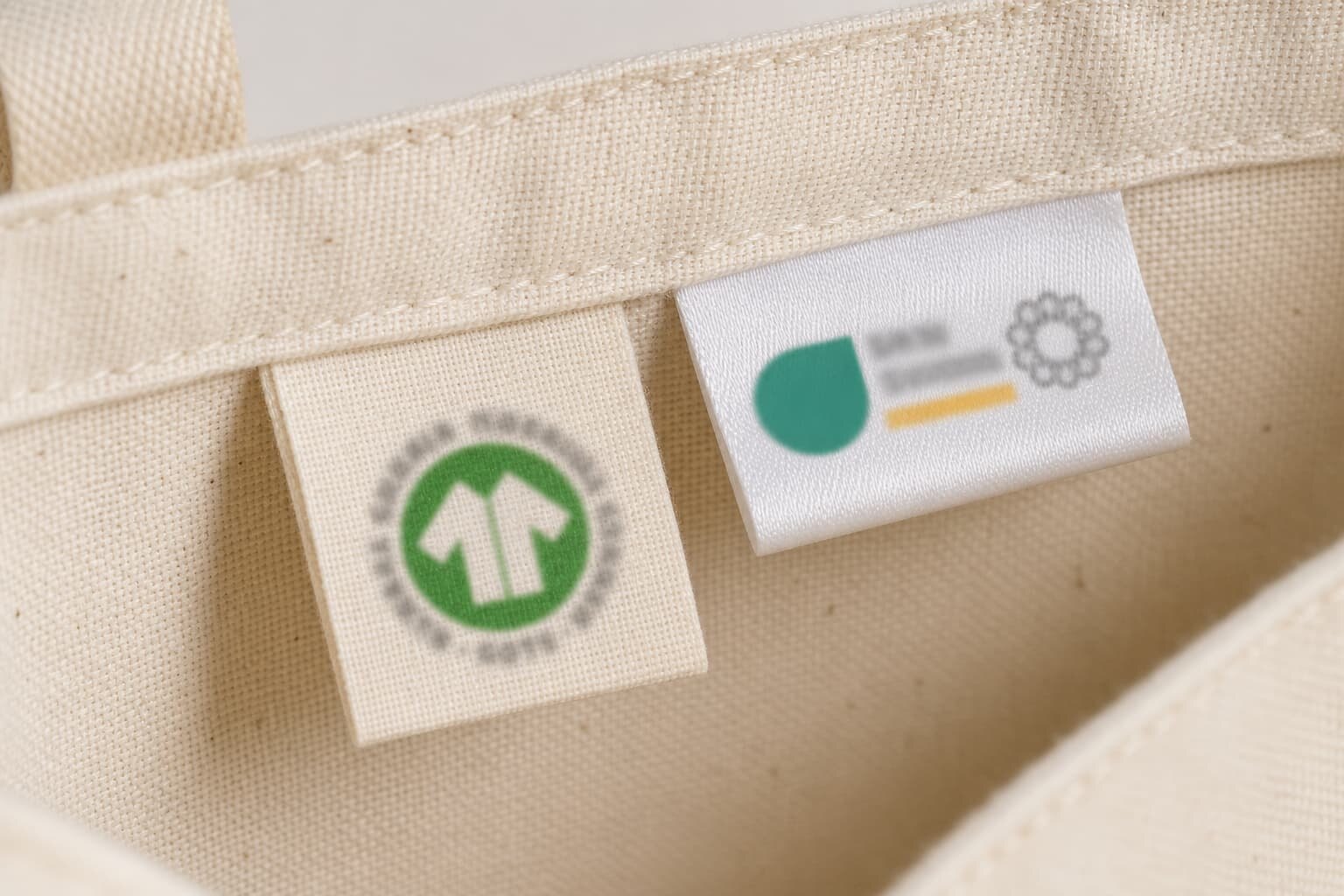
For Organic Cotton Bags, the plan must also separate material appearance from material claim. Natural cotton usually means unbleached or minimally processed cotton color. Organic cotton means cotton grown and handled under a recognized organic standard and supported by documentation. A natural-looking tote is not automatically organic. If the retail listing, swing tag, product page, or packaging says organic, the buyer must verify certification before approving the program.
- Treat the first PO as the master specification order, not only a trial order.
- Keep one sealed approved sample with the buyer and one with the factory.
- Create a signed spec sheet covering material claim, GSM, finished size, handle drop, gusset, print, label, packing, carton data, and tolerances.
- Define which parts can change on reorders, such as artwork, and which should remain locked, such as fabric, construction, and label claim.
- Ask the supplier which parts depend on outside partners: fabric mill, organic certification documents, print shop, label maker, embroidery unit, or packing supplier.
2. Confirm whether the tote is natural, organic, GOTS, or OCS
Because this topic sits under Organic Cotton Bags, sourcing language matters. Many buyers ask for a natural cotton tote when they mean an unbleached beige tote. Others mean certified organic cotton. The two requirements are different. Natural describes color and finish. Organic describes how the cotton was grown and tracked. GOTS and OCS are certification frameworks with different requirements, scopes, and labeling rules.
GOTS is commonly used when buyers need a broader textile processing standard that can include organic fiber content, processing, chemical restrictions, and chain-of-custody controls. OCS focuses on verifying the presence and amount of organically grown material in a final product through chain of custody. The exact standard required depends on the retailer’s claim, market, and internal compliance policy. Procurement should not allow a supplier to quote “organic style” or “eco cotton” as a substitute for valid certification when the product will be sold as organic.
For a reorder program, certification is not a one-time check. A supplier’s certificate can expire, a fabric mill can change, or a subcontracted print process may fall outside the certified chain. If the buyer needs certified organic totes, certification documents and transaction records should be part of the reorder file, just like artwork and packing lists.
- Use “natural cotton” when the requirement is unbleached appearance and no organic claim is made.
- Use “organic cotton” only when the supplier can support the claim with recognized certification and chain-of-custody documentation.
- Ask for current scope certificates before sampling and required transaction certificates or equivalent documentation after production when applicable.
- Confirm whether printing, dyeing, labels, sewing, and packing are included within the certification scope required by your retailer or market.
- Make the exact approved claim part of the spec sheet, swing tag copy, carton label, and ecommerce product copy.
3. Choose GSM by retail use, not only unit price
Cotton tote pricing can vary widely because fabric is often the largest cost driver. A 5 oz or 6 oz bag may work for a lightweight giveaway, but it may feel too thin if sold as retail merchandise. For bookstore totes, lifestyle brand merchandise, museum shops, grocery accessories, and recurring retail programs, 10 oz to 12 oz cotton canvas, roughly 280 to 340 GSM, is a practical starting range. It gives better handfeel, improved opacity, and more stable print performance than very light cotton.
Heavier fabric increases material cost and freight weight. That does not automatically make it the wrong choice. A bag that feels flimsy can create markdowns, customer complaints, or weak perceived value. Procurement should compare two or three GSM options using the same dimensions and construction. This keeps the conversation commercial instead of subjective: buyer teams can see the price difference, carton weight, print result, and shelf presentation for each option.
Organic cotton may also affect lead time and MOQ. Certified organic canvas is not always stocked in every weight. If a buyer wants a specific organic standard, heavier canvas, and a tight natural shade range, the fabric booking may require earlier commitment than a conventional natural cotton tote.
- 5 oz to 6 oz cotton: light promotional use, lower freight weight, limited structure, less suitable for premium resale.
- 8 oz cotton: budget retail or event merchandise, but check opacity, shrinkage, and handle strength.
- 10 oz to 12 oz canvas: strong retail handfeel for repeat-use shopping bags, brand merchandise, and gift-with-purchase programs.
- 14 oz or heavier canvas: premium feel and durability, but higher freight cost, more sewing stress, and longer print drying or curing time.
- For certified organic fabric, ask which weights are regularly available and which require mill production MOQ.
4. Lock fabric appearance without rejecting normal natural variation
Natural cotton is valued because it looks unbleached and tactile, but it is not a perfectly flat white material. Seed flecks, small slubs, cotton husk marks, and mild shade variation can be normal. The buying mistake is to approve one attractive sample and then reject a later shipment because the next fabric lot is slightly warmer, creamier, or more grey. The better method is to define an acceptable shade band before bulk cutting.
For reorder planning, ask whether the fabric is stock fabric, made-to-order fabric, or reserved fabric from a planned lot. Stock fabric can shorten lead time, but shade may vary between lots. Made-to-order fabric can improve continuity for larger programs, but it may require higher MOQ and earlier forecast approval. Fabric reservation can be helpful, but it needs written terms: quantity, holding period, deposit if any, and what happens to unused material.
Physical swatches are more reliable than photos. Natural cotton shifts under daylight, LED lighting, and warehouse light. If the tote is sold next to previous stock, shade continuity should be reviewed against old production as well as the approved sample.
- Approve a physical shade band with light, target, and dark acceptable swatches.
- State whether seed flecks, slubs, and cotton husk marks are acceptable as natural fabric character.
- Reject oil stains, colored yarn contamination, holes, heavy weaving bars, mildew, strong odor, and large dark marks affecting retail appearance.
- Record fabric lot numbers or batch references on inspection reports for every order.
- If old and new stock will sit together in stores, compare reorder fabric against previous batch photos and retained samples before shipment.
5. Specify construction so every reorder feels the same
A tote looks simple, but small construction changes can alter the user experience. A flat tote is easy to pack and usually economical. A gusseted or boxed-bottom tote gives more carrying capacity and better shelf presentation, but it adds sewing operations and measurement points. Long handles allow shoulder carry; shorter handles suit hand-carry shopping bags. If these details are not locked, a reorder may technically match the old PO description but feel different to shoppers.
The most repeatable retail specification usually includes finished width and height, gusset depth, handle width, handle drop, seam allowance, stitch type, reinforcement method, and trim details. For heavier canvas, needle size, thread strength, and sewing tension matter. Natural cotton shows puckering, needle holes, and dirty handling more easily than dark dyed fabrics.
Retail buyers should also decide whether the tote body will remain standard while artwork changes by season. This is often the cleanest reorder model: one approved base bag, with controlled print variations. It reduces development time and lowers the chance of accidental construction changes.
- Define finished size with tolerance, for example plus or minus 1 cm for width and height where suitable for the style.
- Measure handle drop from the top edge of the bag to the inside top of the handle loop.
- Specify reinforcement as box stitch, cross stitch, bartack, or another clear method; do not write only “strong handles.”
- Define gusset or boxed bottom depth using one consistent measuring method.
- Add label type, label material, label position, and batch code rule to the construction spec.
- Keep base tote construction stable if seasonal artwork changes frequently.
6. Match print, label, and artwork controls to repeat ordering
For many natural or organic cotton tote programs, screen printing is the most practical method for one to three solid colors. It works well on canvas texture, gives good color coverage, and remains cost-effective for repeat orders. The risk is that natural cotton absorbs ink differently from bleached or dyed fabric. Large solid areas can look uneven, and fine reversed-out text can fill in or break.
Digital printing, heat transfer, and embroidery can also work, but each changes the reorder plan. Digital printing may suit multicolor artwork or lower quantities but needs color density testing on the selected fabric. Heat transfer can reproduce detailed graphics but may feel less integrated with the cotton surface. Embroidery gives a premium look, yet stitch count, puckering, and backing must be controlled, especially on lighter fabric.
For organic cotton bags, the buyer should also check whether inks, print processes, and labels affect the approved claim or retailer standard. Do not assume that a certified organic fabric automatically makes the finished printed bag acceptable for every organic retail program. The full claim depends on the standard, certification scope, and chain-of-custody requirements.
- Approve a printed strike-off on the exact fabric weight and shade before bulk printing.
- Specify logo width, height, distance from top edge, center alignment tolerance, and print position tolerance.
- Ask whether Pantone matching is realistic on natural cotton or whether a visual standard will be used.
- Record artwork revision number, ink reference, screen number if retained, and approved strike-off photos.
- Avoid very thin reversed-out text on coarse canvas unless the supplier proves it in a strike-off.
- Confirm whether labels, inks, and printing subcontractors are compatible with the required organic claim.
7. Understand MOQ by component, not just by bag quantity
MOQ for a natural or organic cotton tote is rarely one simple number. There can be separate minimums for fabric purchase, organic fabric certification documentation, cutting efficiency, printing setup, woven labels, care labels, carton marks, and mixed artwork designs. A supplier may accept a small first order using available fabric, but a reorder with certified organic canvas or a custom woven label may need a larger quantity.
A practical retail program separates the stable tote body from variable artwork or allocation. For example, a buyer might order one standard 10 oz organic cotton tote body and rotate two seasonal front prints. If the supplier can combine cutting and sewing while separating print designs, MOQ and lead time may be easier to manage. If every reorder changes size, fabric weight, handle length, label, and packing, the order becomes a new style.
Buyers should ask for a price ladder rather than one MOQ price. The lowest MOQ is not always the best commercial choice if it raises unit cost, creates more frequent freight shipments, or prevents continuity of fabric and label stock.
- Request MOQ by same design, same tote with assorted prints, and same tote with mixed store allocation.
- Ask whether organic fabric MOQ is higher than sewing MOQ.
- Check whether woven label MOQ exceeds bag MOQ and whether unused labels can be stored for future reorders.
- Confirm whether cutting can be combined for multiple print designs using the same bag body.
- Ask if blank stock plus later printing is possible, but review alignment risk and certification implications.
- Use quantity tiers to compare total landed cost, not only ex-factory unit price.
8. Compare direct manufacturers, trading companies, mills, and subcontractors
Supplier type affects reorder reliability. A direct bag manufacturer may control sewing, packing, and some quality checks, but still purchase fabric from a mill and outsource printing. A trading company may offer strong communication and sourcing flexibility, but the buyer should understand who is actually making the bags and who is responsible for QC. A fabric mill-linked supplier may offer better fabric continuity, but may rely on another factory for cutting and sewing.
None of these models is automatically good or bad. The issue is visibility. If the buyer does not know where fabric, printing, labels, and sewing are controlled, it becomes difficult to solve shade drift, print mismatch, label delays, or certification gaps. For organic cotton programs, chain of custody makes this even more important. The supplier must be able to show how certified material moves through the production process and which parties are covered by the required documentation.
During quotation, ask the supplier to name the controlled stages and the subcontracted stages. Procurement does not need confidential factory secrets, but it does need accountability. The PO should state who approves strike-offs, who performs inline checks, who conducts final inspection, and who pays for rework if the goods fail the agreed standard.
- Ask whether the supplier owns the sewing facility or coordinates production through partner factories.
- Identify whether the fabric mill is certified for the required organic standard.
- Check whether printing, embroidery, washing, labeling, or packing are subcontracted.
- Confirm who holds the sealed sample and who signs off first bulk pieces.
- Ask whether the supplier has handled the same material claim before, not just a similar-looking natural cotton tote.
- Include responsibility for failed inspection, sorting, rework, and reinspection in the purchase terms.
9. Build the reorder calendar with a clear inventory trigger
A reorder plan must convert lead time into an inventory decision. Many quote sheets say production takes 30 to 45 days, but that may exclude sample approval, fabric booking, organic documentation, export booking, ocean freight, customs clearance, warehouse receiving, and store allocation. Retail buyers should plan backward from the required in-store date and add safety stock for delays.
A simple reorder trigger uses average weekly demand and total replenishment lead time. For example, if a retail program sells or distributes 500 totes per week, and total replenishment lead time is 12 weeks from PO approval to warehouse availability, the base coverage need is 6,000 pieces. If the buyer wants 3 weeks of safety stock, add 1,500 pieces. The reorder trigger becomes 7,500 pieces remaining. When available inventory plus confirmed inbound stock falls to that level, procurement should release the next PO.
This formula should be adjusted for seasonality. Museum shops, bookstores, grocery retailers, and lifestyle brands may see peaks around holidays, tourist seasons, campus openings, or promotional events. If the tote is part of a gift-with-purchase program, demand may be tied to campaign volume rather than steady weekly sales.
- Reorder trigger formula: average weekly demand × total replenishment lead time in weeks + safety stock = reorder point.
- Total replenishment lead time should include factory production, inspection, export handover, freight, customs, warehouse receiving, and store allocation.
- Use available inventory plus confirmed inbound inventory, not only on-hand units, when checking reorder point.
- Increase safety stock for certified organic fabric, seasonal demand, holiday congestion, or new supplier programs.
- Review forecast accuracy after each reorder and adjust the trigger before the next PO.
10. Use QC, packing, and reorder files to protect continuity
Most reorder problems are not dramatic factory failures. They are small differences that accumulate: fabric feels lighter, handle drop is shorter, logo placement shifts, shade looks different beside old stock, carton count changes, or organic claim labels are inconsistent. These issues can be prevented when the buyer maintains a complete reorder file and applies the same inspection method every time.
AQL sampling gives both buyer and supplier a clearer pass/fail basis. For many retail soft goods inspections, buyers use General Inspection Level II with separate AQL limits for critical, major, and minor defects. The exact levels should be agreed before production. A common structure is zero tolerance for critical defects, AQL 2.5 for major defects, and AQL 4.0 for minor defects, but stricter limits may be appropriate for premium retail or regulated claim programs.
Packing should also be treated as part of the specification. If the first order ships 50 pieces per carton and the reorder ships 80 pieces per carton, warehouse receiving, pallet counts, freight cost, and bag condition can all change. For natural cotton totes, moisture control is important because the fabric can absorb odor or humidity during long transit. Carton marks, inner pack count, and batch identification should be repeatable so shortages and mixed designs are easier to trace.
- Attach the current spec sheet, artwork revision, certification requirement, packing standard, and approved sample reference to every reorder PO.
- Inspect first bulk pieces before the full sewing run continues, especially when fabric lot, print color, or subcontractor changes.
- Apply agreed AQL sampling to randomly selected finished and packed cartons.
- Use critical, major, and minor defect classifications so inspection decisions are not subjective.
- Confirm carton quantity, inner pack count, carton dimensions, gross weight, barcode, carton marks, and batch code before shipment.
- Keep inspection photos, supplier quote revision, fabric lot records, organic documents, packing lists, and inbound receiving notes in one reorder file.
Specification comparison for buyers
| Supplier comparison point | What to request | Why it matters for bulk reorders | Buyer risk to check |
|---|---|---|---|
| Cotton claim | Confirm whether the tote is conventional natural cotton, GOTS organic cotton, OCS organic cotton, recycled cotton, or a blend | The category is Organic Cotton Bags, so certification and material claims must match retail labeling and compliance needs | Do not market the bag as organic unless the supplier can provide valid scope certificates, transaction certificates where applicable, and chain-of-custody support |
| Fabric weight | Quote 8 oz, 10 oz, and 12 oz options with estimated GSM, weave, shrinkage, and natural shade range | Lets procurement compare price, handfeel, print performance, freight weight, and perceived retail value on the same style | Some quotes use nominal ounce weight; verify actual GSM and finished handfeel against the approved sample |
| MOQ tiers | Ask for prices at realistic first-order and reorder quantities, such as 1,000, 3,000, 5,000, and 10,000 pieces | Shows whether the supplier can support replenishment without restarting development or changing the fabric source | Low MOQ may depend on stock fabric; repeat orders may require a higher MOQ if organic fabric, labels, or print setup are custom |
| Lead-time impact | Break timing into certification check, fabric booking, sampling, printing, sewing, inspection, packing, and shipment | Helps retail buyers set reorder triggers before inventory falls below coverage needs | A quoted 30 to 45 days may exclude organic fabric availability, strike-off approval, export booking, or peak-season delays |
| Manufacturer type | Identify whether the supplier is a direct bag manufacturer, trading company, fabric mill-linked factory, or print-and-sew coordinator | Clarifies who controls fabric, labels, print quality, certification documents, and production scheduling | Trading companies can be useful, but buyers must know which party owns QC, claim verification, and issue resolution |
| Print and label control | Request strike-off rules, label MOQ, screen retention policy, artwork revision numbers, and print subcontractor details | Keeps logos, batch labels, and retail presentation consistent across repeat orders | External print or label suppliers can become bottlenecks if screens, inks, labels, or certified trim sources change |
| Packing and freight | Request inner pack quantity, carton dimensions, gross weight, pallet plan, and moisture protection method | Affects warehouse receiving, store allocation, freight quotes, and carton continuity between orders | Carton changes can increase freight cost, cause receiving errors, or damage structured totes during transit |
| Reorder continuity controls | Ask whether fabric, labels, screens, shade bands, and approved samples can be retained or reserved | Reduces variation between the first order and replenishment orders | Fabric lot shade, organic yarn availability, and label stock may change unless continuity is planned before the first PO |
| Inspection standard | Require AQL level, defect classification, measurement tolerance, and inspection photos | Gives buyers a pass/fail basis instead of relying on general visual approval | Without defined major/minor defects, shade variation, print defects, and quantity shortages become difficult to dispute |
Buyer checklist before sampling
- Decide whether the retail claim is natural cotton, organic cotton, GOTS certified organic cotton, OCS certified organic cotton, or another material claim; do not use these terms interchangeably.
- Request current supplier certification documents before quotation if the bag will be sold or labeled as organic.
- Lock the base tote specification by finished size, gusset, handle drop, fabric ounce/GSM, weave, shrinkage expectation, stitching, label, and packing.
- Approve a physical pre-production sample using the final fabric, handle length, seam construction, print size, label position, and carton packing plan.
- Define acceptable natural cotton appearance: seed flecks, slubs, shade range, and visible husk marks versus rejectable stains, holes, contamination, or weaving bars.
- Quote at two or three quantity tiers and two GSM options so merchandising and procurement can compare unit price, freight impact, and retail value.
- Confirm MOQ separately for bag sewing, organic fabric booking, logo printing, woven labels, care labels, carton marks, and mixed designs.
- Ask whether the supplier is the direct manufacturer or coordinates fabric, printing, labeling, and sewing through subcontractors.
- Build a reorder calendar using production lead time, transit time, customs clearance, warehouse receiving, store allocation, and safety stock.
- Set a reorder trigger using remaining inventory weeks, not only a minimum unit count.
Factory quote questions to send
- Is the quoted tote conventional natural cotton, certified organic cotton, GOTS, OCS, recycled cotton, or a blend? What exact claim can we legally make on product labels or retail pages?
- Can you provide your current scope certificate and, if required, transaction certificate or chain-of-custody documentation for organic cotton orders?
- What is the exact fabric construction: cotton source, weave, ounce weight, estimated GSM, yarn count if available, shrinkage expectation, and natural shade range?
- Is the fabric greige, washed, pre-shrunk, or finished after weaving, and how will that affect final size tolerance and handfeel?
- Are you the direct bag manufacturer? If not, which processes are subcontracted: fabric milling, printing, embroidery, label production, sewing, inspection, or packing?
- What MOQ applies separately to organic fabric booking, bag cutting and sewing, screen printing, woven labels, care labels, carton printing, and mixed artwork designs?
- Can you quote the same tote at 8 oz, 10 oz, and 12 oz so we can compare cost, carton weight, freight impact, and perceived retail quality?
- Which print method do you recommend for our artwork on natural or organic cotton, and what line thickness, ink coverage, or color matching limitation should we adjust?
- Will you provide a printed strike-off and a full pre-production sample before bulk cutting? What sample lead time is realistic?
- What is the production lead time by stage: fabric purchase, certification document check, cutting, printing, sewing, trimming, inspection, packing, and export handover?
Quality-control points to confirm
- Verify certification documents before production when the order will be sold as organic; confirm supplier scope, product category coverage, validity dates, and required transaction documentation.
- Measure finished bag width, height, gusset, handle width, and handle drop against the approved sample and signed tolerance table before packing begins.
- Check fabric GSM with a cutter scale, lab report, or verified supplier test report, then compare handfeel and opacity to the sealed approval sample.
- Inspect natural cotton shade under consistent light using the approved shade band because unbleached cotton can shift from creamy beige to grey-beige between lots.
- Classify defects before inspection: critical defects such as unsafe contamination or wrong claim label; major defects such as holes, open seams, severe stains, wrong size, wrong print, broken handles; minor defects such as small loose threads or slight shade variation within approved range.
- Use an AQL plan for final inspection, commonly General Inspection Level II with AQL 0 for critical defects, 2.5 for major defects, and 4.0 for minor defects unless the buyer requires stricter limits.
- Pull cartons randomly from the full packed lot, not only from cartons selected by the factory.
- Run a practical handle load test based on the intended retail use; document weight, duration, and failure criteria.
- Review print adhesion, color density, edge sharpness, ink penetration, rubbing resistance, and position tolerance on actual bag panels.
- Check seam allowance, backstitching, loose threads, skipped stitches, needle holes, boxed bottom symmetry, and stress points at handle attachments.