1. Start with the job the tote must do
A natural cotton tote is not one product. It can be a light giveaway bag, a reusable branded carryall, a retail item, or a packaging layer that ships with another product. If the RFQ only says natural cotton tote with logo, suppliers will fill in the gaps with their own assumptions about fabric weight, handle strength, print method, and finishing. That is where quotes start drifting apart and the first production problem gets built into the price.
The buyer should describe the use case in plain operational terms. What will the tote carry, how often will it be reused, and where will it be sold or distributed? A bag that only holds event handouts can be lighter and simpler than a tote that carries books, bottles, or boxed goods. The more honest the load and channel description, the less likely the factory is to quote the wrong construction.
- For event use, keep the spec lean and avoid over-engineering the bag.
- For brand merchandise, prioritize appearance, print quality, and repeated use.
- For retail, include tighter cosmetic standards and better finishing details.
- For packaging, test with the actual product weight before confirming the spec.
2. Choose fabric weight against load, not just preference
Fabric weight drives cost, structure, and freight. Buyers often ask for an 8 oz tote without confirming whether that means finished fabric, greige fabric, or a local seller's shorthand. To make supplier quotes comparable, state the weight in both oz and GSM and ask the factory to confirm how it is measured. On natural cotton, the same nominal weight can feel noticeably different depending on weave density and finishing.
For most brand-owner programs, 8 oz to 10 oz is the practical middle ground. It gives enough body for printing and repeated use without jumping into the cost and freight of heavy canvas. A 5 oz bag can work for light giveaways, but it will look thinner and will not hide contents well. A 12 oz bag feels more premium and durable, but the sewing time, carton volume, and shipping cost rise fast.
- 5 oz: light promotional use, low load, low cost, more transparent fabric.
- 8 oz: common brand tote weight, balanced structure, easy to print.
- 10 oz: stronger handfeel, better for heavier daily carry and retail resale.
- 12 oz: premium and sturdy, but slower to make and more expensive to ship.
- Always approve a physical swatch because unbleached cotton can vary from creamy white to deeper beige.
3. Lock the finished size, gusset, and handle drop early
Many tote issues begin with vague dimensions. A supplier may quote a flat 38 x 42 cm bag with no gusset while the buyer expects a deeper shopping tote with bottom volume. Finished size affects fabric yield, cutting layout, print placement, carton size, and carrying comfort. The spec should always name width x height x gusset and then the handle drop, in that order, so there is no room for interpretation.
Handle drop matters just as much as the body size. A short carry tote may only need a 12 to 15 cm drop, while a shoulder tote may need 25 to 30 cm. If the handles are too short, the bag feels awkward. If they are too long, the tote hangs low and the artwork can fall into an uncomfortable spot. Print position should be set from the top edge and center line, not eyeballed from a mockup.
- Example flat tote: 38 W x 42 H cm with no gusset and 28 cm handle drop.
- Example shopping tote: 35 W x 40 H x 10 cm gusset with 25 cm handle drop.
- Example retail tote: 40 W x 35 H x 12 cm gusset with boxed bottom and 26 cm handle drop.
- Set a tolerance in writing, such as plus or minus 1 cm on body size and plus or minus 1.5 cm on handle drop.
- Define print placement from seams and edges so the logo does not shift from batch to batch.
4. Treat handle construction like a load-bearing part
Handles fail more often than buyers expect. A tote can look fine on a table and still tear at the handle after a few uses if the reinforcement is weak. That is why the quote must identify the handle material, width, length, number of layers, and stitch pattern. Self-fabric handles, cotton webbing, and folded handles are not interchangeable if the bag is meant to carry any real weight.
For a practical buyer check, load the sample with the actual product or an equivalent weight and lift it repeatedly. Then hang it briefly and look for stitch opening, handle twist, top-hem distortion, or fabric tearing near the anchor point. This quick test will not replace a lab report, but it catches the most common construction mistakes before bulk approval.
- Light giveaways can use simple self-fabric handles if the load stays low.
- Reusable brand totes usually benefit from wider webbing or reinforced self-fabric handles.
- Heavier retail use should specify box stitch, cross-stitch, or bar tack reinforcement.
- Check that the handle anchoring does not sit too close to the top edge where stress concentrates.
- If the tote will be carried on the shoulder, confirm that the handle length works with the actual body depth.
5. Match the print method to the artwork and reorder plan
Screen print is usually the most reliable option for natural cotton when the artwork is one to three solid colors. It gives good coverage on unbleached fabric, works well with the surface texture of canvas, and stays economical on repeat runs. Ask the supplier what ink system they use, how it is cured, and whether the print is applied before or after sewing. For large front graphics, printing flat panels before assembly often improves registration and edge quality.
Digital print can support detailed art or small runs, but the base color of natural cotton affects how bright the artwork appears. Embroidery can feel premium, yet it adds weight and may pucker thinner fabrics. Woven labels or a small side label are useful when the brand wants restrained marking or a more organic look. The right choice depends on how durable the image needs to be and how often the program will reorder.
- Use screen print for solid logos and repeatable bulk orders.
- Use digital print only when the artwork needs fine detail or many colors.
- Use embroidery for small premium marks, not large filled graphics on light fabric.
- Request a strike-off on the actual bulk fabric, not only a generic swatch.
- Specify acceptable limits for print position, color shift, pinholes, and rub resistance.
6. Verify organic cotton claims with the right documents
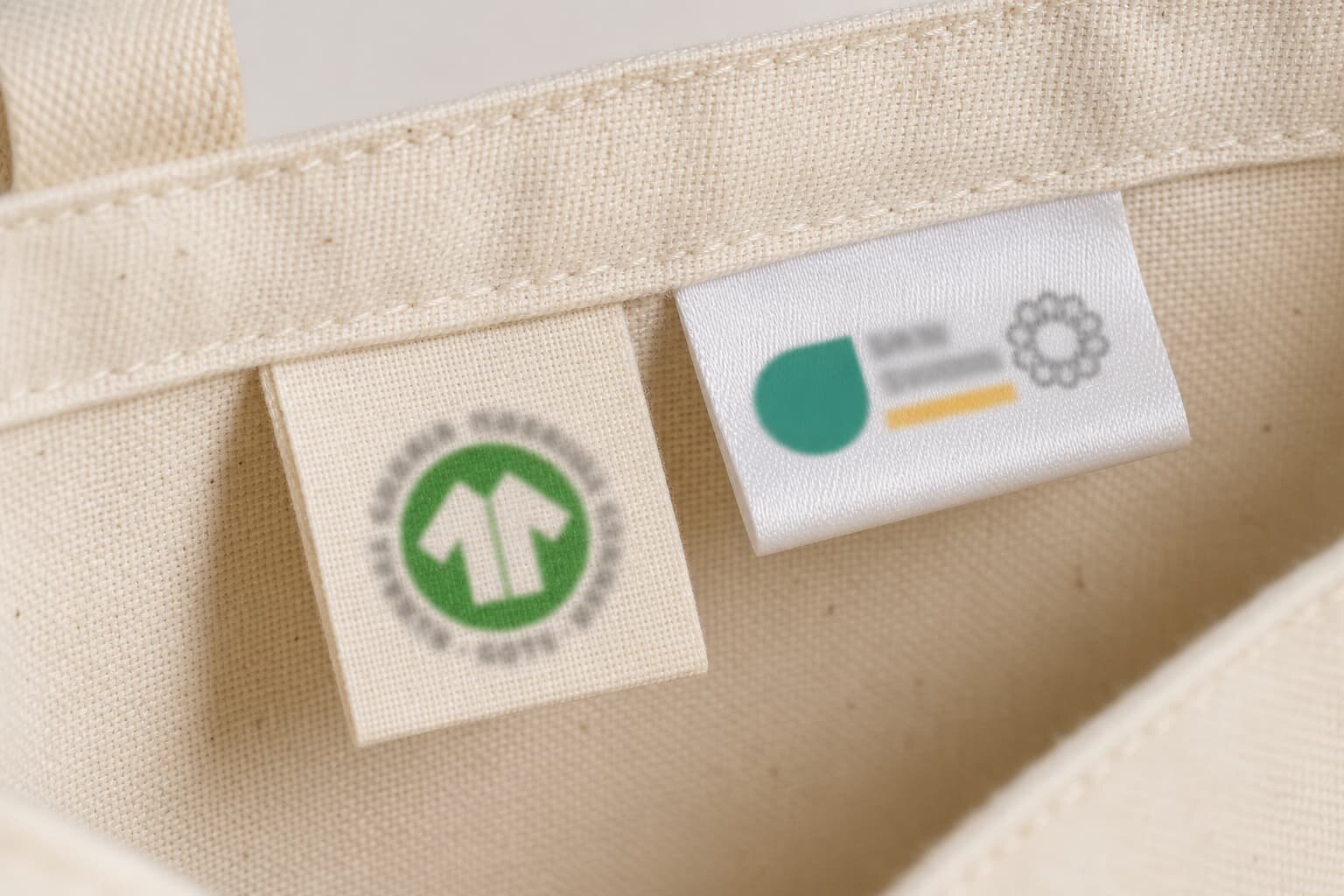
Category matters here. Natural cotton describes the appearance or finish of the fabric, but it does not prove organic origin. If the bag will be sold or marketed as organic cotton, the buyer needs certification language in the spec, not just a material description. GOTS and OCS are common references, but the important point is that the supplier must be able to show a current certificate with the correct scope, certified site, and product category.
Procurement should ask for more than a logo on a certificate PDF. The factory should confirm which entity in the supply chain is certified, whether the cert covers spinning, knitting or weaving, dyeing or printing, and final assembly, and whether transaction certificates are available for the lot being shipped. Chain-of-custody evidence matters because an organic claim is only as strong as the paper trail behind the goods.
- Ask for the current certificate and check that the factory name and site match the production location.
- Confirm the certificate scope includes the product category you are buying, not just a related textile process.
- Request lot-level traceability or batch records that link fabric rolls, cutting batches, and packed cartons.
- For organic claims, ask whether transaction certificates are issued for each shipment and who provides them.
- Keep the approved wording for any hangtag, care label, or sales copy aligned with the certificate the supplier can actually support.
7. Use sampling to remove guesswork before bulk cutting
A single mockup is not enough for a tote program. At minimum, request a fabric swatch, a print strike-off, and a pre-production sample built with the intended fabric, handle, label, and packing method. If the bag is organic, the sample route should also reflect the certified material path the factory plans to use in bulk. The approved sample should be tied to actual measurements and photographs so everyone is signing off on the same object, not a vague concept.
Comments should be written like production instructions. Say move the logo down 2 cm, change handle reinforcement to box stitch, or increase the top hem to 3 cm. Avoid soft feedback such as make it feel better. Factories can execute precise edits quickly; they cannot reliably convert a mood into a pattern instruction.
- Material swatch: check shade, GSM, weave, and handfeel.
- Print strike-off: check ink coverage, position, curing, and rub behavior.
- Prototype sample: check size, gusset, handle drop, and seam build.
- Pre-production sample: confirm all final details before bulk fabric is cut.
- Packing sample: verify folding, bundling, carton marks, and retail barcode placement if needed.
8. Make supplier quotes comparable on the same line items
A useful quote is broken down, not bundled into a number that hides the tradeoffs. If two suppliers quote the same tote at very different prices, the difference is usually in fabric weight, handle build, print setup, label work, packing, or shipment assumptions. The buyer should request the same data fields from each factory so the numbers can be compared fairly.
MOQ deserves the same discipline. One supplier may have a low bag MOQ but a higher MOQ for woven labels, custom packing, or organic-certified fabric. Another may offer a better unit price only because the carton count, print setup, or fabric lot size is larger than the buyer expected. Ask for MOQ by component so the commercial picture is clear before approval.
- Quote the bag body separately from printing, labels, packing, and sample charges.
- Ask for price breaks at realistic order levels such as 500, 1,000, 3,000, and 5,000 pieces.
- Request carton dimensions, gross weight, and estimated CBM for freight planning.
- Confirm quote validity, payment terms, Incoterms, and production start conditions.
- If the order is organic, ask whether the certified fabric lot is already available or needs sourcing time.
9. Set packing and lead time rules before production starts
Packing is part of product quality, not an afterthought. Cotton totes can crease deeply if over-folded, and printed bags can offset if they are stacked before the ink has fully cured and cooled. Moisture control matters too, especially for ocean freight. The order should state whether bags are flat packed, lightly folded, bundled, polybagged, or finished as a retail-ready unit with hangtags and barcodes.
Lead time should be broken into real stages: artwork check, material booking, sample approval, cutting, printing or embroidery, sewing, inspection, packing, and export handling. A factory cannot fairly promise a short schedule if artwork is still changing or if the fabric needs to be sourced after the order is placed. Clear approval gates protect both sides from avoidable delay.
- Specify units per inner bundle and whether bundles are wrapped or loose.
- If polybags are needed, define bag type, ventilation holes, and warning text.
- For retail programs, confirm hangtag attachment, barcode position, and sticker area.
- Request dry cartons with clear marks and no mixed sizes unless approved in writing.
- Ask the factory to state when bulk lead time starts: PO date, deposit date, or final sample approval date.
10. Define inspection, testing, and reorder controls in writing
Quality control should be measurable. Natural cotton does have normal character, including small slubs and slight shade variation, but that does not excuse stains, oil marks, open seams, wrong size, or bad print registration. A good QC plan separates cosmetic issues from functional ones and gives the factory a clear pass or fail line. If your program is retail-facing, use a formal sampling plan and record the defect types separately.
For functional checks, ask for a handle pull or suspension check, a seam inspection, a print rub check, and a measurement audit on a defined sample size. If the tote is intended to be washable, ask for shrinkage expectations after one wash or another agreed conditioning cycle. Reorders should always reference the same approved sample, fabric lot, print file version, and label version so the next run does not slowly drift away from the first one.
- Major defects: wrong size outside tolerance, broken handle, open seam, severe print error, wrong label, stain, mold odor, or incorrect packing.
- Minor defects: loose thread, light acceptable slub, small crease, slight stitch variation, or minor shade variation within the approved range.
- Handle check: use a practical load or suspension test that reflects the intended use case.
- Print checks: include color, position, edge sharpness, curing, and dry or wet rub resistance when needed.
- Inspection example: many retail programs use AQL 2.5 for major defects and 4.0 for minor defects, but the buyer should confirm the standard that fits the channel.
Specification comparison for buyers
| Fabric option | Typical weight | Best use and load | MOQ and production impact | Print and freight notes |
|---|---|---|---|---|
| 5 oz cotton | About 170-200 GSM | Light giveaways, brochure bags, low-load event handouts | Lowest fabric cost, but weak structure and less margin for cutting error or heavy handle reinforcement | Good for simple one-color prints; folds small, but can look thin and travel badly if over-packed |
| 8 oz cotton | About 270-300 GSM | Core brand tote, gift-with-purchase, light retail use | Often the best balance of cost, sewability, and appearance; common starting point for custom programs | Prints cleanly on natural fabric and still keeps freight reasonable for export cartons |
| 10 oz cotton | About 320-350 GSM | Reusable merch tote, bookstore bag, moderate daily carry | Higher sewing time and fabric consumption, but better body and fewer complaints about transparency or limpness | Strong print surface and better premium feel; expect a modest freight increase from added bulk |
| 12 oz cotton | About 390-420 GSM | Heavier retail bag, larger product loads, premium merchandise | Highest unit cost, slower sewing, and more carton volume; useful only when the load and brand position justify it | Excellent structure and print stability, but higher freight impact and harder fold compression for packing |
Buyer checklist before sampling
- Define the real use case first: giveaway, product packaging, retail merchandise, or everyday carry.
- State finished size as width x height x gusset, plus handle drop, in one measurement system.
- Specify natural cotton or organic cotton clearly, including whether the bag is unbleached, dyed, or blended.
- Provide fabric weight in both oz and GSM, and say whether the number refers to finished fabric or greige fabric.
- Choose handle type, handle width, handle length, and reinforcement style before artwork is approved.
- Share vector artwork, print color references, print size, print position, and any no-print zones near seams or folds.
- Confirm whether you need woven labels, care labels, hangtags, barcodes, or retail polybags.
- Request a material swatch, print strike-off, pre-production sample, and sealed approval sample.
- Ask the supplier to quote MOQ separately for the bag body, printing, labels, and custom packing.
- Set inspection standards in advance, including measurement tolerances, stitch defects, print quality, and carton condition.
Factory quote questions to send
- What exact fabric weight, weave, and composition are you quoting, and is the weight measured before or after finishing?
- Is the fabric natural cotton, organic cotton, recycled cotton, or a cotton blend? Please state the composition and finish clearly.
- If this is organic cotton, which certification applies: GOTS, OCS, or another standard, and is the certificate currently valid?
- Can you share the certification scope, certified factory name, certified site address, and product category covered by the certificate?
- Will you provide transaction certificates or other lot-level proof of certified material movement for each bulk shipment if the order uses an organic claim?
- What is the MOQ for the bag body, printing, labels, hangtags, and custom packing separately?
- What handle construction is included in the quoted price: self-fabric, cotton webbing, straight stitch, box stitch, bar tack, or cross-stitch?
- What measurement tolerance do you apply for finished size, handle drop, and print position after sewing and finishing?
- What sample stages are included in the lead time, and what changes would require a new strike-off or new pre-production sample?
- Please break out the unit price, print setup, label cost, packing cost, sample cost, and freight assumptions so quotes can be compared on the same basis.
Quality-control points to confirm
- Approved swatch, pre-production sample, and bulk fabric match in shade, handfeel, thickness, and weave.
- Finished width, height, gusset, and handle drop stay within agreed tolerance on a measured sample set.
- Handle attachment passes a practical load check with no tearing, stitch failure, or seam distortion.
- Seams are straight, even, and free from skipped stitches, open seams, broken threads, and seam puckering that affects use.
- Print position, ink density, edge clarity, and curing match the approved strike-off on the actual fabric.
- Dry and wet rub testing are requested for the print where the program depends on graphic durability.
- Shrinkage is checked after one wash or a specified conditioning cycle if the bag is intended to be laundered or reused often.
- Carton sample, bundle count, and packing method match the approved packing instruction and do not crush handles or transfer print.
- Organic documentation is complete and matches the production lot, including certificate scope, lot records, and shipment paperwork where required.
- Inspection uses an agreed sampling plan, such as AQL 2.5 for major defects and 4.0 for minor defects, if your program requires a formal standard.