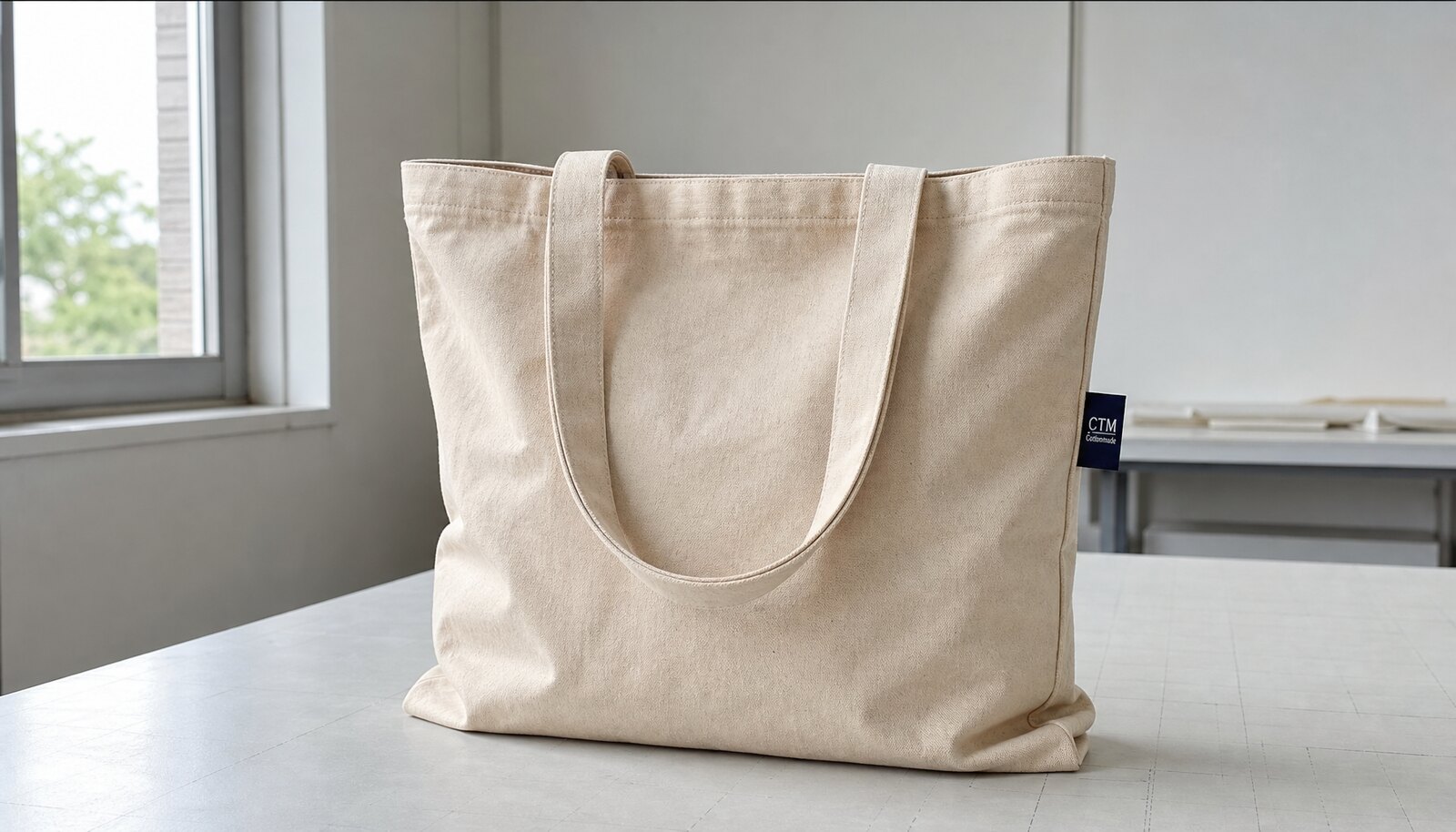
What buyers mean by monogrammed
A monogrammed canvas bag is not just a tote with a logo on it. In sourcing terms, it is a blank bag platform with a decoration requirement that changes how the product is cut, sewn, inspected, and packed. The buyer has to decide whether the monogram is the main selling point or only a brand identifier. That one decision affects the bag weight, the decoration method, the acceptable placement tolerance, and how much deviation you can tolerate on a reorder.
For corporate gifting, the bar is usually presentation and consistency. For retail, the bar is repeatability across lots, because the first order and the reorder must look like the same product. On rough canvas, a small mark that looks clean in artwork can still read as sloppy if the fabric is too soft, the panel tension is uneven, or the decoration area was never defined as part of the spec.
- Define the monogram as initials, a wordmark, or a logo device before you compare suppliers.
- State the end use: retail, gifting, event giveaway, or fulfillment insert.
- Decide whether the mark must survive folding, handling, and repeated use, or only one-time presentation.
Lock the blank bag spec first
The bag body controls most of the quote and most of the risk. For a monogrammed canvas bag, 10 oz or about 280 GSM can work for promotional use, but it often looks soft once embroidery or a sewn patch is added. Twelve oz or about 340 GSM is usually the most balanced starting point because it holds shape better, supports decoration more cleanly, and still ships at a reasonable weight. Fourteen oz or about 400 GSM and above gives a more structured premium feel, but it raises fabric cost, sewing resistance, and freight weight.
Do not stop at fabric weight. Buyers should also lock dimensions, gusset depth, handle length, handle width, seam allowance, and reinforcement points before they ask for quotes. If the bag needs to feel premium, a better answer is often a stronger construction package rather than just heavier cloth. That may mean a lining, a bottom board, self-fabric handles, or cleaner edge finishing rather than a blanket move to thicker canvas.
- 10 oz / 280 GSM: lower cost, softer body, better for event bags than premium retail.
- 12 oz / 340 GSM: the safest general-purpose option for most branded programs.
- 14 oz / 400 GSM and above: better structure, higher cost, stronger premium feel.
- Specify handle length in use terms, not only finished centimeters, so the bag sits correctly on the shoulder or in hand.
Choose the decoration method with the fabric in mind
For monogrammed canvas, the decoration method drives appearance, cost, and the failure mode you will see in inspection. Screen printing is efficient for one-color initials or simple wordmarks, especially when the artwork is flat and the run is large enough to justify setup. The key control points are registration, ink cure, and whether the print still looks aligned after the bag is folded. A cheap print that cracks or shifts on the front panel is not a viable procurement choice, even if the first quote looks attractive.
Embroidery usually creates a more premium feel, but the stitch density has to match the canvas weight. On lighter fabric, a dense fill can pucker the panel or pull the weave off grain. If you are using embroidery, ask for the stitch count, the backing material, and the thread path on the reverse side, not just a front-facing mockup. Woven labels, appliques, and sewn patches can be a better answer when you want tactile detail without the bulk of dense embroidery. Heat transfer is usually the weakest choice for reusable canvas unless the order is short-run and the buyer accepts shorter decoration life.
- Screen print: best for flat, simple marks with low unit cost and clear artwork.
- Embroidery: best for premium initials, but requires stabilizer and placement control.
- Woven patch or applique: good when the monogram should feel refined without heavy stitch density.
- Heat transfer: acceptable mainly for short-lived programs or low-use samples.
Compare the supplier route, not only the price
A low quote does not tell you much until you know who is actually cutting, decorating, inspecting, and packing the bag. The same monogrammed canvas bag can come from a direct factory with in-house decoration, a trading company that outsources the work, a domestic decorator using imported blanks, or a stock-bag seller adding the mark locally. Each route has a different control point, and that control point is what decides whether the reorder stays stable.
The right comparison is not route versus route in the abstract. It is route versus the level of control your program needs. If you need exact color repeatability and a long shelf life, a direct factory or a tightly managed trading company is usually safer. If you need speed or a small test order, a stock blank or local decorator may be enough. The risk is not that one route is always bad. The risk is that the quote hides where the work is actually happening.
- Ask who cuts the fabric, who applies the decoration, and who signs off final inspection.
- Separate the blank bag cost from the decoration cost when the quote is vague.
- Request proof that the same route can be repeated on the next order without changing the look.
Build the RFQ around comparison, not guesswork
A useful RFQ for a monogrammed canvas bag should let two suppliers quote the same product without interpretation. Send a dimension sheet, the artwork file, the decoration method, the placement drawing, the color reference, the pack format, the quantity split, the incoterm, and the delivery target. If the bag is supposed to look premium, say so in practical terms: fabric weight, handle finish, label style, and packaging quality. If it is meant to be a low-cost promotional piece, say that as well so the factory does not overbuild the quote.
Ask for separate lines for blank bag, decoration setup, decoration labor, packing labor, carton charge, test charge, and export assumptions. If the supplier refuses to break the price apart, you do not have a clean comparison. Procurement teams get trapped when one supplier includes packing and another excludes it, or when setup is hidden inside a unit price that only works for the first order.
- Send one artwork file, one dimension sheet, and one reference photo whenever possible.
- Ask for the quoted assumptions in writing so you can compare landed cost, not just ex-works price.
- Include the acceptable defect standard in the RFQ so the factory cannot invent its own threshold later.
Treat samples as production gates, not show-and-tell
The sample stage is where most problems can be removed cheaply. A useful approval flow has three gates: blank approval, decoration proof, and pre-production sample. The blank sample confirms the body fabric, handles, seams, and dimensions. The decoration proof confirms the color, placement, stitch density, or print registration. The pre-production sample should use the final fabric, final trim, and final packing so the buyer is approving the actual production method, not a substitute.
On embroidery, ask for the reverse side as well as the front so you can see backing trim, thread tails, and whether the machine is pulling the canvas. On screen print, inspect the sample after full cure and after at least one fold cycle so you can see whether the ink cracks or marks the panel. Keep a sealed golden sample in procurement records with revision number, date, and sign-off name. Reorders fail when teams rely on memory instead of a physical reference.
- Approve the monogram placement on a real bag, not only on a digital mockup.
- Require the sample to use the production fabric, thread, ink, and trim.
- Keep a sealed master sample and tie it to the PO revision number.
- Do not allow bulk cutting until the pre-production sample is signed off.
Use objective QC thresholds
A monogrammed canvas bag needs a measurable inspection plan, not just a visual thumbs-up. Buyers should define tolerances for size, placement, seam quality, and color consistency before bulk starts. On a small tote, a few millimeters of drift can make the mark look off-center. On embroidery, poor tension can show as puckering even when the stitches are technically complete. If the decoration adds stiffness, the inspection should also check whether the front panel still hangs naturally instead of twisting or bowing.
Set the defect language in advance. Wrong artwork, wrong color, missing handle, open seam, or decoration outside the approved zone should be critical defects. Cosmetic issues outside the logo area may be major or minor depending on the brand standard, but the logo zone deserves tighter rules because buyers are usually paying for that visible mark. On the material side, ask for cut-and-weigh GSM checks, lot labels, and shrinkage or colorfastness testing if the bag will be washed or exposed to moisture. If the bag is not meant to be laundered, do not overpay for test packages you will never use; spend the control budget where the risk actually sits.
- Set tolerances for body size, handle length, and monogram placement before production starts.
- Treat wrong artwork, wrong color, or wrong placement as critical defects.
- Use the agreed AQL plan and write it into the PO.
- Request in-line and final inspection photos with the first and last off-line pieces.
Packing affects presentation and damage rate
Packing is part of the product for a monogrammed canvas bag, especially when the order goes to retail, corporate gifting, or fulfillment. A folded bag can crease the monogram, flatten embroidery, or leave a permanent bend across the front panel if the pack method is careless. The supplier should tell you whether the bag is folded with tissue, inserted with cardboard, packed loose in a polybag, or bundled in a retail-ready kit. That detail changes the appearance the customer sees on arrival as much as the sewing line does.
For retail programs, the pack plan needs to cover barcode placement, hangtag attachment, care label placement, and carton marks. For gift programs, it needs to cover tissue color, insert cards, and whether the decoration face is protected from rubbing against closures or other hard items. If the supplier hides packing behind a generic line item, ask for the pack-out sequence in writing and request a pack photo before carton sealing. Crushed monograms and scuffed prints often begin as packing mistakes, not sewing mistakes.
- Confirm whether polybags, tissue, inserts, and silica gel are included in the quote.
- Specify fold direction so the monogram face does not crease under carton pressure.
- State carton quantity, carton size, and carton strength before freight booking.
- Protect the decoration face from rubbing against labels, zips, or hardware.
Lead time risk comes from setup, not only sewing
Buyers often underestimate how much the decoration step affects the schedule. Sewing the blank canvas may be straightforward, but embroidery programming, screen preparation, sample approval, and color correction can add days or weeks. If the factory is waiting on artwork clarification, production stops even when fabric is already in house. The safest schedule separates sample approval time from bulk sewing time and then adds a realistic buffer for decoration setup and pack-out.
Reorders are where schedule discipline matters most. If the first order used a special thread shade, a woven patch, or a non-stock blank, the factory may need to source those same materials again before cutting starts. Ask the supplier which components are stock and which are one-off. A partner that cannot explain what is repeatable from one order to the next is not yet a safe replenishment source. The best buyers keep lead time control by making repeatability part of the spec, not just part of the purchase order.
- Build timing around sample approval and decoration setup, not just sewing capacity.
- Ask which materials are stock items and which require special procurement.
- Separate the first-order timeline from the reorder timeline so the team does not assume they are the same.
Use the reorder file to protect quality
The second order is where many tote programs drift. Teams remember the look of the bag but not the exact fabric lot, stitch density, packaging sequence, or placement tolerance that made the first order work. The fix is a simple reorder file: approved artwork, revision number, golden sample photo, measurement sheet, decoration method, packaging photo, and the last inspection report. If any of those change, the buyer should know it before cutting starts.
A disciplined file also helps when the quote changes. If a supplier raises price on reorder, you can compare the new BOM against the old one instead of guessing whether the increase is real. The same file should record supplier substitutions, approval dates, and any exceptions to the standard spec. Procurement teams that keep this record usually spend less time arguing about what was approved and more time deciding whether the new price is justified.
- Keep one file per style with revision number, date, and sign-off name.
- Store approved artwork, measurement sheet, pack photo, and final inspection report together.
- Require written approval before any change to fabric, thread, ink, or packing.
- Use the reorder file to separate real cost inflation from unapproved spec drift.
Specification comparison for buyers
| Supplier route | Best fit | What to verify in the quote | Risk trigger |
|---|---|---|---|
| Direct factory with in-house cutting and decoration | Best for recurring orders where you need the fabric, sewing, and monogram controlled in one place | BOM, seam spec, decoration method, sample revision number, and who signs final inspection | The supplier cannot name the machine type, stitch count, or the person responsible for decoration QC |
| Trading company with a named factory | Best for multi-line programs or buyers that want one commercial contact but still need factory traceability | Actual factory name, audit evidence, sub-supplier flow, and whether the same line will run the reorder | The quote changes after award or the supplier will not identify where cutting and decoration happen |
| Domestic decorator using imported blanks | Best for short launch windows, smaller quantities, or test markets | Blank-bag source, blank-lot consistency, and how the decoration will stay stable across reorders | The blank line is discontinued or the supplier cannot guarantee the same body on the second order |
| Stock blank bag plus local personalization | Best for urgent gift runs and very low MOQ | Current stock availability, blank color lot, and decoration proof on the actual blank you will receive | Color drift, mixed blank sources, or a last-minute substitution of the bag body |
| Premium gift assembler with custom packaging | Best for retail-ready sets where inserts, labels, and presentation matter as much as the bag | Pack-out BOM, carton spec, label placement, and whether packing labor is included | Packaging gets quoted as an afterthought and turns into a hidden cost later |
| Marketplace seller or broker | Best only for early concept validation or internal review samples | Actual photos, measurement sheet, sample retention, and production origin | Generic listings, no documentation, and no control over fabric, thread, or decoration substitutions |
Buyer checklist before sampling
- Define the monogram as initials, a short wordmark, or a logo that only looks like a monogram, then lock the revision number.
- Specify the fabric by composition, weight in oz or GSM, weave style, finish, and whether the canvas is raw, washed, or bleached.
- Set body dimensions, gusset depth, handle length, handle width, seam allowance, and reinforcement points before you request pricing.
- Choose the decoration method, placement, maximum artwork size, and color standard before the supplier prepares samples.
- State the intended use: retail, corporate gifting, event giveaway, or promotional mailer, because the quality bar changes by use case.
- Ask for a sample made with final fabric, final trim, final packing, and the same decoration process planned for bulk production.
- Request MOQ by decoration method and by artwork color count, not just one overall MOQ for the style.
- Define the load target and any wash or wipe-clean requirement so the factory knows what the bag must survive in use.
- Specify packing format, carton count, barcode placement, and retail label requirements if the bags will ship to stores or fulfillment centers.
- Confirm incoterm, lead time by stage, and what changes trigger a new setup charge on repeat orders.
Factory quote questions to send
- What is the exact fabric specification in composition, oz or GSM, weave, finish, and shrinkage allowance?
- Which needle size, stitch density, and seam allowance are you using for the body seams and handle attachments?
- Is the monogram screen printed, embroidered, woven, appliqued, or heat transferred, and what is the setup charge for each method?
- Can you quote the blank bag, decoration setup, decoration labor, packing labor, cartons, and export assumptions as separate lines?
- What is the MOQ by decoration method, by color count, and by packaging format?
- What placement tolerance do you hold for the monogram, and how do you measure it during production?
- What defect categories are treated as critical, major, and minor, and what AQL plan do you build to?
- Can you share a pre-production sample photo, a first-article photo, or a physical sample before bulk cutting starts?
- What is the standard inner pack, outer carton size, and carton quantity for this order?
- Which components are stock items and which require special procurement, and what substitutions would trigger written approval?
Quality-control points to confirm
- Fabric weight and composition match the approved BOM, with the measured weight staying within the agreed tolerance, usually no more than 5 percent unless your spec is tighter.
- Canvas weave is even and free of oil marks, broken ends, thin spots, and heavy slub clusters in the monogram area.
- Body seams hold the agreed seam allowance, typically 8 to 10 mm for medium canvas, with no skipped stitches, open stitches, or needle cuts.
- Stitch density is consistent across the bag, often 6 to 8 SPI on body seams unless the pattern requires a different construction.
- Handles and bar-tacks are symmetrical, secure, and do not open when the bag is loaded at the stated working weight.
- Monogram placement stays within the written tolerance, often plus or minus 3 mm for small marks and plus or minus 5 mm for larger marks.
- Print is fully cured or embroidery is fully trimmed and backed, with no cracking, puckering, show-through, or loose thread tails in the logo zone.
- Thread color or ink color matches the approved reference under normal shop light and does not drift across cartons or dye lots.
- A filled-bag load test at the agreed working weight shows no seam opening, handle stretch beyond the spec, or visible panel distortion.
- Critical defects are 0 percent, and major and minor defects follow the agreed AQL plan, commonly AQL 2.5 for major and AQL 4.0 for minor unless your buyer standard is stricter.