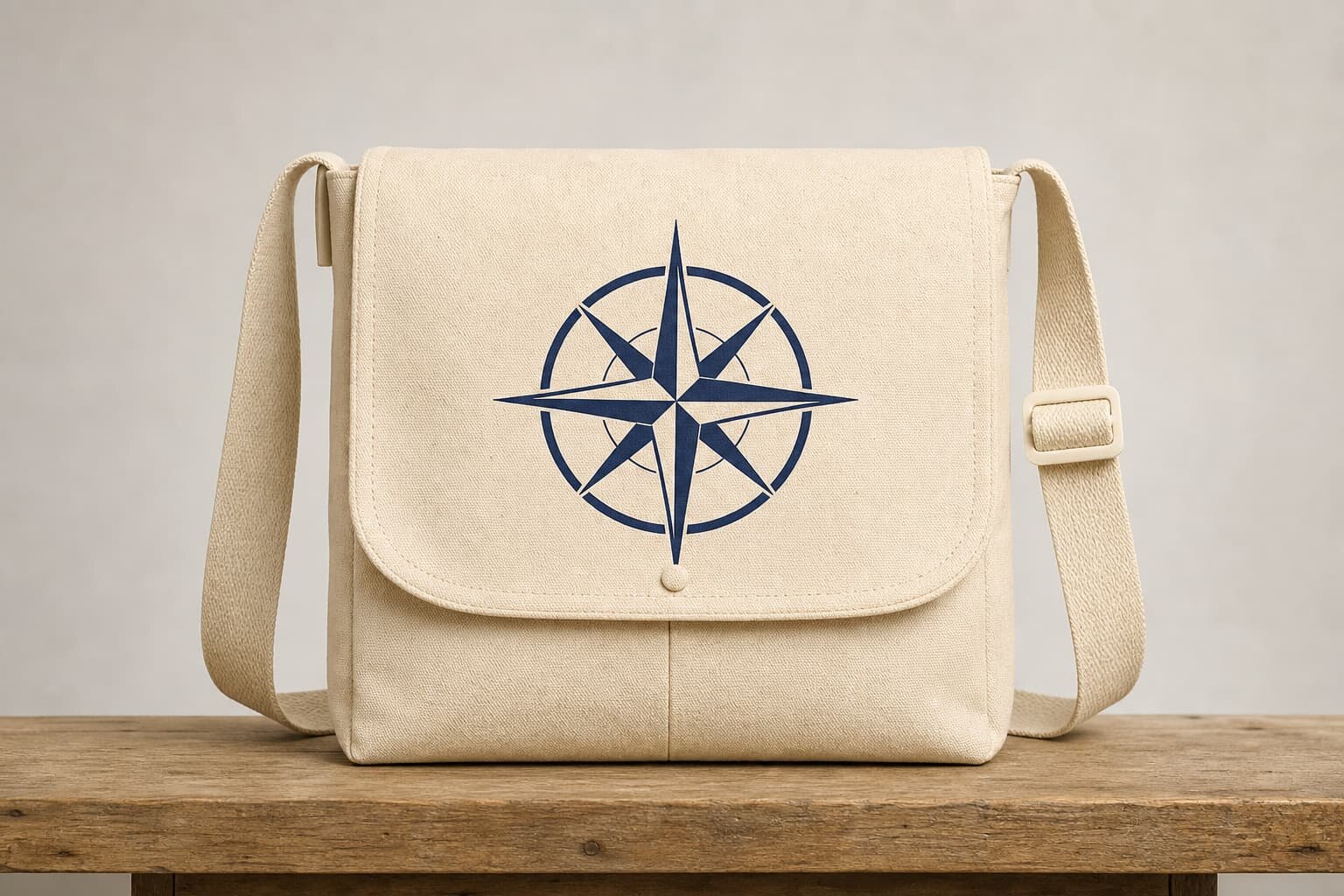
Why MOQ and Lead Time Are Linked
For canvas messenger bags, MOQ is rarely only about how many bags the sewing line wants to make. It is usually connected to fabric purchasing, dyeing minimums, webbing rolls, hardware cartons, print setup, label production, and packing materials. A supplier may be willing to sew 200 bags, but if your design needs a custom dyed 16 oz canvas, a non-standard buckle, and woven labels, the real production MOQ may be much higher.
Lead time works the same way. A factory can sometimes sew a simple natural canvas messenger bag quickly when materials are in stock. But the clock changes when you require lab dips, strike-off prints, custom webbing, embroidery approval, retail barcode labels, or special carton packing. A good RFQ should ask what drives the MOQ and which approval step controls the production schedule. This prevents buyers from comparing one quote based on stock materials against another quote based on fully customized materials.
- Stock natural canvas normally supports lower MOQ than dyed canvas.
- Custom color fabric often needs lab dip approval before bulk fabric production.
- Hardware and webbing may have separate supplier MOQs.
- Print screens, embroidery programs, and woven labels add setup steps.
- Lead time should start from approved pre-production sample, not from first quotation.
Set the Bag Specification Before Asking for MOQ
A messenger bag MOQ question without a complete specification produces unreliable answers. A 36 x 30 cm flat cotton document-style messenger is not the same production job as a 40 x 32 x 10 cm canvas bag with lining, padded laptop sleeve, zipper pocket, metal adjuster, and reinforced strap anchors. Both may be called messenger bags, but their material consumption, labor time, and trim needs are completely different.
Before asking for MOQ, define the structure in buyer language. State finished size, gusset, flap length, closure type, strap width, pocket layout, lining, padding, handle option, and intended load. If the bag is for a retail program, include hangtag, barcode, inner label, and individual packing. If it is for a promotional campaign, specify logo size, carton quantity, and delivery deadline. The more complete the spec, the easier it is for factories to quote honestly instead of protecting themselves with a high MOQ.
- Basic promo style: unlined canvas body, flap, webbing shoulder strap, simple print.
- Retail style: lining, inner pocket, brand label, hangtag, shaped flap, better hardware.
- Laptop style: padded compartment, stronger strap attachment, reinforced bottom, larger carton volume.
- Event style: lower cost fabric, simple closure, fast packing, short delivery window.
Fabric Weight and Canvas Choice Affect Both Cost and Timing
Canvas messenger bags are commonly quoted in ounces or GSM. For practical RFQs, ask the factory to state both where possible. Around 10 oz canvas may work for a light promotional bag, but it can look soft and less structured when the flap is large. Around 12 oz to 16 oz is a common range for better messenger bags because it gives the body more shape and improves perceived value. Heavier canvas can be durable, but it also increases material cost, sewing resistance, carton weight, and sea freight CBM impact.
Natural cotton canvas is usually the easiest option for MOQ and lead time because mills and bag factories often keep it available. Black, navy, olive, or custom Pantone dyed canvas needs more planning. Even if the factory has similar fabric in stock, shade control must be discussed. If your brand color is strict, request a lab dip or fabric swatch approval and include this time in the schedule. If the order is urgent, choosing stock natural, black, or another available shade may reduce risk.
- 10 oz canvas: lower cost, softer body, suitable for light campaigns.
- 12 oz canvas: balanced choice for many branded messenger bags.
- 14 oz to 16 oz canvas: stronger hand feel and better structure, higher weight.
- Washed canvas: softer and more casual, but color and size tolerance need attention.
- Dyed canvas: better brand color control, but higher MOQ and longer approval process.
MOQ Logic: What Buyers Should Ask Suppliers to Separate
A single MOQ number can hide important quote conditions. One supplier may quote 300 pcs because they plan to use stock fabric and stock webbing. Another may quote 1,000 pcs because they assume custom dyed canvas, custom lining, and branded metal hardware. Neither number is useful unless the buyer knows the basis. Ask the factory to separate MOQ by material and process, not only by finished bag quantity.
The most common MOQ drivers are fabric roll quantity, dyeing batch, webbing color, zipper or buckle availability, woven label minimum, print setup, and carton or retail packing material. For a simple canvas messenger bag with a one-color print on stock fabric, MOQ can be much lower than a fully customized retail bag. If you need a test order, ask what can be kept standard to reduce MOQ while preserving the customer-facing brand elements.
- Ask for MOQ using stock canvas and stock trim.
- Ask for MOQ using custom dyed canvas.
- Ask for MOQ when changing only the logo and label.
- Ask for MOQ when changing fabric, webbing, and hardware color.
- Ask for any surcharge or setup fee for quantities below normal MOQ.
Print Method Decisions That Change Approval Time
Most canvas messenger bag logos are placed on the front flap, lower corner, side panel, strap label, or inside pocket. Screen print is a practical choice for solid logos and simple artwork because it is durable and cost-efficient on cotton canvas. However, coarse canvas texture can reduce edge sharpness compared with smooth polyester. If your logo has thin lines, small text, gradients, or multiple colors, ask for a print test or strike-off before approving bulk.
Heat transfer can reproduce detailed artwork, but it may feel less natural on heavy cotton and needs adhesion testing on the exact fabric. Embroidery gives a premium look for small logos, but it can pucker lighter canvas or add cost when the stitch count is high. Woven labels are useful when the artwork is too small for printing. The best RFQ does not simply say printed logo. It states logo size, color count, placement, method preference, Pantone reference, and whether a physical print approval is required.
- Screen print: best for solid brand marks, slogans, and large flap logos.
- Heat transfer: useful for detailed artwork, but test bending and rubbing.
- Embroidery: premium look, best for compact logos and heavier canvas.
- Woven label: clean solution for small branding and repeat retail programs.
- Embossed leather patch: possible for premium styles, but changes trim MOQ.
A Realistic Lead Time Workflow
Messenger bag lead time should be broken into stages. Many delays happen before sewing starts: artwork clarification, fabric approval, trim sourcing, sample making, sample revision, and deposit confirmation. If a buyer only asks for production lead time, the answer may exclude these earlier steps. For import planning, ask for a timeline from RFQ to shipment readiness, not only from bulk cutting to final packing.
A practical workflow includes quotation, artwork proof, material confirmation, sample production, sample review, pre-production sample approval, material purchasing, cutting, printing, sewing, trimming, inspection, packing, and export handover. The schedule is shorter when the factory uses stock canvas and a simple screen print. It is longer when the order requires custom dyed fabric, lab dips, multi-position printing, lining, padding, or special retail packing. Build your purchase order around the slowest approval item.
- Artwork and technical clarification should happen before sampling.
- Sample time is affected by fabric availability and logo process.
- Bulk production should not start before the approved pre-production sample.
- Printing may happen before or after sewing depending on panel layout.
- Final inspection should be scheduled before carton sealing or shipment handover.
Quote Data Needed to Compare Suppliers Fairly
Procurement teams often receive messenger bag quotes that look similar on unit price but are not built on the same assumptions. One quote may include 14 oz canvas, lined interior, individual polybag, and reinforced strap stitching. Another may use 10 oz canvas, no lining, lower stitch density, and bulk packing. If the quote sheet does not show fabric weight, trim type, print method, carton data, and lead time basis, the cheaper price may not be comparable.
Ask suppliers to quote against the same specification and to show exceptions clearly. A useful quote should include bag size, fabric weight and color, lining if any, strap material and width, closure type, logo method, label details, packing method, pcs per carton, carton dimensions, gross weight, sample charge, setup charge, MOQ, production lead time, and validity period. For repeat programs, also ask what cost changes if the order is split across colors or artwork versions.
- Fabric: material composition, oz or GSM, color basis, washed or unwashed.
- Construction: lining, padding, gusset, pocket, closure, strap width, hardware.
- Branding: logo process, color count, size, placement, label and hangtag.
- Packing: individual pack, carton quantity, carton size, gross weight, CBM.
- Commercials: MOQ, sample fee, setup fee, payment terms, lead time basis.
Sample Checks Before Bulk Approval
The pre-production sample is not only for appearance. It is the buyer's reference for bulk production and inspection. Check the sample as if it were a production unit from the final shipment. Measure the finished size, confirm the fabric hand feel, inspect the flap shape, wear the shoulder strap, open and close all hardware, and place expected contents inside the bag. If the bag is advertised for laptop use, check the actual laptop size and weight instead of relying on the product name.
For printed messenger bags, bend the flap and rub the logo after the print has cured. Look at print position when the bag is empty and when it is filled, because flap alignment can shift. For dyed or washed canvas, compare the fabric under consistent lighting and keep an approved swatch. For retail orders, check barcode scanning, hangtag position, label spelling, and carton packing. Any change after sample approval should be documented because even small adjustments can affect MOQ, material ordering, and lead time.
- Measure size and gusset after the sample is fully sewn, not flat fabric panels.
- Check strap length range on both small and tall users if possible.
- Confirm reinforcement at strap anchors and stress points.
- Review logo position after the flap is closed and the bag is filled.
- Keep one signed sample at the factory and one with the buyer or inspector.
Packing and Carton Planning Are Part of the Lead Time
Packing is often treated as an afterthought, but it affects cost, carton volume, inspection speed, and product appearance. A canvas messenger bag with a large printed flap can be damaged by poor folding. If the logo is folded sharply through the center, the print may crease. If the strap hardware presses against the flap, it may leave pressure marks. If bags are packed too tightly, the shape may look distorted when the retailer opens the carton.
Define packing early in the RFQ. Options include individual polybag, recycled polybag, paper band, tissue wrap, hangtag, barcode sticker, master carton only, or inner carton for retail handling. Ask for carton dimensions and gross weight because messenger bags can have higher CBM than small pouches or flat totes. If your shipment is by air, carton volume can change the landed cost. If your shipment is by sea, carton strength and moisture protection matter more.
- Avoid folding directly across the main printed logo where possible.
- Separate metal hardware from printed panels during packing.
- Confirm pcs per carton before calculating freight cost.
- Use desiccant or moisture control where shipping conditions require it.
- Approve shipping marks, barcode labels, and carton layout before packing starts.
Common Mistakes That Create Late Shipments
The most common delay is not sewing capacity; it is incomplete approval. Buyers lose time when artwork files are low resolution, Pantone colors are missing, the sample is approved verbally, or packing marks are sent after production is finished. Factories also lose time when they must wait for decisions on fabric shade, label wording, barcode placement, or carton quantity. These issues are preventable if the RFQ includes decision owners and approval deadlines.
Another mistake is changing the specification after the supplier has purchased materials. A request to increase fabric weight, change webbing color, add an inside zipper pocket, or move the logo can affect cutting, printing, and sewing sequence. For urgent orders, lock the specification early and avoid cosmetic changes after sample approval. If a change is necessary, ask the factory to confirm impact on MOQ, existing material waste, sample revision time, and final shipment date before issuing the updated purchase order.
- Do not compare quotes unless the fabric weight and packing method are the same.
- Do not approve bulk production from digital artwork only when logo quality is critical.
- Do not assume custom dyed fabric has the same lead time as stock natural canvas.
- Do not send retail barcodes after cartons are already packed.
- Do not change strap, closure, or pocket details after material purchasing without a revised timeline.
Specification comparison for buyers
| Spec decision | Recommended option | When it fits | Buyer risk to check |
|---|---|---|---|
| Fabric weight | 12 oz to 16 oz cotton canvas for most promotional and retail messenger bags | Fits branded giveaways, campus bags, light laptop use, and retail lifestyle collections | Too light may collapse after packing; too heavy can raise freight cost and sewing difficulty |
| MOQ planning | 300 to 500 pcs per color for standard canvas and common trims | Works when fabric, webbing, buckle, zipper, and print colors are available from stock | Low MOQ may still carry sample, setup, dyeing, or print screen charges |
| Custom dyed fabric | Use only when brand color accuracy is critical and order volume supports it | Best for retail brands, licensed programs, or seasonal assortments with strict Pantone control | Dye lot MOQ, lab dip approval, and extra lead time can be larger than the bag MOQ |
| Print method | Screen print for solid logos; heat transfer for detailed graphics; embroidery for premium small logos | Screen print suits most canvas flaps and pocket panels with moderate artwork detail | Print area over seams, rough canvas texture, and dark fabric can change final logo sharpness |
| Structure | Flap messenger with inner pocket and adjustable webbing shoulder strap | Good balance of cost, function, and buyer familiarity | Adding padding, laptop sleeve, metal hardware, or lining increases material MOQ and sewing time |
| Packing | Individual polybag or paper band plus export carton based on retail need | Polybag protects during sea shipment; paper band fits plastic-reduction programs | Carton size affects CBM; over-compressed packing can crease flap and distort printed logo |
| Lead time basis | Count from approved pre-production sample and deposit, not from first email | Gives importer and factory a clear production clock | Artwork changes, color approvals, and missing shipping marks can quietly delay production |
Buyer checklist before sampling
- Confirm bag size, gusset, flap shape, strap width, closure type, inner pocket layout, and whether the bag must hold a laptop, documents, or retail goods.
- Specify canvas fabric weight in oz or GSM, fabric color, washed or unwashed finish, and acceptable tolerance for shrinkage, color shade, and hand feel.
- Send vector artwork with logo size, placement, Pantone references, print method preference, and clear limits for print over seams or folds.
- Ask whether MOQ is driven by fabric, dyeing, webbing, hardware, lining, zipper, print setup, or final packing instead of accepting one simple MOQ number.
- Request a quotation that separates sample cost, mold or screen cost, unit price, carton packing, export carton dimensions, estimated gross weight, and production lead time.
- Approve a physical pre-production sample before bulk cutting, especially when the order includes dyed canvas, custom webbing, metal fittings, embroidery, or laptop padding.
- Check carton packing method, bag folding direction, polybag thickness or paper band size, desiccant use, shipping marks, and whether retail barcodes are applied by the factory.
- Define inspection criteria for size tolerance, stitching strength, print position, color difference, strap pull strength, hardware function, carton count, and acceptable defect level.
Factory quote questions to send
- What is the MOQ for this messenger bag if we use stock natural canvas, and what changes if we require dyed canvas matched to Pantone?
- Which material or trim is the main MOQ driver: canvas fabric, webbing, buckle, zipper, lining, label, print screen, or carton packing?
- What fabric weight do you recommend for this size, and can you quote both 12 oz and 16 oz canvas with estimated weight per carton?
- Can the logo be printed clearly on the flap fabric, and do you see any risk from seam position, canvas texture, or dark fabric color?
- How many days do you need for artwork proof, sample making, sample revision, material purchasing, bulk sewing, packing, and final inspection?
- Does the lead time start after deposit, after artwork confirmation, or after signed pre-production sample approval?
- What are the carton dimensions, pcs per carton, gross weight, net weight, and estimated CBM for the proposed packing method?
- Which parts can be changed without affecting MOQ, and which changes require new material purchasing or longer lead time?
- Can you provide photos or video of the pre-production sample showing logo placement, stitching, inside pocket, strap hardware, and carton packing?
- What tolerances do you recommend for size, color shade, print position, and sewing alignment for this messenger bag style?
Quality-control points to confirm
- Measure finished width, height, gusset, flap length, strap length, and pocket size against approved sample with agreed tolerance.
- Check fabric weight by supplier declaration and spot weighing where practical, especially when comparing quotes across factories.
- Review canvas defects such as slubs, oil marks, weaving holes, uneven dyeing, heavy creasing, and shade variation between panels.
- Test print adhesion with rubbing, tape pull, and bending on the same canvas surface used for production.
- Check stitch density, skipped stitches, loose threads, back-tacking at stress points, and reinforcement at strap attachment points.
- Pull-test shoulder strap seams and hardware loops by practical handling force appropriate for the intended load.
- Open and close buckles, snaps, zippers, magnetic buttons, or hook-and-loop closures repeatedly to check function and alignment.
- Confirm label position, care label content if required, barcode accuracy, polybag warning text, carton marks, and carton quantity.
- Inspect folded packing to ensure the logo is not sharply creased and the flap returns to shape after unpacking.
- Record defects by severity before shipment so rework decisions are made before goods leave the factory.