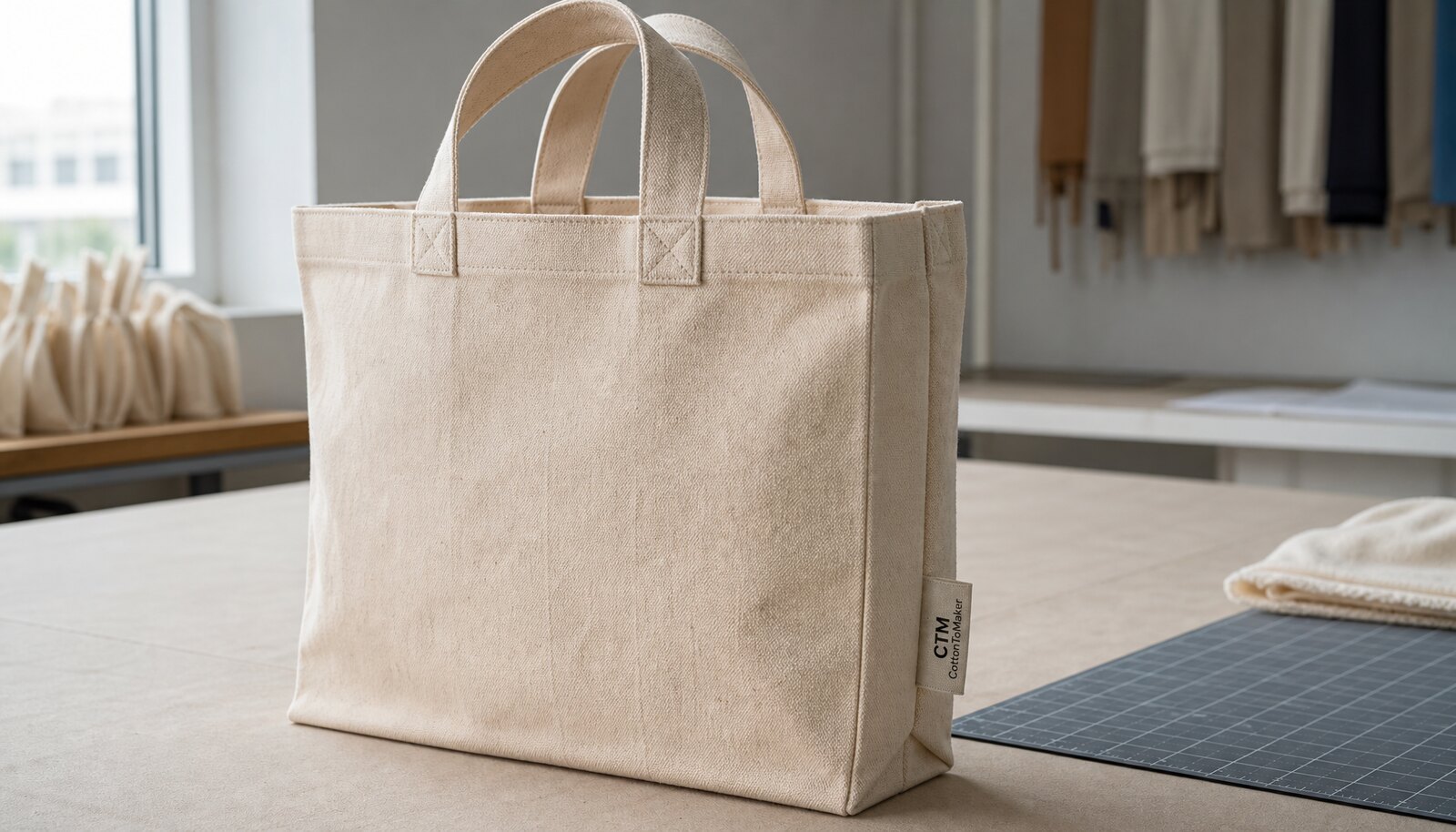
1. Start with the winery use case, not the artwork
For boutique wineries, the right tote material depends on where the bag will live in the customer journey. A tasting-room giveaway has different requirements from a retail shelf item, and both are different again from a bottle carrier used for take-home sales. If the bag is mainly there to hold brochures, a tasting card, and a small purchase, a softer tote in the 170-190 gsm range can be appropriate. If it will carry a bottle, a gift set, or stacked merchandise, the specification needs more structure, better reinforcement, and a more controlled fabric surface. Buyers often start by approving the logo and only later discover that the bag is too thin, too floppy, or too opaque for the use case. That sequence creates avoidable rework because the material and construction determine the commercial value of the bag more than the artwork does.
For winery programs, it helps to split the business use case into four common channels. First is tasting-room merchandising, where the tote needs to look presentable, fold well, and support a modest purchase. Second is event giveaway use, where cost, pack density, and distribution volume matter more than premium feel. Third is retail resale, where shelf appearance, print consistency, and opacity become more important because the bag is part of the brand offer. Fourth is bottle carry, where the bag becomes a load-bearing item and needs a heavier cloth, stronger handles, and better bottom support. The same design can sometimes serve two of these channels, but the spec should be written for the most demanding one so the bag does not fail when used outside the easiest scenario.
The best way to avoid a vague quote is to describe the bag as a function, not as a style. Instead of asking for a generic tote, say whether the customer will carry one bottle, two bottles, or a mixed retail set; whether the tote needs to stand upright on a counter; whether it should fold flat into a drawer or retail pouch; and whether the winery wants the bag to feel rustic, premium, or understated. Those choices change the material route. A flat tote may work for printed collateral and light purchases, but a gusseted tote or a boxed-bottom build is more appropriate when the bag must support weight and still look orderly on a shelf or in a tasting room display.
A useful internal rule is that if the tote is meant to be remembered as part of the brand experience, it should feel stable in the hand and hold its shape when placed on a table. If it is only a functional handout, then pack efficiency and unit cost can matter more. The procurement point is not to over-engineer every order; it is to match cloth weight, construction, and decoration to the real channel so the quote reflects the right commercial outcome.
- Tasting-room handout: lighter fabric, simple print, lower freight volume.
- Retail resale: cleaner surface, stronger structure, better opacity, tighter QC.
- Bottle carry: heavier fabric, gusset, reinforced handles, and load testing.
- Event giveaway: optimize unit cost, carton density, and fast production rather than premium detailing.
2. Choose fabric weight as a performance decision, not a marketing number
Fabric weight is the first material choice that affects cost, look, and performance all at once. For organic cotton totes, the common mistake is to treat GSM as a vague quality label rather than a measurable build parameter. A bag around 150-170 gsm is usually light, packable, and cost-conscious, but it can show contents, lose shape faster, and feel too soft for premium retail use. The 170-190 gsm range often works as a balanced middle ground for branded boutique winery totes when the bag is not expected to carry a heavy bottle. A heavier 240-280 gsm bag brings more body, hides the contents better, and usually supports stronger handle reinforcement, while 300 gsm and above starts to move the product into a more premium or utility-driven category. The higher the weight, the more the buyer should expect changes in sewing time, material usage, carton weight, and freight cost.
That said, GSM alone is not enough to compare quotes. Two suppliers can quote the same weight while delivering very different results because one uses a tighter weave, a different yarn count, or a finishing process that changes hand feel and shrink behavior. A compact weave in the midweight range can often perform better than a heavier but looser cloth because it prints more cleanly and distorts less at the seams. If your winery brand wants a refined retail presentation, ask for fabric samples side by side under the same lighting. Look at opacity, drape, seam behavior, and whether the cloth shows lint or slubs that might be acceptable in a rustic program but not in a polished tasting-room display. Buyers should also ask whether the quoted GSM is taken on finished fabric after finishing or on greige material before finishing. That one point can change the comparison by enough to mislead a price review.
A practical rule for boutique winery programs is to set the fabric weight after you decide whether the bag is promotional or load-bearing. If the bag is a retail handout that may only hold a menu or a small sale item, a midweight cloth can keep the item affordable and easier to stock. If the bag may be reused as a bottle carrier or gift bag, moving up in weight is usually the safer commercial choice because it reduces the chance of customer complaints about stretching or bag collapse. The important buying insight is that heavier cloth is not automatically better; it is only better if the use case needs the extra structure and you are willing to pay for the extra sewing and freight impact.
When comparing proposals, look for specificity rather than broad promises. A serious supplier should be able to give you fabric weight tolerance, shrinkage expectation, and whether the material is pre-shrunk or calendered. If the quote only says ‘organic cotton tote, premium quality,’ the supplier is not giving you enough information to assess risk. For procurement teams, that vagueness matters more than a slightly lower unit price because the hidden cost often shows up later in print issues, inconsistent dimensions, or a bag that no longer matches the approved sample.
- 150-170 gsm: light hand, lower cost, best for giveaway use and flat carry.
- 170-190 gsm: balanced choice for many tasting-room and retail programs.
- 240-280 gsm: stronger structure and better opacity for heavier use.
- 300+ gsm: premium feel, but check stiffness, stitching load, and freight weight.
- Ask whether gsm is measured on finished fabric and whether the cloth is pre-shrunk.
3. Define the weave and finish so the bag prints and sews the way you expect
The weave matters because it changes both production reliability and the final retail look. For wholesale organic cotton totes for boutique wineries, plain weave is usually the safest starting point. It gives a stable surface for screen print, sews consistently, and tends to produce fewer surprises during cutting and handle attachment. Light canvas can add a slightly more premium appearance and a bit more body, but it also changes the fabric face enough that the printed logo may look softer. Twill can feel richer in hand and may suit a more elevated merchandise line, but it introduces a diagonal texture that can affect print edges and can make the bag look more decorative than promotional. The buyer decision should be driven by brand tone and production stability, not just by the word ‘premium’ on a sample card.
Finish is equally important. Unbleached natural cotton fits many boutique winery brands because it reads as earthy, understated, and compatible with sustainability positioning. It can also hide small fiber flecks and shade variation better than bright white cloth. But natural shade variation must be accepted deliberately; otherwise, a buyer can end up treating a normal feature as a defect. If the bag is intended for a more polished shelf display, ask whether the fabric is calendared or otherwise finished to reduce surface fuzz and improve print clarity. If the tote is meant to feel rustic or artisanal, a softer and more open hand may be acceptable, but the print method and artwork should be chosen accordingly.
The most useful sourcing question here is not ‘is the fabric organic?’ but ‘what exactly is the fabric route?’ Ask the supplier to identify the cotton source, the yarn stage, the weave, and whether the cloth is segregated from conventional material through cutting and sewing. If you need organic claim support, documentation should not be an afterthought. Buyers should request the document set up front and confirm whether the factory can match those records to the finished lot. A bag can be made from organic cotton and still create a compliance problem if the paperwork trail is incomplete or the fabric is mixed in a way that does not support the claim your customer or importer expects.
For winery procurement, it is also worth asking for visual references under standard lighting, not just studio photos. Texture, speckling, and cloth body look different in real light, and those differences matter more in a retail environment than they do on a spec sheet. A good supplier should be able to explain whether the weave is chosen to improve print results, conceal contents, or create a more artisanal visual finish. If they cannot explain that tradeoff, they may be quoting a standard stock bag rather than a tote purpose-built for your channel.
- Plain weave is the most reliable default for custom winery totes.
- Twill can look more premium but changes texture and print behavior.
- Natural cotton works well for earthy branding, but shade variation must be accepted in writing.
- Request the exact fabric route, not just the words ‘organic cotton’.
4. Build the structure around handles, gussets, and load points
Handle design is where many tote orders win or lose in real use. A clean-looking tote can still fail if the handles stretch, twist, or tear at the anchor. Self-fabric handles are often preferred for organic cotton programs because they keep the appearance fully natural and can look more cohesive on shelf. They are also a practical choice when the winery wants a soft, minimal look. The tradeoff is that self-fabric handles usually need stronger reinforcement to support weight. Cotton webbing handles, by contrast, often give better carry comfort and resist stretch more effectively, but they can change the visual tone of the bag and make it feel less like a single-material product. The right answer depends on whether the tote is mostly a brand object or a carry object.
For bottle or gift-set use, gusset depth and bottom construction are just as important as the handles. A tote without enough gusset depth may look fine when empty but become difficult to load once bottles or boxed items are added. A boxed bottom or a structured base insert can improve stability and help the bag stand upright in a tasting room or at retail. If the bag needs to hold one bottle, the load point often shifts to the bottom corners and handle anchors the moment the customer lifts it. That means the buyer should not only ask whether the handles are strong, but whether the entire bag shape supports the way the customer will actually lift and carry the item. For some winery programs, a slightly wider body and a moderate gusset will outperform a tall skinny silhouette simply because the load sits more naturally in the hand.
Reinforcement should be specified in the quotation and sample stage, not left to the factory’s standard practice. Ask the supplier to state the stitch pattern at the handle anchors, whether they use box-X, bar tacks, or multi-row topstitching, and how many rows or passes are used. Ask for the finished seam allowance, because narrow allowances can look tidy but provide less margin under load. If the bag may carry glass, ask how the factory tests the handle area and whether it has a load or pull test standard for this category. A procurement team does not need a laboratory report for every purchase order, but it does need enough detail to know the factory understands the failure points and is not guessing.
One practical distinction is between cosmetic structure and functional structure. A tote that stands neatly on a shelf can still fail when filled if the seam at the bottom opens or the handle anchor pulls loose. Conversely, a strong tote may look slightly softer empty but perform well and last longer. For boutique wineries, that difference matters because customer perception is shaped by both the first impression and the post-purchase reuse. If the tote becomes a daily carry item, weak reinforcement becomes a brand defect long after the sale is closed.
- Self-fabric handles suit a fully natural look but need stronger reinforcement.
- Webbing handles generally improve carry comfort and reduce stretch.
- Use gussets or a boxed bottom for bottle carry or retail merchandise.
- Specify the reinforcement stitch pattern and seam allowance in the quote.
5. Match the decoration method to logo size, surface texture, and retail position
Decoration should follow the artwork and channel, not habit. For most boutique winery totes, water-based screen print remains the most practical option when the logo is medium to large and the design is simple. It gives good visibility, reasonable cost control, and works well on natural cotton when the fabric surface is sufficiently compact. Screen print also scales well for wholesale orders because setup cost is usually easier to manage across larger quantities. If the logo is small, delicate, or intended to feel quiet and premium, a woven label or side label may be better than forcing a print that will lose detail on a textured cloth. Embroidery can also work for a premium accent, but buyers should use it selectively because it can pucker lighter fabrics and change the drape of the tote.
The main decoration risk is not just color count. A one-color print can still fail if the artwork sits too close to a seam, if the print area is too large for the fabric, or if the fabric texture breaks up the ink edge. Multi-color graphics can be acceptable when the weave is compact and the design is built with enough line weight and registration margin. Buyers should ask the factory what minimum line width they can hold cleanly, what their registration tolerance is, and whether the print proof is made on final fabric or on a substitute sample. If the tote will be sold at retail, it is worth asking how the print wears after folding and light abrasion, because a logo that cracks quickly makes the product look older before its time.
A useful rule is to choose the decoration method based on distance and detail. If the tote needs to be recognized from across a tasting room or retail shelf, screen print usually gives the clearest read. If the bag is being merchandised as a premium gift, small woven labels or restrained embroidery may fit the brand better. The more textured the fabric, the more you should favor bold graphics or simple marks. On a looser cloth, fine type and thin lines can disappear or look uneven. In procurement terms, the artwork should be judged against the fabric, not in isolation on a screen.
Buyers should also consider decoration placement as part of the retail decision. A centered front print is the easiest to produce consistently, but a side label or subtle lower-corner mark may be a better fit for premium winery branding. If the tote is meant to be reused by the customer, remember that repeated folding shifts the way the decoration is seen over time. A print that looks fine in a flat sample may be partially hidden once the tote is folded and carried. Ask for a folded presentation photo or a production-style mockup so you can judge the real retail impression before approval.
- Large simple logo: screen print is usually the best default.
- Small premium mark: woven label, side label, or restrained embroidery may work better.
- Demand minimum line-width and registration guidance for detailed artwork.
- Check print appearance both flat and folded.
6. Read supplier quotes as technical documents, not just price sheets
A useful quote should let you compare suppliers on the same basis. If one factory bundles fabric, sewing, print, and packing into a single figure while another itemizes every step, the comparison is already distorted. For a boutique winery program, the quote should show fabric type and weight, weave, handle style, reinforcement detail, decoration method, packing method, and whether freight or export carton assumptions are included. If the supplier is quoting stock fabric, say so. If they are sourcing custom-woven cloth, that should be clearly stated because it affects MOQ, lead time, and color consistency. The cheapest quote is not the best quote if it hides the differences that matter to your merchandising and compliance team.
MOQ logic should also be discussed more precisely than ‘higher for custom, lower for stock.’ MOQ tends to rise when you change more than one variable at once. A custom size, a custom color, multi-color print, custom label, and retail packing can each add complexity, but the biggest jump often comes from fabric sourcing and line changeovers. If you want multiple winery SKUs, it is usually more efficient to hold the base bag constant and vary only the decoration or label. That gives the factory a repeatable sewing process and lets procurement compare options without requalifying the entire build. A practical buyer should ask whether MOQ is set by size, color, decoration version, or total order value, because those are not interchangeable. If the supplier cannot state this clearly, the quote is too vague to be useful.
Lead time should be broken into sourcing, sampling, production, inspection, and shipping rather than given as one flat number. For example, a supplier may have a fast sample cycle but a slower fabric reservation process. Another may have stock cloth but a longer decoration queue. The risk is especially high in winery programs that are tied to events, gifting seasons, or retail launch dates. A slightly cheaper bag that lands after your selling window can cost more than a higher-price option that arrives on time. Buyers should ask what events most commonly push out the schedule: fabric delays, print approval, line congestion, carton confirmation, or documentation. That is a more useful commercial question than asking for a simple best-case lead time.
When comparing quotations, avoid the trap of asking only for a unit price. Ask for a normalized landed-cost view that includes carton density, gross weight, and any retail packing. A heavy tote may cost more to sew but be better suited to your brand story and resale economics. A light tote may look attractive on paper but become expensive if it needs additional protection or causes reject rates to rise. The right comparison is the one that shows how the product will actually move through your channel, not just how much fabric was purchased at the mill.
- Ask for separate line items for fabric, sewing, print, label, packing, and freight assumptions.
- Confirm whether MOQ is tied to size, color, decoration version, or order value.
- Request a lead-time breakdown by sourcing, sample approval, production, inspection, and shipping.
- Compare landed cost and carton density, not just unit price.
7. Use samples to verify the production route and catch the hidden risks
A sample is only useful if it reflects the production method you will actually buy. A showroom sample made from different cloth, different thread, or a different print setup can look impressive and still fail to represent the order. For a boutique winery tote, ask for a pre-production sample that uses the final fabric weight, the final weave, the correct handle style, the intended reinforcement pattern, and the actual decoration method. If the order will include retail packing, the sample should also show the final fold and pack style. This is especially important for natural cotton bags, because the hand feel and visual finish can change materially when the fabric is printed, washed, or folded for bulk packing.
The sample approval process should be tied to measurable checks. Measure the width, height, and gusset against the approved spec. Check the handle length and the symmetry of the handle placement. Open the bag and inspect inside seams, top hems, corner construction, and stitch consistency. Pull on the handles with realistic force and pay attention to any seam opening, thread distortion, or anchor stretch. If the bag is intended for bottles, test it with the actual item weight and confirm that the bag does not tilt, warp, or deform in a way that would affect presentation or safety. The important point is not to create an academic lab exercise; it is to replicate the customer use case well enough to expose the weak points before bulk production starts.
Buyers should also look at the sample from a merchandising angle. Does the tote stand upright enough for shelf display or tasting-room display? Does it fold into a shape that feels premium or messy? If there is a print, is the artwork centered and visible when the bag is folded the way it will be handed to a customer? For winery programs, the bag often becomes part of the gift moment, so presentation matters more than buyers sometimes expect. A tote that works technically but looks awkward at the point of handoff may weaken the perceived value of the purchase.
If possible, ask for a production-style sample set rather than a single hand-finished piece. One sample can hide variation; two or three from different positions in the cutting and sewing process are more informative. That does not mean you need to overcomplicate approvals. It means you should use the sample stage to verify the exact route, avoid ambiguous substitutions, and prevent the factory from building the order around a sample that was never meant to be the real production standard.
- Approve a sample made from the same fabric, trim, and print method as production.
- Measure finished size, handle placement, and gusset depth directly on the sample.
- Load-test bottle carriers with the actual intended weight.
- Review folded presentation as part of the approval, not only flat appearance.
8. Set QC standards that reflect real manufacturing failure points
Quality control for organic cotton totes should be specific enough that a factory can inspect against it without interpretation. The most important checks are fabric weight, size, stitch quality, handle reinforcement, print performance, shrinkage, and carton condition. A general tolerance like ‘good quality’ is too vague to manage. Buyers should state what is a pass, what is a rework item, and what is a reject. For example, a small size variance may be acceptable if it does not affect function, while loose handle stitching, visible skipped stitches, or a misregistered print may be non-negotiable. If the bag will be sold at retail, cosmetic consistency matters more than it would for a free giveaway, because the customer compares bags across the same carton or display.
A more useful QC workflow starts before production and continues through shipment. In pre-production, confirm the fabric lot, the print artwork, the handle cut length, and the reinforcement pattern. During production, inspect a start sample, a mid-run sample, and an end-run sample so you do not only see the best pieces from the beginning of the line. For larger orders, use an AQL-based inspection plan and write the inspection level into the purchase order. That gives both sides a shared reference for how many units will be checked and what defect class counts as a failure. It also prevents the common problem where a buyer expects one standard and the factory assumes another.
The most practical pass/fail rules are tied to function. A handle anchor with skipped stitches, a seam that opens under normal pull, or a print that cracks with light abrasion should fail regardless of how the bag looks from a distance. For bottle-carry programs, the bag should be tested with the intended load because visual inspection alone will not catch a handle that stretches too much or a bottom seam that distorts under weight. For natural cotton, shade and fiber fleck variation may be acceptable if they are consistent with the approved standard, but stains, oil marks, or off-tone lots should be rejected. A winery tote should look clean enough to support the brand story even if the material itself is intentionally rustic.
A supplier that is serious about QC should be able to tell you their inspection method, the stitch density range they use, and how they verify print cure or adhesion. They should also tell you whether final carton checks include count verification, dryness, and mark accuracy. Those details matter because a bag can be well made and still arrive in a condition that hurts resale or event presentation. Good QC is not about creating more paperwork than the order requires; it is about setting the few controls that prevent the most costly failures.
- Write pass/fail criteria for size, stitch integrity, print quality, shrinkage, and carton condition.
- Inspect start, middle, and end of the run; do not rely only on pre-production approval.
- Use AQL-based inspection for larger orders and state the level in the PO.
- Treat bottle-carry bags as load-bearing items and test them accordingly.
9. Verify organic sourcing and documentation before you finalize the PO
Organic cotton sourcing is most useful to procurement when it is documented clearly enough to support the claim you need to make. That means asking not only for a statement that the cotton is organic, but for the paperwork trail that connects fiber, yarn, fabric, cutting, sewing, and final shipment. If the factory cannot explain how the material is segregated from conventional cotton, or if it cannot show you how the finished lot is tied back to the source lot, the claim becomes harder to defend. For a boutique winery, that matters because the tote may sit alongside other branded merchandise, retailer requirements, or import documentation that expects the claim to be clear and supportable.
A practical verification workflow starts with the supplier’s document set. Ask what certificates, transaction records, production logs, or chain-of-custody documents they normally provide for an organic cotton order. Then check whether the documents cover the full supply chain or only the final bag. If the supplier is using a trading layer, ask who owns each document and who is responsible for correction if there is a gap. Buyers should also confirm whether embellishments, labels, or trims are consistent with the claim position and whether any non-organic components create a disclosure issue in your market. The point is not to overlawyer the tote; it is to prevent a small sourcing omission from creating a commercial problem later.
For procurement teams, the most useful supplier question is this: ‘If I audit this order later, what would I need to see to prove the material route?’ A strong supplier can answer with a document list and a clear workflow. That list usually includes proof of organic input, fabric or yarn lot reference, production record, packing list with batch identification, and any claim-supporting certificate or transaction statement relevant to your market. If the factory uses segregated production, ask how it prevents mix-ups in the cutting room and what labeling is used to keep lots distinct through sewing and packing. That kind of detail tells you whether the organic claim is operationally managed or only verbally asserted.
This step is often where buyers discover the real difference between a bag supplier and a bag source partner. A supplier who can support documentation, lot control, and claim accuracy is more likely to be dependable on repeat orders. A supplier who only answers with general assurances may still produce a usable tote, but the compliance burden shifts back to your team. For a winery brand, especially one selling through multiple channels, that is usually not worth the risk.
- Ask for the full document trail, not only a statement that the cotton is organic.
- Confirm how the factory segregates organic and conventional material during cutting and sewing.
- Request batch or lot identification on packing records for traceability.
- Check whether labels, trims, and packaging align with the claim you intend to make.
10. Compare landed cost by use case, not by supplier label
Once the spec is clear, compare the offer as a channel decision rather than a supplier beauty contest. A direct factory may give you tighter control over fabric, sewing, and documentation, while a trading company may offer sourcing flexibility or easier communication. The right choice depends on how much control you need versus how much complexity you are willing to manage. For boutique winery totes, the product is often simple enough that control matters more than breadth. If you are placing recurring orders for tasting-room merchandising or retail resale, you usually want the least number of handoffs that still gives you the documentation and lead time you need.
Landed cost should include the obvious and the hidden. Obvious costs are fabric, sewing, print, labels, and packing. Hidden costs include freight volume, carton weight, sample rework, inspection time, and the risk of inconsistent quality. A heavier bag costs more to move, but it may support a better customer experience and lower the chance of returns or brand damage. A lighter bag may be appropriate for event handouts, but it can become expensive if it fails early or looks too thin at retail. Procurement should therefore map each supplier quote to a real use case: tasting-room handoff, event giveaway, bottle carry, or shelf resale. That is the only way to know whether a quote is genuinely competitive.
It is also worth comparing suppliers on the operational questions that affect repeat buying. Who can hold the same shade and fabric route on a reorder? Who keeps the same stitch standard across different production months? Who can supply a sample from the same line rather than a separate sample room? These questions matter because boutique winery programs often need continuity across seasonal releases or repeat retail restocks. A supplier who can hold the same build over time may be more valuable than a slightly cheaper option that changes fabric lots or decoration results from order to order.
The most reliable buying approach is to keep the base bag spec stable and change only the channel-specific details. If one winery location needs a bottle carrier and another needs a tasting-room gift tote, treat those as two programs built from a common sourcing framework rather than as unrelated products. That lets procurement control quality, documents, and vendor performance more effectively. It also makes the supplier easier to evaluate because each quote can be compared against a consistent technical standard instead of a loose request for a ‘nice organic tote.’
- Compare landed cost by use case: giveaway, retail, bottle carry, or merchandise bundle.
- Count freight volume, carton weight, inspection effort, and rework risk as part of cost.
- Favor suppliers that can repeat the same fabric route and stitch standard on reorder.
- Keep the base spec stable and vary only the channel-specific details.
Specification comparison for buyers
| Decision area | Options to compare | Buyer tradeoff | What to verify in the quote |
|---|---|---|---|
| Fabric weight | 150-170 gsm, 170-190 gsm, 240-280 gsm, 300+ gsm | Lower weights reduce cost and freight; higher weights improve opacity, structure, and bottle carry | Whether gsm is measured on finished fabric or greige fabric; allowed tolerance; shrinkage after finishing |
| Weave | Plain weave, light canvas, twill, brushed/unfinished surface | Plain weave is usually the safest for print and sewing; twill looks more premium but changes texture and cost | Exact weave construction, yarn count if available, and whether the fabric is calendared or pre-shrunk |
| Bag form | Flat tote, gusseted tote, boxed-bottom tote, bottle carrier with dividers | Flat totes suit brochures and giveaways; gusseted or boxed-bottom bags are better for merchandise and bottles | Finished dimensions, gusset depth, bottom reinforcement, and whether the bag stands upright |
| Handle style | Self-fabric handles, cotton webbing handles, long shoulder drop, short hand-carry handles | Self-fabric supports a fully natural look; webbing usually improves comfort and load support | Handle width, finished length, attachment method, reinforcement stitch pattern, and carry load target |
| Decoration | Water-based screen print, one-color or multi-color print, woven label, embroidery, heat transfer | Screen print is best for most winery logos; embroidery and labels suit premium accents but can distort lighter bags | Minimum line width, color registration tolerance, print cure method, and whether decoration is on the final fabric |
| Closure/insert options | Open top, snap closure, inner slip pocket, bottle sleeve insert, cardboard base insert | Adds merchandising value and utility, but each add-on increases MOQs, labor, and QC points | Whether hardware is nickel-free or brand-approved, and whether inserts are separate SKUs or included in the bag build |
| Supplier type | Direct factory, vertically integrated factory, trading company with audited factory partner | Direct control usually improves consistency; trading can help with sourcing breadth but may hide accountability gaps | Who owns fabric procurement, who issues production records, and who signs off on QC findings |
| Packing route | Flat-packed bulk carton, retail-folded, individual polybag, paper band, moisture-protected bulk | Bulk packing reduces cost; retail presentation can protect appearance but adds labor and waste | Pieces per carton, carton size and weight, moisture protection, carton marks, and whether retail packing is included |
Buyer checklist before sampling
- Define the winery use case first: tasting-room gift, event giveaway, retail resale, bottle carry, or merchandise bundle.
- Lock the fabric weight, weave, and finished dimensions before discussing decoration.
- State whether organic cotton claims need supporting paperwork, and list the exact documents required.
- Specify handle length, handle width, reinforcement pattern, and target carry load.
- Choose print, woven label, or embroidery based on logo size, artwork detail, and retail positioning.
- Ask for a pre-production sample made from the same fabric, trim, and decoration method as mass production.
- Set measurable QC tolerances for fabric weight, size, stitch quality, print quality, and shrinkage.
- Confirm packing format, carton count, carton dimensions, and whether retail-ready packing is needed.
- Request lead time broken into sampling, material sourcing, production, inspection, and shipment.
- Compare landed cost, not only factory price, across at least two suppliers using the same spec sheet.
Factory quote questions to send
- What exact fabric weight are you quoting, and is the gsm measured before or after finishing and washing?
- Can you confirm the cotton is organic and tell me what documentation you can provide for chain-of-custody or claim support?
- Is the fabric plain weave, twill, or canvas, and is it pre-shrunk, calendared, or otherwise finished?
- What handle style, handle width, and reinforcement stitch pattern are included in the price?
- What is the MOQ by size, color, decoration method, and packing format?
- Will the sample use the same cloth, same sewing line, and same print or label method as production?
- What is your expected seam allowance, top hem detail, and stitch density at the handle anchors?
- How will you test print adhesion, seam strength, and load performance before shipment?
- How are the bags packed, how many pieces per carton, and what is the estimated carton volume and gross weight?
- Which step is most likely to extend lead time: fabric procurement, printing, sewing, inspection, or documentation?
Quality-control points to confirm
- Fabric weight should match the approved spec within a written tolerance, commonly about +/-5%, with the same tolerance method used by all suppliers.
- Finished dimensions should be measured after production folding and packing, not only on a flat sample board; set tolerance by key dimension, such as +/-0.5 cm to +/-1.0 cm depending on size and construction.
- Handle attachment should use a defined reinforcement pattern such as box-X, bar tack, or double topstitch; specify a minimum stitch density for the reinforcement zone and reject skipped stitches or loose ends.
- Seams should be checked for straightness, seam allowance consistency, and no puckering at stress points; define whether three or more skipped stitches in a seam is a fail or a rework item.
- For bottle-carry or heavier totes, test a loaded sample with the intended weight and hold time; if the bag distorts, tears, or handle anchors open, the sample should fail.
- Print should be centered within the agreed artwork tolerance, cured properly, and resistant to light rub; define a simple rub test and reject cracking, bleeding, or offset.
- Natural cotton shade variation should be acceptable only within the approved visual standard; reject major lot-to-lot color shifts, prominent stains, or oil marks.
- If shrinkage matters, test a representative sample after the agreed wash or humidity exposure; specify the maximum percent change allowed in width, height, and gusset.
- Cartons should arrive dry, clean, correctly labeled, and free from crushed corners or mixed lots; define carton count variance and seal integrity expectations.
- Use an AQL-based inspection plan for bulk orders and state the inspection level in the PO so the factory knows whether you expect visual inspection only or formal lot sampling.