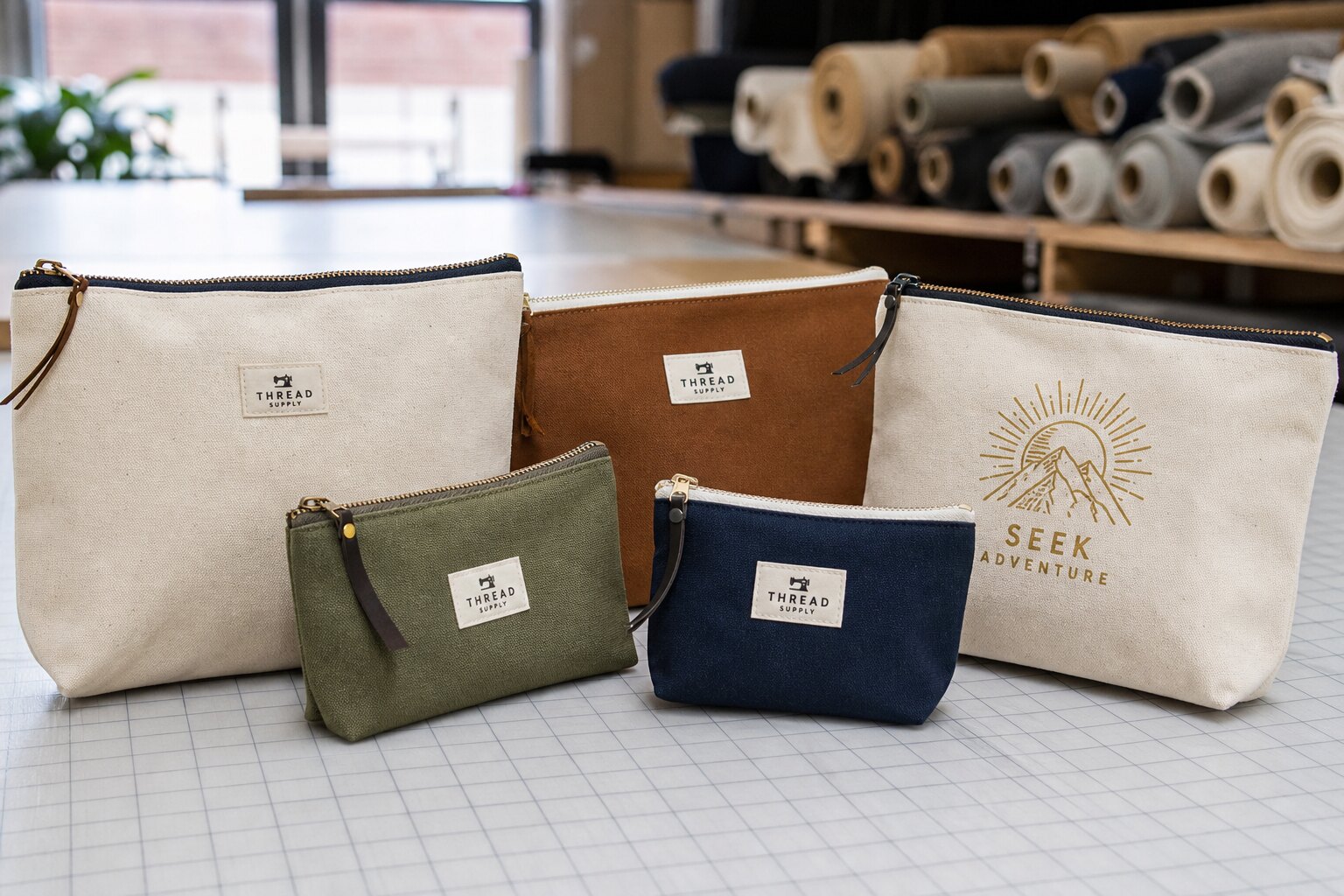
Why Supplier Evaluation Matters for Logo Zipper Pouches
A logo zipper pouch looks simple, but small production issues are easy to notice in bulk: crooked zippers, uneven logo position, weak seams, color variation, or poor packing that creases the pouch before it reaches retail or a promotional event.
For procurement teams and importers, the main buying problem is not finding a factory that can make a pouch. The real task is confirming whether the supplier can repeat the approved sample across hundreds or thousands of units with stable quality and clear communication.
- Focus on production control, not only catalog photos
- Check whether the supplier understands tolerance, packing, and inspection requirements
- Ask for actual production references or similar finished samples
- Confirm which details are controlled in-house and which are outsourced
Define the Pouch Use Case Before Comparing Suppliers
A cosmetic pouch, document pouch, amenity pouch, retail gift pouch, and business accessory pouch may use the same zipper structure, but the quality priorities are different. A good supplier should ask about use case before quoting.
If the pouch will be sold in retail, appearance consistency and packaging become more important. If it is used for events or kits, delivery timing, logo clarity, and carton packing efficiency may be the bigger concern.
- Retail pouch: clean sewing, stable shape, hangtag or individual packing may be needed
- Corporate gift pouch: accurate logo color and position are usually the priority
- Travel or amenity pouch: zipper smoothness and fabric strength matter more
- Document or business pouch: size tolerance and flatness are critical
- Promotional pouch: MOQ, lead time, and cost control may drive the specification
Supplier Capability Checklist for Logo Zipper Pouch Orders
Before requesting a final price, buyers should check whether the supplier can manage the full pouch specification, not just provide a rough size and logo quote. This section should include a practical checklist table comparing what to verify, why it matters, and what evidence to request.
- Checklist row: Fabric sourcing - confirm canvas, cotton, polyester, recycled cotton, or jute availability with GSM options
- Checklist row: Zipper options - confirm nylon, metal, coil, invisible, puller style, and color matching
- Checklist row: Logo method - confirm screen print, heat transfer, embroidery, woven label, leather patch, or embossed patch
- Checklist row: Sewing control - confirm seam allowance, reinforcement points, lining options, and zipper end finishing
- Checklist row: Sampling process - confirm sample fee, sample lead time, revision process, and approval method
- Checklist row: Bulk QC - confirm inline inspection, final inspection, AQL standard, and defect handling
Compare Logo Methods Based on Fabric and Order Purpose
The best logo method depends on pouch material, artwork detail, target cost, and how the pouch will be used. A reliable logo zipper pouch supplier should explain these trade-offs instead of recommending one method for every order.
This section should include a comparison table showing logo method, suitable material, best use, cost level, durability, and common risk.
- Screen printing: suitable for cotton and canvas; cost-effective for simple logos; risk is ink cracking if fabric or curing is poorly controlled
- Heat transfer: good for detailed or multi-color logos; suitable for smooth fabrics; risk is peeling if temperature and pressure are not controlled
- Embroidery: premium appearance and durable; works well on thicker fabrics; risk is puckering on thin pouch panels
- Woven label: consistent brand finish; suitable for retail and repeat orders; requires label MOQ and sewing accuracy
- Embossed or debossed patch: suitable for PU, leather patch, or special branding; higher cost and longer preparation time
What to Check on the Pre-Production Sample
The pre-production sample is the buyer’s control point before bulk cutting begins. It should be checked against a written specification sheet, not only by general appearance.
If the supplier cannot match the approved sample in bulk, the issue usually comes from unclear fabric weight, zipper substitution, loose logo tolerance, or no defined packing method.
- Measure finished size, zipper opening length, gusset depth, and seam allowance
- Check whether the pouch lies flat or twists after sewing
- Test zipper movement several times and inspect zipper end finishing
- Confirm logo size, logo color, print edge sharpness, and placement tolerance
- Review fabric handfeel, thickness, shrinkage risk, and color consistency
- Approve packing method before production, especially for retail or gift sets
Questions Buyers Should Ask Before Placing the PO
A professional supplier should be able to answer production questions clearly. Vague answers such as 'no problem' are not enough when the order involves logo accuracy, export packing, and fixed delivery dates.
These questions help procurement teams filter suppliers that only trade from those that actively manage pouch production.
- Will the fabric, zipper, puller, and logo process be the same as the approved sample?
- What is the acceptable tolerance for size, logo position, and color?
- Can you provide a pre-production sample before bulk production?
- How do you inspect zipper function and sewing defects during production?
- What carton size, packing quantity, and gross weight will be used?
- Who is responsible if bulk goods do not match the approved sample?
Common Quotation Gaps That Cause Cost Changes Later
Many zipper pouch quotations look competitive because they exclude details that will be required later. Buyers should confirm what is included before comparing prices between suppliers.
A lower unit price may become expensive if logo setup, inner lining, custom zipper puller, individual polybag, barcode label, or export carton requirements are added after sampling.
- Fabric GSM and composition are not clearly stated
- Logo setup cost or mold cost is missing
- Zipper type and puller style are not specified
- Lining, inside pocket, or label sewing is excluded
- Packing method is quoted as bulk pack only
- Sample revision cost and courier cost are not clarified
How to Judge Whether the Supplier Is Ready for Bulk Production
A capable logo zipper pouch supplier should provide more than a price. Buyers should expect a clear specification confirmation, realistic lead time, sample approval process, and inspection plan before releasing the deposit.
The best sign is not a perfect promise. It is a supplier who points out production risks early and helps adjust the specification before the order becomes difficult to control.
- The supplier confirms all materials and accessories in writing
- The supplier explains lead time by sampling, material preparation, production, and packing
- The supplier provides clear photos or videos during sampling and bulk production
- The supplier can discuss defect standards and acceptable tolerances
- The supplier confirms export carton details before shipment
- The supplier keeps the approved sample as the production reference