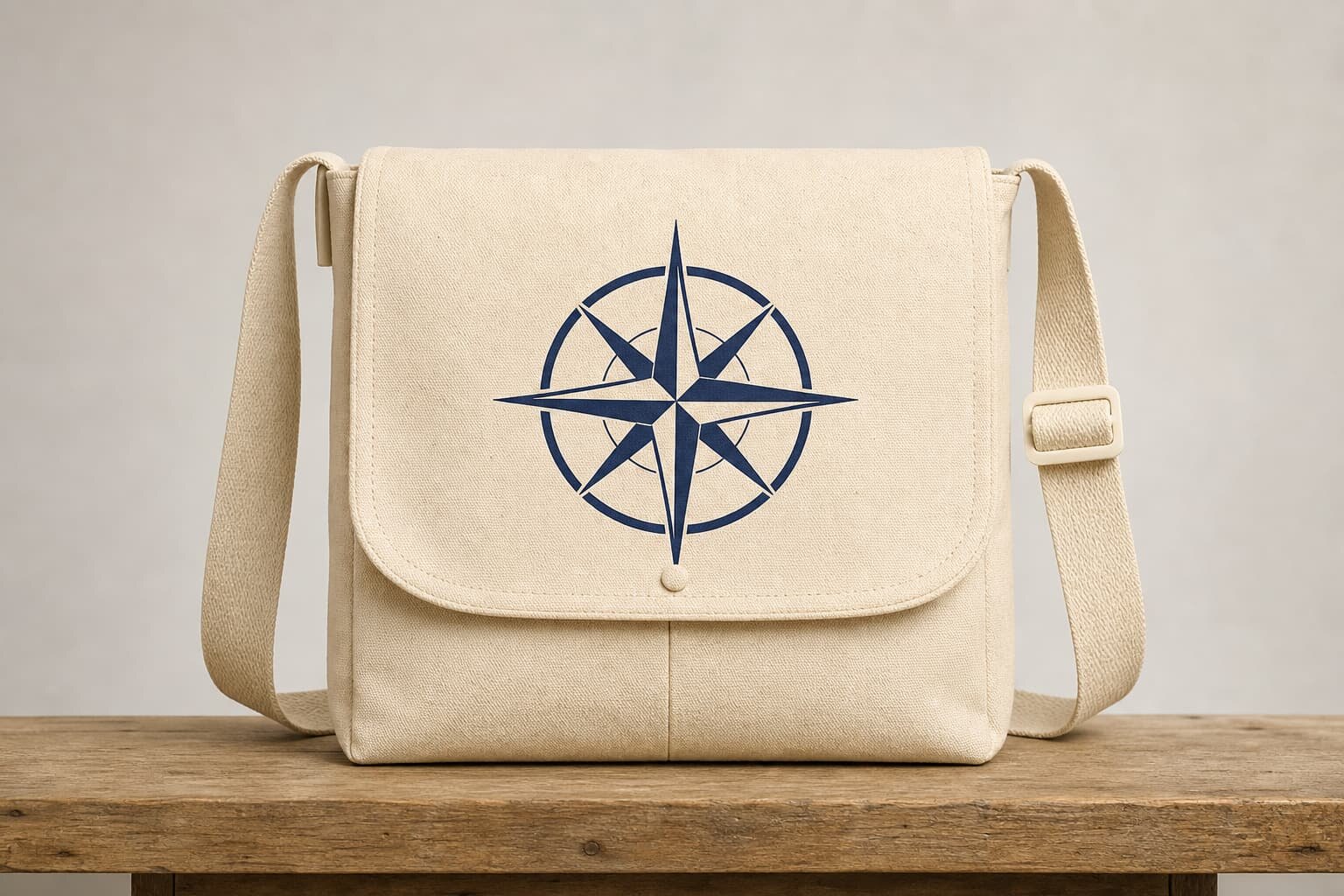
Why logo messenger bag quotes vary more than buyers expect
The biggest mistake in messenger bag sourcing is treating all canvas bags of the same size as comparable. A 38 x 30 x 10 cm messenger bag can look similar across supplier quotations while using very different canvas weights, strap construction, hardware grades, inside organization, and print methods. That is why a quote gap of 15% to 35% is common even when the artwork and dimensions look aligned on paper.
For procurement teams, the real problem is not getting a high price. It is approving a low price tied to an incomplete specification, then absorbing cost later through sample revisions, failed testing, repacking, or retail complaints. The cleanest way to control cost is to identify which three or four specifications drive most of the unit price before the RFQ goes out.
- The usual cost drivers are fabric weight, construction complexity, hardware count, print method, and packing standard.
- A factory can reduce cost by thinning canvas, simplifying pockets, narrowing the strap, or downgrading hardware without changing the photo.
- Messenger bags are more quote-sensitive than simple totes because they have more sewing operations and more load-bearing parts.
- If you want comparable quotes, lock the structure first and leave only one or two variables open for supplier recommendation.
Start with the spec choices that move price fastest
For a branded messenger bag, fabric is usually the first price lever. Standard body fabric for this category is commonly 12 oz, 14 oz, or 16 oz cotton canvas, roughly 407, 475, and 542 GSM. A 12 oz bag may be fine for promotional retail or bookstore merchandise. A 16 oz bag gives better shape retention and a heavier hand feel, but it increases both material cost and shipping weight. If the design includes a flap, laptop sleeve, or large front panel print, that extra structure often improves the final look.
The second major lever is the number of operations. Every zipper pocket, divider, buckle, snap, lining panel, and adjustable strap component adds labor minutes. Buyers often focus on print cost because it is visible, but in messenger bags the sewing complexity can add more than the logo. When cost control matters, simplify the inside layout before you reduce the fabric weight below the level needed for the product promise.
- Base fabric: 12 oz to 16 oz canvas is the normal commercial range for custom messenger bags.
- Lining: adding full lining improves finish but adds material, cutting, and sewing time.
- Hardware: each buckle, D-ring, snap, rivet, or zipper is both a material cost and an assembly step.
- Pockets: inside zipper pockets and padded sleeves are useful, but they should be justified by the sales channel.
Use fabric weight correctly in the RFQ
Fabric weight is one of the most misquoted items in bag sourcing because suppliers may describe it by ounces per square yard, GSM, or general phrases such as thick canvas or heavy canvas. For import buying, ask for both units and confirm that the quoted weight is based on finished fabric. Dyeing, washing, printing, and coating can affect final weight and hand feel. A factory that quotes 16 oz greige canvas but delivers a lighter finished dyed canvas can still claim the original fabric met its internal purchase standard.
You should also define finish and color method. Natural canvas, piece dyed canvas, washed canvas, recycled cotton blend canvas, and canvas with water-resistant backing do not behave the same in cutting and printing. Washed canvas can give a premium retail look, but it can also shift dimensions slightly and create shade variation between panels if the process is not controlled. If color consistency matters across repeat orders, standard dyed canvas is easier to control than heavily washed finishes.
- Request fabric in both oz and GSM on the quotation and sample approval sheet.
- Ask whether the fabric is natural, bleached, dyed, washed, coated, or blended with recycled content.
- If shrinkage matters, ask for fabric shrinkage expectation after finishing and after print curing.
- If you need a structured bag, ask whether a hidden interlining or foam is included or excluded.
Choose the logo method based on production reality, not artwork alone
Most logo messenger bags use screen printing, heat transfer, embroidery, debossed patches, or woven labels. Screen print remains the most practical choice for a clear brand logo on canvas when order volume is moderate to high and the artwork is one to three solid colors. It gives good opacity, relatively low setup cost, and clean reproduction on flat front panels or flaps. For large filled areas, however, poor curing or over-inking can create tackiness, cracking, or set-off marks during packing.
Embroidery and patches can raise perceived value, but they also affect cost and construction. Embroidery on heavy canvas may cause puckering if the backing and stitch density are not balanced. Faux leather or PU patches can look premium, yet they introduce another material that may age differently from the cotton body. If your main buying goal is accurate quote comparison, one-color screen print on a defined panel is the easiest baseline because factories price it consistently.
- Screen print works best for simple logos, retail programs, and consistent unit economics.
- Heat transfer suits detailed artwork but may raise adhesion and wash-rub concerns depending on finish.
- Embroidery looks premium but can distort lighter canvas or slow production at scale.
- Woven labels are good for subtle branding and lower print risk, but they do not replace a visible front logo if the brand requires it.
Build MOQ logic around colorways and setup cost
MOQ is often misunderstood because factories may quote one number for the style but different effective minimums for each fabric color, print color, or hardware finish. A supplier might say the style MOQ is 500 pieces, but that does not mean 100 pieces each across five colors will hold the same unit price. If each colorway needs separate cutting planning, separate print setup, and separate carton labeling, your real cost per variation rises fast.
For new programs, a clean way to manage risk is to launch with one body color, one print position, and one hardware finish. That creates higher quantity concentration, better print efficiency, lower wastage, and simpler carton planning. Once sell-through is proven, you can expand the assortment with better negotiating leverage because the factory already has approved patterns, screens, and production flow for the base style.
- Ask for MOQ by total style, by colorway, and by logo version.
- Request a separate price ladder for 300, 500, 1000, and 3000 pieces if the factory supports it.
- If you need multiple colors, ask whether stock dyed canvas shades are available at lower minimums.
- Confirm whether sample-approved colors are lab-dipped or matched to an in-stock standard.
Break the quote into components before you compare suppliers
A single FOB unit price is not enough to compare messenger bag factories. You need to know what that price contains. At minimum, separate the quotation into bag body construction, logo application, hardware package, packaging, and sample or setup charges. Some factories include polybag, hangtag stringing, and export carton in the unit cost; others add them later. The same issue appears with inside pockets, lining, zipper brands, and woven labels.
This breakdown also helps you negotiate intelligently. If the unit price is high because of hardware and not labor, asking for a lower rate without changing the buckle or strap spec will go nowhere. But switching from custom dyed webbing to a close stock color, or from a two-pocket interior to one zipper pocket, can produce a usable saving without changing the customer-facing silhouette.
- Ask for separate lines for sample charge, screen charge, unit price, and optional packing upgrades.
- Confirm trade term used in the quote: EXW, FOB, or another agreed basis.
- Ask whether the factory priced based on your estimated order quantity or its standard MOQ.
- If a price is notably lower, ask which specification was assumed rather than pushing immediately for a match.
Sample approval should test cost-risk points, not just appearance
A pre-production sample is the buyer's chance to catch cost and quality deviations early. Too many teams approve messenger bag samples based only on shape and logo appearance, then discover later that the strap feels weak, the flap does not sit flat, or the interior pocket dimensions are not functional. Your sample review should mirror the way the end user will handle the bag, especially if the product is sold at retail rather than used for one-off promotion.
Measure the sample against the approved spec sheet, but also weigh it, inspect the fabric hand feel, test the hardware movement, and load the bag with a realistic item set. If the product is meant to carry a notebook, tablet, brochure pack, or daily accessories, test that exact use case. A messenger bag that passes visual review but fails in actual loading will almost always lead to rework or customer complaints later.
- Measure body width, height, depth, flap overlap, and strap length adjustment range.
- Check logo size, print registration, ink density, edge sharpness, and rubbing resistance after curing.
- Load the bag with the intended contents to see if the flap closes and the base holds shape.
- Review pocket access, zipper smoothness, and whether bulky seam allowances reduce usable space.
- Photograph approved details and send them back to the factory as a written approval standard.
Packing details affect landed cost and retail condition
Packing is often treated as a back-office detail, but it directly affects both freight and sellable quality. Messenger bags have flaps, straps, and hardware that can crease, rub, or mark adjacent units if the packing method is too tight. A cheap quote may assume heavy carton compression to reduce volume, but that can leave permanent flap folds, print offset, or hardware pressure marks by the time the shipment reaches the warehouse.
For most standard canvas messenger bags, one piece per polybag and 20 to 30 pieces per export carton is workable, depending on final dimensions and structure. If the bag has a stiff flap, foam insert, or large front print, you may need lower carton density or tissue separation. The right choice depends on how much post-arrival steaming, reshaping, or repacking your operation can tolerate.
- Ask for packed carton dimensions and gross weight before approving the order.
- Set a carton weight limit if your warehouse or retail distribution has handling rules.
- If the front logo is sensitive, ask whether interleaving or flap protection is recommended.
- If hangtags are attached at factory, confirm tag placement so it does not dent the flap during transit.
Lead time depends on material readiness more than buyers think
Factories often present bulk lead time as a simple number of days, but messenger bag production is only predictable when fabric, webbing, hardware, artwork approval, and sample sign-off are aligned. Custom dyed canvas, custom webbing colors, special zipper tape, or branded hardware can each become the critical path. If you need a launch date, ask the supplier to identify which material has the longest readiness time instead of focusing only on sewing capacity.
Lead time planning should also account for revision loops. If the first sample fails because the logo is too large for the flap, or the strap attachment needs stronger reinforcement, you may lose more time in correction than in actual bulk sewing. That is why a strong RFQ and a detailed sample review save time, not just money. A complete spec shortens the approval cycle and reduces stop-start production.
- Ask separately for sample lead time, material lead time, and bulk production lead time.
- Confirm whether bulk lead time starts from deposit date, artwork approval, or pre-production sample approval.
- If any component is custom, ask what fallback stock option exists in case of delay.
- Request a simple production timeline showing material booking, cutting, printing, sewing, packing, and ex-factory readiness.
Use acceptance criteria to prevent the usual production arguments
Many buyer-factory disputes happen because the order has a price but not a measurable acceptance standard. For logo messenger bags, you can avoid most debate by defining tolerances and pass-fail points before bulk production starts. This does not need to become a complex testing protocol. It just needs to cover the areas most likely to create claims: size, fabric feel, logo appearance, seam strength, hardware function, and packing compliance.
Procurement teams sometimes avoid detailed acceptance language because they worry it will slow negotiation. In practice, the opposite is true with experienced factories. Clear acceptance criteria reduce revision risk, help the supplier train the line against the correct standard, and make final inspection easier. If a factory pushes back strongly on basic measurable standards, that is itself useful buying information.
- State size tolerance, for example plus or minus 1 cm on major body dimensions unless design requires tighter control.
- Define acceptable shade variation range using approved swatch or lab dip reference when relevant.
- Set logo tolerance for position and print clarity, especially on centered front flap placement.
- Require reinforcement stitching at strap joints and define whether skipped stitches are major defects.
- Confirm packing count per carton and barcode or label placement as part of shipment acceptance.
Specification comparison for buyers
| Spec decision | Recommended option | When it fits | Buyer risk to check |
|---|---|---|---|
| Fabric body weight | 12 oz to 16 oz cotton canvas, about 407 to 542 GSM | Daily retail messenger bags that need structure without extreme cost | Some factories quote natural canvas by ounce and dyed canvas by GSM; confirm finished fabric weight after washing or dyeing, not greige weight only |
| Logo print method | 1-color screen print on flap or front panel | Best for clear logos and mid to large volumes | Ask whether print area is measured on flat cut panel or finished bag; oversized print can trigger extra setup, reject rate, and packing scuff risk |
| Strap construction | 38 mm cotton webbing crossbody strap with box-x reinforcement | Standard branded messenger bag for bookstores, events, and lifestyle retail | Low quotes often reduce webbing thickness or stitch count; request webbing width, thickness, attachment pattern, and pull test method |
| Closure hardware | Magnetic snap under flap or simple metal buckle | Retail styles that need easier use than zipper-only closures | Hardware plating, magnet strength, and rust risk vary sharply; ask for finish, salt spray expectation if relevant, and replacement policy for defective pieces |
| Inside organization | One padded slip pocket plus one zipper pocket | Corporate gifting or laptop-adjacent daily carry | Pocket dimensions are often omitted from quotes; if pocket fits matter, define device size or document size to avoid unusable interiors |
| MOQ strategy | Single colorway and single print position first order | New SKU launch where target cost matters more than assortment depth | Mixed colors and multiple logos increase fabric wastage, printing setup, and carton complexity; low headline MOQ may not apply to each variation |
| Packing method | One piece in polybag, 20 to 30 pieces per export carton depending on size | Most ocean shipments where carton efficiency and dust protection are enough | Over-compressed cartons can distort flaps and crease printed panels; request packed carton dimensions and max carton gross weight |
Buyer checklist before sampling
- State finished bag size in centimeters and whether tolerance applies before or after stitching and turning.
- Specify canvas weight in oz and GSM, and confirm whether the quoted weight is finished fabric weight.
- Define cotton type if relevant: standard cotton canvas, recycled cotton blend, washed canvas, or enzyme washed finish.
- List exact logo method, print size, print colors, and location on the bag body, flap, lining label, or woven side label.
- Call out strap width, strap material, adjustable length range, and reinforcement stitch requirement at both strap ends.
- Describe hardware finish and count: buckle, D-ring, snap, zipper puller, rivet, or magnetic closure.
- Include inside construction details such as laptop sleeve, zipper pocket, divider, key loop, and lining material.
- Request sample sequence clearly: digital artwork mockup, blank material swatch, pre-production sample, and shipping sample if needed.
- Define packing ratio, barcode or hangtag requirement, carton size limit, and carton gross weight limit.
- Ask the factory to quote separately for sample charge, mold or screen setup, unit price, packing upgrade, and freight terms.
Factory quote questions to send
- Is the fabric quote based on finished dyed canvas weight or greige fabric weight before finishing?
- What is included in the unit price: printing, inside pockets, strap, metal hardware, polybag, hangtag attachment, and export carton?
- What MOQ applies to each colorway and each logo version, not just the total order quantity?
- Does the print method require a separate screen or plate charge for each size, color, or location?
- What bag dimensions were used for the quote, and what size tolerance do you control in production?
- How many stitches per inch or per 3 centimeters are used on load-bearing seams and strap box-x points?
- What webbing specification are you using for the strap: width, thickness, cotton or polyester content, and colorfastness level?
- If lining is included, what is the lining material, weight, and color matching method?
- What is the normal pre-production sample lead time and bulk lead time after sample approval and deposit?
- How many pieces fit per carton, what is the carton gross weight, and how does packing change if inserts or shape protectors are added?
Quality-control points to confirm
- Verify finished dimensions, especially flap coverage and strap drop, against approved spec sheet with stated tolerances.
- Check fabric weight and hand feel against approved swatch; thin canvas substitutions are a common cost-down issue.
- Inspect logo position, color density, edge sharpness, and adhesion or crocking performance for the selected print method.
- Review seam alignment, topstitch spacing, skipped stitches, raw edge cleanup, and reinforcement at all load points.
- Test hardware function: zipper smoothness, buckle plating consistency, snap holding force, and magnet alignment if used.
- Confirm interior pocket dimensions and opening width; pocket features often pass visual inspection but fail actual use.
- Check carton packing count, polybag quality, barcode placement, and whether overpacking causes flap distortion or logo scuffing.