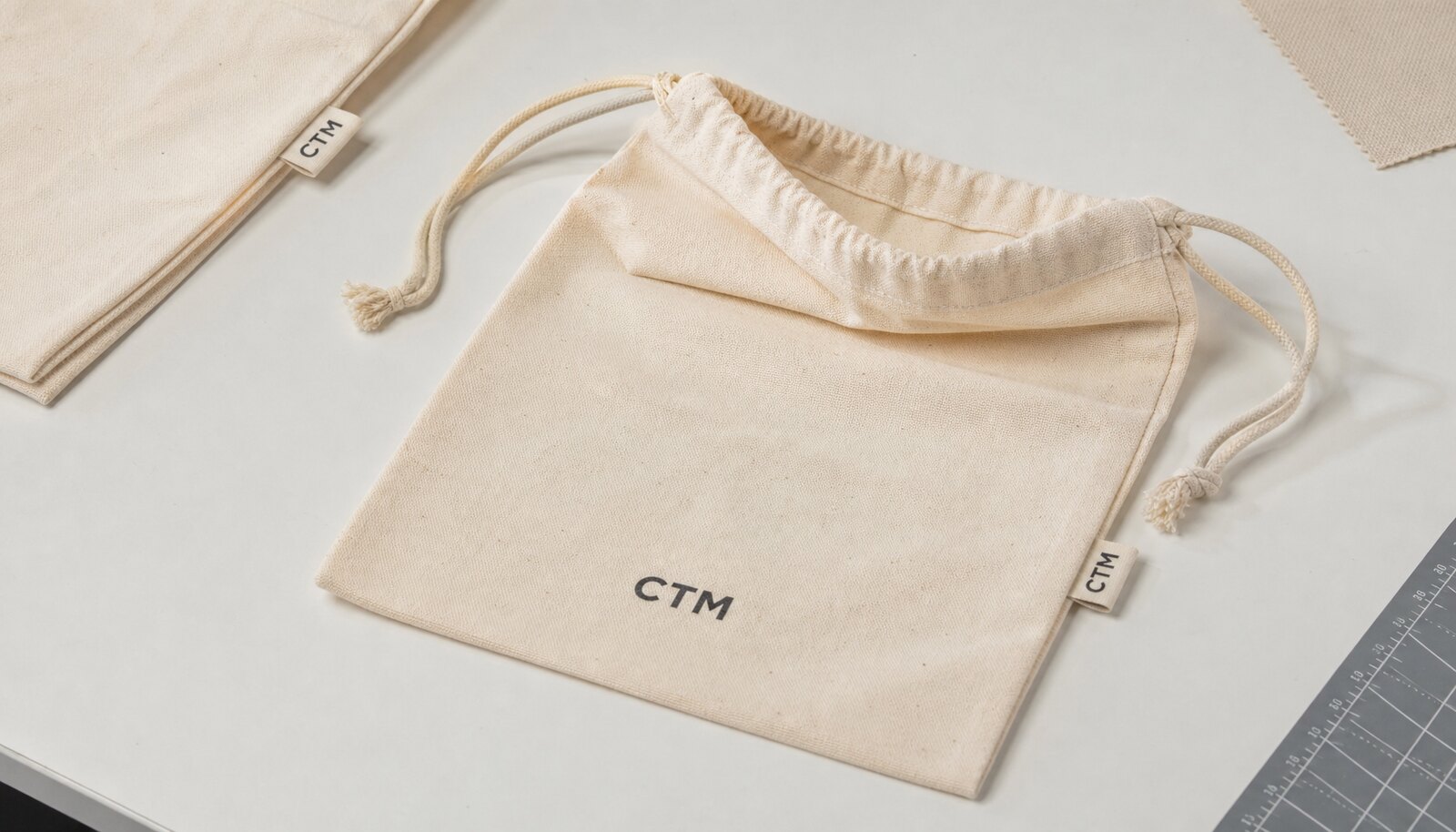
Why sample approval matters before you place the order
For logo drawstring pouches, the sample is not just a visual check. It is the point where you lock the fabric, logo method, cord construction, and packing standard that the factory will repeat in bulk. If you approve a sample with vague notes, the factory will usually treat that sample as the production target, even if your internal buyer team expected something different.
A good approval process reduces later disputes over print quality, logo size, and packing counts. It also makes supplier quotes easier to compare because you can separate the cost of the pouch body from the cost of the decoration and packaging.
- Approve the sample against a written spec, not only against a photo.
- Use one signed reference sample for the factory and one for the buyer file.
- Treat every change after approval as a new revision, not a casual note.
Lock the base pouch spec before you judge the logo
A logo can look good on one pouch and poor on another because the base fabric is different. For simple promotional pouches, 140-160 GSM cotton is common because it keeps the unit cost controlled and works well with basic screen print. For premium retail programs or heavier contents, 180-220 GSM cotton or 10oz canvas gives a firmer hand feel and better structure, but it also affects carton size and freight cost.
Before you review print quality, confirm the size, fabric, seam allowance, drawstring material, and any washing or steaming requirement. Cotton can shrink, and a pouch that looks correct on a flat sample can shift once the fabric is finished or packed. If the buyer team expects the pouch to hold a product insert, gift item, or jewelry set, that internal use case should be stated up front.
- Confirm finished size and acceptable tolerance.
- Ask whether the quoted GSM is finished fabric weight or greige fabric weight.
- Check whether the cord is cotton, polyester, or blended.
- Ask if the sample was made from stock fabric or a fresh dye lot.
Choose the logo method that matches the order size
Screen print is usually the most practical choice when the logo is simple and the run is medium or large. It keeps setup manageable and works well for one or two colors. The main buyer checks are ink opacity, alignment, and whether the print softens or cracks when the pouch is folded, rubbed, or packed tightly.
Woven labels and sewn patches are better when the brand wants a more finished look or when the logo is too fine for a clean print. Embroidery can work on heavier canvas, but it needs careful control because it can pucker thinner fabric. Heat transfer may be acceptable for short runs, but it can be a risk if the pouch will be folded often or handled roughly in retail.
- Keep logo placement away from the top cord channel unless you want the print to fold.
- Match the print method to the fabric weight, not just the artwork.
- Ask how many colors are included in the quoted price and what happens if the logo changes later.
Inspect the first sample like a production part
A sample should be evaluated under normal viewing conditions, not only in a photo. Check the logo from arm's length, then look closely at the edges, ink coverage, and any distortion near the seams. If the pouch will be used for retail gifting or brand merchandising, the logo should still look clean when the pouch is slightly filled and tied shut.
The mechanical details matter just as much as the branding. Pull the cord several times, check the top hem for even stitching, and look for loose thread ends around the tunnel or side seams. A sample can look acceptable on the table and still fail after the first round of packing or repeated handling.
- Check print clarity, color density, and edge sharpness.
- Open and close the pouch several times to test cord movement.
- Look for seam puckering, skipped stitches, or loose threads.
- Fold the pouch once or twice to see whether the logo cracks or marks.
Use a buyer checklist before you approve the artwork and sample
The fastest way to avoid claims is to make the approval checklist part of the buying file. The checklist should cover the logo artwork, the pouch body, the construction details, and the packing instruction. This is especially important when procurement, marketing, and fulfillment all review the sample from different angles.
If the sample looks right but the dimensions, weight, or packing do not match the quote, stop and correct it before bulk production starts. A good-looking sample is not enough if it cannot be packed, stored, or shipped the way your team expects.
- Artwork file approved and matched to the sample.
- Fabric GSM and finished size verified.
- Logo placement measured and signed off.
- Cord type and closure function checked.
- Packing count and carton marks confirmed.
- Sample version and approval date recorded.
Ask factories for quote data, not just a unit price
Two quotes can look similar on paper and still be very different in real production. Ask for the fabric basis, decoration method, setup cost, sample fee, packing assumption, and carton count so you can compare suppliers line by line. Without those details, a lower quote may simply hide a thinner fabric, a weaker print process, or a less complete packing scope.
MOQ logic also changes by spec. A stock cotton pouch with one-color screen print may allow a lower minimum than a pouch with woven label, multi-color logo, or special packaging. If you need several logo placements or multiple colorways, each variant may count as a separate production line or a separate setup charge.
- Ask whether the MOQ is based on fabric stock, print setup, or carton efficiency.
- Confirm if each logo color or placement creates a separate MOQ.
- Request the quote split into pouch body, logo decoration, and packing.
Confirm packing, labeling, and carton details before approval
Packing is part of the sample approval because it affects labor, freight, and retail readiness. Decide whether the pouches will be bulk packed, folded in polybags, or packed with inserts or barcode labels. If the order is going to a distributor or retail warehouse, carton marks and label placement need to be clear and consistent.
Lead time should also be tied to the packing scope. A simple bulk-packed order may move faster than a pouch that needs individual bagging, barcode application, or special carton marking. If the factory changes the packing method after the sample is approved, the schedule and quote should be reviewed again.
- Confirm piece count per inner pack and master carton.
- Check whether pouches are folded flat or stuffed for packing.
- Verify barcode, size sticker, or warning label placement.
- Ask for carton dimensions and gross weight used in the quote.
Set revision rules so the final approval is unambiguous
A sample approval should state exactly what is approved and what is still open. If you change the logo size, fabric weight, or packing after the first sample, the factory should issue a revised sample or a written change note. That keeps procurement, merchandising, and the supplier aligned on the same version.
Do not approve by email alone if the sample has unresolved issues. The safest approach is a short approval note that names the product, version, date, and any allowed tolerance. That reduces the risk of a factory using an old artwork file or an earlier packing standard when bulk production starts.
- Record the approved sample version and date.
- Write down any accepted tolerance on print, size, or shade.
- Require written approval for any substitution in fabric, cord, or label.
Specification comparison for buyers
| Spec decision | Recommended option | When it fits | Buyer risk to check |
|---|---|---|---|
| Body fabric | 140-160 GSM cotton | Promo pouches, light retail, and price-sensitive programs | Too thin can show print-through and weaken the cord tunnel |
| Body fabric | 180-220 GSM cotton or 10oz canvas | Premium retail, heavier contents, and repeated use | Higher unit cost, bulkier cartons, and longer finishing time |
| Logo method | 1-2 color screen print | Simple logos and medium-to-large runs | Check ink opacity, rub resistance, and placement tolerance |
| Logo method | Woven side label or sewn patch | Brand-led packaging and a cleaner premium look | Confirm label size, edge finishing, and stitch quality |
| Packing | Bulk packed by size with clear carton counts | Importers who need efficient freight and warehouse handling | Check whether inserts, barcodes, or warnings add labor and cost |
Buyer checklist before sampling
- Approve one final sample version only, with the version number or date written on the sample card.
- Confirm pouch size, fabric type, and GSM before judging the logo appearance.
- Check logo color, placement, size, and orientation against the signed artwork file.
- Verify that the drawstring closes smoothly and that the cord tunnel stitching is clean.
- Inspect print sharpness, ink coverage, and whether the logo distorts when the pouch is filled.
- Confirm whether the sample reflects production method or a hand-made pre-production sample.
- Review packing count, polybag use, carton marks, and barcode or label placement.
- Get written confirmation for any substitutions in fabric, print process, cord, or label construction.
Factory quote questions to send
- What is the exact pouch size, fabric type, and GSM included in the quote?
- Which logo method is quoted, and what setup or screen charges apply?
- What is the MOQ by fabric, logo color count, and logo placement?
- Does the quote include sample fee, sample freight, and pre-production sample revisions?
- What packing method is included: bulk pack, individual polybag, barcode label, or retail insert?
- What are the expected lead times for sample approval and bulk production after PO?
- Are cord, stitching, and label changes treated as a new quote line or a free revision?
- What carton size, piece count, and gross weight are assumed in the offer?
Quality-control points to confirm
- Logo placement matches the approved artwork and stays centered within the allowed tolerance.
- Print or label edges are clean, with no smudging, fraying, cracking, or mis-registration.
- Fabric weight feels consistent across the panel, with no thin spots or obvious shade variation.
- Cord pulls smoothly, stops evenly, and does not cut into the tunnel after repeated opening and closing.
- Seams, bar tacks, and top hems are secure, especially where the cord tension concentrates stress.
- Packing count, carton marks, and any barcode or size labels match the approved packing instruction.