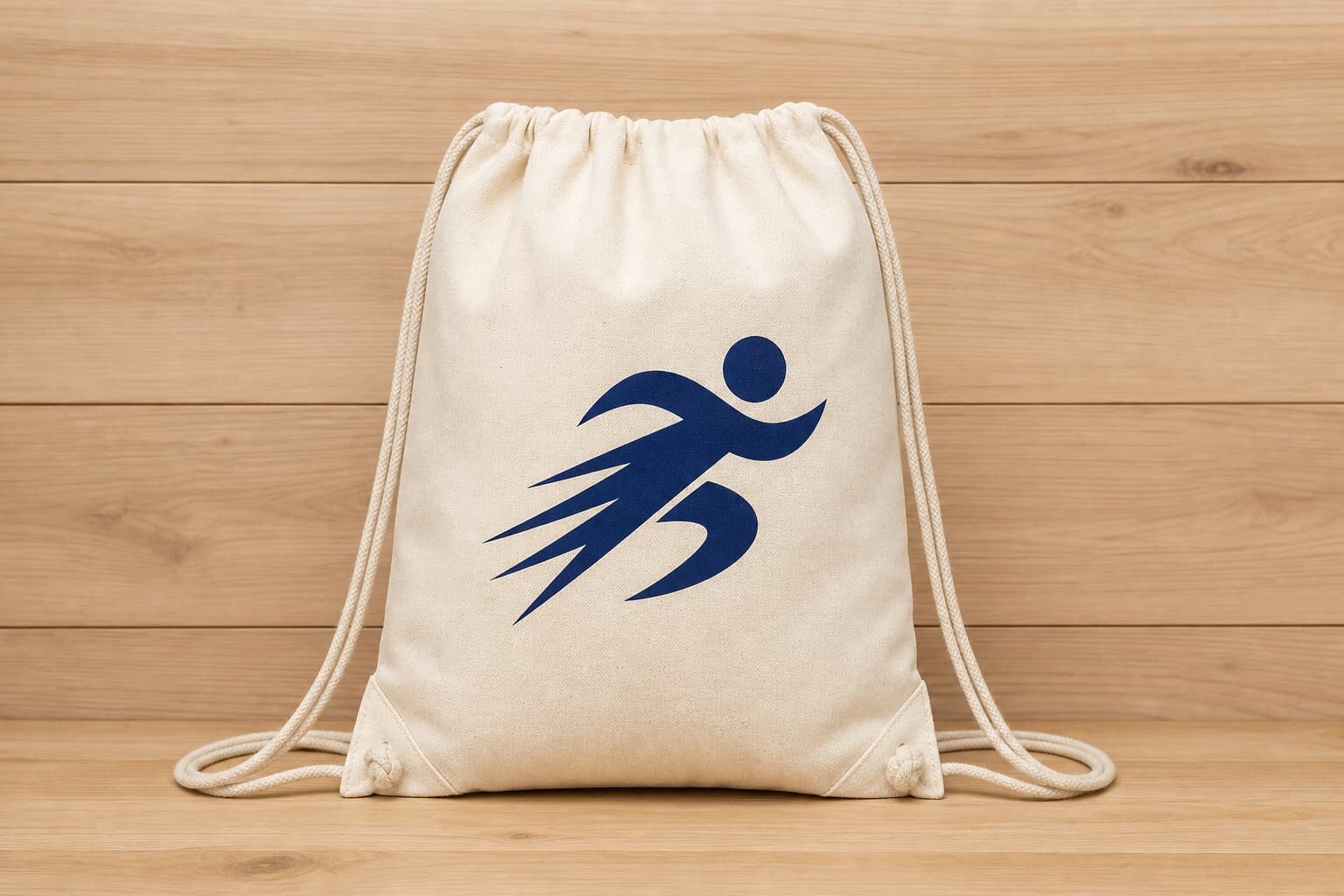
Why Bulk Pricing Varies So Much
A logo drawstring backpack looks simple, but the price can move quickly when the RFQ is vague. Two suppliers may both quote a 34 x 42 cm drawstring backpack, yet one may use thin 190T polyester with narrow cord and light stitching, while another uses true 210D polyester, reinforced bottom tabs, heavier cord, and better print curing. The buyer only sees a unit price difference until the samples arrive or, worse, until complaints begin after distribution.
For procurement teams, the main pricing problem is not finding the lowest number. It is making sure every supplier prices the same product. Your RFQ should lock the cost drivers that affect material consumption, labor time, logo setup, rejection rate, packing volume, and lead time. Once those points are clear, quote comparison becomes much more accurate.
- Fabric weight and construction usually create the largest base cost difference.
- Logo method changes setup cost, production speed, and defect risk.
- Cord type, corner reinforcement, and stitching standard affect both labor and durability.
- MOQ depends on fabric availability, logo setup, and color separation, not only bag quantity.
- Packing method affects labor, carton volume, warehouse handling, and freight cost.
Start With the Use Case Before Asking for Price
The best RFQ starts with the real use case. A one-day trade show giveaway does not need the same fabric as a retail drawstring backpack sold with a hangtag. A school sports bag may need stronger corner reinforcement because users carry shoes and bottles. A cosmetics or fashion brand may accept higher unit cost for better fabric texture and a cleaner print surface.
Tell the factory who will use the bag, what it will carry, how long it should last, and whether it is free promotional merchandise or paid retail merchandise. This helps the supplier recommend the correct construction instead of quoting the cheapest common version. It also helps you explain internally why a higher GSM or reinforced tab is not an upgrade for appearance only, but a risk-control decision.
- For event giveaways, prioritize cost, fast output, and simple one-color printing.
- For campus, gym, or sports use, prioritize seam strength, cord comfort, and corner reinforcement.
- For retail, prioritize fabric hand feel, logo finish, consistent color, and neat packing.
- For outdoor or travel promotions, ask about water resistance, coating, and color fastness.
- For child-related programs, confirm drawcord safety requirements for your selling market.
Fabric Weight and Material Choices
Fabric specification is the first price anchor. Polyester drawstring backpacks are commonly quoted in 190T, 210D, 300D, and sometimes 420D. Cotton and canvas versions are usually quoted by oz or GSM, such as 5 oz cotton, 6 oz canvas, 8 oz canvas, or 180-220 GSM recycled cotton blends. A supplier should not only say polyester or cotton; that is not enough for price comparison.
For polyester, denier and coating matter. A 210D polyester backpack with a light PU coating will feel different from an uncoated lightweight substitute. For cotton and canvas, fabric weight, weave tightness, shrinkage, and natural color variation affect both cost and print outcome. If your logo has sharp small text, an uneven open weave can make the print edge less clean.
- 190T polyester: lowest-cost option, thin hand feel, suitable for very short-term promotions.
- 210D polyester: common balance for bulk promotional backpacks, better strength and opacity.
- 300D polyester: stronger and more structured, suitable when the bag must feel more durable.
- 5-6 oz cotton: soft natural look, good for light merchandise and eco-positioned campaigns.
- 8 oz canvas: heavier retail feel, higher cost, more bulk in carton packing.
- Recycled polyester or recycled cotton: request material documents only if your program requires them.
How Logo Method Changes the Quote
Screen printing is usually the most economical choice for bulk logo drawstring backpacks when the artwork is one to three solid colors. The factory must make screens, mix ink, align the print position, and cure the ink. These fixed setup steps are why a 200-piece order often has a much higher unit cost than a 2,000-piece order. If the artwork is large, placed on both sides, or needs a white underbase on dark fabric, the price changes again.
Heat transfer, sublimation, digital print, embroidery, woven labels, and rubber patches can all be suitable, but not for every fabric and quantity. Sublimation is strong for polyester but requires the right base color and artwork setup. Embroidery can look premium, but it may pucker thin polyester and is usually slower. A woven side label is useful for subtle branding, but it adds sewing time and requires minimum label production.
- Use screen print for simple bulk logos, solid colors, and tight promotional budgets.
- Use heat transfer for detailed logos or short runs where screen setup is inefficient.
- Use sublimation mainly on suitable polyester fabrics and artwork planned for that process.
- Use embroidery on heavier canvas or premium versions, not on very thin fabric unless tested.
- Use woven labels when the brand wants a retail finish without a large front print.
MOQ Logic: What Factories Are Really Pricing
MOQ is not only a sales rule. It comes from fabric purchasing, cutting efficiency, print setup, sewing line changeover, packing setup, and rejection allowance. A factory may accept 300 pieces if the fabric is available from stock and the logo is one color. The same factory may require 1,000 or 3,000 pieces for custom dyed fabric, multiple logo versions, or a non-standard cord color.
When you compare bulk pricing, separate quantity breaks from specification changes. Ask the factory to quote the same spec at 500, 1,000, 3,000, and 5,000 pieces if those volumes are realistic. Do not ask for ten quantity levels if your likely order is 800 pieces; it wastes time and encourages rough guessing. A good quote should show where the setup cost becomes less important and material purchasing becomes the main driver.
- Low MOQ is easier when using stock fabric, stock cord, and simple print.
- Custom dyed fabric often has its own mill MOQ that is separate from sewing MOQ.
- Each logo version can create separate screen, film, and setup costs.
- Multiple bag colors may split the MOQ and increase cutting and packing labor.
- Very small orders may be sampled or produced in a workshop flow, not normal line production.
Cost Breakdown Buyers Should Request
You do not need every factory to reveal its full internal cost sheet. But for a serious RFQ, you should ask the supplier to separate the main quote assumptions. This helps identify why one supplier is much cheaper or more expensive. A low price may exclude setup, packing, barcode labels, carton marks, or pre-production samples. A high price may include better fabric, better reinforcement, and more careful packing.
A practical cost comparison should include bag unit price, logo setup charges, sample cost, packing cost, carton quantity, estimated carton dimensions, and Incoterm. Freight can distort the final landed cost because heavier canvas bags and bulky packing may increase carton volume significantly. For importers and distributors, carton data is not a small detail; it affects warehouse receiving, pallet planning, and shipping quotes.
- Unit price: confirm the exact bag spec, logo method, packing, and Incoterm included.
- Setup charge: ask whether screens, films, transfer plates, or embroidery digitizing are included.
- Sample charge: separate blank sample, print strike-off, and pre-production sample costs.
- Packing charge: confirm individual polybag, recycled polybag, hangtag, barcode, and carton marks.
- Carton data: request pieces per carton, carton size, gross weight, and net weight.
- Validity: ask how long the quote is valid if fabric or exchange rates change.
Sample Approval Before Bulk Production
A logo drawstring backpack should not go to bulk production based only on a digital artwork file and a material name. At minimum, approve a pre-production sample that uses the intended fabric, intended cord, intended print method, and intended packing. If timing is tight, approve a fabric swatch and logo strike-off first, then approve a full pre-production sample before mass cutting.
The sample should be checked like a production item, not like a presentation piece. Measure the finished size, compare logo placement, pull the cord, rub the print, inspect the bottom corners, and fold it into the proposed polybag. If the bag cannot be packed neatly at sample stage, carton packing may become inconsistent during bulk production.
- Check finished size tolerance, for example plus or minus 0.5 cm or 1 cm depending on construction.
- Confirm logo position from top edge, side edge, and center line, not just by visual approval.
- Rub the print with dry and slightly damp white cloth to catch poor curing or ink transfer.
- Pull lower corner tabs and top channel stitching to check weak seams before production.
- Fold the bag into the approved polybag to confirm packing appearance and barcode position.
- Sign and seal one approved sample for factory reference and one for buyer inspection reference.
Packing and Carton Details That Affect Landed Cost
Packing is often treated as an afterthought, but it changes cost and service quality. A distributor may need each backpack in a polybag with barcode label. A retail buyer may need hangtags and carton labels by SKU. A promotional buyer may prefer bulk packing to reduce plastic and unit cost. These are different packing flows, and they should not be priced as the same product.
Canvas and cotton backpacks create more carton volume than thin polyester bags. Heavy cord, reinforced tabs, and individual polybags also increase carton size. Ask for estimated carton dimensions during quotation, then confirm actual carton data after the packing sample or pilot run. This allows your logistics team to estimate freight and warehouse space before production is finished.
- Bulk packing is lower cost but gives less protection and less retail readiness.
- Individual polybag packing keeps items clean and organized but adds labor and material cost.
- Barcode labels must be tested for scan position and readability before mass packing.
- Carton quantity should balance carton strength, warehouse handling, and freight efficiency.
- Carton marks should show SKU, color, quantity, gross weight, net weight, and destination if required.
- For retail programs, request a packed sample photo or carton packing sample before shipment.
Lead Time Planning and Production Bottlenecks
Bulk lead time depends on more than sewing capacity. Material availability, logo proofing, sample approval, print drying or curing, packing material preparation, inspection booking, and export schedule all affect delivery. A stock-fabric one-color logo order may move quickly, while custom dyed canvas with woven labels and hangtags needs more planning.
Buyers should build the timeline backward from the required delivery date. Include time for artwork correction, sample shipment, approval comments, production, inspection, and freight. If the deadline is fixed for an event, tell the factory at RFQ stage. A reliable supplier may suggest a safer material or print method instead of accepting a risky spec that cannot be finished properly.
- Artwork confirmation: allow time for vector cleanup, Pantone confirmation, and logo placement proof.
- Sampling: plan for blank sample, logo strike-off, or full pre-production sample depending on risk.
- Material preparation: stock fabric is faster; custom color, recycled material, or special cord takes longer.
- Printing: multiple colors, large coverage, and dark fabric underbase can slow production.
- Inspection: reserve time for rework if logo placement, packing, or stitching issues are found.
- Shipping: confirm whether the quote is EXW, FOB, CIF, DDP, or another Incoterm.
How to Compare Supplier Quotes Fairly
Do not compare only the first unit price line. Put each quote into a simple comparison sheet with fabric, GSM or denier, size, logo method, logo size, number of colors, reinforcement, cord, packing, carton data, sample terms, production lead time, payment terms, and Incoterm. If one supplier omits several of these items, ask for clarification before presenting the quote internally.
When a quote is unusually low, look for silent downgrades. The factory may have assumed a smaller logo, thinner fabric, no individual packing, no reinforcement, no barcode labels, or a less expensive print method. When a quote is higher, ask which specifications are driving the cost. Sometimes a small spec adjustment, such as reducing logo size or using stock cord color, can reduce cost without damaging the program.
- Normalize all quotes to the same size, fabric, logo process, packing, and Incoterm.
- Ask each supplier to confirm whether artwork setup and pre-production sample are included.
- Review carton volume because the lowest unit price may not produce the lowest landed cost.
- Check supplier comments carefully; exclusions often appear in small notes after the price.
- Compare sample quality before negotiating too aggressively on bulk price.
- Keep a quote revision history so changes in spec do not get mixed with price negotiation.
Specification comparison for buyers
| Spec decision | Recommended option | When it fits | Buyer risk to check |
|---|---|---|---|
| Fabric for low-cost event giveaway | 210D polyester, about 70-80 GSM | Large promotional campaigns, school events, sports giveaways, short-term use | Confirm coating feel, color fastness, seam strength, and whether the quoted fabric is true 210D or lighter substitute |
| Fabric for retail or paid merchandise | 6-8 oz cotton canvas or 180-220 GSM recycled cotton blend | Brand stores, museum shops, campus merchandise, lifestyle promotions | Check shrinkage, print hand feel, fabric slubs, color lot variation, and whether weight is quoted before or after washing |
| Logo method for simple one-color mark | Screen print with matched Pantone ink | Most bulk orders with flat artwork, solid logos, and tight unit cost targets | Ask for print size, ink type, curing method, rub test, and whether setup is included or charged separately |
| Logo method for multi-color or gradient artwork | Heat transfer or digital print depending on fabric | Detailed graphics, short runs, photographic artwork, sponsor logos | Check transfer edge, cracking after bending, wash/rub resistance, and whether dark fabric needs a white base layer |
| Cord and closure spec | 5-6 mm polyester cord with reinforced corner tabs | Standard promotional and retail drawstring backpacks | Confirm cord length, knot finish, eyelet or tab material, and pull test at the lower corners |
| Packing method | 1 pc in clear or recycled polybag, then export carton | Distributor stock, retail repacking, clean warehouse handling | Specify warning text, barcode position, carton quantity, carton drop test expectation, and whether bags are folded consistently |
| MOQ strategy | 500-1,000 pcs per color/logo for economical production | Buyers needing stable pricing without excessive setup cost per unit | Below MOQ, confirm sample-room surcharge, print setup allocation, and whether fabric color is available from stock |
Buyer checklist before sampling
- Define the backpack size, usable capacity, and target user instead of requesting only a general drawstring bag quote.
- State fabric type and weight, such as 210D polyester, 300D polyester, 6 oz cotton canvas, or 220 GSM recycled cotton.
- Send vector artwork with print size, Pantone references, logo position, and maximum color count.
- Ask whether the quote includes print setup, sampling, inner packing, export carton, barcode labels, and inspection support.
- Confirm MOQ by fabric color, logo version, and shipment lot, not only by total order quantity.
- Request a pre-production sample using bulk fabric, bulk cord, and actual logo process before mass cutting.
- Set acceptance criteria for logo placement tolerance, print rub resistance, seam strength, cord pull strength, and carton packing.
- Compare quotes using the same Incoterm, delivery port, payment terms, and validity period.
- Ask the factory to list cost drivers separately if you are comparing alternate fabrics or print methods.
- Keep one approved sample sealed and signed for production reference and final inspection.
Factory quote questions to send
- What exact fabric construction and GSM are included in the quoted price, and can you provide a swatch from the intended bulk lot?
- Is the fabric stock color or custom dyed, and what is the MOQ and lead time difference for each option?
- Which logo method is quoted, how many colors are included, and what setup or screen charges apply?
- What is the maximum recommended logo size for this fabric without print cracking, bleeding, or heavy hand feel?
- Are reinforced bottom corner tabs, metal eyelets, or stitched buttonholes included in the base price?
- What cord diameter, cord material, and cord color are quoted, and can the cord be custom matched?
- What sample types are available: blank sample, logo strike-off, pre-production sample, and carton packing sample?
- What are the estimated lead times for sampling, material preparation, bulk production, inspection, and shipment booking?
- How many pieces are packed per inner carton and master carton, and what are the estimated carton dimensions and gross weight?
- What test or inspection standard can you support for seam strength, print adhesion, color fastness, and needle detection if required?
Quality-control points to confirm
- Measure finished size at top width, bottom width, and height against the approved tolerance before approving shipment.
- Check fabric GSM or denier against the approved swatch because small substitutions can change both price and durability.
- Inspect logo size, position, color, edge sharpness, and curing quality under normal light and after rubbing.
- Pull both cords from the top opening and bottom corner points to confirm stitching and reinforcement strength.
- Check corner tabs, eyelets, buttonholes, or bartacks for skipped stitches, loose threads, and tearing risk.
- Confirm shade consistency across panels, cords, tabs, and different cartons, especially on custom dyed fabric.
- Review folding, polybag size, barcode labels, carton marks, and carton quantity before shipment release.
- Keep rejected samples showing defects so the factory understands the exact boundary between acceptable and unacceptable.