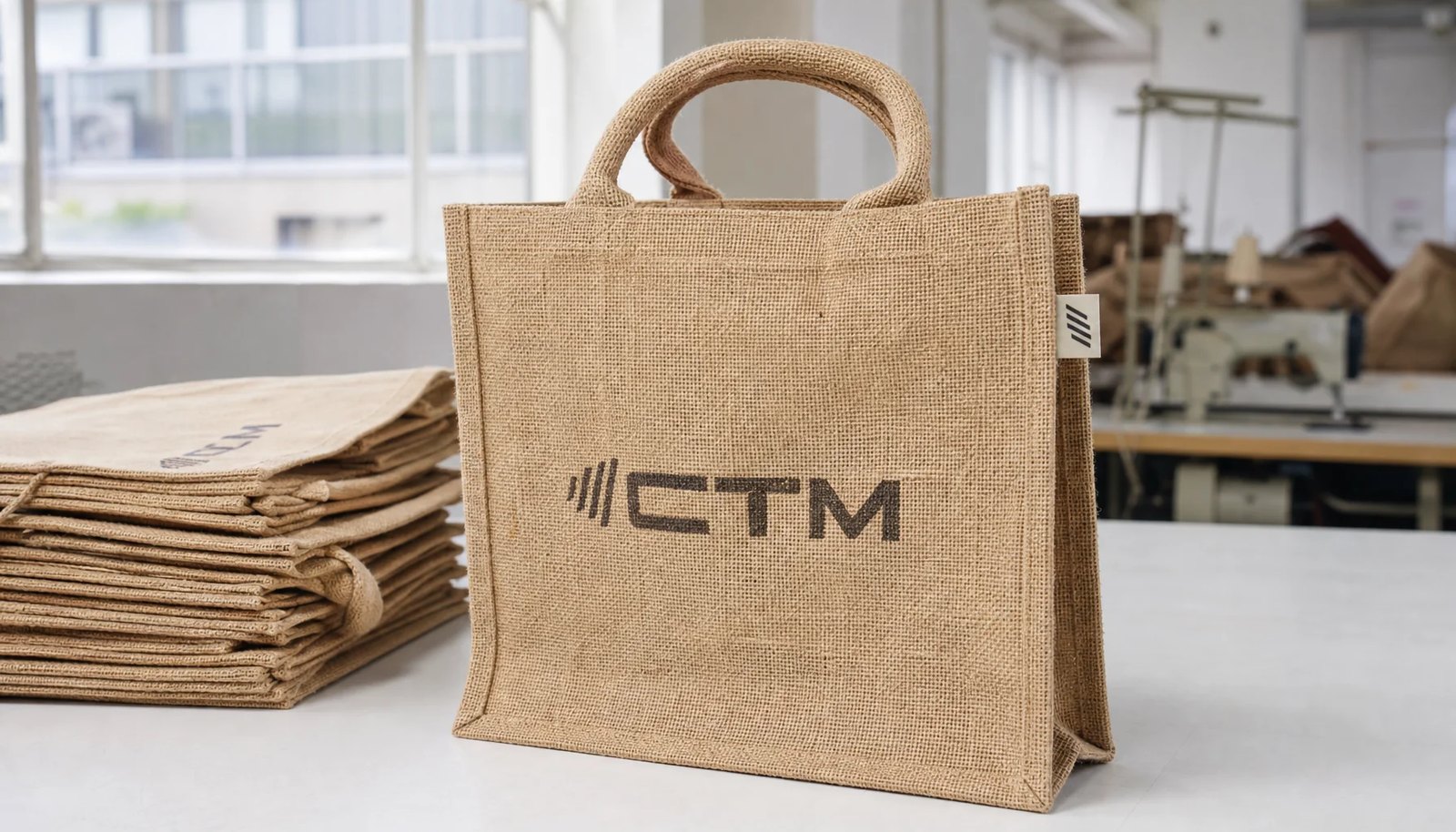
Start From the In-Hand Date, Not the Factory Start Date
Wholesale jute tote bags for trade show exhibitors should be planned backward from the date the bags must be in hand. That sounds simple, but it is where many late orders begin. A real event timeline includes artwork approval, sample review, raw material booking, bulk production, packing, export handling, customs clearance, warehouse receiving, and any kitting work after arrival. If the bags miss the venue cutoff or the show warehouse deadline, the order has failed even if the factory shipped on time.
A backward schedule makes the hidden work visible. A factory quote that says production takes three or four weeks is not the same thing as a usable project plan. Buyers need separate dates for spec approval, artwork approval, sample approval, bulk release, final inspection, and dispatch. Each gate should have a dated signoff. That prevents the team from drifting into the common trap of saying the order is already underway when the real bottleneck has not even been identified.
For a new jute tote program, a practical planning baseline is usually 8-12 weeks before the in-hand date once transit and receiving are included. A repeat order can be shorter if the spec is frozen, materials are already booked, and the supplier has open capacity. A simple week-by-week view helps: week 1 for RFQ and quote alignment, week 2 for artwork and spec lock, week 3-4 for sample approval, week 5 for PO release and raw-material booking, week 6-8 for bulk production, and week 9-12 for transit, customs, and warehouse intake.
Freight choice changes the schedule as much as production does. Air freight shortens transit but compresses margin. Ocean freight is usually more efficient, but it adds exposure to port delays, customs questions, and warehouse intake schedules. If the exhibitor team needs bags repacked or inserted with printed collateral before the show, that work should be in the calendar from day one. A margin of safety is not optional here; it is the only reason the last mile stays manageable when one earlier step slips.
- Work backward from the in-hand date, not the factory ship date.
- Separate sample timing from bulk timing in the project plan.
- Reserve time for customs, warehouse receiving, and any kitting.
- Build a week-by-week timeline before the PO is released.
Match the Tote Build to the Actual Giveaway Load
The right jute tote is determined by what it has to carry, how long it will be used, and how it needs to present on the show floor. A 320-350 GSM natural jute body is usually enough for brochures, a notebook, and a few lightweight inserts. That construction keeps the bag economical while still giving buyers the natural texture they expect from jute. If the tote needs to stand upright on a table, hold heavier sample packs, or look more premium at the registration desk, move to 400-450 GSM or a laminated build.
Handle choice affects both comfort and perception. Cotton webbing handles are usually more comfortable for all-day show use and sit cleanly in the hand when attendees carry the bag across a venue. Jute handles keep the natural look, but they can feel rougher and give less forgiveness if the tote holds heavy inserts. Handle drop should match how the bag is actually used. A short drop can look tidy on a table and still be awkward to carry. A very long drop can make a compact tote look loose or unfinished.
Artwork needs to respect the material. Jute is textured, uneven by nature, and not friendly to thin type, tiny lines, or delicate gradients. Strong one-color logos and simple two-color layouts usually survive the weave more cleanly than detailed artwork. If the buyer wants a more polished look, a woven label or stitched patch can be a better answer than forcing a fine print treatment onto a rough surface. That decision should happen early because it affects screens, setup time, and the chance of rejecting the sample later.
Trade show use also changes the product equation. A tote handed out at registration must be easy to grab, easy to carry, and sturdy enough to survive the rest of the day without looking tired. A tote that sits on a booth counter and holds printed collateral can prioritize structure and presentation instead. If the bag will be reused after the event, specify that up front because it changes the acceptable level of stitch reinforcement, handle comfort, and overall finish.
- Use 320-350 GSM for standard exhibitor totes with light inserts.
- Use 400-450 GSM or laminated jute for structured or premium event bags.
- Match handle material and drop to the actual carry pattern.
- Keep artwork bold enough to survive the jute surface texture.
- Specify the event use case so the supplier does not overbuild or underbuild the bag.
Compare Supplier Routes Before You Compare Price
The lowest FOB number is not the lowest-risk buying decision if the supplier cannot control the process. Direct factory sourcing is usually the strongest route when the program is repeatable, the quantity is meaningful, and the buyer wants one party accountable for cutting, sewing, printing, and packing. That structure is easier to manage when the spec is already locked and the event date is fixed. An integrated converter can be the better fit for structured bags, lamination, or more complex finishing because fewer handoffs reduce the chance of mismatch between the body and the final decoration.
A trading company can be useful when a buyer needs support across several bag styles, but it adds another layer between the buyer and the plant. That often slows issue resolution. Stock-bag and local print routes can work when the deadline is short, but they should be used with clear eyes. A blank bag can shorten the decoration timeline, yet it shifts risk to the imported blank. Shade variation, seam quality, and handle attachment are no longer under the same control as the print operation.
Regional tradeoffs matter too. A lower piece price from a farther inland factory does not help if the goods still need long trucking legs to reach port, slow booking windows, or a freight route that is already congested. A supplier close to an export port may cost more on paper but gain back days in inland transport and loading reliability. Time-zone overlap also affects problem solving: when artwork changes, sample comments, or carton dimensions need same-day response, a team that can answer quickly often saves more schedule than a cheaper supplier that replies a day later.
The right comparison is not just whether a supplier can make the bag. It is who owns each process step and how quickly issues can be solved. Ask where the jute is sourced, who cuts the panels, who prints, who sews, who inspects, and who packs the cartons. If those answers are vague, the lead time is already less reliable than the quote suggests.
- Direct factory: best for repeat orders and tighter control.
- Integrated converter: stronger for structured or finished bags.
- Trading company: useful for multi-SKU programs but slower to troubleshoot.
- Stock blank route: fastest only when the design is simple and the blank quality is proven.
- Do not ignore port access, inland trucking, and response time when comparing regions.
Write an RFQ That Lets Suppliers Quote the Same Thing
A useful RFQ gives suppliers the same target. If one buyer sends only a logo and a quantity, the quote will usually come back too vague to compare. For wholesale jute tote bags for trade show exhibitors, the RFQ should include finished size, gusset depth, handle type and length, target fabric weight or build, decoration method, number of print colors, print placement, packing quantity per carton, carton size expectations, delivery destination, and the required in-hand date.
The RFQ should also clarify what is not flexible. If the bag must fit a registration folder, say so. If the tote must stand upright on a table, say so. If the event team needs both sides printed, specify that before the quote. These details matter because a quote that seems cheaper may simply be based on a smaller bag, a thinner jute body, one-sided print, or a lower pack count that later creates more freight cost. Procurement teams should not compare numbers until they have normalized the spec.
Ask suppliers to break out sample lead time, bulk lead time, and packing lead time separately. The last one is often ignored even though it can become a real bottleneck. If a supplier can produce the tote but needs several days to pack and palletize the order, the event calendar still needs to reflect that delay. A supplier that refuses to itemize the quote is usually signaling hidden variability in the process.
It also helps to ask for one clear list of assumptions. For example: is the quote based on the supplier's standard handle color, a stocked jute shade, a specific carton count, and a single export destination? If the answer is yes, those assumptions need to be visible before the PO is issued. Otherwise, the first change request becomes a negotiation instead of a routine update.
- Specify finished size, gusset, handle, GSM, print method, and pack count in the RFQ.
- State what the bag must carry or fit so the supplier can size it correctly.
- Ask for sample, bulk, and packing lead time separately.
- Normalize quotes before comparing price, not after.
- Request the supplier's assumptions in writing so hidden scope does not surface later.
Use Sampling as a Production Gate
A sample is only useful if it reflects the bulk run. A polished sales sample made with extra attention can create false confidence if the factory cannot repeat the result at scale. The pre-production sample should use the same jute body, handle material, print method, stitching style, label, and packing method planned for the bulk order. If the sample is assembled from different materials, it is not a true approval sample.
The review should cover more than the logo. Check the body shade, odor, lint level, seam trim, handle symmetry, print clarity, and how the tote folds for carton packing. If the bag will be handed to attendees immediately on arrival at the booth, comfort matters too. Does the handle feel rough in hand, does the bag sit properly when carried, and does the structure recover after being flattened in shipping? Those are not cosmetic concerns. They are user-experience issues that affect whether the tote performs like a branded asset or like a generic carrier.
Use the sample approval to lock the final production conditions. That includes how the logo is placed, whether both sides are decorated, whether the bag needs internal reinforcement, and whether the carton pack will be bulk or inner-bundled. If the buyer keeps changing those details after sample approval, the lead time and cost will move with them. The practical rule is simple: if the factory would need to change screens, sewing setup, or carton dimensions, the change belongs in the sample stage, not after bulk release.
A useful approval package includes a written sample note, photographs of the front, back, handle, inside, and packed carton, plus a clear statement of what is approved and what is still open. That record protects both sides when the bulk lot is finished and helps the warehouse team know what to expect.
- Require the sample to match the exact bulk material and print method.
- Review body shade, handle symmetry, odor, lint, and fold behavior.
- Lock logo placement and packing method before releasing bulk.
- Do not approve a sample built from different materials than production.
- Document the approved sample with photos and a written approval note.
Put QC Targets Into the PO, Not Just the Inspection Report
For a trade show order, waiting until the end to inspect quality is too late. The better approach is to check the process at the right points so issues are caught before cartons are sealed. That starts with raw material verification, then moves to print setup, first-off stitch approval, in-line visual checks, and final packed inspection. Jute is a natural material, so some variation in fiber texture and color tone is normal. The point is not to eliminate variation. The point is to keep the variation within the approved band and make sure the construction remains consistent across the lot.
The first production pieces matter a lot. They show whether the print is registering correctly on the weave, whether the stitch line is straight, and whether the handle tension is balanced. If the first-off sample fails, the line should be corrected before the full run continues. That saves time and avoids bulk rework. A buyer should also ask the factory to test a loaded bag, not just an empty one. A tote that looks fine on the table can still fail when it is filled with catalogs or samples. Handle pull strength and seam stress are the relevant tests for real use.
Set measurable acceptance criteria and write them into the order. A practical starting point is finished dimension tolerance of plus or minus 5 mm on body size and plus or minus 10 mm on handle drop, with print placement held within plus or minus 2 mm for simple logos. The supplier should also state the stitch count, seam allowance, and bar-tack count used on the approved style. For load testing, use the actual event load or a realistic test load, often 2-4 kg for brochure-plus-sample kits, and confirm the handles and side seams hold for a defined period without visible failure.
Compliance documents belong in this same section of the project plan. Depending on the destination market and how the tote will be used, the buyer may need a material declaration, origin paperwork, or test documentation for inks, fibers, or restricted substances. Do not wait until the shipment is at port to ask for those files. If the supplier cannot produce them on time, the issue is not administrative; it is a sourcing risk.
- Inspect raw material, print setup, first-off pieces, and final pack-out.
- Test loaded bags, not only empty ones.
- Check carton counts, bundle counts, and labeling before shipment.
- Treat the packing stage as part of QC, not just logistics.
- Ask for compliance documents early if the destination market requires them.
Plan Packing, Labels, and Warehouse Handoff Early
Packing decisions affect more than protection. They also affect warehouse speed, freight cost, and how quickly the bags can be distributed once they arrive. Many exhibitor programs use bulk carton packing because it is economical and reduces extra materials. That works well when the buyer is handling the bags directly at the show or moving them into controlled storage. If the bags need to stay clean for a longer period, be retail-ready, or be distributed through a third-party fulfillment process, then a simple inner pack or polybag can make sense.
Carton data should be part of the quote, not an afterthought. Ask for carton count, inner pack quantity, carton dimensions, and gross weight. That information helps estimate freight, palletization, and receiving labor. It also makes it easier to spot a mismatch between the bag volume and the proposed pack plan. An oversized carton can increase cube and freight cost. An overly heavy carton can slow receiving or increase damage risk. Good packing is efficient, but it is also easy for the warehouse team to handle.
If the order is going into multiple destinations, build the labeling plan before production starts. That includes carton marks, destination labels, and any special handling instructions. Buyers often lose time after arrival because they have to open and sort cartons by hand. A small amount of planning at the factory can prevent that waste. For a trade show team, the real goal is not just to receive the bags. It is to receive them in the exact configuration needed for immediate distribution.
This is also where buyer teams should align internal and external receiving rules. If the show warehouse needs pallet labels, appointment numbers, or carton marks in a specific format, the factory needs that format before packing begins. If the bags are going to a regional distribution center first, the pack may need to be optimized for storage rather than booth handoff.
- Choose bulk, inner bundle, or polybag based on the next handling step.
- Request carton dimensions and gross weight in the quote.
- Plan carton labels and destination marks before production starts.
- Avoid carton sizes that create unnecessary freight cube or receiving labor.
- Match packing to the actual warehouse or show-floor handoff.
Compare Landed Cost and Schedule Risk Together
FOB only tells part of the story. The real cost of wholesale jute tote bags for trade show exhibitors includes freight, customs handling, duty, destination warehouse charges, and any repacking or relabeling that happens after arrival. If two suppliers quote similar FOB prices, the buyer still needs to compare the full landed cost. A lighter or more compact pack configuration can reduce freight. A bag that ships in larger cartons or with inefficient packing may look inexpensive on paper but cost more by the time it reaches the event team.
Lead time risk should be evaluated alongside price. A supplier that is slightly more expensive but much more reliable can be the better decision when the bags are tied to a fixed event date. If the show is non-negotiable, schedule risk has a real financial cost. That cost includes not only replacement freight or expedited handling but also the brand impact of handing out the wrong bag or nothing at all. Procurement teams should make that tradeoff explicit instead of assuming the cheapest offer is automatically the best buy.
The most defensible comparison method is to normalize every offer to the same spec, same pack count, same destination, and same deadline. Then factor in the contingency cost of a delayed shipment or a bulk-quality issue. This does not require a complicated model. It requires discipline. Buyers who compare full landed cost and timing together usually end up making decisions they can stand behind when the event date gets close.
There is also a practical difference between transit time and transit reliability. A route that is theoretically faster can still be less dependable if the booking window is tight or the freight lane is volatile. For event buys, a stable route with predictable warehouse intake is often worth more than an aggressive plan that only works if every link behaves perfectly.
- Compare FOB and landed cost separately.
- Normalize spec, pack count, destination, and delivery date before deciding.
- Include freight efficiency and schedule risk in the decision.
- Choose reliability over the lowest unit price when the event is fixed.
- Compare transit reliability, not only transit speed.
Lock Change Control and the Final Pre-Ship Checklist
The purchase order should not be a loose buying signal. It should be the final production record for the job. That means the PO should reference the approved sample number, spec revision, artwork version, inspection standard, carton pack, ship-to address, incoterm, and latest delivery date. If those fields are not fixed, the factory is left to guess which version is correct. Guessing is expensive when the order is tied to a trade show deadline.
Any supplier suggestion that changes the structure after quote approval should trigger a formal review. If the factory wants to change the jute weight, substitute a handle material, adjust the pack count, or alter the carton size, the buyer should ask for a revised quote and revised lead time before release. The same rule applies to branding changes. Even a small logo repositioning can require new screens or rework in the print layout, which moves the schedule.
A clean handoff from sourcing to production also protects the internal team. When the spec sheet, sample, artwork file, and PO all match, there is less room for dispute if a later issue appears. That makes factory communication faster and makes the final inspection more objective. For time-sensitive exhibitor orders, discipline at release is one of the cheapest ways to reduce risk.
The final pre-ship checklist should answer one question: will the receiving team get exactly what they expect, in the condition they expect, on the date they expect? That means the final review has to cover more than product appearance. It should confirm the approved sample, count accuracy, carton markings, pallet labels, weight, and any special handling notes. If a show team has to open cartons on arrival and sort them by booth or destination, a mislabeled shipment can waste more time than a minor cosmetic flaw ever would.
- Reference the approved sample, spec revision, and artwork version on the PO.
- Require a revised quote if material, print, or pack details change.
- Keep the ship-to address, incoterm, and latest delivery date on the order record.
- Do not release bulk until the production record is frozen.
- Verify count, carton marks, pallet labels, and packed configuration before dispatch.
Specification comparison for buyers
| Spec decision | Practical starting point | When it fits | Buyer risk to check |
|---|---|---|---|
| Supplier route | Direct factory with in-house cutting, sewing, printing, and packing | Repeat programs, fixed event dates, and buyers who need one party accountable for schedule and QC | Confirm which steps are actually in-house and whether any stage is subcontracted |
| Supplier route | Integrated converter with lamination or structured finishing capability | Premium exhibitor bags, heavier inserts, or a cleaner internal finish | Check who owns lamination, sewing, print, and final inspection |
| Supplier route | Trading company coordinating an audited factory | Mixed-SKU programs or buyers who need one contact across several bag styles | Watch for slower issue resolution and weaker visibility into the actual production line |
| Fabric build | 320-350 GSM natural jute | Standard giveaway totes with brochures, notebooks, and light samples | Verify the bag still holds shape after a realistic load test |
| Fabric build | 400-450 GSM or laminated jute | Structured bags, heavier sample kits, or a more premium presentation | Higher weight can slow sewing and raise cost; confirm handle attachment strength |
| Handle spec | 20-25 mm cotton webbing or reinforced cotton blend with bar-tack or X-box reinforcement | When comfort matters and the bag is meant to be carried all day | Confirm handle drop, stitch pattern, and whether the handle rubs the print area |
| Print method | Single-color or two-color screen print, or a sewn label for a cleaner finish | Logo-led programs with controlled cost and simple artwork | Verify registration tolerance, cure quality, and whether ink cracks on rough jute |
| Packing method | Bulk carton pack with inner bundles only if the warehouse flow needs it | When the bags go straight to show staff or controlled storage | Ask whether carton count, dust protection, and repack burden still fit the receiving plan |
| Timing buffer | Build 10-15% extra time into the plan for first orders | New specs, new suppliers, holiday periods, or tight freight lanes | Do not let a quoted production date replace the full in-hand schedule |
Buyer checklist before sampling
- Confirm the show date, venue receiving deadline, warehouse appointment rules, and last acceptable ship date before requesting quotes.
- Lock the finished size, gusset depth, handle drop, closure need, pocket requirement, and target jute weight before sampling starts.
- State the print method, number of colors, print placement, and whether both sides need decoration.
- Ask for the factory MOQ per style, per color, per print screen, and per packing configuration instead of one blended MOQ.
- Request a sample made from the same jute, handle material, print method, and packing method planned for bulk production.
- Require written targets for finished dimensions, handle length, print placement, stitch type, and load test result.
- Ask whether the factory owns cutting, sewing, printing, and packing or outsources any of those steps.
- Require carton count, carton dimensions, gross weight, and pallet count in the quote.
- Confirm whether the supplier has raw jute, screens, labels, and carton materials reserved for the job.
- If the bags need market-specific paperwork, ask for material declarations, country-of-origin documents, and any test reports before PO release.
Factory quote questions to send
- What exact finished dimensions in W x H x gusset, handle drop, and bag style are you quoting?
- What jute weight, weave style, lining, lamination, and handle material are included in the price?
- Is the sample quoted from the same material and the same print method that will be used in bulk production?
- What is the MOQ per style, per color, per print screen, and per packing configuration?
- What happens to price and lead time if we change logo placement, add a second-side print, change handle material, or add an internal pocket?
- How many days are needed for sample development, pre-production approval, bulk production, packing, and carton booking?
- Which processes are in-house, and which are subcontracted?
- What stitch spec, seam allowance, and handle reinforcement method do you use on this bag?
- What dimensional tolerance, print registration tolerance, and load test standard do you use?
- Can you share the expected carton count, carton dimensions, gross weight, pallet count, and shipper marks?
Quality-control points to confirm
- Measure finished bag dimensions against the approved spec before packing and keep the agreed tolerance written in the order file.
- Check stitch density, seam straightness, and handle attachment strength on first-off pieces and in-line samples.
- Inspect print registration, ink coverage, and edge cracking on the rough jute surface after curing.
- Confirm fabric weight and weave quality against the approved sample, not only against the written spec sheet.
- Verify odor, dust, lint, and loose fibers because natural jute can vary by lot and finishing process.
- Test handle pull strength and body seam stress with a realistic loaded sample rather than an empty bag.
- Review carton counts, bundle counts, and shipper marks before cartons are sealed.
- Approve one golden sample that includes body material, handle, print, label, and packing configuration.
- Check that the final bag sits upright, closes cleanly if required, and does not twist when loaded.
- Record photo evidence of approval points so the factory and buyer reference the same standard.