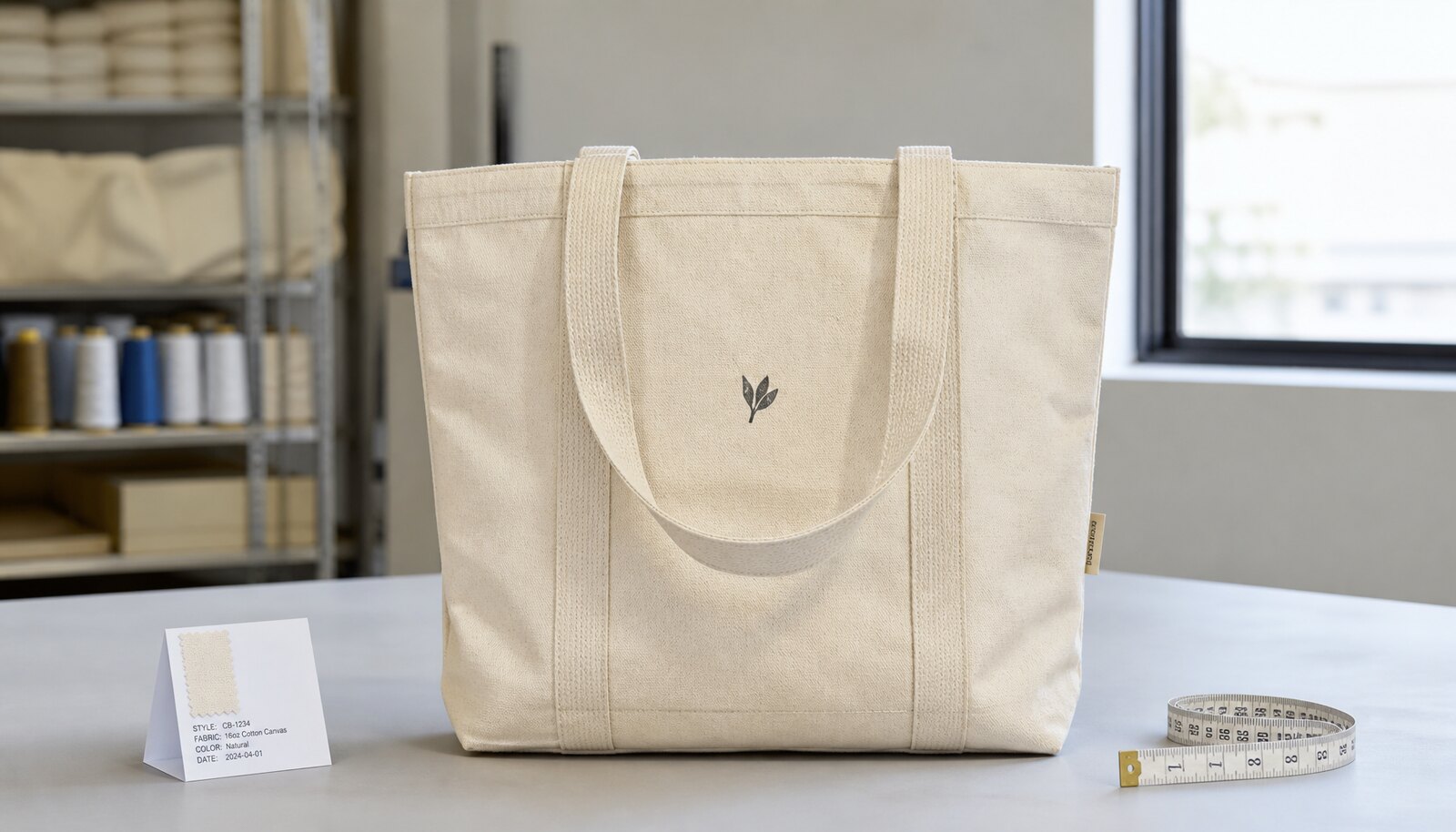
Why Museum Bags Need Their Own Sourcing Logic
Large canvas grocery bags for museums are not ordinary promotional totes. They sit between retail souvenir, working carrier, and branded merchandise, which means the buyer has to solve for appearance, carry performance, and margin at the same time. A museum shopper may fill the bag with books, exhibition catalogues, postcards, boxed gifts, bottled drinks, and apparel. That changes the product definition. A thin throwaway bag may be cheap to buy but weak on shelf. An overbuilt tote may look premium but push the retail price beyond what the shop can support.
Museum retail also adds a commercial constraint that generic tote advice usually ignores: the bag has to fit the shop's assortment and the museum's buying calendar. The best sourcing plan starts with the store format, the expected basket, and the date the bag has to be on shelf. A gift shop near a major exhibition opening has different needs from a permanent collection shop with steady traffic. If the bag is meant to earn margin as a core SKU, the spec needs to be stable enough for repeat ordering. If it is tied to a show, the plan should leave room for artwork changes without changing the whole bag every season.
- Define whether the bag is a core SKU, an exhibition item, or an impulse add-on.
- Match the bag to the actual basket of purchases in the shop.
- Set a target retail price before asking suppliers to quote materials and finishing.
Start With Assortment, Margin, and Carry Load
Museum buyers should start by looking at what sits beside the bag in the store. If the shop sells books and catalogues, the tote needs enough structure to hold rectangular items without collapsing. If the assortment is mostly apparel, stationery, or smaller gifts, a slightly softer canvas may be acceptable. That decision should come from the merchandise mix, not from a supplier's default template. It also affects how customers perceive value. A shopper will read a sturdy tote as a usable retail product, while a floppy one can feel like a premium-priced giveaway.
The bag should also fit the shop's operating model. Some museum stores have limited backroom storage and need flat-fold packing. Others rely on quick replenishment from the stockroom during busy exhibition weekends. If the tote is part of a seasonal assortment, the buyer should plan for how it will behave across the season: launch, peak traffic, markdown risk, and reorder window. That is the commercial reality. A good sourcing plan keeps the base bag stable and changes only the elements that need to move, such as print artwork or a seasonal label.
- Use the heaviest realistic merchandise mix from the shop as the load reference.
- Check whether the tote needs to fit books, bottles, or both.
- Decide if the bag must be flat-stacked, hung, or displayed folded on shelf.
Fabric and Construction Specs That Sell in Retail
For most museum programs, 12 oz canvas, or roughly 400-420 GSM, is a practical starting point. It is heavy enough to feel like a retail product, prints well, and usually gives the bag enough body to stand up on shelf. If the buyer is working to a lower price point or expects lighter merchandise, 10 oz canvas can work, but the tote will feel softer and may sag more under load. Heavier canvas can lift perceived value, but it also raises fabric cost and can slow sewing, so it should be used only when the retail price can support it.
Size and structure matter just as much as fabric weight. A useful planning range for many museum shops is about 14 x 16 x 6 in. to 15 x 17 x 6 in., though the final size should reflect the merchandise mix and how the bag will be displayed. A 6 in. gusset is a strong default because it handles books and boxed items better than a flat panel tote. Handle drop should be chosen for actual use, not aesthetics alone. If customers are expected to carry the bag on the shoulder, the drop needs to support that comfortably without making the tote look oversized when held by hand.
- 12 oz / 400-420 GSM: strong default for a balanced museum retail tote.
- 10 oz / 330-360 GSM: useful when price pressure is high and the bag will carry lighter goods.
- 14-16 oz / 470-540 GSM: better for a more structured look, but only if the retail price can support it.
- 6 in. gusset: a practical starting point for books, catalogues, and mixed purchases.
- Ask for handle reinforcement patches or bartacks if the shop sells heavy items.
Private-Label Branding That Fits the Museum Brand
Museum buyers usually want branding that feels intentional, not loud. A one-color screen print is often the most reliable choice for a repeatable retail program. It is clean, relatively durable on canvas, and easier to hold consistent across reorders than more complex decoration. If the artwork is highly detailed or uses multiple colors, the buyer should ask whether the mark can be simplified without losing the museum identity. The goal is a bag that looks calm and collectible, not one that uses every available decoration method.
A woven side label or seam label can add brand presence without turning the front panel into an ad. That is useful when the museum wants the tote to feel like a lasting souvenir rather than a one-season promo item. Embroidery can work, but only for simple graphics and only when the fabric weight can carry the needle penetration without distortion. Heat transfer is best treated as a short-run option. It may solve a deadline problem, but it is not usually the best default for a canvas bag that will see real retail wear.
- Use screen print for repeatable museum SKUs with simple artwork.
- Use a woven side label when you want quieter branding and better shelf presentation.
- Use embroidery only when the art is simple and the canvas is heavy enough to support it.
- Treat heat transfer as a short-run tool, not the default for a core bag line.
Supplier Routes and the Decision Thresholds Behind Them
The right supplier route depends on how much control the museum needs over the finished bag. A direct sewing factory is usually the best fit for core private-label SKUs because it gives the buyer the clearest control over stitching, sample-to-bulk consistency, and repeat-run stability. A trading company can help when the order includes multiple trims, export paperwork, or communication support across several factories. The tradeoff is margin opacity. Buyers need to know who is actually making decisions on QC, because a nice quote is not useful if no one owns the bulk outcome.
Specialized bag workshops are often the best middle path when the museum wants a more finished retail product. They are better suited to reinforcement detail, label placement, and repeatable presentation than a general supplier that sells many product types. Stock or low-price general suppliers work best for one-off events where speed matters more than long-term repeatability. The main rule is simple: if the museum expects a reorder, the sourcing route must be able to recreate the same bag in three months without spec drift. If it cannot, the bag should be treated as a campaign item, not a permanent SKU.
- Use a direct factory for repeatable core SKUs and tighter sample-to-bulk control.
- Use a trading company only if it can prove the factory, QC process, and trim source.
- Use a specialized workshop when the tote needs more construction detail or a more retail-ready finish.
- Use stock suppliers only when the bag is tied to a one-off event and reorder continuity does not matter.
Quote Structure, MOQ, and Cost Drivers
The quote should be built from components, not from a single all-in number. The museum buyer needs to see the bag body, print, labels, packing, and setup fees separately. That is the only way to compare offers fairly. A low unit price can hide expensive screen setup, special trim charges, or retail packing add-ons. It can also hide the opposite problem: the supplier may quote a simple blank tote and then charge extra for every small museum-specific detail the buyer assumes is included. If the quote does not show the price logic clearly, it is not ready for approval.
MOQ should be read as a function of what is being customized. For a natural canvas tote with one-color print and flat packing, a practical planning range is often 500-1,000 pcs if the supplier has stock fabric and standard trims. Add woven labels, custom insert cards, or retail packing and the MOQ often moves into the 1,000-3,000 pc range. Custom-dyed fabric, multi-color art, or special carton specifications can push it higher. Buyers should not treat MOQ as one universal number. They should treat it as the result of fabric, decoration, and packing complexity.
- Ask for unit price, setup fees, sample fees, and packing add-ons as separate lines.
- Confirm whether MOQ is driven by fabric, print version, label type, or carton format.
- Compare only like-for-like quotes with the same fabric, artwork count, and packing standard.
- Request repeat-run pricing if the museum expects to reorder the bag.
Sample Approval and Golden Sample Lock
Museum tote samples should be approved as working retail products, not just as visuals. Start with dimensions: finished width, height, gusset depth, and handle drop. Then test how the bag behaves empty and loaded. A tote can look clean on a sample table and still fail once books or bottles go in it. That matters in a gift shop because the customer is not buying a design render. They are buying something they need to trust at the point of sale.
The sample stage should also lock down print placement, label position, and fold behavior. Check centerline alignment, ink coverage across the canvas weave, and any distortion near seams or handle joins. If the bag uses a woven label, verify that it lies flat, does not create a bulky fold, and does not interfere with packing. Once the museum approves the golden sample, store it with the final spec sheet and artwork file. Reorders only stay consistent when the approved reference is version-controlled and easy to find.
- Measure the sample after it has rested flat, not immediately after sewing.
- Test the tote with the heaviest realistic merchandise mix from the museum shop.
- Check print alignment, label placement, and handle feel before bulk approval.
- Keep the golden sample with the spec sheet and artwork file as one reference set.
QC Thresholds and Inspection Evidence Buyers Can Use
Quality control is only useful if the acceptance criteria are measurable. A museum buyer needs a short list of pass-fail checks that can be used at sample stage and again at bulk inspection. That starts with dimensions and fabric weight, but it should also include stitching, print placement, handle attachment, and packing count. For book-heavy museum programs, the handle test matters more than it does for a lightweight giveaway bag. The supplier should be able to explain how the load is tested and what counts as failure before the bags leave the factory.
The buyer should also ask for evidence, not just reassurance. Photos of print placement, seam finish, and carton packing are worth asking for on the first order. If the supplier resists simple evidence, that is a signal that the process may be less controlled than the sales pitch suggests. QC does not need to be complicated. It just needs to be specific enough that both sides know what is acceptable before the shipment is booked.
- Set a dimension tolerance of plus or minus 5 mm against the approved sample.
- Verify finished fabric weight within plus or minus 5% of the target GSM.
- Define a static load test based on the museum's real carry load plus a safety margin.
- Reject bags with skipped stitches, seam opening, or visible loose thread clusters.
- Require print placement within plus or minus 6 mm of the approved keyline.
- Check color under daylight-equivalent lighting and compare sample to bulk, panel to panel.
- Confirm barcode placement, carton count, and carton marks before shipment release.
Packing, Shelf Readiness, and Backroom Constraints
Packing is part of the product in a museum store. Flat folding usually makes the most sense because it protects the canvas, reduces carton bulk, and keeps storage efficient in a back room that is already short on space. Barcode stickers should be placed where staff can scan them without unfolding the tote. If the shop uses exact receiving counts, the pack quantity and master carton quantity need to match the purchase order precisely. Otherwise the bag arrives as a merchandising problem instead of a sales item.
Shelf readiness should be defined early. Some museums want the bag to look premium when folded on a fixture. Others care more about fast receiving and easy replenishment than about a perfect front-of-house display. Those goals can conflict if the supplier is not told how the bag will be handled. If the tote is part of a seasonal exhibition line, the buyer should keep the base pack format stable and change only the art or label when needed. That reduces rework and makes replenishment less fragile.
- Use flat fold unless the bag is being sold hanging or open-face on shelf.
- Place barcode stickers where staff can scan them quickly at receiving.
- Fix inner pack count and master carton count before production starts.
- Keep the base packing format stable if the bag will be reordered across seasons.
Lead Times, Seasonal Cycles, and Landed Cost
Lead time should be planned around the museum calendar, not generic factory timing. Exhibition dates, holiday traffic, school breaks, and store reset windows often create the real deadline. The biggest risk is usually not sewing time but sample approval, art sign-off, and packing confirmation. Late changes to print size, label position, or carton format can trigger extra setup and push the shipment past the on-sale window. The buyer should build buffer time for exactly those steps, especially when the bag is tied to a launch date.
Landed cost should be compared on one consistent basis. The right comparison includes the bag price, setup fees, packing, carton density, freight assumptions, and the chance of rework if the sample is not followed closely. A cheaper quote can become more expensive if the cartons are oversized, if the pack count is awkward, or if the supplier needs extra rounds to match the approved sample. For museum retail, the best sourcing decision is usually the one that keeps the unit economics predictable over the season, not the one that only looks cheapest on the first line of the quote.
- Build time for artwork approval and packing sign-off into the schedule.
- Avoid late changes to print size, label position, or carton format after sample approval.
- Compare landed cost using the same spec, same pack count, and same artwork complexity.
- Account for freight density and likely QC rework, not only factory unit price.
- If the bag will repeat annually, keep one stable base spec and rotate only the seasonal art.
Specification comparison for buyers
| Supplier option | What to verify | Commercial advantage | Buyer risk to control |
|---|---|---|---|
| Direct sewing factory | fabric swatch, approved sample, seam close-ups, logo test photos, packing pilot, and final inspection evidence | Better sample-to-bulk control and faster production feedback | May be weaker on export paperwork or branded packing unless checked early |
| Trading company | Factory name, production photos, trim-source proof, and who owns QC decisions | Can coordinate small mixed orders and extra services | Markup can hide real factory capability and slow defect decisions |
| Specialized bag workshop | bag size, gusset, handle drop, seam allowance, stitch density, reinforcement patch, and loading expectation | More practical for detailed construction, trims, and repeat programs | Capacity may be limited during peak seasons |
| Low-price general supplier | 8-12 oz cotton canvas, 120-220 gsm cotton, recycled cotton, or blended fabric selected by use case and target price | Useful for simple promotional runs with loose specs | Material downgrades, weak packing, and vague inspection scope can erase savings |
| Retail-ready supplier | fold method, inner bundle, carton count, carton mark, moisture protection, SKU separation, and warehouse receiving needs | Can handle labels, SKU separation, carton marks, and receiving rules | Higher unit cost must be compared against reduced warehouse work |
| Compliance-focused supplier | Fabric records, labeling review, test plan, and production traceability | Safer for retail programs and repeat brand orders | Documentation claims need evidence, not only sales language |
| Local sample room plus bulk factory | Signed sample, bulk factory handoff, first-piece photos, and deviation owner | Good for complex branding before large production | Sample room quality may not match bulk line unless handoff is controlled |
Buyer checklist before sampling
- Finished size, gusset depth, and handle drop are written on one spec sheet with tolerances.
- Target fabric weight is stated as finished GSM, not only loom weight or pre-wash weight.
- Primary use case is defined: books, catalogues, bottled drinks, apparel, mixed gift shop purchases, or event giveaways.
- Artwork instructions specify print count, Pantone target, placement, and whether side A and side B differ.
- Private-label trim choice is made: woven label, seam label, inside label, hangtag, or no trim.
- Load expectation is documented so handle length and reinforcement match the real merchandise mix.
- Packing format is defined: flat fold, inner pack quantity, barcode placement, carton marks, and master carton count.
- Seasonal timing is mapped to exhibition openings, store resets, tourism peaks, and replenishment windows.
- Sample approval path is defined: prototype, pre-production sample, golden sample, and bulk lock.
- Quote is broken out by body, print, trims, packing, setup fees, and any second-run price change.
Factory quote questions to send
- Is the quoted fabric weight the finished GSM after any washing, shrinkage, or finishing, or is it only raw fabric weight?
- What is the exact finished size, gusset depth, handle length, and handle drop included in this quote?
- How many print colors are included, and what is the added cost for a second color, second side, or artwork revision?
- What is the MOQ by fabric color, print version, and label type, and can seasonal exhibition variants share one production run?
- Which items are standard in the price: fabric, handles, bartacks, woven label, polybag, insert card, barcode sticker, and carton marks?
- What lead time do you quote for sampling, first production, and repeat production if the spec does not change?
- What inspection standard do you use for dimensions, stitch density, print registration, and pack count?
- Can you share photos or a checklist from a recent pre-shipment inspection for a similar canvas tote?
- What carton size, gross weight, and pack count do you expect for this style, and how will that affect freight cost?
- If the museum needs a reorder, which parts stay fixed and which parts are allowed to vary?
Quality-control points to confirm
- Finished dimensions should match the approved sample within plus or minus 5 mm on each measured side after the bag has rested flat for 24 hours.
- Fabric weight should be within plus or minus 5% of the approved GSM target, measured from finished material rather than from a sales declaration.
- Seams should show no skipped stitches, seam opening, needle damage, or loose thread clusters that affect strength or shelf appearance.
- Handle attachment should pass a documented static load test based on the museum's real carry load plus a safety margin, with no bartack failure or stitch tearing.
- Handle drop should match the approved sample within plus or minus 5 mm so shoulder carry feels consistent across the order.
- Print placement should stay within plus or minus 6 mm of the approved keyline, with no major bleed, smudge, cracking, or visible misregistration.
- Color should be checked against the approved swatch under daylight-equivalent lighting, with no obvious shade shift between panels, lots, or sample and bulk.
- Trim edges, label corners, and inside seam endings should be clean, with no fraying or label placement that interferes with folding or scanning.
- Flat-pack count, barcode placement, and carton quantity should match the purchase order exactly, and carton marks should remain legible after transit handling.
- The golden sample, final spec sheet, artwork file, and packing standard should be stored together so reorders can be checked against one version-controlled reference.