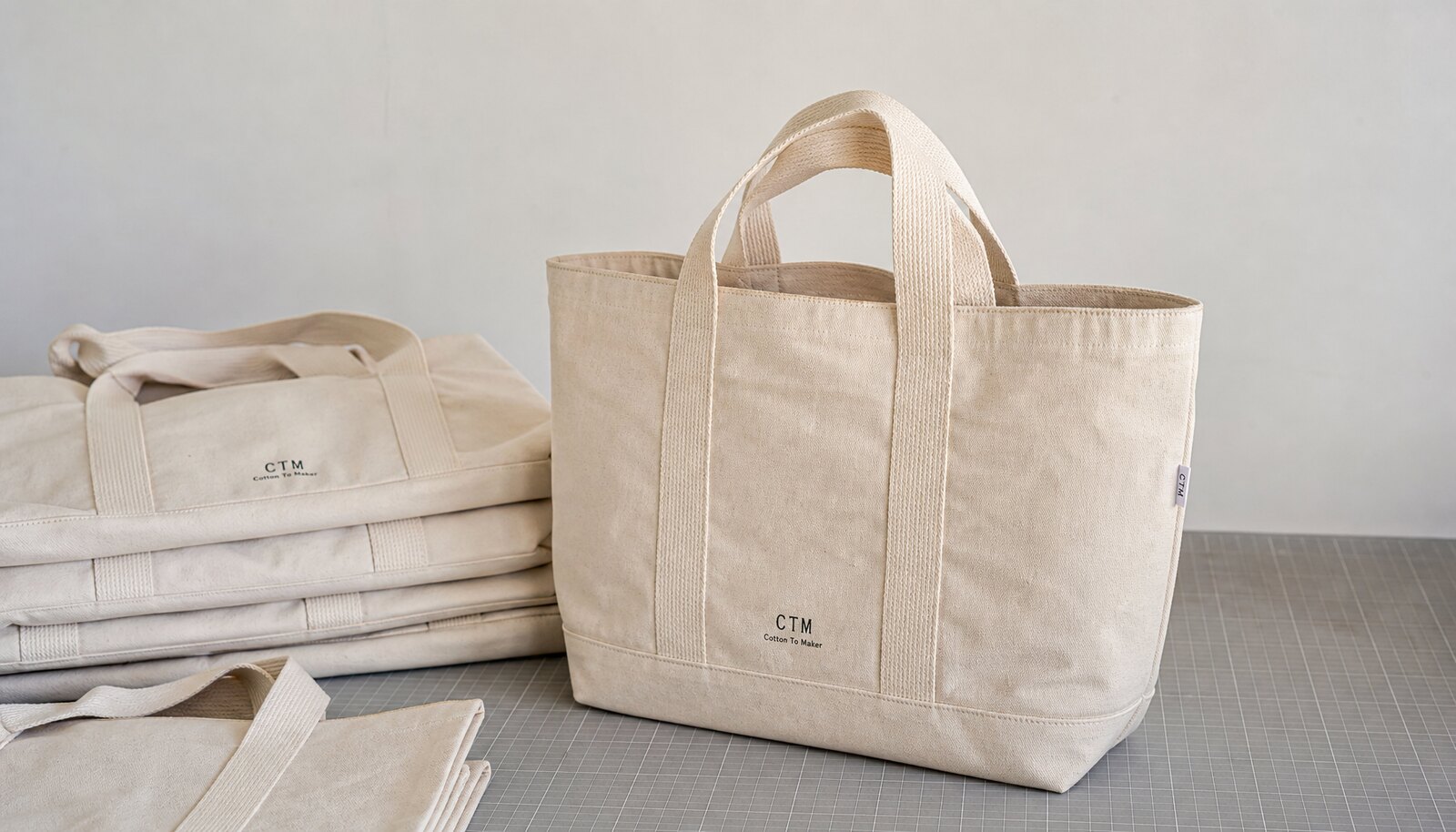
1. Start with the use case, not the bag trend
Large canvas grocery bags for hotels retail launch buying guide searches often begin with style, but procurement decisions should begin with function. The same bag format can serve three very different buying situations: a hotel gift or amenity item, a retail launch product, or a grocery-use carry bag sold at checkout. Those channels do not value the same things. Hotels usually care about a premium first impression, easy storage, and a clean presentation in the room or gift shop. Retail launch buyers care about shelf appeal, barcode readiness, and the ability to reorder the same spec later. Grocery buyers care more about load handling, durability, and cost per use.
That channel difference changes almost every line in the RFQ. A hotel program may accept a softer handfeel, a smaller logo, and flat packing. A retail launch may require stronger stitching, a more consistent bag shape, and packaging that survives shelf display. A grocery resale program may need reinforced handles, wider gussets, and a more conservative fabric weight because customers will load bottles, cartons, or heavy produce. If you do not define the use case up front, suppliers will fill the gap with their own assumptions, and you will receive quotes that cannot be compared fairly.
Before sending out a request for quotation, write a one-page use-case brief that answers six practical questions: What goes inside the bag? How heavy is the typical load? Is the bag carried by hand, shoulder, or both? Does it need to stand upright? Will it be sold flat, folded, or pre-packed? And is the primary objective premium presentation, low cost, or long-term durability? Those answers help a supplier choose the right fabric density, handle structure, and carton configuration from the start.
For hotel buyers, also define whether the bag is a guest giveaway, a concierge-sold item, or part of an amenity program. A giveaway can often tolerate simpler finishing. A retail item inside the hotel shop needs the same discipline as any consumer product: clear SKU labeling, presentation consistency, and a replenishment plan. For retail launch teams, treat the first order as a test of both product fit and supplier discipline. If the launch works, the same spec should be easy to repeat without rework.
The most common procurement mistake is approving a bag sample before the channel requirement is clear. A bag that looks strong enough for a hotel gift may still fail on a retail shelf because the handle hangs unevenly or the print looks too small from a distance. A bag that looks premium in a showroom may become too expensive once freight, packing, and retail margins are included. Define the use case first, then design the bag to match it.
- Hotel use: premium feel, low brand noise, predictable presentation, and often flat pack
- Retail launch: shelf-ready appearance, barcode or hangtag support, and repeat-order consistency
- Grocery use: stronger handle joins, better seam strength, and practical load performance
- Always define the target load before asking for samples or quotes
2. Choose canvas weight with a buying-spec mindset, not a marketing phrase
For large canvas grocery bags, a useful starting range is usually 10–12 oz cotton canvas, which is roughly 300–400 GSM depending on the weave, finishing, and how the supplier measures it. That range is common because it balances handfeel, printability, and actual load performance. Below that range, the bag may feel thin, collapse when filled, or show print show-through on dark inks. Above that range, you gain body and some abrasion resistance, but you also add fabric cost, sewing difficulty, and freight weight.
GSM alone is not enough to compare suppliers. Two fabrics can both be described as 340 GSM and behave differently in hand and in production. A tighter weave with lower slub content will usually print more cleanly and hold shape better. A looser weave may feel more relaxed but can show more irregularity in the weave surface and may allow the print to sink in unevenly. Ask the supplier whether the fabric is greige, piece-dyed, pre-shrunk, enzyme-washed, or otherwise finished, because finishing changes the final handfeel and can affect size stability.
There are also tradeoffs between retail-facing appearance and pure utility. A hotel gift bag may benefit from a softer, more approachable handfeel, especially if it is sold as a lifestyle accessory. A grocery-use bag may be better with a firmer body and slightly heavier canvas because it keeps its shape when loaded with bottles or boxed goods. If the bag needs to stand on a shelf, a firmer canvas and more defined bottom panel make a visible difference. If it will be folded into a hotel drawer or distributed in bulk to guests, a softer, more compressible canvas may be easier to manage.
When comparing supplier quotes, require them to quote the same fabric basis weight, weave type, finishing, and acceptable tolerance range. Ask for a swatch or photo of the actual stock canvas if the order uses standard fabric, or a lab dip and weave reference if the supplier plans to source custom material. In some markets, suppliers may quote a lower GSM but use a narrower fabric width or a different weave density to hit a price point. That can distort the real comparison. If you want procurement-grade comparison, normalize the material spec before you compare unit prices.
As a practical guide, 300–320 GSM often works for lower-cost launch programs or lighter retail carry. 330–380 GSM is the balanced zone for many hotel and grocery programs because it gives a better structure without making the bag too heavy or too expensive. 400 GSM and above is usually a deliberate premium choice, not a default choice. It can make the bag feel more substantial, but it also raises cutting waste, freight cube, and sewing effort. The right answer depends on the use case, not just on the desire for a stronger product.
- 300–320 GSM: lower-cost launches, lighter carry loads, and tighter price targets
- 330–380 GSM: balanced spec for most hotel and grocery buyer programs
- 400 GSM and above: premium body, higher freight weight, and more sewing effort
- Ask for weave type, finishing method, and shrink control, not GSM alone
3. Dimensions, gusset depth, and handle geometry determine usability more than artwork does
Many first-time buyers focus on logo size, but the bag’s dimensions are what determine whether it works on the floor. For large canvas grocery bags, a practical starting point is often a body in the range of roughly 38–42 cm wide and 35–40 cm high, with a moderate gusset that gives the bag enough internal volume without making it bulky to ship. If the gusset is too narrow, the bag does not sit well with bottles or boxed items. If the gusset is too deep, the bag becomes boxy, takes up more carton space, and can look awkward when empty.
The handle is equally important. For grocery and retail use, 25–30 mm cotton webbing is a sensible baseline because it spreads load better than thin webbing and gives a more substantial appearance. But width alone does not solve comfort. Buyers should specify handle drop, total loop length, handle attachment point, and whether the bag should be hand-carry or shoulder-carry friendly. If you only say “comfortable handles,” each supplier will interpret that differently.
Handle reinforcement should be explicitly defined. Bar-tack reinforcement can be efficient and strong when done correctly, while X-box stitching often gives a more visible premium reinforcement structure. The best option depends on the bag’s load and the intended visual style. The important procurement point is not which stitch the factory prefers; it is whether the chosen stitch pattern is documented, repeatable, and easy to inspect. If the bag will be sold retail, even a small variation in handle angle or attachment symmetry can make the product look inconsistent on shelf.
Also decide whether the bag must stand upright when empty or partially loaded. Some retail and hotel buyers want the bag to hold shape in-store or in a guest room. That requires a firmer canvas, a more stable gusset, and sometimes a boxed bottom construction. If the bag will be used mainly as a promotional carry bag, a simpler construction may be sufficient. Stated another way: a strong product is not always the same as a useful product. The dimensions and geometry should match the actual customer behavior you expect after launch.
As a final check, make the supplier confirm the finished measurements in writing: width, height, gusset depth, handle width, handle drop, and stitch allowance. If you are buying several SKUs or colors, keep the measurement format identical across every quote. That makes the comparison easier and reduces the risk of one supplier using hidden dimensional assumptions to make the price look better.
- Specify width, height, and gusset separately, not as one overall size
- Define handle width, drop, and total loop length in the RFQ
- State whether the bag must stand upright, fold flat, or fit a shelf display
- Document handle reinforcement style so all suppliers quote the same build
4. Print, branding, and decoration should be matched to quantity and surface texture
On textured canvas, branding is not just an artwork decision; it is a production decision. For most large canvas grocery bags, a one-color or two-color screen print is the most practical option because it keeps setup costs lower and gives predictable coverage on a woven surface. It also tends to survive the launch order better when artwork is simple and the quantity is large enough to spread setup cost across units. If your logo uses fine type, gradients, or multiple color separations, the supplier may need to simplify the art or switch methods, which can change the look of the bag more than buyers expect.
If your brand requires a more premium presentation, woven labels, patch labels, or embroidery may be the better route for certain placements, especially when the logo mark is small or when the bag should feel less promotional. But those methods usually add labor, can affect MOQ, and may change the perceived weight of the front panel. They can also complicate approval because thread color, stitch density, and placement tolerance all need to be managed. For a retail launch, that can be acceptable if the brand story justifies it; for a cost-sensitive grocery program, it can be over-engineering.
When reviewing print quotes, ask the supplier to state the print area in centimeters, the number of colors, the ink type, whether a strike-off is included, and how many revision rounds are covered before extra charges apply. Ask whether the quoted price includes print curing or washing after print, because insufficient curing can cause cracking, tackiness, or color transfer. If the canvas is dark, insist on knowing whether underbase printing is required. That can materially change cost and appearance.
It is also important to understand where the print sits relative to seams and folds. A large front graphic that is centered on a flat sample may drift visually once the bag is filled, folded, or hung on a hook. For hotel buyers especially, a smaller logo placed in a stable area often looks cleaner than a large full-panel graphic. Retail launch buyers should inspect the sample on a display form or after stuffing, because the bag may hang differently once its own weight pulls on the handle attachments.
The best quote is one that matches your artwork complexity to the intended order size. If the supplier proposes a complex print method for a small run, ask what makes that method necessary and what the fallback option is if the launch quantity grows later. For procurement teams, the goal is not just to get a bag printed; it is to lock a decoration method that remains repeatable for replenishment without surprise cost escalation.
- Screen print: best for simple logos, cleaner cost control, and good repeatability
- Heat transfer: useful for finer detail, but inspect durability, feel, and placement risk
- Embroidery or woven label: premium feel, but higher labor and often higher MOQ
- Always confirm strike-off, curing, and color references before bulk approval
5. MOQ should be interpreted as a production signal, not a shopping metric
MOQ matters because it tells you how the supplier is set up to run the product. For custom large canvas grocery bags, a lower MOQ is usually possible when the supplier can use stock canvas, a simple shape, a single print color, and standard packing. Once you add custom dyeing, complex handle construction, closure hardware, or retail-ready packaging, the economic floor rises because the factory needs more setup time, more material coordination, and more line changeovers.
That does not mean buyers should automatically choose the supplier with the smallest MOQ. A very low MOQ can be a sign that the supplier is flexible, but it can also indicate that the quote assumes limited control over fabric choice, slower replenishment, or a heavier reliance on spot purchasing. For a retail launch, the best MOQ is the one that fits the real launch plan and leaves a path for restock without rebuilding the entire spec from scratch. For a hotel program, a slightly higher MOQ may be acceptable if it ensures consistent presentation and fewer production variations.
When comparing vendors, ask them to split MOQ by variable. Is the MOQ tied to color? To artwork? To the handle material? To packaging format? To carton count? Those distinctions matter. A factory may be able to produce 1,000 pieces overall, but only 500 pieces per color, or only if you accept stock fabric. Another supplier may support mixed designs but charge higher setup fees. If you do not isolate those variables, you may accidentally compare a flexible quote with a more rigid one and think the prices are very different when the build is not actually the same.
For launch planning, it helps to think in lanes. A market test order can be built around stock canvas, one print color, and flat packing. A first retail launch can justify a little more structure: better reinforcement, exact carton counts, and perhaps a retail hangtag. A replenishment program can then move to tighter color control and stronger inspection standards. This staged approach lowers the risk of overcommitting to a spec that has not been proven in use.
The key procurement lesson is that MOQ is not a quality guarantee and not a cost benchmark by itself. It is a signal about the supplier’s manufacturing model. Use it to understand flexibility, setup burden, and likely response time, then compare the actual landed cost and QC discipline before you decide.
- Low MOQ can work when the supplier uses stock canvas and simple decoration
- Custom dye, special closures, or retail-ready packing usually raise the minimum
- Separate MOQ by color, design, and packing format in the RFQ
- Ask what happens to price if the order is split into multiple SKUs
6. Evaluate suppliers on evidence, not presentation
For large canvas grocery bags, supplier evaluation should start with proof of capability rather than a polished sales pitch. A strong factory or trading company can explain how the bag is made, where the fabric comes from, how the stitches are controlled, and what happens if the first production lot fails an inspection. A weak supplier may focus on broad promises, while avoiding specific answers about sourcing, defect handling, or production line ownership.
Direct factories usually make sense when you want repeat orders, tighter QC control, or direct visibility into material sourcing. Trading companies can be helpful if you need multiple product categories, consolidated communication, or faster quoting across different styles. But either route should be held to the same evidence standard. Ask for the actual sewing site, fabric source, recent sample-room photos, production photos, and documentation for the quality process. If the supplier cannot tell you where the canvas is sourced or who is responsible for the final inspection, the risk sits with you.
This is also where practical document requests matter. For a hotel or retail program, ask for mill or fabric source information, OEKO-TEX, GRS, GOTS, BSCI, or similar documents only if they are relevant to your brand or customer requirements; do not ask for certificates you do not need, but do ask for whatever compliance papers your market requires. If the supplier claims a sustainability or social compliance program, request the actual certificates, validity dates, and scope. If they cannot provide them promptly, treat the claim as unverified until proven otherwise.
You should also ask how the supplier manages substitutions. If the selected fabric is temporarily unavailable, will they propose a different roll from the same mill, an alternative mill, or a different weave? Will they notify you before cutting begins? Will they need written approval for thread changes, label changes, or packaging changes? Buyers who do not define substitution rules often discover after shipment that the bag differs from the approved sample in ways that create receiving disputes or customer complaints.
Contingency planning matters because the supply chain for canvas bags can be disrupted by fabric delays, print capacity issues, or packing material shortages. A reliable supplier will explain whether they hold stock fabric, whether they have backup sewing lines, and how they handle late shipments from their fabric source. If the answer is vague, you should build more time into the project or move to a supplier with a clearer control structure. In procurement, transparency is often more valuable than a slightly lower quoted unit price.
- Direct factory: stronger control over sewing, fabric sourcing, and repeatability
- Trading company: useful for consolidated programs, but verify the actual factory and mill
- Request source documents, compliance certificates, and validity dates where relevant
- Ask for a written substitution policy covering fabric, trims, labels, and packing
7. Use a structured comparison grid for hotel and retail launch sourcing
The right sourcing route depends on whether the bag is being bought for hotel distribution, retail resale, or a hybrid program. A hotel buyer may prioritize appearance, consistency, and the ability to pack efficiently into a back-of-house system. A retail buyer may prioritize shelf appeal, barcoding, case pack efficiency, and a stable replenishment pipeline. The same supplier can work for both, but the weighting of the decision criteria should change by channel.
A good supplier comparison should include at least six weighted factors: fabric suitability, sample accuracy, QC process, lead time reliability, packing efficiency, compliance documentation, and price. Weighting helps the team avoid overreacting to a low unit price when sample quality or delivery reliability is poor. For example, a hotel launch with a fixed event date may put more weight on lead time and sample accuracy. A retail launch with repeat replenishment may put more weight on QC consistency and supplier communication. The table below gives a procurement-style way to score vendors.
In practice, suppliers should be asked to quote against a single spec sheet version. That spec sheet should include the approved size, fabric weight, color, decoration method, handle details, packing method, carton count, and inspection expectations. Then the team can score each supplier on the same basis. If one vendor quotes a different handle width or a different bag fold, the price comparison becomes meaningless. This is especially important when a buyer is comparing a direct factory with a trading company, because the trading company may bundle services that are not obvious in the first quote.
For hotel procurement, also look at the visual consistency of the sample across multiple pieces. Hotel buyers often need a tidy, premium presentation and may be less tolerant of subtle shade differences or uneven panel alignment. For retail launch procurement, assess how the sample looks after handling, folding, and shelf placement. A bag that looks perfect in a flat photo may present poorly once it is touched by staff or customers. That is why a structured comparison needs both visual and functional evidence, not just price.
If the launch schedule is tight, short-list suppliers who can show stable sourcing and a realistic approval timeline. If the market test is more flexible, you may accept a slightly longer lead time in exchange for lower unit cost or lower MOQ. The critical thing is to make the tradeoff explicit before you approve the order.
- Weight supplier scores by channel priority, not just by price
- Use one controlled spec sheet for every supplier quote
- Check visual consistency across multiple samples, not only one hero sample
- Retain the same spec version through quote, sample, and inspection
8. Sample approval should combine visual review with load testing and measurement
A sample should never be approved on appearance alone. A correct approval process checks the bag as a product under load, not as a flat piece of fabric. Start by verifying dimensions against the approved spec sheet with a ruler or caliper. Then inspect the canvas weight if you have a simple weight check method, or at least compare the sample against the swatch and approved reference. After that, review print placement, seam alignment, handle symmetry, and bottom construction.
Load testing should reflect the actual use case. For grocery programs, fill the bag with bottles, canned goods, books, or weighted cartons that approximate real customer behavior. For hotel programs, test with the likely contents the guest or staff will carry. Observe whether the handle joins pull, whether the bag twists, whether the bottom corners deform, and whether the bag remains comfortable to carry. A sample that survives a brief visual check but fails after practical loading is not ready for bulk production.
Pay close attention to print and seam interaction. If the artwork sits too close to a fold line or seam, the print may distort when the bag is filled or when the fabric shifts during sewing. Ask the supplier to show a revised artwork placement if needed. For multi-color logos, inspect registration under normal light and at a viewing distance similar to retail shelf distance. Buyers often forget that the customer will not inspect the bag as closely as the QA team does.
If you are ordering several colors or sizes, do not approve only one sample and assume the others will match perfectly. Ask for a sample of each critical variant or at least a confirmed material reference for each colorway. Natural canvas can vary more than synthetic fabrics, and dye lots can differ. For a retail launch, that variation can make the product line look inconsistent even if every unit technically meets the base spec.
A strong sample approval file should include the approved sample photo set, measurement record, print reference, and a written list of any accepted deviations. That document becomes the anchor for production and inspection. If there is no record of what was approved, later QC disputes are much harder to resolve.
- Measure width, height, and gusset on the sample before approval
- Load-test handles and bottom seams with realistic contents
- Confirm print placement after the bag is filled, not only when flat
- Keep a written approval record with photos and any accepted deviations
9. Packing, carton math, and warehouse handling can change landed cost materially
Packing choices affect more than presentation; they directly change freight, storage, and receiving labor. Flat-packed canvas bags save cubic space, reduce shipment cost, and usually work well for hotel supply channels or distribution centers. Individual polybags can protect the bag from dust, improve shelf presentation, and support retail scanning or hangtag presentation, but they add cost and increase carton volume. The buyer should decide packing format based on where the goods are handled after arrival, not just on whether the product looks better in plastic.
Carton math matters. Ask the supplier to state the exact pack count per inner pack and master carton, the dimensions of the master carton, the gross weight, and how many cartons fit on a pallet if palletization matters. If the carton is oversized or the pack count is inefficient, a cheaper bag price can disappear in transport and warehouse labor. A carton that is too heavy can also slow receiving or trigger handling concerns. For a retail launch, carton math should be part of the comparison from the beginning, not added after pricing is already accepted.
Include barcode, SKU label, and packing slip instructions in the RFQ. If the bag must be retail-ready, the supplier should know whether each unit needs an individual sticker, a hangtag, or an insert card. If the goods are for hotel operations, the case label may need to be simpler but more robust for back-of-house handling. Ask the supplier to show a carton mock-up before bulk production if the pack format is unusual or if the order has multiple SKUs.
Do not underestimate the value of standardized packing. If every supplier uses a different carton size or bag fold, warehouse receiving gets harder and the landed-cost comparison becomes distorted. One supplier may look cheaper on paper but may ship in inefficient master cartons that cost more to move. The best procurement practice is to fix carton count, carton size limits, and unit presentation before the final quote is accepted.
Finally, make sure the packing rules are written into the purchase order. Verbal packing instructions are easy to miss when production gets busy. If the order is important to shelf presentation or to a hotel gifting program, the pack specification should be as explicit as the bag specification itself.
- Flat pack usually reduces cube and freight cost
- Individual polybagging improves retail presentation but adds cost and handling
- Fix carton count, carton size, and label rules before comparing landed cost
- Ask for a carton mock-up when the pack format is unusual or multi-SKU
10. Build the landed-cost model before you approve the order
A procurement buyer should never approve large canvas grocery bags on unit price alone. The real cost of the program includes fabric, cutting, sewing, print setup, reinforcement method, packing format, carton size, inspection effort, freight cube, and the cost of any expected rework. A low bag price can be misleading if the supplier quietly uses a heavier canvas than you need, adds extra packaging, or quotes on a different handling assumption. The landed-cost model makes those hidden differences visible.
To build a useful comparison, start with one master spec sheet and one approval sample baseline. Then ask each supplier to quote the same size, same fabric weight, same handle build, same print method, same packing format, and same carton count. After that, compare setup fees, sample fees, lead time, QC transparency, and the supplier’s response to substitution risk. For a hotel launch, on-time delivery may matter more than the last cent of unit cost. For a retail launch, consistency and replenishment security may matter more than speed alone.
It is also worth asking how the supplier handles risk if something goes wrong during production. Do they offer photo approval before bulk packing? Do they confirm fabric receipt before sewing starts? Do they inspect in-line or only at the end? Do they have backup material sources if the mill delays? These questions do not just protect quality; they protect timing. A bag that arrives after the launch date is effectively an expensive failure, even if the unit cost looked good.
For more accurate landed-cost planning, buyers should also consider expected defect rate and buffer stock. If the channel is retail, a small allowance for replacement units or rework may be necessary. If the channel is hotel distribution, an extra buffer may be valuable to avoid service interruptions. The most reliable way to avoid surprises is to ask the supplier to quote clearly on quality, packing, and timing, then normalize every bid to the same assumptions before final approval.
In short, the cheapest quote is not necessarily the best buy. The best buy is the quote that gives you the right bag, in the right pack, from a supplier that can repeat the spec without hidden substitutions. That is what makes the program workable after launch, not just on paper.
- Compare unit price plus setup, packing, QC, and freight assumptions
- Normalize all quotes to the same size, fabric, and handle spec
- Treat lead time, sample quality, and substitution risk as part of the cost
- Include a buffer plan for reorders, defects, and launch contingencies
Specification comparison for buyers
| Spec decision | Recommended option | When it fits | Buyer risk to check |
|---|---|---|---|
| Direct factory vs trading company | Direct factory for custom canvas bag programs that need repeatability | Repeat orders, fixed brand standards, and stronger control over sewing/QC | Confirm the actual sewing site, who buys the fabric, and who owns defect responsibility in writing |
| Stock canvas vs custom-dyed canvas | Stock natural or stock dyed canvas for the first launch | Market tests, speed-to-market, and lower upfront risk | Shade variation, dye lot consistency, and whether the fabric is ready in time for sample approval |
| Fabric weight and weave | 10–12 oz canvas, ideally with a consistent plain weave and low slub visibility for retail-facing programs | Most hotel gifting, retail launch, and grocery carry use cases | Verify GSM/oz conversion, weave density, and acceptable tolerance before comparing prices |
| Single-color screen print vs multi-color print | Single-color screen print for most launch orders | Clean logo, lower setup cost, and more reliable repeatability | Check ink coverage on textured canvas and whether the supplier is simplifying artwork without telling you |
| Flat pack vs retail polybag | Flat pack for distribution; retail polybag only when shelf-ready presentation is required | Hotel supply channels, warehouse receiving, and bulk replenishment programs | Polybag adds labor, plastic cost, and cube; confirm barcode placement and pack count changes |
| Open top vs closure | Open top unless contents must be secured or merchandised differently | Grocery carry and general retail use | Closures add sewing points, approval time, and often raise MOQ and defect risk |
| Standard handle vs reinforced handle | Reinforced cotton webbing with bar-tack or X-box stitching | Heavier loads, retail resale, and repeated-use programs | Weak handle joins are a common failure point; require measurable strength checks |
| Factory sample vs seller sample only | Request a factory-made pre-production sample, not just a sales sample | Any branded program with a launch date or replenishment plan | Sales samples can hide material substitutions, stitching shortcuts, or print differences |
| Low MOQ route vs cost-efficient MOQ | MOQ aligned to real launch demand, not the smallest possible order | Retail test programs and hotel pilot launches | Very low MOQ can hide higher unit cost, limited fabric control, or slow replenishment |
Buyer checklist before sampling
- Confirm the use case first: hotel amenity/gift, retail resale, or grocery carry; then define target load, desired handfeel, and whether the bag must stand upright.
- Write the fabric spec in both GSM and oz if possible, and include weave type, finishing, and a tolerance range so suppliers do not quote different assumptions.
- Specify body width, height, gusset depth, handle length, handle drop, and handle width as exact dimensions on the RFQ.
- Provide vector artwork, PMS/CMYK references, print size, print placement, and the minimum seam clearance around the artwork.
- State whether the bag must be flat-packed, folded a certain way, or individually polybagged with barcode label, hangtag, or insert card.
- Ask for a factory-made pre-production sample plus stitched seam close-ups, print close-up photos, and carton mock-up photos before approving bulk production.
- Request lead time broken into sample making, material sourcing, approval revisions, bulk sewing, packing, and shipping handoff.
- Compare quotes using the same handle reinforcement, fabric weight, carton count, packing method, and defect tolerance so the price comparison is actually valid.
- Ask for mill or fabric source information, certificate copies, and a substitution policy before confirming the order.
- Define what happens if the approved fabric is unavailable, if a dye lot shifts, or if a print method needs to change due to equipment capacity.
Factory quote questions to send
- What exact canvas specification are you quoting, including GSM or oz, weave type, yarn count if available, and whether the fabric is stock-supported or custom ordered?
- What is the fabric origin or mill source, and can you provide any material documentation such as OEKO-TEX, GRS, GOTS, BSCI, or factory audit reports if applicable to the program?
- What are the finished bag dimensions, handle length, handle drop, gusset depth, and reinforcement stitch pattern included in the price?
- What print method is included, what is the maximum artwork coverage in the quoted price, and what are the setup charges, color limits, and strike-off rules?
- What is the MOQ by color, by print design, and by packing format, and how does pricing change if we reduce quantity or add variants?
- What tolerance do you apply to finished dimensions, fabric weight, color shade, print position, and handle placement?
- What is your standard defect tolerance for stitching skips, loose threads, stains, shade banding, print misregistration, and off-spec cartons?
- Can you provide carton dimensions, gross weight, pack count per carton, and whether master cartons are test-packed before shipment?
- Do you have a written substitution policy for fabric shortages, thread changes, zipper or snap substitutions, and packing substitutions?
- How long do sample making, revisions, bulk production, inspection, and shipment booking each take after artwork approval?
Quality-control points to confirm
- Fabric weight should stay within the agreed tolerance, ideally within ±5% of the approved spec unless a wider range is contractually accepted.
- Finished dimensions should stay within a practical tolerance of ±0.5 cm for small bags and about ±1.0 cm for larger grocery bags, unless the design intentionally allows more variance.
- Seam construction at side seams, bottom gusset corners, and handle joins should show no skipped stitches, loose back-tacks, or broken thread ends on visible surfaces.
- Handle reinforcement should be symmetrical and secure; any X-box or bar-tack reinforcement should match the approved stitch pattern and size on both sides.
- Print registration should stay visually centered and not creep toward seams or folds; the buyer should define an acceptable offset in millimeters before production.
- Color should match the approved lab dip, strike-off, or reference sample within the agreed tolerance; natural canvas variation should be called out in advance.
- No major stains, oil marks, broken fibers, needle holes, puckering, shade bands, or cut-edge fraying should appear on visible panels.
- Bottom gusset and side panels should lie flat enough for packing and retail presentation without twisting, bulging, or collapsing when unloaded.
- Carton count, inner pack count, barcode label placement, and SKU labeling should match the PO and sample approval sheet exactly.
- For AQL-style inspection, buyers can set a general inspection plan such as major defect AQL 2.5 and minor defect AQL 4.0, then adjust based on brand risk and product channel.