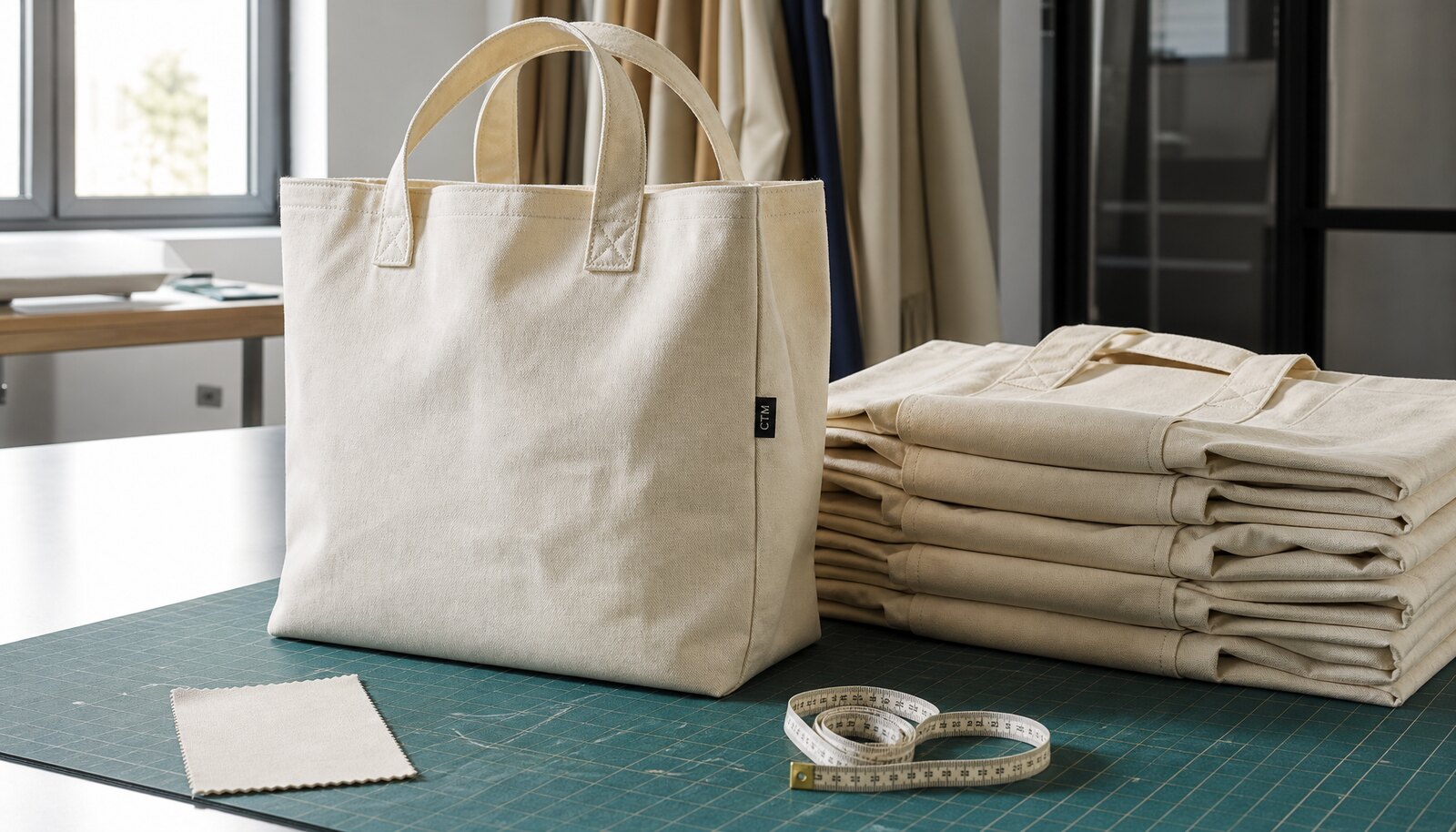
Why gift shop buyers need a different QC standard for large canvas grocery bags
Large canvas grocery bags for gift shops do not fail the same way promotional totes fail. Gift shop customers handle them like a reusable carry bag, but they still expect shelf appeal. That means the inspection standard has to cover both retail presentation and practical load performance. A tote that looks fine in a photo can still be rejected if the seams twist, the handles sit unevenly, or the print looks dull next to the approved sample.
For procurement teams, the key issue is consistency across cartons. Gift shop assortments are often restocked in small waves, and buyers notice shade drift, size drift, or print placement drift very quickly. Your inspection checklist should protect against those problems before shipment, not after the first store opening.
- Use the same approved sample for visual, size, and print reference.
- Treat handle strength and carton presentation as retail quality points, not just factory issues.
- Write down acceptable variation before the PO is issued.
Start with the spec: fabric weight, weave, and bag structure
For a gift shop grocery bag, 12 oz to 14 oz plain weave canvas is the safe commercial range. It gives a cleaner drape than very heavy duck canvas and still supports routine carry use. If the design is large and the product mix includes books, candles, or boxed souvenirs, go heavier or reinforce the bottom and handle points. A 10 oz bag can work, but only when the sewing is disciplined and the use case is light to medium weight.
Size matters just as much as fabric. Many buyers focus on width, but depth and handle length affect sell-through. A common retail-friendly size is around 15 x 16 x 7 in. with 22-24 in. handles. That gives enough volume for grocery-style use without making the bag look oversized on a gift shop rack.
- Ask for fabric weight in oz and GSM if the factory can provide both.
- Confirm whether the canvas is bleached, natural, or dyed, because print contrast changes with base color.
- Require reinforcement at handle anchors and bottom seam if the bag will carry boxed gifts.
Compare sourcing routes before you compare prices
A low quote from a trader is not automatically a better buy if the factory cannot control cutting, sewing, printing, and packing in one workflow. For large canvas grocery bags for gift shops, the most useful comparison is not just unit price. It is how much control each supplier route gives you over color match, stitch consistency, carton count, and remake responsibility.
If you source direct from a factory, you usually get better spec discipline and easier corrections during sample approval. If you source through a trading company, communication may be smoother at the start, but the defect root cause can be harder to isolate. For a retail buyer who wants stable replenishment, that extra layer often creates more schedule risk than it saves in time.
- Direct factory: better for repeat orders, custom packing, and tighter QC ownership.
- Trading route: useful when you need mixed SKUs or a broader supplier network, but ask who actually controls production.
- Always compare the same spec sheet, not two different interpretations of the bag.
Use this comparison table to separate real options from vague quotes
When suppliers quote a large canvas grocery bag for gift shops, they may use different assumptions for fabric, print, or packing. A useful comparison table forces the discussion back to buyer risk. You are not just choosing a price; you are choosing a production route and a level of inspection effort.
If one supplier quotes a lower unit cost but excludes bar-tacks, skip the sample approval stage, or packs bags loosely in cartons, that quote is not comparable. Put the inspection standard in the same frame as the commercial offer.
- Write decisions in measurable language, not only descriptive wording.
- Ask for sample photos plus one physical approval sample for important orders.
- Keep quotation, sample approval, and inspection notes tied to the same spec version.
Define the print method around artwork complexity and retail durability
Screen print remains the most stable option for simple logos, one to three colors, and medium-volume gift shop programs. It gives good ink build and predictable repeatability, which matters when the bag is displayed beside other branded merchandise. If the artwork includes tiny lettering, gradients, or photographic elements, a different method may be needed, but the tradeoff is usually durability and unit cost.
Heat transfer can be acceptable for seasonal or short-run programs, especially when the design changes often. The risk is in wear testing. A good transfer on day one can still crack or lift after flexing, folding, or light washing. That is why the sample approval stage should include a simple bend test and a wipe test, not just a visual approval under showroom light.
- Screen print: best for simple logos and repeat orders.
- Heat transfer: acceptable for short runs, but test for cracking and edge lift.
- Embroidery: premium look, but it adds cost and can distort lighter canvas if overbuilt.
What to inspect on the sample before you release bulk
A pre-production sample should be judged like a production unit, not like a display piece. Measure the finished size, check the seam allowance, verify the handle length, and inspect where the stitching starts and stops. If the sample has cleaner finishing than the bulk line can realistically achieve, it is not a useful approval sample.
Pay special attention to print placement and color density. On large canvas grocery bags for gift shops, the logo often sits high and becomes the first thing customers notice. A centered print that sits 1 cm too low may not bother a factory, but it can make the bag look misaligned on the retail peg. Use a sample approval note with clear tolerances, not just a signed photo.
- Check symmetry on handles, seams, and print placement.
- Measure the opening width and gusset depth after the bag is folded and opened.
- Test the bag with actual gift shop loads, such as books, candles, boxed mugs, or folded textiles.
Quality inspection checklist: the points that catch avoidable claims
Most claim-worthy defects show up in five places: fabric, seams, handles, print, and packing. Fabric flaws include slubs, thin spots, stains, and weave distortion. Seam issues show up as skipped stitches, loose thread tails, crooked side seams, or twisted panels. Handle failure often comes from weak stitch density or poor anchor placement rather than the handle material itself.
A proper QC pass should also verify the carton-level details. Bags may pass sewing inspection and still fail on packing if folds are uneven, carton marks are missing, or the outer case weight exceeds a distributor’s receiving limit. For importers and distributors, those small details affect warehouse labor, damage rate, and shelf-ready presentation.
- Accept only clean, straight seams with consistent tension.
- Reject visible oil marks, fabric contamination, or misshaped handles.
- Verify carton count against the packing list before palletizing.
Packing and carton planning should be part of the quote, not an afterthought
Packing can change the actual landed cost more than buyers expect. A bag packed loosely may cost less at the factory but create more damage, higher cubic volume, and more receiving labor. For gift shops, a neat bulk fold with size labels and carton marks usually performs better than retail-ready overpacking unless the bag is being sold as a hanger-display item.
Ask the supplier to quote the packing format clearly: how many pieces per inner pack, what type of polybag or moisture barrier is used, and what outer carton dimensions are expected. If your distribution center has a weight or carton size limit, that should be written into the packing spec before production begins.
- Confirm whether each bag is folded with tissue, polybag, or bulk stack only.
- Request carton marks that match SKU, color, size, and PO number.
- Ask for gross weight per carton if your warehouse has receiving limits.
Lead time risk is usually hidden in sample approval and raw material availability
For custom large canvas grocery bags, the production clock does not start when the order is placed; it starts when the approved sample and final artwork are locked. A typical schedule might allow a few days for sampling, then 30-45 days for bulk after approval, depending on fabric stock, print setup, and seasonality. If a factory needs to weave fabric, source custom thread, or rework artwork, the schedule stretches quickly.
This is why a buyer should ask for the supplier’s real bottlenecks. Many delays have nothing to do with sewing speed. They come from delayed artwork, color approval, shortage of matching thread, or a packing change requested after materials were cut. A good factory will tell you where the critical path is.
- Do not release bulk until print placement and color are approved in writing.
- Reserve buffer time if the order is tied to a store launch or holiday season.
- Treat raw material stock status as part of the quote, not a hidden variable.
Landed-cost comparison: where buyers lose money without noticing
Unit price is only one line in the total cost. For gift shop buyers, the hidden costs usually come from freight volume, rework, underfilled cartons, and late replacements. A slightly heavier canvas may raise the factory price, but it can also improve retail perception and reduce return risk. The right decision depends on whether the bag is a margin item, a branded merchandise item, or a replenishment accessory.
When comparing quotes, normalize the numbers. Compare the same fabric weight, the same print method, the same packing count, and the same inspection level. If one supplier includes pre-production sample approval and the other does not, the lower quote may simply be less complete. The best quote is the one that survives a landed-cost review, not the one with the lowest headline number.
- Compare price by identical spec, not by similar-looking product photos.
- Include freight cube, carton count, and possible rework in the cost review.
- Treat low MOQ offers carefully if they require expensive setup or mixed material substitutions.
Specification comparison for buyers
| Spec decision | Recommended option | When it fits | Buyer risk to check |
|---|---|---|---|
| Fabric weight | 12 oz to 14 oz plain weave canvas, or 10 oz minimum if the bag is reinforced | Gift shops that want a premium hand feel and repeat retail use | Too light a fabric can wrinkle, sag under product weight, or look see-through in light colors |
| Bag size | Approx. 15 x 16 x 7 in. with 22-24 in. handles | General gift shop grocery carry use and mixed souvenir packing | Handles may feel short or bag depth may be too narrow for boxed gifts |
| Bottom construction | Gusseted bottom with bar-tack reinforcement at handle stress points | When customers carry books, ceramics, candles, or bottle sets | Flat bottoms without reinforcement can distort after first wash or heavy loading |
| Print method | Screen print for 1-3 solid colors; heat transfer only for short seasonal runs | Logo-driven bags with stable artwork and medium to high quantity | Fine details may blur; transfer films may crack if wash and flex testing is weak |
| Supplier route | Direct factory with in-house cutting, sewing, printing, and packing | Need tighter control over QC, packing, and reorders | Trading layers can hide defect responsibility and make spec changes slow |
| MOQ logic | 500-1,000 pcs per color/style for custom retail programs | Gift shop assortments with logo continuity and planned replenishment | Low MOQ can raise unit price and lead to mixed lot quality if materials are not reserved |
| Packaging | Bulk packed with size label, carton mark, and moisture protection; retail insert only if needed | Wholesale shipments, DC receiving, or backroom storage | Loose packing can create dust, folds, and carton damage during ocean transit |
| Lead time control | Sample approval before bulk, with 30-45 days typical after approval depending on print and fabric stock | Seasonal buying and store reset calendars | Delays often come from artwork sign-off, trim sourcing, or color matching, not sewing alone |
| Inspection method | AQL-style visual and functional inspection plus carton count verification | Most importers and distributors buying at scale | Skipping weight, stitch, and print checks creates avoidable claims and rework |
Buyer checklist before sampling
- Confirm finished size, gusset depth, handle length, and target use case before requesting quotes.
- Specify fabric weight in oz or GSM, weave type, and whether a soft wash or enzyme wash is required.
- Define print artwork size, number of colors, placement, and acceptable color variation.
- Set stitch requirements for handles, side seams, and bottom seam reinforcement.
- State the packaging format, carton dimensions target, and whether polybags or moisture protection are needed.
- Request pre-production samples, size tolerances, and wash/flex test evidence before bulk approval.
Factory quote questions to send
- What exact fabric weight, weave, and yarn count are you quoting, and is it in-stock or newly woven?
- Which print method do you recommend for this artwork, and what setup or plate charges apply?
- What is your MOQ by color and by logo version, and how does price change at 500, 1,000, and 3,000 pcs?
- What are your size tolerances, seam allowances, and reinforcement standards for handles and bottom gussets?
- How will the goods be packed per carton, and what outer carton size and gross weight should we expect?
- What sample stages are included: color sample, pre-production sample, and top-of-production approval?
- What is the production lead time after sample approval, and what steps usually extend the schedule?
- What inspection report, photos, or carton count records can you provide before shipment?
Quality-control points to confirm
- Finished size within agreed tolerance, ideally ±0.5 in. on width and height and ±0.25 in. on gusset depth unless the pattern is unusually complex.
- Fabric weight matches the approved swatch or test report; no visible underweight areas, thin streaks, or loom defects in the body panel.
- Handle attachment points are bar-tacked or reinforced with clean stitching, with no skipped stitches, loose ends, or asymmetry.
- Print edges are sharp, centered, and cured properly; no smearing, cracking, ghosting, or shade shift beyond the approved sample.
- Seams are straight and secure; seam allowance is consistent and thread tension does not pucker the body panel.
- Carton count matches packing list; bag folds are uniform and no heavy creasing or staining appears on retail-facing surfaces.
- No foreign odor, oil marks, needle damage, broken threads, or fabric contamination on visible surfaces.
- Barcodes, hang tags, size labels, and side labels are placed consistently and remain readable after handling.