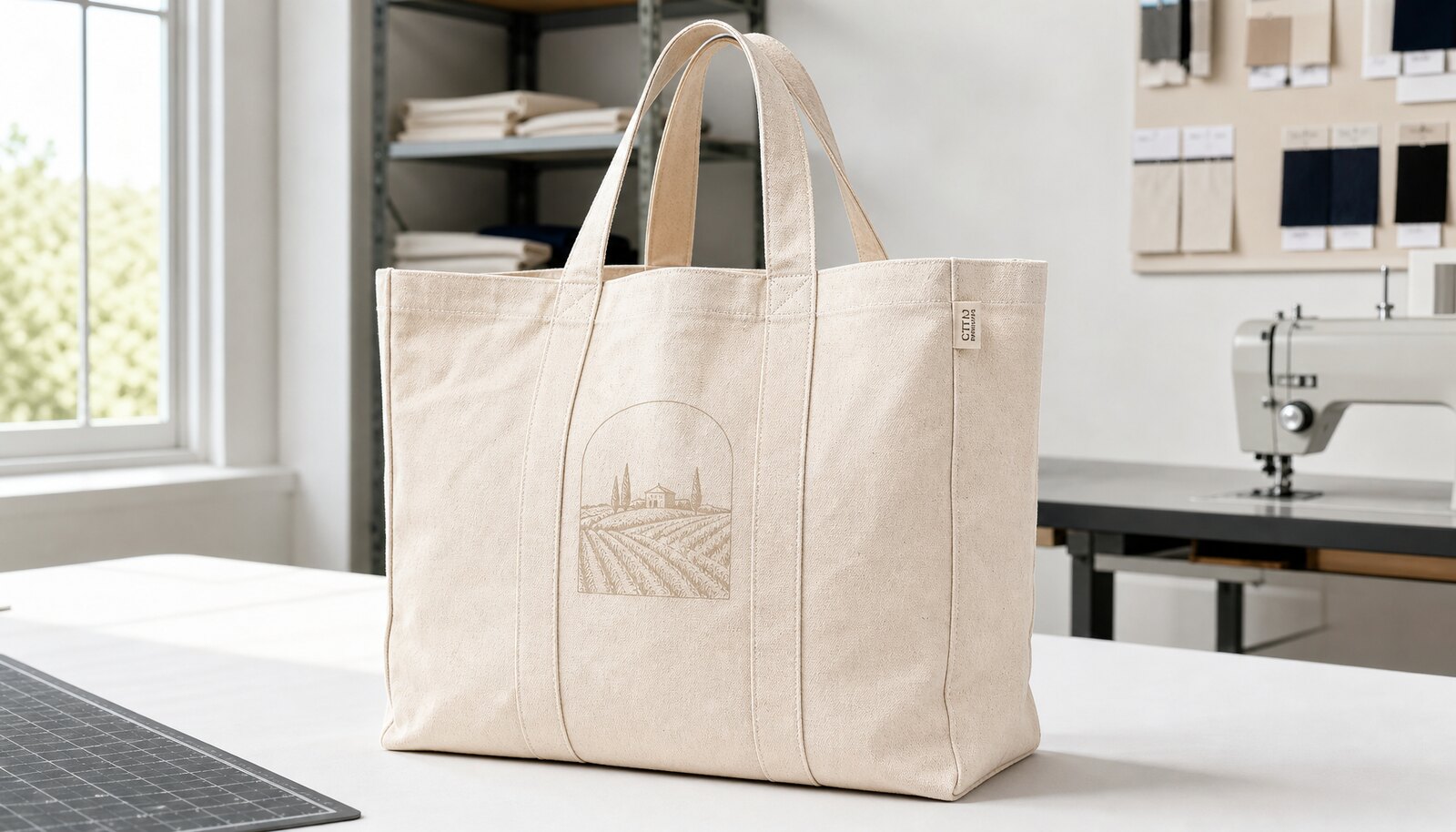
Why winery buyers need a different QC lens
Large canvas grocery bags for wineries are not just shopping totes with a logo. They sit in a awkward middle ground: heavy enough for bottle carry, clean enough for premium retail, and durable enough to survive repeat use without looking tired. That means the inspection standard has to cover both appearance and load behavior. A bag can print well and still fail the first time it carries two bottles if the bottom panel, handle stitching, or fabric weight is not right.
For procurement teams, the main mistake is buying by price per piece only. Winery programs often need a better hand feel than a basic supermarket tote, but not the soft, thin look of a fashion bag. The right inspection checklist starts with the use case: tasting room retail, wine club shipment add-on, seasonal gift packaging, distributor promo, or grocery carry. Each one pushes different specs, especially on fabric weight, gusset depth, and handle construction.
- Define the carry load before requesting quotes: one bottle, two bottles, or mixed grocery items.
- Decide whether the bag is a premium retail gift or a working utility bag; that changes fabric weight and print method.
- Use a measurable inspection standard instead of a visual approval only.
Start with the right fabric weight and build
For most winery programs, 12 oz to 16 oz canvas is the workable range. At the lower end, the bag is lighter and more cost-efficient, but it can feel soft and may lose structure when loaded with bottles. At the higher end, the bag feels more premium and holds shape better, but the freight cost increases and the sewing line needs better control because thick seams are harder to keep even. In practice, 14 oz is often the middle ground for a bag that needs to look substantial without becoming bulky.
GSM matters when you are comparing suppliers across countries because some quote in ounces and some in grams per square meter. Do not let the unit blur the actual weight. Also define whether the supplier is quoting greige canvas, bleached canvas, or finished canvas after wash and print prep. That changes hand feel and can affect color consistency. If the winery wants a natural look, the buyer should accept minor shade variation but not uneven weave, weak spots, or visible contamination.
- 12 oz: lighter, lower cost, good for promo use, but less forgiving under bottle weight.
- 14 oz: balanced option for wineries that want structure and repeat use.
- 16 oz: stronger premium feel, better shape retention, higher sewing and freight cost.
- Clarify whether the weight is before or after finishing.
Supplier routes: factory-direct versus trading route versus local decorator
Not every sourcing path gives the same control. A factory-direct bag maker with in-house cutting, sewing, and printing gives you better control over fabric lot, stitch quality, and artwork registration. That matters when you are trying to keep one standard across reorders, because the weakest point in a canvas tote is often not the logo but the sewing consistency. A trading company can still be useful if your order is small, highly urgent, or needs mixed products, but you should expect less traceability on the production floor.
A local decorator or reseller can look attractive for short lead times, yet the real risk is hidden substitution. They may source the base bag from one plant and the print from another, which makes it harder to know where a failure started. For winery buyers, the best route depends on order size and repeat frequency. If the bag will be used as an ongoing retail item, factory-direct is usually the safer path. If it is a one-time event piece, a trading route may be acceptable only when sample approval is tight and carton packing is clear.
- Factory-direct: better traceability, stronger QC control, usually better for repeat business.
- Trading route: flexible for mixed orders, but check who owns defect responsibility.
- Local decorator: useful for urgent small runs, but confirm the source bag and print method.
Comparison table: choose the sourcing route that fits the order
The best quote is not always the lowest unit price. Winery buyers should compare suppliers by how much control they give over construction, sample accuracy, and repeatability. The table below is designed to separate the main sourcing routes by practical buying risk, not by marketing claims.
Use the table when you are reviewing two or three quotes. If one supplier is much cheaper, find out whether the lower price comes from lighter fabric, looser tolerance, simpler stitching, or a weaker print method. Those differences usually show up after the first handling cycle, not on the quote sheet.
- Write decisions in measurable language, not only descriptive wording.
- Ask for sample photos plus one physical approval sample for important orders.
- Keep quotation, sample approval, and inspection notes tied to the same spec version.
Production-specific quote logic that changes the unit price
Canvas tote pricing is usually driven by fabric weight, bag size, handle length, stitching complexity, print color count, and packaging. A larger bag with a box gusset and reinforced bottom takes more fabric and sewing time, so the unit price should reflect that. If a supplier quotes a large winery bag at the same price as a basic flat tote, the spec is probably being simplified somewhere. That may be fine if you accept a lighter bag, but it should be visible in writing.
MOQ logic also matters. Some factories price a 1-color print at one MOQ tier and jump the price sharply when the artwork adds a second color, because they need another screen, more setup time, and additional curing control. Custom fabric color often increases MOQ further because the mill or dye house has to run separately. If the bag is for a winery program that needs reorder stability, it is usually better to keep the base fabric neutral and concentrate on one strong print location.
- Higher GSM or oz increases raw material cost and sew time.
- Box gusset and reinforced bottom add fabric consumption and labor.
- Each extra print color can add setup cost and slow the line.
- Custom dye or special wash finish can raise MOQ and lead time.
- Packaging changes, such as individual polybags or insert cards, add handling cost.
Inspection checklist for seam strength, handle load, and print durability
The inspection checklist should focus on what actually fails in use. Start with seams. Top stitching should be straight, even, and close enough to the edge to lock the seam without causing puckering. Handle attachments need reinforcement, especially if the bag is intended for bottle carry. A bag may look fine on the table and still fail when the shoulder strap angle is wrong or the handle bar-tack is too short. Check both sides of the bag because asymmetry often signals poor cutting or sewing control.
Then move to print durability. On natural canvas, screen print usually gives the cleanest, most durable result for one or two colors. It is better for bold winery logos than for tiny text. Heat transfer can work for limited runs, but the buyer should be cautious about edge lift and surface gloss. Embroidery can look premium, though it is heavier, more expensive, and not always ideal for thin canvas. The acceptance criterion should not be “looks good.” It should be whether the logo remains readable after rubbing, folding, and repeated handling.
- Seam straightness: no skipped stitches, broken thread, or loose tails.
- Handle strength: no lifting, twisting, or uneven bar-tack length.
- Bottom panel: corners must be secured; no exposed raw edges.
- Print: clean edges, consistent ink coverage, no cracking at fold lines.
- Surface condition: no oil marks, dust, thread knots, or fabric holes.
Sample approval should match the actual bulk fabric
One of the most common procurement mistakes is approving a sample that was made from a different canvas lot than the mass order. That sample can hide color differences, weight variation, or a softer finish that is not available in production. For winery programs, sample approval should be based on the same intended fabric weight, same print method, and the same bag construction that will be used in the order. If the supplier sends a sales sample, treat it as a reference only, not as the final standard.
A useful approval sample is a pre-production sample cut from bulk fabric. It should include the actual logo placement, handle length, seam construction, and folding method. If the bag is being sold in a retail environment, the sample should also show the full folded presentation and the intended hangtag or label position. Ask the factory to send photos of the sample next to a measuring tape and to note any deviations from the PO spec before you sign off.
- Approve the sample only after verifying fabric weight, print position, and handle drop.
- Compare sample dimensions to the purchase order, not just to the visual appearance.
- Make sure the sample shows the final packing style if the bag is retail-facing.
Packing, folding, and carton rules that protect the shipment
Packing can create quality problems even when the bag itself is good. If the tote is folded too tightly, the handles can develop a permanent crease or the print can crack on the fold line. If the carton is overpacked, the bottom panel can deform and the shape never fully recovers after unpacking. On the other hand, underpacking increases cube and freight cost, which is a problem when shipping a large canvas bag in volume. The goal is to balance warehouse efficiency with product presentation.
For winery buyers, carton pack count should be set around the receiving workflow, not only the factory's convenience. If the bags are going to a winery warehouse or distributor DC, the pallet and carton marks should be easy to scan and count. If the bags are going to retail shelves, the fold must keep the front print visible and avoid sharp creases across the logo. In either case, ask for a packed carton photo before shipment so you can spot problems early.
- Define fold direction so the logo does not land on a hard crease.
- Keep carton weight within receiving limits for warehouse handling.
- Use carton marks that match PO, SKU, color, and pack count exactly.
- If polybags are used, confirm ventilation and moisture control for canvas.
Lead time risk and how to avoid schedule slippage
Lead time for large canvas grocery bags usually moves with three steps: fabric sourcing, sample approval, and production slot availability. If the bag uses standard natural canvas and one or two print colors, the schedule is usually more predictable. Custom dye, special finishing, or multiple decoration steps can add time quickly. The mistake many buyers make is assuming the first quote lead time includes every approval cycle. It often does not.
A practical schedule should include enough time for sample correction before bulk cutting. If you approve a sample with a small issue, that issue can scale across the entire order. The most common delay is not sewing speed but a late artwork change, a missing carton spec, or a mismatch between the PO and the approved sample. Add a buffer if the bags are tied to a winery launch, event, or seasonal promotion.
- Build in time for bulk fabric approval and artwork proofing.
- Freeze dimensions and handle spec before the factory cuts bulk fabric.
- Do not change logo placement after sample approval unless you reset the schedule.
- Ask what part of the lead time is factory production versus transit.
Buyer-side quality checklist before payment release
The last inspection step should be simple enough that a procurement team or receiving team can use it without the factory present. Review dimensions, seam finish, print quality, pack count, and carton integrity. Then do a practical handling check by loading the bag with wine bottles or equivalent weight. If the bag stretches excessively, twists at the handles, or shows seam noise, that is a warning sign. A useful rule is to reject based on functional failure first and cosmetic variation second, unless the order is retail-premium and cosmetics are critical.
For repeat orders, keep a short defect log by supplier. Note the issue type, the carton number, and whether it came from the same fabric lot. Over time, that record helps you understand whether the supplier has a cutting issue, a sewing issue, or a packing issue. It also helps when comparing quotes later because you can see whether a cheaper price came with a higher defect rate.
- Functional test: carry weight without handle slippage or seam pop.
- Visual test: logo alignment, clean print edges, no stains or loose thread.
- Packing test: correct carton count and fold recovery.
- Documentation test: PO, sample, and carton marks should match.
Specification comparison for buyers
| Spec decision | Recommended option | When it fits | Buyer risk to check |
|---|---|---|---|
| Fabric weight | 12 oz to 16 oz canvas, with 14 oz as the common winery sweet spot | Retail giveaways, wine club programs, and grocery-style carry use where the bag should feel substantial and hold bottle weight | Too-light fabric sags at the bottom and telegraphs cheapness; too-heavy fabric raises freight cost and can make printing less crisp |
| Bag structure | Box gusset with reinforced bottom panel | When the bag must carry bottles, jars, tasting-room retail, or mixed grocery items without collapsing | Flat bags can twist under load; check bottom stitch density and whether corners are bar-tacked |
| Handle style | Long shoulder-length handles with reinforced top attachment | If customers need hands-free carry from tasting room to car or from store to home | Short handles limit usability; weak handle anchoring is the most common failure point after first use |
| Print method | 1-2 color screen print or woven label for premium positioning | When the winery wants clean branding on natural canvas with repeatable run-to-run appearance | Fine halftones and small type can fill in; confirm ink opacity and wash/rub resistance |
| MOQ route | Standard production MOQ with one approved bulk fabric and one artwork placement | For repeatable seasonal programs and distributor replenishment | Low MOQ quotes often hide setup fees, limited color counts, or fabric substitutions |
| Supplier type | Factory-direct canvas bag maker with in-house cutting, sewing, and printing control | When buyer needs tighter QC on seams, panel alignment, and print registration | Trading routes may be fine for small buys, but they can weaken traceability when defects appear |
| Packaging | Polybag with carton pack count matched to handle crease protection and warehouse handling | When bags ship to DCs, winery warehouses, or retail fulfillment centers | Overpacked cartons crush handles and distort folded dimensions; underpacked cartons increase freight cost |
| Sample approval | Pre-production sample from bulk fabric, not a generic salesman sample | For repeat orders, private label work, or any order with wine bottle load requirements | Sales samples can hide fabric shade differences, trim changes, or stitching that the bulk run cannot match |
| Quality standard | Measured tolerances for size, stitch count, and print placement, plus load test criteria | When the bag must be judged by objective acceptance standards rather than visual approval alone | Without tolerance limits, every inspection becomes subjective and disputes are harder to resolve |
Buyer checklist before sampling
- Confirm finished size, gusset depth, handle length, and target fabric weight in GSM or oz before asking for a price.
- State the intended load, such as two wine bottles plus tasting-room purchases, so the factory can spec seam reinforcement correctly.
- Approve a bulk-fabric pre-production sample before mass cutting, especially if you need a natural canvas shade match across reorders.
- Define print method, artwork colors, and minimum line width so the supplier does not substitute a weaker decoration process.
- Set carton pack count, inner polybag requirement, and shipping mark format before production starts.
- Ask for a measured inspection standard covering size tolerance, stitch quality, print registration, and odor/contamination control.
- Require photos of bulk fabric, pre-production sample, and first-article output if the order ships directly to a warehouse or distributor.
Factory quote questions to send
- What is the exact fabric weight in GSM or oz, and is that the greige, bleached, or finished weight?
- Is the quoted price based on stock canvas or custom-dyed canvas, and what color variation should we expect from batch to batch?
- What seam construction do you use at the handle and bottom panel, and how many stitches per inch are standard?
- Which print method is included in the quote, and what are the setup charges, plate charges, or screen charges if artwork changes?
- What is your MOQ by fabric color and print color count, and do you allow mixed artwork within one production lot?
- What are your bulk carton dimensions, carton quantity, and gross weight, and can you pack to our warehouse receiving limit?
- What sample do you provide for approval, and will the mass-production bag match the approved pre-production sample?
- What inspection points do you record before shipment, and can you share in-line and final QC photos?
Quality-control points to confirm
- Measure finished dimensions on at least 10 samples per lot and compare against the agreed tolerance, especially bag height, width, gusset, and handle drop.
- Inspect handle anchoring for symmetry, straight top stitching, and reinforcement at the load-bearing point.
- Check fabric weight consistency and surface uniformity; thin spots, slubs, or weak weave zones should be isolated before packing.
- Verify print registration, edge sharpness, and ink cure; rub the print with dry and slightly damp cloths to detect early transfer.
- Open random cartons and inspect folding consistency, odor, lint, dust, and moisture before accepting the shipment.
- Perform a practical load test using wine bottles or equivalent weight to watch for seam strain, bottom deformation, and handle elongation.
- Confirm carton pack count, barcode or shipping mark accuracy, and whether the folded bags recover without permanent creasing.