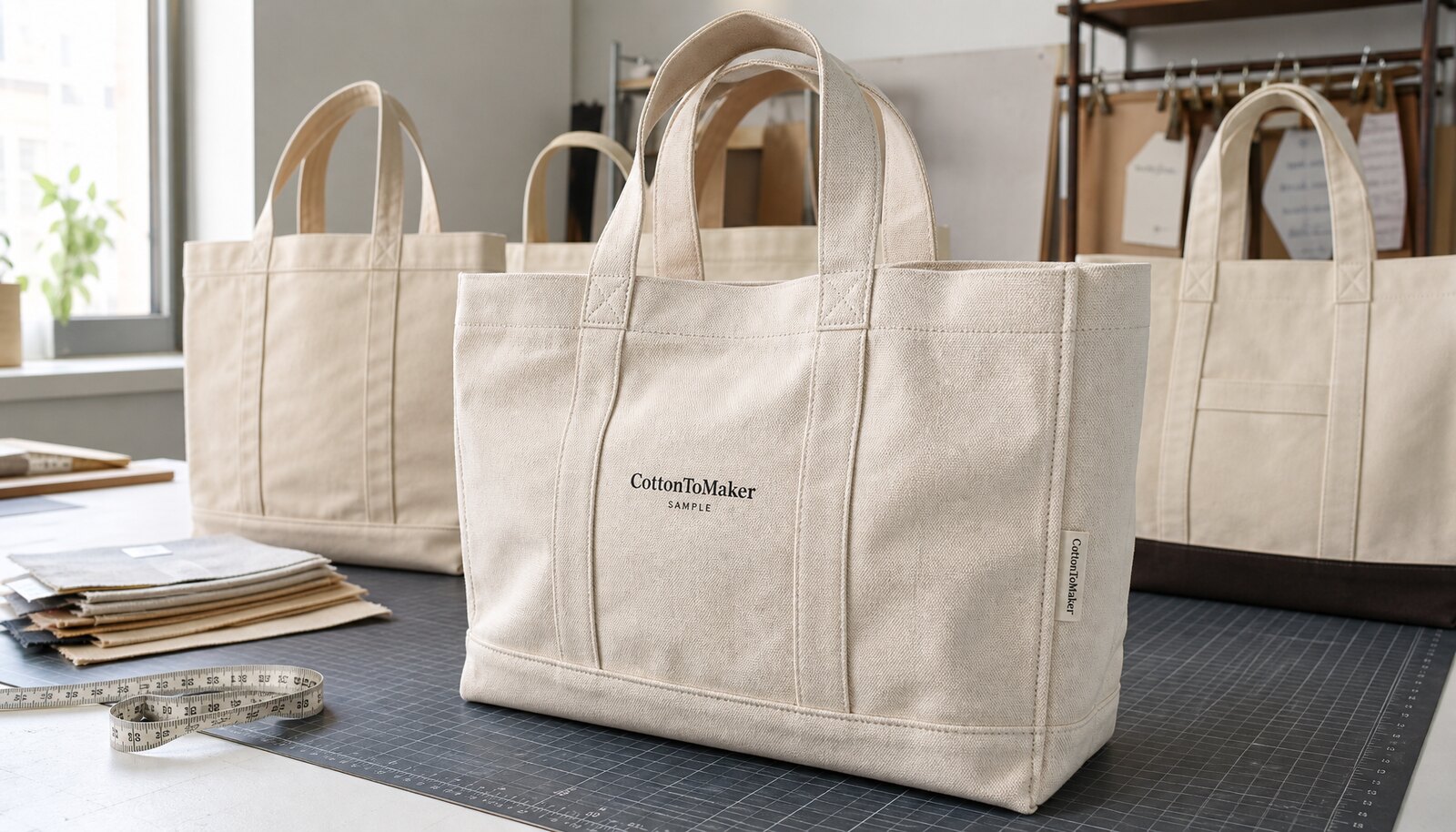
Why winery tote requirements are different from ordinary grocery bags
A winery tote is usually not just a shopping carrier. It may hold bottles, boxed sets, tasting-room purchases, chilled items, or fragile gift bundles. Those contents create point loads that are very different from the soft, distributed loads in apparel or book retail. A bag that looks fine in a catalog can still fail in use if the bottom sags, the handle digs into the hand, or the print cracks where the canvas flexes around a bottle neck or carton edge.
This is why large canvas grocery bags for wineries need a spec built around load shape, not just dimensions. The right bag should protect glass, stay presentable after repeated use, and feel sturdy enough that customers keep using it. For the buyer, the goal is not only to source a bag that passes an initial sample check; it is to avoid a design that creates returns, complaints, or a brand image problem after a few weeks of store traffic.
A winery also tends to use the bag as part of the brand experience. The tote can function as a gift-wrap substitute, a loyalty reward, or a retail add-on that stays in circulation long after the original purchase. That means the canvas, stitching, and print all carry more weight than they would in a one-time promotional bag. The procurement team should therefore think in terms of durability, appearance after folding, and replenishment consistency, not only unit price.
- Wine retail use cases usually need a wider, stronger base than a standard promo tote.
- The bag should hold shape when partially loaded, not collapse into a soft pouch.
- Premium appearance matters because the bag often stays visible after purchase.
- The spec should protect both product safety and perceived brand quality.
Start with fabric weight, weave density, and finish
For most winery programs, 10 oz to 12 oz canvas is the practical starting point. Ten-ounce canvas can work for lighter grocery use, but once the bag regularly carries bottles, chilled food, or a mix of retail items, 12 oz gives better body and fewer complaints about stretching. If the bag will routinely carry heavier mixed loads, 14 oz is safer, but the sewing labor, freight weight, and carton count all go up. The key is not to compare only the factory price; compare cost per usable load and the risk of early failure.
Fabric weight should be paired with weave density. A loose weave can still distort under print pressure or fray at the cut edges even if the nominal weight looks strong. Ask the supplier for both ounces and GSM, plus a fabric description that shows whether the cloth is pre-shrunk, washed, stabilized, or left natural. That extra detail matters because a bag may be perfectly acceptable at the sample stage and then shift after steam, humidity, or heat from printing and packing.
Natural unfinished canvas gives a rustic look and usually better price control, while lightly bleached or piece-dyed canvas can support a cleaner shelf presentation and more consistent print contrast. For a winery buyer, the real question is how much lot-to-lot color variation the brand can tolerate. If the bags are meant to sit near premium bottles or gift packaging, ask the factory for a swatch card and a photo under the same light source used in approval. Photos alone are not enough to judge color and texture.
- 10 oz: lower cost, suitable for lighter grocery use and promotional gifting.
- 12 oz: balanced option for most winery retail and bottle-carry use.
- 14 oz: better for heavier loads, premium positioning, and fewer seam complaints.
- Ask for fabric swatches before sampling; hand feel and weave tightness matter more than catalog photos.
- Request both oz and GSM so your team can compare global supplier quotes without conversion errors.
Pick the bag structure around what it has to carry
Large dimensions alone do not make a good winery grocery bag. The base shape determines whether the tote can hold a bottle carton, a cheese box, or a mixed retail basket without sagging. A flat-bottom gusset is usually the right starting structure because it lets the bag stand upright on counters and makes checkout packing easier. Side gussets are useful when the buyer wants more internal volume without making the bag look oversized from the front.
There is also a practical difference between a soft utility tote and a premium gift carrier. A stiffer base and cleaner top hem make the bag easier for staff to pack, and customers generally perceive it as more valuable. But more structure also increases folding memory, sewing time, and shipping volume. If the bag is being mailed or stacked in tight warehouse space, ask the supplier how the gusset folds and whether the bottom panel distorts under compression. A beautiful structured bag that arrives crushed defeats the purpose.
Do not rely on outer width alone when judging size. A wide bag with a shallow gusset can carry less than a slightly smaller but deeper design. Ask the factory for a simple internal use drawing that shows the usable base area, the handle drop, and the flat-fold size. For procurement, that drawing is more useful than a marketing-style product sketch because it shows how the bag will behave with real bottles and retail bundles inside.
- Use a flat-bottom gusset for upright display and easier packing.
- Use side gussets when internal volume matters more than front-panel branding space.
- Do not rely on outer width alone; ask for internal usable volume or a carton-fit drawing.
- If the bag must sit upright on shelves, request a bottom-panel photo with weight inside the sample.
Choose the handle build for comfort first, then for price
Handle choice is one of the fastest ways to move from a bag that feels premium to one that fails in service. Self-fabric handles usually look cleaner and suit a brand-forward retail presentation. They can also be comfortable if the width is generous and the reinforcement is done correctly. Webbing handles are often better for repeated heavy loads because they resist stretch and distribute force more reliably, but they can change the look of the bag and may feel more utilitarian.
For wineries, the handle needs to survive not just the load but the way customers carry it. People often grab the bag one-handed, let bottles swing, or carry the tote by a single strap while opening a car. That means the attachment point is just as important as the handle material itself. Ask for the reinforcement method in writing: box-X, bar-tack, double needle, or a combination. A vague promise of "strong handles" is not enough. If the supplier cannot state the pattern, they probably do not control it tightly.
Handle drop also matters in use. Too short and the bag bangs against the body or fails to clear a counter edge. Too long and the load hangs low, which makes bottle bottoms more likely to hit the ground. For a retail tote, ask for the effective handle drop measured from the finished top seam to the top of the handle. If the supplier gives only the total handle length, you still do not know how the bag will carry.
- Self-fabric handles fit premium retail styling.
- Webbing handles usually reduce stretch and stress at the attachment point.
- Ask for handle width, handle drop, and reinforcement pattern together.
- A good handle spec includes comfort in hand, not just tensile strength.
Print method should match artwork, not just MOQ
Most winery logos are simple, which makes screen print the default choice for medium and larger orders. It gives solid coverage, strong durability, and predictable pricing when the artwork is limited to one or two colors. If the brand wants a softer or quieter look, a woven label, sewn side label, or small woven patch can sometimes be better than a large front print. Heat transfer is useful for shorter runs or multi-color artwork, but the buyer should test abrasion and fold resistance before approving it for resale rather than event use.
Canvas is not a smooth surface. Fine lines, tiny text, and thin strokes can break up if the mesh, ink deposit, or curing profile is wrong. That is why the artwork should be simplified before quoting. Ask the supplier for a physical strike-off or printed sample in the actual fabric color and planned ink color. If the supplier only shows a digital proof, you are looking at layout, not print performance. For procurement, the useful approval question is simple: does the logo still look clear after the bag is folded, loaded, and rubbed lightly?
The print choice should also reflect brand positioning. A high-contrast front print is easier for a tasting room or retail shelf to read from a distance. A label-based option feels more understated and can be better when the winery wants the bag to look like a reusable lifestyle item rather than a promotional giveaway. If you are unsure, quote both routes on the same body spec. The cost difference is often small enough that the final decision should be based on use case, not habit.
- Screen print: best for repeat orders and durable logo applications.
- Heat transfer: useful for shorter runs or more complex artwork.
- Woven or sewn label: good for minimal branding and premium retail positioning.
- Always review print placement on a physical fabric sample, not only on a PDF.
- Ask the supplier what curing or setting method they use, because under-cured ink can crack early.
Compare sourcing routes before you issue the RFQ
The cheapest quote is not always the lowest-risk sourcing route. For large canvas grocery bags for wineries, buyers usually have three practical paths: direct factory, trading company, or a domestic decorator using imported blanks. Each route changes MOQ, communication speed, material control, and the level of visibility you have into stitching and fabric selection. Direct factory sourcing is strongest when you need a repeated custom size, a specific canvas weight, or a planned replenishment program. Trading companies can help when the assortment is mixed or when your team wants one account manager for several bag styles.
Domestic decorators can be useful for short lead times, especially if you need a quick seasonal refill. But buyers should verify the blank bag origin, the print durability, and whether the decorator can hold the same fabric and seam quality across a second order. Their quote often looks simple until freight, setup, and packaging changes are added. The real sourcing question is not which supplier can send a sample fastest; it is which route can keep the same construction level on the next replenishment order.
A practical procurement check is to ask every route to quote the same drawing, same fabric weight, same handle build, same print size, and same packing method. Without that, you are comparing different products disguised under one name. If a supplier resists sharing construction details, that is already a risk signal. Good suppliers usually know exactly how the bag is made and can show the difference between the sample and the bulk spec.
- Direct factory: best for custom spec control and repeat purchasing.
- Trading company: useful for low-MOQ testing or mixed SKU programs.
- Domestic decorator: useful for speed, but verify blank bag origin and print durability.
- Ask each route to quote the same tech pack so the numbers are actually comparable.
Supplier comparison table for winery buyers
The table below is meant to help buyers compare real sourcing tradeoffs, not just headline prices. A quote that uses lighter fabric, fewer stitches, or simpler packaging may look attractive until the first complaint arrives. Ask each supplier to attach the same spec version number so pricing, sample approval, and inspection notes stay linked.
If you are comparing large canvas grocery bags for wineries across multiple suppliers, look for cost signals that show where the price is moving: fabric weight, handle method, print complexity, lining, and carton pack density. Those are the parts that usually change price and failure risk the most.
- Write decisions in measurable language, not only descriptive wording.
- Ask for sample photos plus one physical approval sample for important orders.
- Keep quotation, sample approval, and inspection notes tied to the same spec version.
How to read a quote and spot the real cost drivers
Canvas bag quotes are often too compressed. The first number may cover fabric and sewing only, while the actual landed cost changes with print setup, handle reinforcement, lining, carton packing, and freight. For winery buyers, the hidden cost is usually not the body fabric. It is the combination of reinforcement and finishing that makes the bag feel dependable in hand. A bag that costs slightly more but avoids returns is often the better procurement decision.
Ask the supplier to split the quote into fabric, cutting, sewing, print, packaging, sampling, and any testing or inspection fees. If they will not separate these items, it becomes hard to compare alternatives or remove a single feature later. It is also worth asking how they calculated fabric consumption. A bag with a wider gusset or deeper hem can use more cloth than the buyer expects, and that difference is often where the quote changes. For procurement teams, the useful question is not only "what is the unit price?" but "what construction choice makes this price move?"
Failure modes are easy to miss in a quote. A slightly thinner fabric can save a little money but produce a softer bag that collapses in the bottle case. A cheaper handle can look fine but dig into the hand and wear faster at the seam. A lower-cost pack plan can increase carton compression and distort structured bottoms. Ask the factory to give one alternate option that changes a single variable at a time. That makes it much easier to judge the price impact of fabric, handle, or print upgrades.
- Fabric weight changes have an outsized effect on durability and freight.
- Handle reinforcement adds cost but protects against early failure.
- Color printing setup can be a major cost driver at low MOQ.
- Packaging choices affect both carton rate and warehouse handling cost.
- Ask for a line-item view so you can see which feature is actually driving the quote.
Use the sample to test structure, not only appearance
A pre-production sample should be treated like a working prototype. Do not approve it only because the logo looks good. Fill the bag with real bottles or a weighted substitute, then check handle comfort, seam behavior, bottom shape, and whether the bag tips when set down. The sample should also reflect the exact fabric, thread, print method, and finishing planned for bulk production. If any of those are different, the sample has limited value as an approval standard.
For retail resale, the sample should also be checked in the same lighting where the bag will be sold. Natural canvas can vary a little from lot to lot, but the print color, seam alignment, and top hem finish should stay consistent. Look closely at the corners, the handle base, and any areas where the bag folds sharply. Those are the first points to show wear in a customer’s car trunk or at home. If the bag is going into wine club shipments, add a simple shake test and a carton-fit check so you know the structured bottom does not deform under packing pressure.
A good sample approval process ends with a control file. Keep one signed sample, one measurement sheet, and one approved photo record. If the next order arrives with a fabric hand that feels softer, a lighter print tone, or a different handle width, the team needs a reference point that is easy to find. Without that control record, every future replenishment becomes a debate instead of a comparison.
- Test with loaded bottles or equivalent weight before approval.
- Check handle comfort, not only seam strength.
- Keep one signed control sample, photos, and a measurement sheet on file.
- Inspect corners and handle joins because those are common wear points.
Packing, carton marks, and lead time risks
Packing decisions affect damage, warehouse speed, and freight cost. Large canvas grocery bags are usually shipped flat-packed in bulk cartons, which is efficient if the fabric is stable and the print can tolerate folding. If the bag includes a thick label, laminated lining, or a more structured bottom panel, the pack method should be agreed early so the supplier does not overfill cartons and crush the shape. Carton size should also fit your inbound storage plan and any pallet or container loading rules you already use.
Lead time delays usually come from three places: fabric booking, print approval, or packing rework. If the bag is tied to a seasonal winery launch, ask the supplier to break the schedule into sample, material reservation, sewing, inspection, and packing milestones. That makes it obvious where the bottleneck is. A vague lead time often means the factory has not actually checked capacity or has not yet booked the specific canvas weight you want.
To reduce surprises, ask for the carton dimension, inner pack count, and gross weight target before you approve final production. This matters even more if the bags are going into export lanes with moisture or compression risk. Good packing keeps the tote flat without creating permanent creases, and it keeps the warehouse team from receiving cartons that are difficult to count or damage-prone to move. For procurement, a good shipment is one that arrives ready to receive, not one that requires sorting and rework.
- Flat-packed bulk cartons reduce freight cost and simplify inbound counting.
- Confirm carton dimensions and gross weight before booking ocean freight.
- Build buffer time for print correction and sample revision if the logo is color-sensitive.
- Agree pack density early if the bag has a structured bottom or sewn-on label.
Specification comparison for buyers
| Spec decision | Recommended option | When it fits | Buyer risk to check |
|---|---|---|---|
| Fabric weight | 10–12 oz canvas for most winery retail and grocery use; 14 oz if the bag will carry repeated mixed loads or multi-bottle sets | Best for tasting-room retail, wine club add-ons, and customer grocery use where the bag is reused often | If the cloth is too light, the bottom panel can bow, handle stitches can tear out sooner, and the print may warp where the weave opens under load |
| Weight conversion | 10 oz ≈ 339 GSM; 12 oz ≈ 406 GSM; 14 oz ≈ 475 GSM | Useful when a factory quotes in GSM and your internal team thinks in ounces | A quote can look comparable while actually being a lighter cloth if the buyer does not convert units and compare on the same basis |
| Weave and finish | Tightly woven, pre-shrunk or stabilized canvas with clean edge control; natural, bleached, or piece-dyed depending on brand look | Pre-shrunk matters when bag size, print placement, and carton fit must stay consistent across lots | Loose weave fabrics can feel thick but still stretch, fray, or distort after cutting and sewing |
| Handle construction | Self-fabric handles with box-X reinforcement for premium retail; webbing handles with bar-tacks for heavier or more frequent carry | Self-fabric suits a polished look; webbing suits heavier loads and lower failure risk at the seam | Thin tape or short reinforcement stitching can cut into hands and fail at the attachment point |
| Bag structure | Flat-bottom gusset with optional side gusset; wider base for bottles and mixed retail kits | Best when the bag must sit upright on counters or in car trunks | If the base is too narrow, the tote looks large but carries like a shallow pouch and tips easily |
| Printing route | Screen print for simple logos and volume; heat transfer for short runs or multi-color art; woven or sewn label for understated branding | Screen print is usually the best durability-to-cost option; labels work when the brand wants a quieter front panel | Fine art on coarse canvas can lose detail, crack sooner, or shift if the mesh, ink deposit, or curing is wrong |
| Supplier route | Direct factory for repeat custom programs; trading company for low-MOQ assortment buying; domestic decorator for speed-sensitive replenishment | Direct factory fits stable annual demand and custom construction; decorator fits rapid, smaller programs | A low quote may hide subcontracted sewing, lighter fabric, or a different finishing standard than the sample |
| Packing method | Flat-packed bulk cartons with size-marked case packs; polybag only when channel rules require it | Best for import efficiency and warehouse counting | Overpacking can raise freight, trap moisture, and distort structured bottoms or labels |
| Inspection point | Define measurable tolerances for dimensions, stitch density, and seam allowances before approval | Needed for repeat orders where the first sample is not enough | A supplier may still call a bag acceptable if the tolerance was never written into the spec |
Buyer checklist before sampling
- Confirm the use case first: wine bottles only, mixed grocery items, or gift bundles, because the base width, handle reinforcement, and fabric weight change with the load.
- Lock fabric in both ounces and GSM, and state whether the canvas is pre-shrunk, stabilized, bleached, dyed, or natural unfinished.
- Define the handle load target and reinforcement style, not just handle length or drop.
- Approve one final drawing with outer dimensions, seam allowance, gusset depth, top hem, and print safe area clearly marked.
- Request a pre-production sample built from the same fabric, thread, ink, label, and handle material planned for bulk production.
- Require the supplier to state fabric weight tolerance, measurement tolerance, and stitch density in the quote or spec sheet.
- Confirm carton count, inner pack method, carton marks, and gross weight target before final pricing.
- Get a lead-time breakdown by sample, material booking, production, inspection, and export packing.
- Ask for at least one alternate priced option, such as 10 oz versus 12 oz fabric or screen print versus woven label.
- Keep the signed sample, spec sheet, and approved artwork version together so later replenishment orders can be matched accurately.
Factory quote questions to send
- What is the exact fabric weight in oz and GSM, and is the canvas pre-shrunk or stabilized before cutting?
- Can you confirm the seam construction at the bottom, side gusset, and handle attachment, including stitch type, stitch count per inch, and reinforcement pattern?
- What seam allowance do you use at the side and bottom seams, and can you keep it consistent across the full order?
- What is the minimum order quantity per size, fabric color, and print color, and can mixed artwork be combined in one production run?
- Which print method is included in the quote, what is the setup cost, and how many colors are included before extra charges apply?
- Can you provide a fabric swatch or mill specification showing yarn count, weave density, and finish?
- What is the sample timeline for a pre-production sample, and will the sample use the same materials as bulk production?
- What inspection standard do you use for stitching, print registration, measurement tolerance, and defect classification?
- How will cartons be packed by size and color, and what is the carton dimension, net weight, and gross weight target?
- What is the production lead time after sample approval, and what steps can extend it, such as print correction or fabric booking?
Quality-control points to confirm
- Fabric weight should match the approved spec within the agreed tolerance, and no panels in the handles or bottom should feel visibly thinner than the approved standard.
- All major dimensions should match the approved tech pack, including body width, gusset depth, handle drop, top hem, and printed area placement.
- Agree a measurement tolerance before production; for large canvas totes, a practical buyer threshold is usually within a few millimeters per side on critical dimensions and no visible asymmetry when laid flat.
- Handle stitching should be secure, with no skipped stitches, broken thread, loose bar-tacks, or pull-away at the attachment point.
- A useful sewing benchmark is clean, even stitch density with no obvious long skips; ask the factory to state stitches per inch or centimeter rather than saying only that it is "reinforced."
- Seam allowances should be consistent and wide enough to support the expected load; if the supplier will not specify them, ask for a sample cross-section or sewing photo.
- Print registration should be centered within tolerance and not crack, smear, or bleed when folded, rubbed lightly, or compressed in carton packing.
- The bag should stand reasonably flat when empty if a gusseted base is specified, and seams should not twist the body or pull the corners out of square.
- No visible oil stains, broken yarns, excessive slubs, cut-edge fraying beyond the trim standard, or stain marks from handling should remain in finished goods.
- Carton count should be correct, with clear size marks and no mixed bundles unless this was agreed in writing.