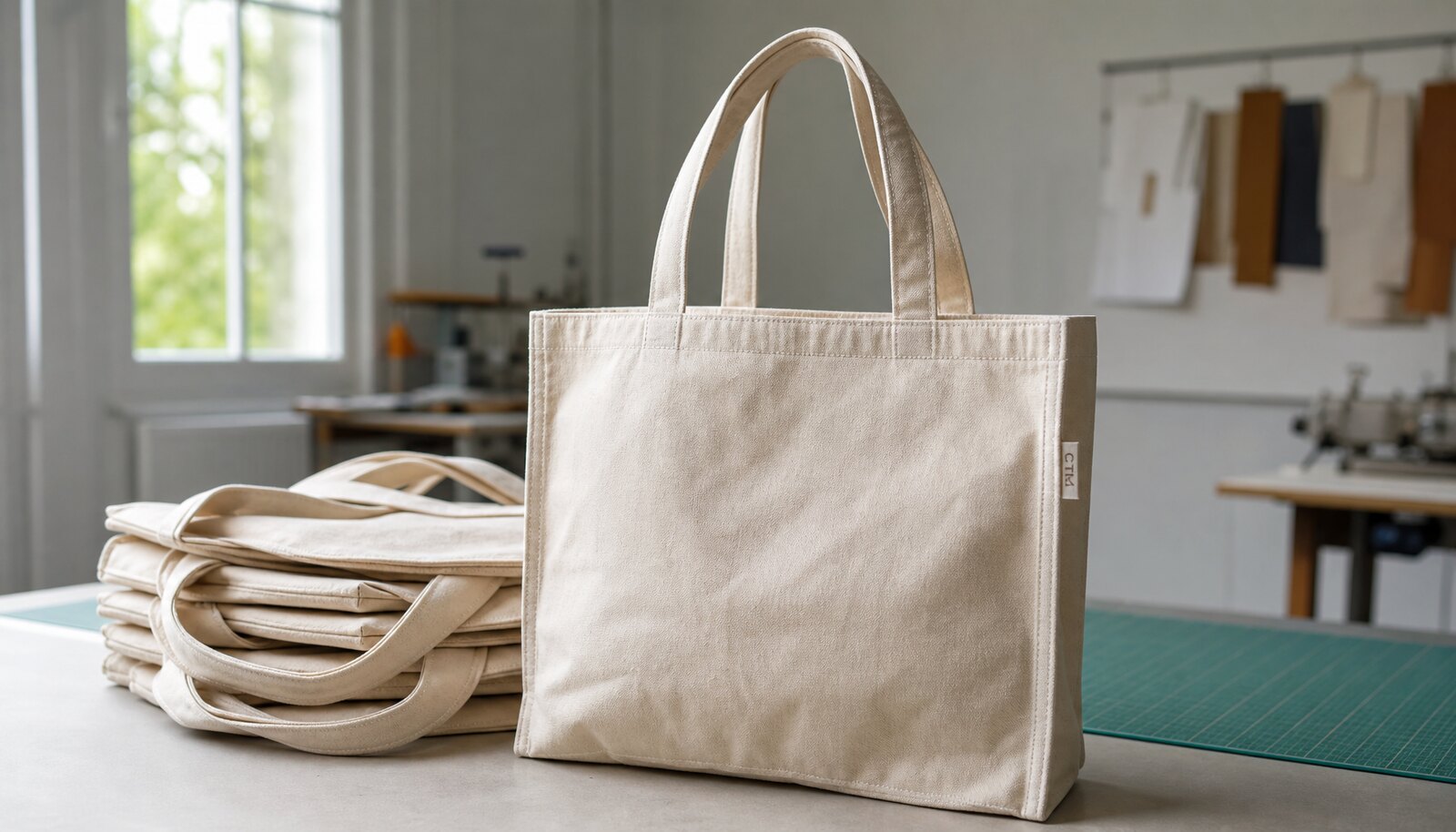
Why reorder planning matters more than first-order pricing
For large canvas grocery bags used by wellness brands, the first order often feels straightforward. The team approves a bag that looks good on the shelf, the logo reads clearly, and the supplier hits the launch date. The harder part is the reorder. On the second run, buyers discover whether the original price was tied to a very specific fabric lot, whether the print setup was actually repeatable, and whether the supplier can reproduce the same hand feel after the first production batch is gone.
That is why this memo is written for procurement, not for design inspiration. A wellness brand usually needs the bag to behave like a stable replenishment item, not a custom one-off. If the bag supports grocery-style retail kits, supplement bundles, studio merch, or event resale, the commercial priority is consistency: same fabric weight, same dimensions, same carton density, same logo placement, and the same landed cost logic on every repeat order.
The biggest mistake is treating a canvas tote like a simple promotional good. In practice it is a sewn item with multiple cost drivers. Small changes in fabric, stitching, packing, or print method can move the quote more than the buyer expects. A factory can also quote a low unit price while quietly shifting risk into freight-heavy packing or unapproved fabric substitution. Reorder planning is the discipline of preventing those surprises before they turn into receiving disputes or markdowns.
For wellness brands specifically, presentation matters because the bag is often part of a broader brand promise. It may sit beside natural skincare, pantry goods, yoga accessories, or retail subscriptions. If the canvas looks cheap, the edge stitching is messy, or the print cracks early, the brand perception suffers even if the bag still technically carries weight. The reorder memo should therefore focus on commercial repeatability, not just whether the first sample looked acceptable.
The practical takeaway is simple: do not request a reorder quote until the approved sample, spec sheet, and pack format are all locked. That lets you compare suppliers on equal terms and protects the margin on the next replenishment, which is where the real buying value is usually won or lost.
- A repeat order should reproduce the approved sample, not only the artwork.
- The cheapest quote often omits setup, packing, or freight-impacting carton detail.
- For wellness brands, shelf presentation is part of the product, not an extra.
Define the bag as a production spec, not a style name
The phrase 'large canvas grocery bag' is useful for search, but not enough for sourcing. A buyer needs a production definition the factory can price and reproduce. Start with the dimensions that actually matter in use: nominal width, height, gusset depth, and handle drop. For many grocery-style wellness programs, a practical starting point is around 15 to 18 inches wide, 13 to 16 inches high, and 4 to 6 inches in gusset depth, with handle drop long enough for shoulder carry over a jacket or tote stack. Those numbers are not a template; they are a baseline for a real RFQ.
Fabric weight should be stated in a way the supplier cannot easily interpret around. Cotton canvas in the 12 oz to 14 oz range, often roughly 407 to 475 GSM depending on weave and finishing, is a common procurement range because it gives structure without excessive freight penalty. But the buyer should also ask for composition and weave description, not only a single number. A loosely woven 14 oz bag can behave very differently from a denser 12 oz canvas. If the brand cares about a premium hand feel or a more structured retail presentation, that should be written into the spec file.
It also helps to distinguish between use case and bag geometry. A bag intended for supplement jars and pantry goods needs a different loading behavior than one designed for towels or mixed retail bundles. The same flat dimensions can feel very different in the store depending on the gusset, seam placement, and whether the base is reinforced. If the bag is meant to be used repeatedly, ask the supplier to state whether the construction is single-layer or whether there is any reinforcement at the base or handle roots.
A good reorder spec includes enough detail that a different buyer could place the same order six months later and get the same result. That means the style description must be replaced by measurable fields: final dimensions, fabric composition, weight, color target, stitch requirements, print area, packing format, and acceptable tolerances. Once those are defined, the factory can quote on a stable basis and the procurement team can compare offers without guessing what each seller means by 'heavy duty' or 'premium canvas.'
- Request both flat dimensions and usable loading dimensions.
- State the real use case: grocery carry, retail bundle, promotional resale, or event fulfillment.
- Ask for weave description and composition, not only GSM or ounce weight.
Sourcing route comparison: supplier types, not just product specs
A useful procurement comparison for canvas tote bags should compare the supplier route, not only the bag dimensions. The sourcing choice affects risk, sample speed, visibility, and the likely quality of the reorder. A direct factory can often give the best control over cutting, stitching, printing, and packing if the order is large enough to justify their line setup. A verified trading team can be useful when a brand needs coordination across several product components, but only if the buyer can confirm the actual production site and who owns each step. Domestic converters or regional printers can reduce sampling friction, but they may cost more per unit and have less scale flexibility. Low-price online sellers are usually the weakest option for any repeat program because the buyer rarely gets full visibility into fabric source, subcontracting, or inspection standards.
The table above is designed to help buyers make that route decision. In practice, the real question is not 'which supplier is cheapest?' It is 'which supplier can repeat the approved bag with the least risk to fabric, print, packing, and delivery date?' For a wellness brand, an extra penny saved on unit price can easily be erased by a carton-count error, a reprint, or a delayed launch. The procurement team should therefore ask for verification documents before it compares the commercial offer.
A serious supplier screen should include a business license or registration record, export capability if the order crosses borders, recent production photos, and a clear statement on whether any part of the order is subcontracted. If a trading team claims factory control, ask for a factory authorization letter and the name of the actual plant. If the factory says printing is in-house, ask to see the press area in a live video call and request examples of recent work on the same canvas type. If a seller is unwilling to share that level of clarity, the risk is usually not worth the lower quote.
The most practical way to screen suppliers is to ask three questions in sequence. First, can they prove who makes the bag? Second, can they reproduce the approved sample without changing fabric or pack format? Third, can they document the QC process if the next order has a problem? Those answers tell you more than a polished sales deck. For repeat purchases, production control matters more than a broad catalog.
If the brand has a formal vendor onboarding process, this is the right place to apply it. Ask for the factory’s legal name, contact person, production location, QC lead, and export terms. Then check whether the supplier can show enough traceability for a reorder: fabric lot, print setup record, carton spec, and signed sample reference. That is the difference between a quote and a dependable supply line.
- Request business registration, factory authorization, and production-site identity before award.
- Ask who actually cuts, prints, and packs the bags if a trading team is involved.
- Prefer the source with the clearest repeatability, not simply the lowest opening number.
Fabric, weight, and hand feel: where the margin actually moves
For large canvas grocery bags for wellness brands, fabric weight is important, but it should not be treated as the only durability signal. The buyer should ask how the canvas is woven, whether the supplier uses single-fill or a denser construction, and whether the fabric has any finish that changes stiffness, shrinkage, or print behavior. A bag that feels strong in the hand but collapses in the cart is not doing the job. A bag that is too stiff may hold its shape but can be less pleasant to carry and more expensive to ship.
In most reorder programs, the useful range sits around 12 oz to 14 oz cotton canvas. That is enough for grocery-style carry without creating a freight penalty that wipes out the commercial benefit. But if the brand is positioning the bag as a premium retail object or intends to carry heavier mixed loads, the buyer may want to test the upper end of the range. The right answer depends on how often the bag is reused, how much the brand is willing to spend on landed cost, and whether the customer will carry it by hand or on the shoulder.
Color is another fabric-related decision that changes quote behavior. Natural canvas is generally the simplest and most stable choice for reorder planning because it reduces dye-lot variability and prints well with most simple artwork. If the brand wants a dyed body color, ask how the supplier handles shade tolerance and whether there is a risk of lot-to-lot variation. For wellness brands, natural, oatmeal, and soft neutral tones often fit the market better than saturated colors, but the buyer should still check whether the chosen color affects print opacity or perceived premium quality.
Shrinkage is often overlooked. If the bag will be used in an environment where cleaning, moisture, or folding matters, ask the supplier to state expected shrinkage and any precautions for washing or steam finishing. A reorder should reproduce not only the initial appearance but also the usable size after normal handling. For sewn cotton goods, that is a meaningful part of commercial quality. If the supplier cannot explain their finishing process or the fabric’s pre-shrink treatment, the buyer should treat the quote as incomplete.
The procurement result is not 'heavy canvas' or 'premium canvas.' It is a bag that holds its shape, matches the approved dimensions, and remains economical enough to reorder at the planned pace. That is why the fabric spec should be tied to the channel. A grocery-style bag for wellness retail needs structure and longevity, but it does not need decorative overengineering that inflates cost without improving the customer experience.
- Ask for weave description and finishing method alongside GSM or oz weight.
- Confirm whether the fabric is pre-shrunk or if shrinkage needs to be budgeted.
- Keep color simple unless the brand can absorb higher shade-control risk.
Print and decoration: choose the method that survives a reorder
Decoration is where many tote bag programs quietly become expensive. Screen print remains the most practical option for a large canvas grocery bag when the artwork is simple, the color count is low, and the buyer wants repeatability. A one-color or two-color logo on natural canvas usually gives the best balance of cost, clarity, and reorder consistency. For the procurement team, the main advantage of screen print is that it is easy to lock into a repeat spec if the artwork and placement do not change.
Transfer methods such as heat transfer or DTF can solve problems with complex artwork, gradients, or short-run flexibility, but they introduce different risks. The hand feel can become less textile-like, the edge can show more visually after folding, and the supplier may need tighter temperature control to avoid adhesion issues. Embroidery can look premium, but on a canvas grocery bag it may add thickness and may not suit large filled areas or very low-cost programs. Woven labels and sewn side labels are useful for branding, but they should be treated as separate line items, not assumed to be included in the print price.
For a reorder, the buyer should ask the supplier to quote the exact print area, not a vague 'logo size as requested.' A larger logo may change the ink volume, drying time, or registration risk. Likewise, a second print position on the reverse side is not a minor adjustment; it is often a separate setup with its own inspection concerns. The same applies if the brand wants a small woven label in the side seam, a hangtag, or a barcode sticker. Each detail should be itemized in the RFQ because each one changes labor and yield.
The best commercial question is not 'which decoration looks nicest?' It is 'which method can be repeated with the fewest production variables?' For a wellness brand that plans seasonal reorders, keeping the bag body fixed and varying only the print art is usually the cleanest route. If the design requires a more complex decoration method, the buyer should insist on a pre-production sample that uses the final fabric, final artwork, and final packing style. That prevents a false approval based on a simpler mockup or a digitally enhanced proof.
A good supplier answer will mention more than price. It should address opacity, cracking risk, color consistency, registration tolerance, and whether the print survives normal folding and packing. If the team sells through retail partners, the buyer should also ask how the decoration looks after carton compression and after several handling cycles. That is where many otherwise decent prints reveal their weakness.
- Use screen print for simple, repeatable artwork whenever possible.
- Treat labels, hangtags, and second-side prints as separate priced items.
- Approve the decoration on final materials, not on a digital mockup alone.
MOQ strategy and reorder planning: how to avoid expensive fragmentation
MOQ on canvas grocery bags is rarely an arbitrary number. It usually reflects fabric cutting efficiency, print setup, sewing line time, and packing labor. The more variables you add—different sizes, body colors, logo versions, labels, inserts—the more likely the order becomes expensive or unstable. For wellness brands, the simplest way to protect margin is to keep the base bag fixed and use a controlled number of artwork variants. One size, one fabric spec, and a limited color palette will almost always outperform a fragmented reorder with many SKUs.
A buyer planning repeat shipments should also distinguish between launch quantity and replenishment quantity. The first order may need a larger proof-of-market run, but the reorder should be designed around the consumption pattern that actually emerged. If a SKU is moving steadily, ask the supplier whether they can hold the same fabric and production slot for the next release. In some cases, a standing forecast or release schedule is more valuable than a one-time spot order because it allows the factory to reserve fabric and print materials in advance.
If the supplier offers a price break at 1,000, 3,000, or 5,000 pieces, compare those levels against your real forecast and warehouse capacity. Do not chase the lowest unit price if it creates dead stock. On the other hand, do not split a stable SKU across too many micro-orders if that forces repeated setup charges. The real commercial answer is usually the smallest order size that still earns a meaningful price break and keeps replenishment lead time under control.
For a wellness brand, reorders may also be tied to seasonal retail calendars or promotional bundles. That makes timing important. If the next buy will need to align with a product refresh, keep the bag construction constant and only update the print version or hangtag. Changing the bag size, handle length, and packaging at the same time is a common source of delays because it forces the supplier to rework sample approval and sometimes remakes the cutting layout. When the order is repeatable, the quote should reflect that repeatability; if it does not, the buyer should ask why.
The key procurement rule is to reduce variation wherever possible. Variation increases quote complexity, slows approval, and makes defect disputes harder to resolve. A cleaner reorder plan is often worth more than a lower first order price, especially when the bag is part of a brand-facing retail program rather than a low-visibility giveaway.
- Consolidate sizes and colorways whenever the channel allows it.
- Use standing forecasts or release schedules for recurring SKUs.
- Avoid changing construction, artwork, and packing on the same reorder.
What a commercial-grade quote should include
A serious quote for large canvas grocery bags should read like a small contract summary, not a vague price line. At minimum it should show the finished size, fabric weight, material composition, print method, number of print colors, artwork setup charge, MOQ, packing format, carton count, and quoted trade term. If those fields are missing, the buyer cannot compare suppliers on equal terms. In practice, the unit price is only one part of the deal. Setup charges, packing labor, and carton efficiency can be just as important to landed cost.
The buyer should also ask for the quote version to clearly state what is excluded. Is the price based on bulk packing or retail-ready packing? Does it include barcode stickers, hangtags, individual polybags, or desiccant? Are sample costs deductible after bulk order or billed separately? Does the quote assume a specific carton size and weight limit for sea freight? These are the details that often change the economics of the order after the quote looks 'cheap' on paper.
One useful method is to ask every supplier to quote the same commercial scenario. For example: same size, same fabric, same artwork position, same print count, same packing, same carton count, and the same Incoterm. Then compare side by side. If one supplier wants to substitute a lighter canvas or a different fold pattern, that should be treated as a different offer, not a better price. Apples-to-apples comparison is especially important for procurement teams managing wellness-brand retail programs because the visual standard is usually non-negotiable.
Another point that matters on reorders is quote validity. A supplier that can only hold the price for a few days may be signaling unstable fabric sourcing or very thin margin. Ask how long the quote remains valid and what component is most likely to move. If canvas or carton board prices are volatile in your market, request a note on the triggers for repricing. This helps your team decide whether to release the PO immediately or hold for a full approval cycle. Better to know the commercial risk before you commit than after the supplier has started cutting fabric.
In short, a real quote should let procurement evaluate cost, risk, and repeatability in one document. If it does not, it is not yet ready for ordering.
- Require a single quote structure across all suppliers.
- Separate included items from excluded items.
- Ask how long the price is valid and what could trigger a revision.
Sample approval: test the bag as a working container, not a flat mockup
A canvas grocery bag sample should be approved as a working product, not as a visual prop. That means the buyer should fill it with representative contents and check how the bag behaves in use. For wellness brands, the test load may include supplement bottles, pantry goods, paper products, or bundled retail items. The point is to see whether the bag opens cleanly, stands reasonably well, and feels comfortable when lifted. A flat sample can look impressive on a table while still failing in real carry conditions.
The first approval should focus on three things: material quality, construction, and decoration. On the material side, check hand feel, color consistency, weave visibility, and whether the fabric feels too thin or too stiff. On the construction side, check seam alignment, handle attachment, reinforcement, and the accuracy of the gusset. On the decoration side, confirm logo placement, edge sharpness, opacity, and whether the print area looks balanced on the actual bag shape. If the supplier sends only a photo, treat that as a pre-screening step, not final approval.
Once the buyer signs a pre-production sample, the sample should be stored and labeled as the reference for the full run. Keep one physical golden sample and one counter-signed sample if possible. If the supplier changes a detail after approval, do not assume the change is minor. Moving a logo a few millimeters, changing the fold, or switching the inner pack can alter the final product enough to create receiving disputes. A small revision deserves a new sample if it affects the bag’s final appearance or use.
If the program involves retail partners or brand-sensitive channels, the buyer should also check opening presentation: loose threads, odor, dust, stains, and packing cleanliness. These things may sound minor, but they are often the first defects seen by a retail buyer or end user. For wellness brands, clean presentation is part of the product promise. A well-made bag should feel ready for shelf or shipment the moment the carton opens.
Good sample approval saves money later because it eliminates guesswork. The factory does not need to interpret the order from memory, and procurement can anchor future reorders to a documented standard instead of a vague impression.
- Approve the bag with a real load inside it.
- Store a signed golden sample for future reorders.
- Treat any post-approval change as a new decision, not a minor note.
QC thresholds that are useful in a factory discussion
Quality control for sewn canvas bags becomes much stronger when the buyer gives the factory measurable limits instead of general expectations. Start with dimensions. Decide which dimensions are critical—usually body width, body height, gusset depth, and handle drop—and define a tolerance for each. For many procurement programs, a quarter-inch tolerance on critical carry dimensions is a sensible starting point, but the buyer can tighten or relax that range depending on the channel. The key is consistency: the factory should know exactly what is accept-reject and what is merely a cosmetic deviation.
Stitching should be checked with a repeatable method. Instead of saying 'good stitching,' specify visible stitch density, seam allowance consistency, and reinforcement expectations at the handle roots. Ask the supplier what their target stitch count is and whether bar-tacks, backstitching, or double-seam reinforcement are used at the stress points. If the bag is intended for heavier grocery loads, it is reasonable to ask for a simple load test that reflects actual use rather than a purely visual inspection. The supplier should be able to explain how they test seam strength and how they respond if a sample fails.
Print quality should also be written in measurable terms. The buyer should define placement tolerance, acceptable color drift, and the print defects that are rejectable versus tolerable. Minor variation in weave texture is normal on canvas, but severe misregistration, smudging, pinholes, or cracking on the first fold are not acceptable if the bag is sold as a premium item. Ask the factory to show how they inspect logo position: centerline, edge distance, and alignment across front and back panels. That reduces ambiguity later.
For defect management, AQL is a practical tool. Many buyers use General Inspection Level II with AQL 2.5 for major defects and 4.0 for minor defects as a starting framework, but the actual level should match the risk of the program. If the bags are for retail resale or brand presentation, a tighter standard may be appropriate. The important part is to write the rule down and have the supplier acknowledge it before production begins. Without that, inspection findings become arguments instead of decisions.
Finally, the packing inspection should be treated as part of quality, not as a separate admin task. Wrong carton count, incorrect label, or missing inner packs can be enough to block receiving even when the bag itself is fine. A commercial-grade QC plan checks workmanship, print, dimensions, packing, and carton labeling together because that is how the goods will be received and distributed in practice.
- Set measured tolerances for the critical dimensions and record the method used.
- Define stitch and print acceptance terms before the order starts.
- Use AQL for workmanship and carton count, not just visual spot-checking.
Packing and logistics: protect carton density without making the product look cheap
Packing is often where a bag program quietly gains or loses money. Large canvas grocery bags can be bulk packed to improve carton density, or individually folded and polybagged if the channel needs a cleaner retail presentation. The right choice depends on how the bags will be received, stored, and sold. Wholesale and distribution programs usually benefit from bulk packing with clean fold consistency and clear carton markings. Retail-ready programs may justify individual packing if the extra labor improves store handling or customer perception.
For procurement, the critical information is carton size, pieces per carton, gross weight, and whether the fold method is fixed. A change in fold can alter carton dimensions enough to change container utilization. That means two quotes with the same bag price can have different freight outcomes. The buyer should ask for a packing diagram or at least a written pack spec before comparing suppliers. If the quote is for a wellness brand that ships alongside other SKUs, carton consistency matters because warehouse teams need predictable count and labeling behavior.
If the bags include inner polybags, hangtags, barcode stickers, or tissue inserts, ask whether those are included in the quoted price and who supplies the materials. These details often get missed in early communication. A factory may quote the bag body but not the insertion labor, then add the cost later. The same applies to master carton labeling, pallet wrapping, or special shipping marks. In a reorder, the packaging spec should be as locked as the bag spec because changing it later can delay shipment and alter freight cost.
Buyers also need to think about presentation on arrival. A wellness brand often sells a lifestyle story, and the first thing the receiving team sees is the carton opening. Dust, oil marks, loose fibers, or poor folding can make a well-made bag look low quality before it is even merchandised. That is why packing instructions should include acceptable fold direction, inner pack count, carton cleanliness, and external label placement. Those are small details, but they are frequently the difference between a tidy receipt and a painful receiving claim.
In short, packing is not a back-office afterthought. It is part of the landed cost, the warehouse workflow, and the perceived quality of the reorder.
- Choose bulk or retail-ready packing based on the actual channel.
- Lock carton count, fold direction, and carton dimensions before quoting.
- Include labels, inserts, and palletization in the RFQ if they affect the shipment.
Specification comparison for buyers
| Sourcing route | Commercial strengths | Commercial tradeoffs | Verification steps before award |
|---|---|---|---|
| Direct factory with in-house cutting, sewing, printing, and packing | Better control of fabric lot, print registration, carton count, and reorder continuity; easier to lock a repeat spec | May require clearer documentation and higher MOQs to achieve the best price break | Request factory license, export record, machine list, QC flow, recent production photos, and a live video of the sewing and packing area |
| Verified trading team with stable factory allocation | Useful when the trading team can consolidate small orders, manage artwork, and keep communication smooth | Risk of hidden subcontracting, variable fabric sourcing, or less visibility into who actually prints and packs | Ask for the named production facility, factory authorization letter, sample traceability, and a direct line to the actual production manager |
| Domestic converter or regional printer | Faster sampling, easier visits, and lower time-zone friction for artwork revisions | Usually higher unit cost and less scale efficiency on heavy canvas bag programs | Confirm where canvas is sourced, whether printing is in-house, and whether repeat lots will match the approved sample after the first run |
| Lowest-price online supplier | Can work for short-term promotions or non-repeat orders | Highest risk for inconsistent fabric weight, weak documentation, and poor reorder continuity | Insist on pre-production sample, carton spec, fiber content declaration, and a written corrective-action process before considering award |
| Material | 8-12 oz cotton canvas, 120-220 gsm cotton, recycled cotton, or blended fabric selected by use case and target price | Before price comparison | Different cloth weights, backing, or certification claims make quotes hard to compare |
| Construction | bag size, gusset, handle drop, seam allowance, stitch density, reinforcement patch, and loading expectation | Before sampling | Weak stress points create returns and failed inspections |
| Decoration | screen print, heat transfer, embroidery, woven label, or hangtag matched to fabric texture and brand durability needs | Before artwork approval | The wrong method can crack, bleed, pucker, or fail on the chosen fabric |
| MOQ | Base MOQ plus change drivers | During quote review | Custom colors, trims, and packing can change minimums |
Buyer checklist before sampling
- Lock the final bag size, gusset, handle drop, and intended load before quoting.
- Specify fabric composition, GSM or oz weight, weave style, color target, and acceptable shrinkage.
- Send vector artwork, Pantone references, logo size, print position, and any second-side decoration rules.
- Ask for a blank swatch, printed photo reference, and one physical pre-production sample from final materials.
- Request the supplier’s factory documentation: business license, export capability, QC process, and subcontracting disclosure.
- Confirm carton count, inner pack format, barcode placement, and outer carton markings before production.
- Set measurable QC tolerances for dimensions, stitch quality, print registration, and defect limits.
- Keep the approved sample, signed spec sheet, and quote version tied to the same PO.
Factory quote questions to send
- What exact canvas construction are you quoting, including yarn count, weave density, composition, and finished GSM or ounce weight?
- What tolerance do you allow for fabric weight, size, handle drop, and gusset depth across a production lot?
- Is the price based on blank bags, one-color print, or multiple print positions, and what is the setup charge for each version?
- Do you print in-house, and if not, which subcontractor performs printing, embroidery, labels, or final packing?
- What is the MOQ per color, per artwork version, and per size, and can mixed SKUs be combined to reach the threshold?
- What documents can you provide for factory screening: business license, export registration, quality procedure, and recent inspection report or internal audit summary?
- What sample stages are included: material swatch, photo sample, pre-production sample, and any revision rounds?
- What are the approved packing details: fold method, inner pack count, master carton count, carton dimensions, gross weight, and palletization if needed?
- What is your inspection standard, and do you use AQL? If yes, what AQL level applies to dimensions, stitching, print, and carton count?
- What happens if we find a repeat issue on the next order—how do you handle corrective action, replacement, or credit for confirmed defects?
Quality-control points to confirm
- Measure fabric weight using the same method on every lot, and keep a written record of the test method and sample location from the roll or cut panel.
- Check bag dimensions flat and loaded: opening width, body height, gusset depth, and handle drop should match the signed spec within agreed tolerance, typically ±0.25 in for critical carry dimensions unless the brand approves a different range.
- Inspect stitch construction with a simple counting method: confirm consistent stitch density on seams and handle attachment, no skipped stitches at load points, secure backstitching, and clean thread trimming; for heavy-use grocery bags, ask the supplier to state target stitches per inch or stitches per 3 cm and hold them to that target.
- Reject handle reinforcement that is visibly uneven, misaligned, or under-stitched; if bar-tacks are used, define the bar-tack count, size, and placement on the artwork proof before production.
- Inspect print using placement marks and a measurement from the top edge or centerline, not by eye only; set a placement tolerance such as ±3 mm to ±5 mm for logo position, unless the design requires tighter control.
- Define defect limits in writing: for example, no holes, oil stains, mold, torn seams, wrong color, or severe shade mismatch; set a numeric allowance for minor cosmetic defects per AQL inspection rather than using vague terms like 'acceptable quality.'
- Use AQL inspection for carton count, sizing, appearance, and workmanship; for many procurement programs, a General Inspection Level II with AQL 2.5 for major defects and 4.0 for minor defects is a reasonable starting point, but the buyer should choose the standard based on channel risk and price sensitivity.
- Require one physical signed golden sample and one sealed counter-sample from production for future reference, especially when the bag is reordered through a different season or buyer.
- Check odor, lint, loose fibers, contamination, and packaging cleanliness at carton opening, because wellness-brand presentation is judged at unpacking as much as during use.