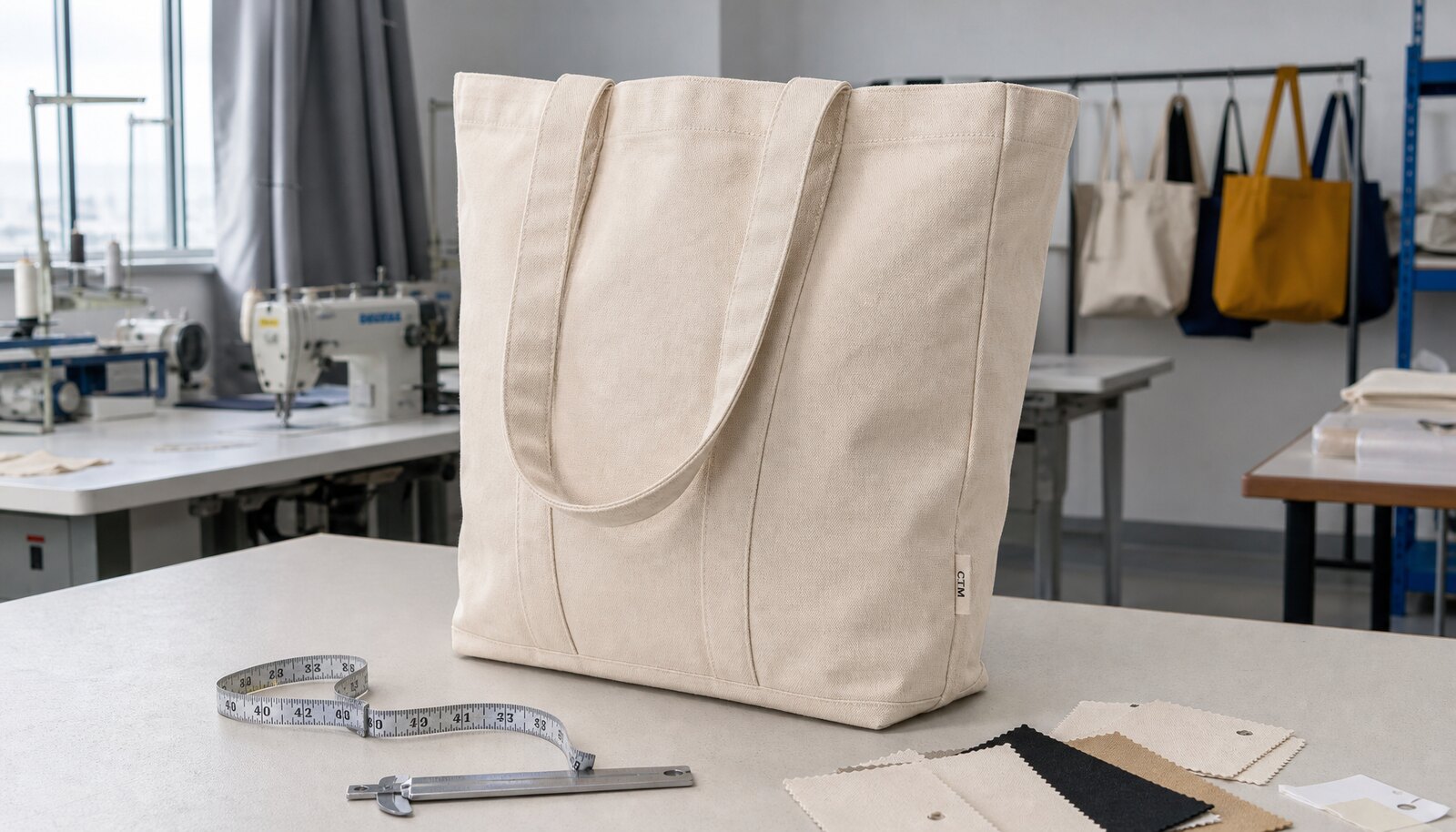
Use the buyer guide to define the buying decision
A strong buyer guide for large canvas grocery bags for wellness brands packaging specification guide starts with the decision it must support: supplier comparison, sample approval, production release, or claim prevention. The document should turn a broad product request into measurable notes that a factory merchandiser, QC inspector, and buyer can all follow.
For custom bag, the key is to connect large grocery for wellness brands packaging specification with fabric, construction, logo method, MOQ, packing, and inspection. When the file only repeats the product name, suppliers guess. When it records RFQ evidence, they can quote and produce against the same standard.
For acceptance, add one line that defines the target, tolerance, proof photo, and approver for this step. That makes the buyer guide usable under production pressure instead of becoming a long note that nobody can verify.
- Write decisions in measurable language, not only descriptive wording.
- Ask for sample photos plus one physical approval sample for important orders.
- Keep quotation, sample approval, and inspection notes tied to the same spec version.
- Mark every open item as buyer-approved, supplier-proposed, or QC-required.
Material and construction notes
Specify 8-12 oz cotton canvas, 120-220 gsm cotton, recycled cotton, or blended fabric selected by use case and target price. Then connect those material choices to bag size, gusset, handle drop, seam allowance, stitch density, reinforcement patch, and loading expectation for the expected loading condition of the custom bag.
The quote should state what is included in the sample and what changes in bulk production. A cheaper quote may simply use a lighter cloth, weaker trim, fewer stitches, or a less controlled packing method.
For acceptance, add one line that defines the target, tolerance, proof photo, and approver for this step. That makes the buyer guide usable under production pressure instead of becoming a long note that nobody can verify.
- Write decisions in measurable language, not only descriptive wording.
- Ask for sample photos plus one physical approval sample for important orders.
- Keep quotation, sample approval, and inspection notes tied to the same spec version.
- Mark every open item as buyer-approved, supplier-proposed, or QC-required.
Decoration and brand placement
Logo work should be described as a production method, not just artwork. For this topic, compare screen print, heat transfer, embroidery, woven label, or hangtag matched to fabric texture and brand durability needs.
The buyer guide should ask what can go wrong with the chosen method on this material. Useful supplier answers mention ink bleed, cracking, puckering, registration drift, weak label edges, hardware pressure, or poor adhesion.
For acceptance, add one line that defines the target, tolerance, proof photo, and approver for this step. That makes the buyer guide usable under production pressure instead of becoming a long note that nobody can verify.
- Write decisions in measurable language, not only descriptive wording.
- Ask for sample photos plus one physical approval sample for important orders.
- Keep quotation, sample approval, and inspection notes tied to the same spec version.
- Mark every open item as buyer-approved, supplier-proposed, or QC-required.
MOQ, price breaks, and quote comparison
Make suppliers separate base unit price, setup fee, sample fee, label or packing cost, and freight handover term. MOQ should be tied to real drivers such as fabric dye lot, print setup, trim sourcing, carton rules, or inspection depth.
This structure protects buyers from false savings. If one quote excludes sample approval or carton labeling, it is not cheaper in a practical purchasing sense; it is just incomplete.
For acceptance, add one line that defines the target, tolerance, proof photo, and approver for this step. That makes the buyer guide usable under production pressure instead of becoming a long note that nobody can verify.
- Write decisions in measurable language, not only descriptive wording.
- Ask for sample photos plus one physical approval sample for important orders.
- Keep quotation, sample approval, and inspection notes tied to the same spec version.
- Mark every open item as buyer-approved, supplier-proposed, or QC-required.
Sample approval evidence
The sample record for large canvas grocery bags for wellness brands packaging specification guide should include front, back, side, seam, logo, label, inside, and packed-carton photos. For important programs, keep one signed physical sample and record the sample version in the approval file.
Approval should include the known deviations. A small accepted deviation is manageable when written down; an unwritten deviation becomes a dispute during final inspection.
For acceptance, add one line that defines the target, tolerance, proof photo, and approver for this step. That makes the buyer guide usable under production pressure instead of becoming a long note that nobody can verify.
- Write decisions in measurable language, not only descriptive wording.
- Ask for sample photos plus one physical approval sample for important orders.
- Keep quotation, sample approval, and inspection notes tied to the same spec version.
- Mark every open item as buyer-approved, supplier-proposed, or QC-required.
Inspection method and tolerance
Define the measurable checks around fabric weight, size tolerance, handle pull, seam strength, logo rub, stains, loose threads, and carton count verification. Add tolerance ranges only where the buyer truly cares, and ask for photos that show the measurement point, not just a finished product overview.
For procurement decisions, the inspection note should say who checks, when they check, and what evidence is required. Photos without measurements are often not enough for remote approval.
For acceptance, add one line that defines the target, tolerance, proof photo, and approver for this step. That makes the buyer guide usable under production pressure instead of becoming a long note that nobody can verify.
- Write decisions in measurable language, not only descriptive wording.
- Ask for sample photos plus one physical approval sample for important orders.
- Keep quotation, sample approval, and inspection notes tied to the same spec version.
- Mark every open item as buyer-approved, supplier-proposed, or QC-required.
Packing and warehouse handling
Packing rules should cover fold method, inner bundle, carton count, carton mark, moisture protection, SKU separation, and warehouse receiving needs. These details affect cost, damage rate, receiving speed, and whether the goods can move directly into retail or distribution.
A custom bag can pass product QC and still create claims if cartons are mislabeled, overpacked, crushed, damp, or mixed. Treat packing as part of the specification, not an afterthought.
For acceptance, add one line that defines the target, tolerance, proof photo, and approver for this step. That makes the buyer guide usable under production pressure instead of becoming a long note that nobody can verify.
- Write decisions in measurable language, not only descriptive wording.
- Ask for sample photos plus one physical approval sample for important orders.
- Keep quotation, sample approval, and inspection notes tied to the same spec version.
- Mark every open item as buyer-approved, supplier-proposed, or QC-required.
Supplier evidence that separates real factories from brokers
Ask for fabric swatch, approved sample, seam close-ups, logo test photos, packing pilot, and final inspection evidence. The point is not to collect paperwork for its own sake; it is to see whether the supplier can connect the approved sample to the bulk production line.
A stronger supplier can explain which step controls fabric, cutting, sewing, decoration, packing, and final release. A weaker supplier usually replies with only a price and a broad promise that quality will be checked.
For acceptance, add one line that defines the target, tolerance, proof photo, and approver for this step. That makes the buyer guide usable under production pressure instead of becoming a long note that nobody can verify.
- Write decisions in measurable language, not only descriptive wording.
- Ask for sample photos plus one physical approval sample for important orders.
- Keep quotation, sample approval, and inspection notes tied to the same spec version.
- Mark every open item as buyer-approved, supplier-proposed, or QC-required.
Supplier communication and owner actions
Every open item in the buyer guide should have an owner: buyer to approve, supplier to confirm, or QC to verify. This keeps large grocery for wellness brands packaging specification from becoming a vague note buried in an email thread.
Use short decision language: approved, rejected, revise sample, rework, sort, hold shipment, or accept with deviation. Clear action words help the factory respond without guessing.
For acceptance, add one line that defines the target, tolerance, proof photo, and approver for this step. That makes the buyer guide usable under production pressure instead of becoming a long note that nobody can verify.
- Write decisions in measurable language, not only descriptive wording.
- Ask for sample photos plus one physical approval sample for important orders.
- Keep quotation, sample approval, and inspection notes tied to the same spec version.
- Mark every open item as buyer-approved, supplier-proposed, or QC-required.
Release, shipment, and claim prevention
Before shipment, collect the final inspection result, carton photos, packing list, label photos, and any deviation approvals. If a claim appears later, the buyer needs evidence that connects the defect to the approved spec and shipped cartons.
For large canvas grocery bags for wellness brands packaging specification guide, this final record is what makes the order repeatable. The next RFQ can start from the same file instead of rebuilding requirements from memory.
For acceptance, add one line that defines the target, tolerance, proof photo, and approver for this step. That makes the buyer guide usable under production pressure instead of becoming a long note that nobody can verify.
- Write decisions in measurable language, not only descriptive wording.
- Ask for sample photos plus one physical approval sample for important orders.
- Keep quotation, sample approval, and inspection notes tied to the same spec version.
- Mark every open item as buyer-approved, supplier-proposed, or QC-required.
Specification comparison for buyers
| Spec decision | Recommended option | When it fits | Buyer risk to check |
|---|---|---|---|
| Canvas weight | 12 oz to 14 oz cotton canvas | Best balance for wellness retail, grocery use, and premium brand presentation | Too light leads to sagging and print distortion; too heavy can raise cost, carton weight, and folding difficulty |
| Handle construction | Self-fabric handles with cross-stitch and bar-tack reinforcement | Good for grocery-style carrying and cleaner brand aesthetics | Thin handles, short stitch lengths, or weak bartacks can fail at the attachment point under load |
| Print method | Water-based screen print for repeat orders; transfer print only for short runs or complex artwork | Simple logos, wellness messaging, and one-to-two color artwork | Fine gradients, small text, or full coverage may lose sharpness on textured canvas |
| Bag size | About 16 x 14 x 6 in or similar wide-format grocery proportion | Fits produce, pantry goods, and bundled wellness kits | If the gusset is too narrow, usable volume drops; if too wide, the bag can slump and lose shelf shape |
| Closure option | Open top with optional inside pocket or snap only for premium retail upgrades | Convenience-focused grocery use with controlled cost | Closures add labor, extra components, and more failure points in production |
| Supplier route | Direct factory or audited trade supplier with in-house cutting, sewing, and printing | Best for repeat programs, custom specs, and QC control | Middlemen can blur accountability and hide subcontracted print or sewing work |
| Packing method | Bulk packed with polybag and export carton; individual retail folding if store-ready | Bulk replenishment or distribution programs | Retail folding can increase labor cost and carton count; bulk packing can create crease memory and handle compression |
| MOQ logic | Start with a sample-validated MOQ based on fabric width, print colors, and carton plan | Most efficient when artwork is stable and repeat orders are likely | Very low MOQs often mean higher unit price, less fabric-lot control, and weaker consistency |
| QC standard | AQL-based inspection plus measurement and load testing on pre-production and top-of-line samples | Any brand that sells through retail or wholesale channels | Skipping load testing can miss handle failures, seam puckering, or size drift before shipment |
Buyer checklist before sampling
- Final bag size with tolerated deviation in length, height, gusset, and handle drop
- Canvas weight in oz or GSM, including acceptable fabric hand feel, opacity, and shrinkage limit
- Weave count or fabric construction, finish, and whether the cloth is pre-shrunk
- Handle length, width, stitch pattern, bartack count, and target load
- Artwork file, print colors, Pantone references, and print placement drawing
- Packing requirement: bulk, retail folded, polybagged, barcode, or master carton labeling
- Target MOQ, target lead time, and whether repeat orders must keep the same fabric lot
- Inspection standard, AQL target, and required load, seam, print, and shrinkage test methods
- Supplier capability proof: in-house sewing, printing, cutting, and packing confirmation
- Documented response for subcontracting, rework control, and replacement policy
Factory quote questions to send
- Which fabric weight and construction are included in this unit price?
- What MOQ changes if we adjust logo colors, print size, or fabric color?
- Can you provide a pre-production sample using the same fabric and logo method?
- What inspection standard will you use for stitching, print registration, and packing?
- How many production days are needed after artwork and sample approval?
Quality-control points to confirm
- Check fabric hand feel, color, weave density, and visible stains before cutting.
- Measure finished size and handle drop against the approved sample.
- Inspect logo placement, edge sharpness, ink coverage, embroidery tension, or label alignment.
- Test drawstring, zipper, seam strength, or handle reinforcement according to product type.
- Verify carton count, bundle method, moisture protection, and shipping marks before release.