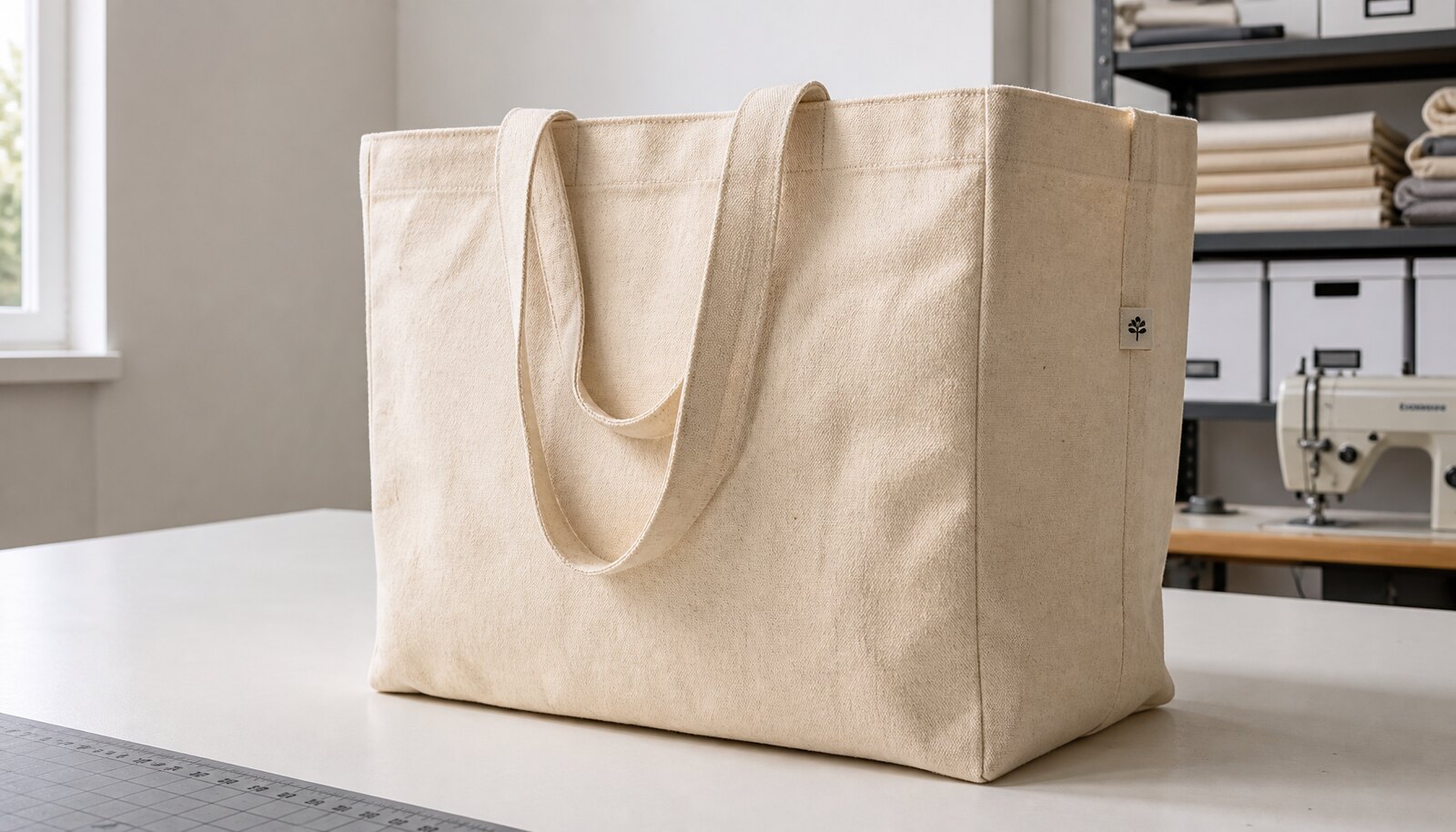
Why this bag category fails at launch when the quote looks fine
A large canvas grocery bag for a subscription box retail launch is not the same as a generic tote. The bag is part packaging, part retail item, and part brand signal. That means a quote can look competitive on paper while still failing at shelf appeal, fill efficiency, or warehousing. The most common mistake is buying to unit price only and discovering later that the bag is too soft, too small inside, or too costly to pack in a launch carton.
Procurement teams should treat this as a functional packaging component with a retail finish. If the bag has to hold sample products, inserts, or grocery-style bundles, the inside volume matters as much as the print. A bag that photographs well but collapses in the warehouse creates a different problem: it may look premium in a sample room and still be difficult to pack at scale.
- Launch problem to solve: bag must look retail-ready and still pack efficiently into master cartons.
- Commercial problem to solve: avoid hidden costs from oversized handles, weak reinforcement, and extra packing labor.
- Operational problem to solve: keep print, size, and carton counts stable enough for a reorder.
Choose the canvas weight around use case, not around a generic tote standard
For most subscription box retail launches, 10 oz to 12 oz canvas, roughly 340 to 420 GSM, is the practical range. Below that, the bag can look promotional rather than retail-ready unless the design is minimal and the load is light. Above that, you start paying for weight that may not create a visible consumer benefit, especially if the bag is mainly used to house packaged goods rather than carry loose heavy items every week.
The right answer depends on how the bag will be filled, not on a catalog description. A bag used to contain boxed skincare or small home goods can work at the lower end of the range. A grocery-style launch bag that needs structural presence, better stand-up behavior, and repeated customer use is usually better at the middle or upper end.
- 10 oz / about 340 GSM: lower cost, lighter hand, suitable when the pack-out is light and brand wants a softer tote.
- 12 oz / about 420 GSM: better body, stronger shelf impression, often the safer launch choice for premium retail programs.
- Higher GSM increases freight weight and carton cost, so ask for landed-cost impact before upgrading by habit.
Pick the build details that affect fill, durability, and shelf appeal
Size and structure matter more than buyers usually expect. A bag that is too narrow can make the box contents sit awkwardly, while a gusset that is too deep can waste carton space and push freight higher. For a retail launch, the bag should be designed around the product assortment and the warehouse pack plan together. That means the finished dimensions need to be locked before the factory quotes a true landed cost.
Handle length and reinforcement are where launch bags often fail under real use. If the handles are too short, consumers do not use the bag after the initial box opening. If the stitch reinforcement is weak, you may not catch the issue until the first retail return or customer complaint. For grocery-style use, the handles should be long enough for shoulder carry if that is part of the retail promise, and the stress points should show clean box-stitching or bar tacks rather than casual sewing.
- Good launch spec includes finished width, height, gusset, handle drop, and exact reinforcement method.
- If the bag will carry boxed products, test actual product fit, not just empty dimensions.
- Gusset depth should support the pack without creating wasted carton volume.
How to compare suppliers without letting the lowest quote distort the decision
A useful supplier comparison starts with the route, not the number. A direct factory with canvas bag production experience usually gives you more control over fabric weight, handle reinforcement, and packing details. A trading company can be useful if you need consolidation, but you should be clear about whether they are managing the actual production or simply passing through a factory quote. The cheapest line item often hides a weaker production path or a softer inspection standard.
When evaluating two or three quotes, line them up on the same basis: exact fabric, exact size, exact print method, exact packing, and the same MOQ. Then ask which parts are included and which are excluded. If one supplier is quoting a lower price but charges separately for plate setup, special carton sizes, or pre-production samples, the apparent savings can disappear quickly.
- Compare like-for-like: same GSM, same bag dimensions, same handle reinforcement, same print method.
- Separate true unit price from setup fees, sampling charges, and packaging upgrades.
- Use a direct factory when you need repeatability and instruction control; use a trading route only if they show full production accountability.
Decision table for sourcing routes and spec choices
For subscription box launches, the sourcing route should match the commercial risk. If the product is still being tested, flexibility matters. If the retail launch is confirmed and repeat orders are likely, production control matters more. The table below is meant to help buyers decide which route or spec level fits the launch stage, not to choose based on price alone.
The practical test is simple: which option gives you the best balance of visual quality, pack efficiency, and reorder stability? The best launch bag is the one your warehouse can receive cleanly, your retail team can present confidently, and your factory can repeat without redesigning every order.
- Write decisions in measurable language, not only descriptive wording.
- Ask for sample photos plus one physical approval sample for important orders.
- Keep quotation, sample approval, and inspection notes tied to the same spec version.
Plan the print method around artwork complexity and reorder volume
For large canvas grocery bags, screen print is usually the most stable option when the artwork is simple and the order will repeat. It handles solid logos, clean typography, and two-color retail graphics well, and it tends to scale better than ad hoc digital methods once the launch proves demand. The setup cost can feel annoying on the first order, but that is often offset by lower unit costs and better print consistency on larger runs.
If the launch is small or the design may change after sell-through data comes in, digital transfer or DTF can reduce upfront risk. That said, these methods need careful approval because they can look acceptable on a single sample and still show edge lift, texture differences, or reduced wash durability in production. For a retail launch, the question is not which method is trendy; it is which method survives the buyer’s expected reorder pattern.
- Simple logo, stable art, larger run: screen print is usually the most commercially efficient.
- Small launch, changing artwork, multiple versions: transfer-based methods may make more sense.
- Always approve print on the same fabric color and GSM as bulk production.
Sample approval should test dimensions, not just visual appearance
A sample can look good and still fail once the line starts running. That is why the pre-production sample should be measured against the same size sheet the factory will use in bulk. Inspect width, height, gusset, handle length, and stitch placement. If the logo sits too high or too low by a noticeable amount, the bag may still look acceptable in isolation but inconsistent in a retail set or e-commerce photo line.
Use the sample stage to catch build issues that are expensive to correct later. Pull the handles under load, flex the seams, check for stray threads, and look at print edge quality under natural light. If the sample has a loose weave or a slight canvas shade variation, decide now whether that is acceptable for the launch. The cost of re-approving a sample is tiny compared with reworking a 3,000-unit run.
- Measure sample dimensions with a tape, not by eye.
- Check print placement against a visual centerline and the approved artwork file.
- Apply load testing with actual planned inserts or weighted fill, not just empty bag handling.
MOQ logic: build the order around launch risk and reorder confidence
MOQ should not be treated as a factory demand only; it is part of your launch strategy. If the retail program is new, a smaller launch quantity can protect cash and reduce obsolescence risk. But an MOQ that is too low can increase unit cost, make the factory less flexible, and create inconsistency between the sample and the bulk run if they switch production lines to accommodate you. There is a balance between testing the market and keeping the supplier engaged.
A useful way to think about MOQ is by version count. One bag style with one print usually has the cleanest MOQ economics. The moment you add color variants, regional text changes, or retailer-specific packing, the effective MOQ rises because the factory must split labor, materials, and QC attention. If you need multiple SKUs, ask for the price break by version and not just by total quantity.
- Single SKU launch: best for keeping MOQ and setup costs controlled.
- Multiple print versions: expect higher effective MOQ per version even if the total quantity is large.
- Ask for a quote ladder at 500, 1,000, and 3,000 units so you can model reorder economics.
Packing, carton spec, and inbound handling can make or break the launch
Packing is where many tote bag launches lose money quietly. A bag that is rolled or folded badly can pick up creases that stay visible at retail. A carton that is overfilled can crush edges and cause uneven bag shapes. If your warehouse or 3PL expects standard master carton dimensions, the factory carton should be matched to that receiving process rather than built only for factory convenience.
For subscription box and retail launch programs, bulk packing in polybags inside export cartons is usually the simplest route. Retail hang tags are worth adding only when the bag is going directly to store shelves or to an organized retail display. If the bags are going first into a 3PL or subscription fulfillment center, over-investing in retail packaging can add labor without improving sell-through.
- Define the folding method before production starts.
- Set carton count per size so receiving teams can verify contents quickly.
- If the bag is sensitive to creasing, request a packing photo from the factory before shipment.
Lead time planning should separate sample, bulk, and shipping risk
A realistic lead time for a custom canvas bag launch is not one number. It has at least four parts: sample development, material sourcing, bulk production, and freight booking. Buyers get into trouble when the factory gives a single total timeline and the launch team assumes every step is already booked. If the print plate is late, the fabric shade is not approved, or the carton spec is revised after sample approval, the ship date slips even when the factory is otherwise capable.
The safest way to manage the schedule is to lock the design details before sampling and avoid version drift after sign-off. Small changes such as handle length, ink color, or packing count can force a new approval cycle. For a retail launch, those details should be frozen early enough that the factory can start material reservation immediately after sample approval.
- Sample lead time and bulk lead time should be quoted separately.
- Ask whether the factory can reserve fabric before final artwork approval.
- Allow space for freight booking, especially during peak shipping seasons.
Specification comparison for buyers
| Spec decision | Recommended option | When it fits | Buyer risk to check |
|---|---|---|---|
| Canvas weight | 10 oz to 12 oz / 340 to 420 GSM for a retail-ready grocery bag | Best for subscription boxes that need a premium hand feel, decent structure, and repeated use after launch | Too light looks floppy and prints can distort; too heavy raises cost and carton weight without adding value if the bag is only for one-time packaging |
| Handle construction | Cross-stitch handles with reinforced stress points | Use when bags will carry groceries, bundled inserts, or heavier retail packs | Short handles reduce usability; weak handle bar tacks fail first in real-world retail use |
| Print method | Screen print for simple 1-color or 2-color art; heat transfer or DTF only for short-run launches | Choose screen print when volumes justify plates and art is stable; choose digital transfer for early launch testing | Fine text, gradients, and low-contrast logos can look acceptable on sample but fail on mass production |
| Supplier route | Direct factory with canvas bag experience | Fits buyers managing a launch, repeat orders, and custom packing instructions | Trading layers can hide fabric origin, print method, and carton spec; quote may look low while control is weak |
| MOQ strategy | Start with a launch MOQ that matches sell-through risk, not the factory’s maximum efficiency order | Use when SKU demand is unproven or multiple colors / print variants are under review | Too-low MOQ can push up unit cost, weaken factory attention, or force compromises on color matching and packaging |
| Bag style | Open-top tote with gusset and reinforced bottom | Useful for grocery-style retail packs, bundled subscription inserts, or promotional resale | No gusset can reduce usable volume; oversized gusset may make cartons inefficient and increase freight |
| Lining / interior finish | Unlined or lightly hemmed unless the bag must carry sharp-packaged items | Best for cost control and a natural canvas look at launch | Loose threads and raw seam finish become visible in e-commerce photography and create returns risk |
| Packing method | Bulk pack in poly + export carton with clear carton marking; retail hang tag only if needed | Works for wholesale replenishment and launch inventory shipped to a warehouse or 3PL | Retail-ready packing adds labor and cost; overpacking can crush bag shape if cartons are overfilled |
| Supplier evidence | Recent production photos, in-line QC notes, and a pre-production sample with measured dimensions | Needed when comparing factories that quote close together but differ in execution strength | Without evidence, buyers compare prices only and miss the real cost of defects, delays, or rework |
Buyer checklist before sampling
- Confirm the target canvas weight in GSM or oz, plus the acceptable tolerance on finished bag weight and thickness.
- Lock the exact bag size, gusset depth, handle length, and reinforced stress-point construction before asking for price.
- State print method, print locations, ink colors, and the minimum logo clarity you will accept after washing or handling.
- Define whether the order is launch-only, launch plus reorder, or a multi-SKU retail program, because MOQ logic changes.
- Specify packing: polybag requirement, carton count, carton drop-test expectation, and whether retail hang tags are needed.
- Request measured pre-production samples and a photo of the actual production fabric, not only a blank stock swatch.
- Ask for lead time split by sample, bulk production, QC, and booking to the ship date, not just one generic factory timeline.
Factory quote questions to send
- What exact canvas fabric weight, weave type, and shrinkage allowance are you quoting, and what tolerance do you allow in bulk production?
- Is the quoted print method screen print, heat transfer, DTF, or embroidery, and what setup cost is included for each?
- What is the MOQ by color, by print version, and by packing style, and how does the unit price change at 500, 1,000, and 3,000 units?
- Does your quote include handle reinforcement, bottom seam reinforcement, and thread color matching, or are these treated as extras?
- What sample stage do you provide before bulk: blank sample, pre-production sample, or pilot run, and how long does each stage take?
- How are bags packed per carton, what is the master carton size and gross weight, and do you include carton test data or only carton dimensions?
- What inspection standard do you use for dimensions, print alignment, thread trims, odor, and needle damage, and what is your allowable defect rate?
- Which costs are excluded from the quote: sampling fee, plate fee, special packaging, inland trucking, export carton upgrade, or third-party inspection?
Quality-control points to confirm
- Finished size must stay within the agreed tolerance on width, gusset, and handle drop; a launch bag that misses size by several centimeters usually fails shelf or packing plans.
- Canvas weight should match the approved sample and be measured against the spec sheet, not estimated by hand feel alone.
- Print registration must stay centered within the agreed tolerance and must not show haloing, cracking, pinholes, or ink bleeding on natural canvas.
- Handle stitching should show even bar tacks or box-stitch reinforcement with no loose ends, skipped stitches, or puckering at stress points.
- Bottom seam and side gusset seams should lie flat, with no seam opening under normal hand pull and no thread breaks at corners.
- Color variation across the run should be controlled against the approved lab dip or physical standard; natural canvas is especially prone to shade drift.
- Cartons must protect shape and print surface; crushed corners, moisture exposure, or overpacked cartons can create warehouse rejects before the bags ever reach retail.