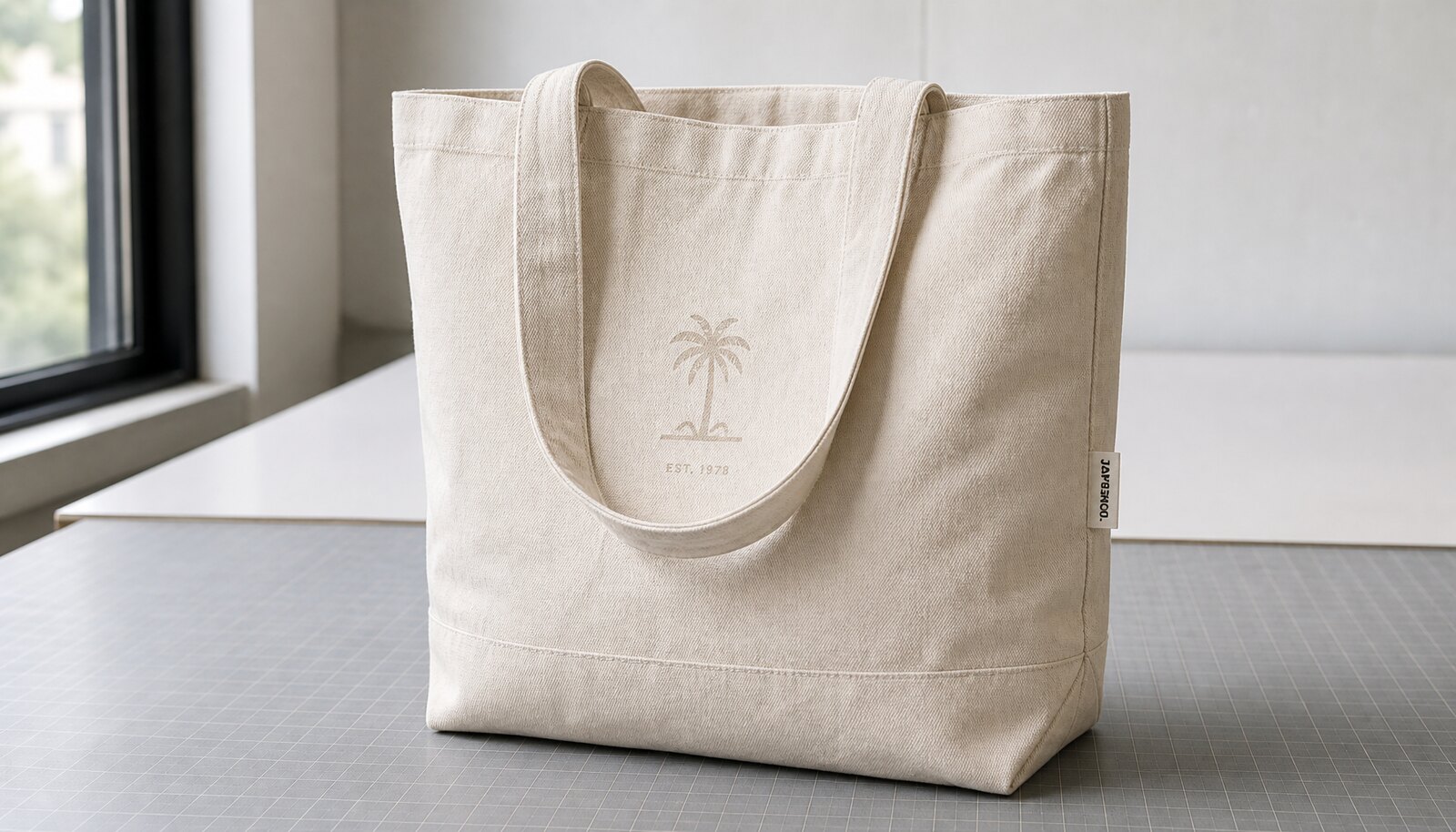
1. Start with the use case, not the logo
When buyers search for large canvas grocery bags for hotels event giveaway planning, the first temptation is to begin with artwork. That is usually the wrong starting point. In a hotel or event environment, the tote is not just a branded object; it is a working container. It may hold water bottles, snacks, brochures, amenity kits, local gifts, or retail purchases, and it may be carried by guests who do not handle it gently. The bag therefore needs to be specified as a functional product first and a branding surface second.
For procurement teams, the most important early decision is how the bag will be used on site. A one-day conference handout bag can be lighter, simpler, and packed more tightly. A guest welcome bag that sits in a room or lobby should feel sturdier and present better. A grocery-style bag for resort shops or multi-night stay programs needs stronger canvas, better seam security, and a gusset that supports the contents. If the use case is not defined, every later quote becomes fuzzy.
The use case also affects the commercial model. A low-cost giveaway can tolerate a simpler build if the item is meant to be used once or twice. A premium hotel program may justify a heavier fabric, longer handles, or better decoration because the tote will be part of the guest experience. That is why the buyer should write a short internal brief before contacting suppliers: what will go inside, how heavy it may be, who will carry it, how long it needs to last, and what impression the bag must create.
Once that brief is clear, suppliers can quote more accurately and buyers can compare on a real like-for-like basis. Without it, one factory may price a light event tote while another prices a stronger grocery-capacity bag, and both can look cheap at first glance. The result is a false comparison, not a real sourcing decision.
A practical procurement approach is to define three things before requesting quotes: target load, intended distribution scenario, and expected reuse level. Those three inputs tell you whether to prioritize cost, structure, print simplicity, or packing efficiency. That is the difference between buying a bag and buying the right bag for the program.
- Define what will be carried: bottles, brochures, boxed gifts, or grocery items.
- Define how the bag will be handed out: room drop, front desk, conference desk, or retail counter.
- Define whether the tote is intended for one-time giveaway use or repeated guest reuse.
- Write the requirement in business terms before asking for decorative proposals.
2. Choose fabric weight by load, not by habit
Fabric weight is one of the most important drivers of performance and cost. For canvas totes, buyers often hear descriptions such as heavy canvas, but those words are too vague for procurement use. Ask for a numeric specification in GSM or ounces, and make sure the supplier states whether the number refers to finished fabric or raw fabric. The difference matters because finishing, washing, and shrinkage can change the actual feel and strength of the bag.
For many hotel giveaway programs, 12 oz canvas, roughly 320–340 GSM depending on construction, is a workable entry point when the contents are light to moderate. It can be appropriate for brochures, small gifts, or a welcome kit with light items. But if the bag is expected to hold multiple bottles, dense products, or heavier grocery purchases, 14 oz or 16 oz canvas is usually safer. The extra cost can be justified by better shape retention, improved handle feel, and lower risk of customer complaints.
The key commercial tradeoff is not simply thicker is better. Heavier canvas adds cost, can reduce print softness, and may increase carton weight and shipping cost. There is a point where the bag becomes more expensive to move and less convenient to fold. For a hotel event giveaway, the ideal fabric is the lightest weight that still carries the intended load with acceptable durability and presentation. That is the procurement sweet spot.
Buyers should also ask about consistency. One shipment of nominally 12 oz canvas may feel different from another if yarn quality, weave density, or finishing is inconsistent. If the tote must be repeated across properties or event cycles, consistency matters as much as the headline weight. A stable, repeatable fabric is often more valuable than a slightly heavier but unstable one.
If your organization cares about sustainability or product claims, confirm what the fabric is actually made from and whether recycled content is genuinely part of the construction. Do not let a green label replace a materials declaration. A supplier should be able to explain fiber content, finishing process, and any documentation supporting the sustainability claim.
- 12 oz / about 320–340 GSM: useful for lighter giveaway kits and budget control.
- 14 oz / about 380–420 GSM: a common middle ground for hotel use and grocery carry.
- 16 oz / about 430–450 GSM: better for heavier loads, premium perception, and shape retention.
- Ask for finished-fabric weight, not a marketing description.
- Confirm whether shrinkage or post-wash finishing affects the final size or feel.
3. Size, gusset, and handle length determine real usability
Finished dimensions are more than a line on a tech pack. They determine whether the bag can be packed, carried, displayed, and reused effectively. In hotel giveaway planning, buyers often focus on face size and forget the gusset. That is a mistake because the gusset controls usable volume and stability. A bag that is wide on paper but shallow in depth can still collapse when filled with bottles or boxed items.
For grocery-style use, a gusseted bottom and side depth are usually worth the extra material. A tote with around 10–15 cm gusset depth often behaves much better in guest use than a flat tote of the same width. It stands more reliably, holds square-shaped items more neatly, and feels less like a thin promotional bag. If the bag must sit on a lobby counter or in a guestroom, this stability has real value.
Handle length is equally important. Handles that are too short are awkward in hotel settings because guests may carry the bag across a property, through a parking area, or on public transit. A handle length in the 50–60 cm webbing range is often practical because it supports both hand carry and shoulder carry. If your program expects heavier loads or longer walk distances, check whether the handle width and stitch reinforcement match the added stress.
Buyers should also think about fold size and carton density. Longer handles and deeper gussets improve usability, but they may also make the bag bulkier to pack. That affects carton utilization and freight cost. A strong buyer will not just ask whether the bag looks good. They will ask how many units fit in a carton, whether the bag folds cleanly, and whether the packed carton size suits the distribution method.
If your event involves multiple distribution points, ask the supplier to confirm consistency in body dimensions, gusset depth, and handle drop. Inconsistent cutting can lead to bags that look mismatched on a display table or create sorting issues in warehouse dispatch. For bulk hospitality programs, uniformity is part of quality.
- Typical practical range: 35–40 cm wide, 38–45 cm high, and 10–15 cm gusset.
- Longer handles improve shoulder carry but can reduce carton density.
- Gusseted construction improves volume and keeps the bag upright better.
- Ask for exact measurement reference points so the supplier does not interpret dimensions loosely.
4. Print method should follow artwork complexity and order volume
Most hotel giveaway bags do not need a complicated decoration method. For simple logos, one-color or two-color screen print is usually the most practical route because it offers a good balance of cost, clarity, and durability. It is also easier for procurement to compare because the cost structure is straightforward: artwork setup, print pass count, and unit production cost. That makes it ideal for event programs where the logo and message are stable.
Screen printing works well when the brand mark is bold, the text is short, and the print area is not too close to seams or handles. It can look sharp on natural canvas and generally handles bulk volume better than many decorative methods. If the artwork has fine lines, gradients, or tiny reversed text, however, screen printing may require simplification. A buyer should not assume that all logo files can be reproduced as-is at tote scale. The supplier should review artwork and flag any production limits before the order is approved.
Heat transfer can be useful when the artwork is too detailed for standard screen printing or when the run is short. The tradeoff is that it may not age as gracefully on a canvas bag that is repeatedly folded or carried. Embroidery creates a premium feel, but it can be slower, may cost more, and can change the drape of a lighter tote. For large giveaway programs, embroidery often makes more sense only when the brand wants a higher-end gift and is willing to absorb the extra cost and production time.
There are also practical constraints around print placement. If the artwork sits too close to the handle seam or gusset fold, print distortion can occur. If the supplier does not control registration carefully, the logo may appear skewed after sewing tension is applied. Buyers should request a strike-off or print-position diagram that shows actual placement dimensions, not just a digital mockup. For procurement, the difference between looks right in a file and prints right on cloth is significant.
A useful sourcing question is whether the supplier can produce a sample before bulk production. This is especially helpful if the hotel chain uses brand color standards or if the event requires exact logo positioning. Even a simple one-color logo should be checked on the actual fabric, because the color and absorbency of natural canvas can change the final appearance.
- Screen print: usually best for simple logos and repeatable volume.
- Heat transfer: useful for short runs or detailed art, but confirm durability.
- Embroidery: premium appearance, but usually higher cost and slower output.
- Avoid placing fine artwork too close to seams, folds, or handle anchors.
- Request a print placement drawing if the logo position matters to the brand.
5. Source route is a commercial decision, not just a supplier preference
For large canvas grocery bags for hotels event giveaway planning, the choice between a direct factory and a trading company should be made on commercial control, not on habit. A direct factory usually gives you better visibility into fabric sourcing, sewing method, print execution, and packing discipline. That is valuable when the same tote may be reordered for future events or rolled out across multiple properties. A buyer who wants repeatability should prefer a supplier who can explain their own process instead of relaying someone else’s.
A trading company can still be useful when the buyer needs a broader assortment, fast communication, or a consolidated purchase across multiple categories. But the buyer must check whether the trading firm can actually control production quality, or whether it is simply passing requirements to another plant. If the latter, hidden cost layers and weak accountability become a risk. When a project is time-sensitive, that extra layer can slow sample approval and make root-cause investigation harder if a defect appears.
A practical way to screen the source route is to ask for factory identification, production photos, and recent process documents. If the supplier claims to be a factory, ask what sewing lines they run, what their monthly tote output is, and whether they cut and print in-house. If they are a trading company, ask which factory will run the order, whether the factory has been audited, and how the buyer will be informed if production changes.
For procurement teams, the right question is not factory or trading company? but who can own the quality outcome and document it? That means asking for business license, export experience, a basic quality system description, and proof that the supplier can handle the tote size, print style, and packing method you need. A responsive quote is not enough. You need a supplier who can explain the actual production path.
If your organization has supplier onboarding steps, this is where audit materials matter. Ask for company registration, factory address, production line photos, compliance statements, and any relevant testing or sustainability documents. A credible supplier should be able to provide a clear paper trail without making the buyer chase every detail after the quote is issued.
- Direct factory: better for repeat orders, clearer QC responsibility, and more stable production control.
- Trading company: useful for consolidated buying, but verify the actual factory and fee layers.
- Ask who owns cutting, sewing, printing, inspection, and packing.
- Request company documents before price comparison is finalized.
- Use supplier accountability as part of your selection criteria.
6. Compare quotes line by line to avoid false savings
The most common procurement error in tote sourcing is comparing quotes by headline price only. With canvas bags, a low number often hides a smaller fabric weight, a cheaper print approach, excluded packing, or omitted carton data. That is why one quote can appear dramatically cheaper while actually offering less product or less service. A buyer should normalize every quote to the same spec before judging value.
A meaningful quote should clearly state bag dimensions, fabric weight, handle type, print method, print area, packing style, MOQ, sample charge, production lead time, and delivery terms. If the supplier does not specify these items, ask them to revise the quote before it goes to approval. Procurement teams need a quote that can survive internal review, not just a sales message. Without full details, it is impossible to compare landed cost or judge risk.
It also helps to ask for carton data at the quote stage. Canvas totes are bulky, and freight can become a major cost driver. Carton size, carton count, gross weight, and units per carton affect sea freight, air freight, and warehouse receiving. A quote that looks strong per unit can become poor value if the cartons are oversized or the packing density is weak. For this reason, a buyer should not approve a tote order without knowing how much cubic space the shipment will consume.
Tradeoffs should be explicit. A lower MOQ may come with higher unit pricing because the supplier must absorb setup and material inefficiency. A lower print cost may mean fewer color options or less precise registration. A simple bulk pack may save freight, but it may also require extra handling at the destination. These are not hidden issues if they are discussed early; they become problems only when they are ignored.
If you are comparing multiple factories, create a simple internal scorecard: spec match, quote clarity, sample quality, lead time credibility, carton efficiency, and QC transparency. That approach usually reveals which supplier is truly cheaper and which one is simply incomplete.
- Compare fabric, size, print count, packing, and carton data on the same basis.
- Ask for all setup, sample, and packing fees before final comparison.
- Check whether the quoted price is ex-works, FOB, CIF, or delivered.
- Use landed cost per acceptable bag, not just unit price.
- If one quote is much lower, verify what has been omitted rather than assuming it is a bargain.
7. MOQ depends on stock base, customization level, and packing choice
MOQ is not a fixed industry number; it shifts with the production route. A stock natural canvas tote with a simple one-color print can often be produced at a lower MOQ because the factory already has the base material and a standard sewing pattern. A fully custom tote with bespoke size, special dyeing, custom handles, or multi-color artwork needs more setup and more material commitment, so the MOQ rises. Buyers should expect that logic rather than treating MOQ as a negotiation game.
When procurement teams ask only, What is your MOQ? they often miss the more important question: what is driving it? Is the minimum tied to fabric sourcing, print screen setup, cutting efficiency, or packaging labor? If you know the constraint, you can often reduce MOQ by simplifying one variable. For example, keeping the bag in a standard natural color and using one print color may allow a smaller run without compromising function.
For event giveaway planning, stock-base customization is often the most efficient option when the timeline is tight or the design may change. You can keep the bag body standard and customize only the print, label, or insert card. That lowers material risk while still giving the program a branded look. It also helps with replenishment because a future reorder can be matched more easily if the core product remains standard.
Still, buyers should be careful not to optimize MOQ in isolation. A very low MOQ can increase unit price enough to erase the benefit, especially once sample charges, packing, and freight are included. Also, some factories will accept a small order but compensate by relaxing process discipline, which can produce more defects or wider size variation. The real question is whether the MOQ aligns with the quality level needed for the event.
A useful procurement tactic is to ask the supplier for two pricing paths: one for a stock-base bag and one for a fully custom build. That shows the buyer the cost of flexibility. It also helps internal stakeholders understand why a slightly higher MOQ may actually produce a better total result.
- Low MOQ is easiest with stock canvas and simple print.
- Higher MOQ is normal for custom size, custom color, or premium finishing.
- Small orders often need artwork simplification to stay economical.
- Ask why the MOQ exists, not just what the MOQ is.
- Request two paths if possible: stock-base versus fully custom.
8. Sample approval should verify function, measurement, and presentation
A sample is the buyer’s best risk-control tool, but only if it is treated as a functional test, not a photo opportunity. For event giveaway bags, the sample should reflect final fabric, final print method, final handle material, and final packing style. If the sample is made from different cloth or printed by a different process, it does not prove the bulk order. Procurement should insist on a true pre-production sample whenever the order is meaningful or time-sensitive.
The sample review should start with measurement. Check body width, body height, gusset depth, handle length, and handle attachment position against the approved tech pack. Then inspect the print placement, logo clarity, color tone, and edge sharpness. On natural canvas, small fiber variations are normal, but the logo should still appear centered and legible. If the artwork is too close to a seam or the panel is skewed, that must be corrected before bulk begins.
Function testing matters too. Put a realistic load in the bag and see how the handles feel, whether the bottom stays stable, and whether the seams show tension. If the tote is meant for grocery items, test with weight that reflects the likely use, not just a few papers. A sample that looks nice but fails under load is not an approved sample. Likewise, if the bag is supposed to sit upright, verify that behavior on a flat surface.
Packing approval should happen during sample review, not after. Fold the bag as it will be packed, count how many units fit into the intended carton, and check whether the carton closes properly. Many tote issues become freight or receiving issues because the packing plan was never tested. If the carton is too full, the bags may crease badly or the carton may burst in transit. If the carton is too loose, freight efficiency suffers and the goods can shift.
Where possible, ask for a signed sample-approval record that states fabric weight, dimensions, print method, packing method, and any accepted tolerances. This reduces ambiguity later if the buyer needs to reject a shipment or request rework.
- Verify dimensions with a tape measure, not by eye.
- Inspect print alignment, color consistency, and ink coverage on the actual cloth.
- Test handle pull and seam stress with a realistic load.
- Fold and pack the sample as bulk goods will be packed.
- Get written approval notes that define what was accepted.
9. Packing, carton utilization, and freight impact deserve early attention
Packing is often overlooked until the shipment is ready, but it has a direct impact on cost and on the receiving experience. Canvas totes are bulky relative to their value, which means carton utilization can decide whether the order is economical. A bag that is only slightly larger than necessary may create a much bigger carton footprint, especially if the handles are long or the tote does not fold neatly. That extra volume can matter more than a small unit-price difference.
For hotel programs, bulk packing is often the most efficient choice when the bags are going into storage or internal distribution. It reduces labor and usually lowers freight volume. Individual polybags are useful when the bag is handed to guests as a premium gift or when cleanliness and presentation matter. Set packing makes sense when the tote is part of a preassembled welcome kit or event pack. Each option has a cost and a volume implication, so the buyer should select the packing format intentionally.
Carton utilization should be discussed with the factory before the order is confirmed. Ask how many bags fit per carton, how the bags are folded, whether the handles are tucked, and whether the carton has enough strength for the packed weight. A carton that is too heavy may slow warehouse handling or trigger carrier surcharges. A carton that is too large wastes freight. This is particularly important if the order might move by air instead of ocean.
Freight planning should also consider destination handling. If the bags will be distributed to multiple properties, uniform carton marks and SKU labels become essential. Receiving teams need to identify quantity, color, style, and program name quickly. When carton marking is vague, goods may be delayed in the warehouse even if production was correct. That is a supply-chain problem, not merely a labeling problem.
A strong procurement request should therefore ask for packing details as part of the quote. Do not wait until production is complete. Packing affects cost, timing, storage, and damage risk. It should be treated as part of the product spec.
- Bulk pack lowers labor and freight volume.
- Polybag or set pack improves presentation but raises cost and cubic size.
- Ask for units per carton, carton dimensions, and gross weight before approval.
- Confirm carton marks for multi-property or distributor receiving.
- Check whether the packed carton weight is practical for warehouse handling.
10. Landed-cost thinking and supplier screening prevent expensive surprises
The cheapest tote is rarely the best buy once the full landed cost is calculated. A bag with a lower ex-factory price may still cost more if it uses oversized cartons, needs extra packing labor, has higher defect risk, or requires more rework after sample approval. Canvas totes are especially prone to this mistake because they are relatively low value per cubic meter. Freight, inspection, and rejects can materially change the economics.
Procurement teams should calculate landed cost per acceptable bag. Start with the factory quote, then add sample cost, packing upgrades, inspection cost, freight, duty or taxes if relevant, and a reasonable allowance for rejects or rework. If you are comparing suppliers across countries, also consider transit time, communication speed, and the stability of material supply. A supplier in a lower-cost country may still lose on total value if lead times are longer or if shipping route volatility is high.
Country and sourcing context matters because manufacturing ecosystems differ. Some suppliers are strong in low-MOQ stock-base customization, while others are better at higher-volume sewn goods with tighter QC systems. Buyers should ask where the fabric is sourced, where cutting and sewing happen, and whether the print operation is in-house or subcontracted. Those answers can affect lead time, color consistency, and issue resolution. They also reveal how much control the supplier truly has.
A basic supplier screening checklist should include business registration, factory address, product-specific experience, recent QC or audit information, sample responsiveness, and willingness to document tolerances. If the supplier cannot provide clear answers before the order, they are unlikely to become more transparent after the order. Good procurement practice is to vet the process, not just the price.
For sustainability-sensitive buyers, ask for the exact certificate, scope, and validity date if the supplier makes any environmental claim. Do not accept vague statements like eco-friendly material without proof. If recycled content, responsible cotton, or restricted-substance compliance matters to your organization, the supplier should provide specific documentation. This is increasingly important for hospitality brands that need procurement records to withstand internal review.
The final decision should balance cost, control, and schedule. A slightly more expensive supplier may be the better choice if they provide clear documentation, better carton efficiency, and more reliable delivery. For a hotel giveaway program, avoiding disruption is often worth more than saving a few cents per bag.
- Use landed cost per acceptable bag, not just unit price.
- Include freight, packing, inspection, duty, and reject risk in the comparison.
- Ask where fabric, cutting, sewing, and printing happen.
- Verify business registration, factory address, and product-specific experience.
- If sustainability claims matter, require the exact certificate and scope.
- A reliable supplier with clean documentation can be cheaper in practice than a low quote with weak control.
Specification comparison for buyers
| Spec decision | Recommended option | When it fits | Buyer risk to check | Typical pricing / MOQ context |
|---|---|---|---|---|
| Source route | Direct factory with tote-bag experience | Best for repeat programs, tighter spec control, and clearer accountability | Trading-company quotes may hide print, packing, inspection, or carton fees | Direct factory often gives better control at scale; MOQs commonly start around 1,000–3,000 pcs for custom runs, lower for stock-base programs |
| Fabric weight | 12 oz to 16 oz canvas, or about 320–450 GSM | 12 oz for lighter giveaways; 14 oz for balanced hotel use; 16 oz for heavier loads or premium perception | Confirm whether the GSM quoted is finished fabric or raw fabric; lighter cloth can distort under load | 12 oz usually sits in the lower price band; 14–16 oz can add cost depending on cotton market, weaving density, and finishing |
| Bag construction | Gusseted bottom, reinforced handle stitching, top hem | Best when the bag must hold bottles, brochures, amenity kits, or grocery items and stand upright | Flat bags may look cheaper but reduce usable volume and stability | Gussets and reinforcement usually increase cost modestly but improve acceptance and lower complaint risk |
| Print method | 1-color or 2-color screen print for most giveaways | Simple hotel logos, event marks, and short brand messages | Fine gradients, tiny reverse text, and tight registration can fail in production | Screen print is typically lowest cost at volume; setup often starts around 1–2 colors with per-color screens |
| MOQ route | Stock base bag plus custom print for lower MOQs | Near-term events, pilot programs, or changing artwork | Low MOQ can look attractive but unit cost may rise once setup, packing, and freight are included | Stock-base programs can start around 300–1,000 pcs; fully custom often 1,000–5,000+ pcs |
| Closure and carry comfort | Open-top tote with 50–60 cm cotton webbing handles | Guestroom drops, welcome kits, grocery carry, and event handouts | Handles that are too short reduce shoulder carry and hurt usability | Longer handles may slightly raise price and carton volume, but usually improve end-user satisfaction |
| Packing format | Bulk packed by count in master carton, or simple polybag if needed | Bulk for internal distribution and freight efficiency; polybag for guest-facing presentation | Retail-style packing adds cost and cubic volume without always improving function | Bulk packing is usually most economical; individual bagging adds labor and carton space |
| Sampling route | Pre-production sample with final fabric, print, and packing structure | Whenever the order is branded, time-sensitive, or going to multiple hotel properties | A photo sample alone does not validate hand feel, print density, or carton fit | Sample charges are often credited on bulk orders at some factories, but not always |
| Compliance evidence | Material declaration, test data, and carton pack-out confirmation | Needed for corporate procurement review, distributors, or sustainability checks | Missing documents can delay PO release even when the bag spec is correct | Request a document list before quote finalization so paperwork is not an afterthought |
Buyer checklist before sampling
- Define the end use first: grocery carry, room-drop kit, welcome gift, retail-style giveaway, or event handout. That decision should drive size, fabric weight, handle length, and packing.
- State the finished dimensions in centimeters or inches, including body width, height, gusset depth, and handle drop or overall handle length.
- Specify fabric clearly in GSM or oz, and say whether you want natural, bleached, or dyed canvas. Avoid vague words like “heavy-duty” without a number.
- Decide the artwork scope early: one-color logo, two-color logo, full-front print, or small placement mark. Print complexity affects cost, MOQ, and lead time.
- Ask whether the quote includes seam reinforcement, top hem, edge binding, and thread trimming.
- Request a pre-production sample made from the same fabric weight and the same print method that will be used in bulk production.
- Require carton dimensions, gross weight, carton count, and units per carton so freight and warehouse receiving can be planned before PO approval.
- Compare quotes on the same basis: fabric, size, print colors, setup, sample charge, packing, carton marking, inspection, and delivery terms.
- If sustainability matters, ask for the exact certification document, scope, and validity date rather than accepting a generic claim.
- Set an approval deadline for artwork, sample, and production so the event date has buffer for corrections.
Factory quote questions to send
- What is the quoted fabric weight in GSM or oz, and is it finished canvas weight or raw fabric weight?
- Is the price based on stock canvas or a custom-woven or custom-dyed base, and what MOQ changes with each route?
- Which print method is included, how many colors are covered, and what is the setup charge per color or per design?
- What are the exact finished dimensions, gusset depth, handle length, and handle reinforcement details?
- Does the unit price include top hem, bar-tacks, loose-thread trimming, and dust removal before packing?
- What packing format is included: bulk pack, individual polybag, set pack, or carton dividers?
- What is the sample lead time, sample charge, and will the sample match final bulk material, sewing, and print method?
- What is the bulk production lead time after sample approval, and what events can extend it such as yarn shortage, print correction, or packing change?
- Can you share carton dimensions, net weight, gross weight, and units per carton for freight planning?
- What QC checks are performed before shipment for measurements, seam strength, print alignment, stain screening, and packing accuracy?
Quality-control points to confirm
- Check fabric weight against the approved spec using the same measurement method for all quotes. Set an agreed tolerance band, commonly around ±5% unless the buyer accepts otherwise.
- Measure finished dimensions on multiple random pieces after light flattening, not just on one sample. Measure body width, height, gusset depth, and handle length from the same reference points used in the tech pack.
- Inspect handle attachment for symmetry, correct spacing, and reinforcement. Confirm bar-tacks or cross-stitches are present at the agreed locations and that both sides match.
- Check seam quality for skipped stitches, loose thread ends, seam puckering, and weak corners. Stress points near the handle base and bottom corners deserve special attention.
- Review print quality for placement, registration, opacity, color consistency, and edge definition. Look for bleeding, pinholes, smudges, off-center artwork, or distortion from seam tension.
- If the bag is intended to hold heavy content, run a simple load test on samples or pilot pieces. Use a realistic weight and inspect for seam opening, handle stretch, or fabric tearing after a short carry period.
- Use an AQL-style sampling plan for production checks when order size justifies it. As a practical buyer-side framework, classify defects as critical, major, or minor and define acceptance thresholds before production starts.
- Color control should include shade matching against the approved reference under standard light. For natural canvas, confirm whether fiber speckling and shade variation are acceptable or whether they count as defects.
- Carton pack-out should be counted and cross-checked against the PO. Verify units per carton, carton marks, carton dimensions, and whether packing order matches the receiving plan.
- Pre-shipment inspection should include random sampling for stains, needle damage, mixed shade lots, misprints, stitching damage, and packing errors. A generic visual check is not enough for a bulk event order.