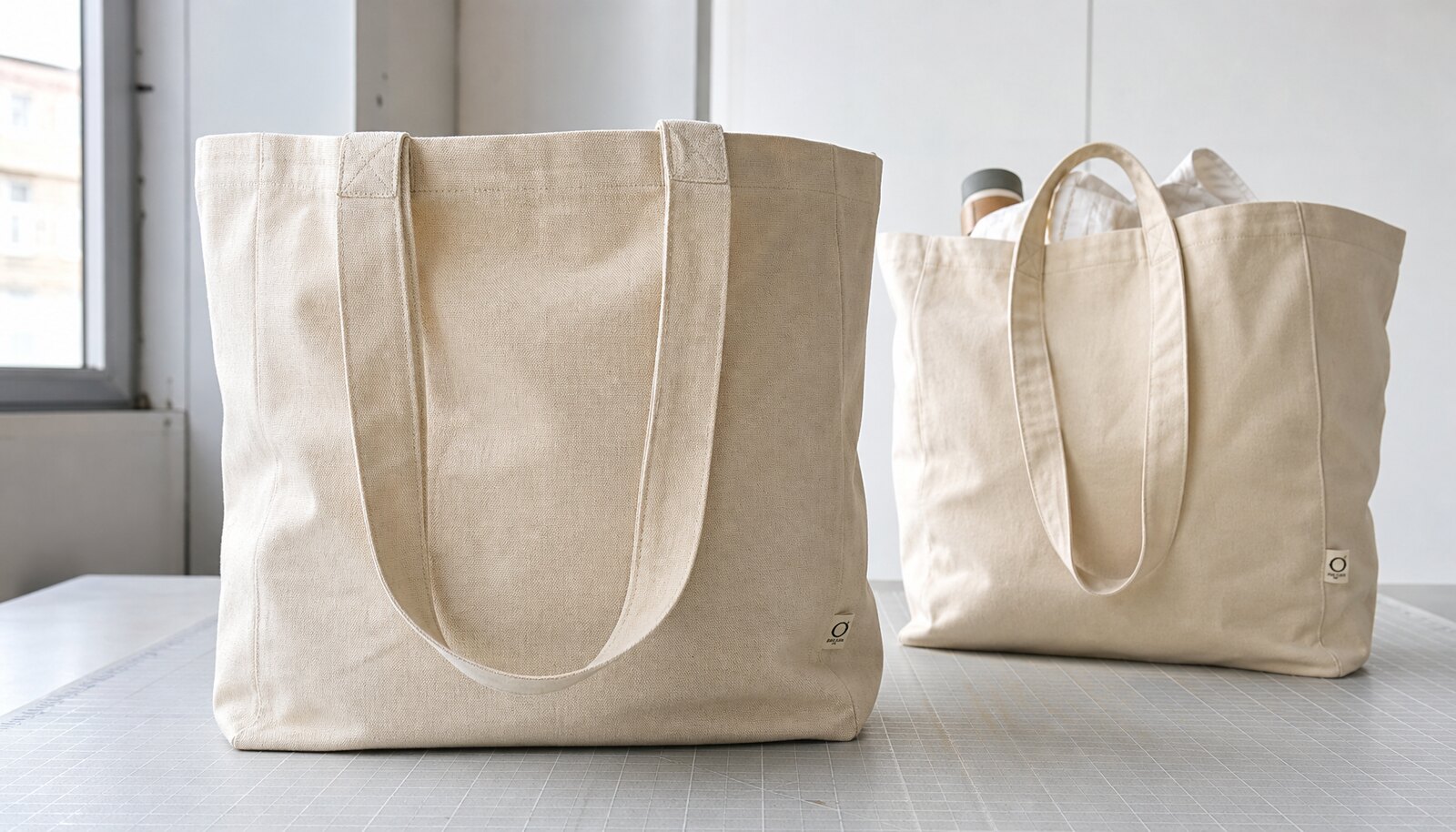
Why Hotels Buy Large Canvas Grocery Bags
Hotels do not buy large canvas grocery bags only as giveaways. In most programs, the bag has to support an actual guest activity: grocery runs, local market shopping, minibar retail, amenity packing, welcome kits, spa retail, or a gift item in the hotel shop. That makes the bag a functional product, not just branded merchandise. Procurement should therefore evaluate it like a reusable utility item, with attention to load capacity, stitching, handle comfort, and the way the logo holds up after repeated use.
The business value is simple. A well-made canvas bag can extend brand visibility beyond the property, but only if the bag feels worth keeping. Guests notice whether the bag sits upright, carries bottles safely, and looks clean after it is folded and reused. A thin promotional tote may save a few cents, but it can create a poor brand impression if the side seams twist, the handles dig into the hand, or the print cracks after limited use.
Hotels also have different user scenarios than grocery chains or gift shops. A resort may want a premium reusable tote for excursion kits. A city hotel may want a practical shopping bag at the concierge desk. A luxury property may need a heavier canvas bag with a restrained logo for retail sale. That variation means the RFQ should define the use case first, because the right bag for a guest amenity pack is not always the right bag for front-desk retail.
A good sourcing brief will name the use case, expected loading behavior, and the presentation standard. If the bag will be sold in a hotel shop, the stitching, label finish, and folding presentation matter more than they would for an internal supply item. If the bag is included in a welcome package, the packaging format and opening experience matter. When procurement starts with the use case, the supplier can quote a much more relevant construction instead of a generic canvas tote.
- State the primary use case: guest shopping, room amenity, retail sale, VIP gift, or event distribution.
- Decide whether the bag is expected to stand upright, collapse flat, or fold into a retail pack.
- Treat presentation and durability as procurement requirements, not optional finishing details.
Choose the Right Bag Construction Before You Ask for Quotes
For large canvas grocery bags, the first commercial decision is construction. Fabric weight matters, but so do panel structure, gusset depth, handle type, and reinforcement. A buyer who only asks for a “large canvas bag with logo” usually receives a vague quote that is hard to compare. A better RFQ starts with the exact body size, the gusset, and how much weight the bag must carry without distortion.
In practical hotel sourcing, the most common starting point is uncoated cotton canvas in the 10 to 14 oz range, which is roughly 340 to 480 GSM depending on the factory’s convention. At the lower end, the bag feels lighter and folds more easily, which helps if it will be packed inside amenity kits or sold as a casual retail item. At the upper end, the bag has more structure and a more premium handfeel, but the fold becomes stiffer and freight weight rises. Buyers should not assume heavier is automatically better; the right spec depends on whether the guest needs a roomy shopping bag, a displayable retail bag, or a compact pack-in item.
Construction also changes cost more than many buyers expect. A flat tote with short handles is cheaper than a gusseted bag with long shoulder handles and inside reinforcement. A boxier profile, piped seams, bottom insert, or lining will increase cutting time, stitching operations, and inspection time. If the hotel wants to place bottles or boxed groceries in the bag, a gusset usually gives a better user experience than a flat body because the load sits more naturally and the top edge is less likely to collapse inward.
Handle design deserves equal attention. Self-fabric handles are common because they keep the look consistent and are easy for factories to produce. Webbing handles may improve comfort and strength but change the appearance and can add cost. Handle drop should be written clearly because a bag that works as a hand-carry item may feel awkward on the shoulder if the handles are too short. For hotel buyers, comfort matters because guests often carry the bag while traveling through a lobby, parking area, or market, where a poor handle design is immediately noticed.
- Use a gusseted body if the bag must hold bottles, boxed foods, or folded purchases without tipping.
- Choose self-fabric handles for a cohesive look; choose webbing if comfort and load strength matter more.
- Ask for the bag to be measured with the final fold state, not only as a sewn-but-unpacked sample.
Fabric Weight, Finish, and Color: What Actually Changes Price and Performance
Fabric weight is one of the first lines in a quote, but it is not the only fabric variable that affects commercial performance. Canvas quality is shaped by weave consistency, yarn thickness, prewash or pre-shrink treatment, dye method, and whether the factory is sourcing greige cloth or buying finished stock fabric. Two suppliers can both say “12 oz canvas” and still deliver different handfeel, different shrink behavior, and different print results.
For hotel buyers, natural canvas is often the most forgiving choice. It usually hides small shade variation better than deep dye colors, and it allows the logo to stand out clearly. Bleached canvas gives a brighter premium look but can show dirt or handling marks more easily. Dyed canvas can create a strong brand color story, but it raises the risk of lot-to-lot color variation and may require higher minimums or longer fabric lead time. If the hotel wants a specific brand shade, the buyer should ask how the mill or factory controls shade bands, what light source they use for approval, and whether the factory can provide a fabric swatch for sign-off before cutting begins.
The finish also affects use. Unfinished canvas has a more natural feel and may be acceptable for eco-positioned guest items. Prewashed canvas can reduce shrink risk and soften the handfeel, which may be preferred for premium retail bags. Coated or laminated canvas changes the product into a different category, because it can improve wipeability but may reduce foldability and alter the print method. Those choices should be made intentionally, not left to the supplier’s standard practice.
Procurement teams should ask whether the fabric is pre-shrunk, what shrink tolerance is acceptable after washing or humidity exposure, and whether the factory controls fabric lot mixing. If bags from different rolls are combined without shade management, the final delivery can look inconsistent even when all bags are technically within specification. For a hotel brand, that inconsistency is visible at the moment the bags are laid out in a stack or retail shelf.
- Ask for the actual GSM or oz weight, weave style, and whether the fabric is pre-shrunk or washed.
- Decide early if you want natural, bleached, dyed, or coated canvas, because each option changes MOQ and lead time.
- Request a fabric swatch or strike-off and approve it before cutting bulk fabric.
Logo Decoration Options: What Works Best on Heavy Canvas
Logo choice should follow the bag’s use environment, not just the artwork file. Screen printing remains the most practical method for many hotel orders because it is readable, economical, and durable when properly cured. It is especially effective for bold hotel logos, single-color marks, or simple two-color artwork. On a heavy canvas surface, screen print usually gives the best balance between cost and wear resistance, provided the ink is matched to the fabric and fully cured before packing.
Digital print can be useful when the design is complex, multicolor, seasonal, or short-run. It is a sensible route for a test program where procurement wants to evaluate response before committing to a larger roll-out. The tradeoff is that the ink layer, rub resistance, and color consistency can vary by machine and substrate. If the hotel expects heavy handling, ask the supplier to prove that the print will not scuff during normal folding and unpacking. Heat transfer can also reproduce detailed artwork, but on canvas it may create a less integrated handfeel and can be more sensitive to edge lift if the process is not controlled.
Woven labels, side labels, and small embroidered marks are often better for a premium or retail-facing presentation than for a utility grocery bag. They make the bag feel closer to a branded merchandise item. The downside is that these methods add steps, can increase lead time, and may stiffen a small area of the bag. Hotels that want a quiet, upscale look often use a small woven label rather than a large printed logo, but the placement has to be intentional. A side seam label can look clean; a poorly stitched label can look like afterthought branding.
One common procurement mistake is to focus on the artwork and ignore the substrate. The same logo can look good on a 10 oz natural canvas bag and too brittle or too faint on a much rougher or darker canvas. The buyer should therefore confirm the print area, minimum line thickness, and Pantone targets before approving the final proof. If the hotel logo has fine type or thin strokes, ask the factory to show an actual sample or print strike-off rather than a digital mockup alone.
- Use screen print for bold, repeatable hotel branding and best cost-to-durability balance.
- Use digital print only when the artwork complexity or short-run quantity justifies it.
- Require a strike-off or print sample if the logo has thin lines, small type, or specific Pantone requirements.
MOQ, Setup Fees, and How Unit Cost Really Moves
MOQ is not a single number; it is a function of how much the order changes the factory’s standard workflow. A bag that uses stock canvas, one print location, and a standard handle usually has a lower MOQ than a bag with custom dye, special trim, custom label, and multiple print positions. The more you change, the more the factory must book fabric, set screens or plates, cut separate runs, and manage extra QC points.
Procurement should ask for pricing at the target MOQ and at at least one higher tier. That reveals whether the factory is using scale to lower cost or just quoting a convenient entry price. A quote that looks low may depend on a minimum run that the hotel will never repeat, while a slightly higher quote may be more favorable on the reorder because it removes some setup burden. If the hotel plans seasonal replenishment, the reorder price is often more important than the first order price.
Setup charges need to be separated from unit price. Screen fees, plate fees, sampling fees, woven label setup, color matching, and special packing fees should be shown line by line. Otherwise procurement cannot tell whether one supplier is genuinely lower cost or simply hiding more of the cost in the base price. For hotel programs, it is also useful to ask whether setup fees are amortized or waived on reorders. A supplier willing to waive repeat setup can look more expensive on the first purchase but materially cheaper over a twelve-month replenishment cycle.
A practical negotiation point is carton and packaging. Some factories quote a basic bulk fold, then add cost if the buyer needs retail-ready packing, barcode labels, or inserted tissue. That may be acceptable, but it must be visible in the quote. If the hotel shop team needs display-ready packaging, the buyer should state that in the RFQ before requesting prices, because retrofitting retail packaging later usually costs more than sourcing it correctly at the start.
- Request pricing at two volume tiers so you can see the scale effect and the reorder effect.
- Separate one-time setup charges from recurring production cost.
- Do not compare quotes until packaging, print, and label assumptions are identical.
Comparison Table: Which Supplier Route Fits Which Procurement Need
For large canvas grocery bags for hotels custom logo order guide decisions, the right supplier route depends on the balance between speed, control, and price. Procurement teams often compare factories, trading companies, nearshore converters, and local decorators as if they were interchangeable. They are not. Each route has different cost structure, QC visibility, and lead-time risk. The table below is more useful when you read it as a decision filter rather than a price list.
A direct factory is usually strongest when the hotel needs repeatable quality and wants the quote to reflect the real bag spec. A trading company can help consolidate multiple items into one shipment, but buyers should ask who actually owns the production schedule and who is responsible if the print or fabric changes without notice. Nearshore converters can shorten transit and simplify communication, yet the available fabric and trim options may be narrower. Local decorators are often best for emergency or very small runs, but the incoming blank bag quality becomes the hidden risk. In every route, procurement should ask for sample photos, production photos, and the exact point at which the supplier’s QC team signs off.
The clearest decision threshold is this: if the order is a repeat hotel standard item, choose the route with the best control over fabric, seams, and print consistency. If the order is a short-term event or seasonal test, choose the route that can move quickly and still document its blank-bag source and decoration method. If the quote does not show those facts, the supplier is not yet ready for a clean procurement comparison.
- Ask every supplier to name the actual factory or decorating site, not only the sales office.
- Compare routes by speed, control, and re-order stability, not by headline unit price alone.
- Treat outsourced print or sewing as a risk item that must be disclosed before approval.
Samples, Proofs, and the Approval Path That Avoids Rework
Sample approval should be treated as a production gate, not a courtesy step. For hotel buyers, a sample must prove more than appearance. It must show the bag size, handle comfort, logo placement, print quality, fold behavior, and how the bag performs with a realistic load. If the sample looks attractive but the handles dig in or the top opening collapses once filled, the sample has failed even if the logo is perfect.
The most useful sample sequence is usually: fabric swatch or color reference, decorated strike-off or print proof, pre-production sewn sample, then a final pre-shipment reference if the order is large. Each stage answers a different question. The fabric swatch confirms color and handfeel. The strike-off checks print clarity and placement. The sewn sample proves construction. The pre-shipment reference helps catch packing issues that are easy to miss when looking only at one sample bag. If the supplier skips directly to bulk production, the buyer loses the chance to correct problems at low cost.
Sample instructions should be written in a way the factory can act on. Rather than saying “make it look premium,” define exact acceptable variations: logo centered within a specified tolerance, handle drop within a certain range, seams trimmed cleanly, and no visible oil marks or loose threads in the front panel. If the hotel wants a full retail presentation, the sample should include the exact folded state, insert card, barcode, and carton mark so the warehouse team can confirm the intake flow before goods arrive.
When a sample is revised, keep version control tight. Use dated approval sheets and mark which image or physical sample is the binding reference. Many disputes happen because the buyer approves one sample photo, the supplier cuts from another reference, and the bulk order reflects an earlier revision. Clear sample control protects both sides and is one of the easiest ways to reduce lead-time arguments later.
- Use a swatch, strike-off, sewn sample, and packing reference if the order is more than a small test run.
- Test the sample under realistic load before giving final approval.
- Put version numbers and dates on all approvals so the factory cannot mix old and new references.
QC, Inspection, and Acceptance Criteria for Bulk Orders
Quality control for canvas bags needs more detail than a generic “check for defects” note. A hotel buyer should define what counts as a major defect, a minor defect, and an acceptable cosmetic variation. Major defects are the ones that affect function or brand presentation: broken seams, wrong size beyond tolerance, missing handle reinforcement, unreadable or badly misplaced logo, holes, or cartons short by a significant count. Minor defects are the ones that do not stop use but still need monitoring: loose threads, light wrinkles, slightly uneven folding, or small visual variation within the approved range.
Inspection should start with incoming fabric and continue through sewing and packing. On the line, QC should verify stitch density, seam alignment, bar-tack placement, and logo registration. At final inspection, the buyer or third-party inspector should sample cartons under an AQL plan that matches the order risk. A common commercial structure is to use a standard AQL-based inspection with major and minor defect thresholds defined in the PO, but the exact sampling level should depend on order value and tolerance for risk. If the bags are for a hotel retail store or opening pack, the defect threshold should be stricter than a back-of-house supply item.
The practical tests matter. A simple pull test on the handle attachment can reveal weak reinforcement that a visual check would miss. A tape adhesion or dry rub test can show whether the print has cured properly. If the canvas is dyed or washed, use a shade check under consistent lighting to see whether the lot is uniform. Where load performance matters, test the bag with a realistic grocery load rather than a theoretical one. A canvas tote that holds an empty bag well may still fail when bottles pull on the handle anchoring points.
Procurement should also define examples of acceptance and rejection. For example, if handle length is within tolerance but the stitching is visibly skewed in the front panel, does that count as acceptable? If the print is slightly off-center but still within the agreed range, is it a major or minor defect? Buyers save time when these decisions are made before production rather than debated after inspection. If the factory can provide inspection photos, defect counts, and a packing report before shipment, the buyer has much better leverage to resolve issues without delaying arrival.
- Define major and minor defects in the PO before production starts.
- Use AQL sampling plus targeted pull, rub, and seam checks, not only visual review.
- Request inspection photos and defect counts before shipment release.
Packing, Cartons, and Import Details That Affect Landed Cost
Packing is often where the commercial value of a canvas bag order is won or lost. A hotel may care about clean presentation, but its warehouse and logistics team care about carton count, carton size, and whether the bags arrive in a format that can be received quickly. If the bags are folded too tightly, they may look wrinkled or compressed at opening. If they are packed too loosely, the cartons take up more cube space and freight cost rises. The right answer depends on whether the bags are going directly to a hotel store, a central distribution center, or a third-party logistics warehouse.
A useful RFQ should define inner packs, master carton count, carton dimensions, gross weight target, and whether the bags are individually polybagged. It should also specify if the carton needs retail or warehouse labeling. Many buyers under-specify this area and then pay later in receiving delays because the warehouse team must re-label or re-count the goods. If the bags are part of a hospitality opening kit, the opening experience may justify a more careful pack style. If the bags are just a distribution item, a simple flat fold may be the better cost choice.
Landed cost is not only product price plus freight. It includes packaging volume, carton strength, customs handling, and the cost of correcting mistakes. A quote that is a few cents cheaper per bag may become more expensive if the carton dimensions are inefficient or the supplier uses weak packing that leads to damage in transit. When comparing suppliers, ask for carton photos, gross weight, and a clear packing sketch. Those items help procurement and logistics teams estimate the real shipping cost and warehouse handling effort.
Import programs also benefit from documentation discipline. Ask for a commercial invoice, packing list, and carton marks that match what the warehouse expects. If the order is going to multiple hotel properties, the supplier may need to split cartons or apply property codes. That detail should be written into the order before production, because splitting cartons after packing usually creates avoidable labor and errors.
- Define carton count, carton size, gross weight, and label format in the PO.
- Choose flat-fold, rolled, or polybagged packing based on both presentation and freight efficiency.
- Ask for carton photos and packing sketches so warehouse intake can be planned before shipment arrives.
Lead Time, Incoterms, and How to Negotiate the Commercial Terms
Lead time on canvas tote orders is usually longer than the first quote suggests because the workflow has several fixed steps: fabric booking, cutting, sewing, decoration, curing, inspection, packing, and dispatch. Custom dye, special handle construction, multi-color decoration, or delayed artwork approvals all add time. Hotel buyers should work backward from the launch date and add a buffer for sample approval and transit, rather than assuming the production clock starts the day the PO is issued.
Incoterms can change the apparent attractiveness of a quote. FOB may look simple because the supplier covers export-side handling, but freight, insurance, duty, and destination charges still matter. EXW can be useful for domestic or consolidated buying, but it places more logistics burden on the buyer. DDP or delivered pricing can simplify budgeting, though the supplier may build margin into the freight side. Procurement should compare terms on a landed basis, not only on the ex-factory line.
There is also room to negotiate commercial terms around setup fees and packaging. If the hotel expects reorders, ask whether screen fees, plate fees, or label setup can be waived on repeat runs. If the bags must be in retail-ready cartons, negotiate whether the packing change is a one-time charge or included in the base quote for the program. For larger hotel groups, a blanket agreement with fixed specifications can reduce quote churn and help the supplier hold inventory or fabric reservations more efficiently.
Timing risk deserves an explicit clause or at least an operational checkpoint. Late artwork approvals, late sampling, and freight booking delays are common reasons for missed delivery windows. The buyer should state who must approve what and by when. If the delivery date is tied to a hotel opening or a seasonal promotion, it may be worth asking the supplier to commit to a partial shipment plan or to reserve material in advance. That approach can reduce schedule risk even when the unit price is slightly higher.
- Build schedule buffers for sample approval, fabrication, and transit.
- Compare quotes on a landed-cost basis, not just ex-factory price.
- Negotiate repeat-run terms for screen fees, labels, and packaging if you expect reorders.
Specification comparison for buyers
| Supplier route | Typical spec / capacity | Pricing implication | QC and control difference | Use when |
|---|---|---|---|---|
| Direct factory with in-house cut-and-sew and print | 10–14 oz canvas, 1–2 color screen print, standard handles, custom size within normal cutting limits | Lowest repeat-run price when MOQ is reached; one-time screen or plate fees are usually transparent | Best control over fabric weight, stitch density, print curing, and packing; ask for in-line photos and final AQL report | Repeat hotel programs, opening packs, and replenishment orders where consistency matters more than extreme speed |
| Direct factory with separate decoration subcontractor | Same bag spec as above, but print or label work may happen off-line | Quote can look competitive, but artwork, handling, and transfer charges may be layered in later | More risk of color shift, schedule slip, and sample-to-bulk mismatch; insist on subcontractor disclosure | When the factory is strong on sewing but not on decoration, and you still want factory pricing |
| Trading company bundling multiple suppliers | Flexible bag spec, often 12 oz blank bag with logo and packaging coordinated through one contact | Usually 8–18% margin is embedded; useful for bundle convenience, not lowest cost | QC depends on their inspection discipline; ask who actually makes the bag and who signs off on defects | When procurement wants one purchase order for tote, hangtag, insert card, and carton labeling |
| Nearshore converter | Shorter transport lanes, simpler specs, often limited to stock canvas or standard trims | Unit cost is often 10–30% higher than offshore factory pricing, but freight and transit days may fall | Good for lead-time control; weaker on unusual sizes, custom dye, or niche trims unless they carry them already | Urgent replenishment, regional hotel groups, or programs where speed beats absolute lowest unit cost |
| Local decorator using stock blank bags | Ready-made blank canvas bags printed or labeled in the destination market | Lower setup friction for tiny runs, but blank-bag pricing can be higher and quality varies by stock source | Very dependent on their incoming blank quality; ask for blank bag origin, seam spec, and wash/rub tests | Short event runs, emergency replacements, or market-specific messaging with low volume |
| Low-MOQ digital print supplier | Detailed artwork, seasonal graphics, or small batches on heavier canvas | Unit price can be higher than screen print, especially as quantity rises; good only when setup savings offset it | Print surface and rub resistance must be tested carefully; ask for adhesion, crack, and abrasion evidence | Short-run hotel retail, seasonal promotion, or multi-artwork testing before a bigger roll-out |
Buyer checklist before sampling
- Final bag size in inches or millimeters, including body width, height, gusset, and handle drop
- Target fabric weight in oz or GSM, plus an acceptable tolerance range for bulk production
- Canvas type and finish: natural, bleached, dyed, prewashed, coated, or laminated, if any
- Handle spec: width, length, fold-over or self-fabric, attachment method, bar-tacks, and reinforcement patches
- Logo file format, Pantone references, print colors, print size, print placement, and whether one side or both sides will be decorated
- Expected bag use case: guest shopping runs, amenity packs, hotel retail shop, VIP gift, or event giveaway
- Packaging requirement: flat fold, rolled fold, polybag, tissue insert, barcode, hangtag, master carton count, and carton mark
- Order quantity, forecast for reorders, and whether the first order is a pilot or production release
- Target incoterm, destination port or delivery point, and who manages freight, duty, and last-mile delivery
- Sample requirement: pre-production sample, color strike-off, size fit sample, or decorated full sample
Factory quote questions to send
- What exact canvas weight, weave count, and finish are you quoting, and what tolerance will you hold in bulk?
- Is the logo screen printed, digital printed, embroidered, woven as a label, or heat transferred in-house? If any step is outsourced, who is responsible for final QC?
- Please itemize one-time charges separately: screen setup, plate charge, color match, artwork prep, sample fee, label setup, and carton artwork.
- What MOQ applies by size, color, decoration method, and packaging style? If I reorder the same spec, which charges disappear?
- What is the finished size tolerance for body width, height, gusset, handle length, and handle placement?
- What handle construction are you using, and what reinforcement do you place at the top seam and stress points?
- What load or pull test do you use on the handles and side seams, and what is your pass/fail threshold?
- How are you checking print adhesion, cure, and rub resistance before packing?
- What carton size, carton count, gross weight, and pallet pattern will you ship, and can you provide carton dimension photos?
- What packing format do you offer: flat-fold, rolled, individually polybagged, tissue-wrapped, or retail-ready?
Quality-control points to confirm
- Fabric weight should match the approved spec within the agreed tolerance, commonly ±5% for GSM or oz.
- Use a calibrated scale and cut swatch method for incoming fabric checks, not only supplier paperwork.
- Finished size should be checked on a sample of cartons against the approved measurement sheet; typical tolerance is ±0.5 cm to ±1 cm depending on the dimension and bag style.
- Handle length, handle drop, and placement should be measured from the same reference points on every piece, or the line can drift unnoticed.
- Seam inspection should look for skipped stitches, loose ends, puckering, seam slippage, and uneven bar-tacks at handle anchors and side joins.
- For bag strength, use a defined pull or hang test on the handles. A practical buyer threshold is to hold a realistic loaded weight without seam opening, but the exact kilograms or pounds must be written into the PO.
- Print inspection should include register check, ink opacity, edge clarity, and a rub test. Tape adhesion or dry rub is useful for screen print; a wet rub or abrasion test may be needed if the bag will be handled often.
- Reject pieces with smudges, oil marks, broken needles, holes, mismatched panels, or foreign fibers in visible areas or seams.
- If the bag is dyed or washed, check shade variation across panels, handles, and between cartons using a visible standard under consistent lighting.
- Packing should be checked against the approved packing list: bag count per carton, carton label accuracy, barcode readability, and whether the fold keeps the logo area presentable on opening.