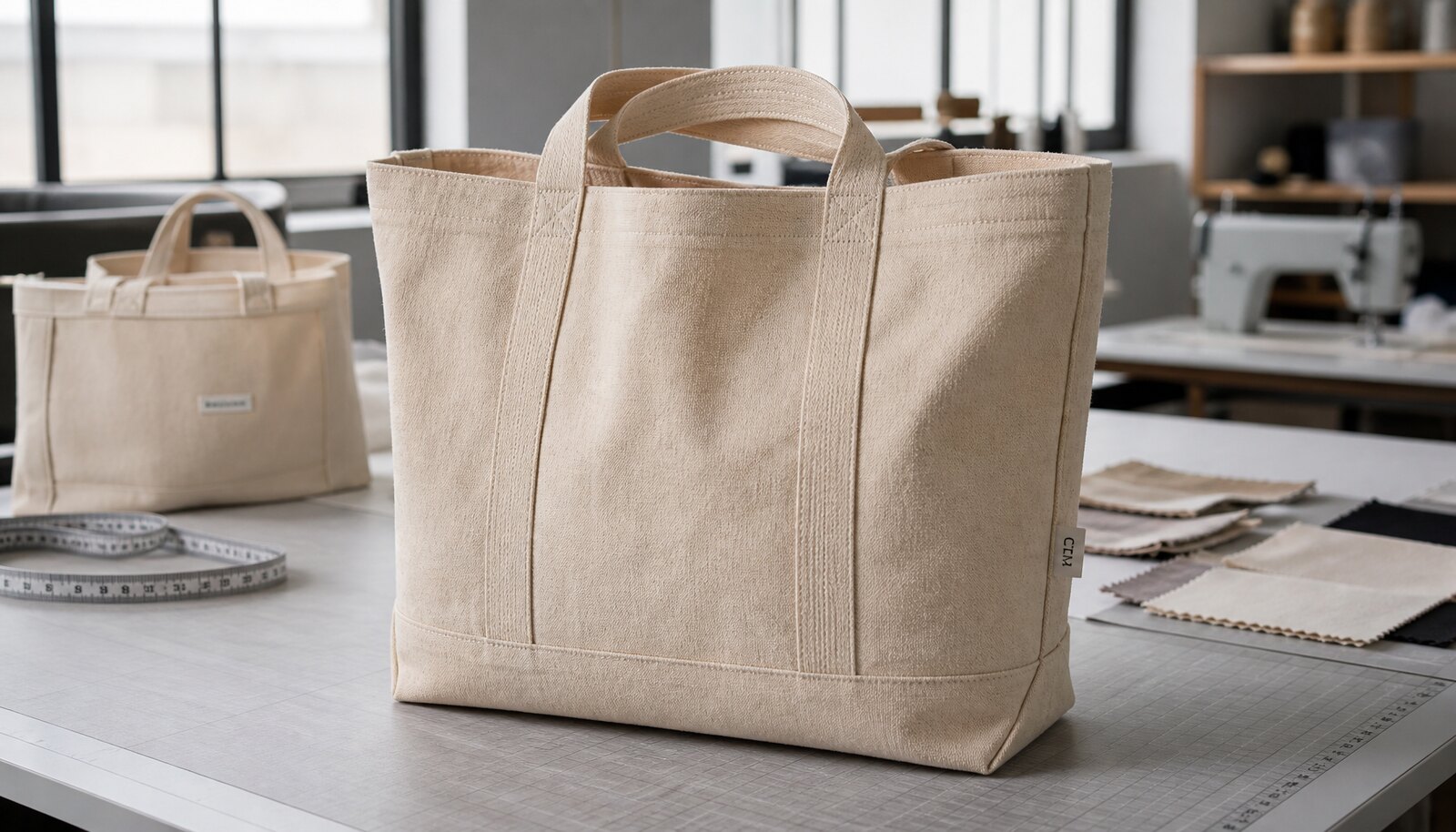
Define the event use before you quote
Large canvas grocery bags can mean very different things to different event teams. A bag used for a conference welcome kit only needs to hold folders, a notebook, and a few samples. A bag used as a grocery-style giveaway has to carry heavier contents, stand up to repeated use, and survive a longer distribution cycle. If you do not define the use case first, the supplier will guess the fabric weight, handle build, and packing method, and the quote will look cheaper than it really is.
For corporate events, the wrong spec usually shows up after the bags are already printed. The tote may look good on paper but feel flimsy when loaded, or it may be overbuilt and too expensive for a free giveaway. Start the RFQ with the job the bag has to do: carry weight, sit flat in a car, fit inside a welcome box, or act as a reusable brand item after the event. That one decision drives almost every cost and quality choice that follows.
- State whether the bag is for handout, retail resale, or repeated grocery use.
- List the likely contents and the heaviest practical load.
- Say whether the bag must stand upright, fold flat, or fit inside another kit.
- Identify if the event cares more about appearance, durability, or unit cost.
Choose canvas weight, size, and bag construction
For large canvas grocery bags, the most common buying mistake is choosing by appearance instead of fabric weight. Lightweight canvas around 8 oz or roughly 270 GSM can work for low-cost event giveaways, but it is usually the bottom of the range for grocery-style use. A more practical spec for corporate events is often 10 oz to 12 oz, or about 340 to 400 GSM, because it gives the bag body, better print opacity, and more confidence when the tote is filled. If the program is positioned as premium or the bag will carry heavier items, 14 oz and above may be justified.
Size and structure matter as much as fabric. A large flat tote can look generous but be awkward once filled. For event use, buyers often land on a wide body with a gusset, reinforced handles, and a top hem that stays neat after repeated folding. If the bag will carry bottled drinks or boxed items, specify a wider base and stronger stress-point stitching. If it will be handed out at a booth and used mostly for light loads, you can save cost by avoiding overbuilt handles and unnecessary extras.
- Use 8 oz to 10 oz for lighter giveaways, 10 oz to 12 oz for general corporate grocery use, and heavier canvas for premium programs.
- Specify finished dimensions, gusset depth, handle drop, and top hem width.
- Ask for reinforced handle attachment, especially if the bag is expected to carry weight repeatedly.
- Keep the bag design simple if it will be printed in volume; every structural extra adds cost and lead time.
Match print method to art, run size, and brand standard
The print method should follow the artwork, not the other way around. Screen printing is usually the best route for large logos, simple spot colors, and mid to high volumes because it gives strong opacity and predictable repeatability on canvas. If the brand mark has multiple colors, gradients, or fine detail, the cost and registration risk go up quickly. Heat transfer can make short runs or complex art easier, but it may not age as well on a bag that will be reused often. Embroidery, woven labels, or a sewn patch can work for premium programs where the logo is small and the bag itself is part of the gift.
Canvas is forgiving in one sense and unforgiving in another. It accepts a bold print well, but the texture can break up thin lines and tiny text. If your logo has small type, ask the supplier to show how it will render at full size on the actual bag fabric, not just on a flat proof. Also state the color standard clearly. A printed navy that looks close on screen can read very differently on natural canvas, especially under event lighting. For corporate events, fewer colors usually means better consistency and less risk.
- Use screen printing for simple, high-contrast logos and larger quantities.
- Use heat transfer only when the artwork or low quantity justifies it.
- Avoid tiny text or thin lines unless you have approved a real sample at full size.
- State Pantone targets, print placement, and whether a white underbase is required.
Compare supplier routes before comparing unit price
The cheapest quote is not useful if you do not know what kind of supplier produced it. A direct factory can give the best control over fabric, stitching, and packing, but it usually needs cleaner specs and a longer lead time. A trading company can simplify communication, but you should expect an extra layer between you and the actual production site. Domestic decorators and regional stock-program suppliers can be faster, yet they often work from a narrower bag selection and may not offer the exact canvas weight you want. For event orders, supplier route matters as much as unit price because the route determines risk, flexibility, and visibility.
Use the comparison table as a sourcing filter, not a ranking of quality. If the event is fixed, the first job is to choose the route that can actually meet the calendar while preserving the required spec. If the order is larger and the tote becomes part of a long-term brand program, direct factory sourcing is often the better fit. If the event is small or the deadline is tight, a domestic or regional route can be smarter even when the unit cost is higher. The point is to compare like with like.
- Do not compare a stock blank quote against a made-to-order factory quote without normalizing the spec.
- Ask who owns production, who owns QC, and who replaces defects.
- If a supplier cannot explain the base bag source or print method, the quote is incomplete.
- Pick the route that matches your timeline and control needs, not the lowest first number.
Build an RFQ that exposes hidden costs
Most bad bag buys start with an RFQ that is too vague. If the supplier has to infer the canvas weight, print count, folding method, or carton count, the quote will come back with assumptions hidden inside it. A clean RFQ should read like a production brief: finished size, fabric weight, color, print size, print colors, handle style, seam reinforcement, packaging format, destination, and target ship date. That is how you avoid paying later for revisions, setup, or repacking that should have been in the original offer.
The main hidden costs in canvas bag programs are not difficult to spot once you know where to look. Screen setup, artwork adjustments, sample production, carton changes, label changes, special folding, and added insert packing all move the price. Freight can also distort a quote if one supplier is quoting ex-works and another is quoting delivered. Make sure every offer is normalized to the same commercial term and the same packing assumptions before you compare them.
- Require the supplier to separate base bag cost, print cost, packing cost, and freight if applicable.
- Ask whether price changes if the artwork changes, even slightly.
- Confirm if cartons, master labels, and inner polybags are included.
- Request any assumptions in writing so later quote revisions are visible.
Set sample approval rules that prevent bulk surprises
A sample is only useful if it becomes the standard for bulk production. For large canvas grocery bags, the sample should show the finished fabric weight, exact dimensions, seam build, handle construction, print placement, and packaging method. Do not treat a sales sample as the approval standard unless it was made from the same material and by the same process. The supplier should know whether you are approving the shape only, or the full production specification. If the bag is intended for repeated use, the sample should also show how it looks when folded and reopened several times.
The strongest approval process is simple: keep a signed sample, record the accepted measurements, and note any cosmetic variance that is allowed. That matters because natural canvas is not a perfect uniform material. Some shade variation is normal, but the buyer should define how much variation is acceptable before bulk starts. If the print is large and one-color, approve the placement against a measured template. If the bag includes a woven label or side label, decide whether its position is fixed to a seam or allowed a small tolerance. Precision here saves money later.
- Approve a pre-production sample, not only a sales sample.
- Record dimensions, print placement, and seam details in writing.
- Decide what fabric shade variation is acceptable before mass production starts.
- Use daylight or neutral lighting when comparing sample to bulk.
Specify packing and event kitting
Packing is where a lot of event orders lose efficiency. If the bags are packed too tightly, they crease and can pick up odor or moisture during transit. If they are packed too loosely, carton volume goes up and freight becomes more expensive. Decide whether each tote will be folded once, flat-packed, bulk-stacked, or individually polybagged. For grocery-style bags, many buyers want a compact fold that still opens cleanly at the event site. If the order includes inserts, brochures, or product samples, the packing sequence needs to be defined before production, not after the cartons are filled.
Corporate events often involve more than one destination, more than one kit variation, or more than one internal team handling the cartons. That is why carton marks, pack counts, and pallet rules matter. If the bags are going directly to a venue, label the cartons clearly so the event team can find the right lot quickly. If they are going into a broader welcome kit, ask the factory or fulfillment partner to show how they will protect the bag surface from rubbing against hard objects. A clean tote can still arrive with creases, stains, or crushed corners if the packing plan is weak.
- State the fold method and whether bags ship individually wrapped or bulk packed.
- Define carton count, carton dimensions, and pallet height limit if applicable.
- Use clear carton marks for SKU, quantity, color, and ship-to location.
- If the tote is part of a kit, confirm the exact pack order and insert placement.
Plan lead time around the event calendar
Lead time for a printed canvas bag is not just sewing time. It includes artwork confirmation, sample production, possible corrections, fabric reservation, print setup, bulk sewing, packing, export handling, transit, and final delivery. For corporate events, the date on the invitation is not the real deadline; the real deadline is the day the bags must be in your hand, sorted, and ready for distribution. If the program has no buffer, even a small issue like a color mismatch or carton label error can turn into a rush charge or a partial shipment.
The better practice is to ask the supplier for a working schedule with milestones. That schedule should show when artwork is frozen, when the sample is approved, when bulk production begins, when packing is finished, and when the order leaves the factory. If the event date is immovable, build in a contingency plan such as split shipment, a small local backup order, or a simplified blank-bag fallback. The point is to move the risk earlier in the process, where it is cheaper to fix.
- Count backward from the event date, not forward from the purchase order date.
- Reserve extra time for sample revisions and freight delays.
- Ask for a written production schedule with milestones, not a vague lead-time promise.
- Keep a backup plan for urgent delivery if the main shipment slips.
Compare landed cost and award the order
A proper award decision for large canvas grocery bags should be based on landed cost and production confidence, not on the lowest ex-factory quote. The quote that looks cheapest can become the most expensive once you add screens, packing, inland freight, export docs, duty, customs fees, and local delivery. If the supplier is quoting a heavier canvas weight or better stitching, the bag may actually be cheaper to own because the rejection rate is lower and the event team has fewer issues on-site. The cheapest unit price is not always the lowest cost per usable bag.
Before you award the order, normalize the quotes to the same spec, the same incoterm, and the same delivery point. Then compare the supplier's evidence: sample quality, communication speed, production transparency, and willingness to explain the line items. For recurring programs, consistency matters even more than a small price spread. If a supplier can repeat the bag, pack it correctly, and document the shipment cleanly, that is often worth more than a slightly lower first quote. Use the checklist below to make the award decision with fewer surprises.
- Compare total landed cost per bag, not just factory price.
- Normalize freight, packing, and duty assumptions before selecting a winner.
- Use sample quality and quote completeness as part of the award score.
- Favor the supplier that can repeat the spec cleanly on the next reorder.
Specification comparison for buyers
| Spec decision | Recommended option | When it fits | Buyer risk to check |
|---|---|---|---|
| Direct factory sourcing | Use when you need custom size, custom print, and control over fabric weight | Mid-size to large orders where sample rounds are acceptable and the event date is fixed but not urgent | Confirm screen fees, packing details, inspection scope, and whether the quote is ex-works or includes export handling |
| Trading company route | Use when you need one contact to manage multiple factories or mixed product lines | Small procurement teams that want less back-and-forth across suppliers | Watch for margin layering, limited factory transparency, and specs being relayed loosely |
| Domestic decorator | Use for short lead times, small quantities, or last-minute event replenishment | Orders where speed matters more than the lowest unit cost | Check whether the base bag is truly in stock and whether print durability matches your event use |
| Regional stock-program supplier | Use for fast delivery with limited customization | When color and size flexibility is acceptable and the brand can work within standard blanks | Verify stock depth, shade consistency, and whether the same blank will still be available for reorders |
| Nearshore factory | Use when communication speed and transit time matter | Projects that need better time-zone alignment and moderate customization | Confirm fabric availability, print capability, and whether the factory has enough capacity for your window |
| Full-service promotional distributor | Use when bags must be shipped to several event locations or kitted with inserts | Corporate events with complex fulfillment, named recipients, or multiple ship-to points | Ask where the bag is actually produced and who owns quality responsibility if the pack-out fails |
| Blank-bag importer plus local print shop | Use when the body spec is standard but logo application needs flexibility | Brand teams that already approved a base tote and only need local decoration | Make sure the blank bag GSM, dimensions, and handle construction stay constant across reorders |
| Hybrid kitting partner | Use when each tote must be packed with collateral, samples, or partner gifts | Event kits with assembly rules and final-mile delivery requirements | Confirm exact pack sequence, overpack allowance, carton labels, and damage prevention inside each kit |
Buyer checklist before sampling
- Define the bag's real use: grocery carry, welcome kit, retail giveaway, or premium event keepsake.
- Lock the finished size, gusset depth, handle length, and print area before requesting quotes.
- Choose fabric weight in oz or GSM and state whether natural, bleached, or dyed canvas is acceptable.
- Specify the print method, number of colors, placement, and whether Pantone matching is required.
- Set MOQ expectations by color, artwork version, and packing configuration.
- Request a pre-production sample and define what must match the approved sample.
- Confirm carton pack count, folding method, labeling, and whether each bag needs an insert or barcode.
- Compare quotes on the same incoterm, the same packing assumptions, and the same transit method.
- Reserve time for sample review, bulk production, freight, and a rework buffer before the event date.
Factory quote questions to send
- What is the exact fabric specification, including finished weight, weave type, and acceptable tolerance?
- Is your quote for blank bags, printed bags, or printed and packed bags with inserts or tags?
- What tooling, screen, plate, or setup charges are included, and what is billed separately?
- What is the MOQ by artwork, color, and packing format, and what changes if we split colors?
- What handle reinforcement and seam construction do you use for a large grocery load?
- Can you provide the pre-production sample schedule, bulk lead time, and shipment method options?
- What QC reports, photos, or inspection records can you share before balance payment?
- How do you handle overruns, shortages, defective cartons, and replacement units after shipment?
Quality-control points to confirm
- Fabric weight and handfeel must match the approved swatch or pre-production sample within the agreed tolerance.
- Bag dimensions, gusset depth, and handle drop should stay within the buyer's stated acceptance range.
- Handle attachments should use the agreed reinforcement pattern, such as bar-tack or boxed stitching, with no skipped stitches.
- Print position, registration, and logo size should match the signed sample, with no ghosting, pinholes, or color bleed.
- Stitch tension should be even, with no loose threads, puckering, open seams, or twisted handles.
- Natural or undyed canvas should not show unexpected shade jumps between cartons unless that variance was pre-approved.
- Carton count, carton marks, and outer packaging must match the packing list and ship-to instructions.
- A bulk lot should pass the agreed load test or practical carry test without seam failure or excessive stretch.