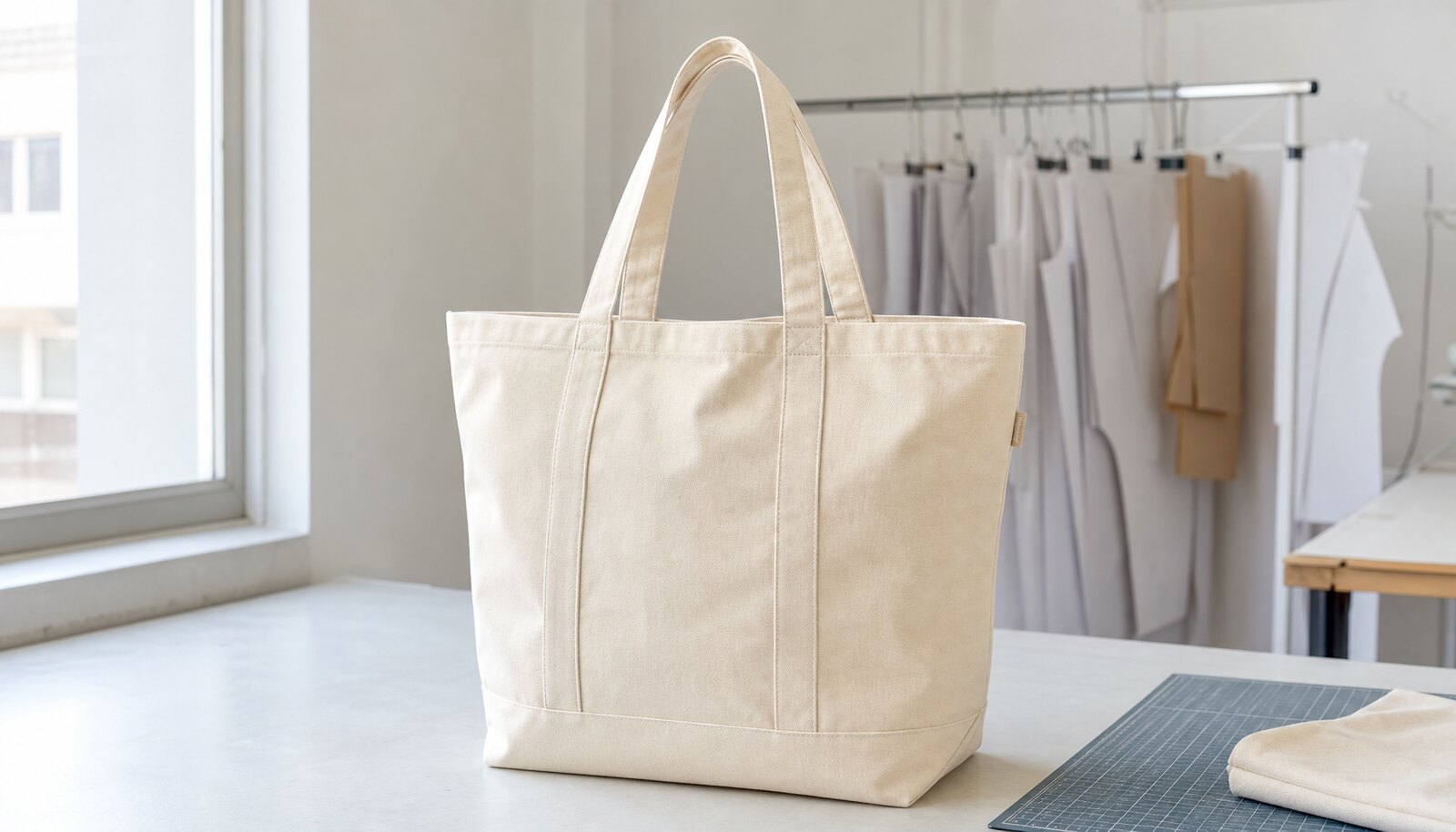
Why charity campaign buyers need a different sourcing plan
Large canvas grocery bags for charity campaigns are usually bought for visibility first and utility second. That combination sounds simple, but it creates a sourcing trap. Buyers often spend most of their time on logo artwork and overlook the real drivers of value: the fabric weight, stitching pattern, handle attachment, print process, and packing format. If those details are loose, the bag can look fine in a sample and still fail in bulk or feel cheap in the hand, which is a problem for any charity program that wants public trust and repeat use.
Private label sourcing adds another layer of responsibility. The bag is not only a giveaway item. It may be sold in a fundraiser, inserted into a donor kit, handed out at a public event, or used as a reusable grocery tote that carries the charity name into everyday life. In all of those cases, the bag becomes part of the organization’s public image. That is why the sourcing plan should lock the spec before price negotiation begins. A small change in canvas weight, handle length, or label method can move the cost more than many buyers expect.
The smartest starting point is to define the campaign outcome in plain language. Is the bag meant to maximize reach at the lowest landed cost? Does it need a premium feel because it will be sold or gifted to donors? Must it survive repeated grocery use because the charity wants a longer brand life? Once the answer is clear, procurement can decide whether to optimize for unit cost, appearance, shipping volume, or reuse performance. That decision should happen before RFQs go out, not after the quotes arrive.
There is also a field reality that does not show up in generic product specs: charity teams often manage multiple stakeholders. Marketing wants brand accuracy. Operations wants low warehouse labor. Finance wants a predictable landed cost. A good sourcing plan should anticipate all three. For example, a slightly higher unit price may be acceptable if the bags arrive folded consistently, labeled clearly, and ready to distribute. Similarly, a lower-cost bag may be a poor choice if it forces extra repacking or creates complaints about weak handles. The right decision is not always the cheapest quote; it is the quote that matches the campaign’s real constraints.
- Write the use case first: grocery carrying, fundraising merchandise, donor pack, or public event distribution.
- Decide whether the bag must feel premium, economical, or durable enough for repeated use.
- Treat print durability, label placement, and packing format as part of the product spec, not as afterthoughts.
- Align marketing, operations, and finance on the same approved spec sheet before RFQ release.
Set the bag specification before asking for prices
A supplier can only price a canvas tote accurately if the specification is disciplined. For large canvas grocery bags, the core dimensions are finished width, finished height, gusset depth, handle width, handle length, and handle drop. In practice, a common large format falls around 14 x 15 in. to 15 x 17 in. with a 4 to 6 in. gusset, but that range only makes sense if it matches the actual use case. A taller bag may create more shelf presence for fundraising retail, while a wider bag may be better for groceries and donor kits.
Fabric weight matters as much as size. For many charity programs, 12 oz to 14 oz canvas, or roughly 340 to 420 GSM, is a practical range because it offers a balanced hand feel and visible strength without becoming overly heavy in freight or sewing. A lighter canvas can still work if the bag is truly a short-life giveaway, but buyers should accept more drape, less structure, and a lower perceived value. A heavier build can look more premium, but it may also increase material cost, sewing difficulty, and carton weight.
Handle design is a common hidden cost driver. A long shoulder-drop handle can improve usability, but it also consumes more fabric and can change the sewing path. A double-layer handle, folded handle, or cross-box reinforcement can improve load performance but adds labor. Buyers should define not just how the handle looks, but how it will be used in the field. If the bag is intended for groceries, the handle should be comfortable under load and should not dig into the hand after a short walk. If it is a donor gift, the handle can be optimized more for appearance than for heavy carrying, but that should be an intentional decision.
Artwork should also be part of the spec, not a loose attachment. State the print method, the number of colors, the print area size, whether the design wraps around the side, and whether the logo must remain visible after the bag is folded. If the campaign uses a Pantone brand color, say whether an exact match is required or if a tolerance is acceptable. For sewn labels, define the label type, placement, fold direction, and size. The more precise the RFQ, the less likely the factory is to quote the wrong build and then re-price later.
- Specify finished dimensions, not cut size.
- State handle length and handle drop in the RFQ.
- Confirm whether the bag will be open-top, snap closure, or zipper closure.
- Write print colors, print area, and label placement into the same approved spec sheet.
Choose the right canvas build for the campaign
Not every large canvas tote needs the same fabric. The campaign use case should drive the build. A simple public handout bag may be fine with a lighter weight and a single-color print. A fundraising item sold to donors may need thicker canvas, more structured sides, and cleaner internal finishing. A grocery bag that will be reused several times needs more than a strong logo; it needs seams that will survive repeated loading, corners that do not distort, and handles that do not twist under weight.
Canvas is usually discussed in ounces or GSM, but that metric should be tied to function. A 12 oz bag is often a sensible middle ground for low- to medium-intensity use. A 14 oz bag gives a firmer feel and can handle a more premium private label presentation. If a buyer wants a very structured retail look, the supplier may suggest fabric finishing, a lining, or more reinforcement, but those changes should be priced separately because they affect both sewing time and freight weight. There is no advantage in asking for a premium appearance if the campaign budget only supports a basic utility tote.
The buyer should also decide on color strategy early. Natural canvas remains the easiest and often cheapest option for charity campaigns because it aligns with an eco-friendly message and usually prints well. Bleached or dyed canvas can look more branded and may support higher-end fundraising, but dyed fabric can introduce shade variation and color migration risk if the quality is not controlled. If the campaign uses multiple versions, such as regional chapters or event-specific artwork, the same base fabric should be held as consistent as possible so the supplier does not treat each version as a different product class.
A good sourcing plan also considers how the bag will age. If the charity expects recipients to reuse the bag, the finish should not make the fabric too stiff, too brittle, or prone to crease whitening at the folds. If the bag is more of a one-time distribution item, buyers may accept simpler construction, but they should still require acceptable seam strength and a neat appearance. For charity-facing products, “cheap” is not the same as “efficient.” The bag has to meet the brand promise at the distribution point.
- Match fabric weight to intended reuse, not to a generic tote standard.
- Ask for fabric hand-feel and structure notes in the sample comments.
- Confirm whether any finishing, lining, or reinforcement is included or priced separately.
- Use natural canvas when the campaign wants simple eco-friendly branding and easier print control.
Compare sourcing routes before you compare unit prices
The supplier route affects control, timeline, and risk more than many teams realize. A direct sewing factory is usually the best option if you need repeat private label runs, stable construction, and better control over line-level decisions such as stitch pattern, label position, and carton packing. Factories generally give better visibility into what is actually being made. The trade-off is that they may ask for a clearer MOQ and a stronger commitment to the final spec before they lock production.
A trading company can be helpful when the campaign has several artwork versions, a compressed timeline, or a buyer who does not want to manage multiple factories. Trading companies can often bundle services such as label sourcing, packing, and shipping coordination. However, the buyer has to ask harder questions about where the bag is made, who approves changes, and whether the person giving the quote has real control over the production line. A polished quote is not the same thing as a dependable bulk process.
A specialized bag workshop is often a strong fit for detailed construction, because the team tends to understand gussets, seams, reinforcement, and handle comfort more than a general supplier. That matters when the charity bag is meant to be reused or sold as branded merchandise. The downside is capacity. Workshops can be excellent on sample quality and still struggle if the order volume is larger than their normal output or if the season is busy. Buyers should ask about current line loading rather than assuming the workshop can scale instantly.
A low-price general supplier is only sensible when the campaign accepts a basic bag and the goal is simple distribution. These suppliers may quote aggressively, but the buyer needs to verify the actual fabric weight, stitch quality, and packing discipline. On a canvas tote, a cheap quote can hide downgraded material or weak seams. If the bag is for charity visibility, a visibly flawed product can damage the campaign more than the price savings justify. The most useful routing decision is not “factory vs broker” in abstract terms; it is which supplier type can prove the exact bag you need, at the level of control your team requires.
- Ask who owns cutting, sewing, printing, and packing.
- Compare not only unit price but also sample control, artwork support, and packing flexibility.
- Separate direct factory quotes from trading-company quotes in your internal comparison sheet.
- Check current capacity and peak-season workload before assuming lead time is available.
What actually drives cost in a private label canvas tote
The biggest cost drivers are fabric weight, finished size, print complexity, reinforcement, and packing. Once those are fixed, the quote becomes far more comparable. A larger bag does not merely use more fabric; it also increases cutting waste, sewing time, and the chance that the tote needs more reinforcement at the handles or base. If the bag is going to be used for groceries, the buyer may need stronger seams and a more careful stitch pattern than a promotional handout would require.
Print can move the price in ways that are easy to underestimate. A one-color logo on natural canvas is usually the simplest path. Two or three colors can require extra screens and more setup time. Large full-front artwork may look appealing in a charity campaign, but the supplier may need to control ink coverage, drying time, and registration more tightly. If the design is meant to be seen from a distance at an event, the buyer should ask whether a larger print area changes the cost per piece or the setup charge.
MOQ logic is often based on one complete combination: one size, one fabric weight, one base color, one print design, and one label spec. That means the “minimum order” may not be a single number. It may be a minimum per design or per print version. If your charity campaign needs several regional versions or donor-specific messages, ask whether the supplier can pool production under one fabric run while still separating the artwork variants. Some suppliers can, but only if the buyer clarifies the setup logic in advance.
Packing and labeling can also be meaningful cost drivers. Individual polybags, barcode stickers, hangtags, folded inserts, and retail cartons all add labor. They also affect carton size and freight volume. If the bags are going into a fulfillment center or retail shelf, those extras may be worth it because they save downstream handling. If the bags will be handed out in bulk at a charity event, the buyer can usually strip packing down to the minimum needed for cleanliness and count accuracy. A disciplined buyer asks which extras are functional and which are merely decorative.
- Build your RFQ around one exact base SKU first.
- Separate setup costs from per-piece costs.
- Request line-item pricing for additional colors, extra print locations, and label changes.
- Ask whether the MOQ applies per design, per colorway, or per combined campaign order.
Use a comparison method that reveals hidden quote gaps
A quote review becomes much more useful when all suppliers are normalized to the same assumptions. The comparison should use the same finished dimensions, the same canvas weight, the same handle length, the same print area, and the same packing format. Without that discipline, one factory may appear cheaper only because it quoted a lighter fabric, a smaller logo, or bulk packing instead of retail-ready packing. That is not a real price advantage; it is a different product.
A practical way to compare is to create a simple landed-cost worksheet. Start with the unit price, then add setup fees, sample costs, packaging upgrades, and freight volume. If you receive carton dimensions, convert them into CBM or estimated shipping space so that one supplier’s “small” price does not hide a bulky pack-out. For charity campaigns, this matters because the bag often ships in large quantities and carton efficiency can materially affect the landed cost.
The buyer should also check what is included in the sample approval process. Some suppliers provide a neat sample but then quote a different packing method or hidden label charge in bulk. Others include a woven label in the sample but not in the price. Before comparing, ask each supplier to break out the same cost buckets: fabric, sewing, print, label, packing, sample, and freight support if relevant. A quote that is clearer is usually safer, even if it is not the cheapest headline number.
When the order is split across multiple campaign versions, the total cost should also account for how many screens, labels, or carton marks will need to be created. A procurement team may think it is only ordering one bag with several message variations. A factory may think it is four separate SKUs with four separate setups. The difference can be large. If the campaign needs version control, ask the supplier to show the price impact of every additional variant before internal approval is finalized.
- Normalize all quotes to the same fabric weight and pack method.
- Separate setup fees from running price.
- Convert carton dimensions into expected shipping volume if freight cost matters.
- Ask the supplier to state what changes would trigger a re-quote.
What to demand in samples and pre-production approval
Do not approve a canvas grocery bag sample only by looking at the logo. A proper sample should prove the final fabric weight, the final stitch pattern, the final handle build, the final print method, and the exact label treatment that will be used in bulk. If the sample is too stiff, too limp, or oddly shiny, the fabric may not match the quoted material. If the logo looks clean but the side seams twist or the bag collapses under a realistic load, the sample is not fit for approval.
The sample should also be evaluated as a use object, not only as an image object. Fill it with a realistic grocery load, lift it repeatedly, and check whether the handles cut into the hand, whether the seam corners deform, and whether the bag stays upright. For charity campaign buyers, this matters because recipients often judge the item quickly. A bag that feels flimsy can make the entire program look less credible. A bag that holds shape and has clean finishing can make even a simple logo look more professional.
Packing deserves the same level of approval as the bag itself. Ask the supplier to show the fold method, polybag size if used, carton counts, and carton markings before bulk starts. Heavier canvas bags often remember crease lines, so the way they are folded can affect how they look when opened. If the campaign has retail presentation needs or donor-kit standards, the buyer should approve the packed sample condition, not just the loose bag. Otherwise, the bulk shipment may be technically correct but visually disappointing on arrival.
If possible, request a pre-production sample made from actual bulk material and actual bulk accessories. A lookalike sample can be misleading, especially for canvas where the feel, print coverage, and shade may change across lots. The sample approval should end with a signed sheet that states the approved fabric, dimensions, print details, label type, and packing method. That sheet becomes the reference point if the factory later proposes a substitution.
- Approve size, print clarity, handle feel, and fold behavior together.
- Request a pre-production sample using the actual production material.
- Compare sample dimensions against a written tolerance sheet.
- Test the bag with a realistic load before final signoff.
Price bands, MOQ thresholds, and when each route is preferred
For procurement planning, it helps to think in ranges rather than exact quotes. For a standard 12–14 oz natural canvas tote with one-color print, direct factory pricing is often most competitive once the order reaches the factory’s practical run size, commonly around 1,000 pieces or more. Below that, setup and line change time can make the unit price look less attractive. Trading companies may be willing to work on smaller quantities, but the buyer pays for that flexibility in margin. Specialized workshops can be a good middle ground when the bag requires stronger construction or a more careful appearance.
MOQ should be treated as a commercial negotiation point, not a fixed truth. Some suppliers quote MOQ per design, some per fabric color, some per print method, and some per combined campaign order. A buyer running a charity program with multiple regional messages should ask whether the supplier can combine the same base bag across several artworks. In many cases the answer depends on screen setup, label sourcing, and how many versions need to be packed separately. If the supplier cannot explain the MOQ logic clearly, that is usually a sign the order may become expensive once changes start.
Lead time also varies by route. A direct factory may be able to move fastest once the sample is approved, but only if the artwork is final and the packing instruction is fixed. A trading company may help if the project needs sourcing flexibility, but it can add days in communication and approval. A workshop may be quick on sample turnaround but slower on high-volume bulk. For charity campaigns with fixed event dates, buyers should ask for a milestone schedule: quote, sample, approval, bulk production, packing, and dispatch. The value is not in the nominal lead time alone but in the supplier’s ability to hold each milestone without surprises.
When choosing a route, the best option is usually the one that aligns with the campaign’s risk tolerance. A donation drive with one simple logo can tolerate a lower-cost source if the supplier proves the sewing and print basics. A retail-facing fundraising product needs stronger process control, better labeling, and more predictable packing. There is no single best supplier type for all charity bags. There is only the best fit for the commercial objective, lead-time pressure, and quality threshold.
- Treat MOQ as per design, per fabric color, and per pack style until the supplier proves otherwise.
- Use milestone lead times, not only total lead time, in the project plan.
- Prefer direct factories for repeat programs, workshops for construction-heavy bags, and trading companies when coordination complexity is high.
- Ask for a written explanation of how the supplier calculates MOQ and setup.
Quality control thresholds that matter on large canvas grocery bags
QC on large canvas bags should be specific enough to catch the failures that actually matter in use. The most common problems are weak handles, missed stitches, seam puckering, incorrect dimensions, print defects, and poor pack-out consistency. A factory can show a pretty sample and still deliver bulk bags that fail one of those points if no one is measuring them. Good QC starts by putting measurable thresholds in writing before the order begins.
Measurement control is important because large bags show variation more obviously than smaller promotional items. A 1 cm drift on a small pouch may go unnoticed, but on a tote it can alter fit, load balance, and carton count. Buyers should ask the supplier to measure the finished bag after sewing and final pressing, not from cut panels. The tolerance for width, height, and gusset should be listed in the approval sheet. If the buyer expects a certain load-bearing performance, the handle attachment and seam reinforcement should be checked against that expectation rather than against a generic factory standard.
Print quality should be inspected under conditions that reflect how the bag will actually be used. Canvas can hide minor flaws in the weave, but it can also make print edges look uneven if the ink coverage is inconsistent. For a charity logo, the buyer should specify acceptable registration drift, color variance, and edge sharpness. If the design is folded near the print field, the buyer should ask the supplier to show what happens after folding and handling. Cracking, flaking, or heavy shade variation are not decorative issues; they are brand damage.
Packaging inspection should be treated as part of QC, not a separate logistics issue. Carton marks, SKU separation, and bundle count need to match the packing list exactly. If the bags carry a care label, barcode, or campaign tag, those items should be legible and secured. The factory should be able to show first-piece photos from the line and final carton photos before shipment. That evidence is especially valuable when the order is large enough that a post-arrival fix would be expensive or slow.
- Measure finished size after sewing and pressing, not from cut panels.
- Inspect stitch quality at handle joins, bottom seams, and gusset transitions.
- Set print tolerances for registration, color shade, and edge sharpness.
- Verify carton count, SKU separation, and carton marks before shipment release.
- Reject visible stains, odor, holes, or loose-thread clusters that suggest unstable sewing control.
Test methods and failure modes to ask about in RFQ and inspection
Procurement teams often ask for a generic QC checklist, but large canvas grocery bags benefit from more concrete test questions. Instead of asking only whether the supplier “checks quality,” ask how they check handle strength, how they verify fabric weight, and what happens if a seam fails during use. The answer should tell you whether the factory has process discipline or only a final visual inspection habit.
For handle strength, ask whether the supplier performs a lift test with a filled bag and how many cycles are used during sample review. A practical field test is to load the bag with a realistic grocery weight, lift it repeatedly, and inspect whether the bar-tacks, topstitching, or handle folds begin to distort. Failure modes usually show up as thread breakage, seam slippage, handle twist, or fabric tear near the attachment point. If the factory cannot describe the reinforcement method in simple terms, the bag may not be suitable for repeated use.
For fabric quality, ask whether the factory can confirm weight with a gram measurement or supplier certificate and whether they inspect for weaving defects in the print zone. Canvas failure modes often include thin strips, slub-heavy areas, or oil stains that reduce print quality. On natural canvas, buyers should also ask about color consistency and odor. Strong odor can indicate poor finishing or storage conditions, while uneven shade can make a batch look mismatched even when all bags are technically within spec.
For print durability, ask what the factory does after printing: drying, curing, rubbing, folding, or visual bend checks. A design can look acceptable on a flat table and still crack after folding if the ink or transfer process is wrong for the fabric. Buyers should also ask for the most likely print failure modes by process. Screen print can fail through misregistration or ink thickness problems. Heat transfer can fail through edge lift or cracking. Digital decoration may fail through fading or inconsistent color on textured canvas. You do not need every technical detail, but you do need the supplier to prove they know where the process can go wrong.
For packing, ask for the failure modes the warehouse team watches for: mixed SKUs, incorrect carton marks, over-compressed folds, bag-to-bag abrasion, or missing inserts. Those are not trivial mistakes. They create receiving delays and can require hand sorting after arrival. If the supplier can explain which step controls each risk, the buyer is dealing with a more mature operation.
- Ask how the factory tests handle strength, not just whether it does a QC check.
- Ask how fabric weight is verified and what paperwork supports that claim.
- Ask what print failure modes are most common for the chosen decoration method.
- Ask which packing errors the warehouse is most likely to catch before shipment.
Specification comparison for buyers
| Supplier option | What to verify | Commercial advantage | Buyer risk to control |
|---|---|---|---|
| Direct sewing factory | fabric swatch, approved sample, seam close-ups, logo test photos, packing pilot, and final inspection evidence | Better sample-to-bulk control and faster production feedback | May be weaker on export paperwork or branded packing unless checked early |
| Trading company | Factory name, production photos, trim-source proof, and who owns QC decisions | Can coordinate small mixed orders and extra services | Markup can hide real factory capability and slow defect decisions |
| Specialized bag workshop | bag size, gusset, handle drop, seam allowance, stitch density, reinforcement patch, and loading expectation | More practical for detailed construction, trims, and repeat programs | Capacity may be limited during peak seasons |
| Low-price general supplier | 8-12 oz cotton canvas, 120-220 gsm cotton, recycled cotton, or blended fabric selected by use case and target price | Useful for simple promotional runs with loose specs | Material downgrades, weak packing, and vague inspection scope can erase savings |
| Retail-ready supplier | fold method, inner bundle, carton count, carton mark, moisture protection, SKU separation, and warehouse receiving needs | Can handle labels, SKU separation, carton marks, and receiving rules | Higher unit cost must be compared against reduced warehouse work |
| Compliance-focused supplier | Fabric records, labeling review, test plan, and production traceability | Safer for retail programs and repeat brand orders | Documentation claims need evidence, not only sales language |
| Local sample room plus bulk factory | Signed sample, bulk factory handoff, first-piece photos, and deviation owner | Good for complex branding before large production | Sample room quality may not match bulk line unless handoff is controlled |
Buyer checklist before sampling
- Confirm the final bag size, gusset depth, handle length, handle drop, and intended loading weight before requesting prices.
- Specify fabric type, target GSM/oz weight, color tolerance, and whether shrinkage after finishing must be controlled.
- Send vector artwork, define logo size and placement, and state Pantone references or acceptable shade tolerance.
- Ask for a fabric swatch, print proof, and one physical pre-production sample before bulk approval.
- Agree carton packing, barcode or hangtag needs, carton marks, and shipping labels before production starts.
- Record inspection checkpoints for stitching, print adhesion, measurement tolerance, stains, odors, and carton count.
- Ask the supplier to confirm who approves substitutions if the bulk line needs a material or trim change.
- For charity distribution, confirm whether the bags must arrive retail-ready, donor-ready, or simply bulk-serviceable on arrival.
Factory quote questions to send
- What exact fabric weight are you quoting, and is it measured before or after washing, dyeing, or finishing?
- What is the yarn or fabric construction, and can you state whether the canvas is woven, bleached, dyed, or recycled-content material?
- How many print colors are included, and what is the cost for each extra color, extra location, or larger print area?
- What handle construction, stitch density, seam allowance, and reinforcement method are included in the base price?
- Is the MOQ based on one design, one colorway, one size, one packing style, or one combined order across multiple campaign versions?
- What packaging is included in the price, and what is the surcharge for individual polybagging, barcode stickers, paper inserts, or header cards?
- What sample charges apply for swatches, strike-offs, and pre-production samples, and are any deductible from bulk order value?
- What is the standard lead time after sample approval, and which steps add time if artwork, label text, or packing changes?
- Which QC documents can you provide with the quote: measurement sheet, inline inspection record, final inspection report, carton photos, or defect photos?
- Can you state what will trigger a re-quote if the buyer changes handle length, gusset depth, or logo coverage after approval?
Quality-control points to confirm
- Measure finished size after sewing, pressing, and final packing, not from cut panels; define separate tolerances for width, height, and gusset depth in writing.
- Set an AQL plan before production starts. For many procurement programs, use AQL 2.5 for major defects and 4.0 for minor defects, unless your internal standard is stricter.
- Check fabric weight with an agreed method and keep the supplier from substituting lighter fabric without written approval; if the supplier cannot prove weight, the quote should not be treated as firm.
- Inspect canvas weave uniformity for thin spots, slubs, oil marks, and yarn skips in the print area; these defects can show through light logos and create weak points on larger bags.
- Test handle attachment with a load-and-cycle method during sampling: lift the bag with a realistic filled weight, then inspect for opening, distortion, or bar-tack failure.
- Confirm seam construction at side seams, bottom seams, and gusset transitions; puckering, skipped stitches, and needle damage usually appear first on larger tote formats.
- Review print performance on both flat and folded states: the logo should not crack, delaminate, or show major color shift when the bag is folded at the base of the print field.
- Set a written print tolerance for registration, edge sharpness, and color shade; if brand color matters, compare to a signed physical target rather than only to a digital file.
- For sewn labels, check placement tolerance, stitch security, orientation, and text clarity; for heat-applied labels, check edge lift after folding and handling.
- For packed goods, verify carton count, SKU separation, master carton marks, gross/net weight, and the actual bundle count against the packing list.