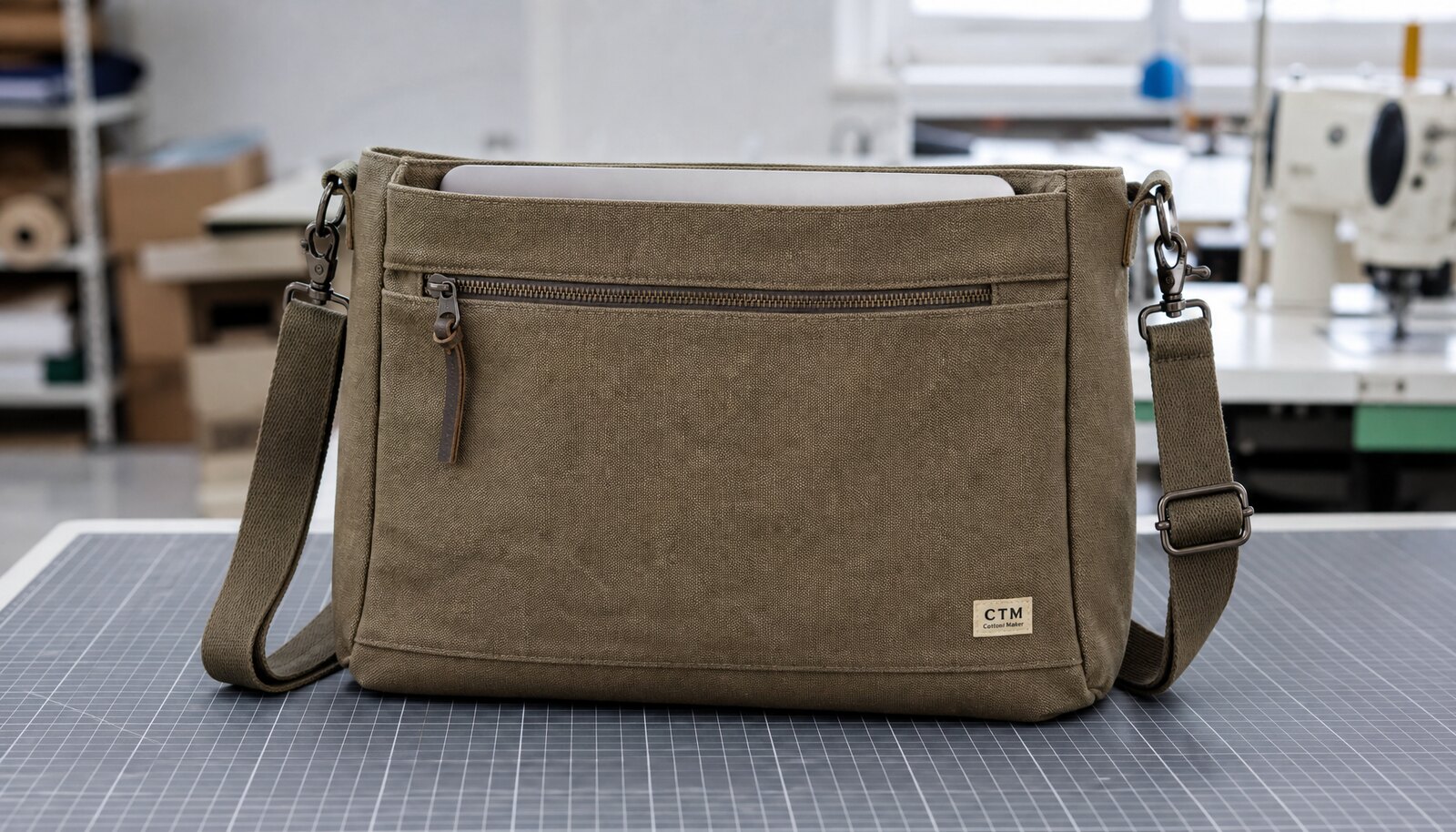
What event buyers are really buying
Laptop messenger bags for events are not just carrier bags with a logo on them. For procurement teams, they have to solve three problems at once: protect a laptop, present the brand well in a crowded venue, and survive short-term handling by staff, attendees, or sales teams. That means the right bag is usually a compromise between structure, weight, decoration area, and packing efficiency. If the bag looks too soft, it reads as cheap. If it is too heavy or overbuilt, freight and carry comfort both suffer.
A good event bag spec starts with the use case. Conference giveaways need lighter builds and simpler branding. Speaker kits or client-facing event bags can justify a heavier canvas body, better hardware, and a cleaner inner finish. Retail buyers should also think past the event day. A messenger bag that keeps getting reused extends brand exposure, but only if the shoulder strap, laptop sleeve, and closure system feel reliable enough for daily commuting.
- Define who will carry it: staff, speakers, buyers, media, or attendees.
- Match the bag to the expected load: laptop only, laptop plus charger, or laptop plus documents and samples.
- Decide whether the product must read as a premium gift or a functional utility item.
Choose the right canvas build
For most event programs, canvas weight is the first spec that changes how the bag feels in hand. A 10oz or lighter canvas can work for budget distribution, but it often lacks the body needed for a laptop messenger silhouette. A 12oz to 14oz canvas is usually the practical middle ground: structured enough to hold shape, still reasonable in freight, and easier to decorate consistently. When the brand brief calls for a more premium retail look, 16oz canvas with a reinforced base gives the bag more visual authority and better abrasion resistance.
The inside matters as much as the shell. A laptop event bag generally needs a lining such as 210D or 300D polyester, plus light foam or EPE padding around the base and back panel. If the bag must protect a 13 inch device, 3mm padding can be enough. For 15.6 inch or mixed-device programs, 5mm padding in the main body and a reinforced bottom panel usually quotes better because it reduces complaints after use. Ask for shrinkage control and color consistency, especially on dyed canvas, because small shade variation becomes obvious across a batch.
- 12oz to 14oz canvas is the usual commercial sweet spot for event messenger bags.
- Use 16oz only when the brief justifies the extra weight and cost.
- Specify lining and padding separately; do not let the supplier bundle them as a vague internal standard.
Size, fit, and closure details
Laptop size is where many event bag projects go wrong. A vendor may say the bag fits a 15.6 inch laptop, but that often means the device fits without a sleeve and without a charger. Procurement should define the actual usable cavity: internal width, height, depth, and the extra room needed for a protective sleeve. If the bag will be handed out at an event, users will also push in notebooks, power banks, or a folding stand, so the tolerance should not be too tight. A bag that fits only the exact laptop dimensions will look fine in a spec sheet and fail in the field.
Closure style affects both security and brand perception. Zipper-top messenger bags are easier to approve for travel and transport because they keep the laptop enclosed. Flap-over designs can look more classic and retail-friendly, but the closure must be tested for quick access and strap interference. Magnetic snaps are neat on paper, yet they can be weak if the bag is overloaded. If the program includes staff movement across airports or crowded venues, a zippered main opening plus an external document pocket is usually safer than a purely decorative flap.
- Measure internal cavity dimensions, not only the laptop screen size.
- Leave room for a sleeve, charger, and event inserts if needed.
- Approve closure type based on the real movement pattern of the user, not the artwork mockup.
Decoration methods that survive event handling
Decoration choice changes cost, appearance, and failure risk. Screen printing is the most economical route for simple logos, especially when the artwork is one or two colors and the placement area is flat. It is usually the best fit for high-volume event programs because the unit economics stay manageable once the screen is set. The downside is that canvas texture can make fine detail less crisp, and large flood areas can feel heavy or crack if the ink system is poor.
Embroidery, woven labels, woven patches, PU patches, and debossed trims give a more finished look, but they bring different tradeoffs. Embroidery can pucker on lighter canvas if the backing is weak. A woven label gives clean detail, yet it can look small unless the bag design supports it. For buyer approval, the key point is not which decoration is trendy; it is whether the method matches the logo, the fabric, and the event audience. A rough-print bag at a premium conference is a mismatch. An over-decorated bag for a short giveaway is wasted spend.
- Use screen print for simple, flat artwork and controlled cost.
- Use embroidery or a patch when the brand needs a more retail-ready finish.
- Approve logo size, placement, and edge quality on a physical sample, not just a render.
How sourcing route changes MOQ and cost
The same bag can quote very differently depending on where you source it. A direct factory usually gives the cleanest control over canvas weight, stitching, print method, and packing, but it expects clearer specs and more disciplined approvals. A trading company can help when you need several product categories under one order, though the path from inquiry to approval may be less transparent. A local decorator working from imported blanks can be practical for urgent events, but you inherit the risk of hidden bag quality limits and a narrow decoration window.
For procurement, the useful question is not only unit price. It is what part of the bill is fixed and what part moves when you change the spec. Custom fabric color, custom lining color, custom zipper puller, and custom packaging all push the order into a more expensive setup path because the supplier needs separate materials or tooling. If the event program is repeatable, it is often better to start with a standard canvas and standard trim package, then customize the visible brand points first. That keeps MOQ logic predictable and makes it easier to reorder the same item later without reworking the whole pattern.
- Direct factory sourcing is best when you need control over sewing, decoration, and packing.
- Trading or local decoration routes can help on speed, but they need stricter inspection of the blank bag quality.
- The fastest way to raise MOQ is to change fabric color, custom hardware, and special packaging all at once.
How to read a factory quote
A useful factory quote breaks the bag into components, not just a single unit number. Buyers should see the bag body fabric, lining, padding, webbing, zipper, hardware, decoration method, packing method, and carton spec. If the supplier only returns one number without the bill of materials behind it, there is no way to compare offers on equal terms. The same quote can look competitive while hiding a thinner canvas, cheaper zipper, or simpler inner finish. That is how event bags arrive on time but disappoint in hand.
Ask for quote data that makes landed cost visible. You do not need a price forecast from me, but you do need a quote structure that lets your team compare ex-factory cost, packing cost, inland freight, ocean freight, duty, and any QC or warehousing fees. A cheap ex-factory number can become expensive after carton changes, extra inserts, or a surprise second sample round. The best supplier quotes are boring in a good way: they show exactly what is included, what is excluded, and what happens if the order changes after approval.
- Require a component-level quotation with fabric, lining, padding, trim, print, and packing separated.
- Compare like for like; do not treat two quotes as equal if one omits inner lining or reinforcement.
- Ask which items are standard and which items are optional so the quote can be normalized.
Sample approval and QC thresholds
The sample stage should prove function, not just appearance. A good pre-production sample lets the team test laptop fit, strap comfort, zipper flow, and print placement under real handling. Ask the supplier to build the sample with the intended fabric weight and the intended decoration method. If they substitute a lighter canvas for sampling, the finished bag may look acceptable but behave differently in production. A sample that is too perfect can also hide issues if the factory uses special hand-finishing that will not repeat on bulk orders.
Set acceptance criteria before the sample arrives. Check stitching at the load points, zipper stitching near the top corners, canvas shade across panels, and the way the bag sits when filled with a laptop and charger. For decoration, test rub resistance lightly by hand and look for crack lines or fuzzy edges around the logo. If the event bag will ship in a retail channel later, do a simple drop check on a packed carton and inspect whether the bag keeps its shape. These are basic controls, but they catch more real defects than a visual approval alone.
- Approve a full-size sample with the real fabric, trim, and decoration method.
- Test the bag loaded, not empty.
- Treat the sample as the standard for bulk workmanship, not just a design reference.
Packing, labeling, and event readiness
Packing is part of product quality, not an afterthought. For laptop messenger bags for events, the cleanest standard route is individual polybag protection, a desiccant where climate or transit requires it, and a master carton with clear carton marks. If the bags will sit in storage before the event, moisture control matters more than many buyers expect, especially on canvas with darker prints. Poor packing can leave fold marks, dirty corners, or zipper tracks that look worn before the bag is even distributed.
If the order goes through retail or distributor handling later, label design matters too. Barcode placement, size identification, and country-of-origin marking should all be set early. Tell the factory whether the carton is going to an event warehouse, a third-party fulfillment center, or direct to a venue. That changes carton size, unit count, and handling priorities. A neat bag in a crushed carton still arrives as a problem. Packing needs to preserve the shape of the flap, the print face, and the shoulder strap arrangement so the first impression is consistent at unpacking.
- Use individual protection if the bag will sit in storage or cross humid transit routes.
- Lock carton count, carton size, and marks before bulk packing starts.
- Make sure label and barcode placement does not conflict with the logo face or retail presentation.
Lead time and schedule risk
Event bags usually fail on timing, not just on spec. The schedule needs room for sample making, sample revision, artwork correction, pre-production confirmation, bulk sewing, decoration, packing, and transit. A realistic planning window is often more valuable than a low unit quote because a delayed bag can cancel a campaign or force local emergency buying. The most common delay points are late artwork approval, fabric color matching, and sample changes after the PO is already placed. Each one adds time because the factory has to reset materials or rework trims.
A buyer can reduce schedule risk by freezing the design earlier than usual. That means no last-minute changes to logo size, zipper color, strap length, or internal pocket count once the sample is approved. If the event date is fixed, consider a buffer for one round of corrections and another buffer for freight variability. When several suppliers can meet the spec, the one with the clearest production calendar and the most disciplined sample process is often the safer choice, even if the quote is not the lowest on paper.
- Build time for one sample revision into the calendar.
- Freeze artwork and trim decisions before bulk materials are committed.
- Treat freight and customs as part of lead time, not a separate afterthought.
Land cost and reorder planning
For procurement teams, the real decision is not the ex-factory number. It is the landed cost of a bag that arrives in saleable condition and can be reordered without re-engineering the spec. When you compare suppliers, keep the fabric weight, decoration method, packing method, and carton format constant. That makes cost differences easier to explain internally and avoids a false comparison between a lighter event bag and a more durable one. If the bag is being used for a campaign with multiple event dates, a stable specification is worth more than a marginal savings on the first PO.
Reorder planning also depends on how repeatable the construction is. A supplier that keeps one standard pattern, one approved artwork zone, and one packing standard is easier to work with for future runs. Ask for the finished spec sheet and archive the approved sample details so the next order does not rely on memory. That matters most when the bag becomes a recurring event item, because the second order is when small variances in canvas shade, strap length, or logo placement start to create avoidable disputes.
- Compare landed cost on a matched spec, not a changed spec.
- Keep an approved spec sheet and sample record for reorders.
- Favor repeatable construction if the bag will become a recurring event item.
Specification comparison for buyers
| Spec decision | Recommended option | When it fits | Buyer risk to check |
|---|---|---|---|
| Sourcing route | Direct canvas bag factory with export experience | Best for repeat programs, custom trim, and cleaner control over fabric, print, and packing | Confirm they actually sew messenger bags themselves, not just source them from a trading network |
| Sourcing route | Trading company with multiple factory access | Useful when you need speed, mixed products, or one contact for several bag styles | Inspect who owns the spec, who approves samples, and who is responsible if stitching or print is off |
| Sourcing route | Local decorator plus imported blank bag | Works for small event runs with short deadlines and simple logo work | Blank bag quality often varies, and local print can expose weak seams or unstable fabric |
| Fabric build | 12oz to 14oz canvas with light structure | Balanced choice for event staff bags, conference kits, and daily carry at a moderate cost | Check shrinkage, surface fuzz, and whether the bag slouches once a laptop is inside |
| Fabric build | 16oz canvas with reinforced base | Better for premium events, heavier laptops, and buyers who want a more durable retail feel | Watch unit weight, freight volume, and whether the bag feels too rigid for shoulder carry |
| Decoration method | Screen print for simple one to two color logos | Best for large logo areas, high contrast artwork, and cost control on bulk orders | Confirm ink hand-feel, registration tolerance, and rub resistance on canvas texture |
| Decoration method | Woven label, patch, or embroidery for a premium finish | Useful when the event bag must look more retail-ready or the logo is small and detailed | Check stitch density, puckering, and whether decoration interferes with flap closure or zipper track |
| Packing route | Individual polybag with carton mark and bulk master carton | Standard for import, warehouse handling, and clean event distribution | Do not ignore ventilation, moisture control, and carton compression during ocean transit |
Buyer checklist before sampling
- Confirm the laptop size the bag must fit, including sleeve, charger, and event inserts; a 15.6 inch bag that only fits a bare device is a common spec failure.
- Lock the canvas weight, lining, and foam thickness before quoting; changing any one of those after sample approval usually breaks both cost and lead time.
- Specify the decoration method, logo size, and placement zone with a measured mockup, not a verbal note.
- Define strap width, shoulder pad length, zipper grade, and hardware finish so the supplier cannot downgrade them as equivalent.
- Request a pre-production sample or golden sample after artwork placement is fixed and before bulk trim is cut.
- Set packing rules for polybag, desiccant, carton count, carton marking, and barcode label if the bags go through retail or event distribution.
Factory quote questions to send
- What exact canvas weight, lining, foam, zipper, and webbing are included in this quote, and which items are optional upgrades?
- Is the quoted MOQ based on the bag body only, or does it also assume custom color, custom logo method, and custom packing?
- How many days are needed for sample making, sample revision, pre-production, and bulk production after approval?
- What artwork file format do you need, and what is the tolerance for logo size, placement, and color match on canvas texture?
- Which parts of the bag are fully stitched, bar-tacked, or reinforced, and where do you expect the buyer to accept normal needle mark variation?
- What packing method, carton size, and carton quantity per case are included, and what changes the freight volume most?
Quality-control points to confirm
- Laptop fit must be checked with the target device plus sleeve; the zipper or flap should close without forcing the bag into a bulge.
- Stitching at strap anchors, flap corners, and handle joins should be straight, secure, and reinforced with bar-tacks where load transfers occur.
- Canvas surface should be free of visible weaving defects, excessive slubs, oil marks, and shade mismatch across panels in the same bag.
- Print or logo placement should stay within the approved zone, with clean edges, no cracking, and acceptable rub resistance after basic handling.
- Zipper action should be smooth across the full length, with no snagging at corners or fabric caught in the teeth.
- Carton packing should protect shape and decoration, with no crushed corners, moisture issues, or mixed sizes unless the PO allows it.