Start With the Event Job
A trade show tote is a carrying item, a brand surface, a sponsor asset, and a logistics unit. It may be handed out quickly at a booth, pre-packed before the hall opens, photographed by visitors, or used to move samples between meetings. A useful jute tote bags wholesale buying checklist for trade show exhibitors should therefore begin with how the bag will be used, not with a generic description such as eco tote or premium jute bag.
Write a short operating brief before asking for prices. A clear brief might say: natural laminated jute tote for booth giveaway, carrying one A4 catalog, two light sample boxes, one flyer pack, and one 500 ml bottle, packed 50 pcs per carton for delivery to an advance warehouse. That sentence gives suppliers enough context to recommend fabric, gusset depth, handle construction, print method, carton quantity, and production timing.
Different event roles need different controls. A basic aisle giveaway can use a simpler finish, but the handles still need to hold and the front panel still needs to look clean. A press kit bag needs tighter print control because it may appear in photos. A sponsor tote needs stronger artwork version control. A resale tote may need barcode placement, retail labeling, and destination-specific compliance review.
- Confirm whether the tote is handed out empty, pre-filled at the factory, or packed by the event team.
- List the heaviest likely contents, not just the printed literature.
- Decide whether visitors need hand carry, shoulder carry, or both.
- Confirm whether the bag must stand upright on a counter or can be stored flat behind the booth.
- Classify the bag as giveaway, reusable brand item, resale product, or internal sales kit before quoting.
Write an RFQ Suppliers Can Price
Vague RFQs create prices that cannot be compared. Phrases such as strong handle, standard size, good quality jute, or nice logo print mean different things to different factories. A procurement-ready RFQ should define size, fabric weight, lamination, handle material, handle width, handle drop, stitch pattern, print method, print area, packing, carton marks, inspection requirements, Incoterm, destination, and required arrival date.
The goal is not to make the buying process complicated. The goal is to make every supplier quote the same product. If one supplier prices light unlaminated jute and another prices heavier laminated jute with cotton webbing, the lower unit price may not be lower for the same bag. Keep one RFQ sheet and ask each supplier to mark any deviation directly on it.
Lead time should also be written in procurement language. Ask for sample lead time, revision time, bulk production time after sample approval, inspection window, export booking time, and latest approval date needed to meet the event. A factory may say production takes 25 days, but that may start only after deposit, final artwork, raw material confirmation, and sample approval.
- Use one RFQ sheet for all suppliers.
- Record the exact artwork file name and print color count used for the quote.
- Ask suppliers to state exclusions such as screen fee, sample freight, label cost, or inspection support.
- Compare prices under the same Incoterm and delivery point.
- Require written confirmation before production if any quoted component changes.
Choose Fabric by Load, Not Habit
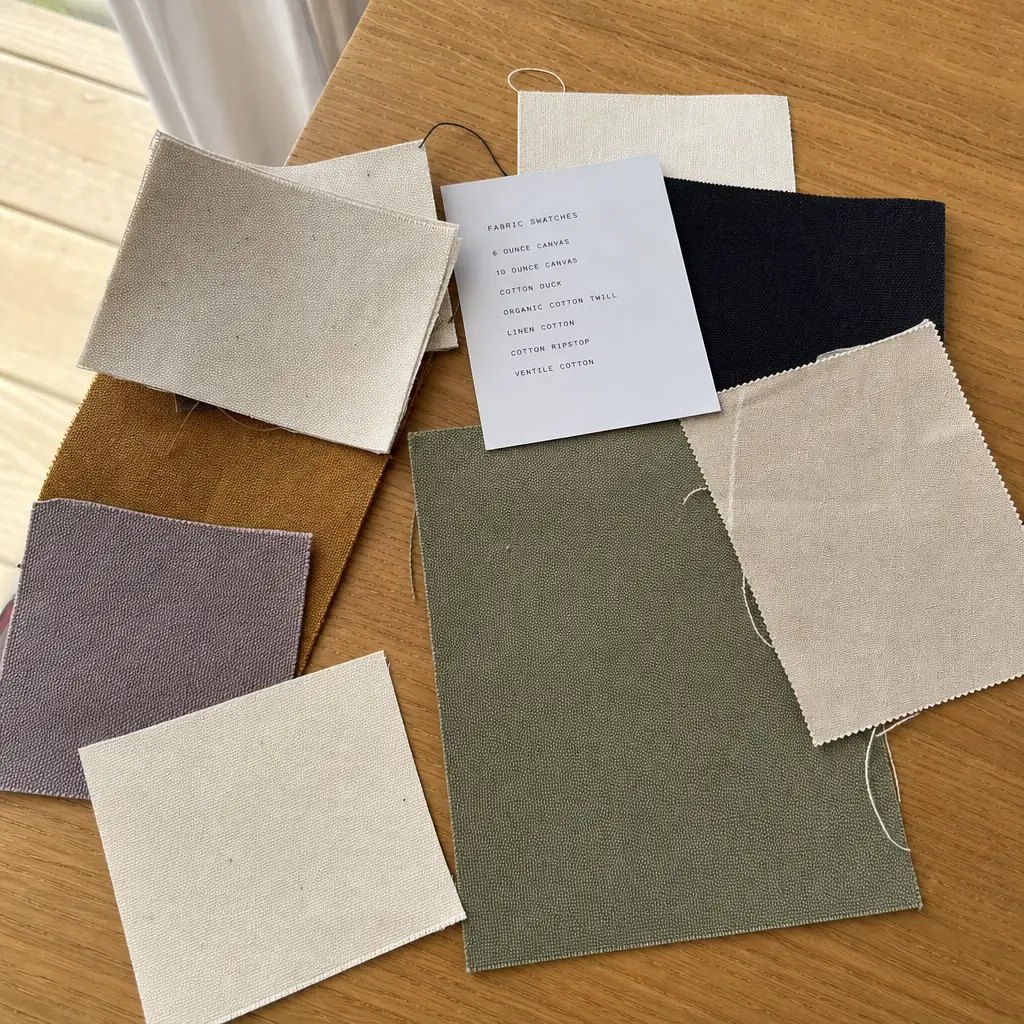
Jute weight is one of the first specifications buyers discuss, but it is also one of the easiest to misunderstand. Suppliers may quote GSM, ounces, or a local commercial fabric description. Some refer to raw jute before lamination. Others refer to finished laminated material. Because conversion is not always applied consistently, the safest approach is to request the number, the measurement basis, and a physical swatch from the material standard used in the quote.
For many exhibitor programs, mid-weight laminated jute is a practical starting point for A4 catalogs, brochures, light samples, notebooks, sponsor inserts, and a water bottle. Lighter fabric can reduce cost but may look loose, hairy, or semi-transparent under bright booth lighting. Heavier fabric can feel more substantial, but it increases material use, sewing effort, carton volume, and freight cost.
The best fabric is the one that fits the load and display standard. A tote carrying only a leaflet and lightweight promotional item can use an economical construction. A tote carrying technical catalogs, boxed samples, bottled products, or press materials needs better body stability and stronger seams. Heaviest is not automatically best; the right combination is suitable jute, suitable lamination, suitable handles, and a print method that works on the surface.
- Ask for GSM or oz plus the supplier's measurement basis.
- Require a swatch and keep it with the approved sample.
- Confirm whether the quoted weight is before or after lamination.
- Use lighter material only when the load is controlled and presentation requirements are modest.
- Avoid accepting descriptions such as standard jute until the supplier gives measurable specifications.
Specify Lamination as a Performance Detail
Inside lamination is common on jute tote bags because it improves shape, reduces fraying, and creates a cleaner interior. For trade show exhibitors, that matters when bags are displayed upright, packed with printed materials, or stacked behind a booth for fast handout. Lamination can also help the front panel sit flatter, which may support more consistent screen printing.
Do not treat lamination as a yes-or-no checkbox. Ask whether the finish is matte, semi-matte, or glossy. Ask whether the supplier can state approximate thickness or provide a matching laminated sample. A very stiff laminated bag may crease during packing, crack at fold lines, or feel less natural than the brand expects. A glossy interior may also shift the overall impression of the tote.
Review lamination after the bag has been handled like bulk product. Fold the sample the way it will be packed, place it under light compression, reopen it after 24 hours, and inspect the side gusset, bottom, corners, and printed panel. Look for cracking, peeling, large bubbles, sharp interior edges, and plastic odor. This quick check is more useful than approving a fresh sample photographed flat on a table.
- Specify inside lamination and finish type in the RFQ.
- Ask whether lamination thickness or film type can be documented.
- Check fold lines and gusset corners after sample packing.
- Confirm whether lamination affects any sustainability claim the event team plans to make.
- Review a printed laminated sample when the final order includes printing.
Size the Tote Around Contents
Bigger is not always better for trade show bags. Every extra centimeter affects jute consumption, lamination area, cutting yield, sewing time, carton dimensions, freight volume, and storage space at the venue. Oversized totes can also be awkward in crowded aisles. The target is enough space for the contents, clean loading, and efficient shipping.
A common conference tote starting point is about 38 x 35 x 15 cm, but it should not be treated as universal. Start with the largest insert. Measure catalog width and height, boxed sample dimensions, flyer stack thickness, and any item that must remain flat. Add practical loading clearance so booth staff or a warehouse team can pack quickly without bending materials.
State how size is measured. Width x height x gusset is common, but buyers should confirm whether the gusset is side, bottom, or both, and whether the factory measures the bag flat or opened. Natural fiber sewn products will have tolerance. About +/- 1 cm is often used for standard constructions, but the approved tolerance should match the bag size, sewing method, and supplier capability.
- Measure the largest insert before selecting the bag size.
- Allow clearance for quick packing at the booth, warehouse, or pre-pack station.
- Use gusset depth deliberately instead of simply increasing the front panel.
- Avoid tall narrow bags if catalogs may bend or catch at the opening.
- Confirm printable area after gusset and bottom construction are finalized.
Treat Handles as Load-Bearing Parts
Handles look simple on drawings, but they carry the whole user experience. Visitors may add catalogs, samples, notebooks, personal items, and a bottle to the same tote. If the handle is narrow, scratchy, too short, or poorly stitched, the bag feels cheap even when the body fabric is acceptable. A handle failure on the show floor is also a visible brand problem.
Cotton webbing is often a strong default for trade show jute totes because it is softer than jute tape and consistent for repeated carrying. A width around 2.5-3.0 cm works for many exhibitor bags. Handle length depends on carry style. Short hand-carry handles may be suitable for counter giveaways, while shoulder-carry handles need more drop, especially if visitors wear coats or carry other event materials.
Stitching matters as much as webbing. X-box stitching or reinforced rectangle stitching spreads load better than a few straight stitch lines. During sample approval, pack the tote with expected contents or equivalent weight and carry it for several minutes. Inspect the seam afterward for torn jute, skipped stitches, loose thread, and stress marks.
- Define handle material, width, total length or drop, color, and stitch pattern.
- Use reinforced stitching when the bag carries catalogs, samples, or bottled products.
- Test handle comfort with realistic weight inside the bag.
- Ask whether dyed webbing can transfer color to natural jute during humid transit.
- Reject uneven handle placement when it affects comfort or display symmetry.
Match Printing to Jute Texture
Jute is not a smooth paper or nonwoven surface. Its weave, fiber variation, and natural base color affect how ink appears. Screen printing is usually the most stable commercial choice for one to three solid colors on wholesale jute tote bags. It works well for bold logos, event names, sponsor marks, booth messages, and simple QR codes when the artwork is prepared for the material.
Fine gradients, tiny legal text, thin outlines, and tight multi-color registration are harder on jute. Heat transfer can improve detail for some artwork, but it changes surface feel and may look less natural. Embroidery can work for small marks, though dense stitching may distort the panel and is rarely the best method for a large front graphic.
A digital mockup is not enough for brand approval. A printed strike-off on actual jute should show print size, position, ink coverage, color direction, edge quality, and whether fibers interrupt the design. If the tote includes a QR code, scan the printed code on several phones under office light and brighter booth-like light. If sponsor logos include small text, simplify the artwork before production if needed.
- Send vector artwork with fonts outlined.
- Provide Pantone references but allow realistic tolerance on natural jute.
- Set minimum line thickness and minimum text size before sample printing.
- Keep print away from seams, gusset folds, bottom creases, and heavy fold areas.
- Approve print position using measurements from fixed edges.
Compare MOQ, Price Breaks, and Versions
Wholesale MOQ for jute tote bags is shaped by material sourcing, cutting efficiency, printing setup, and sewing line planning. For a standard natural jute tote in a common size, many suppliers can discuss 500-1,000 pcs, while stronger price breaks may appear at 2,500 or 5,000 pcs. The best quantity is not simply the lowest unit price; it is the quantity that fits the event count, safety stock, storage space, and leftover inventory plan.
Custom elements can change MOQ quickly. Dyed jute, unusual lamination, custom webbing color, special labels, uncommon sizes, or multiple artwork versions may require higher minimums. Ask whether different prints can share the same body MOQ when the bag construction is identical. Even when the body is shared, each artwork version can add setup cost, production separation, inspection steps, and carton marking.
Separate true unit cost from project cost. A low bag price may look less attractive after screen charges, pre-production samples, revision samples, packing changes, domestic trucking, and inspection support are added. Use one comparison sheet with the same Incoterm, quantity, artwork count, packing method, payment terms, and delivery deadline for every supplier.
- Ask for price breaks at 500, 1,000, 2,500, and 5,000 pcs using the same specification.
- Clarify whether MOQ applies per artwork, color, size, material, or total order.
- Record sample fee, screen fee, print setup, and any refundable charges.
- Ask if quoted material is in stock or requires new raw material booking.
- Do not compare FOB, EXW, and delivered quotes without separating freight and destination costs.
Approve Samples and Control QC
A sample is not only for internal presentation. It is the reference that production, inspection, purchasing, logistics, and the event team should use. The approved sample should include actual jute fabric, lamination, handle, print method, print size, stitch construction, and packing approach. A blank bag with a digital logo layout leaves too many risks open.
Use the sample the way the final bag will be used. Put in the catalog, flyer pack, sample box, and gift item. Let the bag stand on a table. Carry it by hand and shoulder if applicable. Inspect handle seams. Rub the print lightly for scuffing. Fold or pack it as production cartons will be packed. This practical review often reveals issues that supplier photos do not show.
Quality control should be defined before production. Natural jute has expected variation, but oil marks, mold spots, severe odor, broken handles, wrong print, and unreadable QR codes are not normal texture. For event-critical orders, inspection should cover size, fabric appearance, lamination, print position, print clarity, QR scanning, stitch quality, loaded carry test, thread trimming, odor, carton count, carton marks, and carton condition.
Packing is part of the buying specification. Flat packing is common, often 25-50 pcs per export carton depending on bag size, gusset, handle bulk, and lamination stiffness. Require carton dimensions, CBM, gross weight, and pieces per carton before approving the quote. For multiple designs, regions, booths, or sales teams, carton marks should match the distribution plan so the right bags reach the right location.
- Approve a printed pre-production sample before mass production.
- Keep the approved sample, swatch, artwork proof, and specification sheet together.
- Create critical, major, and minor defect definitions before production starts.
- Scan QR codes from printed production units, not only from artwork files.
- Use carton marks that match the event team's receiving and distribution plan.
Specification comparison for buyers
| Buying decision | Procurement-grade specification to request | Best use case | Risk to control |
|---|---|---|---|
| Body fabric weight | State GSM or oz and ask whether it refers to raw jute or finished laminated material; request a matching swatch | Conference totes carrying A4 literature, brochures, light samples, notebooks, and a 500 ml bottle | Oz-to-GSM conversion is not always quoted the same way; approve a physical swatch and supplier material record |
| Lamination | Inside lamination with stated finish, such as matte, semi-matte, or glossy, and supplier-confirmed thickness if available | Bags that need shape, reduced fraying, cleaner interiors, and upright booth presentation | Overly stiff lamination can crease, crack, peel, or create odor after carton packing |
| Bag size | Width x height x gusset, measurement method, printable area, and agreed tolerance, often about +/- 1 cm for standard sewn jute totes | A4 catalogs, press kits, sponsor inserts, boxed samples, and counter display | Unclear gusset measurement can cause poor fit, higher freight volume, or artwork placed too close to fold lines |
| Handle construction | Cotton webbing, handle width, total length or drop, color, and X-box or reinforced rectangle stitching | Visitor carry comfort during long exhibition days with mixed booth materials inside | Narrow handles or weak stitch patterns can fail under real event load |
| Print method | Screen print for 1-3 solid colors; transfer or alternate method only when artwork detail requires it | Bold logos, event names, sponsor marks, booth messages, and simple QR codes | Jute weave softens edges and can fill small gaps; approve a printed strike-off and scan QR codes from samples |
| MOQ and pricing | Quote the same specification at 500, 1,000, 2,500, and 5,000 pcs, with setup and sample costs separated | Buyers balancing event quantity, price breaks, storage, and leftover inventory | Low MOQ may hide higher setup fees, limited material choice, or weak inspection leverage |
| Packing plan | Flat pack quantity per export carton, carton size, CBM, gross weight, carton marks, and version separation | Delivery to warehouse, event contractor, distributor, regional office, or convention advance warehouse | Over-compression can permanently crease laminated jute; mixed cartons can delay booth distribution |
| Inspection scope | AQL plan with size, fabric, lamination, print, QR scan, stitch, handle load, odor, count, and carton checks | Fixed-date shows where rework or replacement is difficult after shipment | Quantity-only inspection misses the failures exhibitors notice first: handles, print, odor, stains, and wrong cartons |
Buyer checklist before sampling
- Define the exact use: booth giveaway, press kit, sponsor tote, VIP pack, resale item, internal sales kit, or distributor handout.
- List every item expected inside the tote, including catalog size, sample box dimensions, bottle weight, flyer thickness, and any pre-packed inserts.
- Estimate loaded bag weight and match fabric, handle width, stitch pattern, and gusset depth to that load.
- Specify width x height x gusset, measurement method, printable area, and accepted size tolerance in the RFQ.
- State jute weight in GSM or oz and require the supplier to confirm whether the value is before or after lamination.
- Define lamination finish, handle material, handle width, handle drop or total length, handle color, and reinforcement stitch pattern.
- Send vector artwork with Pantone references, outlined fonts, print size, print position, print side count, QR code file, and final artwork version name.
- Request a printed pre-production sample made with actual jute, lamination, handles, stitching, print method, and packing style.
- Set acceptance criteria for stains, odor, mold, thread ends, print registration, QR readability, lamination defects, handle strength, carton marks, and carton condition.
- Ask for a quote breakdown covering unit price, setup, screen charge, sample fee, revision sample, labels, packing, export carton, inspection support, Incoterm, and freight terms.
Factory quote questions to send
- What exact jute fabric weight is included, which measurement standard is used, and does the quoted value refer to raw jute or finished laminated material?
- Can you provide a fabric swatch from the same material standard that will be used for bulk production?
- What lamination finish and approximate thickness are included, and have you checked for cracking, peeling, bubbles, and odor after folding and carton packing?
- Is the quoted size measured as width x height x gusset, how is the gusset measured, and what tolerance can you hold after sewing?
- What handle material, width, total length or drop, color, and reinforcement stitch pattern are included in the unit price?
- What loaded weight do you recommend for this construction, and what handle pull or loaded carry test can be performed during inspection?
- Which print method do you recommend for this artwork on natural jute, and what minimum line thickness or text size should our designer follow?
- Can you print and scan our QR code on actual jute before bulk approval?
- Does the price include screen setup, pre-production sample, domestic sample shipping, labels, export cartons, and one revision sample if the first sample misses the written spec?
- How many pieces go into each export carton, what are the carton dimensions, CBM, and gross weight, and can cartons be marked by artwork version, booth, region, or sales team?
Quality-control points to confirm
- Size should be checked against the approved drawing, including width, height, gusset, handle drop, and print position; standard sewn jute totes often use about +/- 1 cm tolerance unless otherwise agreed.
- Jute fabric should match the approved swatch and material record, with a clear note on whether the reference is raw or laminated finished material.
- Handle attachment must show even reinforced stitching, no skipped stitches, no loose backstitching, no torn jute around the seam, and no exposed weak points at the top edge.
- Loaded carry testing should reflect real event contents, such as catalogs, sample boxes, and a water bottle, rather than only a short static hang test.
- Print should be centered within tolerance, with no missing ink, excessive bleeding, filled logo gaps, unreadable small text, heavy scuffing, or QR modules that fail scanning.
- Natural jute shade variation can be acceptable within the approved range, but front-panel stains, oil marks, mold spots, water marks, and strong odor should be rejected.
- Lamination should be bonded evenly, without large bubbles, peeling, cracking on normal fold points, sharp interior edges, or odor that remains after airing.
- Thread trimming, panel alignment, gusset shape, bottom stability, and bag standing ability should be reviewed because they affect booth display appearance.
- Carton count must match the packing list, and mixed designs should be separated or clearly marked to prevent event distribution errors.
- Cartons should be strong enough for export handling, with no crushed corners, weak tape closure, unclear marks, water damage, or compression that permanently creases the bags.