Why tech startups need a stricter buying checklist for jute tote bags wholesale
Jute tote bags often get treated as a simple promo item, but they usually sit at the intersection of brand marketing, operations, events, and finance. A startup may use the same bag for conference giveaways, new-hire welcome kits, partner mailers, and limited retail merchandise. That means the bag has to do more than look acceptable in a product photo. It has to carry real weight, print well enough for brand standards, arrive on time for launch dates, and fit the freight budget.
In procurement terms, the main problem is not that jute bags are complicated. It is that they are easy to under-specify. When an RFQ says only 'natural jute tote with logo,' suppliers may quote different GSMs, different handle materials, different seam reinforcement, different print methods, and very different packing assumptions. Two prices can look close while the actual delivered product is not comparable at all.
For startup teams, the commercial consequence is larger than the unit cost difference. A late or poorly built bag can disrupt event kits, leave inventory unsellable, or force a rushed re-order with high freight expense. A stronger checklist helps buyers compare suppliers on actual build quality, not on incomplete assumptions.
- Treat the bag as a product spec, not just a branded accessory.
- Tie construction decisions to the real use case and target load.
- Freeze quote assumptions early so price comparisons are meaningful.
Start with the use case: giveaway tote, welcome kit bag, or retail product
The right jute tote bag specification starts with what the bag will actually carry. A lightweight conference handout bag does not need the same body stiffness or seam reinforcement as a welcome kit tote holding boxed accessories, notebooks, bottles, or apparel. Likewise, a tote sold through a startup merch store needs cleaner finishing and better print discipline than a one-day event giveaway.
This step sounds basic, but it drives nearly every cost and quality decision that follows. If your bag is expected to carry heavier tech-startup onboarding items, ask the supplier to recommend the working load for the quoted construction and confirm how they validate handle strength. If the bag is retail-facing, define the premium cues that matter: sharper logo placement, less visible weave inconsistency, a cleaner inside finish, or a structured silhouette that stands better on shelf.
Procurement teams also benefit from splitting use cases into separate RFQ scenarios. For example, one scenario might be an event tote at lower MOQ using an existing base bag. Another might be a custom retail tote with stronger handles and a larger gusset. Comparing both options helps stakeholders decide whether the premium construction genuinely supports the business use, instead of defaulting to the cheapest bag and discovering later that it does not perform.
- Define typical contents and approximate carry weight.
- Specify whether the bag is promotional, functional, retail, or mixed-use.
- Separate pilot-order needs from longer-term replenishment needs.
Material specification: GSM, weave, finish, and what 'natural jute' really means
One of the most important decisions in jute tote bags wholesale buying is the material definition. Buyers often focus only on GSM, but GSM alone does not fully describe the bag. A 280 GSM jute fabric can still behave differently depending on weave openness, yarn quality, finishing, lamination, and whether the supplier is using pure jute or a blended construction.
As a starting point, many buyers look at roughly 250 to 300 GSM for standard promotional or everyday tote use, while 320 GSM and above can suit heavier contents or a more substantial retail feel. But a higher GSM is not automatically better. Heavier fabric increases body and weight, yet it also increases carton weight and may raise freight cost. The more useful procurement question is whether the quoted construction matches your target carry performance and presentation standard.
You should also decide whether you want a pure natural jute appearance or a more controlled structure. Pure jute can communicate an organic, textured look, but it naturally comes with shade variation, visible slubs, and some fiber shedding. Laminated or lined versions often hold shape better and can improve the appearance of printed logos, but they alter feel, cost, and the product story around material composition.
If dyed panels, dyed handles, or other trims are involved, add color-control expectations to your RFQ. Natural jute is inherently variable, and that variation may be acceptable for an earthy branded look. What causes disputes is not the variation itself but the lack of a written expectation about how much is commercially acceptable.
- Ask for nominal GSM plus tolerance, not just a target number.
- Confirm whether the quote is pure jute, blended, laminated, or lined.
- State whether natural shade variation is acceptable before sampling begins.
Construction choices that matter in real use: size, gusset, handles, lining, and reinforcement
Many wholesale bag failures happen at the construction level rather than the fabric level. Buyers choose a visually acceptable body fabric but leave handle build, seam reinforcement, or gusset geometry too vague. In practice, these details determine whether the tote feels sturdy in hand and whether it survives normal use.
Start with finished dimensions and measured drawings. Specify body width, height, gusset depth, and handle drop. A bag that looks proportionate in a sample photo may become awkward in use if the handles are too short for shoulder carry or if the gusset is too narrow for boxed items. If startup welcome kits include rectangular cartons or devices, ask the supplier to test fit actual dimensions rather than relying on nominal volume.
Handle specification deserves special attention. Self-jute handles, padded handles, and cotton webbing all create different usability and durability profiles. Many B2B buyers prefer cotton webbing or reinforced handles for daily-use bags because jute-only handles can feel rougher and may fail earlier if the stitch area is not strengthened properly. Whichever route you choose, define handle width, attachment length, and stitch pattern such as box stitch, cross stitch, or bartack reinforcement.
If your bag needs structure or a cleaner interior, specify lining, lamination, or a reinforced base panel. These features increase perceived value and improve shape retention, but they also change lead time and defect modes. Once they are included, QC must check not only the exterior but also adhesion, edge finishing, and interior cleanliness.
- Freeze measured dimensions before price comparison.
- Define handle material and reinforcement, not just handle color.
- Add lining or lamination only when it supports the use case and margin.
Print method, artwork limits, and logo expectations on a textured jute surface
Branding is usually the reason tech startups choose custom jute totes, yet print expectations often get copied from cotton or paper packaging standards. That is where trouble starts. Jute is textured, porous, and uneven compared with smoother fabrics, so tiny text, thin strokes, and gradients may not reproduce cleanly.
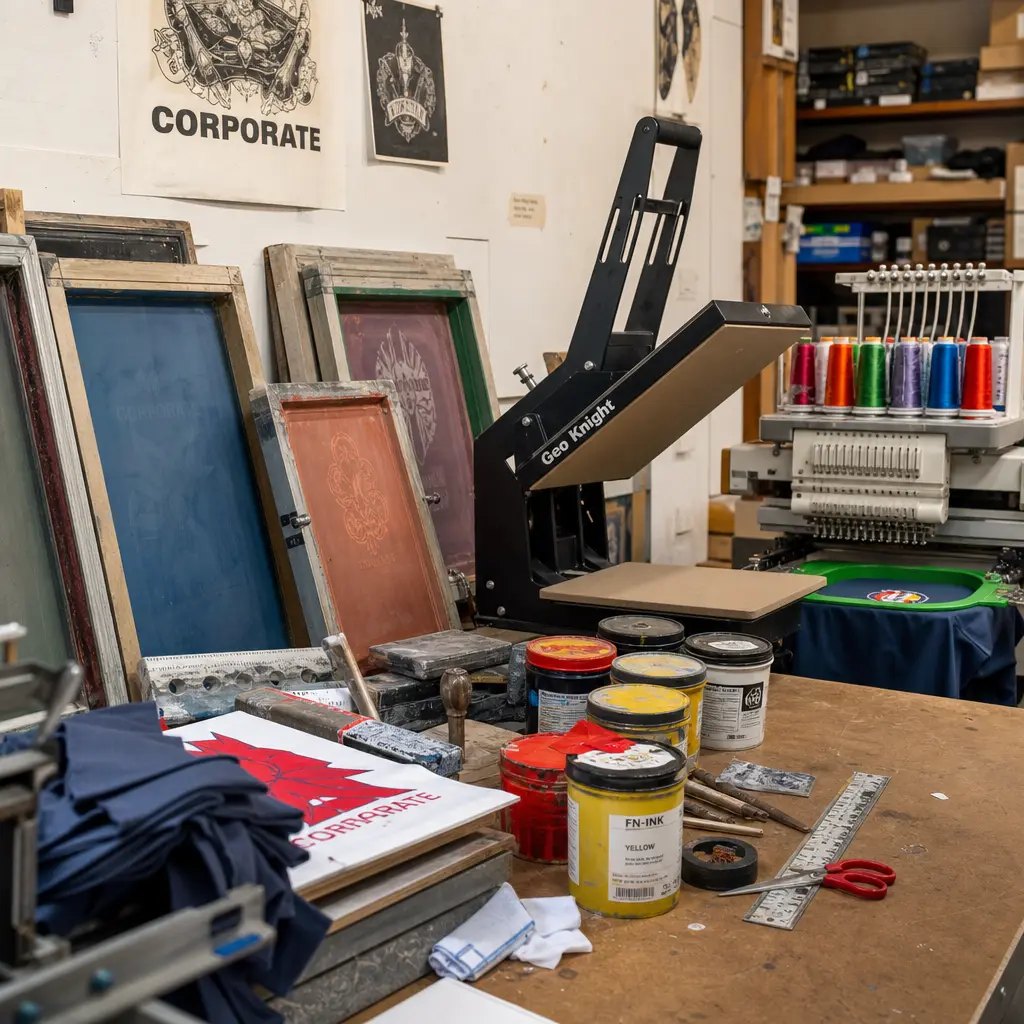
For many wholesale programs, screen printing remains the most practical option for bold logos, simple one- or two-color designs, and repeatable cost control. But even screen printing has to be matched to the weave. A logo that looks sharp on a digital proof can lose detail once printed over coarse fibers. If your startup identity uses small type or delicate linework, ask the supplier to test actual legibility on the proposed bag body rather than approving a mockup alone.
Other branding methods can work, but they should be chosen for clear reasons. Heat transfer may support detailed artwork at low volume, though it can look more like a surface-applied patch than an integrated print. Embroidery or woven labels can upgrade the retail feel, but they introduce added labor and can distort the base fabric if not stabilized correctly. Woven patches are often a stronger option than direct embroidery when the jute surface is especially open or inconsistent.
A seasoned buying process also sets print tolerances in writing. Define the maximum print area, the reference point for logo placement, and what drift is acceptable from top and side seams. If color matters, provide Pantone references where relevant and note that natural jute background tone can shift perceived ink color. That simple note can prevent avoidable disagreements at final inspection.
- Approve artwork on the actual bag construction, not only on flat digital visuals.
- Use larger safe zones for small copy and fine details.
- State print placement tolerance and color expectations before bulk begins.
How to compare supplier routes, country-of-origin factors, and audit readiness
Not all jute tote bag suppliers present the same risk profile, even when the quoted unit price is similar. Buyers should distinguish between direct factories, trading companies, domestic resellers, and mixed-product exporters that only occasionally produce jute items. Each route can be workable, but each changes what you need to verify.
A direct factory with in-house cutting and sewing often gives better visibility into material handling, seam construction, and packing controls. That can be especially useful if your startup needs repeatable spec control across future re-orders. A trading company may still be the right fit for small mixed orders or fast commercial communication, but then the buyer should ask directly where production will occur, who controls printing, and whether the trading team has authority to stop production if quality slips.
Country of origin also deserves practical, not political, attention. Some buyers prefer suppliers in regions with established jute raw material access because fabric sourcing options may be stronger and more familiar. Others prioritize a bag factory in a broader textile cluster because print or trim support is better. The right answer depends on your priorities: raw jute capability, export experience, transit time, documentation quality, or alignment with your internal vendor compliance requirements.
At minimum, ask for the manufacturing country, exporting entity, and any origin details your customs broker or compliance team needs. If your company has material restrictions, social compliance expectations, or vendor onboarding rules, include them before quoting, not after award. A supplier who can make a decent bag but cannot support basic documentation may still be the wrong commercial partner.
- Verify who actually cuts, sews, prints, and packs the bags.
- Request manufacturing country and exporter details early.
- Match audit depth to program value and business risk.
RFQ and quote controls: what a procurement-ready quotation should actually include
A procurement-ready quote for jute tote bags wholesale should read like a commercial spec summary, not a rough price note. If you receive only a unit price, MOQ, and a promised lead time, you do not yet have a quote that can be compared confidently. You have an estimate built on hidden assumptions.
A stronger quotation should include nominal material specification, GSM tolerance, finished dimensions, gusset depth, handle material and length, stitching approach, branding method, color count, sample charges if any, MOQ by variant, and detailed packing assumptions. It should also separate whether the quoted item is based on an existing standard pattern or on a fully custom pattern. This distinction matters because development charges, higher MOQs, and timeline changes often appear only after the buyer requests custom dimensions or upgraded finishes.
For startups managing cash carefully, quote clarity also matters for inventory planning. Low MOQ sounds attractive, but not if it only applies to a standard bag that misses your brand or performance needs. Likewise, a lower unit price may hide a larger carton footprint, pushing the landed cost above a seemingly more expensive quote. This is why logistics data belongs in the quote stage, not only after order confirmation.
To reduce back-and-forth, many buyers attach a quote template or RFQ matrix. That forces each supplier to answer the same questions and gives your team a clean basis for commercial comparison, supplier scoring, and internal approval.
- Use one RFQ pack across all suppliers.
- Separate standard-body pricing from full-custom pricing.
- Require packing and carton data before supplier selection.
Sampling and pre-production approval: where most mistakes should be caught
Sample approval is the most useful control point in the buying process, provided the buyer uses it as a formal gate rather than as a visual courtesy. A jute tote sample should answer practical questions: Does the body feel right in hand? Do the handles sit comfortably? Does the print remain legible on the actual weave? Does the bag hold shape once filled? Does it fold acceptably for packing?
For startup procurement teams, the safest sequence is usually material confirmation first, then development sample if the shape is new, then a pre-production sample after artwork and construction details are frozen. If the bag is standard and only the logo changes, you may be able to shorten the process. But if dimensions, handle type, lining, or reinforcement are new, skipping a true pre-production sample invites bulk disputes.
The sample should be reviewed against a written checklist. Measure dimensions. Check seam consistency. Assess odor. Compare print placement to the approved art layout. Load the bag with realistic contents and carry it. If your marketing or retail team has non-negotiable presentation requirements, involve them before bulk starts, not after cartons are packed.
Most importantly, freeze the approved sample standard. If later changes are requested, note them formally and understand the impact on cost and lead time. A surprising number of production delays come from late artwork or construction tweaks that seem small but require re-screening, new material allocation, or re-sewing instructions.
- Approve against a written sample checklist, not memory.
- Test with realistic contents, not just empty-bag visuals.
- Document all post-sample changes with cost and timeline impact.
Quality control in bulk production: testing, defect standards, AQL, and shipment acceptance
For a serious B2B buying guide, quality control on jute tote bags needs to go beyond generic phrases like 'check stitching' or 'verify logo position.' The buyer should define what will be checked, what failure looks like, and when the check happens. Jute is a natural, variable material, so commercial quality means controlled variation, not a fantasy of perfect uniformity.
At the fabric and visual level, inspect for major weave openings, holes, contamination, heavy stains, mildew smell, wet storage damage, and shade inconsistency beyond the agreed expectation. At the construction level, inspect body size tolerance, handle symmetry, gusset balance, seam security, reinforcement execution, and top-edge neatness. For printed bags, include registration, edge sharpness, fill coverage, smudging, and legibility of any small type.
Load testing is often overlooked but highly relevant for startup use cases involving welcome kits or product literature. The test method does not need to be overly complex, but it should be consistent. Use the agreed working load, fill the bag as intended, lift and carry for a set number of cycles or time period, and then inspect the handles, seam creep, and fabric distortion. If the bag is marketed for heavier use, require a stronger test than a quick hand pull at the factory table.
Acceptance sampling should also be set before shipment. Many professional buyers use a final random inspection based on an agreed AQL plan with major and minor defect categories. Whether you use a third-party inspector or your own team, the point is to define the rules before production ends. That prevents last-minute arguments over whether a skewed logo or open seam is a rejectable defect or merely a tolerable variation.
If the order is commercially important or technically new, consider adding an inline inspection during early sewing. Inline checks can catch recurring issues like handle misplacement or print drift while the line still has time to correct course, reducing the risk of discovering a systemic problem only at final inspection.
- Define major and minor defects before bulk starts.
- Use actual load testing for handle and seam verification.
- Apply final random inspection against an agreed sampling plan.
Packing, freight, and landed-cost checkpoints that startup buyers often miss
A jute tote bag may be inexpensive per unit, but it is not always cheap to move. Because totes are bulky, packing format has a direct effect on CBM, freight cost, and warehouse handling. This is where startup buyers sometimes lose margin: they negotiate unit price hard but accept vague packing assumptions that create expensive inbound logistics.
Flat packing usually improves carton efficiency, but the fold plan matters. A large front print may crack visually or show fold pressure if the bag is packed too tightly. Soft structures can also deform if stacked poorly. If the bags are retail-ready, ask whether cleaner inner packs, tissue support, or alternate fold direction would better protect presentation. Then compare the extra cube cost against the cost of damaged or unattractive inventory.
Carton information should be available before you approve the final supplier. Ask for inner quantity, master carton quantity, carton dimensions, gross weight, net weight, and estimated total CBM by order quantity. If your operation uses barcodes, FNSKU-style labels, or warehouse-specific carton marks, provide that format in the RFQ. Otherwise the supplier will apply its own standard, and relabeling costs will move downstream to your team.
Landed cost also includes less obvious items: sample charges, screen or plate fees, origin-related paperwork, destination duty, customs clearance, drayage, and domestic final-mile handling. For startup teams with fixed campaign budgets, it is often wiser to compare suppliers on estimated landed cost per usable bag rather than on ex-factory unit price alone.
- Ask for carton and CBM data before award, not after deposit.
- Check whether packing protects print presentation as well as cube efficiency.
- Compare ex-factory cost against likely landed cost per usable unit.
Specification comparison for buyers
| Bag or sourcing scenario | Recommended construction | Best for | Commercial upside | Buyer risks to verify |
|---|---|---|---|---|
| Low-MOQ event giveaway bag | Existing base bag in natural jute, 250-280 GSM, simple self-fabric or cotton web handles, 1-color screen print | Startup events, recruiting fairs, conference swag, pilot campaigns | Lower development cost, faster sampling, easier replenishment on proven body | Often limited in exact size, handle length, fabric shade, and packing options; confirm stock continuity and print area before PO |
| Retail-ready branded tote | Custom size, 280-320 GSM jute, reinforced handles, cleaner inside finish, tighter print placement standard | Merch stores, paid branded goods, premium partner kits | Better perceived value and stronger brand presentation | Higher MOQ, more approvals, and more ways to drift from sample if construction details are not frozen |
| Heavy-carry welcome kit bag | 320+ GSM jute or reinforced blended construction, boxed gusset, stronger seam reinforcement, longer handles | Laptop sleeves, product literature, bottle kits, onboarding packs | Improved carry performance and less bag collapse under load | Weight and carton cube increase freight cost; ask for real packed CBM and load-test results |
| Laminated jute tote | Jute exterior with interior lamination or structured lining | Programs that need shape retention, cleaner print appearance, or moisture resistance | More stable body, improved print presentation, easier wipe-clean performance | Lamination changes feel, recyclability perception, and cost; ask what material is used and whether edges remain exposed |
| Natural unfinished jute look | Pure jute appearance with visible slub and texture variation | Eco-positioned branding where natural variation is acceptable | Authentic look and simpler material story | More color variation, more fiber shedding, and more visible weave inconsistency; set acceptance expectations in writing |
| Direct factory with in-house cutting and sewing | Factory controls material sourcing, cutting, sewing, and final packing | Buyers needing stronger control over construction and QC | Better visibility into build details, sampling, and corrective action | Still verify whether printing is subcontracted and whether export documentation is handled in-house |
| Trading company coordinating multiple workshops | Sales team aggregates production and may manage sampling across factories | Small or mixed programs requiring broader sourcing reach | Can be faster at quoting and useful for mixed-item orders | Less transparency on true producer, audit status, and substitution risk; require named production site before approval |
| Domestic importer or reseller | Pre-imported stock or standard styles with local delivery | Short timeline orders where customization is limited | Fast delivery and simpler communication | Usually higher unit cost and less control over exact GSM, print route, or factory-level compliance documentation |
| Supplier in a jute-dominant origin country | Factory based where jute supply chain is established and fabric access is stronger | Programs needing broader jute construction options | Better raw material familiarity and potentially more fabric choices | Confirm origin of both fiber and manufacturing, export readiness, and consistency between fabric lots |
Buyer checklist before sampling
- Confirm end use by load: giveaway literature, boxed kits, retail resale, onboarding packs, or daily commuter use.
- Define exact finished size, gusset depth, handle drop, opening style, and whether the bag must stand when filled.
- Set fabric target by GSM and tolerance range, and ask whether the quoted fabric is pure jute, jute blend, or laminated construction.
- Specify whether natural shade variation is acceptable and state any color reference if dyed panels or handles are required.
- Define handle material, width, stitch pattern, reinforcement patch requirement, and minimum load expectation.
- Provide vector artwork, Pantone references where relevant, maximum print area, logo position measurements, and any no-print zones near seams.
- State whether small text is mandatory so the supplier can confirm if the chosen print method is technically suitable on jute weave.
- Ask for MOQ by style, color, print method, and whether mixed SKUs or mixed artwork can ship under one purchase order.
- Require a pre-production sample after materials and artwork are confirmed, not just a digital mockup or previous-stock reference.
- Specify packing method, fold direction, inner quantity, master carton count, carton markings, barcode labels, and palletization if needed.
Factory quote questions to send
- What is the exact jute construction you are quoting: pure jute, jute blend, laminated jute, or jute with lining, and what is the nominal GSM with tolerance?
- What are the finished dimensions, handle width, handle drop, gusset depth, and seam allowance in your quotation drawing?
- Are handles self-material, cotton webbing, or other material, and what reinforcement method is included at the attachment point?
- What realistic working load do you recommend for this construction, and how do you test handle strength before shipment?
- Which print method is included, how many colors are included, what artwork limitations apply on this weave, and what surcharge applies for larger print areas or additional colors?
- Is your price based on an existing bag body or a fully custom pattern, and what changes would trigger a new MOQ or development charge?
- What is the MOQ by base bag, printed bag, dyed bag, and fully custom version, and can mixed colors or mixed artworks count toward one MOQ?
- Do you cut and sew in-house, and is printing done in-house or subcontracted? If subcontracted, who controls print QC and final accountability?
- What sample stages do you offer: material swatch, development sample, pre-production sample, and shipping sample, and how long does each stage take?
- What quality standard do you apply for seam defects, print placement, loose threads, stains, odor, and count variance, and can you work to an agreed AQL inspection plan?
Quality-control points to confirm
- Fabric GSM must match the approved standard within the agreed tolerance; verify by test cut or documented factory measurement from bulk lot, not sample assumption alone.
- Weave and surface must be commercially consistent: no severe slubs, holes, open weave sections, hard knots, major color banding, excessive fiber shedding, oil marks, mildew odor, or damp storage evidence.
- Body panels must meet agreed size tolerance after sewing; common checkpoints include body width, height, gusset depth, handle drop, and top opening width.
- Seams must be straight, secure, and complete with no skipped stitches, unraveling starts, exposed raw failures at stress points, or visibly weak back-tacking.
- Handle attachment must use the agreed box stitch, cross stitch, bartack, reinforcement patch, or equivalent method; both handles should be symmetrical and securely anchored.
- Load testing should reflect actual use. For example, test a filled bag at the agreed working load for a defined carry period and lift cycle, then inspect seam creep, fabric tear, handle distortion, and stitch failure.
- Print placement must be within agreed tolerance from top seam and side seam reference points; logos should not drift, tilt, double-print, or fall into gusset folds unless approved.
- Printed color should visually match the approved reference within agreed commercial tolerance; on natural jute, confirm expectations because substrate color and texture can mute or dirty bright inks.
- Fine text, thin lines, and enclosed letterforms must remain legible on the actual weave. Reject prints where the jute texture causes material fill-in, broken counters, or unreadable small copy.
- Interior finishing should be checked if lining or lamination is specified: adhesion, edge cleanliness, trapped debris, warping, and odor all affect perceived quality.