Start With the Bookstore Use Case
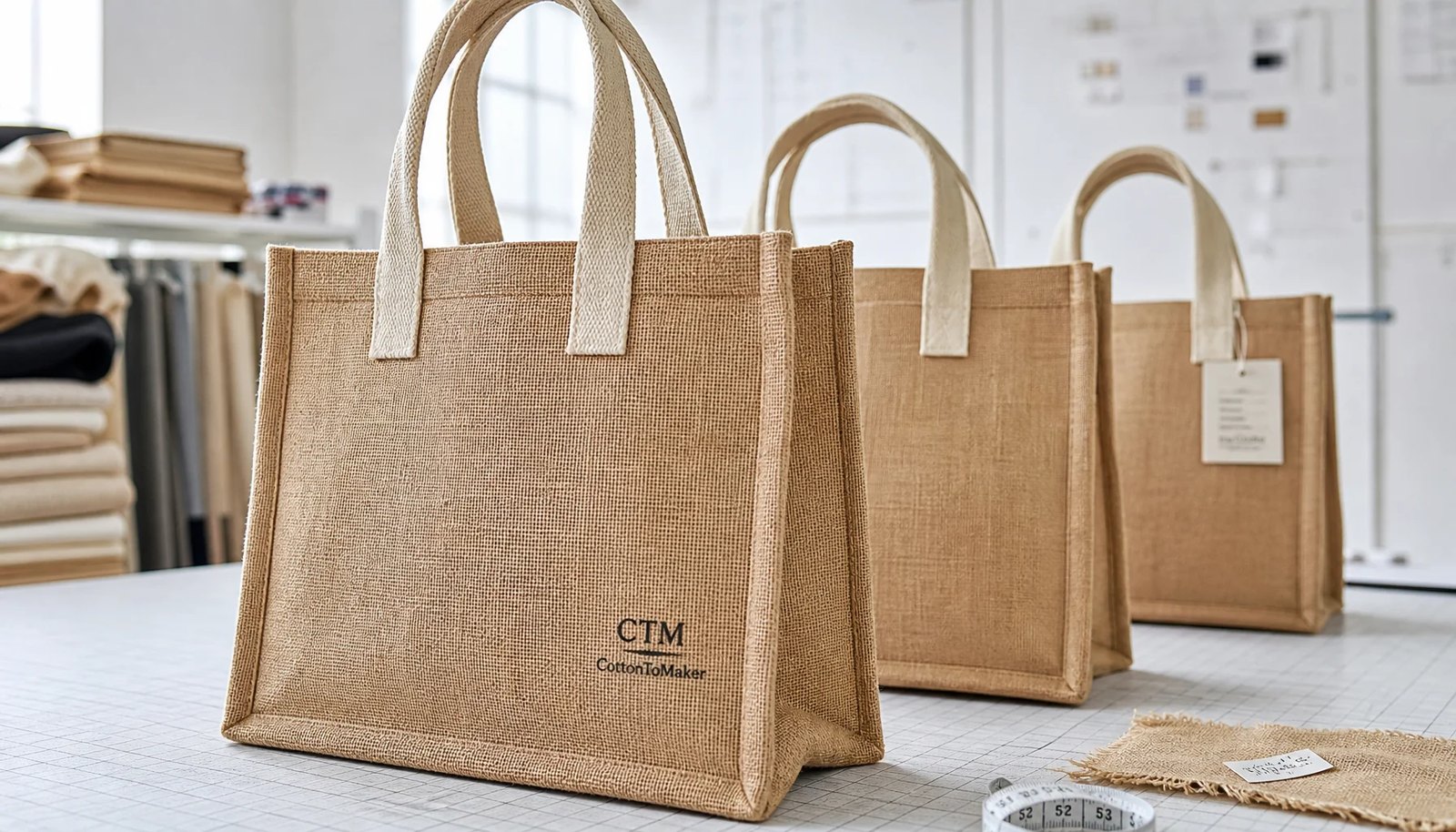
A university bookstore tote is not the same product as a farmers market jute shopper. The buyer usually needs a bag that can sit neatly on a retail shelf, carry books and apparel without handle complaints, and present the university logo cleanly enough for licensed merchandise review. Material selection should begin with the selling situation, not with the cheapest jute tote photo in a supplier catalog.
For a checkout bag, the main concern is practical load strength and controlled cost. For an orientation or alumni gift, the bag may need better shape, softer handles, and stronger logo presentation. For a premium campus store item, buyers often accept a higher unit cost for tighter sewing, lamination, reinforced bottom construction, or a woven label. These use cases should not be quoted under one vague specification because suppliers will make different assumptions.
- Checkout use: focus on cost, strength, carton efficiency, and fast replenishment.
- Gift pack use: focus on presentation, standing shape, odor control, and consistent shade.
- Retail resale use: focus on premium finish, barcode labeling, hangtag position, and shelf appearance.
- Licensed logo use: focus on print proofing, Pantone control, artwork placement, and approval samples.
Choose Jute Weight by Function
Jute tote pricing changes quickly with fabric weight, but weight is also one of the easiest places for a quote to become misleading. Many suppliers describe bags as heavy duty without listing GSM or ounce weight. For university bookstores, a practical range is often around 300-360 GSM, roughly 13-15 oz depending on weave structure and local conversion. Lighter material may be acceptable for event giveaways, but it can feel weak when carrying textbooks or hoodies.
Heavier jute can improve perceived value, but it is not automatically better. Very stiff jute may crease during packing, increase carton volume, and make screen printing less predictable because the weave surface is more uneven. The RFQ should request fabric weight, tolerance, and whether the quoted weight is before or after lamination. A supplier quote that only says natural jute is not detailed enough for apples-to-apples comparison.
- Budget event tote: consider lighter jute only when load expectations are low.
- Standard bookstore tote: target medium-heavy jute with stable weave and good sewing behavior.
- Premium merchandise tote: use heavier jute only when packing, printing, and freight impact are accepted.
- Quote control: require GSM tolerance and a swatch or cut panel from the intended fabric lot.
Laminated or Unlaminated Material
Unlaminated jute gives the most natural hand feel and is easier to position as a rustic, reusable campus product. It folds more naturally and usually avoids the plastic-like interior appearance that some bookstore buyers dislike. The tradeoff is lower moisture resistance, less standing shape, and more dust or fiber shedding. If the tote will hold apparel, stationery, or light gift items, unlaminated jute may be enough.
Laminated jute uses a clear or matte film on the inside surface, commonly PE or PP depending on the factory setup. Lamination helps the bag stand upright, protects contents from light moisture, and gives a cleaner interior. It can also trap odor if goods are packed too soon after production. Buyers should be careful with environmental claims because a laminated jute bag is not the same material story as a fully natural fiber bag.
- Use unlaminated jute when natural texture and lower plastic content are the selling points.
- Use laminated jute when shelf shape, moisture resistance, and interior cleanliness matter more.
- Define film type, finish, and thickness if lamination is required.
- Include odor and delamination checks in the pre-shipment inspection plan.
Handle Material and Load Comfort
Handles are where many low-cost jute totes fail in real bookstore use. A bag carrying one sweatshirt is different from a bag carrying three textbooks and a water bottle. Cotton webbing handles are often the safest option for campus retail because they feel better in the hand, accept consistent stitching, and can be dyed or matched to school colors. A width of 2.5-3.8 cm is common, with the final choice depending on bag size and target load.
Jute handles can look more natural, but they may be rougher and less comfortable under load. If the buyer wants jute handles for appearance, the reinforcement detail becomes more important. The supplier should specify handle drop, handle width, fold construction, stitch pattern, and whether the attachment uses cross-stitching, box stitching, or bar tacks. For heavier bookstore loads, the factory should provide an agreed pull test or loaded hanging test before bulk approval.
- Short handle drop suits hand carry and shelf display but may not fit over bulky coats.
- Longer shoulder drop improves usability for students walking across campus.
- Cotton webbing improves comfort and color options but changes the all-jute look.
- Handle stitching should be inspected on both front and back panels, not only from the outside.
Size, Gusset, and Bottom Structure
The correct tote size should come from the merchandise it must carry. A common bookstore size may sit around 35 x 40 x 15 cm, but there is no universal best dimension. Textbooks need width and height, hoodies need volume, and boxed gifts need a stable gusset. A flat jute tote may look inexpensive in the quote, yet it will not stand well on a shelf and will carry less than buyers expect.
A boxed bottom with a reinforced gusset is usually worth considering for university bookstores because it improves presentation and capacity. Some buyers add a removable or sewn-in bottom insert, especially for premium retail totes. Inserts increase cost and packing complexity, but they help the bag stand square. The RFQ should state finished size, gusset depth, seam allowance, and whether size is measured empty, flattened, or standing.
- For textbook use, avoid narrow gussets that make the bag tip forward.
- For apparel bundles, prioritize volume and handle comfort over rigid structure.
- For premium retail display, consider a boxed bottom and stronger side seams.
- For freight control, compare total CBM before approving oversized dimensions.
Printing on Coarse Jute
Raw jute is not a smooth canvas. The woven surface has raised yarns, small gaps, and color variation, so artwork must be selected with the material in mind. Screen printing is usually the practical choice for solid university marks, simple mascot shapes, event names, or one to three color designs. Fine serif text, tiny registration marks, gradients, and photographic effects should be avoided unless the factory proves them on actual jute.
Heat transfer can improve detail, but it may look less natural and can raise durability questions if the bag is bent, rubbed, or stored in hot conditions. Woven labels, cotton patches, or leather-like patches can work for premium bookstore collections when the main jute surface is too rough for small logo details. A serious RFQ should include Pantone references, print size, print position, artwork file format, and minimum acceptable line thickness.
- Use screen print for bold marks, slogans, department names, and simple alumni graphics.
- Use woven labels when small typography or premium branding is required.
- Avoid thin outlines and low-contrast ink colors on natural brown jute.
- Approve print strike-off on the actual bulk fabric, not only on a digital mockup.
MOQ and Cost Drivers
MOQ is not only a number; it is the point where cutting, printing, sewing, and packing become efficient. For jute totes, MOQ may change by fabric color, handle color, bag size, lamination type, and artwork. A bookstore buyer may want one base bag with different department logos, but each logo can require separate screens, proofing, and packing control. A quote that combines all designs under one MOQ may later add setup charges.
The largest cost drivers are jute weight, bag size, lamination, handle type, print color count, reinforcement, labeling, and carton volume. Importers should compare cost by finished bag specification and by landed cost per usable retail unit. A slightly higher FOB price may be better if the carton packing is efficient, defect rate is lower, and the bag does not require rework after arrival.
- Separate MOQ per artwork, per size, per material color, and per handle color.
- List screen charges and sample charges outside the unit price if they are not included.
- Compare carton CBM because bulky jute bags can make ocean freight a major cost factor.
- Avoid approving a cheaper quote before confirming fabric weight and lamination status.
Sample Approval Before Bulk Production
A pre-production sample should prove the material, construction, print, and packing direction before the factory buys all bulk materials or starts mass sewing. For jute bags, the sample is especially important because fabric shade and weave openness can change the final appearance. A digital proof cannot show the roughness of jute, the hand feel of the handle, or the way ink sits on the surface.
The buyer should treat the approved sample as the control standard. Keep one approved sample with the buyer, one with the supplier, and one for the inspection company if a third-party inspection is used. Approval notes should be written clearly: fabric acceptable, logo position acceptable, handle drop revised, stitch density approved, odor acceptable after airing, carton label pending, or similar. Without written comments, the sample approval can become a source of dispute.
- Measure finished size, gusset, handle width, and handle drop with the sample flat and standing.
- Load the sample with the expected bookstore weight and inspect handle stress points.
- Rub the print lightly after curing to detect weak ink adhesion or surface flaking.
- Photograph all approved details, including side seams, bottom corners, and carton layout.
Packing and Moisture Control
Jute is a natural fiber, so packing deserves more attention than many buyers give it. If the bags are packed while damp or stored in a humid warehouse, mildew, odor, and carton staining can appear during ocean transit. Export cartons should be dry, strong, and sized to avoid excessive crushing. Depending on route and season, buyers may request polybag grouping, carton liners, or desiccants, but each choice affects cost and sustainability positioning.
Flat packing is common because it controls freight volume, but overly tight compression can crease laminated panels or mark fresh print. The factory should confirm pieces per carton, carton dimensions, gross weight, and total CBM at quote stage. For retail distribution, carton marks, SKU separation, barcode labeling, and inner pack quantities should be decided before production packing begins, not after finished goods are waiting in the warehouse.
- Use dry export cartons and avoid storing finished jute directly on damp floors.
- Confirm whether individual polybags are required, optional, or not allowed by the bookstore program.
- Request packing photos from the pre-production sample stage for buyer approval.
- Include carton drop, compression risk, and moisture checks in the inspection plan.
Lead Time and Schedule Risk
A realistic jute tote timeline includes artwork preparation, material booking, sample making, sample shipping, buyer approval, bulk cutting, printing, curing, sewing, final QC, packing, and export booking. Production lead time may look short when the factory has similar material in stock, but custom handles, uncommon lamination, dyed webbing, or multiple logo versions can add days or weeks. University launch dates are often fixed, so vague lead time is a procurement risk.
The schedule should be built backward from the bookstore delivery date, including receiving inspection and internal distribution. Buyers should leave time for licensed logo approval because university trademark offices may request color or placement changes. If the order is linked to orientation week, homecoming, graduation, or a store opening, the RFQ should state the required arrival date and the latest acceptable ship date.
- Do not start the production clock until artwork, sample, deposit, and material specification are all approved.
- Add buffer for fabric shade approval when natural jute consistency is important.
- Plan extra time for multi-design orders because screen setup and packing separation take longer.
- Confirm vessel cutoff or courier timing before promising campus event delivery.
Specification comparison for buyers
| Spec decision | Recommended option | When it fits | Buyer risk to check |
|---|---|---|---|
| Main jute fabric weight | 13-15 oz natural jute, roughly 300-360 GSM depending on weave density | Standard bookstore totes carrying textbooks, apparel, drinkware, and gift items without looking too stiff | Very light jute can sag at the bottom; very heavy jute may raise freight cost and reduce print smoothness |
| Inner backing or lamination | Unlaminated for a natural look, or clear PE/PP lamination when moisture resistance and shape retention matter | Unlaminated suits eco-positioned merchandise; laminated suits higher retail price points and sharper standing shape | Lamination changes recyclability claims and may create odor if material is not aired before packing |
| Handle material | Cotton webbing 2.5-3.8 cm wide, or padded jute handles for a fully natural appearance | Cotton webbing is more comfortable for campus shoppers carrying heavy books; jute handles keep the rustic retail look | Thin jute handles can scratch hands and fail earlier at bar-tack points under heavy loads |
| Bottom construction | Boxed bottom with reinforced seam allowance and optional insert for larger sizes | Needed when the tote must stand on bookstore shelves or carry boxed gift sets | Flat totes are cheaper but do not display well and may not hold textbooks neatly |
| Print method | Screen print for solid university marks; heat transfer or woven label for small details; avoid fine halftones on raw jute | Best for school logos, simple slogans, mascot outlines, alumni event graphics, and department stores | Raw jute weave breaks thin lines; proof on actual jute, not only on paper or cotton fabric |
| Size range | Common retail size around 35 x 40 x 15 cm, adjusted to textbook and apparel bundle dimensions | Works for bookstore checkout, orientation packs, alumni gifts, and campus event merchandise | Oversized bags increase carton volume quickly; undersized gussets reduce practical carrying capacity |
| MOQ logic | One artwork and one material color per MOQ; combine sizes only if supplier confirms cutting and packing efficiency | Useful when buyers need several campus departments under the same base bag specification | Many low quotes hide separate setup charges for each logo color, size, or handle change |
| Packing method | Flat packed in export cartons with moisture barrier as needed, usually 50-100 pcs per carton depending on size | Keeps freight volume controlled while protecting natural fiber from humidity during ocean shipment | Compressed packing can crease laminated jute and distort printed panels if ink is not fully cured |
Buyer checklist before sampling
- Define the target use first: checkout bag, orientation gift, alumni merchandise, or premium reusable tote.
- Specify jute weight by GSM or oz plus acceptable tolerance, not only by the word natural jute.
- Decide whether the bag must be laminated, unlaminated, or partly lined before collecting prices.
- Provide finished size with width, height, gusset, handle drop, and expected carrying load.
- Limit artwork to print methods that suit coarse jute texture; request proofing on actual production material.
- State whether the university mark requires licensed color matching, Pantone references, and trademark approval.
- Set sample acceptance criteria for seam strength, handle comfort, odor, print registration, and carton packing.
- Request carton dimensions, gross weight, pieces per carton, and packing photos for freight comparison.
- Separate base bag cost, logo setup, sampling, labeling, inner packing, export carton, and inland freight in the quote.
- Build lead time around artwork approval, material booking, sample approval, bulk production, inspection, and vessel cutoff.
Factory quote questions to send
- What exact jute weight, yarn count, and GSM tolerance are included in this quotation?
- Is the quoted material laminated or unlaminated, and what film type and thickness are used if laminated?
- What handle material, handle width, handle drop, and reinforcement stitch are included?
- What maximum safe load can the finished bag carry based on your internal pull or loading test?
- Which print method is quoted, how many colors are included, and what is the minimum line width you recommend on raw jute?
- Are logo setup charges, screens, digital proofing, and pre-production sample fees included or listed separately?
- What MOQ applies per artwork, per bag size, per fabric color, and per handle color?
- What are the estimated carton size, carton weight, pieces per carton, and total CBM for the order quantity?
- What is the realistic production lead time after sample approval and deposit, including material purchasing?
- Can you provide photos or records of similar jute tote construction, seam reinforcement, and packing method without disclosing other customers' trademarks?
Quality-control points to confirm
- Fabric weight should stay within the agreed tolerance, commonly plus or minus 5 percent unless otherwise approved.
- Finished bag size should be controlled within an agreed tolerance, often plus or minus 1 cm for width and height and plus or minus 0.5 cm for handle width.
- Handle attachment should pass an agreed pull or load test based on the intended bookstore use, especially for textbook carrying.
- Screen print should show acceptable coverage on the jute texture without major pinholes, smearing, ghosting, or registration shift.
- Cutting should keep panels square so the logo does not appear tilted after sewing.
- Natural jute odor should be aired and acceptable before packing; strong fuel, mold, or chemical odor should be rejected.
- Seams should have consistent stitch density, clean backstitching, and no open seams at gusset corners.
- Metal contamination control should be included if the shipment goes into retail distribution centers.
- Cartons should be dry, export grade, labeled correctly, and strong enough for stacking during ocean freight.
- Bulk goods should match the approved sample for fabric shade, handle shade, print color, size, and construction.