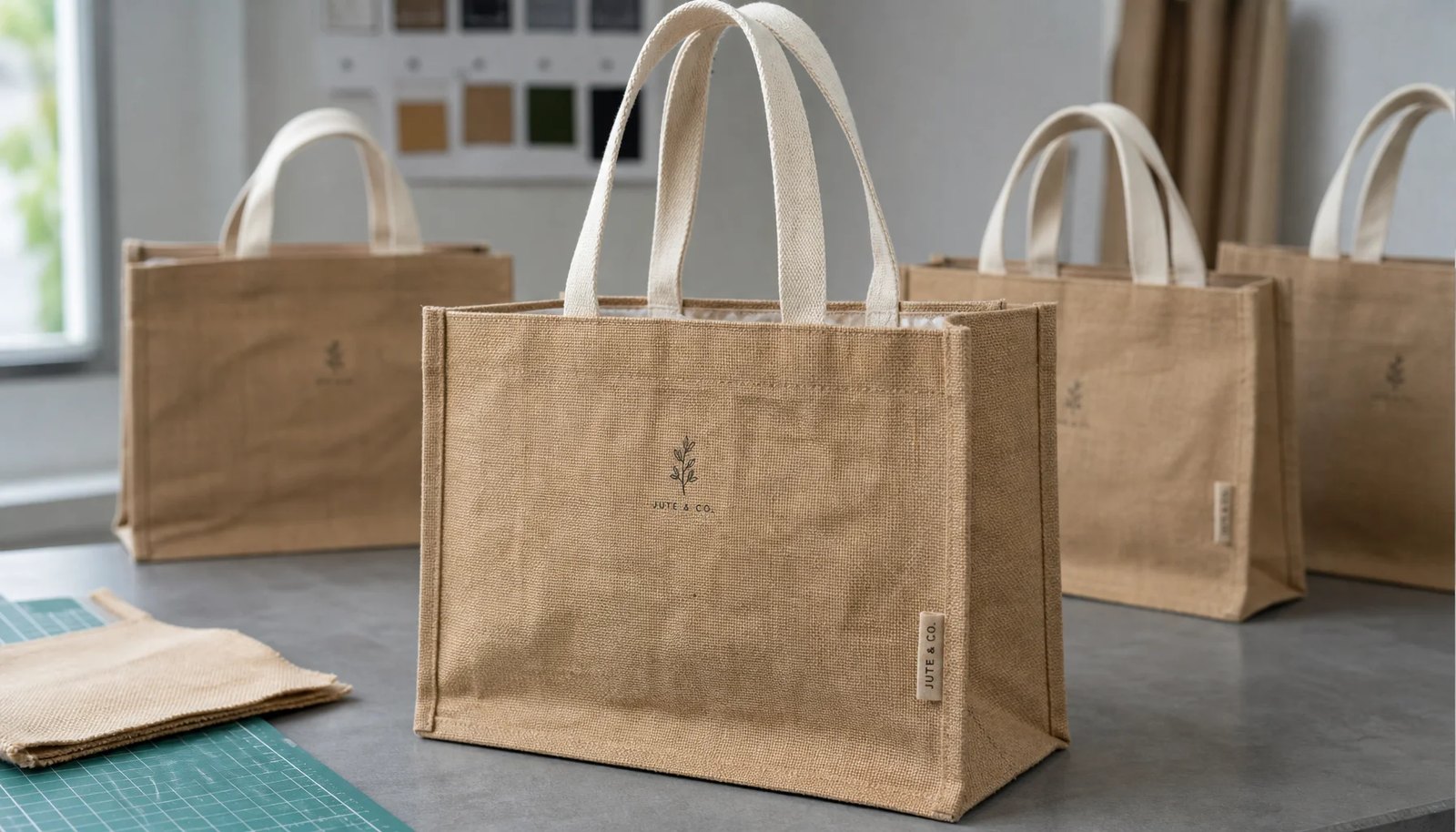
Start With the Buying Problem
A request for jute tote bags for university bookstores can sound straightforward: add the university logo, quote bulk pricing, and deliver before the semester rush. In practice, that is not enough information for a reliable RFQ. A bookstore tote may be a retail item, a checkout bag, an orientation giveaway, an alumni gift, or part of a merchandise bundle. Each use changes the target cost, construction, artwork control, packing, labeling, and inspection risk.
A resale tote needs shelf presence, a clean front panel, comfortable handles, and barcode-ready packing. An orientation tote may need higher quantity, faster turnaround, and strict carton sorting by campus or event. A gift-with-purchase bag may be judged less by retail finish and more by reliable delivery and low receiving labor. Procurement gets better pricing when the buying purpose is clear before suppliers quote.
The lowest unit price is only useful when every supplier is quoting the same bag. One quote may assume light unlaminated jute, narrow handles, one-color print, and loose master cartons. Another may include 14 oz laminated jute, cotton webbing handles, Pantone matching, hangtags, barcode labels, and carton marks by campus. Both might be called a custom jute tote, but they are not the same product. Build the specification first, then ask for the price ladder.
- Procurement goal: compare like-for-like quotes with the same material, construction, print, packing, and inspection assumptions.
- Retail goal: deliver a tote that stands well enough for display, carries typical bookstore items, and supports the intended selling price.
- Brand goal: keep university marks clean, correctly colored, correctly placed, and consistent across reorders.
- Operations goal: avoid hidden receiving labor from mixed designs, missing barcodes, creased panels, or unclear carton labels.
- Risk-control goal: identify quality issues before shipment, when correction is still possible and freight cost has not been committed.
Build the Bulk Price Ladder
University bookstore demand rarely arrives as one tidy order. A buyer may need a pilot run, a back-to-school purchase, an orientation batch, a homecoming version, a graduation top-up, and repeat replenishment if sell-through is strong. That is why a bulk pricing plan should show several quantity breaks instead of one blended number. Common RFQ breakpoints include 500, 1,000, 3,000, 5,000, and 10,000 pieces, but the right ladder depends on storage space, budget cycle, event dates, and expected annual use.
Price does not always fall evenly as volume increases. Setup costs such as screens, strike-offs, artwork handling, and print line preparation are spread across more units at higher quantities. Material and sewing labor, however, remain major cost drivers. The drop from 500 to 1,000 pieces may be meaningful; the drop from 5,000 to 10,000 pieces may be smaller if fabric and labor dominate the cost. Splitting one order into several campus logos can also reduce scale savings because each version may need separate screens, packing, labels, and inspection records.
Keep the ladder clean. Every price break should use the same finished size, jute weight, lamination, handle system, logo method, packing method, payment terms, Incoterm, inspection assumption, and delivery window. A 1,000-piece FOB quote in bulk cartons should not be compared directly with a 5,000-piece delivered quote that includes hangtags and barcode stickers. Procurement should convert each quote into landed cost per sellable tote, including setup, freight, duty or import charges where applicable, inspection, receiving labor, and any relabeling.
- Ask for unit price and total order value at each quantity break, not only a single best bulk price.
- Show estimated annual volume separately from first purchase quantity so suppliers can discuss reorder pricing without hiding first-run costs.
- Require setup charges to be listed separately for screens, strike-offs, color matching, hangtags, barcodes, and split packing.
- Keep Incoterms consistent across bidders, such as FOB port, FCA factory, DDP warehouse, or another buyer-approved basis.
- Compare landed cost per sellable bag after freight cube, carton recovery, inspection, and store receiving requirements are included.
Lock the Jute Specification
The word jute is not a specification. Fabric weight, weave, lamination, shade range, and finishing all affect cost and performance. For many university bookstore totes, 13 oz to 15 oz natural jute, approximately 370-425 GSM, is a practical starting point. It gives better structure than very light promotional jute and can support common bookstore contents such as folded hoodies, notebooks, drinkware, small gifts, and light textbooks. If the bag is only a short-event giveaway, a lighter fabric may be acceptable, but the decision should be deliberate.
Lamination deserves a clear line in the RFQ. Clear inner PP lamination helps the tote hold its shape, reduces fiber shedding into merchandise, and offers basic resistance to damp handling. It can also introduce plastic content, odor, cracking, or delamination risk if the process is poorly controlled. Unlaminated jute has a softer, more natural hand feel and may suit certain merchandising stories, but it sheds more, collapses more easily, and protects contents less. A cotton lining can feel more finished for alumni gifts, though it adds sewing complexity, cost, and sampling time.
Structure matters as much as fabric weight. A common bookstore tote size is around 38 x 42 x 15 cm with a real gusset, but the sample should be tested with actual merchandise. A flat-looking large bag can still have poor capacity if the gusset is narrow, the bottom corners collapse, or the top opening pulls inward. Write tolerances into the purchase order before production begins so size variation is judged consistently.
- Baseline retail spec: 13-15 oz jute, inner PP lamination, cotton webbing handles, gusseted body, and one-position logo print.
- Common dimension tolerance: set buyer-approved limits such as plus or minus 5-10 mm for finished dimensions, depending on factory capability and product use.
- Fabric tolerance: define acceptable GSM variation, often plus or minus 5 percent, and require bulk fabric to match the approved sample range.
- Capacity test: pack the sample with a hoodie, notebook, bottle, small gift item, and books to confirm usable volume and handle comfort.
- Display test: place the empty and filled tote upright on a table to evaluate shelf presence, front-panel shape, and logo visibility.
Do Not Under-Spec Handles
Handles are small on the quote sheet but large in customer experience. They carry the weight, affect comfort, and often reveal whether a tote was built for retail use or only for low-cost promotion. For university bookstore programs, cotton webbing is usually more comfortable than rough jute rope or narrow jute tape. A practical starting point is 25-30 mm wide cotton webbing with a finished handle drop of about 250-300 mm when shoulder carry is expected.
The RFQ should name the handle material, width, drop, color, attachment method, reinforcement stitch, and stitch density target. Box stitch, cross stitch, bar-tack reinforcement, or a hidden internal reinforcement patch should be agreed before sampling. If the factory folds the handle into the top hem, the sample should show that exact method. A quote that simply says cotton handles leaves too much room for quiet substitution.
Load testing does not need to be complicated, but it does need to be repeatable. Define the test weight, hold time, and pass criteria based on likely bookstore contents. After the test, inspect the handle attachment points, top hem, side seams, and bottom corners. The purpose is to catch weak stitching, webbing slippage, seam tearing, or distortion before the order ships.
- Quote detail: require handle material, width, drop, color, attachment method, reinforcement stitch, and whether the handle is cotton, jute, or blended webbing.
- Comfort check: carry the sample by hand and shoulder with realistic contents, not empty or lightly filled.
- Load check: define test weight and hold time in the inspection brief, then inspect handle attachment points and seams after testing.
- Visual check: reject twisted handles, uneven handle lengths, loose reinforcement stitches, and visible tearing around attachment points.
- Reorder control: keep handle webbing width and color on the approved sample record to prevent quiet substitutions in later production.
Protect Licensed Logo Quality
University artwork often includes athletic marks, seals, mascots, department names, founding dates, fine lines, and strict color rules. Jute is a coarse woven surface, so it will not behave like smooth cotton canvas or coated paper. Thin strokes can break over yarn gaps. Small reversed type can fill in. Light ink may look uneven against natural brown fiber. Before sampling, the buyer should decide whether the artwork is suitable for jute or whether a simplified retail version needs licensing approval.
Screen printing is usually the most practical bulk method for one- to three-color university logos with solid artwork. It scales well and can sit naturally on the jute surface. Heat transfer can handle finer detail, gradients, or full-color art, but it creates a different surface feel and may change the perceived value of the bag. Embroidery may work for a small patch or label; large embroidery on jute can distort the panel and raise cost. Choose the print method according to artwork, quantity, brand rules, and retail positioning.
A digital mockup helps confirm placement and scale, but it cannot approve color, opacity, edge sharpness, curing, or rub resistance. Buyers should request a print strike-off or pre-production sample on the final jute with the final lamination and ink system. The approval should record logo size, distance from the top edge and side seam, Pantone references, underbase requirements, and placement tolerance.
- Artwork input: provide vector files, Pantone references, logo size, print position, licensing notes, and any restricted-use rules.
- Print tolerance: set placement tolerance in millimeters, such as plus or minus 5 mm when factory capability and artwork allow.
- Color control: confirm whether the quote includes white underbase, extra screens, ink matching, and strike-off approval.
- Artwork risk: avoid tiny type, thin outlines, detailed seals, and gradients unless the supplier proves the result on final jute.
- Inspection check: review print color, opacity, registration, curing, dry rub, light scratch, and ink transfer before shipment release.
Separate MOQ From Design Complexity
The real MOQ for custom jute tote bags is not always the total order quantity. Minimums may be driven by fabric purchase, lamination batch, handle color availability, cutting setup, screen printing, carton marking, hangtag application, and SKU segregation. A university system may request 5,000 pieces total, but the factory may see ten 500-piece jobs if every campus has a different logo, barcode, hangtag, carton destination, or handle color.
The most efficient structure is usually one common body. Standardize the size, jute weight, lamination, handle material, handle color, handle drop, carton pack, and inspection rules. Then treat artwork versions as separate print and packing lines. That lets the factory cut and sew efficiently while still giving each campus, department, or event its own identity. If the order also changes handle colors, tag designs, inner packs, and destinations, it becomes a multi-SKU program and should be priced that way.
Add a version table to the RFQ. Each row should show design name, artwork file, quantity, logo colors, print placement, barcode, hangtag, inner pack, carton mark, and destination. Without that table, a supplier may quote the order as one design and revise the price after artwork review. Clear version planning also helps bookstore receiving teams confirm the shipment against the purchase order.
- Low-complexity order: one bag body, one logo, one handle color, one carton mark, and one delivery destination.
- Medium-complexity order: one bag body with several one-color campus logos packed in separate cartons.
- High-complexity order: multiple artwork sizes, handle colors, hangtags, barcodes, inner packs, carton marks, and destinations.
- Quote requirement: ask for base-bag MOQ, MOQ per design, screen charge per color, and packing surcharge per version.
- Cost-control tactic: keep the tote body identical across campuses and negotiate only the print and labeling differences.
Quote for Landed Cost
A useful supplier quote shows the assumptions behind the unit price. At minimum, it should list finished dimensions, fabric weight, lamination, handle details, print method, number of colors, setup charges, sample charges, packing, carton dimensions, pieces per carton, net weight, gross weight, estimated CBM, lead time, payment terms, Incoterm, quote validity, and inspection access. If those fields are missing, procurement cannot tell whether the cheaper quote is actually cheaper.
Carton data matters because gusseted jute totes are bulky. A supplier with a slightly higher FOB unit price may still produce a lower landed cost if the carton cube is efficient, packing recovery is acceptable, and store-ready labels are correct. A low unit price can become expensive when cartons are oversized, designs are mixed, printed panels arrive creased, or receiving staff must sort and relabel the order manually.
Keep extra charges visible. Screen charges, strike-offs, physical samples, color matching, artwork cleanup, hangtags, barcode labels, belly bands, individual polybags, palletization, third-party inspection support, split shipment, and destination sorting can all change the budget. Compare cost per sellable unit, not just factory unit price.
- Technical fields: size, gusset, GSM, lamination, handle width, handle drop, stitch type, print method, print size, and color count.
- Commercial fields: price ladder, setup charges, sample fees, payment terms, Incoterm, quote validity, lead time, and cancellation or change rules.
- Logistics fields: carton dimensions, pieces per carton, net weight, gross weight, CBM, pallet option, loading assumptions, and destination split.
- Retail fields: hangtag, barcode, belly band, price sticker, care label, inner pack, SKU sticker, and carton marking cost.
- Comparison rule: normalize all bids to the same specification, packing, freight basis, and inspection requirement before selecting the supplier.
Use Samples as Risk Controls
A sample should prove the production plan, not merely look good in a photo. Buyers should separate reference samples, strike-offs, and pre-production samples. A reference sample can show general body shape, handle feel, and material direction. A strike-off proves print method, color, ink opacity, edge quality, and placement on the selected fabric. A pre-production sample should match the final order as closely as possible, including jute weight, lamination, handle webbing, stitch method, artwork, and key packing instructions.
Sample review should be practical and structured. Measure width, height, gusset, handle width, handle drop, and logo placement. Inspect the top hem, bottom corners, side seams, handle stitching, loose fibers, and interior lamination. Load the tote with realistic bookstore merchandise, then carry it by hand and shoulder. Bend the printed panel lightly after curing to see whether the ink cracks, powders, or transfers. Open the bag after it has been packed for a short period and check for odor.
Write down the approval. Include photos, measurements, material notes, color references, approved logo position, accepted tolerances, and required corrections. If the buyer later changes fabric weight, lamination, handle color, logo size, print method, or packing, the supplier should confirm whether a revised sample or strike-off is needed before bulk production.
- Reference sample: useful for body shape, handle feel, and general material direction, but not enough for bulk release.
- Print strike-off: required when licensed color, small text, edge sharpness, opacity, or rub performance matters.
- Pre-production sample: should use final material, final construction, final artwork, and buyer-approved tolerances.
- Approval record: store photos, measurements, Pantone notes, logo placement, sample date, supplier name, and change history.
- Control sample: keep sealed samples with procurement or merchandising, receiving, and the factory for inspection comparison.
Set QC Before Cutting
Quality control should be agreed before the factory cuts fabric. Natural jute has slubs, shade variation, and uneven fiber texture; those are not automatically defects. The buyer needs to define the acceptable range and separate natural variation from functional or retail defects. The approved sample should show the target, while the inspection protocol should define critical, major, and minor defects in language an inspector can apply consistently.
AQL final inspection can help with shipment release, but it should not be visual only. For bookstore totes, the highest-risk areas are handle strength, seam security, print accuracy, lamination behavior, odor, moisture, measurement accuracy, and packing segregation. A quick appearance check may miss handle stitching that fails under load, ink that powders after curing, lamination that cracks at folds, damp cartons, or mixed campus logos in the same carton.
Defect classification should reflect commercial risk. Critical defects can include wrong logo, wrong university color, mold, strong chemical odor, unsafe sharp parts, or incorrect material. Major defects can include broken handle stitching, wrong size outside tolerance, cracked lamination, badly misaligned logo, print smearing, open seams, or wrong barcode. Minor defects may include trim-able loose threads, slight jute slubs, or shade variation inside the approved range. State whether the order follows a specific AQL level or a buyer-defined inspection plan.
- Measurement control: check finished width, height, gusset, handle drop, handle width, and print position on random samples from packed cartons.
- Material control: compare GSM, jute shade, lamination, handle webbing, and stitching against the sealed approved sample.
- Function control: perform defined load, seam, rub, scratch, odor, moisture, and packing-recovery checks before shipment release.
- Defect control: classify wrong logo, mold, and strong odor as critical risks because they can block retail sale or licensing acceptance.
- Documentation control: require inspection photos, measurement tables, carton count, defect list, and release recommendation before final shipment approval.
Pack for Bookstore Operations
Packing affects freight cost, receiving time, and sellable quality. Bulk flat packing in master cartons is usually efficient, and many programs use about 40-60 pieces per carton depending on bag size, stiffness, and carton strength. Some bookstore orders also need hangtags, barcode labels, price stickers, belly bands, care labels, inner packs by campus, or carton labels by event. Each service should be quoted separately before purchase order release.
Jute is sensitive to moisture and odor. The material can absorb humidity, and laminated or freshly printed totes can trap smell if packed too soon. Cartons should be dry, export-grade, and suitable for the transport route, whether ocean, air, LCL, parcel, or domestic truck. Excessive compression may save cube but can permanently crease the logo panel, distort the gusset, or stress lamination near folds. Ask the supplier to confirm carton size, packing orientation, moisture control, and packing recovery.
Carton marks should match the bookstore’s receiving workflow. At minimum, cartons should show purchase order, item name, design version, quantity, carton number, gross weight, and destination when shipments are split. Multi-campus orders should not mix designs unless the buyer requests mixed packs in writing. Poor segregation creates receiving delays and can disrupt fixed event dates.
- Basic export pack: flat bulk pack, consistent carton quantity, dry master carton, and clear purchase order marking.
- Retail-ready pack: factory-applied hangtag, barcode, belly band, price sticker, or care label for faster bookstore receiving.
- Store-level pack: inner packs by campus, department, event, SKU, or destination to reduce warehouse sorting labor.
- Freight-control pack: approve carton dimensions, pieces per carton, gross weight, and CBM before freight booking.
- Moisture-control pack: check carton dryness, odor, lamination recovery, and printed-panel creasing before shipment release.
Specification comparison for buyers
| Procurement decision | Recommended specification | Commercial impact | QC or quote risk to verify |
|---|---|---|---|
| Fabric weight | 13 oz to 15 oz natural jute, approximately 370-425 GSM, with an agreed tolerance | Heavier jute gives the tote better retail structure and shelf presence, but it raises material cost, carton weight, and sometimes freight cube | Confirm actual GSM, ounce weight, lamination status, and accepted variation; plus or minus 5 percent is common unless the buyer sets another range |
| Bag construction | Gusseted tote around 38 x 42 x 15 cm or a buyer-approved equivalent tested with actual bookstore merchandise | A real side and bottom gusset improves usable capacity for hoodies, notebooks, bottles, gifts, and light books | Measure finished width, height, gusset depth, bottom shape, top opening, and seam allowance; flat dimensions can overstate capacity |
| Inner finish | Clear inner PP lamination for retail structure; unlaminated only when a softer natural feel is intentional | Lamination helps the bag stand, reduces fiber shedding, and improves basic resistance to damp handling | Check lamination odor, cracking at folds, bubbling, delamination near seams, curing or airing time, and whether sustainability copy remains accurate |
| Handle system | Cotton webbing 25-30 mm wide, typical finished drop 250-300 mm for shoulder carry | Comfortable handles support a higher retail price and reduce complaint risk versus rough jute rope or narrow webbing | Verify handle drop, webbing width, color, stitch pattern, stitch density, reinforcement patch if used, and the load-test method |
| Logo method | Screen print for 1-3 solid colors; heat transfer only when fine detail, gradients, or full-color artwork require it | Screen printing usually controls cost for bulk university marks, while transfers can add unit cost and change surface feel | Require a strike-off on final jute, Pantone references, white underbase if needed, curing time, rub test, scratch test, and placement tolerance |
| MOQ structure | One base-bag MOQ plus separate MOQ or setup fees per artwork, print color, handle color, label, barcode, carton mark, and destination | Design splits can erase scale savings if each campus, department, or event is treated as a separate run | Ask suppliers to quote the total order and each design line separately so screen charges, sorting, packing labor, and carton segregation are visible |
| Packing method | Flat packed export cartons, often 40-60 pcs per carton depending on size, stiffness, and carton strength | Efficient packing lowers freight cube, but excessive compression can crease logo panels and stress lamination | Confirm carton dimensions, pieces per carton, net weight, gross weight, CBM, moisture control, carton marks, and whether mixed designs are allowed |
| Retail readiness | Factory-applied hangtag, barcode, price sticker, belly band, or inner pack only when specified | Retail services reduce bookstore receiving labor, but they add handling cost, approval steps, and possible label-error risk | Request a line-item cost for each label service and confirm barcode scanability, label position, adhesive performance, SKU accuracy, and carton segregation |
| Supplier route | Factory-direct for repeat programs; sourcing partner for mixed small runs or complex coordination | Factory-direct can improve specification control, while a partner may help manage artwork splits, inspection, and consolidation | Confirm actual production capability, subcontracting policy, approved-sample ownership, inspection access, reorder documentation, and responsibility for corrective action |
Buyer checklist before sampling
- Define the commercial use first: resale tote, checkout bag, orientation giveaway, alumni gift, department event, gift-with-purchase, or merchandise bundle.
- Specify finished size as width x height x gusset, not only flat panel size; include acceptable tolerance for each finished dimension.
- State jute weight by GSM and ounce range, lamination type, lamination side, handle material, handle width, handle drop, and stitch reinforcement.
- Separate total order quantity from quantity per artwork, campus, department, barcode, hangtag, carton label, and destination.
- Ask for price breaks at the same exact specification, packing method, Incoterm, currency, payment terms, sample requirement, and inspection standard.
- Provide vector artwork, Pantone or brand-color references, logo dimensions, print placement, licensing rules, and any restricted logo-use instructions before sampling.
- Request a print strike-off or pre-production sample made with final jute, final lamination, final handle webbing, final ink system, and final logo size.
- Approve color with a physical swatch or controlled photo under consistent lighting; do not approve licensed university colors from a phone screenshot only.
- Set written tolerances for GSM, finished size, gusset depth, handle drop, handle width, logo placement, stitch quality, odor, moisture, and carton quantity.
- Require quote data for carton size, pieces per carton, net weight, gross weight, CBM, palletization option, and expected loading quantity.
Factory quote questions to send
- What exact jute weight is quoted in GSM and ounce terms, and what fabric-weight tolerance will you accept in bulk production?
- Is the bag unlaminated, inner PP laminated, outer laminated, or lined, and what is the lamination thickness or standard your factory controls?
- What finished dimensions are quoted, including width, height, gusset, handle width, and handle drop, and what measurement tolerance applies after sewing?
- What handle material, webbing width, color, reinforcement stitch, stitch density target, and load-test method are included in the unit price?
- What MOQ applies to the base bag, and what MOQ or setup charge applies per logo, print color, handle color, hangtag, barcode, carton mark, and destination?
- Which print method is quoted, how many colors are included, and are screen charges, white underbase, color matching, strike-off, or artwork adjustment fees separate?
- Can you make a pre-production sample using final material, final construction, final artwork, and final packing direction, and what sample lead time and fee apply?
- What packing is included: flat bulk pack, individual polybag, paper belly band, hangtag, barcode label, inner pack, pallet, or master carton only?
- What are the carton dimensions, pieces per carton, net weight, gross weight, and estimated CBM at each quoted quantity break?
- When does production lead time start: deposit receipt, artwork confirmation, licensing approval, material booking, sample approval, or purchase order release?
Quality-control points to confirm
- Fabric weight should match the approved specification within the written tolerance, commonly plus or minus 5 percent for natural jute unless the buyer sets another range.
- Finished dimensions should be measured after sewing and packing recovery, with width, height, gusset, handle drop, handle width, and print placement recorded separately.
- Natural jute shade variation should be compared with the approved sample range; mismatched panels within one bag should be treated more seriously than normal lot variation.
- Handles should use the approved webbing width and drop, be securely inserted or attached, and pass a practical load test based on intended bookstore contents.
- Handle stitching should show consistent box, cross, or bar-tack reinforcement with no broken stitches, loose ends at stress points, or tearing around the attachment area.
- Seams and top hems should be secure, evenly sewn, and free from skipped stitches, sharp exposed edges, open seams, or bottom-corner failures.
- Screen print should match the approved strike-off for color, opacity, registration, edge definition, placement, and scale on the coarse jute surface.
- Printed panels should pass dry rub and light scratch checks after curing without obvious flaking, powdering, smearing, or ink transfer to hands or adjacent bags.
- Lamination should not peel, bubble, crack at folds, delaminate near seams, or create strong chemical odor after normal airing and packing.
- Odor and moisture should be checked by opening random cartons and inner stacks; mold, damp cartons, or strong chemical smell should be treated as shipment-release risks.