Start With Carton Reality
Jute tote bags for trade show exhibitors shipping carton planning should be part of the first RFQ, not a detail left for the factory packing department. A jute tote is thicker and less compressible than a cotton grocery tote, especially when it has a gusset, lamination, padded handles, piping, or a stiff woven body. Two suppliers can quote the same finished bag size and similar FOB unit prices while producing very different carton cube. That difference becomes visible when the forwarder calculates chargeable weight, when the warehouse receives more cartons than expected, or when the booth team has to move cartons across a venue floor.
The buyer problem is commercial as much as operational. Trade show dates are fixed, booth storage is limited, and last-minute repacking can cost more than the original carton savings. A purchasing team may approve a bag because it looks good in a sample photo, then discover that the folded shape bulges the carton or that the gross weight is not practical for manual handling. The right approach is to specify the tote and carton as one product system: fabric, handle, print, fold, inner bundle, master carton, marks, and delivery route.
Carton reality also protects quote comparability. If Supplier A assumes 150 pieces per carton in a compressed pack and Supplier B assumes 100 pieces with protective spacing, the cheaper quote may not be cheaper after freight and damage risk. Ask for estimated carton dimensions, gross weight, carton count, and total CBM in the first round. The numbers will be estimates until a sample is folded, but they force the conversation early enough to correct the design before production.
- Include target pieces per carton, maximum carton gross weight, and venue handling limits in the RFQ.
- Treat carton dimensions, total CBM, and carton count as buying data, not only warehouse data.
- Ask for a folded sample photo before approving bulk production so handle bulk and gusset shape are visible.
- For direct-to-show shipments, confirm whether cartons must be palletized, labeled by booth, split by destination, or delivered during a specific receiving window.
Choose A Bag Size That Ships Well
Most exhibitor totes are chosen first for visual impact. The bag needs to stand upright on a table, show the logo clearly, and hold brochures, catalogs, samples, or retail inserts. The shipping carton punishes every extra centimeter. A 40 x 45 x 18 cm tote can look more premium than a 35 x 40 x 15 cm tote, but the larger panels, deeper gusset, and longer fold can reduce pieces per carton and raise freight cost per bag. For many trade show programs, a medium gusseted tote gives the best balance between brand presence and carton efficiency.
The gusset is the detail buyers often underestimate. A flat bag packs tightly because the panels stack with less trapped volume. A side-and-bottom gusset makes the tote more useful at the event, but it also creates structure, folding bulk, and air space. If the bag is laminated, the gusset is harder to compress and may spring back inside the carton. If the bag has rope handles, padded handles, or thick cotton webbing, handle bulk can become the limiting factor rather than the jute body.
Start with the real contents. A tote for brochures and a pen does not need the same depth as a tote for boxed samples or drink bottles. If sales teams will preload kits before the show, the bag may need a wider opening and stronger bottom. If bags are stacked behind the booth and handed out empty, carton density may matter more. Ask the factory to estimate carton packing for at least two size options before the design is locked; a small size adjustment can produce a meaningful freight difference without weakening the event experience.
- Common exhibitor size: about 35 x 40 x 15 cm for brochures, catalogs, light samples, and general giveaways.
- Larger premium size: about 38 x 42 x 15 cm or above when the logo panel and carrying capacity are more important than carton density.
- Flat bag option: lower carton volume and simpler stacking, but weaker for bulky booth items.
- Large gusset option: better carrying function, but lower pieces per carton and higher risk of shape distortion if over-compressed.
Specify Jute Weight And Structure
Jute is not judged by GSM alone. Weave density, yarn thickness, finishing, lamination, and cutting direction all affect how the tote looks, prints, folds, and ships. A typical trade show jute tote may use roughly 13 to 15 oz jute, often around 305 to 420 GSM depending on supplier measurement method. A lower nominal weight can still look acceptable if the weave is tight and the panel is well finished. A higher nominal weight can look rough if the yarn is uneven or the logo area has heavy slubs.
For a natural exhibitor tote, unlaminated jute gives the familiar coarse texture and softer hand feel. It may support simpler sustainability language because there is no plastic film layer bonded to the fabric, but claims should still be reviewed carefully by the buyer's compliance or marketing team. Laminated jute adds stiffness, helps the bag stand more cleanly, and gives some moisture resistance. It can also increase odor risk, reduce flexibility in the carton, and change how print ink sits on the surface.
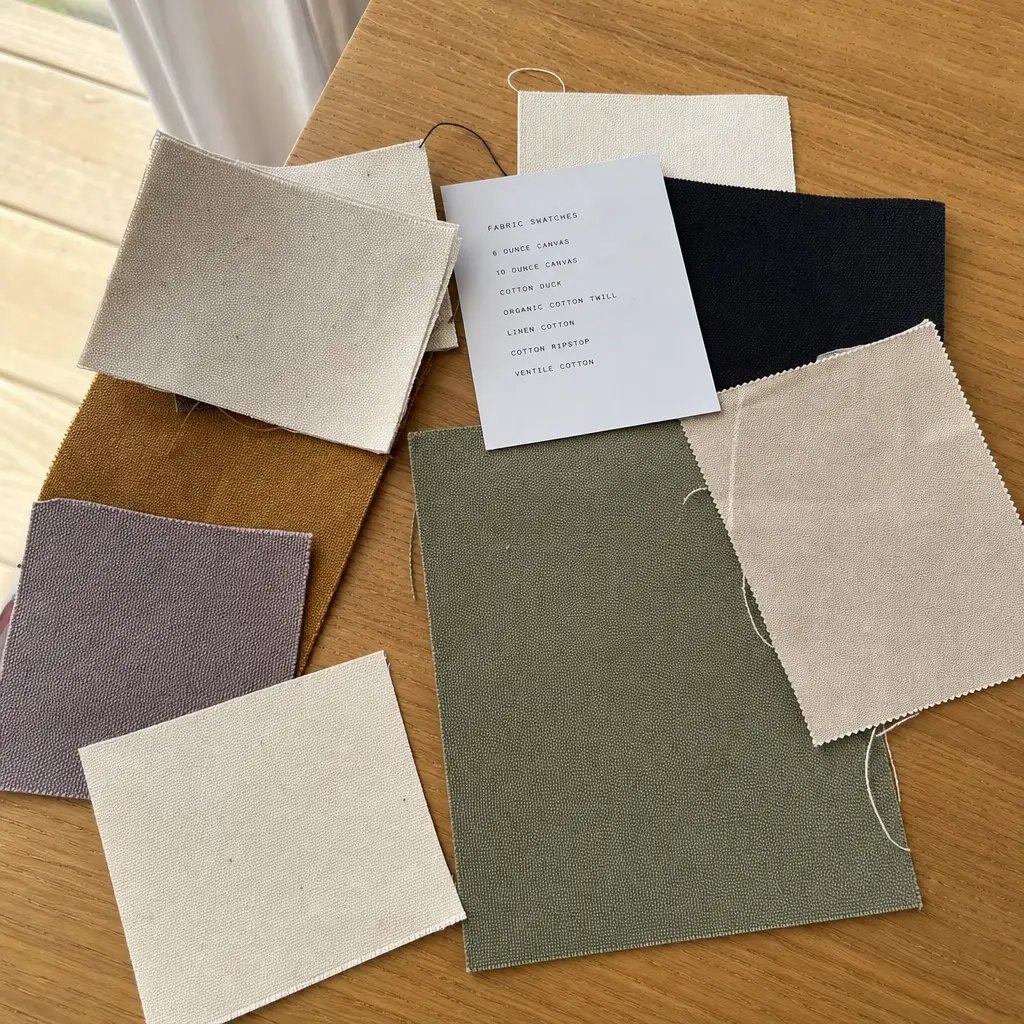
The RFQ should avoid vague phrases such as natural jute tote or premium burlap bag without measurable details. State the fabric weight range, whether lamination is required or prohibited, the expected hand feel, and whether the logo panel needs a smoother zone. Request fabric photos from current stock, not only catalog images. For larger orders, a swatch or pre-production sample should be approved under realistic lighting because jute shade can vary from batch to batch. If all bags need to match across multiple booth locations, shade tolerance should be discussed before cutting starts.
- Use lighter jute only when the bag is a simple giveaway and is not expected to carry heavy catalogs or samples.
- Use mid-weight jute when the tote must hold shape for booth display, photo use, or a more substantial hand feel.
- Use laminated jute when stiffness and moisture resistance matter more than a soft natural texture.
- Request current-stock fabric photos, close-ups of weave, and sample hand feel because shade, slub level, and rigidity can change by batch.
Match Print Method To Jute Texture
Screen printing is usually the practical starting point for jute tote bags with one-color or two-color trade show logos. It works well for bold marks, large sponsor names, simple icons, and campaign artwork with clean edges. The limitation is the uneven surface. Jute yarns create high and low points, so small reverse text, thin strokes, gradients, and tight registration can break, blur, or fill in. Artwork that looks clean on a PDF may lose definition once printed over coarse fiber.
Heat transfer can reproduce more colors and sharper details, which may be useful for multi-color sponsor layouts or artwork that cannot be separated cleanly. It may also look less integrated with the natural fabric because the transfer sits on top of the surface. Buyers should ask about peeling, rubbing, and edge durability even when the tote is not intended for washing. Embroidery is possible for selected designs, but dense stitching can distort jute panels and usually increases cost and lead time.
Procurement should require a print strike-off on actual jute at actual logo size before mass production. A digital mockup is not enough because it does not show broken lines, ink absorption, slub interference, or color shift on natural fiber. For multi-sponsor trade show bags, agree on minimum sponsor logo size, safe spacing, and whether very small legal copy will be omitted or moved to a tag. This avoids the late-stage argument where marketing expects perfect detail and the factory is trying to print artwork that the material cannot support.
- For screen print, keep strokes thick enough to survive the weave and avoid tiny reversed lettering.
- For heat transfer, confirm rub resistance, peeling expectations, edge durability, and whether the transfer changes the bag's hand feel.
- For multi-sponsor artwork, agree on minimum logo size, spacing, and acceptable simplification before screens or transfers are made.
- Define print position tolerance, often plus or minus 5 mm to 10 mm depending on panel size and factory process.
Plan MOQ Around Real Cost Drivers
MOQ for jute tote bags is not only a factory preference. It comes from material purchasing, cutting efficiency, print setup, labor batching, label work, carton packing, and export handling. A simple stock-size jute tote with one-color print may be practical from 500 to 1,000 pieces. A custom size, dyed cotton handle, colored jute panel, private woven label, hang tag, custom inner packing, or special carton mark can push the workable MOQ higher because the factory must buy and process more inputs specifically for the order.
Trade show buyers often ask for 300 bags because the booth only needs 250. That may be possible, but the per-piece cost can look high once sampling, printing setup, carton inefficiency, and export documents are included. A more useful approach is to request price breaks at 500, 1,000, 2,500, and 5,000 pieces using the same specification and carton plan. This shows whether the savings are from production efficiency, better material purchasing, or simply spreading fixed charges.
MOQ should also be reviewed by component. The factory may be able to sew 500 jute bags but require a higher minimum for dyed handles or a private label. A low MOQ quote can hide substitutions: lower fabric weight, narrower handle, simplified stitching, weaker carton, or looser inspection. Ask the supplier to identify which elements are stock and which are custom. If the order is for a distributor or a multi-show calendar, consider one neutral tote construction with separate logo runs. That keeps procurement leverage while still allowing event-specific branding.
- Separate MOQ for bag body, print, custom handle, private label, swing tag, and custom carton mark.
- Request price breaks with the same technical specification so the comparison remains clean.
- Watch for low MOQ quotes that quietly change fabric weight, handle quality, print method, or carton strength.
- For repeated programs, consider a standard bag size and construction with different logo runs to improve purchasing efficiency.
Build The Carton Plan Before Approval
A workable carton plan states pieces per inner bundle, pieces per master carton, carton dimensions, carton board grade, net weight, gross weight, carton marks, and pallet requirements. For a medium jute tote, 100 to 150 pieces per master carton may be realistic, depending on gusset depth, handle bulk, lamination, and folding method. Some buyers push for more pieces per carton to reduce carton count, but overpacking can create bulged cartons, crushed edges, and heavy boxes that are unpleasant or unsafe for event staff to move.
The carton should protect the bag and remain manageable. Many importers prefer keeping gross weight around 18 to 22 kg for manual handling, although the actual limit depends on warehouse rules, venue requirements, and local labor practices. A 5-ply export carton is often suitable for sea freight and stacked warehouse storage. For oversized bags, heavy laminated jute, long inland transport, or direct-to-venue delivery, a stronger carton or palletization may be worth the added cost. Carton savings are minor compared with the cost of damaged or unusable event goods.
Inner packing needs the same attention. Individual polybags keep bags clean and can support retail presentation, but they add labor, plastic, booth waste, and carton volume. Bundles of 25 or 50 pieces are faster to count and unpack for trade show teams. Belly bands can help keep bundles organized without wrapping every bag. Whatever format is chosen, approve it before bulk packing starts. A photo of the folded bag in the carton tells procurement more than a line item that simply says export carton.
- Approve a folded sample photo showing how handles, gussets, and printed panels sit inside the carton.
- Define whether each bag is loose, bundled, belly-banded, individually polybagged, or separated by paper.
- Use clear carton marks: item code, logo version, quantity, carton number, gross weight, net weight, and destination if needed.
- For venue delivery, confirm receiving labels, advance warehouse rules, and delivery windows before cartons leave the factory.
Control Landed Cost, Not Only FOB
A low FOB price can lose its advantage when carton cube is high. Jute totes are relatively light but bulky, so air freight, courier shipments, and less-than-container shipments can be driven by dimensional weight rather than actual weight. Even ocean freight can become less attractive when a design reduces carton density or requires too many loose cartons. Procurement should compare landed cost per usable bag: unit price, carton count, total CBM, inland freight, export charges, duties, inspection, warehouse handling, storage, and expected damage allowance.
The key is to ask for freight-relevant data before the PO is placed. Estimated carton dimensions and gross weight are enough to run a first comparison. Once the pre-production sample and folding method are approved, the factory should update the carton plan and total CBM. If the updated numbers change the freight budget materially, procurement still has time to adjust bag size, packing count, or delivery mode. Waiting until production is finished removes most of the useful options.
For urgent trade show orders, air freight may be unavoidable. In that case, every bulky design choice matters: oversized panels, individual polybags, padded handles, and deep gussets all affect chargeable weight. However, protection should not be removed blindly. Jute can absorb odor and moisture, and printed panels can rub against each other when packed tightly. A balanced landed-cost plan protects the bags while keeping the shipment compact enough to meet budget and schedule.
- Request total CBM, gross weight, carton count, and estimated carton dimensions at quotation stage.
- Compare FOB unit price together with pieces per carton, cartons per order, and delivery route.
- For air shipments, ask the forwarder to estimate chargeable weight using the relevant dimensional factor.
- For sea shipments, decide whether palletization improves damage protection enough to justify the extra volume.
Use Samples To Freeze Risk
The sample should prove more than shape and logo appearance. For jute tote bags used at trade shows, the sample should confirm fabric hand feel, odor level, edge finishing, handle comfort, print clarity, folding behavior, and packing method. A beautiful single sample that cannot be packed efficiently is not a complete approval sample. Ask the factory to show the proposed fold, inner bundle, and master carton arrangement before final signoff.
Sample approval should include written tolerances. Jute is a natural material, so small shade variation, minor slubs, and texture differences are normal. The procurement question is not whether the material can look perfectly uniform; it is what level of variation is acceptable for the brand and use case. A retailer gift-with-purchase may need cleaner panels than a simple booth giveaway. If the brand team expects a crisp retail look, the factory needs that standard before cutting. If the program is a practical giveaway, allowing normal jute character can reduce unnecessary rejection.
Use the sample like the event team will use the bag. Load it with catalogs, brochures, samples, or bottles. Carry it by hand and shoulder if shoulder use is part of the claim. Inspect the handle drop, grip comfort, seam strain, bottom shape, and whether the logo remains visible when the bag is filled. Seal the sample in its normal packing format for a day and then check odor. Jute, ink, lamination, and storage conditions can smell different after being enclosed.
- Approve actual material, not substitute burlap, a previous customer's sample, or a similar stock bag.
- Check logo readability from normal booth distance, not only close-up desk inspection.
- Load the sample with expected contents and carry it by hand and shoulder if shoulder use is claimed.
- Review the folded sample and packing photo because carton performance is part of sample approval.
Set QC Thresholds For Production
Jute bags need inspection standards that match the material. A rigid retail handbag standard may be unrealistic for coarse natural fiber, but a loose giveaway standard can still create brand damage. The inspection plan should cover fabric defects, finished size, handle drop, stitching, handle strength, print position, print durability, cleanliness, odor, packing count, and carton condition. For trade show orders, correct logo version and carton count are especially important because mistakes may not be discovered until staff are setting up the booth.
Inspection should happen before the shipment leaves the factory. Random inspection can include measuring finished size, checking handle drop, loading several bags, rubbing the printed area with dry and slightly damp cloth, opening cartons to verify count, and checking whether printed panels are rubbing against hardware, handles, or rough surfaces. Pre-shipment photos are useful for visibility, but they do not replace acceptance criteria. Procurement should define what is a minor natural-material variation and what is a rejectable defect.
Carton QC belongs in the same inspection. Check board strength, carton dimensions, carton weight, tape condition, marks, inner bundle count, and whether the carton is bulging. If bags are palletized, review pallet height, stretch wrap, corner protection, and label visibility. A shipment can pass bag inspection and still fail operationally if the cartons arrive crushed, mislabeled, or too heavy for the venue team. The carton is the last handling unit before the trade show floor, so it deserves inspection discipline.
- Finished size: commonly plus or minus 1 cm for body measurements unless tighter tolerance is agreed.
- Print placement: define center line and allowable movement, often plus or minus 5 mm to 10 mm.
- Stitching: no broken handle reinforcement, skipped stitches, open seams, or loose thread clusters.
- Packing: carton piece count must match the packing list, and mixed logo versions should be separated and clearly marked.
Protect The Event Schedule
Trade show orders have a hard deadline, so the production calendar must be built backward from the in-hand date. The buyer needs time for artwork adjustment, print strike-off, sample making, sample shipping, internal approval, bulk material preparation, cutting, printing, sewing, packing, inspection, export booking, customs clearance, inland transport, and venue receiving. A lead time that works for normal warehouse replenishment may fail for direct-to-event delivery if the venue has strict receiving dates or show contractor rules.
Risk increases around holidays, peak shipping periods, and last-minute artwork changes. A logo color adjustment may seem minor to a marketing team, but it can delay screen making, require a new strike-off, or restart approval. A change in packing format can also affect carton dimensions and freight booking. The RFQ should state the event date, required in-hand date, destination type, and latest acceptable ship date. The factory and forwarder can then advise whether sea freight, air freight, courier, or split shipment is realistic.
Schedule planning should include a recovery path. If full quantity cannot arrive by sea in time, a split shipment may send the minimum show quantity by air and the balance by sea. If the shipment goes to an advance warehouse, labels and delivery windows should be confirmed before cartons are printed. If it goes to a distributor, the distributor may need carton dimensions and counts for inbound booking. A clear carton plan reduces schedule risk because the shipment is easier to book, receive, count, and move.
- Lock artwork before sample approval; artwork changes after approval should trigger a revised schedule and possibly a new strike-off.
- Build buffer for sample transit and approval, especially when multiple brand stakeholders must sign off.
- Use split shipment only when the first quantity can support the show and the balance can arrive later without disrupting the program.
- For direct venue delivery, align carton labels, pallet labels, and delivery paperwork with the show contractor's receiving instructions.
Specification comparison for buyers
| Spec decision | Recommended option | When it fits | Buyer risk to check |
|---|---|---|---|
| Jute fabric weight | 13 to 15 oz jute or about 305 to 420 GSM depending on weave density and supplier measurement method | Most exhibitor giveaways that need a natural look, enough stiffness for booth display, and reasonable carton density | A loose weave can look thin even at higher nominal GSM; request close-up fabric photos, sample hand feel, and panel rigidity before approving. |
| Bag size for booth handout | Medium tote around 35 x 40 x 15 cm or 38 x 42 x 15 cm with side and bottom gusset | Catalogs, small samples, brochures, conference kits, and lightweight retail items carried during a show day | Oversized panels and deep gussets increase carton CBM quickly; compare landed cost per usable bag, not only FOB unit price. |
| Handle construction | Cotton webbing or padded jute handle, 2.5 to 3.8 cm wide, with cross stitch or box-and-cross reinforcement | Shoulder or hand carry where comfort and perceived value matter more than the cheapest handle option | Handle drop must match real use; a bag that passes a static load test can still disappoint if the shoulder drop is too short. |
| Print method | Screen print for bold one-color or two-color logos; heat transfer only when artwork requires color detail that screen printing cannot hold | Trade show logos, sponsor marks, campaign graphics, and exhibitor branding on textured jute panels | Jute breaks fine lines and small reverse text; approve a strike-off at actual size on the actual fabric before bulk printing. |
| Inner lamination | Unlaminated for natural hand feel; laminated when moisture resistance, stiffness, or upright display shape is a priority | Eco-positioned giveaways, retailer gift-with-purchase, welcome kits, or sample bags that need more structure | Lamination changes hand feel, odor profile, carton bulk, and sustainability language; define it in the RFQ before comparing quotes. |
| Packing format | Flat-packed in inner bundles of 25 or 50 pieces; 100 to 150 pieces per master carton for many medium totes | Orders where booth teams need fast unpacking, cartons must remain liftable, and receiving staff need clean counts | Cartons above roughly 18 to 22 kg are harder to handle at venues and more likely to crush lower cartons in transit or storage. |
| Carton strength | 5-ply export carton for most sea freight and warehouse storage; stronger carton or palletization for heavy, laminated, or oversized bags | International shipments, distributor warehousing, stacked storage, and direct-to-event delivery | Weak cartons may pass factory packing but collapse during trucking, especially when jute has absorbed moisture. |
| Carton labeling | Printed or sticker carton marks with item code, logo version, quantity, carton number, gross weight, net weight, and destination | Multi-booth programs, distributor shipments, show contractor receiving, and orders split across several locations | Unclear carton marks create sorting errors at the venue; mixed logo versions should be separated and visibly marked. |
| MOQ logic | 500 to 1,000 pieces for simple stock-size jute totes with one-color print; higher MOQ for custom dyed handles, private labels, or special sizes | Exhibitor orders with fixed event dates, moderate customization, and a need for predictable sampling and packing | A very low MOQ can carry hidden setup, sample, carton, and freight inefficiencies that disappear at the next price break. |
Buyer checklist before sampling
- Define finished bag height, width, side gusset, bottom gusset, handle drop, handle width, fabric weight or GSM, lamination choice, and target carton weight before requesting price.
- Provide artwork as vector files with Pantone references, logo size, print position, and the allowed printable area on the textured jute panel.
- State whether the bags are for shoulder carry, hand carry, catalogs, sample kits, retail resale, or booth giveaways; the load test should match the real contents.
- Request a pre-production sample using actual fabric, actual handle, actual print method, actual label or tag, and the proposed folding and packing method.
- Ask for estimated carton dimensions, pieces per carton, gross weight, net weight, total carton count, and total CBM with the first quotation.
- Approve carton board grade, carton marks, inner bundle count, polybag or no-polybag decision, palletization, and destination labeling before mass production.
- Compare quotes using landed cost per usable bag, including FOB price, total CBM, inland trucking, export charges, duties, inspection, storage, and damage risk.
- Set acceptance tolerances for size, print position, color variance, loose fibers, odor, stains, broken stitches, handle strength, and carton damage.
- Confirm whether the shipment goes to a warehouse, distributor, advanced warehouse, show contractor, or direct venue dock because each route can require different labels and delivery windows.
- Build schedule buffer for artwork approval, print strike-off, sample shipping, holiday periods, inspection, vessel changes, customs clearance, and venue receiving deadlines.
Factory quote questions to send
- What jute weight, weave density, yarn character, and lamination option are included in this quote, and can you send close-up photos from current production stock?
- What is the exact finished bag height, width, side gusset, bottom gusset, handle drop, handle material, handle width, and reinforcement stitch type?
- Which print method is quoted, how many colors are included, what is the maximum print area, and what minimum line thickness is safe on this jute fabric?
- Will the sample use the same fabric, handle, label, print process, and folding method as bulk production, or are any substitute materials being used?
- What MOQ applies separately to the bag body, handle material, logo printing, private label, swing tag, carton mark, and pallet packing?
- How many pieces are packed per inner bundle and per master carton, and what are the estimated carton dimensions, net weight, gross weight, carton count, and total CBM?
- What carton grade will be used for export, and can you provide a carton sample photo or carton specification before bulk packing starts?
- Can cartons be labeled by booth, destination, SKU, logo version, or delivery sequence if the shipment goes directly to a trade show venue or distributor warehouse?
- How many production days are needed after sample approval and deposit, and what is the latest artwork lock date to protect the event delivery date?
- Can you provide pre-shipment photos showing fabric, stitching, print, inner packing, carton marks, random carton weight checks, and loaded carton condition?
Quality-control points to confirm
- Finished size tolerance should normally stay within plus or minus 1 cm for common jute totes unless a tighter retail tolerance is agreed in writing.
- Fabric should be free from oil stains, mildew odor, excessive loose fiber, large holes, severe shade mismatch, and heavy slubs across the main logo area.
- Handle attachment should use consistent reinforcement stitching with no skipped stitches, loose thread clusters, weak bar-tack areas, or uneven handle drop between left and right sides.
- Print should be centered within the approved tolerance, with no major ink bleeding, ghosting, cracking, peeling, incorrect color, or unreadable sponsor marks.
- Load testing should reflect intended use, such as 5 to 8 kg static hanging for basic giveaways or a higher agreed test when bags carry catalogs, boxed samples, or bottles.
- Rub testing should check whether ink transfers under dry and slightly damp cloth contact, especially when bags are packed face-to-face inside bundles.
- Odor checks should be performed after bags have been closed in their normal packing format because jute, lamination, and printing ink can smell stronger after sealing.
- Cartons should match approved dimensions, board grade, quantity, carton marks, net weight, and gross weight, with dry interiors, intact tape, and no crushed corners before shipment.