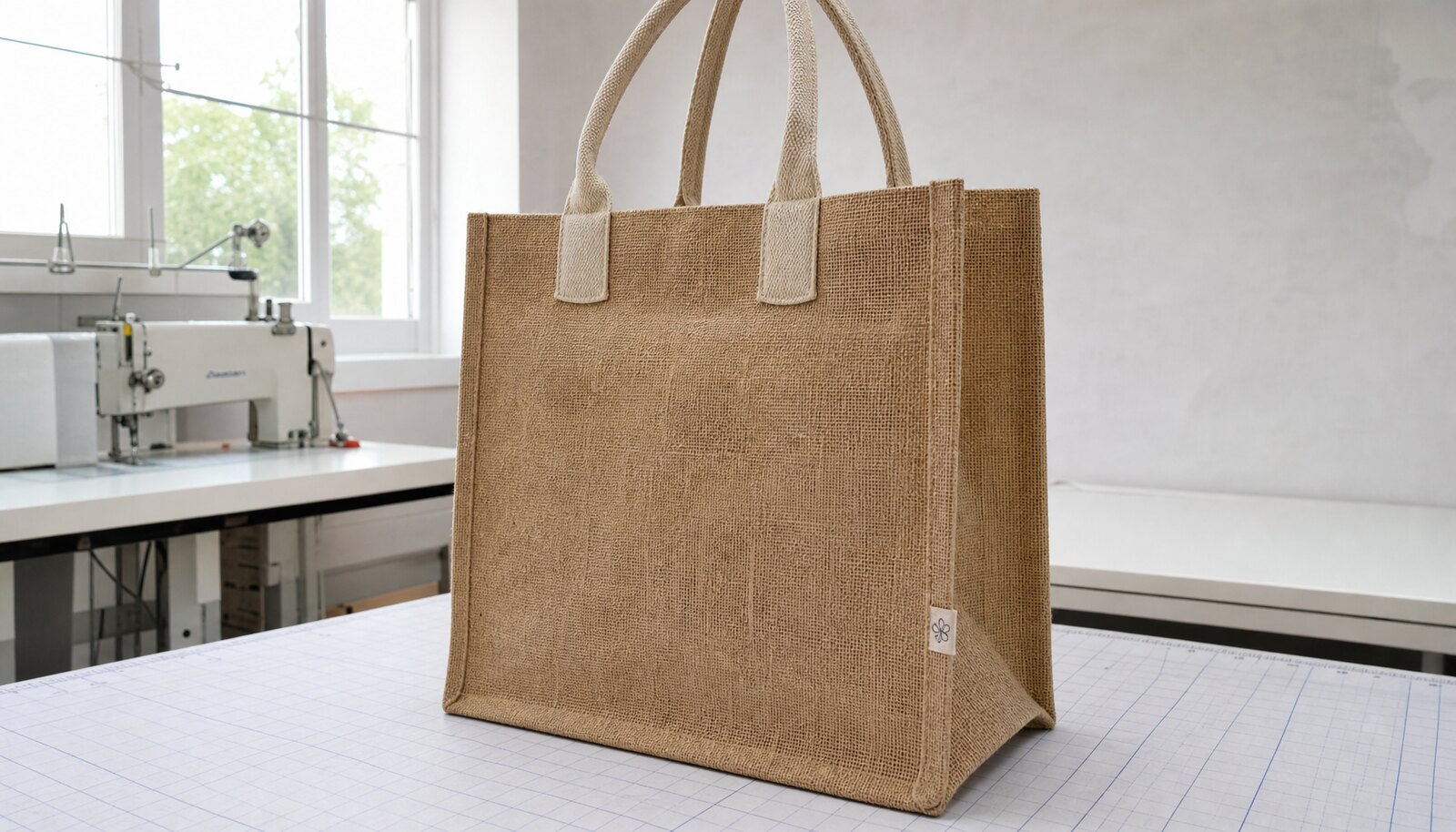
Why gift shop buyers need a compliance checklist before quoting jute totes
Gift shops buy jute tote bags for presentation, resale, gifting, and carry convenience, but they often discover the sourcing risk only after the first sample arrives. One supplier may quote a rustic woven bag with cotton handles, another may quote laminated jute with a stiffer body, and a third may offer a price that only works if the buyer accepts weaker stitching or looser packing. That is why a jute tote bags supplier compliance checklist for gift shops is not paperwork for its own sake. It is a way to make competing quotes comparable.
For procurement teams, brand owners, importers, and retail buyers, the real task is to turn a visual product idea into a measurable purchase specification. The supplier needs to know what construction is acceptable, what the bag must carry, how it will be printed, whether it must arrive shelf-ready, and how much inspection evidence is expected. If those points stay vague, the quote may look attractive but the landed result can miss the store concept, the selling price, or the margin target.
A good checklist also reduces internal disagreement. Marketing may care most about appearance, stores may care about durability, and procurement may care about cost and lead time. A written compliance checklist aligns those priorities before the PO is issued, so the buyer is not forced to debate every detail after production has already started.
- Compare suppliers on specification control, not just unit price.
- Treat sample approval as a formal release gate, not a courtesy step.
- Use the checklist to align design, packing, inspection, and freight assumptions before PO release.
Define the bag construction first: woven jute, laminated jute, or blend
The fastest way to get unreliable quotes is to write only “natural jute tote bag” in the RFQ. That phrase leaves too much room for interpretation. For gift shop programs, the buyer usually needs to choose between plain woven jute, laminated jute, or a jute-blend construction. Each version behaves differently in print, stiffness, shelf appearance, odor, and shipping efficiency.
Plain woven jute has the most natural texture and often suits rustic gift concepts, souvenir shops, and eco-themed stores. Laminated jute is more structured and typically gives a cleaner outer appearance, which can help when the bag is meant to look more retail-ready. Jute-cotton or jute-poly blend constructions may improve print performance or reduce the coarse feel, but they should be specified carefully because the hand feel and brand impression will change.
Buyers should avoid vague descriptors like “thick,” “premium,” or “strong” unless those words are tied to measurable standards. Ask the supplier to state the fabric weight, weave density, lining or lamination detail, and any known tolerance for raw-material variation. If the bag must stand upright on a shelf, say so. If the bag is mainly for carrying gift sets, say that too. Otherwise the supplier may optimize for the wrong priority.
The right construction choice is also tied to how the bags will be sold. A gift shop that places the tote near a checkout counter may need a cleaner, more structured bag than a shop that uses the bag as a simple add-on. Buyers who know the retail setting can avoid paying for features the customer will never notice while still protecting the features that drive conversion.
- State construction in the RFQ: woven, laminated, or blend.
- Add a measurable weight or density target instead of “premium” or “thick.”
- Write the retail use case: shelf display, gift carry, souvenir bundle, or heavy load support.
Comparison table: supplier routes, compliance load, and commercial trade-offs
A supplier comparison for jute tote bags should not stop at unit price. Gift shop buyers need to understand how much control each supplier route offers over material consistency, packing discipline, traceability, and the speed of corrective action. The table below is designed to help a buyer separate the quote that looks cheap from the quote that will actually arrive in a usable retail condition.
If one supplier is a direct factory and another is a trading company, the buyer should not assume the lower quote is the better route. The direct factory may give clearer production accountability and better repeat-order stability. A trading company may still be the right choice if the order needs consolidation or multi-item support, but then the buyer should ask who owns QC, who approves substitutions, and who signs the final packing release.
Handle, reinforcement, and print details that determine retail quality
For gift shop buyers, handles often decide whether the customer keeps the bag or treats it as disposable packaging. Cotton webbing handles are a common choice because they feel comfortable in the hand and stitch well to jute. But the material alone is not enough. The buyer should define handle width, color, length, and reinforcement method. A bag that carries light souvenirs may not need the same reinforcement as a bag that must hold books, candles, or boxed gift sets.
Ask the supplier to show the exact stitch pattern at the handle attachment point. Box-X stitching or bar-tack reinforcement is easier to audit than vague phrases like “double stitched” or “strong sewing.” If the handles are dyed, color consistency matters too; a slightly off-white natural handle may be fine for one brand, but it can look mismatched on a more polished retail line.
Print method should match the artwork and the expected life of the bag. Screen print is usually the cleanest option for simple logos, flat artwork, and repeat orders because it is easier to control on coarse jute. Heat transfer can work for short runs or more detailed art, but buyers should ask about edge lift, rub resistance, and how the print will age after handling. If the brand wants a more finished retail look, a woven label, side label, or sewn patch may create a better result than forcing a complex design onto an uneven jute surface.
The best procurement practice is to ask the supplier to quote the same bag with and without a print upgrade. That side-by-side quote helps the buyer see what the decoration actually costs and whether the retail gain justifies the added expense.
- Use screen print for simple logos and repeat orders where durability matters.
- Use woven labels or sewn patches when a cleaner retail presentation is more important than large graphic coverage.
- Specify handle stitch pattern and reinforcement, not just handle material.
What belongs in the supplier compliance file
The compliance file should function as a production control record, not just a folder of PDFs. For jute tote bags, the buyer should request the material spec sheet, artwork proof, approved sample photos, packing standard, carton data, and the supplier’s QC plan. If the supplier cannot produce these items clearly, the risk usually shows up later as inconsistent bulk goods, packing mistakes, or disputes about what was actually agreed.
The file should also show revision history. If the first sample was a plain woven body and the approved version became laminated jute, that change needs to be documented with a new approval date. If the handle length changed for ergonomic reasons, that should be visible too. This matters because gift shop assortments often get reordered by a different team months later. Without a clear record, the supplier may revert to an old version that no one notices until the store receives the wrong bag.
The buyer should also check whether the supplier can identify approved material sources or at least the substitution rules. Some raw-material variation is normal in natural fibers, but it should be bounded. A responsible supplier can explain which differences are acceptable, which require buyer approval, and which require a new sample round. That is the difference between controlled variation and silent drift.
- Material spec sheet with fabric construction, weight target, and handle details.
- Artwork proof with size, placement, and Pantone references when color matters.
- Approved sample record with date, signer, and revision notes.
- Packing spec with carton size, units per carton, and outer marks.
- QC plan or inspection summary that shows how the factory checks sewing, print, and packing.
Sample approval should test the risks, not just the appearance
A good sample is not the one that looks nice in a photo. It is the one that proves the bag can survive the real use case. For gift shop buyers, that means checking fabric tone, stiffness, handle balance, print clarity, seam alignment, odor, and how the bag behaves when loaded with actual retail items. A sample that stands upright in an empty product shot may still fail if the handles twist under load or the base collapses when the customer carries boxed gifts.
The best control point is usually pre-production approval, after the supplier has confirmed the material and before bulk cutting starts. That is the moment when buyers still have leverage to correct shade, handle length, stitch density, or print placement without wasting a full batch of materials. If the supplier says “bulk will be the same as sample” but cannot identify the exact fabric roll, handle batch, or print setup used for the sample, treat that as a process gap.
Gift shop buyers should also make the sample test mimic the selling environment. If the bag is meant to hold candles, books, or small boxed gifts, put those items into the sample. If the bag is meant to sit at checkout as an impulse item, check whether it keeps its shape in a display stack. This is a practical test, not a laboratory one, but it often reveals problems earlier than a formal inspection would.
- Load-test the sample with real retail goods, not only paper inserts.
- Compare left and right handle symmetry and stitch finish.
- Check odor, stiffness, and opening shape after unpacking and after a short rest period.
- Keep a signed golden sample with a revision date and a brief note on acceptable variation.
MOQ logic: how to reduce variant cost without limiting the gift shop assortment
MOQ for jute tote bags is usually driven by fabric sourcing, print setup, and packing configuration. The more variants a buyer asks for, the more setup time and material yield gets consumed. That is why the cheapest way to buy is often to standardize the bag body and change only the artwork or label for different programs. If the gift shop wants a winter gift bag, a tourist souvenir bag, and a brand-event bag, the buyer should first ask whether those versions can share the same body size and handle spec.
A single body design with multiple prints is usually easier to manage than multiple body sizes with multiple handles. It lowers the chance of slow-moving inventory and makes reorder planning simpler. The buyer can still create visual variety through tag changes, insert cards, or print variations, but the base construction remains stable. That can help the quote stay cleaner and reduce arguments over whether one design is “too close” to another to be worth a separate MOQ.
Before asking for pricing, the buyer should identify which features are permanent and which features are seasonal. Permanent features are body size, handle width, and carton plan. Seasonal features are print artwork, hangtag copy, and promotional inserts. Separating those two groups is one of the simplest ways to keep procurement manageable.
A supplier should also be asked whether MOQ changes when color changes, handle color changes, or print colors increase. Some suppliers absorb small changes into standard production. Others treat every change as a new setup. If the buyer does not ask in advance, the quote comparison becomes misleading.
- Reduce the number of base variants before requesting quotes.
- Keep body size and handle spec stable; vary only artwork or inserts when possible.
- Ask the supplier how MOQ changes with print colors, handle color, and packing changes.
Packing, labeling, and carton data can make or break the landed cost
Packing is where many otherwise acceptable jute tote bags become a margin problem. Jute can trap dust, pick up odor, and compress poorly if packed carelessly. If the retail channel needs shelf-ready goods, the supplier may need individual bagging, barcode stickers, hangtags, or warning labels. If the order goes to a distribution center, a simpler bundle pack may be the better choice. The buyer should not leave this decision to the supplier’s default habit.
Carton data matters more than many first-time buyers expect. Carton dimensions, gross weight, and units per carton drive freight cost, warehouse handling, and damage risk. A bag that is light in the hand can still be expensive in transit if the cartons are oversized or poorly stacked. That is why a quote should include the carton plan alongside the unit price. Without it, the buyer cannot estimate the landed cost accurately.
Packing details should also reflect the sales channel. Gift shops that sell directly to walk-in customers may want cleaner retail packing. Wholesalers or distributors may prefer bulk inner packs to reduce labor. In either case, the packing standard should be written into the PO. If the supplier decides packing at the last minute, the buyer loses control over the final presentation and the receiving process.
For branded programs, carton marks should be standardized. SKU, color, quantity, carton number, and destination should be visible and consistent. Clear carton markings help avoid mix-ups, especially when several tote designs are shipped together for one seasonal launch.
- Require carton size, units per carton, gross weight, and estimated CBM in every quote.
- Specify retail packing only when the channel actually needs it.
- Make outer carton marks consistent with SKU, color, design, and carton count.
Lead time planning: the common slip points and how to prevent them
Lead time for jute tote bags usually moves through a chain of small steps: sample approval, material reservation, cutting, printing, sewing, finishing, packing, inspection, and shipping booking. Delays often come from late artwork, handle changes, or unclear packing instructions. A supplier that looks fast in the quote stage can still slip if the buyer keeps changing details after the sample has been approved.
A good schedule separates sample lead time from bulk lead time. Some suppliers quote a total production window that sounds acceptable, but the buyer still needs to know how long each stage takes and what depends on buyer approval. This matters especially for seasonal gift shop launches, where a few days of delay can miss a holiday window or a store refresh date.
The best practice is to build a modest buffer into the plan and to define approval deadlines on the buyer side. If marketing is slow to approve artwork, that delay should be visible in the schedule instead of being blamed on the factory later. If the buyer wants a firm delivery date, the supplier should be asked what must be frozen at each stage to protect that date.
Suppliers should also be asked whether production is batch-based or continuous. A batch-based line can be efficient for a stable repeat order but less flexible for multiple small versions. Continuous production may help with mixed runs but may introduce more chance for variation if the controls are weak. Buyers should understand the production rhythm before they commit to a retail launch.
For gift shops, the practical question is not only “How fast can you make it?” but “What events can move the delivery date?” That is the real compliance question because a late bag can disrupt a launch even if the product itself is acceptable.
- Request lead time by stage, not only one combined delivery date.
- Add a buffer for artwork correction, sample changes, and freight booking.
- Treat material confirmation and artwork approval as formal milestones.
How to compare landed cost instead of just comparing bag price
The unit price for a jute tote is only one piece of the landed cost. Buyers also need to include sample charges, setup charges, packing labor, carton cost, labeling, inland handling, inspection, and freight. A low unit price can hide higher packaging costs or oversized cartons. In practice, the cheapest quote is often not the cheapest landed result.
A cleaner comparison method is to ask each supplier to quote the same spec, the same packing plan, and the same artwork scope. Then compare the cost per saleable unit, not just the factory ex-works price. If one supplier gives a lower bag price but requires extra fees for every print color, while another includes those steps in the main price, the second quote may be better value even if the headline number is higher.
Gift shop buyers should also compare the operational cost of handling. A retail-ready supplier that can pack, barcode, and carton-mark the goods correctly may save hours of receiving work. That labor saving can be worth more than a small price gap on the bags themselves. Procurement teams often focus on purchase price because it is visible in the PO. But the real margin is protected by accurate packing, fewer defects, and fewer store-level surprises.
The safest way to compare suppliers is to normalize the quote: same bag body, same handle spec, same print method, same packing format, same carton size, and same delivery assumption. Without that discipline, the buyer is comparing different products and pretending they are the same.
- Include setup, packing, inspection, and freight assumptions in every quote comparison.
- Compare quote to quote on the same carton plan and same artwork scope.
- Watch for hidden changes in fabric grade or handle reinforcement when price is unusually low.
Specification comparison for buyers
| Supplier option | What to verify | Commercial advantage | Buyer risk to control |
|---|---|---|---|
| Direct sewing factory | jute roll photos, lamination sample, odor-control process, handle pull evidence, and pre-shipment carton condition photos | Better sample-to-bulk control and faster production feedback | May be weaker on export paperwork or branded packing unless checked early |
| Trading company | Factory name, production photos, trim-source proof, and who owns QC decisions | Can coordinate small mixed orders and extra services | Markup can hide real factory capability and slow defect decisions |
| Specialized bag workshop | handle stitching, side gusset, lamination edge control, inner seam cover, and fiber shedding tolerance | More practical for detailed construction, trims, and repeat programs | Capacity may be limited during peak seasons |
| Low-price general supplier | laminated or unlaminated jute, cotton-jute blend, inner coating, odor control, yarn thickness, and color shade variation | Useful for simple promotional runs with loose specs | Material downgrades, weak packing, and vague inspection scope can erase savings |
| Retail-ready supplier | airing time, moisture absorber, carton liner, bundle wrap, odor separation, and warehouse ventilation before loading | Can handle labels, SKU separation, carton marks, and receiving rules | Higher unit cost must be compared against reduced warehouse work |
| Compliance-focused supplier | Fabric records, labeling review, test plan, and production traceability | Safer for retail programs and repeat brand orders | Documentation claims need evidence, not only sales language |
| Local sample room plus bulk factory | Signed sample, bulk factory handoff, first-piece photos, and deviation owner | Good for complex branding before large production | Sample room quality may not match bulk line unless handoff is controlled |
Buyer checklist before sampling
- Confirm the exact jute construction: woven jute, laminated jute, or jute-cotton blend, and write the acceptable weight, weave density, or thickness target in the RFQ.
- Lock handle specification in writing: material, width, color, length, stitch pattern, attachment position, and minimum reinforcement at each end.
- Define print method, artwork file format, Pantone targets, print area, and placement tolerance before sampling starts.
- Require samples or photos of inner packing, carton marking, and outer carton condition for your retail channel or distribution center.
- Request lead time by stage: sample lead time, pre-production approval time, bulk production time, inspection time, and shipping-booking buffer.
- State your acceptance criteria for stitching, stains, odor, size tolerance, print defects, and carton count accuracy.
- Ask for carton dimensions, gross weight, and estimated CBM so freight can be checked before PO confirmation.
- Keep one approved golden sample with a signed spec sheet, revision number, and date so reorders do not drift.
- Ask the supplier to name every approved material source or substitution rule, especially for handles, lining, and printed components.
- Request final inspection photos or a third-party inspection option if the order is seasonal, branded, or tied to a store launch date.
Factory quote questions to send
- What exact jute construction are you quoting, and can you state the fabric weight, weave density, or lamination detail?
- What is the handle material, width, stitch pattern, and reinforcement method at the attachment points?
- Which print method are you pricing, what is the maximum logo area, and how many colors are included in the quoted price?
- What are the MOQ, sample charge, and any screen, plate, or setup costs for this design?
- What is the production lead time after sample approval, and how does it change if artwork, handles, or packing change?
- Can you provide carton dimensions, units per carton, gross weight, and estimated CBM for the quoted quantity?
- What QC checks do you perform in-line and at final inspection, and can you share photos or a report before shipment?
- What is included in packing: individual bagging, hangtag insertion, barcode sticker, warning label, or carton marking?
- What is your defect policy for stitching, staining, odor, print misalignment, and quantity short-shipment?
- If we reorder, what specification remains fixed and what may vary because of raw material differences?
Quality-control points to confirm
- Fabric construction matches the approved sample and RFQ, with no unapproved downgrade in weight, weave, lamination, or blend.
- Handle stitching is reinforced at every load point, with no loose threads, skipped stitches, broken bar-tacks, or uneven seam tension.
- Printed artwork stays within the agreed placement tolerance and does not crack, smear, peel, or rub off in normal handling.
- Bag dimensions remain within the agreed tolerance for height, width, gusset depth, and handle drop across the lot.
- No oil stains, mildew odor, dampness, foreign fibers, or visible contamination are present on finished bags.
- Carton marks, SKU labels, and unit counts match the packing list and do not mix sizes, colors, or print versions.
- Retail packing items, if used, are inserted cleanly and consistently across cartons, with no damage to the bag surface.
- Golden sample comparison is completed before shipment release, and any deviation is documented and approved in writing.
- Suggested acceptance threshold for bulk inspection: no critical defects, and a tight cap on major defects for stitching, print, or packing errors, with the exact AQL or pass/fail rule written in the PO or QC agreement.
- For gift shop orders with launch deadlines, require a first-piece approval at the start of bulk sewing and a final carton check before shipment booking.