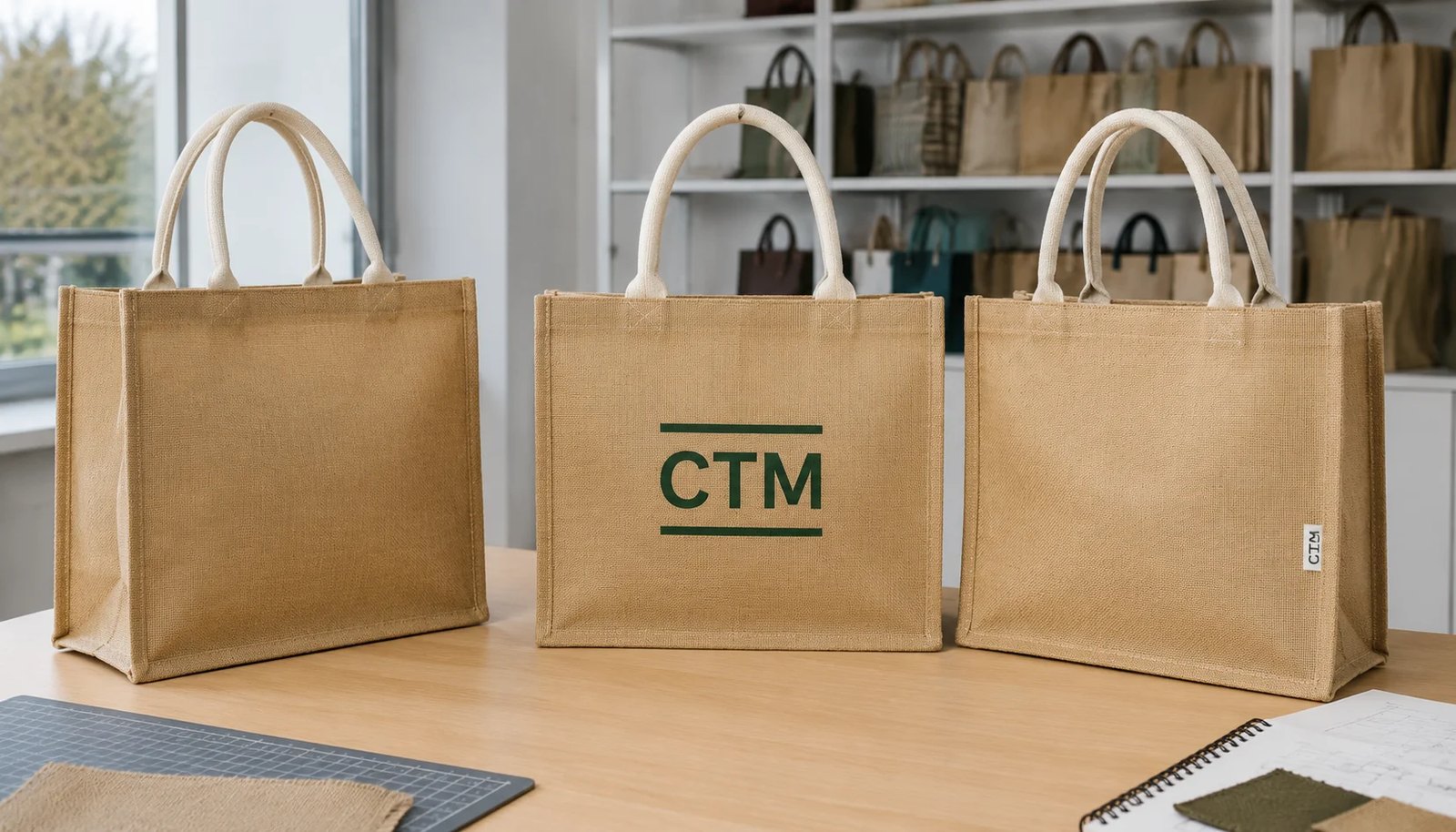
Why natural grocers need a tighter jute tote RFQ than a generic promo bag brief
Natural grocers usually buy reusable bags for a more demanding environment than event giveaways. The bag has to survive heavier grocery loads, contact with boxed goods and produce, repeated handling at checkout, and a brand review from shoppers who notice material quality. A loose RFQ creates the usual result: three suppliers quote three different constructions, prices look far apart, and the cheapest offer often hides lighter jute, weaker handles, or poor packing assumptions.
The buying problem is not simply finding a low FOB price. It is getting comparable quotes on a bag that holds shape, carries weight, prints cleanly enough for a retail brand, and arrives in saleable condition after ocean transit. For jute, small omissions in the RFQ matter more than many buyers expect because suppliers may default to different fabric weights, lamination grades, handle methods, and finishing standards.
- Generic RFQ term that causes trouble: "standard jute tote"
- Better wording: specify size, laminated or unlaminated, handle material and width, print colors, and packing method
- Main failure points in grocery use: bottom seam strain, handle pull-out, rough top edge finishing, and moisture-affected cartons
- Main quote distortion points: hidden fabric downgrade, optimistic lead time, and unspecified carton packing
Start with the retail use case before you write dimensions and materials
A natural grocer may need one of several different bags under the same broad label of jute tote bag. A checkout bag used daily should prioritize structure, handle comfort, and packing efficiency. A promotional tote sold near the register may allow a lighter build if visual appeal matters more than weight-carrying. A seasonal produce-themed bag may need a larger face area for graphics but still fit standard cartons and shelf displays. The RFQ should begin with the intended job of the bag, because that drives almost every downstream specification.
Retail use also determines where you should spend budget. If the bag will be resold as branded merchandise, top edge finishing, print clarity, and handle color matching become more important. If it will be used as a high-volume checkout program, consistency across bulk production, unit cost, and handle strength matter more than decorative trim. This sounds basic, but many quote gaps start when buyers mix a premium display expectation with an economy construction.
- Checkout use: prioritize laminated interior, strong bottom seam, comfortable handle width
- Merchandise resale: prioritize cleaner finishing, better print placement, tighter cosmetic tolerance
- Gift-with-purchase: prioritize price point, simple artwork, efficient MOQ split strategy
- In-store multi-location rollouts: prioritize carton labeling by SKU and stable lead time
Material spec that suppliers can actually quote: jute weight, weave, lamination, and handles
For practical quote comparison, do not rely on the phrase natural jute alone. Quoteable material language should include whether the body is laminated or unlaminated, approximate fabric weight or target handfeel, and whether the weave should feel medium or heavy. Many grocery buyers do best with laminated jute because it improves body structure, reduces loose fiber migration, and gives a more wipeable interior. For a common retail tote, a medium-heavy laminated construction around the equivalent feel of 380 to 420 GSM is a safer benchmark than an unspecified standard grade.
Handles need the same level of precision. Cotton web handles are often preferred by natural grocers because they are easier on the hand than raw jute handles and present a cleaner retail look. But handle width and stitch method affect both comfort and failure rate. A 25 mm cotton web handle stitched into the side seam with reinforcement is usually a better grocery spec than a narrow tape handle attached only at the top edge. If the bag must carry glass jars or multiple boxed items, the RFQ should state a load expectation, even if expressed as an internal target rather than a legal claim.
- Useful body spec example: laminated natural jute, medium-heavy structure, target finished feel equivalent to 13 to 14 oz heavy reusable tote
- Useful handle spec example: 25 mm natural or dyed cotton webbing, reinforced attachment, handle drop 20 to 24 cm
- If using dyed handles, request color reference and note acceptable lot variation
- If requiring bottom board insert, state material and whether removable or fixed
Print method and artwork limits on jute: what looks good on screen may fail on fabric
Jute is not a smooth canvas. Its coarse texture and visible slubs affect fine detail, ink edge sharpness, and halftones. For most natural grocer logos, a 1-color or 2-color screen print is the most sensible route. It controls cost and usually gives the most stable output on textured material. Very small text, thin rule lines, and dense flood areas can all become inconsistent from bag to bag because ink sits across an uneven surface.
A better RFQ includes artwork constraints rather than only the file itself. State the intended print size, preferred placement, and whether the supplier should adjust art for jute readability. If the brand team expects photographic detail or soft gradients, the buyer should solve that expectation before quoting rather than after sample review. The usual compromise is to simplify the artwork, enlarge small elements, or move to a woven label if fine detail matters more than large front-panel branding.
- Best value print route: 1 to 2 spot colors by screen print
- Safer line weight: avoid very thin strokes and miniature legal text on front panel
- Request print position tolerance, for example plus or minus 0.5 to 1 cm from approved center point
- For dark artwork on natural jute, ask whether an underbase is needed and how it affects cost and feel
- If adding side label or care label, specify fold type and sewing position
MOQ logic and why split assortments can quietly raise your true unit cost
Jute tote programs for retail often look simple, but MOQs become expensive when the order is split across too many size or artwork variants. Factories set up cutting, printing, and packing around repetition. If a buyer orders 5,000 bags across five art versions, the nominal total volume may look healthy, but the supplier may still price each variant as a short run because screens, handling, and carton sorting all increase. In jute, extra split complexity can also cause shade and print consistency headaches if variants are produced across different days or material lots.
If your natural grocer program needs multiple store messages or seasonal graphics, request a base quote with one common construction and one shared print layout first. Then ask for adders by extra artwork or handle color. This separates true material cost from variation cost. It also helps the buyer decide whether brand flexibility is worth the higher unit price and operational complexity.
- Most efficient quote structure: one size, one body color, one handle color, one artwork
- Common cost adders: extra print color, extra artwork screen, dyed handle color, custom inner label, lower MOQ per SKU
- Ask for price breaks at practical tiers such as 3,000, 5,000, and 10,000 pcs
- When comparing quotes, normalize them to the same packing count and same sample assumptions
Sample approval workflow that prevents mass mistakes instead of documenting them later
A good jute tote program usually needs more than one sample stage. The first stage can be a material and construction prototype, even without final print. This is where the buyer judges body stiffness, gusset proportion, handle comfort, and seam appearance. The second stage should be a pre-production sample using bulk-intent materials and approved artwork. For textured materials like jute, a print strike-off or at least a clear close-up of printed fabric is useful because logo clarity can change noticeably from a digital mockup.
Approval should be based on written acceptance criteria, not only visual preference. If the team says the sample feels too soft or the print looks slightly off-center, the factory needs measurable direction for revision. A concise approval sheet saves time later during production and inspection because everyone is working to the same tolerances.
- Prototype sample should verify: body size, gusset depth, top finish, handle drop, seam construction
- Pre-production sample should verify: actual jute lot appearance, print color, print position, labels, packing method
- Useful acceptance notes: no exposed raw edge at top rim, no major odor, handle twist acceptable or not acceptable
- Keep one signed approval sample for inspection reference
Quality thresholds for grocery-use jute bags: what to inspect before shipment
Jute is a natural fiber, so buyers should distinguish between acceptable natural character and true defects. Minor slubs, slight shade movement, and a less uniform surface than cotton are normal. Problems begin when natural variation is used to excuse weak construction, dirty fabric, excessive odor, or unstable lamination. Final inspection should focus on whether the bag performs as approved, not whether it looks like a synthetic perfect surface product.
For natural grocers, the most important QC thresholds are strength and saleable appearance. A bag that photographs well but sheds, smells musty, or has handles pulling against thin seams will create store complaints quickly. If the order is large enough for a third-party inspection, reference the approved sample and define critical concerns clearly so inspectors are not improvising standards on the day of loading.
- Measure body width, height, gusset, and handle drop from an agreed sample size set
- Review bottom corner seam security and reinforcement at handle entry points
- Reject criteria example: holes, seam opening, severe print smudging, mold odor, delaminated interior panels
- Minor natural weave irregularity may be acceptable if not structurally weak and if appearance matches approved sample
- If load testing is required, state method and sample quantity in advance
Packing plan and moisture control matter more for jute than many first-time buyers expect
Packing is a major part of whether jute bags arrive retail-ready. Jute can absorb moisture and ambient odor more readily than many synthetic bags. A low price can disappear fast if cartons reach the DC with damp feel, mildew smell, or crushed bag shape. Flat packing is standard and usually efficient, but the exact fold method, liner bag, and carton weight should be specified so warehouse teams can receive and store the goods safely.
For natural grocers distributing across multiple stores, carton marking is not a small detail. If different SKUs, promotions, or seasonal prints are involved, clear outer labeling reduces receiving errors. A good RFQ includes units per carton, maximum carton gross weight, barcode or SKU label requirements, and whether individual polybags are forbidden for sustainability or preferred for dust protection. Jute buyers should also decide whether desiccant or moisture barrier liners are needed for long ocean transit.
- Typical export preference: flat packed, master carton lined or moisture-protected, no overfilled cartons
- Practical carton gross weight target: keep manageable for DC handling rather than maximizing fill at any cost
- State whether inner bundles are required for counting efficiency
- Require shipping marks with item code, quantity, carton number, country of origin, and PO reference
- If no individual polybag is allowed, define alternate dust and moisture protection
Lead time planning: where jute bag schedules usually slip
Buyers often assume a tote bag is a simple sew item with short production timing. Jute projects can still slip for ordinary reasons: material sourcing lag, print screen preparation, sample revision cycles, and congestion around holiday production windows. Dyed cotton handles or custom labels can add another layer if they are not stocked. Lead time should therefore be quoted from a clear event such as deposit plus final sample approval, not from inquiry date.
For seasonal grocery programs, the main risk is not only factory sewing capacity but approval drag. Every day spent revising artwork, discussing size after sample receipt, or changing packing standards reduces the production buffer. A stronger RFQ shortens this front-end uncertainty. If launch timing matters, request a critical path summary with sample timing, material booking, bulk production window, inspection date, and ex-factory readiness assumptions.
- Timing variables that often move the date: revised artwork, changed handle color, added labels, carton approval delays
- Bulk lead time may differ significantly between one-SKU and multi-SKU assortments
- Ask whether quoted timing assumes standard material in stock or fresh jute purchase
- Leave room for inspection and booking, not just factory completion
How to compare supplier quotes on landed value instead of chasing the cheapest bag
A proper quote comparison for jute totes should normalize more than unit FOB price. Fabric grade, laminate presence, print coverage, sample charges, packed CBM, and carton count all affect total import cost and receiving efficiency. One supplier may offer a lower unit price but use thinner fabric and larger cartons that increase freight inefficiency or damage risk. Another may price slightly higher but include better handle reinforcement, moisture-controlled packing, and clearer schedule planning. The lower landed-risk option often wins even before durability claims are considered.
For procurement teams, build a comparison sheet that isolates material, print, packaging, and logistics assumptions. If the bag is for a retail chain or distributor program, also include the cost of operational errors: repacking at destination, inspection failures, or store complaints from weak handles. A buyer who writes a detailed RFQ can usually push suppliers into quoting on the same basis, which is the fastest route to a fair commercial decision.
- Normalize quote basis: same size, same print colors, same handle spec, same packing count, same Incoterm
- Include sample and tooling charges separately from repeat-order unit price
- Compare packed CBM and estimated pieces per container, not only piece price
- Review whether quote includes labels, barcode stickers, and carton marking
- Treat unclear material descriptions as commercial risk, not just a documentation issue
Specification comparison for buyers
| Spec decision | Recommended option | When it fits | Buyer risk to check |
|---|---|---|---|
| Base fabric weight | 13 oz to 14 oz laminated jute, roughly 380 to 420 GSM equivalent feel | Best for grocery programs that need upright shelf presence and better shape retention | Some suppliers quote lighter cloth while calling it standard jute; request fabric weight tolerance and finished bag weight range |
| Lamination choice | Inner PP lamination with matte finish | Works for dry grocery, produce, and repeat-use programs where wipe-clean interior matters | Lamination quality varies; poor adhesion can bubble, crack, or delaminate near fold lines |
| Handle material | Cotton webbing 25 mm width, stitched into side seams with box stitch or X reinforcement | Preferred when buyer wants more comfort in hand than pure jute handles | Handle pull strength is often under-tested; specify load test and stitch count per attachment point |
| Bag size | Approx. 35 x 18 x 35 cm with 15 to 18 cm gusset | Fits common grocery baskets, produce packs, boxed foods, and checkout use | A larger gusset changes carton count and freight efficiency; quote with packed CBM, not just unit price |
| Print method | 1 to 2 color screen print with simple solid artwork | Best value for natural grocer logos, short slogans, and seasonal bulk runs | Fine lines and halftones print poorly on coarse jute; request minimum line thickness and print position tolerance |
| MOQ structure | Single size and colorway consolidated to one artwork across 3,000 to 5,000 pcs | Useful when buyer wants sharper unit pricing and smoother production planning | Too many split SKUs trigger setup waste, slower output, and inconsistent packing by variant |
| Top finish | Turned top edge with concealed seam binding where possible | Better for cleaner presentation in retail environments and reduced fiber shedding at rim | Cheaper folded edges can look rough and fray faster; get a close-up sample photo of top edge finishing |
| Packing route | Flat-packed in export cartons with moisture barrier bag and carton marking by SKU | Suitable for import containers and DC receiving where counting speed matters | Jute can absorb moisture and odor; require dry-pack condition, carton lining details, and carton gross weight limit |
Buyer checklist before sampling
- Define the exact retail use: checkout bag, produce-carry tote, promo gift with purchase, or branded merchandise resale
- Set finished size with tolerance in cm, including gusset depth and handle drop
- State whether bag must stand upright when empty or only when filled
- Specify base fabric construction and weight, not only the word jute
- Decide whether inner lamination is allowed for food-adjacent grocery use and wipe-clean performance
- List handle material, width, color, attachment method, and minimum load requirement
- Attach artwork in vector format and state print colors by Pantone reference if applicable
- Note acceptable jute slubs, shade variation, and natural fiber appearance so aesthetics are judged correctly
- Define sample approval stages: material swatch, pre-production sample, and print strike-off if needed
- State carton size target, units per carton, maximum carton gross weight, and shipping marks format
Factory quote questions to send
- What is the exact jute fabric construction, weave type, and weight tolerance used for the quoted price?
- Is the quoted bag laminated or unlaminated, and where is the lamination applied?
- What handle material, width, and stitch reinforcement are included in the price?
- What is the maximum recommended safe load in kilograms, and has the same construction passed any internal load test?
- How many print colors are included, what print area is assumed, and what artwork limitations apply on coarse jute surface?
- What MOQ applies per size, per color, and per artwork, and how does the price change at 3,000, 5,000, and 10,000 pcs?
- What sample costs apply for blank prototype, printed pre-production sample, and courier?
- What is the production lead time from deposit and artwork approval, and what assumptions could extend it?
- How are bags packed per inner and per master carton, and what are the packed carton dimensions and gross weight?
- What moisture protection is used inside export cartons for ocean shipment?
Quality-control points to confirm
- Finished size within agreed tolerance, usually plus or minus 1 cm on body dimensions and plus or minus 1.5 cm on handle drop
- Fabric weight and handfeel consistent with approved swatch; no substitution to visibly lighter weave
- Lamination bonded evenly with no peeling, bubbles, sharp odor, or large crease whitening
- Handle attachment secure, stitch pattern matching approved sample, no skipped stitches or loose thread clusters
- Seam allowance sufficient and evenly stitched, especially at side gussets and bottom corners
- Print registration centered within agreed tolerance and ink coverage acceptable on textured jute surface
- No major stains, oil marks, mildew smell, mold spots, or excessive fiber shedding inside packed cartons
- Cartons dry, correctly marked, and packed to agreed quantity without crushing bag shape