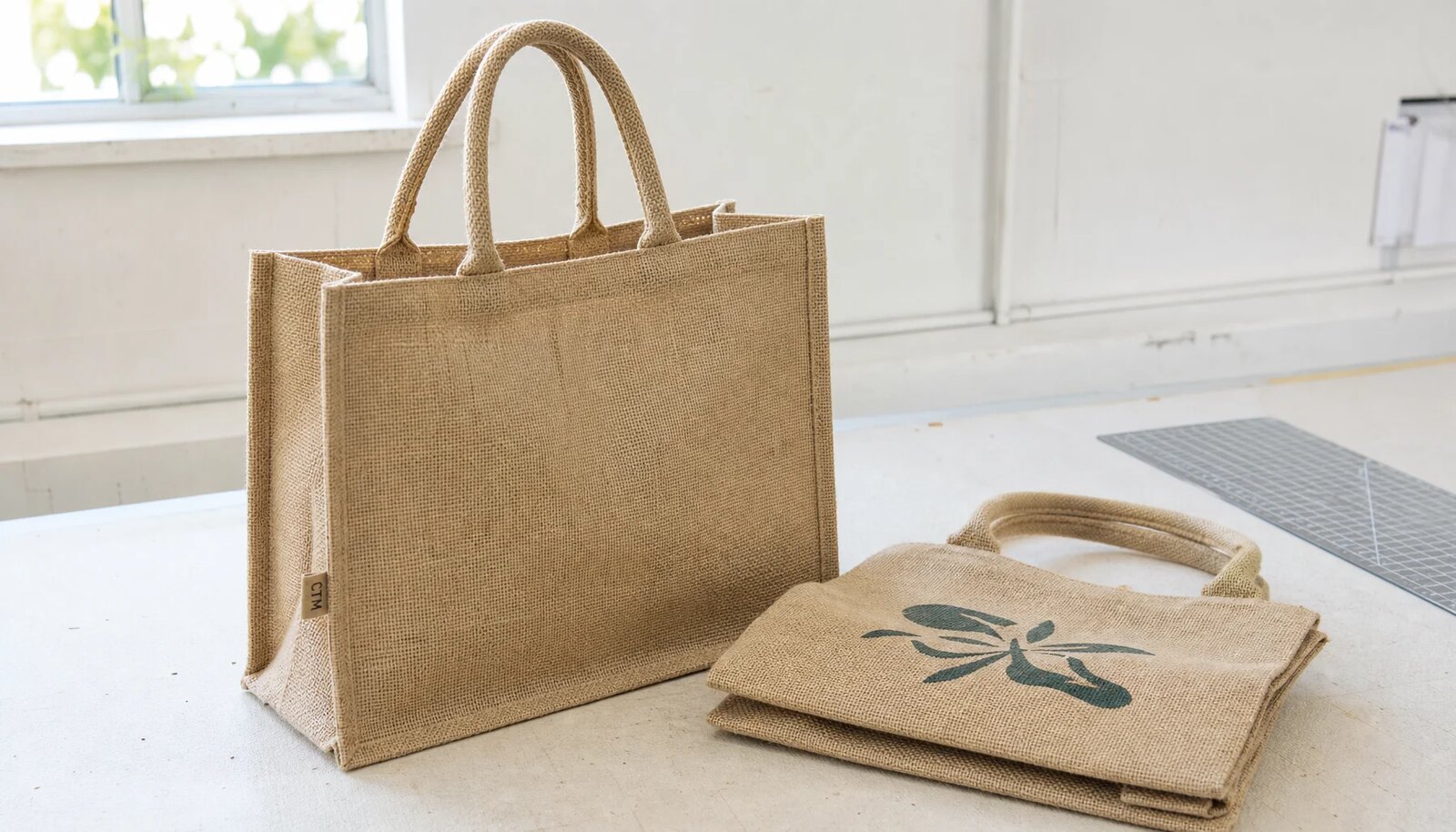
Start With the Event Job
A useful jute tote bags RFQ template guide for event planners starts with the job the bag must perform. A registration handout, sponsor kit, university fair tote, retail activation bag, and VIP gift bag may look similar in a mockup, but they need different structure, packing, and inspection controls. The RFQ should explain who receives the bag, how it is filled, how far it will be carried, and whether it should be reused after the event.
List the intended contents early. Brochures, catalogs, bottles, boxed gifts, apparel, samples, and food-adjacent items put different stress on handles, seams, gussets, and the base. If staff must fill thousands of bags at a venue, carton counts and unpacking speed may matter as much as the bag body. If the tote appears in sponsor photos, shade consistency, logo placement, and interior cleanliness deserve tighter control.
State the buying priority in plain language. Some orders need the lowest workable cost; others need better presentation, repeat-use durability, a firm delivery date, or clean destination sorting. This helps suppliers recommend practical tradeoffs instead of guessing from a product photo.
- State event type, audience, event date, in-hand date, delivery city, and receiving constraints.
- Identify whether the tote is a basic handout, sponsor kit carrier, premium gift, retail-style bag, or reusable item.
- List likely contents with approximate weight and shape, especially bottles, catalogs, boxes, samples, and apparel.
- Name the top priority: cost control, premium presentation, fast timeline, clean receiving, or durability.
Specify Finished Size and Construction
Jute tote quotes become hard to compare when the RFQ only says medium tote or standard conference bag. Suppliers need finished sewn dimensions, not cutting dimensions. Use width x height x gusset, then define handle drop, handle width, handle material, top edge finish, bottom construction, and measurement tolerance. State whether width is measured across the front panel and whether gusset depth is measured at the side or base.
Typical event starting points might include about 30 x 35 x 10 cm for light handouts or about 35 x 40 x 15 cm for larger welcome kits, but these are only planning references. The correct size depends on the actual contents and how the bag is filled. If a boxed gift must fit, measure the box and leave room for packing and removal. If catalogs are included, check paper size and total weight.
Construction should be written with the same care as size. Define natural or dyed jute, laminated or non-laminated, unlined or lined, bound or hemmed top edge, standard or reinforced bottom, and whether the tote should stand upright when lightly filled. Two suppliers may both quote a jute tote while pricing very different bags.
- Quote finished sewn size and define how each dimension is measured.
- Set tolerances for body size, gusset, handle drop, handle width, and logo placement.
- Specify top edge finish, bottom construction, lining, lamination, and interior cleanliness expectations.
- Require handle material, width, drop, stitch pattern, attachment point, and reinforcement method.
Choose GSM With Cost and Freight in View
GSM is useful, but it is not the entire quality standard. GSM means grams per square meter of fabric. Higher GSM often gives more structure, but it can also raise unit cost, carton weight, freight volume, sewing difficulty, and folding bulk. Ask for a target range and tolerance, then ask the supplier to explain how that choice affects the finished bag and packing plan.
For lightweight brochures or short-term giveaways, 260 to 300 GSM is often a practical discussion range. For heavier welcome kits, retail-style reuse, or bags expected to stand upright with contents, buyers may review 330 to 400 GSM options. These are starting points, not universal standards. The best choice is the GSM that fits the load, presentation level, schedule, and freight budget.
Natural jute also has shade movement and weave variation. Instead of rejecting every natural irregularity, define defects that hurt the commercial purpose: no stains, dampness, mold marks, oil marks, strong odor, or heavy surface defects on the branding panel. An approved swatch should become the reference for fabric feel, shade range, and weave character.
- Use 260 to 300 GSM as a starting range for light handouts, then validate against contents.
- Use 330 to 400 GSM as a starting range for heavier kits or more structured presentation.
- Specify GSM tolerance, such as +/- 10% where appropriate, subject to approved swatch.
- Define unacceptable fabric conditions: stains, dampness, mold marks, strong odor, oil marks, and logo-panel defects.
Build a Quote Matrix
A procurement-ready RFQ should not ask for one unit price and hope every detail is included. Separate the bag body, printing, setup, labels, hang tags, packing, carton marking, barcode application, samples, inspection support, inland freight, export documentation, and destination freight if quoted. This prevents late fees from appearing after internal budget approval.
List quantity by style, size, body color, artwork version, sponsor logo, label version, packing method, and destination. A 5,000-piece order may become five smaller production controls if it includes several sponsor logos, two sizes, and split deliveries. Ask whether the MOQ and price apply to total order quantity or to each version.
The quote should also show Incoterms, quote validity, payment terms, sample lead time, bulk lead time, inspection timing, overrun and underrun allowance, and re-quote triggers. Common triggers include changed artwork, reduced quantity, added print position, new label, different packing, rush freight, changed destination, or individual polybagging.
- Separate body price, branding charge, setup fee, sample fee, label cost, packing cost, carton marking, and freight.
- Ask for pricing by variant when there are multiple logos, colors, sizes, labels, or destinations.
- Require MOQ logic by style, body color, print version, label version, and packing method.
- Put Incoterms, quote validity, payment terms, overrun rules, and re-quote triggers into the RFQ.
Match Branding to Coarse Jute
Jute texture is part of the look, but it affects artwork reproduction. Fine lines, small sponsor text, gradients, tight registration, and reversed lettering can lose definition. For many event programs, one-color or two-color screen printing is the most practical route because it is widely available, cost-efficient, and easier to inspect. It still needs clear controls.
Provide vector artwork, Pantone targets where color matters, number of print colors, number of print positions, and a placement diagram measured from the top edge, side seam, or centerline. Do not rely only on a digital mockup. Ask the supplier to flag artwork details that may not reproduce cleanly before screens or plates are made.
Transfers, patches, woven labels, and embroidery can work when they solve a specific problem. Transfers may help complex artwork, but test adhesion, lifting, cracking, rub, and fold resistance. Embroidery may distort small text or pull the weave. A sewn woven label can be cleaner for subtle repeat-use branding. Approve a strike-off or branded sample on the final construction before bulk production.
- Provide vector artwork, Pantone references, print size, print location, and number of logo versions.
- Set logo placement tolerance and measurement points in writing.
- Ask which artwork details are too small, too fine, or too complex for the selected jute surface.
- Require a print strike-off, transfer test, patch sample, or label sample before bulk production.
Control MOQ and Versions
MOQ can be tied to fabric purchase minimums, dyeing or lamination batches, cutting efficiency, screen setup, label minimums, packing labor, and line changeovers. A supplier may quote a low MOQ for one natural jute tote with one front print, then require higher quantities when the order adds dyed jute, multiple body colors, woven labels, sponsor-specific versions, or individual packaging.
Event orders often become version-control projects. Ten sponsor logos, two handle colors, VIP packing, and separate warehouse deliveries can turn one tote into many controlled lines. Variants are not a problem if they are visible in the quote, sample plan, production schedule, carton labels, and inspection checklist. Ask for a version matrix showing quantity, artwork, label, packing, and destination for every version.
A practical risk reducer is to standardize the physical bag and move variation to lower-risk items. Keep one body, one handle color, and one print position, then vary a hang tag, insert card, belly band, or carton label by sponsor or session. If multiple direct prints are required, approve version-specific proofs and require carton segregation.
- Ask whether MOQ applies per total order, style, body color, print, label, or packing version.
- Create a version matrix before awarding, even if some artwork is still pending.
- Price the impact of one version, three versions, and the maximum expected number of versions.
- Standardize the bag body where possible, then vary tags, inserts, or carton labels.
Use Samples as Approval Gates
Sampling should be a controlled approval process. A material swatch confirms fabric shade, weave, GSM feel, lamination, and print surface. A proto sample confirms size, gusset, shape, handle comfort, top edge finish, and sewing construction. A print strike-off confirms how artwork behaves on the selected surface. A pre-production sample should combine final material, construction, branding, and packing approach.
Physical samples are best when the schedule allows because photos cannot fully show odor, stiffness, shedding, handle comfort, interior cleanliness, or true color. If timing prevents physical approval, request high-resolution photos and short videos of the front, back, side gusset, base, inside, handle attachment, top edge, logo close-up, and packed carton. Ask for a load photo or video using intended contents or an agreed equivalent weight.
The sample review should go beyond logo position. Fill the bag with event contents and carry it as an attendee would. Check handle comfort, base sagging, mouth shape, logo rub, loose fibers, and whether contents catch on seams or lining. Written sample approval should state exactly what is approved and what remains conditional.
- Use swatch, proto sample, strike-off, and pre-production sample as separate gates when order risk justifies it.
- Approve construction before final branding when size, handle, lining, or lamination is still uncertain.
- Keep a sealed reference sample for inspection and dispute resolution.
- Record approvals in writing, including approved deviations from the original RFQ.
Write Inspectable QC Requirements
Quality requirements must be concrete enough for the factory, inspector, and buyer to apply the same way. For jute tote bags, key checkpoints include finished dimensions, GSM or swatch match, handle strength, seam security, stitch consistency, print placement, print clarity, rub resistance, odor, stains, fraying, loose fibers, lamination quality, version separation, and carton accuracy.
A workable QC standard accepts normal natural jute character while rejecting defects that harm use, branding, cleanliness, or presentation. The front logo panel should not have stains, holes, oil marks, mold marks, heavy slubs, or distortion that makes the print unreadable. Handles should be symmetrical and secure. Seams should not be open, skipped, or fraying at stress points. Bags should not smell strongly of damp storage, chemicals, or mildew.
Inspection should sample cartons from across the lot, not only the easiest cartons to open. First-piece approval catches setup errors before a full run is printed or sewn. Mid-run checks catch drift in logo placement, ink coverage, stitching, or label placement. Final inspection confirms count, packing, carton marks, and workmanship before shipment. For event orders, mixed sponsor cartons can be as damaging as a sewing defect.
- Set tolerances for finished body size, gusset, handle drop, logo placement, and carton count.
- Name rejectable defects: open seams, weak handles, skipped stitches, crooked logos, stains, dampness, mold marks, strong odor, and wrong labels.
- Inspect first-piece, mid-run, and final samples where schedule and order size justify the control.
- Check variant separation, carton labels, barcodes, packing list totals, and destination marks before shipment release.
Define Packing and Moisture Control
Packing affects freight cost, receiving speed, defect risk, and event operations. Jute totes may be packed flat, folded, bundled, individually polybagged, retail tagged, or sorted by sponsor and destination. For many event handouts, flat bulk packing with defined inner counts is efficient because it controls carton density and speeds unpacking. Individual polybags may protect presentation, but they add material, labor, opening time, and waste handling.
The RFQ should define inner count, master carton quantity, carton dimensions, carton gross weight, carton marks, barcode requirements, and palletization if needed. Maximum carton weight matters because event staff may move boxes quickly without ideal warehouse equipment. Carton size also affects air freight volume, warehouse storage, and venue receiving space.
Moisture control is especially important for jute. Ask whether fabric is stored dry, whether finished goods are packed after drying or curing steps, whether desiccant is recommended, and whether cartons need liners for humid routes or long ocean transit. Ask how long goods will sit after production before shipment. A low quote that ignores moisture and carton condition can create odor, stains, or presentation problems on arrival.
- State flat pack, folded pack, bundled pack, individual polybag, hang tag, barcode, or retail pack requirements.
- Define inner count, master carton count, carton dimensions, carton gross weight, carton marks, and pallet labels.
- Require destination-specific carton labels when orders split by venue, sponsor, session, or warehouse.
- Ask for moisture-control steps during fabric storage, production, packing, ocean freight, and humid transit.
Build the Timeline Backward
Event orders are deadline-driven, so build the schedule backward from the in-hand date. Do not ask only for production lead time. Ask suppliers to break out artwork review, swatch or proto sample, sample transit, buyer approval, material booking, cutting, printing, curing if relevant, sewing, trimming, packing, inspection, inland freight, export documentation, international freight, customs clearance, domestic delivery, and receiving buffer.
Artwork is a common delay point. Sponsor logos may arrive late, files may not be vector, Pantone references may be missing, and fine details may need adjustment for coarse jute. If the event date is close, reduce print colors, reduce sponsor versions, choose standard natural jute, and avoid construction changes after sampling. A simpler bag delivered on time is usually better than a more complex bag stuck in approval.
Freight planning should be decided early. Ocean freight may support planned programs with adequate buffer, while air freight may protect late orders but can be expensive because tote bags occupy carton volume. Split shipments can work when part of the order is urgent and part can travel slower, but cartons must be labeled and documented correctly. Separate the last acceptable ship date from the last acceptable delivery date so decision points are clear.
- Ask for lead time by stage instead of accepting one total production number.
- Add buffer for artwork revisions, sample transit, buyer approval, inspection, documentation, customs, and venue receiving.
- Identify last artwork approval date, last production release date, last ship date, and last delivery date.
- If timing is tight, simplify construction and artwork before awarding instead of relying only on rush production.
Specification comparison for buyers
| RFQ decision | Procurement-ready specification | Best fit | Risk to control before awarding |
|---|---|---|---|
| Event use case | State whether the bag is for registration pickup, sponsor kit assembly, VIP gifting, retail activation, internal meeting kits, resale, or post-event reuse | Helps suppliers recommend structure, packing, handle strength, and presentation level based on the real job | A vague use case can create weak handles, poor carton flow, overbuilt cost, or a bag that does not suit the venue workflow |
| Finished bag size | Quote finished sewn dimensions: width, height, gusset, handle drop, handle width, and measurement tolerance | Apples-to-apples comparison across factories, decorators, and sourcing routes | Suppliers may price different patterns, gussets, shrinkage allowances, or handle lengths while using similar product photos |
| Jute body GSM | Specify a target GSM range and tolerance, subject to approved swatch, such as 280 GSM +/- 10% or 350 GSM +/- 10% | Matching bag body to brochures, welcome kits, retail-style reuse, or heavier sponsor contents | Higher GSM may improve structure but can increase unit cost, carton weight, freight volume, sewing time, and folding bulk |
| Construction type | Define natural, dyed, laminated, unlined, lined, reinforced bottom, bound top edge, hemmed top edge, and interior cleanliness expectations | Orders where appearance, shape, contents protection, and repeat use matter | Quotes may hide cheaper raw edges, weaker top finishing, different lamination, or missing reinforcement unless construction is written clearly |
| Branding method | Specify screen print, transfer, patch, label, or embroidery; include print area, Pantone target, artwork limits, and strike-off requirement | Event logos, sponsor marks, retail-style branding, and repeat-use bags where finish quality affects perception | Fine lines, small reversed text, gradients, transfer lifting, patch curling, and embroidery distortion must be tested on the final construction |
| Sourcing route | Ask whether the supplier is a direct factory, trading company, decorator, or imported-blank provider, and which steps are controlled in-house | Selecting the right supplier model for volume, schedule, artwork complexity, and destination requirements | Loss of visibility over sewing, printing, inspection, carton sorting, and corrective action can make accountability unclear |
| MOQ and variants | Require MOQ by style, size, body color, print version, label version, packing method, and destination split | Orders with sponsor versions, multiple sessions, VIP packs, or split deliveries | A total order quantity may not meet MOQ for each logo, color, label, or packing version |
| Lead time and freight | Break out sample time, approval time, material booking, production, inspection, inland freight, export, international freight, customs, and final delivery | Event programs with fixed in-hand dates and limited receiving windows | A short production quote can still miss the event if artwork, sample transit, inspection, customs, or venue delivery are not scheduled |
| Inspection ownership | Name who performs first-piece check, inline review, final inspection, carton count verification, and shipment release approval | Medium and large orders where defects, mixed versions, or wrong carton labels can disrupt the event | If inspection ownership is vague, problems may be found only after cartons reach the venue |
Buyer checklist before sampling
- State event name, event type, event date, in-hand date, delivery city, receiving address if known, delivery window, dock limits, and whether delivery is single-site or split by venue, sponsor, session, hotel, or warehouse.
- Define finished sewn bag dimensions in width x height x gusset, plus handle drop, handle width, handle material, top edge finish, bottom construction, and dimensional tolerance.
- Specify the jute body: natural or dyed, target GSM and tolerance, unlined or lined, laminated or non-laminated, reinforced or standard, and whether the bag should stand upright when lightly filled.
- List quantity by size, body color, artwork version, sponsor logo, label version, packing method, and destination so variants are priced and packed separately.
- Provide branding details: print method, print position, number of colors, Pantone targets, artwork file format, maximum print area, label placement, and strike-off requirement.
- Ask suppliers to separate unit price, sample fee, screen or plate fee, label cost, hang tag cost, packing cost, carton marking, barcode application, inland freight, inspection support, export documentation, and freight if quoted.
- Confirm MOQ by style, size, body color, print version, label version, and packing destination; ask whether overruns or underruns are allowed and how they are shipped and invoiced.
- Request the right sample path: material swatch, proto sample, print strike-off, pre-production sample, first-piece approval, and sealed reference sample retained for inspection.
- Set inspectable quality requirements for dimensions, handle pull strength, seam security, stitch density, print placement, print rub resistance, odor, stains, loose fibers, fraying, lamination quality, and carton count accuracy.
- Define packing requirements: flat or folded pack, inner count, master carton count, carton dimensions, maximum gross weight, polybag policy, desiccant or moisture-control policy, barcode format, destination labels, and shipping marks.
Factory quote questions to send
- Are you quoting the exact finished size, gusset depth, GSM range, construction type, handle specification, top edge finish, reinforcement method, and branding placement shown in our RFQ?
- Is the fabric natural jute, dyed jute, laminated jute, lined jute, or a jute-blend construction, and what tolerances apply to GSM, shade, finished dimensions, and handle length?
- Which production steps are in-house and which are outsourced, including fabric sourcing, lamination, cutting, sewing, screen printing, transfer application, label sewing, inspection, packing, and carton marking?
- What branding method are you pricing, what setup cost applies per color, screen, plate, label, or design, and which artwork details may not reproduce cleanly on this jute surface?
- Is the MOQ based on one bag style, one body color, one print version, one label version, one packing method, or the total order quantity across all variants?
- Can you separate bag body price, print charge, sample fee, screen or plate fee, woven label fee, hang tag fee, packing cost, carton marking, barcode application, inland freight, and freight-to-destination charge?
- What are the handle material, handle width, handle drop, stitch type, stitch density target, attachment position, and reinforcement method at the top seam and load points?
- Can you provide a proto sample, print strike-off, pre-production sample, first-piece production photos, inline inspection photos, and packed carton photos before mass production continues or shipment is released?
- What practical load test do you recommend for this bag, what test weight and duration will you use, and can you test using our intended event contents or a clearly equivalent weight?
- Who owns final inspection, variant separation, carton count verification, carton marking review, and shipment release approval before the goods leave the factory or warehouse?
Quality-control points to confirm
- Measure finished dimensions across samples from early, middle, and late cartons against the approved tolerance; check width, height, gusset, handle drop, handle width, and logo placement.
- Check jute GSM or confirm against the approved swatch and purchase specification; record noticeable shade shift, weave irregularity beyond agreed limits, or surface contamination on the branding panel.
- Inspect handle symmetry, handle length, handle width, stitch density, reinforcement, attachment location, and pull resistance across multiple cartons rather than only the top carton.
- Review top edge finishing, side seams, gusset seams, bottom corners, binding or hemming, trimming, skipped stitches, loose threads, fraying points, and interior cleanliness under normal lighting.
- Check print placement on first-piece, mid-run, and last-piece samples to catch drift, registration issues, inconsistent ink coverage, patch misalignment, or transfer edge lifting.
- Verify print clarity, opacity, Pantone closeness where specified, rub resistance, fold resistance, and readability of small text at normal viewing distance on the actual jute surface.
- Run a practical load test using intended event contents or an agreed equivalent weight; check handle pull, seam stress, base sagging, shape distortion, and comfort after carrying.
- Reject bags with strong odor, dampness, visible stains, mold marks, oil marks, color contamination, crushed structure, sharp loose fibers, or uneven lamination where lamination is specified.
- Confirm labels, hang tags, barcodes, sponsor marks, destination marks, and carton shipping marks match the purchase order, artwork approval, version matrix, and packing list exactly.
- Open cartons from different positions in the lot, including early-packed and late-packed cartons, to confirm consistent build quality, correct variant separation, and accurate inner counts.