1. Build the RFQ around the decision, not the product name
A weak inquiry for jute tote bags usually starts with a product label: natural jute tote with logo. That is not enough for procurement. It leaves fabric weight, handle strength, print method, lining, lamination, packing, test standard, and compliance evidence open to supplier interpretation. Two suppliers can answer that inquiry with the same unit price and still be quoting different products.
A stronger RFQ starts with the business decision: what must this bag do for the apparel brand? A retail tote sold beside garments needs cleaner sewing, better shape retention, and more predictable branding than a short-lived event giveaway. A gift-with-purchase bag may need to protect folded clothing in a carton. A wholesale market tote may need to carry heavier loads with fewer complaints. The RFQ should make these differences visible before price is discussed.
Use the phrase jute tote bags for eco apparel brands RFQ template guide as a working purpose, not as a formula. The document should help suppliers quote the same finished bag, under the same assumptions, with the same acceptance rules. That is what makes comparison possible.
- State the use case in one sentence: resale tote, gift-with-purchase, event bag, packaging insert, or durable market tote.
- Name the commercial priority: lowest cost, retail appearance, load strength, plastic reduction, fast lead time, or repeat-order consistency.
- Separate must-have requirements from preferred options so suppliers know where they can suggest alternatives.
- Include a reference photo only as a visual guide; the written specification should control the quote.
2. Specify construction in numbers suppliers can price
Jute is not a single fixed material. Weight, weave tightness, lamination, lining, and finishing can change the bag’s body and cost. For many apparel programs, 280-320 GSM is workable for lighter promotional or gift-with-purchase use. For a more structured retail tote, 320-380 GSM is often a better buying range. If the tote must carry heavier goods, do not simply ask for thick jute; define the expected load and let the supplier confirm the construction required.
Finished dimensions should be stated after sewing and pressing. Soft bags can move during production, and cut-panel measurements do not tell your warehouse what will arrive. Include width, height, gusset depth, handle drop, and whether the bag must stand when lightly filled. If the tote is designed for folded apparel, compare the bag’s internal dimensions to the folded garment pack size before approving the sample.
Lining and lamination deserve careful treatment. A cotton lining can improve the interior and make the tote feel more premium. Lamination can add stiffness and moisture resistance. Both change cost, recyclability messaging, weight, and inspection complexity. If the brand wants a natural, low-plastic story, these choices must be made deliberately rather than added casually by the supplier.
- Quote line example: Finished size 38 W x 42 H x 10 cm gusset, measured after pressing, tolerance +/-1 cm.
- Fabric line example: Natural jute, 320 GSM target, tolerance +/-5%, no lamination unless separately approved.
- Handle line example: 60 cm total handle length, 28 cm drop, 3 cm cotton webbing, box-X reinforcement at four attachment points.
- Interior line example: Unlined for promo use, or cotton lining with inside seam finish approved on pre-production sample.
3. Treat handles as a failure-risk item
For apparel buyers, handle quality is not a detail. It is one of the first places a tote fails, and the failure is visible to the customer. A beautiful print cannot compensate for a handle that tears after one grocery trip. The RFQ should define handle material, width, length, drop, attachment position, stitch pattern, and test expectation.
Cotton webbing handles are common because they feel comfortable and stitch cleanly. Self-jute handles can look more natural but may feel rougher and need careful folding and edge control. Rope handles may suit certain retail looks but can affect carton density and attachment strength. Ask the supplier to explain the construction they recommend for your intended load rather than letting them default to the cheapest handle.
The load test should match the real use. For a general apparel tote, an 8-12 kg static load for 30 minutes is a practical starting point. If the tote is intended for heavier market use, set a higher test only if the bag is engineered and costed for it. The point is not to invent an unrealistic test; it is to prevent suppliers from quoting lightweight promotional construction for a reusable retail program.
- Require reinforcement at every handle end, not only decorative top stitching.
- Ask for stitch density or a clear stitch photo if the supplier cannot state stitches per inch reliably.
- Reject loose threads, skipped stitches, torn jute around handle points, or reinforcement that misses the handle tape.
- Include handle load testing in the approved sample review and final inspection checklist.
4. Match print method to jute’s rough surface
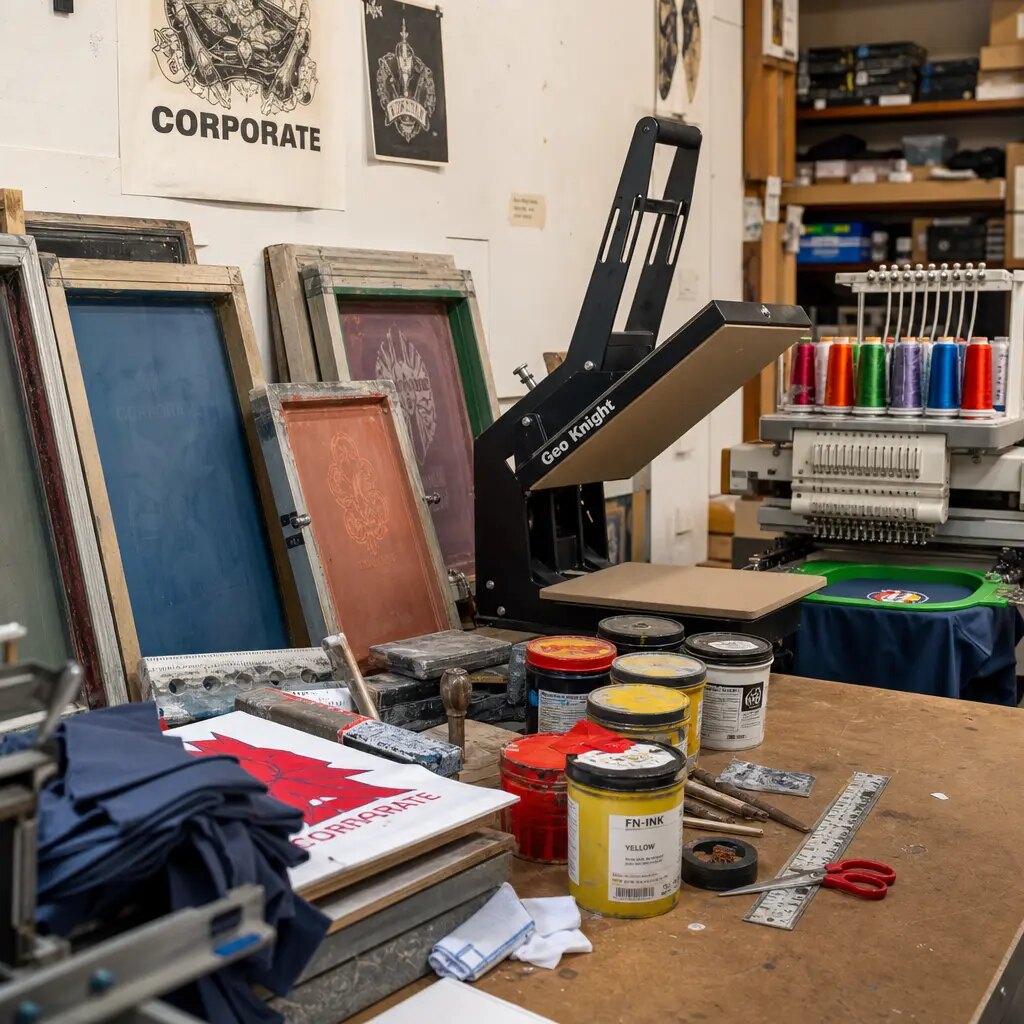
Printing on jute is different from printing on smooth cotton canvas. The weave is coarse, the natural color can mute ink, and small type can break up. Screen printing is usually the best option for bold logos, one to three colors, and repeat production. It gives a practical balance of cost, speed, and durability when the artwork is designed for the fabric.
Heat transfer can help with fine detail or small pilot quantities, but buyers should check the surface feel and cracking risk. A transfer film may look too glossy or plastic against natural jute. Embroidery is less common on coarse jute and may distort the panel unless backed properly. Woven labels, cotton patches, or leather-alternative patches can be strong branding options when ink opacity or logo precision is difficult.
A good RFQ does not simply say print logo. It gives the supplier artwork constraints. State the print size, placement from top edge or seam, color count, Pantone target if needed, minimum line thickness, and whether a rustic broken-ink look is acceptable. For color-critical apparel brands, approve a strike-off before production and keep it with the purchase file.
- Avoid tiny reversed text, thin serif fonts, and fine lines below roughly 1 mm unless the supplier proves they can hold them.
- Set print placement tolerance, such as +/-0.5 cm for standard logo placement, or tighter only if the supplier confirms capability.
- Ask for dry rub and light wet rub checks, especially for dark inks, large print blocks, or bags that will touch light-colored garments.
- Require the supplier to flag expected color shift caused by the natural jute base before sampling.
5. Compare MOQ, price breaks, and rejected shortcuts
MOQ is not only a number. It is tied to material buying, printing setup, line efficiency, packing labor, and the supplier’s willingness to interrupt production. A low MOQ can be useful for a pilot order, but it may come with compromises: stock fabric only, smaller print area, limited handle options, manual cutting, no custom lining, or higher per-unit cost. Those tradeoffs should be visible in the quote.
For apparel brands testing a new tote concept, ask for prices at 500, 1,000, 3,000, 5,000, and 10,000 pieces. Not every supplier will support every tier, but the answers reveal the price curve. A pilot order might be expensive but smart if it validates artwork, customer response, and warehouse handling before a larger buy. A repeat retail program may justify factory MOQ if it locks consistency and reduces unit cost.
Reject shortcuts that quietly change the product. If the supplier drops from 340 GSM to an unstated standard jute to meet a low price, the buyer is not saving money on the same bag. If the quote removes the print strike-off, changes handles, or shifts packing to loose bulk cartons, it should be identified as an alternate quote, not treated as the main offer.
- Ask: What is the MOQ for this exact specification, not for a similar stock tote?
- Request tiered pricing and list which cost items are one-time charges: screen setup, plate, sample, die, label, hang tag, barcode setup.
- Ask whether mixed artwork, mixed colors, or split shipments count toward MOQ, and what surcharge applies.
- Treat any specification change at a price break as a separate quote line.
6. Use cartonization to protect landed cost
Factory unit price can look attractive while cartonization damages landed cost. Jute totes are bulky, especially with gussets, stiff handles, linings, or individual polybags. If the RFQ does not ask for carton dimensions, gross weight, and pieces per carton, logistics cannot estimate the real landed cost. A few cents saved at production can disappear in freight, storage, or receiving labor.
Packing format should follow the distribution plan. Bulk packing is efficient for wholesale or internal distribution, but it needs clean handling to avoid dust, creasing, and moisture exposure. Individual polybags protect presentation but add plastic, labor, and volume. Paper bands or bundled packing can be a compromise for brands reducing plastic, but they must be tested for scuffing and warehouse practicality.
Retail-ready packing requires extra detail. If the tote needs a barcode, hang tag, insert card, folded presentation, or shelf carton, define the exact location and material. These instructions affect labor, carton count, inspection time, and sometimes compliance. Do not leave them for the supplier to assume after the price is agreed.
- Quote requirement: pieces per carton, carton L x W x H, gross weight, net weight, fold method, and carton mark layout.
- Reject quotes that provide only unit price with no packing basis.
- Ask whether individual polybags are recycled-content, virgin poly, paper-based, or avoidable for the channel.
- Confirm carton strength and moisture protection for export shipments, especially if goods will sit in warehouse storage before launch.
7. Verify eco claims with documents, not adjectives
Eco apparel brands face a higher standard because customers, retailers, and internal teams may scrutinize environmental language. Jute is a natural fiber, but the finished tote may include synthetic thread, cotton webbing, laminated film, ink, coating, adhesive, polyester lining, plastic polybags, or metal accessories. The RFQ should require a bill of materials or material composition declaration that identifies every meaningful component.
Avoid broad claims that the sourcing file cannot support. Natural jute is easier to substantiate than biodegradable bag, compostable tote, chemical-free, plastic-free, or carbon-neutral. Claims depend on the exact construction and the market where the bag is sold. If the tote has lamination or a synthetic lining, a plastic-free claim may be inappropriate. If it ships in individual polybags, packaging claims need separate wording.
Documentation should be requested before production or at least before shipment, not after goods arrive. For the EU, buyers often ask for REACH-related restricted substances statements or test reports where applicable. For the US, Prop 65 relevance should be assessed for certain chemicals and inks, and CPSIA may matter if the product is intended for children. The UK and other markets may have similar documentation expectations. A certificate of origin may be needed for import and duty handling, while material declarations support internal brand review.
- Request a material composition declaration listing jute, handle, thread, lining, coating, ink, label, and packaging.
- Ask for restricted substances documentation aligned with the selling market, such as REACH-related statements for the EU or Prop 65 review for California exposure scenarios.
- Do not approve sustainability copy until sourcing, legal, or compliance teams confirm the evidence supports the claim.
- Require the supplier to disclose lamination, coating, water-resistant treatment, recycled-content claims, and packaging material claims in writing.
8. Set inspection tolerances before the PO is signed
Quality control works best when the acceptance standard is agreed before production. If the buyer waits until final inspection to define what is acceptable, disputes become subjective. The RFQ and purchase order should state practical tolerances for dimensions, fabric weight, print placement, handle strength, stitch quality, odor, contamination, carton count, and labeling.
For many standard jute totes, a finished-size tolerance of +/-1 cm on main dimensions is practical. Print placement might be held to +/-0.5 cm for a simple centered logo, while fabric weight can be controlled around +/-5% if the supplier confirms capability. These are not universal laws; they are starting points for a written agreement. If the brand needs tighter control, ask the supplier before pricing because tighter tolerance may change labor and inspection cost.
Use defect classification. Critical defects include mold, unsafe contamination, sharp foreign objects, severe odor, wrong product, or handle failure under the agreed test. Major defects include incorrect size outside tolerance, wrong print color, obvious print misplacement, open seams, weak handle stitching, stains, and incorrect carton labeling. Minor defects include small loose threads or slight natural fiber variation that does not affect use or retail appearance.
- State the inspection plan: AQL level or agreed sampling quantity, who inspects, and when inspection occurs.
- Keep one approved pre-production sample sealed or documented with photos as the production reference.
- Require corrective action before shipment for critical or repeated major defects.
- Tie final release to inspection approval, carton reconciliation, and required document receipt.
9. Score suppliers with weighted buying criteria
A decision-ready RFQ should make supplier comparison easier than a price spreadsheet. Unit cost matters, but eco apparel brands also need repeatability, documentation, print competence, packing accuracy, and honest lead times. A simple weighted scorecard prevents a low quote from winning when it carries high operational risk.
Use the same scorecard for every supplier. Give each category a weight, score each supplier from 1 to 5, then multiply score by weight. The exact weights can change by program. A one-time event bag may weight price and speed more heavily. A retail tote sold through apparel channels should weight construction, print approval, compliance documents, and cartonization more heavily.
The most useful part of scoring is not the final number; it is the discussion it forces. If a supplier scores low on documentation, decide whether that blocks the order. If a supplier scores high on price but cannot state carton dimensions, the quote is not complete. If a supplier has strong samples but vague lead-time language, hold approval until the production calendar is clarified.
- Suggested scorecard: price 20%, construction match 20%, print capability 15%, MOQ flexibility 10%, compliance documents 15%, cartonization/logistics 10%, communication and lead-time clarity 10%.
- Score 5 only when the supplier answers with written data, not when they simply say yes.
- Mark disqualifiers separately: unknown production source, no material declaration, no sample approval, refusal to state tolerances, or unresolved eco-claim risk.
- Keep the winning supplier’s quote, sample photos, test notes, and scorecard in the reorder file.
10. Put the RFQ into a clean supplier-ready format
The final RFQ should be short enough for a factory to answer and detailed enough to prevent guesswork. Put the specification in a table, attach artwork separately, and separate required answers from optional suggestions. Suppliers are more likely to provide useful quotes when the buyer asks precise questions instead of sending a long narrative.
Include a quote template with columns for unit price, MOQ, price breaks, sample cost, setup cost, lead time, packing data, carton dimensions, document availability, and exclusions. Ask suppliers to highlight any deviation from the requested spec. That one instruction prevents many hidden substitutions because it forces alternatives into the open.
For repeat orders, maintain a master specification sheet. Update it only when a real change is approved, such as a new GSM, revised logo size, different handle, or new packing method. A stable spec reduces sampling time, protects brand consistency, and gives procurement a clean baseline for future negotiation.
- RFQ attachment set: product spec sheet, artwork file, reference image, packing instruction, compliance document list, inspection criteria, and quote response form.
- Supplier response rule: quote the requested spec first, then list alternates separately with exact changes and savings.
- PO release rule: no bulk production until final artwork, pre-production sample, tolerances, packing, lead time, and documents are confirmed.
- Reorder rule: compare the new production sample or first output to the archived approved sample before full-line production continues.
Specification comparison for buyers
| Spec decision | Recommended option | When it fits | Buyer risk to check |
|---|---|---|---|
| Jute fabric weight | 280-320 GSM for lighter promo or gift-with-purchase totes; 320-380 GSM for retail apparel programs needing better body | Lower GSM helps cost and folding density; higher GSM improves structure, perceived value, and repeat-use confidence | Reject quotes that say only natural jute or standard quality. Require GSM tolerance, ideally within +/-5% from the approved sample or written spec. |
| Handle construction | Cotton webbing or folded self-jute handles with box-X stitching, bar tack, or reinforced multi-row stitching at each attachment point | Best for reusable retail totes, heavier apparel bundles, market bags, and branded bags expected to survive repeated carrying | Reject simple single-row handle joins for load-bearing programs. Request a load test at 8-12 kg for 30 minutes, or a weight aligned with your intended contents. |
| Print method | Screen print for bold one- to three-color artwork; heat transfer only for short runs or fine detail; woven label or patch for premium branding | Screen print is usually cleaner for scale and durability. Labels avoid ink opacity issues on coarse natural jute and can elevate retail presentation. | Reject tiny reversed text, fine strokes below roughly 1 mm, or color-critical artwork without a strike-off. Ask for dry rub and light wet rub checks before approval. |
| Lining | Unlined for natural promotional bags; cotton or poly-cotton lining for premium retail or apparel-contact interiors | Lining improves inside finish, shape retention, and consumer feel when the tote is sold or packed with garments | Reject lining if the brand claim depends on single-material simplicity. Lining adds cost, sewing complexity, inspection points, and sometimes higher MOQ. |
| Lamination | Avoid unless moisture resistance, stiffness, or wipe-clean performance is required | Useful for grocery-style bags, damp handling environments, or totes that must hold a boxy retail shape | Reject lamination when marketing copy says plastic-free, biodegradable, or compostable unless documentation supports the exact construction and local claim rules. |
| MOQ route | Factory MOQ for stable repeat orders; pilot MOQ through a flexible supplier or agent when artwork, packing, or volume is still being tested | Factories often price better at 3,000-10,000 pieces; pilot runs may be possible at 300-1,000 pieces with higher unit cost and fewer customization options | Reject low MOQ offers that change the spec: thinner jute, generic handles, limited print size, no pre-production sample, or unknown production source. |
| Packing method | Bulk pack for wholesale distribution; folded bundle or individual polybag only when retail presentation or dust protection requires it | Bulk packing improves material efficiency and carton density. Retail-ready packing improves store handling but increases labor, volume, and plastic use. | Reject quotes without pieces per carton, carton dimensions, gross weight, and fold method. Cartonization can change landed cost more than a small unit-price saving. |
| Sample stage | Blank fit sample, print strike-off, then pre-production sample made with final fabric, handles, print, labels, and packing | Needed for new suppliers, new artwork, first retail programs, compliance-sensitive claims, or any order where bulk appearance must match sample | Reject mass production based only on a sales sample. Sales samples may use better handwork, different cloth, or non-final print conditions. |
| Lead time | Typical planning window: 7-14 days for sampling after artwork confirmation, then 30-45 days after pre-production sample approval for standard bulk orders | Works for common natural jute, standard handles, screen print, and normal export packing | Reject lead times that do not state the start point. Custom dyed fabric, laminated material, retail packing, holidays, and inspection holds can extend the schedule. |
Buyer checklist before sampling
- Define the commercial use: retail resale, gift-with-purchase, event giveaway, wholesale packaging, subscription insert, influencer kit, or staff uniform accessory.
- State the finished size after pressing, including width, height, gusset, handle drop, seam allowance expectation, and whether the tote must stand upright when lightly filled.
- Specify jute weight in GSM or oz, acceptable tolerance, natural color range, lamination status, lining material, and whether substitutions require written approval.
- Define handle material, handle width, handle drop, stitch pattern, reinforcement method, and target load test weight based on the intended contents.
- Set artwork rules: print method, color count, print area, minimum line thickness, Pantone or brand color target, placement tolerance, curing standard, and rub-test expectation.
- Ask for MOQ and price breaks at realistic volumes, including what changes at each break: fabric availability, print setup, packing method, carton quantity, or lead time.
- Request sample stages separately: material swatch, blank construction sample, print strike-off, and pre-production sample with final packing for first-time orders.
- Require carton data in the quote: pieces per carton, carton dimensions, gross weight, net weight, fold method, outer marks, pallet notes if applicable, and barcode placement.
- List required documents before production or shipment, such as material composition declaration, restricted substances statement, test reports, invoice/packing list, certificate of origin where needed, and any claim-support records.
- Define QC acceptance criteria before the PO is placed, including size tolerance, GSM tolerance, handle load test, print placement tolerance, stitch defects, odor, contamination, carton count, and defect classification.
Factory quote questions to send
- What exact jute GSM or ounce weight are you quoting, what tolerance do you hold, and will the bulk fabric match the approved sample within that tolerance?
- Is the quoted material unlaminated jute, laminated jute, jute-cotton blend, or jute with lining, and can you list all non-jute components including thread, handles, coatings, labels, adhesives, and packaging?
- What are the unit prices at 500, 1,000, 3,000, 5,000, and 10,000 pieces, and what specification changes, if any, are assumed at each price break?
- What is your lowest practical MOQ for this exact specification, and how does a pilot order affect unit price, sample cost, setup cost, print method, and delivery time?
- Which print method is included in the quote, how many colors are included, what setup charges apply, and what minimum line thickness or type size do you recommend for this jute weave?
- Can you provide a print strike-off and perform dry rub and light wet rub checks before bulk production, especially for dark inks, large print areas, or retail-facing artwork?
- What stitch pattern and reinforcement method will be used at handle attachment points, and what load test weight and duration can you confirm for the finished tote?
- What are your normal finished-size tolerances after pressing and packing, and will you write them into the proforma invoice, specification sheet, or purchase order confirmation?
- What packing format is included: bulk pack, bundles, individual polybag, paper wrap, retail insert, barcode, hang tag, or master carton only?
- What are the planned pieces per carton, carton dimensions, gross weight, net weight, and outer mark details, and will you confirm these before final freight booking?
Quality-control points to confirm
- Fabric weight should be checked against the approved GSM or ounce specification, with a written tolerance such as +/-5% unless the buyer approves another range.
- Finished dimensions should be measured after sewing, pressing, and packing simulation, not only from cut panels; common buying tolerance is +/-1 cm for main dimensions and +/-0.5 cm for logo placement on standard totes.
- Handle attachment should show the approved reinforcement pattern, no skipped stitches, no broken threads, no loose ends at stress points, and no seam tearing after a practical load test.
- For reusable apparel-program totes, set a load test aligned with the product use, often 8-12 kg for 30 minutes for general retail bags, or higher only if the bag is designed and priced for heavier duty.
- Seams, gussets, and top hems should be symmetrical, with no twisting, puckering that distorts shape, open seams, sharp exposed edges, or uneven panel alignment that affects retail presentation.
- Print placement should remain within the approved tolerance, with no obvious tilt, bleed, blur, pinholes beyond the agreed rustic appearance, heavy ink buildup, or loss of small logo details.
- Print cure should be checked for tackiness, cracking after folding, dry rub-off, and light wet rub-off; any test method used should be agreed before production starts.
- Odor, moisture, mold, oil stains, dirt, insect contamination, and foreign fibers are serious defects for apparel brands because bags may be stored near garments or shipped directly to customers.
- Carton inspection should reconcile bag count, SKU, color, barcode, carton marks, gross weight, and dimensions against the packing list before balance payment or shipment release.
- Approved samples, production inspection photos, and final packing images should be archived with the PO so reorders can be compared against the same reference standard.