Start With the Retail Failure Mode
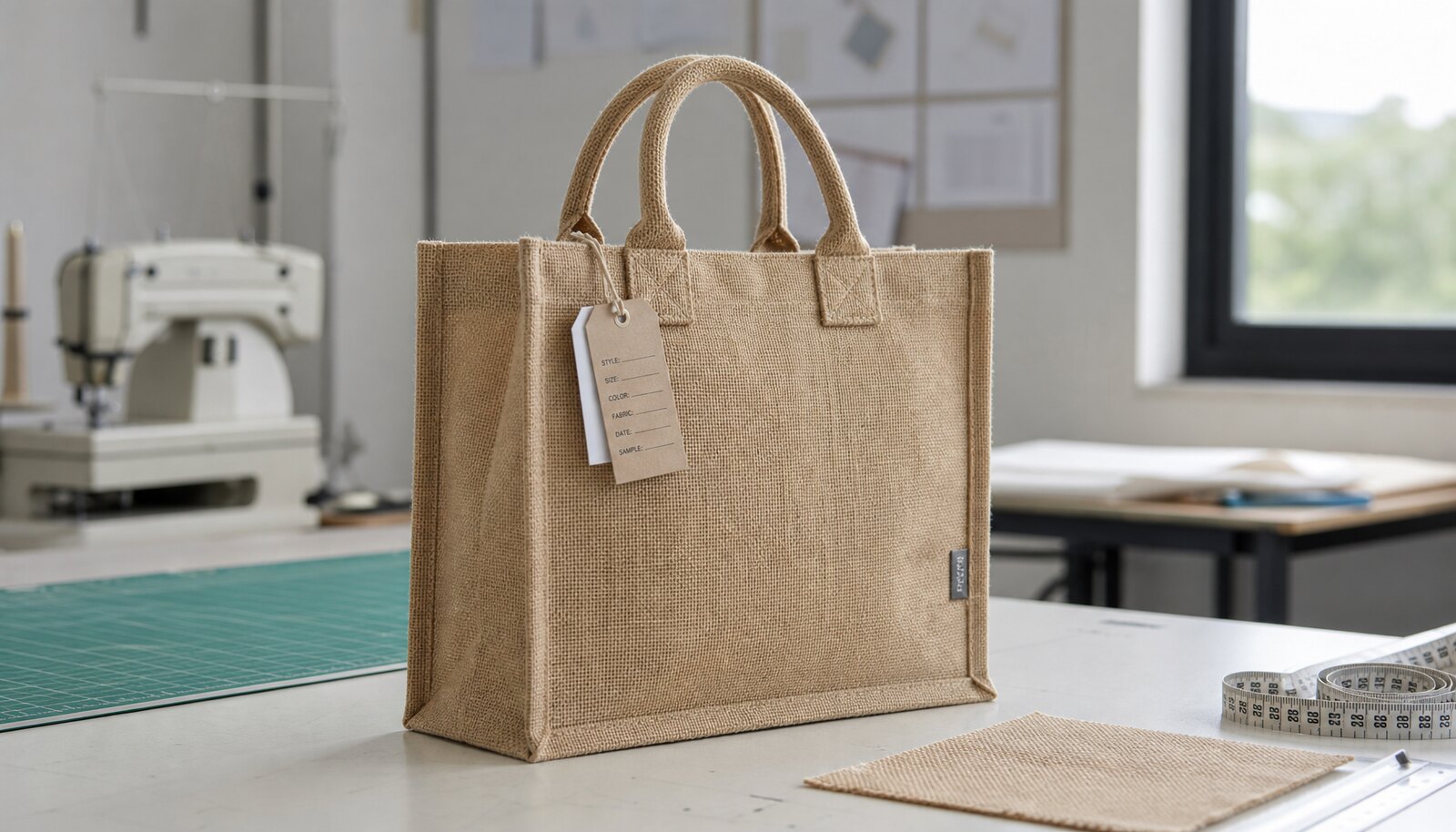
Gift shops do not usually lose money on jute tote bags because the concept is wrong. They lose money because the bags land with the wrong look, the wrong hand feel, or the wrong packing standard for retail. A tote on a gift-shop shelf is not just a carry item. It is a visible product that customers inspect from arm's length, touch, compare, and often buy as a branded souvenir. That means quality is not limited to whether the bag can hold weight. The real question is whether it looks clean, presents well, and stays consistent across the full shipment.
The most common failures are predictable: uneven weave, crooked print, handles that pull at the seams, excess fray at the top edge, odor from moisture exposure, and cartons that crush or scuff the product before it reaches the store. Those defects are not solved by asking for a prettier photo. They are solved by writing measurable acceptance criteria into the RFQ, sample approval, and final inspection plan. If the buyer does not define the failure mode, the supplier will fill in the blanks with their own assumptions.
- Define the retail channel first: tourist shop, museum store, souvenir counter, or seasonal gift display.
- Treat shelf appearance as part of the product spec, not a marketing preference.
- Separate cosmetic defects from functional defects so the factory knows what must be rejected.
- Match the inspection standard to end-use risk, not to the lowest-cost quote.
Write the Spec Around the Store Use Case
A jute tote for a gift shop should be specified from the customer use case backward. A small branded souvenir tote, a mid-size carry bag, and a premium retail resale bag may all use the same base material, but the details should differ. For light retail use, 280-320 GSM is often enough. For a bag that needs more shape on the shelf, 350-420 GSM usually gives a better result because the body holds form and the bag feels more substantial in the hand. Heavier cloth can work, but only if the extra stiffness is worth the cost and sewing time.
Construction matters as much as fabric weight. A gusseted body, folded top hem, and reinforced handle attachment usually look more retail-ready than a loose utility build. If the bag must print cleanly, a laminated or lined build can help flatten the surface, but it also changes folding behavior and hand feel. That tradeoff should be deliberate. Buyers should choose the build that fits the shelf, the price point, and the expected reuse rate, not the one that looks easiest to source on paper.
- Set finished size, gusset depth, and handle drop before asking for a quote.
- Use a tighter tolerance band for small bags, where a few millimeters are visible to the shopper.
- Choose lamination or lining only when it solves a real retail issue such as print flatness or moisture control.
- If the tote is premium retail, require a neat folded top edge and visibly reinforced seams.
Build the RFQ So Quotes Are Comparable
A quote is only useful when every supplier is pricing the same product. That sounds obvious, but many RFQs fail here because one supplier assumes a raw utility tote, another prices a retail-ready bag, and a third quietly excludes packing or reinforcement. The result is a low number that cannot be compared to the others. For jute tote bags, the RFQ needs to state size, GSM, print count, handle type, seam spec, and pack format in plain language. If the buyer leaves those variables open, the factory will fill them in with its own default.
The same rule applies to pricing structure. Ask for the unit price plus any separate charges for screens, plates, sampling, labels, retail inserts, and packaging. Then compare the recurring cost and the one-time setup cost separately. A quote that looks slightly higher can be cheaper in practice if it includes retail packaging, cleaner cartonization, and less risk of rejected units. The goal is not to buy the cheapest tote. The goal is to buy the tote that ships on spec and sells without avoidable rework.
- Send one spec sheet to every supplier so the price basis is identical.
- Ask for tiered pricing at realistic quantities, not just the first MOQ break.
- Separate one-time setup charges from unit cost so repeat order economics are clear.
- Do not compare quotes until the supplier confirms what is included and what is excluded.
Verify the Supplier Before You Price
Gift-shop buyers often get burned when a trading company quotes like a factory. The name on the email signature does not tell you who is cutting, sewing, printing, and packing the bags. Before you accept a price, ask the supplier to show the actual production route. That should include the maker's name, the plant address, the production process, and at least one current photo or video of the sewing and printing area. If a supplier cannot explain where the bags are made, you do not yet have a sourcing partner. You have a sales layer.
The verification step does not need to be complicated, but it does need to be concrete. Ask for a recent QC report, the source of the jute fabric, sample lead time, and the person who owns production follow-up. If your program has retailer requirements, ask whether the supplier can support barcode application, hangtags, carton markings, and export documentation without handoffs to a third party. Real factories answer those questions quickly because the answers live inside their workflow. Intermediaries often answer in generalities and move on to price.
- Ask for the actual factory name, location, and production role, not just a brand or trading name.
- Request a production photo or short video that shows sewing, printing, or packing in process.
- Ask who owns sampling, who owns bulk QC, and who signs off final cartons.
- If the buyer needs compliance documents, request them before sample approval, not after.
Approve Samples as a Procurement Gate
Sample approval should decide whether the bag is commercially ready, not whether the art director likes the photo. The approved sample needs to be made from the actual cloth, with the actual print method, and packed the way the bulk order will be packed. If the factory sends a hand-made sample on different material or with a different ink system, it can look better than production and hide the real risk. That is not a useful approval. Keep one sealed gold sample and use it as the benchmark for the entire order.
The sample review should include simple physical tests. Measure the bag against a template, check handle symmetry, compare the print placement to the art file, and rub the printed area after curing to see whether the ink transfers. Put a realistic retail load in the tote and hold it by the handles for a few minutes. The point is not to destroy the sample. The point is to prove that the bag behaves the way a customer would expect when it is picked up, carried, and reused.
- Approve only a physical sample made from the real fabric and real print method.
- Keep one sealed reference sample and tie the PO to that approval.
- Measure artwork placement, handle drop, and finished dimensions before signing off.
- If the factory changes fabric, ink, or pack format after approval, require a new sample sign-off.
Use Measurable Inspection Thresholds
A gift-shop tote needs clear inspection rules because the defects are easy to see and costly to ignore. A workable baseline is zero critical defects, AQL 2.5 for major defects, and AQL 4.0 for minor defects. Critical defects are the ones that make the product unsellable or unsafe: mold, wet odor, open seam, handle failure, wrong SKU, or missing barcode on retail-ready units. Major defects are the ones that hurt retail presentation or function: crooked logo placement, broken stitch lines, missing reinforcement, size out of tolerance, or severe print misregister. Minor defects are cosmetic issues that do not affect use but still need a cap.
The inspection plan should include hard numbers. For finished dimensions, use a tolerance band in the PO, typically +/- 5 mm for smaller totes and +/- 8 mm for larger sizes unless your product team writes a tighter limit. For stitch quality, ask for 6-8 stitches per inch on load-bearing seams and define what counts as a failure, such as skipped stitches, broken thread, or loose tails over 10 mm. For load performance, hang a filled sample at 1.5x intended use load for 30 minutes and inspect for seam opening over 2 mm, handle elongation over 10 mm, or obvious distortion. Those numbers are practical enough to use on a factory floor and strict enough to prevent cosmetic failures from reaching the shelf.
- Use zero tolerance for critical defects and write the definition into the PO.
- Check a measured sample from each style, color, and packing variant.
- Require stitch density, seam allowance, and reinforcement style to match the approved sample.
- Use a hold point if the first carton opening shows repeating size or print drift.
Treat Print and Branding as Product Quality
On jute, the print is not just branding. It is part of the product quality because the weave and slub pattern affect how the ink lays down and how the logo reads from a distance. Screen print is still the most practical choice for many gift-shop programs because it handles bold logos, simple artwork, and repeat orders well. It also gives the buyer a better chance of consistent coverage than more delicate methods on a coarse natural surface. That said, screen print only works if the artwork is suitable for jute and the supplier can show a physical strike-off at final size.
Retail buyers also need to think beyond the main logo. If the bag will be sold individually, the barcode, hangtag, and country-of-origin marking become part of the retail experience. A beautiful tote can still fail if the barcode will not scan, the hangtag falls off, or the care instructions are missing where the retailer expects them. For premium gift-shop programs, reserve the front panel for the retail image and keep side labels or compliance marks in a controlled, repeatable position. That keeps the shelf view clean and makes packing simpler to inspect.
- Use screen print for simple, bold, low-color artwork.
- Avoid tiny copy and fine line work unless the supplier proves it on the real bag.
- Require a rub test after curing to check for smearing or powdering.
- If retail compliance matters, confirm barcode placement and scannability before bulk release.
Control Packing, Cartons, and Shelf-Ready Delivery
Packing can create defects even when the bag itself is fine. Jute absorbs moisture, creases easily, and shows scuffing, so the pack plan needs to match the shipping route and the retail model. If the tote is going straight to shelf, individual polybagging, barcode labeling, and a clean fold pattern are usually worth the cost. If the order is for back-stock or warehouse replenishment, bulk packing can be cheaper, but only if the cartons are protected against moisture and compression. The buyer should choose one route or the other on purpose, not let the factory default decide it.
Carton details matter because the carton is part of the shipping spec. Ask for carton size, carton strength, pieces per carton, gross weight, and whether the cartons are pressed or drop-tested before release. A weak carton can crush corners, scuff prints, and trigger receiving complaints even if the bags are sewn correctly. For a gift-shop program, the customer judges the whole package, not just the cloth. The bag should arrive looking ready to sell, not like it survived a warehouse accident.
- Match the packing format to the sell-through model: shelf-ready or back-stock.
- Use moisture protection for humid routes or long ocean freight moves.
- Confirm outer carton labels, SKU marks, and barcode data before shipment.
- Keep carton weight manageable for store receiving and store-room handling.
Compare Landed Cost and Reorder Risk, Not Just Factory Price
The cheapest ex-factory price is often not the best buying decision. Landed cost per sellable unit is the number that matters, and that number includes sampling, setup charges, freight, duty, packaging, and the expected reject rate. If one supplier quotes a slightly higher unit price but gives you cleaner packing, lower defect risk, and a simpler approval path, the landed cost may actually be lower. For gift-shop buyers, that matters because a bad tote does not just cost material. It can create markdowns, chargebacks, and lost shelf space.
MOQ also changes the equation. A low MOQ is attractive when you are testing a seasonal line or a new museum store design, but the buyer should only stretch into extra SKUs or extra print locations when sell-through justifies the complexity. Every added variant creates another approval point, another inspection line, and another chance for mix-ups. If the initial program is a test, keep it simple and use the first order to validate quality, presentation, and repeat-order economics before you widen the line.
- Compare quotes on a landed-cost sheet that includes freight, duty, packing, and expected rejects.
- Keep setup cost and unit cost separate so repeat-order pricing is transparent.
- Use the first order to validate the spec before adding sizes, colors, or print variants.
- Hold price discussions until the supplier has answered the technical questions in writing.
Release the Order Only After the Hold Points Are Clear
A good jute tote purchase ends with a clear release rule. The order should move only when the sample is approved, the quote matches the approved spec, the inspection plan is written, and the packing format is confirmed. If any of those pieces are vague, the risk moves into production and the buyer loses control. This is especially important for gift shops, where a tote is judged immediately on appearance and consistency. The product does not get the benefit of the doubt at the shelf.
Use the final release as a simple checklist: does the material match, does the print match, do the dimensions match, do the handles and seams pass the load test, and do the cartons and labels match the PO. If the answer is yes across all five, the program is ready for bulk shipment. If one element is unresolved, hold the order until the supplier fixes it in writing and the revised sample or correction is approved. That discipline is what separates a tidy tote program from a repeat-issue purchase.
- Do not release bulk until the sample, quote, and PO all describe the same product.
- Use written hold points for size, print, pack, and carton approval.
- Require the supplier to close any deviation in writing before ex-factory release.
- Keep the approved sample and the inspection record attached to the purchase file.
Specification comparison for buyers
| Spec decision | Buy when | Hold when | Buyer risk / acceptance rule |
|---|---|---|---|
| Supplier route | Direct factory for repeat programs; trading company only when you need mixed categories or low-volume consolidation; domestic stockist for urgent replenishment | You need control over fabric source, stitching, and repeatability | Ask for the actual maker name, factory address, and a production photo or video of the sewing and printing line before you compare price |
| Fabric weight | 280-320 GSM for light gift retail; 350-420 GSM for shelf-ready structure; 450 GSM+ only when stiffness is part of the product story | The bag must keep shape on display or carry heavier retail purchases | Hold if the quote does not name GSM tolerance or if the approved sample feels significantly lighter than the bulk spec |
| Seam and reinforcement | 6-8 stitches per inch on load-bearing seams, with bartacks or box-X reinforcement at handle joins | The tote will be reused and handled often in-store | Reject if there are skipped stitches, loose thread tails over 10 mm, or handle joints without reinforcement |
| Handle construction | Self-fabric handles for a natural look; webbing handles for heavier use; handle drop matched to shoulder or hand carry | The bag needs stable carry comfort and repeatable presentation | Hold if the handle length varies noticeably from sample to bulk or if pull-out risk is not addressed in the quote |
| Print method | 1-2 color screen print for most gift-shop artwork; woven label or embroidery for small premium branding | The artwork is simple and repeat orders matter | Do not approve fine text, gradients, or close registration on coarse jute unless the supplier shows a physical strike-off at final size |
| Logo and retail mark placement | Front-panel branding with a measured placement window; side labels reserved for brand or compliance info | The tote will sit on a shelf or be hung on a display wall | Hold if the art position is only eyeballed instead of locked to a template with a tolerance band |
| Packing format | Individual polybag, barcode label, and insert card for retail-ready units; bulk pack with moisture protection for warehouse replenishment | The bag will be sold directly from shelf or needs back-stock efficiency | Reject if the pack plan is not matched to the sell-through model or if carton marks, SKU labels, and barcode data are not confirmed |
| Inspection gate | Pre-production sample, inline check, and final AQL inspection with a written defect map | The program matters enough that returns, chargebacks, or shelf rejects would hurt margin | Use zero critical defects, AQL 2.5 for major defects, and AQL 4.0 for minor defects as the baseline unless your brand standard is stricter |
Buyer checklist before sampling
- Define the retail use case first: souvenir carry, gift bag, branded retail tote, or seasonal promotion. Do not quote all four with the same spec.
- Lock the finished size, gusset depth, handle drop, and acceptable tolerance before asking for price.
- Specify GSM or oz/yd2 and state whether lamination, lining, or coating is included in the quote.
- Require a physical pre-production sample made from the actual fabric, print method, and packing format.
- Ask for seam details: seam allowance, stitch density, bartack length, and handle reinforcement method.
- Set print rules: artwork size, color count, placement template, and acceptable registration tolerance.
- Ask for shelf-readiness details: polybag type, barcode placement, insert card, hangtag, and retail case pack.
- Confirm carton size, pcs per carton, gross weight, and whether cartons are test-pressed before shipment.
- Use a written defect map tied to AQL and define critical, major, and minor defects before bulk starts.
- Compare landed cost per sellable unit, not just ex-factory price, and include freight, duty, sampling, and expected reject risk.
Factory quote questions to send
- What is the actual fabric weight, and what tolerance do you allow from the approved sample or target GSM?
- Is the bag unlined, lined, or laminated, and what exactly is included in the unit price?
- Which print method will you use, and can you show a physical strike-off on the same jute fabric before bulk approval?
- What is the MOQ by size, color, and print version, and how does MOQ change if I add a second logo location or a retail hangtag?
- What stitch density, seam allowance, and reinforcement do you quote for the load-bearing seams and handle joins?
- What is your standard handle width, handle drop, and handle attachment method for this tote style?
- What pack format is included: bulk pack, individual polybag, barcode sticker, insert card, or retail hangtag?
- What carton dimensions, carton strength, and maximum carton weight do you propose for export shipment?
- What is your normal production lead time after sample approval, and which steps are most likely to slip in peak season?
- What is your defect policy, overrun or underrun range, and rework commitment, and can you put it in writing?
Quality-control points to confirm
- Fabric weight matches the approved sample and stays within an agreed tolerance band, typically +/- 5 percent unless the buyer writes a tighter limit.
- Finished bag dimensions are within tolerance after sewing and pressing: use +/- 5 mm for smaller gift-shop totes and +/- 8 mm for larger formats unless the PO states otherwise.
- Handle length and handle drop are consistent across the lot, with visible symmetry on the front-facing retail side.
- Load-bearing seams run at 6-8 stitches per inch or the factory-equivalent approved standard, with no skipped stitches on the main seam path.
- Bartacks or box-X reinforcements are present, fully tied off, and positioned exactly where the sample shows them.
- Print placement matches the measured template, with no visible misregister, smearing, pinholes, or ghosting at arm's-length retail viewing distance.
- Print adhesion survives a dry rub test after curing, with no powdering or transfer that would show up during shelf handling.
- No critical defects are present: mold, wet odor, wrong SKU, missing barcode on retail-ready units, open seam, or handle failure.
- Minor cosmetic issues are limited to the agreed AQL standard, with zero tolerance for defects that would trigger a store return or markdown.
- Load test is performed on a representative sample by hanging a weighted bag for 30 minutes at 1.5x the intended retail carry load, then checking for seam opening, handle elongation over 10 mm, or distortion of the top edge.