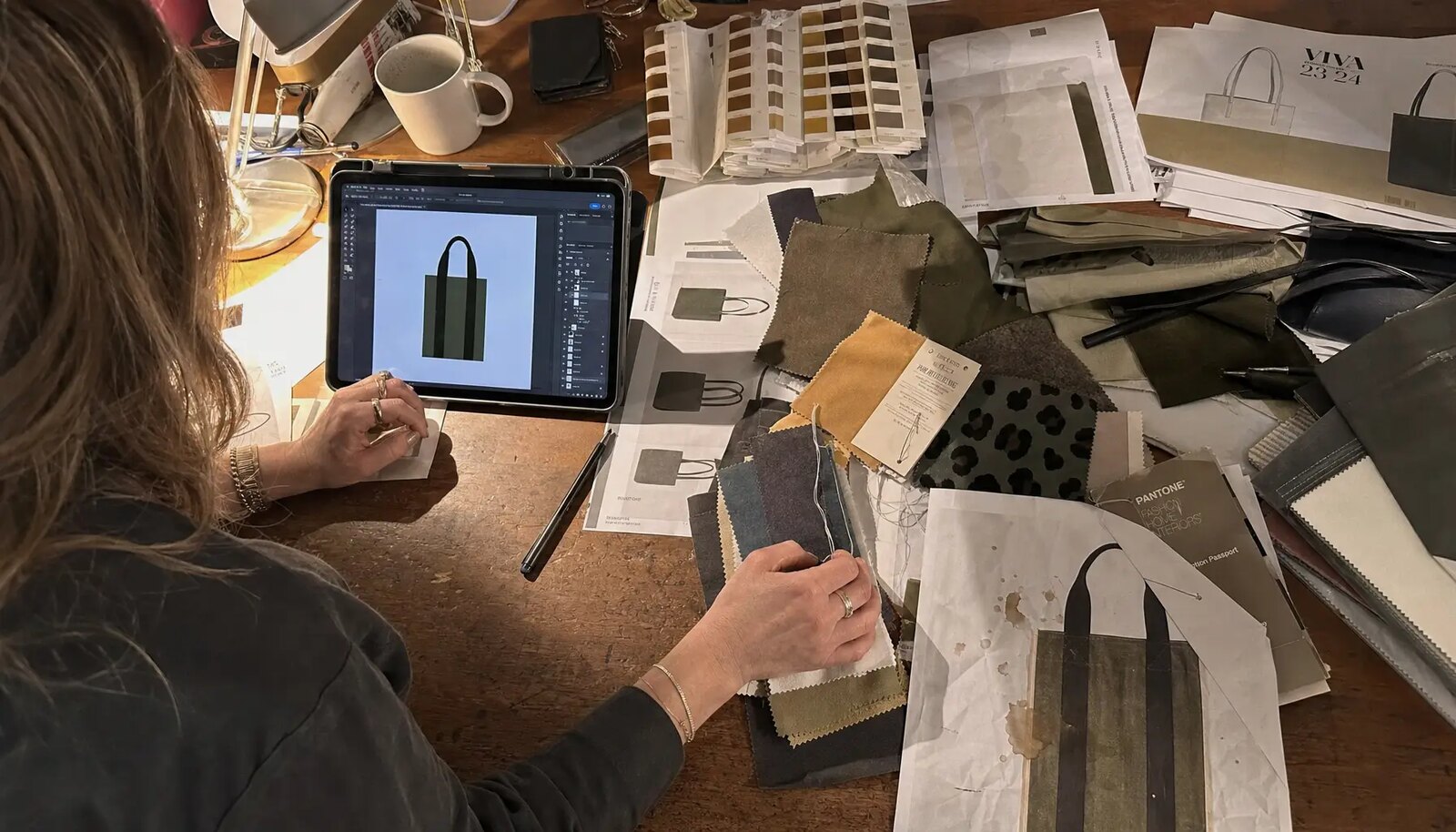
Start with the buying risk, not the mockup
Jute tote bags can look deceptively finished in a digital deck. The logo is crisp, the color is flat, and the bag face appears perfectly smooth. Bulk production is less tidy. Jute is coarse, naturally uneven, and more variable than cotton canvas or polyester. Raised yarns, open weave, slubs, and fiber shade changes can all interfere with the printed mark.
For eco apparel brands, this bag often carries more responsibility than a standard giveaway. It may act as retail packaging, a gift-with-purchase item, a launch kit carrier, an event handout, or a reusable shopping bag. Brand teams care about the logo and the feel. Procurement needs cost, MOQ, lead time, and supplier accountability. Operations needs cartons, barcodes, pack counts, and delivery timing. A useful jute tote bags for eco apparel brands print proofing checklist brings those needs into one buying file before screens are made and fabric is cut.
The proof should not be treated as a pretty preview. It should answer practical questions. Can the chosen jute hold the print? Does the logo remain readable on a textured panel? Are the handles strong enough for the intended contents? Will the packing method protect the print face? Are the tolerances written clearly enough for inspection? When those answers are missing, disputes usually start with ordinary assumptions: premium, natural, centered, strong, clean, retail-ready. Those words feel clear until the shipment arrives.
- Treat the proof as a production control sample, not only a design preview.
- Approve the substrate, construction, print method, trims, and packing together.
- Keep one signed approved sample with the buyer and one matching counter sample at the factory.
- Write tolerances before bulk production rather than negotiating them after shipment.
- Define which natural jute characteristics are acceptable and which defects are rejectable.
Build the RFQ around a real bag
A jute tote quote is useful only when every supplier is pricing the same construction. If the RFQ says natural jute tote with logo, one factory may quote a 280 GSM unlined promotional bag. Another may quote a 350 GSM lined tote with stronger handles. A third may include a laminated surface that changes both appearance and hand feel. The cheapest quote may not be more competitive. It may simply be a different product.
Start with finished dimensions, not loose descriptions. State the body width and height, gusset depth, handle drop, handle width, fabric GSM range, weave type, lining or lamination, closure, handle material, reinforcement method, and intended contents. If the tote must hold folded apparel, a boxed accessory, a lookbook, or an event kit, say so. If it must stand upright when filled, fold flat for shipping, or fit a planned carton, include that as well.
As a practical reference, 280-300 GSM is commonly used for lightweight promotional or event jute totes where cost and volume matter. Retail-facing bags, launch kits, and programs expected to carry folded garments or accessories often start around 310-350 GSM. Heavier fabric can help the bag feel more structured and give the print panel more body, but it does not replace good weaving, sewing, lining, or print control. GSM is one line in the spec, not the whole quality standard.
- State finished size and achievable tolerance, such as +/-10 mm for body dimensions where the supplier can support it.
- Specify GSM as a numeric range rather than using terms such as premium, heavy, strong, or thick jute.
- Confirm whether the quoted bag is raw jute, laminated jute, cotton lined, nonwoven lined, or otherwise structured.
- Define handle drop and handle width based on the intended carry method and load.
- Tell the supplier whether the tote must stand upright, fold flat, fit a garment bundle, or meet a carton plan.
Decide what the jute surface must do
The jute surface is both a design choice and a production variable. Natural unlaminated jute gives the rustic texture many eco apparel brands want, but the open fiber structure can interrupt fine artwork. Edges may look less even than they do on cotton. Small pinholes and texture breaks are more likely. That may be acceptable for a bold one-color mark, but risky for fine copy or tight brand graphics.
Laminated jute can provide a cleaner print face and reduce loose fiber movement, yet it changes the touch, stiffness, appearance, and material story. If lamination is part of the construction, it belongs in the specification and quote. Do not let it hide behind a generic natural jute description. The same applies to lining. A cotton lining may be useful when the bag carries apparel and the buyer wants a cleaner interior. A nonwoven lining may suit cost-sensitive programs. An unlined bag may be fine for simple promotional use, but it still needs inspection for loose fibers, odor, rough edges, and seam quality.
Review the printable panel separately from the rest of the tote. Natural shade variation and small slubs are expected in jute, but not every mark should be accepted as character. Heavy slubs through the logo, broken yarns, holes, oil spots, glue marks, damp odor, mildew odor, or strong shade bands on the print face can damage presentation. The QC standard should make the line clear: normal natural variation is acceptable; defects that harm function, cleanliness, or logo readability are not.
- Ask for a swatch or material photo before sampling if several jute options are available.
- Confirm whether lamination is on the outside, inside, or both, and whether it affects the print method.
- If using lining, specify lining material, color, approximate weight, and attachment method.
- Reject heavy stains, damp odor, holes, and broken fibers in the print area even when natural shade variation is acceptable.
- Avoid making material or sustainability claims unless the confirmed construction supports the wording.
Prepare artwork for the weave
Artwork that works on a screen may not work on jute. The substrate has height, gaps, and irregular color. Fine serifs, hairline rules, small taglines, halftones, gradients, and tight reversed-out details can blur, fill in, or disappear into the weave. The safest approach is not to wait for the supplier to rescue weak artwork at sampling. Prepare the file for the material from the start.
Use editable vector artwork whenever possible. Include final print width and height, color reference, minimum stroke guidance, smallest text size, and exact placement. Placement should be measured from fixed points such as the top edge, side seam, bottom seam, or gusset edge. Centered on front is too loose for a flexible sewn item. If the bag has a gusset, state whether the logo is centered on the flat front panel or visually centered across the full bag body.
Color also needs discipline. A Pantone or agreed color reference can guide ink mixing, but ink on natural jute will not look the same as ink on coated paper or a backlit display. Pale colors may lose contrast. White or cream may need careful opacity control. Dark one-color marks often read more reliably, although even dark ink can show texture breaks. Approve color against the physical proof under consistent lighting, and record whether the standard is the Pantone reference, the approved sample, or both.
- Provide AI, EPS, editable PDF, or another supplier-accepted vector format whenever possible.
- State final print size and exact placement in millimeters or inches.
- Ask the supplier to recommend minimum line weight, minimum text height, and minimum spacing for the chosen jute.
- Avoid gradients, photographic detail, tiny taglines, and thin reversed-out copy unless they are tested physically.
- Record whether color approval is based on Pantone reference, printed proof, approved physical sample, or a combination.
Choose decoration by repeatability
Screen printing is usually the practical default for jute tote bags with bold logos and one to three solid colors. It is familiar, scalable, and cost-effective for repeat programs. It can also put down enough ink to keep a mark legible on a textured surface when the factory controls mesh, pressure, ink viscosity, and drying or curing. Still, screen print is not magic. The result can vary if the jute lot changes, the panel shifts, the operator uses different pressure, or stacked bags rub before the ink is stable.
Heat transfer may help when artwork needs sharper edges or a lower-volume test run, but it must be proven on the actual construction. A clean first photo is not enough. Transfer films can show a visible edge, feel less natural, crack on folds, lift at corners, or fail rub checks if the adhesive does not bond well to the jute surface. Fold the bag, rub the print, stack it, compress it in the proposed packing style, and inspect again.
Labels, stitched patches, woven badges, or leather-like patches can solve some print limits, especially for small marks or detailed branding. They also add cost, attachment risk, and a different visual language. If you choose one, inspect placement tolerance, stitch neatness, fraying, color consistency, edge finish, and attachment strength. The right decoration method is the one that can be repeated at the target order quantity, not the one that looks cleanest in one isolated sample photo.
- Use screen print for bold marks, solid fills, limited colors, and repeat orders.
- Ask whether screens are charged per color, per size, per artwork version, or per reorder.
- Test heat transfer for edge lift, cracking, rub-off, fold marks, and abrasion during packing.
- Consider labels or patches when small type cannot be printed cleanly on coarse jute.
- Require the proof to use the same decoration method intended for bulk production.
Make the proof a production standard
A strong proof sample is not a showroom bag with a logo added for approval. It should use bulk-equivalent jute, final construction, intended print method, confirmed trims, approved handle reinforcement, and proposed packing. If the exact bulk material is not yet available, the supplier should say what is different and how that difference could affect print sharpness, color, bag shape, or handle performance.
Review the sample the way an inspector will review the order. Measure the bag width, height, gusset, handle drop, print size, and print position. Look at the tote empty, then fill it with realistic contents. Rub the print with a clean white cloth to check for obvious transfer. Fold and unfold the print area if the bulk order will be packed flat. Look for smudging, cracking, pinholes, fuzzy edges, heavy texture break, and loss of readability from a normal customer viewing distance.
Then move beyond the front panel. Check handle anchoring, inside lining, lamination, top edge, bottom seam, gusset symmetry, loose threads, stains, odor, and rough fiber ends. Sample approval should be written, not casual. Record the approved fabric, GSM, construction, artwork file, print size, placement, color reference, reinforcement method, packing format, carton quantity, and allowed variation. Any later change to artwork scale, ink color, print method, handle material, lining, or packing should trigger a new approval step.
- Approve one physical sample for each artwork version or colorway that carries material risk.
- Sign and date the approved sample or use another controlled approval method agreed by both sides.
- Ask the factory to keep a counter sample at the production line for operator reference.
- Record all measurements from the proof rather than relying on photos alone.
- Do not release bulk until the sample, spec sheet, quote, and artwork file all match.
Write tolerances inspectors can use
Quality language has to survive the handoff from buyer to supplier to production floor to inspector. Good stitching, clean print, close color, and centered logo are not enough. Use measurable targets wherever possible. Depending on the construction and supplier capability, set body size tolerance, handle drop tolerance, print placement tolerance, registration expectation, and color approval standard before bulk production starts.
Separate natural material character from commercial defects. Slight yarn shade variation, small slubs, and irregular texture are part of jute. Severe stains, oil marks, mildew odor, holes, broken yarns in the logo area, open seams, loose handles, wrong artwork, and unreadable print should be classified as defects. This distinction protects both sides. The buyer avoids over-rejecting a natural fabric for normal variation, while the supplier cannot use natural material as a blanket excuse for avoidable quality issues.
Defect classification should match commercial risk. Critical defects are problems that make the bag unsafe or unusable, such as handles pulling loose, an open bottom seam, sharp trim, wrong material, or closure hardware that could damage apparel. Major defects affect saleability or brand presentation: visibly misplaced print, unacceptable color mismatch, severe stains, failed closures, or crushed cartons. Minor defects may include small irregularities that do not affect function, cleanliness, or logo readability. Put these categories in the buying file so final inspection decisions are less subjective.
- Define logo placement tolerance from top edge, side seam, bottom seam, or gusset edge.
- Define acceptable registration for multi-color prints and reject blurred marks that reduce readability.
- Use the approved physical sample as the color and texture reference for final inspection.
- Classify defects as critical, major, and minor before production.
- Require inline checks during printing and sewing, not only a final inspection after packing.
Check handles like a functional component
The front print usually gets the meeting time. Handles deserve equal attention. A jute tote for an apparel brand may carry folded garments, catalogs, samples, boxed accessories, water bottles, or an event kit. The supplier cannot choose the right handle width, reinforcement, stitch pattern, or seam strength without knowing the intended load.
Handle options include self-fabric jute, cotton webbing, rope-style handles, and padded constructions. Cotton webbing often feels cleaner in the hand and can support strong stitching. Self-fabric jute keeps the natural look consistent. Whatever the choice, the reinforcement method should be named and visible. X-box stitching, bartacks, or another approved method should be inspected for skipped stitches, loose threads, short thread tails, uneven placement, and fabric tearing around the anchor point.
A useful load check can be simple. Fill the tote with the approximate intended weight, lift it repeatedly, hold it for an agreed period, and inspect stress points afterward. The test for a lightweight apparel tote does not need to match a bag intended for books or heavy boxed goods. What matters is that the construction is tested against intended use, not judged only as an empty sample on a table.
- State intended contents and approximate load in the RFQ.
- Specify handle material, width, drop, and reinforcement method.
- Inspect both handle ends for consistent anchoring and no fabric tearing.
- Check seam allowance, stitch density, loose threads, and open seams on stress points.
- Test the sample loaded, not only empty, before approving the production standard.
Protect the print with a packing spec
Packing can quietly undo good production. A tote may leave the print table acceptable and arrive with scuffed ink, creased panels, crushed gussets, moisture odor, or distorted cartons. Flat packing is efficient for freight and common for volume orders, but compression needs limits. If the bag must look structured at retail or sit inside a premium apparel kit, approve the packing method with the proof sample instead of after bulk sewing.
The packing specification should cover inner pack quantity, individual polybag policy, tissue or separator use, barcode placement, hangtag placement, carton dimensions, carton strength, gross weight target, master carton marks, moisture protection, and pallet requirements if relevant. Some eco apparel brands prefer to reduce plastic. That may be appropriate, but the replacement still has to protect the print face and control fiber transfer. If polybags are not allowed, specify paper bands, tissue sheets, or another approved method.
Carton planning affects landed cost as well as quality claims. Dense cartons can reduce freight volume but increase abrasion and shape deformation. Loose cartons may protect the tote better but can raise shipping cost or collapse if not filled correctly. For warehouse receiving, carton marks and barcode accuracy are as important as visual condition. Ask for carton dimensions and gross weight during quoting so logistics teams can estimate freight, storage, and handling before the purchase order is released.
- Approve the packing method during sample approval, not after bulk sewing.
- Set inner quantity, master carton quantity, carton dimensions, and maximum gross weight.
- Protect printed faces from rubbing against rough jute surfaces during transit.
- Confirm barcode, hangtag, insert, and carton mark placement with photos or a packing sample.
- Check cartons for bowing, splitting, weak tape, moisture exposure, and incorrect marks during final inspection.
Compare quotes on the same basis
A low unit price is useful only when you know what it includes. One supplier may exclude screens, sample fees, artwork version charges, packing upgrades, inspection handling, barcode labels, or export cartons. Another may quote FOB while a second quote is EXW. A third may include only delivery to a local forwarder. Normalize currency, Incoterm, packing method, inspection requirement, and artwork count before deciding which quote is better.
MOQ deserves the same treatment. A factory may offer one minimum for a standard body and separate minimums for fabric color, GSM, lining, handle color, print color count, or artwork version. For apparel brands with regional logos, seasonal artwork, or multiple store banners, the per-version MOQ can matter more than the total order quantity. Ask for a price ladder by total units and by version so internal teams can decide whether to consolidate artwork or pay more for smaller splits.
Lead time should be broken into milestones. A quote that says 30 days after approval may hide proofing, corrections, material booking, cutting, printing, drying or curing, sewing, trimming, inline QC, final inspection, packing, and dispatch. Jute tote orders often slip when artwork changes, special lining, colored handles, closures, or multiple print versions are added late. A milestone schedule shows which approvals are blocking the order and which steps can move in parallel.
- Ask for a cost breakdown instead of unit price only.
- Confirm whether fees repeat for each artwork version, print color, or size change.
- Request MOQ by total order and by version.
- Ask for sample lead time, correction time, bulk production time, inspection window, and dispatch date separately.
- Keep the final quote, spec sheet, artwork, proof notes, and approved sample together as the buying file.
Specification comparison for buyers
| Spec decision | Recommended option | When it fits | Buyer risk to check |
|---|---|---|---|
| Fabric weight | 280-300 GSM for lightweight promotional totes; 310-350 GSM for retail-facing or more structured jute totes | Event giveaways, apparel gift-with-purchase bags, launch kits, showroom handouts, and retail shopping bags | GSM alone is not a quality standard. Confirm weave density, lamination or lining, seam construction, and whether the finished panel stays flat enough for the artwork. |
| Jute surface | Natural unlaminated jute for visible texture; laminated jute or lined construction when a cleaner print face and lower shedding risk are needed | Eco apparel brands that want natural fiber character but still need controlled logo presentation | Raw open-weave jute can cause pinholes, uneven ink edges, and shade variation. Laminated jute changes hand feel and should be stated clearly in the spec. |
| Bag dimensions | Quote finished width, height, gusset, and handle drop with tolerances such as +/-10 mm for body size and +/-5 mm for handle drop where achievable | Programs with planned garment bundles, cartons, store displays, or kitting requirements | Two suppliers can use the same casual size description and quote different products. Dimensional drift can affect packing, barcode location, and logo centering. |
| Print method | Screen print for 1-3 solid colors; heat transfer, woven label, or patch after testing on the exact jute construction | Bold logos, campaign marks, store event bags, repeat replenishment orders, and private-label packaging | Fine type, tight registration, gradients, and small reversed-out copy can fill in or break up on coarse jute. |
| Artwork file | Editable vector artwork with final print size, color reference, minimum stroke guidance, and placement measured from fixed edges | Procurement teams aligning brand, supplier, factory, and inspection standards | JPEG mockups do not validate line weight, ink spread, color opacity, or readability over uneven yarns. |
| Handle construction | Cotton webbing, jute self-fabric, or padded handles with X-box stitching, bartack reinforcement, or another approved stress-point method | Bags carrying folded apparel, lookbooks, boxed accessories, employee kits, loyalty packs, or trade show materials | Weak reinforcement can look fine in a front-view photo and still fail under load. Ask for target test weight, lift method, and duration. |
| Lining and lamination | Unlined for low-cost giveaways; cotton, nonwoven, or laminated lining for cleaner interiors and better shape | Premium retail packs, reusable shopping bags, and programs where fiber shedding against garments is a concern | Lining adds sewing complexity and can change finished dimensions. Lamination can bubble, delaminate, or affect material claim language if not documented. |
| Closure and trims | Open top for simple promotional use; zipper, snap, button, or magnetic closure only with alignment tolerance and trim spec | Retail kits, employee welcome packs, subscription boxes, or higher-value merchandising programs | Closure hardware adds cost, lead time, and QC points such as alignment, pull strength, corrosion, and trim color consistency. |
| Packing format | Flat pack with print-face protection for volume efficiency; shaped packing or lower carton count for retail presentation | Bulk distribution, e-commerce kitting, retail store allocation, and event delivery | Over-compression can crease print panels, flatten gussets, and scuff ink. Under-filled cartons can collapse or increase freight cost. |
Buyer checklist before sampling
- Specify finished bag width, height, gusset, handle drop, handle width, fabric GSM range, weave type, lining or lamination, closure, and whether the bag must stand upright when filled.
- Attach editable vector artwork with final print size, Pantone or agreed color references, minimum line weights, smallest text size, and exact placement measured from the top edge, side seam, bottom seam, or gusset edge.
- Request a pre-production sample using bulk-equivalent jute, actual print method, final trims, approved reinforcement, and proposed packing method rather than approving only a digital layout.
- Set written tolerances for bag dimensions, handle drop, logo placement, print registration, color variation, ink coverage, stitch defects, seam alignment, stains, odor, and carton condition.
- Confirm the intended load: number and approximate weight of folded garments, catalogs, boxed accessories, event contents, or retail inserts that the tote must carry.
- Ask the supplier to state the handle reinforcement method, stitch density expectation, thread type or thickness where relevant, seam allowance, and practical load test approach.
- Require the quote to separate bag body cost, print cost, screen or plate fee, artwork version fees, sample fee, packing cost, carton upgrade cost, inspection handling cost, and freight or Incoterm assumption.
- Confirm whether MOQ changes by bag size, jute color, GSM, lining, lamination, handle material, print color count, artwork version, barcode version, or split shipment.
- Define polybag policy, tissue or separator use, insert or hangtag placement, barcode location, inner pack count, master carton marks, carton dimensions, and maximum carton gross weight.
- Lock lead time by milestone: artwork confirmation, material booking, proof sample, correction round, bulk cutting, printing, curing or drying, sewing, trimming, inline QC, final inspection, packing, and dispatch.
Factory quote questions to send
- What finished dimensions, GSM range, weave, lamination, lining, handle material, closure, and reinforcement method are included in this quote?
- Will the proof sample use the same jute lot or bulk-equivalent material, same ink system, same print method, same trims, and same packing format intended for production?
- Which decoration method are you proposing, how many colors are included, and which artwork details should be enlarged, simplified, or removed for this jute surface?
- What minimum line weight, minimum text height, and minimum spacing do you recommend for clean screen printing on the quoted jute construction?
- What is the MOQ by total order, bag size, fabric color, GSM, lining, handle type, print color count, artwork version, barcode version, and split shipment?
- Please break out the unit bag price, printing charge, screen or plate fee, sample fee, courier fee, packing cost, carton upgrade cost, inspection handling charge, and Incoterm basis.
- What size tolerance, handle drop tolerance, print placement tolerance, color tolerance, registration tolerance, and acceptable natural fiber variation can you commit to in writing?
- How do you test handle strength, seam security, print rub resistance, odor, moisture exposure risk, and carton compression before shipment?
- What carton dimensions, pack quantity, gross weight, inner packing, print-face protection, moisture protection, and carton marking method are included?
- How long does each stage take after artwork approval: proof sample, correction round, bulk material purchase, cutting, printing, drying or curing, sewing, trimming, final QC, packing, and dispatch?
Quality-control points to confirm
- Measure logo placement from fixed reference points such as top edge, side seam, bottom seam, and gusset edge. Use written tolerance, commonly in millimeters, instead of visual centering only.
- Check print registration on coarse weave areas, especially around small lettering, outlines, borders, circular marks, and reversed-out elements.
- Compare color against the approved sample or agreed standard under daylight-equivalent lighting, noting that natural jute tone can shift perceived color.
- Inspect ink coverage for pinholes, smudging, over-deposit, cracking, rubbing, poor curing, texture break that harms readability, and transfer marks from stacked bags.
- Measure finished width, height, gusset, and handle drop after pressing and packing simulation because jute panels can move during sewing, drying, or compression.
- Inspect handle attachment for skipped stitches, loose threads, missed bartacks, uneven X-box stitching, weak anchoring, torn fabric near the seam, and inconsistent handle length.
- Check bag body for oil marks, glue spots, mildew odor, dampness, sharp fiber ends, heavy slubs in the print area, broken yarns, holes, and severe shade mismatch.
- Inspect top edge, gusset, side seams, and bottom panel for twisting, puckering, seam roll, uneven folding, and any distortion that pulls the logo out of alignment.
- Check lining or lamination for bubbling, delamination, exposed glue, fiber shedding, uneven trimming, loose corners, and interior stains.
- Verify closures and trims for alignment, smooth operation, correct color, secure attachment, corrosion risk, and no sharp or rough edges against apparel.