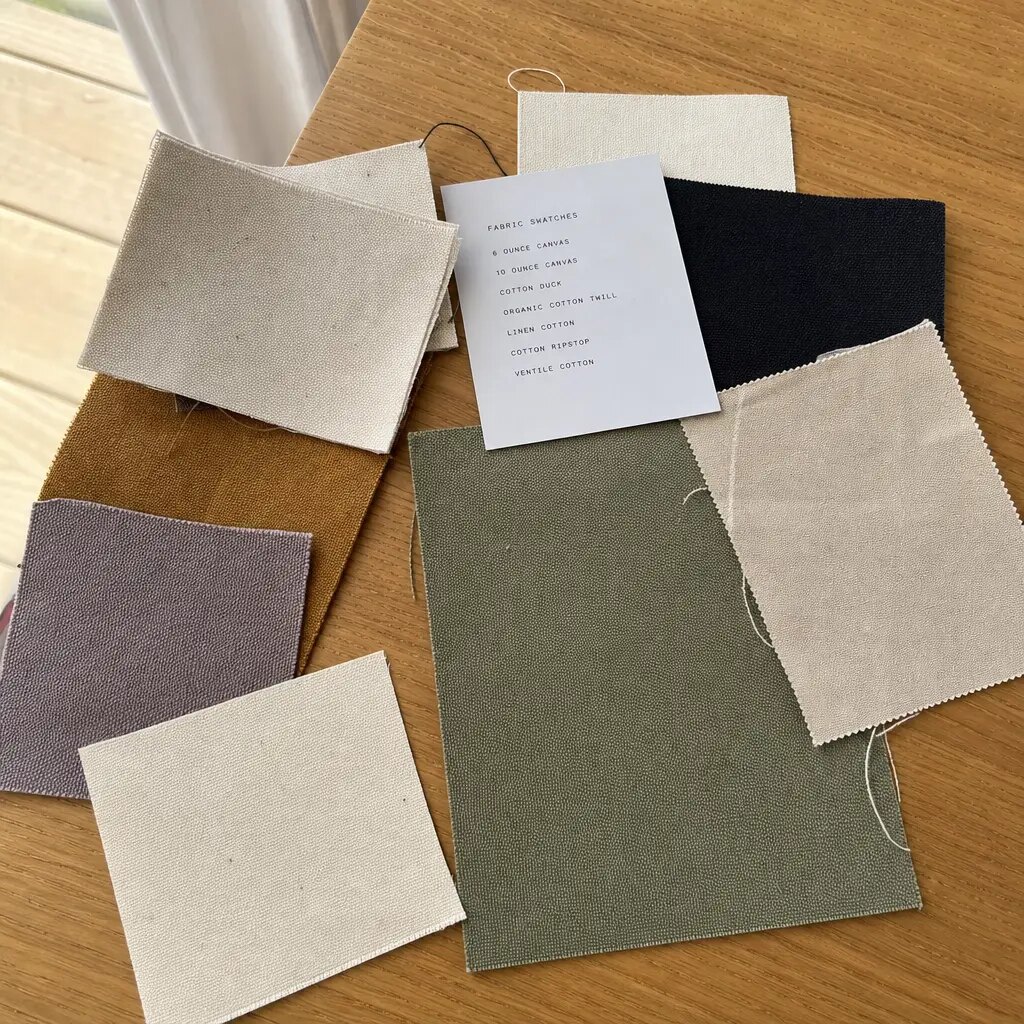
Start with the real purpose of the proof
A jute tote proof is not a prettier version of a PDF mockup. It is the buyer’s first physical evidence of how the chosen fabric, ink, artwork, sewing, and packing will behave together. Jute has an open weave, visible slubs, natural shade variation, and a rougher surface than cotton canvas. Ink can sit on raised fibers, sink into lower areas, or look quieter than the same Pantone color printed on white paper. That is why a jute tote bags print proofing checklist for eco apparel brands needs to treat the sample as a production control, not a design courtesy.
For apparel brands, the tote often carries more responsibility than a basic giveaway. It may be retail packaging, a gift-with-purchase, a wholesale showroom bag, an ecommerce bundle component, a trade show carry bag, or a reusable shopping tote handed directly to customers. Small proofing gaps can show up later as very visible problems: a logo too close to the gusset, fine text that fills in, a crease across the main print, muted brand color, rubbed ink, or handles that feel weaker than the bag body suggests.
Procurement should approve the printed tote as a complete item whenever the order is customer-facing. The control sample should show fabric shade, print opacity, logo placement, handle construction, top hem, gusset shape, seam finish, inside finish, fold direction, and packing behavior. If the supplier changes fabric, ink, print sequence, handle, trim, or carton method after approval, the original proof no longer protects the buyer.
- Treat the proof as a manufacturing standard with measurable acceptance points.
- Approve the same GSM, finish, print process, handle, trim, and packing intended for bulk.
- Connect the approved sample, artwork file, tolerance sheet, and PO specification by date and version number.
- Require written approval before any supplier substitution, even when price and delivery date stay the same.
- Use the proof to separate acceptable natural jute variation from preventable production defects.
Lock the tote specification before judging artwork
Print quality begins before ink is mixed. A 280-320 GSM unlaminated jute tote may be suitable for light promotional use, especially when the artwork is bold and the expected load is modest. Retail packaging, apparel sets, boxed accessories, catalogs, or repeated store use usually call for more body. In many programs, 320-400 GSM is a more dependable starting range because the panel stands better, the bag feels more substantial, and the print area is less floppy during handling. Heavier jute can add structure, but it also raises cost, carton cube, shipping weight, and fold stiffness.
GSM needs careful wording. Some suppliers quote the base jute before coating. Others quote the finished material stack after lamination or lining. A 320 GSM unlaminated cloth and a 320 GSM laminated construction do not cut, fold, sew, smell, compress, or present in the same way. Buyers should confirm whether the bag is jute only, a jute-cotton blend, PP-laminated jute, cotton-lined jute, or nonwoven-lined jute. Broad terms such as “eco jute” or “natural bag” are not enough for a procurement file.
The bag construction also determines what is printable. Panels printed before sewing can shift after seam allowance, pressing, and gusset formation. Finished bags printed after sewing may limit screen access because handles, hems, and side folds get in the way. Handle tabs, top hem depth, seam allowance, and gusset folds define the real print-safe area. A strong spec sheet keeps suppliers quoting the same product and makes it harder for a low price to hide lighter fabric, narrower handles, simpler stitching, or cheaper packing.
- Specify finished width, height, gusset, top hem depth, handle drop, and acceptable dimensional tolerance.
- Use 320-400 GSM as a practical starting range for retail-grade jute totes.
- State whether the fabric is unlaminated, laminated, lined, blended, dyed, washed, or natural shade.
- Confirm whether GSM is measured before or after lamination, coating, or lining.
- Include handle width, handle length, tab depth, stitch pattern, thread color, and label details in the RFQ.
Match the print method to the artwork risk
Screen printing is often the most practical choice for jute tote bags. It works well for bold logos, icons, simple slogans, and one- to three-color spot artwork. At volume, setup costs are easier to absorb, and the ink can be laid down with enough presence to stand out against a tan, uneven base. The tradeoff is detail. Fine strokes, small reversed text, tight traps, halftones, gradients, and close registration are harder to hold on jute than on smooth cotton canvas.
Transfers, DTF, and other heat-applied graphics can solve some artwork problems but create new proofing questions. They may hold more colors or smaller details, yet the transfer edge can be visible, the hand feel may be less natural, and the graphic can react differently to folding, rubbing, heat, or carton pressure. For an eco apparel brand with a natural product story, a simplified one-color screen print often looks cleaner and more intentional than a full-color mark forced onto a rustic fabric.
The supplier’s role is not just to say “printable.” Ask them to review the logo at actual size and state the limits: minimum stroke width, minimum text height, minimum knockout gap, expected ink spread, recommended underbase, maximum print area, and whether the print should happen before or after sewing. Physical proofing is especially important for small text, multiple colors, white ink, large solid areas, transfer graphics, and brand-critical color.
- Use screen print for bold logos, large text, simple icons, and repeat orders where cost control matters.
- Test transfer or DTF for adhesion, fold behavior, edge visibility, hand feel, abrasion, and heat response before bulk approval.
- Be cautious with strokes below 1.0-1.5 mm and text below 6-8 mm unless the supplier proves legibility on the selected jute.
- Avoid gradients, photo detail, hairline borders, and tiny reversed copy on open-weave jute.
- Ask whether an underbase or double pass improves opacity and how it changes cost, texture, curing time, and lead time.
Define artwork, placement, and color in numbers
Many disputes begin with the phrase “approved artwork.” A vector logo is necessary, but it is not a full production instruction. The RFQ should state file format, Pantone references, print dimensions, safe area, exact placement, minimum line weight, minimum text height, knockout spacing, and whether the supplier may adjust artwork for printability. If the factory needs to thicken lines, enlarge small text, remove a fine detail, or shift the logo away from a seam, the buyer should approve the revised production artwork before screens or transfers are made.
Placement should be measured from stable finished-bag points. Instead of “centered on front,” use a rule such as: logo width 180 mm, top of logo 120 mm below top hem, centered on the finished front panel, with maximum skew of 5 mm across the print width. For gusseted totes, keep critical artwork away from side folds because the panel curves when the bag is filled. Avoid placing small copy beneath handle tabs, too close to top stitching, or across the fold line used for packing.
Color proofing needs the same discipline. Pantone references are useful, but the printed result on natural jute will not look identical to ink on coated paper or a backlit screen. Light colors may soften. Dark colors may have textured edges. White ink can look broken because fibers interrupt the surface. For brand-sensitive programs, approve color against a physical sample under daylight or D65 lighting and, when relevant, under indoor retail-like light. Then write down what level of fiber show-through and shade variation is acceptable.
- Send AI, EPS, or print-ready PDF vector files rather than screenshots or low-resolution raster artwork.
- Mark print dimensions, safe area, and placement on a measured bag diagram or dieline.
- Define maximum logo placement shift, skew, registration movement, and color range before production.
- Require written approval for any artwork simplification, underbase change, or color adjustment.
- Keep dated proof photos, final artwork, Pantone references, and the physical approval sample together as the control record.
Use the pre-production sample as the bulk standard
A useful pre-production sample should be as close to bulk production as the supplier can make it. It should use production jute, the correct finish, final handle material and length, approved stitch pattern, production ink, actual print method, confirmed trim, and intended folding or packing. If the supplier uses substitute fabric, temporary handles, or a sample-room print method, the sample may still help with direction, but it should be labeled as reference only. It should not release bulk production.
Review the sample like a buyer and an inspector. Measure width, height, gusset, handle drop, logo size, logo placement, and print skew. Open the bag and inspect the inside finish. Add a light load to see whether the bag twists, whether the gusset pulls the logo off-center, and whether the handles feel secure. Fold the bag the same way it will be packed, then check for cracking, flaking, tackiness, ink transfer, and visible stress on the printed fold line.
For larger orders, keep a signed golden sample. One sample should stay with supplier production and QC. Another should stay with the buyer, sourcing office, or third-party inspector. Tag it with PO number, sample version, artwork version, date, supplier name, approved tolerances, and any accepted deviation such as muted ink caused by natural jute shade. That turns approval into a usable inspection standard instead of a vague memory.
- Approve a complete bag sample, not only a print swatch, whenever the tote is retail-facing or customer-facing.
- Measure the sample against the RFQ specification before approving appearance.
- Review the bag empty, lightly filled, and folded according to the intended packing plan.
- Reject final approval if production-correct and substitute elements are not clearly identified.
- Keep one buyer reference sample and one supplier production/QC sample for bulk comparison.
Build practical tolerances into the checklist
Jute is a natural material, so variation is part of the product. The purpose of tolerances is not to make every tote identical. It is to define where natural character ends and preventable defects begin. Without numbers, final inspection becomes a debate. The buyer says the logo is too low. The factory says it is normal. A tolerance sheet turns that conversation into a check against agreed criteria.
For dimensions, many buyers start with +/-5 mm for smaller totes and +/-10 mm for larger totes, depending on the construction and supplier capability. Handle drop should have its own tolerance because it affects comfort, presentation, and carton consistency. Print placement should be measured from the top hem, side seam, logo centerline, and gusset fold. A small front logo may reasonably use +/-5 mm, while a larger print on rough jute may need +/-8-10 mm. The final number should be agreed before sampling, not negotiated during inspection.
Defect severity should also be set before production. Critical defects may include wrong artwork, broken handles, unsafe contamination, severe stains, or unusable bags. Major defects may include unreadable print, placement outside tolerance, open seams, wrong size, mixed SKUs, wrong barcode, or wrong packing. Minor defects may include small loose threads, slight shade variation, small slubs, or fiber irregularity within the approved range. Clear severity levels help procurement, QA, and the supplier make consistent decisions when goods are under time pressure.
- Define dimensional tolerance for width, height, gusset, handle drop, top hem depth, and panel symmetry.
- Define print tolerance for placement, skew, registration, opacity, smears, pinholes, ink spread, and color variation.
- Classify defects as critical, major, or minor before final inspection.
- Use the approved sample to judge natural shade, fiber show-through, slubs, and acceptable texture.
- Require in-line checks after first print setup and before all panels or finished bags are printed.
Inspect construction as seriously as the logo
A clean logo cannot rescue a weak tote. Jute bags may carry apparel bundles, showroom samples, catalogs, boxed accessories, and event materials, so handle attachment and seam strength need attention early. Procurement should specify handle material, width, total length or drop, tab depth, stitch pattern, thread color, and reinforcement method. Cotton webbing usually gives better comfort for practical load-bearing use. Jute rope or jute webbing may be chosen for styling, but it still needs a defined attachment method.
Handle testing can be simple as long as it is agreed. Buyers may request a static load hold, a pull test to a defined force, or a documented inspection of bartacks, box stitches, and cross stitches at each handle tab. The test should match the intended use. A lightweight gift bag for one apparel item does not need the same expectation as a reusable shopping tote intended for heavier purchases.
Seam and fabric QC should cover skipped stitches, open seams, frayed raw edges, uneven top hems, twisted gussets, misaligned front and back panels, needle damage, holes, heavy slubs in the print area, oil marks, water stains, strong odor, and excessive shedding. For laminated jute, add checks for lamination cracks, bubbles, delamination, and hard fold memory. For lined bags, make sure lining seams, labels, and inner pockets do not distort the outer panel or interfere with the print.
- Specify handle material, width, drop, tab depth, stitch pattern, thread color, and reinforcement details.
- Agree on a handle strength check suitable for the expected load and customer use.
- Inspect top hem, side seams, bottom seam, gusset shape, and panel alignment.
- Check fabric defects before printing when possible, especially in the logo area.
- Include odor, stains, shedding, lamination defects, lining defects, and loose threads in the QC checklist.
Control MOQ and price by reducing variants
MOQ pressure often comes from complexity, not from jute alone. One tote size with one fabric spec, one handle, one front print, and one packing method is easier to source, print, inspect, and ship. A program with multiple sizes, two-sided prints, seasonal logos, different handle colors, several barcode versions, and mixed packing styles creates more setup work. Each variant can require separate screens, artwork control, cutting allocation, label control, carton segregation, and inspection sampling.
For a first order, eco apparel brands can reduce risk by standardizing the opening specification. Choose one bag size, one GSM, one print method, one logo placement, and one packing route. Once the supplier proves print quality, stitching consistency, QC discipline, and delivery timing, the buyer can add seasonal artwork or retail upgrades. This also keeps inspection cleaner because the bulk order is compared against one approved standard rather than several similar-looking versions.
Ask suppliers to separate one-time and recurring costs. Screen charges, transfer plates, artwork cleanup, sample fees, courier charges, barcode setup, hangtag labor, and packing upgrades may not be included in the quoted unit price. Request price breaks at practical quantities such as 500, 1,000, 2,500, and 5,000 pieces when those levels fit the program. A higher unit price may still be better value if it includes stronger fabric, better handles, clearer QC, and efficient carton packing.
- Ask MOQ by size, artwork version, print color count, handle color, label version, and packing method.
- Request setup charges as separate line items rather than hidden inside the unit price.
- Limit first-order variants unless launch, retail, or wholesale account requirements justify them.
- Confirm allowed overruns, underruns, replacement quantity policy, and how shortages will be handled.
- Compare cost per sellable unit after setup, samples, packing, inspection, freight, duty assumptions, and expected defect allowance.
Approve packing and cartons before bulk release
Packing is part of print proofing because it changes how the tote arrives. A bag can look excellent on the sample table and still reach the buyer with a hard crease through the logo, fiber dust inside the carton, rubbed ink, crushed handles, or retail labels in the wrong place. If the tote supports retail display, ecommerce kits, showroom use, or wholesale accounts, packing accuracy is not cosmetic. It affects receiving, presentation, and sellable condition.
Approve fold direction before bulk packing. When possible, avoid folding directly through the main logo. If the print must be folded, test the approved sample after folding and compression. Look for cracking, flaking, ink transfer, permanent crease marks, and visible stress along the fold. Laminated jute may hold stronger fold memory. Unlaminated jute may shed more fiber. Individual polybags can protect presentation, but they may conflict with plastic-reduction goals, so the policy should be decided early and written into the PO.
Cartons influence landed cost as much as presentation. Jute totes can be bulky compared with thin cotton pouches, so carton dimensions and cube matter. Request pieces per carton, carton dimensions, gross weight, carton strength assumption, inner pack method, carton marks, barcode placement, and any moisture-control plan. Share carton data with logistics before PO release because an attractive ex-factory price can become less attractive once freight is calculated.
- Approve fold direction and confirm the logo is not sharply creased unless tested and accepted.
- Specify bulk pack, inner pack, individual bag policy, belly band, hangtag, barcode, insert card, and retail label requirements.
- Request carton dimensions, pieces per carton, gross weight, carton strength, and carton mark layout before PO release.
- Confirm carton marks include PO, SKU, quantity, color or size, country of origin if required, and carton number.
- Use carton cube and expected sellable units per carton when comparing landed cost.
Manage lead time with approval gates
Schedule risk usually starts before bulk production. Delays often come from incomplete artwork, unclear Pantone expectations, slow sample review, fabric availability, sample revisions, screen remake, packing changes, missing barcode files, or late carton mark approval. Sewing may be straightforward, but unresolved details compress production time and increase the chance of rushed QC.
A practical calendar separates the gates. First, lock the finished bag specification. Second, lock production artwork. Third, make and approve the physical proof. Fourth, release bulk fabric cutting and printing. Fifth, complete in-line checks. Sixth, inspect packed goods before shipment. If these steps overlap without clear responsibility, the supplier may cut panels before placement is final, print before color is approved, or pack before carton marks are confirmed.
Ask the supplier for a production sequence after written sample approval. It should show whether printing happens before or after sewing, how long curing or drying takes, when trimming happens, when in-line QC checks occur, when packing starts, and when cartons are sealed. Build in time for one sample round and one correction round when color, placement, or small text matters. Rushing proof approval to save a few days can cost more time if bulk goods later require sorting, rework, or replacement.
- Lock bag spec, production artwork, and packing requirements before final sample approval.
- Allow one sample round and one correction round for brand-critical prints.
- Ask for a production schedule covering fabric, cutting, printing, curing or drying, sewing, trimming, inspection, and packing.
- Set buyer approval deadlines so samples do not sit unreviewed.
- Do not release bulk production until the sample, artwork version, tolerance sheet, packing plan, and PO match.
Specification comparison for buyers
| Spec decision | B2B recommendation | Useful tolerance or control point | Buyer risk to check |
|---|---|---|---|
| Jute fabric weight | Use 280-320 GSM for light promotional totes, 320-400 GSM for retail or gift-with-purchase bags, and 400+ GSM only when extra structure justifies higher cube, weight, and cost. | Ask whether GSM is measured on base jute before coating or on the finished laminated or lined material stack. | A vague “standard jute” quote can hide lighter fabric that prints unevenly, sheds more fiber, loses shape, or compresses poorly in cartons. |
| Fabric finish | Choose unlaminated jute for a natural hand feel; use inner lamination or lining when upright display, shape retention, light moisture resistance, or smoother inside finishing matters. | Confirm whether the material is jute only, jute-cotton blend, PP-laminated jute, cotton-lined jute, or nonwoven-lined jute. | Lamination changes stiffness, odor risk, recyclability language, sewing behavior, fold memory, carton volume, and how the print looks after packing. |
| Finished bag size | Quote finished width x height x gusset, not cut-panel size, and include top hem depth and handle drop. | Common working tolerance is +/-5 mm on smaller totes and +/-10 mm on larger totes, unless the supplier can document tighter control. | Artwork may look misplaced when the factory measures from cut panels but the buyer inspects the finished sewn bag. |
| Print method | Use screen print for bold one- to three-color logos; test transfer, DTF, or heat-applied graphics when artwork has detail, gradients, or more colors. | Require a physical strike-off or pre-production sample for small text, multi-color logos, large solids, white ink, or brand-critical Pantone color. | A digital mockup cannot show ink spread, muted color, fiber interruption, transfer edge visibility, or registration movement on jute. |
| Artwork limits | Send vector artwork with print size, safe area, minimum stroke, minimum text height, knockout gap, and allowed simplification rules. | As a starting point, test strokes below 1.0-1.5 mm and text below 6-8 mm on the selected jute before approval. | Hairlines, fine serif type, tight reversed copy, and narrow gaps can fill in or disappear on open-weave natural jute. |
| Color control | Use Pantone-referenced spot colors and approve the final shade against a physical sample, not a screen preview. | For brand-critical colors, compare under daylight/D65 and indoor retail-like light; document whether underbase or double pass is approved. | Natural jute shade changes perceived color. “Close Pantone” is not specific enough for procurement approval. |
| Logo placement | Measure placement from finished-bag points: top hem, side seams, logo centerline, gusset fold, and handle tab position. | Typical placement tolerance can be +/-5 mm for small logos and +/-8-10 mm for larger prints if agreed before production. | A logo near a gusset, top hem, handle stitching, or fold line can skew after sewing, filling, pressing, or carton compression. |
| Handle construction | Use cotton webbing for comfort and practical load-bearing; use jute rope or jute webbing when the rustic appearance is more important. | Specify handle width, total length or drop, tab depth, stitch type, thread color, SPI if relevant, and pull or load test method. | Handle failure is more serious than a small print variation because the tote becomes unusable even if the logo is acceptable. |
| Sampling route | Approve a complete pre-production sample made with production jute, ink, handle, stitching, trim, label, fold direction, and packing method. | Keep one signed sample with supplier production/QC and one with the buyer or inspection team. | A print swatch may look fine while the bulk bag fails after sewing, folding, tagging, or carton packing. |
Buyer checklist before sampling
- Issue one clear specification sheet before quoting: finished width, height, gusset, fabric GSM, weave or finish, lamination or lining, handle material, handle width, handle drop, stitch pattern, thread color, label or hangtag, fold direction, and packing method.
- Ask suppliers to state whether fabric GSM is measured before or after coating or lamination, and require material composition wording that supports your sustainability claims without overstating biodegradability, recyclability, or plastic-free status.
- Send vector artwork with Pantone references, final logo dimensions, print area, safe zone, minimum stroke width, minimum text height, knockout spacing, orientation, and a rule that artwork changes require written buyer approval.
- Confirm print method, number of colors, screen or transfer setup, underbase requirement, ink type, curing or drying process, and whether printing happens before panel sewing or after the tote is assembled.
- Require a physical strike-off or pre-production sample made with production jute, production ink, final handle, final sewing construction, final trim, and the intended folding and packing method.
- Set measurable tolerances before bulk production for bag dimensions, handle drop, logo placement, print skew, registration, color variation against approved sample, stains, loose threads, seam defects, odor, and carton quantity.
- Request sample photos in daylight and indoor light: full front, full back, print close-up, seam close-up, handle attachment, gusset, top hem, inside finish, folded bag, inner pack, carton mark, and sealed carton layout.
- Confirm carton pack count, carton dimensions, gross weight, carton ply or strength assumption, inner packing, individual polybag policy, moisture-control plan if used, hangtag or barcode placement, and carton mark format.
- Compare landed cost using unit price, print setup, screen or plate charges, sample charges, courier, artwork cleanup, packing material, carton cube, freight estimate, duty assumptions, inspection cost, and expected sellable units.
- Keep one signed approval sample with the supplier, one reference sample with the buyer or third-party inspector, and a dated digital approval file showing artwork version, sample version, tolerances, and approved deviations.
Factory quote questions to send
- What exact jute GSM, weave type, yarn appearance, fabric finish, material composition, and lamination or lining are you quoting, and is GSM measured before or after any coating or lamination?
- What finished bag dimensions, gusset size, seam allowance, top hem depth, handle length, handle drop, handle material, handle width, tab depth, and reinforcement stitch pattern are included in your price?
- Will you print flat panels before sewing or print finished bags after sewing, and how does that choice affect placement tolerance, screen frame access, drying time, fold marks, and in-line QC?
- Which print method will you use for this artwork, how many colors are included, what screen, plate, or transfer setup is required, and what artwork simplification do you recommend for this jute texture?
- What minimum stroke width, minimum text height, minimum knockout gap, and maximum print area do you recommend for this specific jute GSM, weave, and finish?
- Are Pantone-referenced inks included, is a white underbase or double print pass required, and what shade range do you consider acceptable against the approved physical sample on natural jute?
- What is your MOQ per size, per print version, per print color count, per handle color, and per packing style, and how does pricing change at 500, 1,000, 2,500, and 5,000 pieces?
- Does the quote include pre-production sample charges, strike-off charges, print screen charges, plate or transfer charges, artwork cleanup, sample revision cost, courier cost, hangtag or barcode labor, and packing upgrades?
- How many calendar days and production days are needed after written sample approval, and what is the sequence for fabric sourcing, cutting, printing, curing or drying, sewing, trimming, inspection, packing, and carton sealing?
- What carton size, carton quantity, gross weight, inner packing, folding direction, carton mark format, carton strength assumption, and moisture-control method are you using for this quotation?
Quality-control points to confirm
- Approve a physical strike-off or pre-production sample on production-grade jute before screen finalization, bulk fabric cutting, or bulk print release.
- Check that the approved sample includes the same GSM, finish, lamination or lining, handle material, handle drop, stitching, trim, label, fold direction, and packing method planned for bulk.
- Record print placement tolerances from fixed points: top hem to logo, side seam to logo, logo centerline, maximum skew, and distance from gusset fold or handle tab.
- Inspect edge sharpness, ink opacity, pinholes, smears, registration, small text legibility, color consistency, and whether natural jute fibers interrupt critical logo details.
- Use the approved sample as the color standard; judge color under consistent light and document whether fiber shade variation is acceptable or treated as a defect.
- Perform practical rub and fold checks on printed areas to identify ink transfer, cracking, flaking, tackiness, excessive stiffness, or visible stress on the printed fold line.
- Verify handle attachment by the agreed method: pull test, static load hold, bartack or box-stitch inspection, tab depth measurement, or buyer-defined load simulation.
- Check finished dimensions after sewing and pressing: width, height, gusset, handle drop, top hem depth, panel symmetry, and whether the bag twists when lightly filled.
- Review seam quality for skipped stitches, open seams, loose threads, fraying edges, uneven top hem, twisted gussets, needle damage, and misaligned front and back panels.
- Inspect fabric condition for oil marks, water stains, holes, weaving defects, heavy slubs in the logo area, excessive fiber shedding, odor concentration, and shade mismatch beyond the approved range.