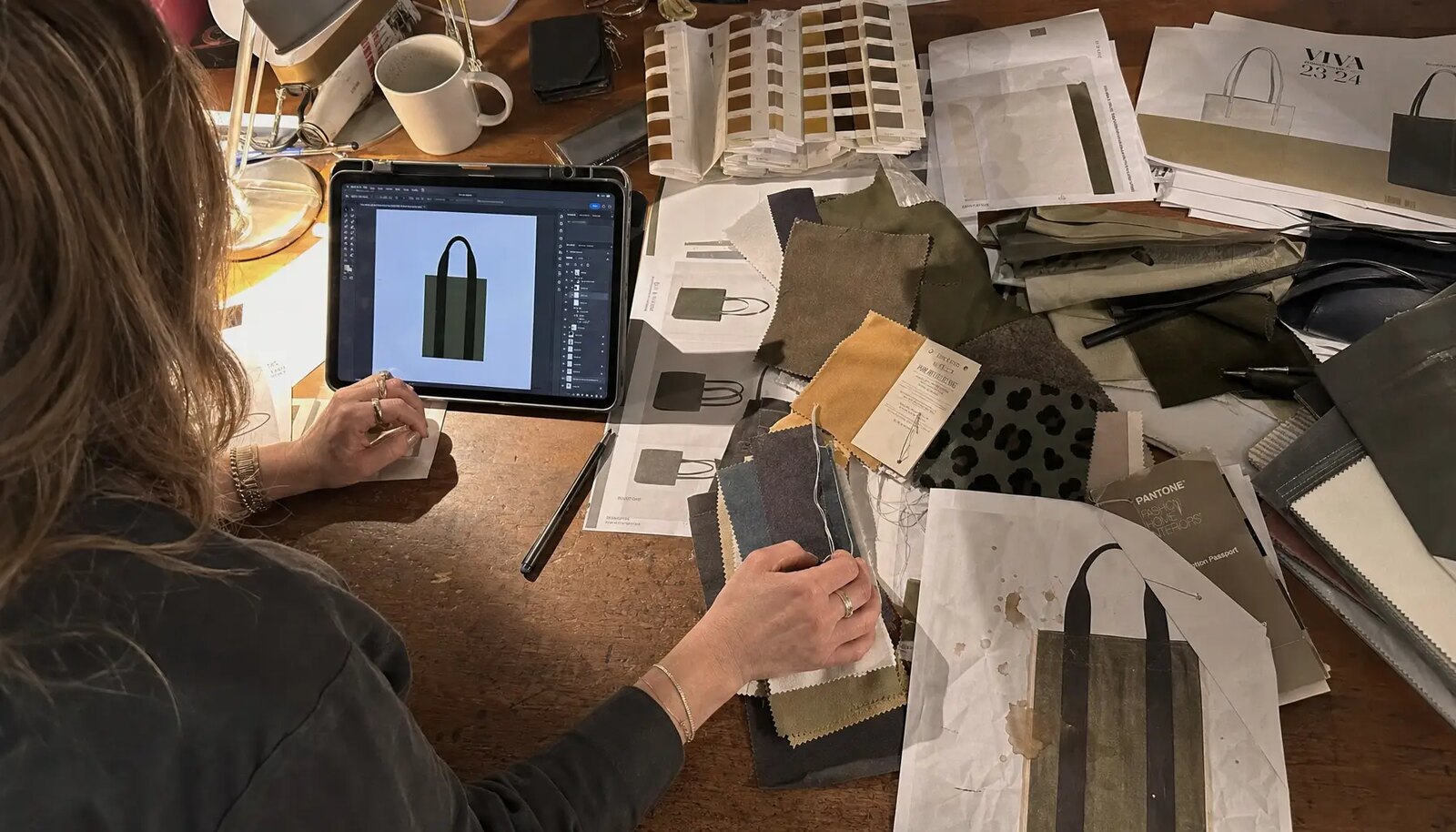
Why MOQ feels harder on jute totes than buyers expect
MOQ on jute tote bags is rarely just a supplier asking for a bigger order. In production terms, MOQ reflects how many separate decisions the factory must control: raw jute purchase, lamination, cutting, handle trim, screen setup, sewing-line changeover, finishing, inspection, export packing, and shipping marks. A coffee roaster may see one 1,000-piece tote project. The factory may see three artwork versions, two cafe allocations, one custom handle shade, and different carton labels. That is a very different job.
Jute also behaves differently from smooth cotton canvas, polyester, or non-woven PP. The yarn is uneven, the weave is open, cut edges can shed, and the print surface is textured. Operators need room for setup, printing adjustments, fabric yield loss, defect sorting, and normal variation. When a buyer pushes the quantity down while keeping every custom detail, the supplier usually protects itself in another way: a higher unit price, a wider tolerance, fewer sample revisions, or a slower production slot.
Coffee roasters have one more pressure point: timing. Tote programs are often connected to harvest launches, holiday gift sets, subscription welcome kits, trade shows, cafe openings, wholesale account launches, or retailer resets. If the bags arrive late, the promotion may already be over. For that reason, MOQ negotiation should feel less like haggling and more like production planning. The best buyers show the supplier where the order can be standardized and where the brand details genuinely matter.
- MOQ is affected by finished size, jute grade, lamination, handle trim, print versions, labels, packing, carton marks, and destinations
- The easiest low-MOQ order uses one material lot, one size, one handle specification, one body print, and one packing method
- Seasonal coffee programs become MOQ-unfriendly when every blend, origin, holiday message, or cafe location gets its own body artwork
- A low stated MOQ may come with tradeoffs: higher unit cost, wider tolerances, delayed production slot, or limited sample support
Start with the coffee use case, not the bag mockup
Before discussing quantity, define the job the tote must perform. A cafe giveaway for one 250 g coffee bag does not need the same construction as a paid merchandise tote holding two 1 kg bags, a mug box, filters, and a brew guide. A trade-show handout may need compact cartons and quick counting. A premium gift-set carrier needs stronger shape, cleaner stitching, better print placement, and a handle that feels comfortable when loaded.
For many roaster programs, a sensible starting point is natural woven jute with inner lamination, cotton webbing handles, and one-color screen printing. The lamination helps the bag hold shape and reduces loose fiber transfer onto packaged coffee. Cotton webbing usually feels smoother than self-jute and is easier to sew consistently. These choices may not be the cheapest possible construction, but they often prevent the sample from feeling limp, scratchy, distorted, or too rustic for retail.
Turn the use case into numbers. Give the supplier finished width, height, gusset depth, handle drop, target load, print size, print position, and packing format. If your final coffee packs are not ready, send dummy dimensions and expected weights. A set with two 340 g coffee bags and a brew card needs a different gusset than one 1 kg bag plus a boxed mug. The RFQ should not say only “custom jute coffee tote.” That forces the supplier to guess.
- Light coffee gift set: consider starting around 30 x 35 x 10 cm, then test with the actual retail coffee bag format
- Larger merchandise tote: consider 35 x 40 x 12 cm or 38 x 42 x 12 cm depending on mug boxes, filters, and inserts
- Handle drop should be specified separately; 12 cm to 15 cm is hand-carry focused, while 20 cm to 25 cm is more shoulder-friendly
- State a realistic load target, such as 3 kg for light promo use or 5 kg to 6 kg for heavier gift sets
- Tell the supplier whether the tote must stand upright when filled, lie flat for shipping, hang on a retail fixture, or fit inside an outer gift carton
Use one size and one material platform to make MOQ work
The best MOQ negotiation often happens before the quote. Every standardized decision removes one reason for the supplier to treat the order as separate mini-runs. One finished size across several coffee programs is usually more valuable than a small unit-price concession. If one team wants a 30 cm wide tote and another wants 32 cm, ask whether those 2 cm justify another cutting plan, sample approval, carton calculation, and sewing adjustment.
Material choices work the same way. Natural jute shade will never be perfectly identical from lot to lot, but one base material gives the factory a better chance to control production. Moving between natural jute, dyed jute, heavier jute, unlaminated jute, and laminated jute creates separate purchasing and production logic. Lower-volume coffee programs usually get cleaner results by keeping the body natural and letting the coffee packaging, hangtag, insert card, or belly band carry the blend story.
Handles are a common hidden MOQ driver. Natural cotton webbing in a stock width is usually easier than custom-dyed webbing. If brand-color handles are important, ask whether the supplier has a stock webbing close to the target shade before requesting custom dyeing. Define width, drop, stitch pattern, thread color, and reinforcement before comparing quotes. A 20 mm handle with a simple box stitch is not the same product as a 30 mm handle with reinforced box-X stitching.
- Standardize one finished size across blends, cafes, events, and wholesale partners where possible
- Avoid multiple jute body colors unless each color can meet MOQ independently
- Use natural cotton webbing when comfort, repeatability, and MOQ flexibility are all important
- Ask whether dyed handles require trim MOQ, lab dip approval, extra days, or wider color tolerance
- Keep top fold, piping, bottom seam, and label placement consistent across the whole order
Artwork is usually the biggest MOQ lever
For coffee brands, artwork creates more MOQ pressure than most teams expect. Marketing may want different tote designs for origins, roast profiles, cities, events, holidays, and wholesale partners. On jute, every body print version adds screen setup, print testing, drying space, line changeover, and inspection risk. Screen printing on jute is not paper printing. Fine type can fill in. Thin strokes can disappear into the weave. Large solid ink areas can look patchy.
The most MOQ-friendly structure is simple: one base bag, one permanent body print, and variable components for SKU detail. A hangtag can identify the blend. An insert card can hold origin notes and tasting language. A belly band can create seasonal presentation. A barcode sticker or carton label can separate channels and destinations. These components are better suited to small text and frequent changes than the jute body itself.
If separate body prints are unavoidable, keep the program disciplined. Two one-color artworks in the same print area are easier than four designs with different ink colors, different placements, and different sizes. Ask for MOQ per artwork, not just total order MOQ. A supplier may accept 1,000 pieces split into two 500-piece print runs but reject five versions of 200 pieces because setup time overwhelms production time.
- Best structure: one common body print plus variable hangtags, inserts, belly bands, or stickers
- Second-best structure: two body prints using the same bag size, print area, ink count, and placement
- Avoid fine serif type, halftones, distressed marks, photographic artwork, small origin maps, and QR codes unless tested on actual jute
- Keep critical strokes roughly 1.0 mm to 1.5 mm or heavier unless the supplier confirms a tighter limit
- Ask for artwork review before sampling so risky line thickness, registration, and ink coverage can be corrected early
Read the quote as a production map, not only a price
A useful jute tote quote should show more than an ex-factory unit price. The main cost buckets are jute fabric, lamination, handle trim, cutting, sewing, screen printing, finishing, packing materials, export cartons, and handling. Material cost depends on fabric weight, weave density, fabric width, lamination, and cutting yield. Labor cost depends on folded edges, piping, gusset forming, bottom reinforcement, handle preparation, stitch pattern, label application, trimming, and packing. Printing cost depends on screen count, print area, ink coverage, registration difficulty, curing, and expected rework.
Small changes can move both price and MOQ. A wider gusset may help a gift set stand upright, but it can reduce fabric yield and increase carton volume. A second print color may look minor in a mockup, yet it adds registration risk on a shifting woven surface. A dyed handle can trigger trim minimums. Individual polybags add plastic, labor, and carton cube. A removable bottom board improves presentation but adds handling and thickness. None of these options is automatically wrong. They simply need to be chosen on purpose.
When comparing suppliers, make sure each factory is quoting the same product. A cheaper offer may be based on lighter jute, narrower handles, no lamination, no piping, no bottom reinforcement, a smaller print area, no hangtag application, or different packing. Procurement teams should compare like with like: same finished size, fabric construction, handle, print method, packing, inspection expectation, and shipment terms. The target is not the cheapest theoretical tote. It is a repeatable bag that can pass inspection and support the coffee brand’s customer experience.
- Major cost buckets: jute fabric, lamination, trim, cutting, sewing, printing, finishing, packing, cartons, and export handling
- High ink coverage can raise both cost and defect risk because coarse jute interrupts ink laydown
- Piping, folded top edge, bottom reinforcement, labels, and hangtag application must be listed explicitly if required
- Carton cube can change landed cost even when the ex-factory unit price looks attractive
- Ask each supplier to identify the top three choices affecting MOQ, price, and lead time
Build MOQ flexibility into the RFQ before sampling
Many buyers negotiate MOQ too late. They approve artwork, pay for samples, request changes, and then ask whether the supplier can reduce the order. By that point, the factory has already treated the job as a specific custom construction. A better RFQ gives the supplier room to help. Present the preferred specification, true must-haves, optional upgrades, and acceptable alternatives. This makes it easier to reduce the effective MOQ without weakening the tote.
Quote by tiers and by splits. Instead of asking for one price at 1,000 pieces, request 500, 1,000, 2,000, 3,000, and 5,000 pieces where those volumes are realistic. Then describe the split: one body print with four hangtag versions, two body prints in equal quantities, or one base bag shipped to three destinations. Ask whether MOQ applies per order, per size, per artwork, per handle color, per carton mark, or per packing style. This is where hidden constraints show up.
Repeat potential can help, but only if it is credible. A supplier may support a lower first order when the buyer has a realistic replenishment plan using the same size, material, and print screen. Avoid promising future orders procurement cannot approve. Instead, explain the program honestly: launch quantity, expected seasonal use, what stays constant, and what changes. If the base bag repeats and only hangtags change, the supplier can preserve screens, production notes, and material references for the next run.
- Ask for quantity tiers instead of negotiating one MOQ number in isolation
- State artwork split, destination split, packing split, and carton-mark split in the first RFQ
- Ask whether variants can run under one material lot and one sewing setup
- Clarify custom-order overrun/underrun tolerance, often discussed in the range of +/-3% to +/-5% depending on supplier policy
- Separate must-have specifications from optional upgrades so the supplier can suggest MOQ-friendly alternatives
Sampling must prove fit, print realism, odor, and strength
Do not approve a jute tote sample from a photo alone. Coffee products are bulky and rectangular, so the way they sit in the bag determines whether the tote feels premium or awkward. Load the sample with the real coffee SKUs, mugs, filters, cards, or accurate dummies. Check whether the gusset opens fully, the bottom sits flat, the top edge collapses, the handles distort the body, and the loaded bag still presents well when carried.
Use a sample sequence that matches the risk. If dimensions are uncertain, start with a blank fit sample. Once the size works, approve a printed sample on the intended jute rather than relying on a digital mockup. For retail, gifting, or multi-destination programs, approve a pre-production sample with final fabric, lamination, handle, stitch pattern, print, label, hangtag method, fold, and packing. Keep that sample as the inspection standard.
Odor and shedding deserve special attention in coffee programs. Jute naturally has an earthy smell, and lamination or ink can add odor if curing, airing, or storage is poor. The tote may not be direct food-contact packaging, but it may be packed close to aromatic coffee bags in a gift set. Smell the sample after it has been enclosed in carton or polybag-like conditions for several hours. Also rub inside and outside surfaces to check loose fiber transfer and print rub-off after curing.
- Recommended sequence: blank fit sample, printed sample, and pre-production sample for higher-risk orders
- Test the sample with actual coffee packs, mugs, filters, brew cards, inserts, or boxes planned for the program
- Measure finished width, height, gusset opening, handle drop, handle width, print position, and label placement
- Perform a practical load check using the target load plus a small safety margin when appropriate
- Rub the printed area with a dry white cloth after curing to check obvious ink transfer
- Photograph approved sample details and attach written comments to the PO or specification sheet
Set QC standards that respect jute but still protect the brand
Jute is a coarse natural fiber, so the inspection standard must be realistic. Minor slubs, small knots, yarn-thickness variation, and moderate shade difference can be normal. If the buyer expects polyester smoothness, the inspection will create unnecessary conflict. But natural variation should not excuse poor manufacturing. Open seams, weak handles, severe panel skew, peeling lamination, dirty surfaces, mold marks, heavy odor, and unreadable logos are defects.
A strong QC plan includes both visual and functional checks. Visual checks cover fabric shade, stains, print clarity, print position, logo centering, thread trimming, fold neatness, label alignment, and carton presentation. Functional checks cover finished size, handle drop, handle attachment, seam strength, gusset opening, bottom stability, and loaded-bag behavior. If the tote is paid merchandise, cosmetic standards should be tighter than for a free event handout.
Put tolerances in the purchase order. For many custom jute totes, finished width, height, and gusset tolerance of +/-1 cm to +/-1.5 cm is a practical starting point, subject to supplier confirmation. Print placement may be controlled around +/-0.5 cm to +/-1 cm depending on construction and print size. Handle drop should be consistent enough that bags in the same carton do not look visibly mismatched. Agree these points before bulk production, not after the shipment arrives.
- Acceptable natural features may include minor slubs, small knots, and shade variation within the approved sample range
- Rejectable defects include open seams, broken handles, peeling lamination, dirty panels, severe skew, unreadable print, mildew marks, and strong chemical odor
- Measure front logo placement from top edge and side seam instead of judging by eye only
- Inspect handle stitching for box-X or approved stitch shape, skipped stitches, thread tails, and tearing around attachment points
- Check carton-level consistency because shade, fold, count, and version-mixing problems often appear by bundle or carton
Packing and carton planning can erase MOQ savings
Packing often gets handled at the end, but it affects landed cost, receiving labor, and allocation accuracy. Jute totes are bulkier than many promotional bags, and inconsistent folding wastes carton space. If handles are folded differently from bundle to bundle, cartons can bulge, carton counts can vary, and warehouse teams may need to recount. This matters when a coffee roaster ships bags to many cafes, distributors, retailers, or event venues.
For most B2B programs, flat packing in fixed bundle counts is the cleanest approach. Bundles of 25 or 50 pieces make receiving easier and reduce shortages. Avoid mixed-artwork cartons unless the distribution model truly needs them. If you use variable hangtags or inserts, decide who applies them and how each version is counted. Factory application can save domestic labor, but it creates another inspection point and requires a clear SKU matrix.
Be deliberate about individual polybags. They can protect resale merchandise, but they add plastic, labor, and carton volume. Many coffee brands choose jute because it feels natural and retail-friendly, so unnecessary polybags may work against the intended experience. If individual polybags are not used, consider carton liners, inner sheets, or moisture-control measures for the route. Ask for carton dimensions and gross weight before comparing landed costs.
- Specify pieces per bundle, bundles per carton, carton dimensions, gross weight range, and fold direction before production
- Use fixed bundle counts such as 25 or 50 pieces to improve warehouse receiving accuracy
- Avoid mixed artwork or mixed hangtag cartons unless carton labels and packing lists are detailed and verified
- If hangtags are applied at origin, provide a SKU matrix and require carton-level version checks
- Decide whether individual polybags are necessary or whether carton liners are sufficient
- Approve shipping marks, carton labels, and retailer labels before packing starts
Lead time risk comes from approvals, batching, and late changes
Jute totes look simple, but the schedule is not only sewing time. Delays often come from artwork review, fabric allocation, lamination, handle trim procurement, screen preparation, print testing, sample revisions, packing confirmation, inspection scheduling, and export booking. Coffee roasters are exposed because launch windows are fixed. A holiday gift tote or trade-show giveaway that ships late can become dead inventory.
Low MOQ can help or hurt lead time. A smaller order may move faster if it uses stock natural jute, stock cotton handles, one-color printing, and standard packing. It may move slower if the factory waits to combine lamination with another order, buys a small trim batch, or fits the job between larger production runs. Ask which timeline elements are fixed and which depend on quantity, material availability, or trim color.
Protect the calendar with approval deadlines. Set dates for final artwork, sample comments, pre-production approval, bulk start, inspection, and shipment handover. If the campaign date is immovable, say so in the RFQ and ask for the latest safe approval date. Sample revisions are not harmless. A 2 cm gusset change, handle-color change, or logo placement change can require another sample and reset the schedule.
- Typical timeline steps: RFQ clarification, artwork review, sample making, material preparation, printing, sewing, finishing, packing, inspection, and shipment booking
- Common delay points: late artwork approval, revised dimensions, added print versions, dyed handle approval, unconfirmed hangtags, and missing carton marks
- A lower MOQ is not automatically faster if the order depends on a separate fabric, lamination, or trim batch
- For event-linked launches, build buffer for sample rework, inspection, and freight booking, not only factory production time
- Ask the supplier for the latest approval date required to meet your delivery window
Specification comparison for buyers
| Spec decision | Recommended option | When it fits | Buyer risk to check |
|---|---|---|---|
| Base fabric weight | Natural woven jute in the common mid-weight range, often quoted around 13 oz to 15 oz per square yard before or after lamination depending on supplier terminology | Retail coffee gift totes carrying 250 g to 1 kg coffee packs, mugs, filter boxes, brew cards, or small merchandise | Confirm whether weight is fabric-only or laminated finished material; lighter open-weave jute can sag, shed more, distort during sewing, and print less cleanly |
| Lamination choice | Inside PE lamination or comparable inner backing, commonly used at roughly 20 to 40 microns depending on construction | Helps the tote hold shape, reduces loose fiber transfer, and improves usability for packaged coffee retail sets | Check odor, delamination, peeling at folded edges, recyclability language, retailer sustainability rules, and whether lamination is included in the quoted fabric weight |
| Handle material | Natural cotton webbing, typically 25 mm to 30 mm wide, with box-X or reinforced box stitch | Premium cafe merchandise, gift sets, subscription welcome packs, and corporate coffee gifting | Self-jute handles may feel rough; dyed cotton webbing can create trim MOQ, shade tolerance issues, longer lead time, and higher minimums per handle color |
| Print method | 1-color screen print, or 2-color screen print only after artwork review and printed sample approval | Bold roaster logos, simple origin icons, cafe names, event branding, and uncomplicated brand statements | Avoid tiny type, thin lines below roughly 1.0 mm to 1.5 mm, halftones, distressed textures, tight registration, and large dark flood areas on coarse jute |
| Bag construction | Gusseted tote with folded top edge, edge piping where needed, reinforced bottom seam, and defined handle stitching | Coffee packs that need upright presentation, retail shelf display, or gift-set structure | Factories may remove piping, bottom reinforcement, labels, or extra bartacks to hit price unless each construction element is written into the RFQ and PO |
| Finished size control | One finished size across campaigns, commonly 30 x 35 x 10 cm for light sets or 35 x 40 x 12 cm for larger merchandise programs | Roasters splitting volume across blends, cafes, wholesalers, events, or seasonal gift sets | Changing width, height, gusset, or handle drop by even 2 cm to 3 cm may require separate cutting, sampling, carton planning, and MOQ treatment |
| Artwork strategy | One permanent body print with variable hangtag, insert card, belly band, barcode sticker, or carton label | Best for SKU differentiation by blend, origin, roast profile, cafe location, or holiday message | Multiple body print versions can turn a 1,000-piece order into several inefficient 100 to 300 piece runs with separate screens and inspection risk |
| Packing method | Flat packed in counted bundles of 25 or 50 pieces per export carton, with consistent fold direction and verified carton count | Importers, coffee roasters, distributors, cafe groups, and retail programs that need clean receiving and allocation | Loose mixed packing causes counting errors, carton bulging, carton weight variation, warehouse labor, and possible chargebacks from retail channels |
| MOQ negotiation route | Negotiate by shared material lot, shared size, shared handle trim, shared print setup, and credible repeat potential | Useful when the order is split across two to four coffee programs but can share the same base bag | A buyer may see one 1,000-piece project while the factory sees separate minimums by fabric, lamination, trim, artwork, packing, carton mark, and destination |
Buyer checklist before sampling
- Define the commercial use: paid retail merchandise, cafe giveaway, trade-show handout, gift-set carrier, subscription welcome tote, wholesale account promo, or distributor launch kit
- List the exact load: number of coffee bags, coffee bag dimensions, net weights such as 250 g, 340 g, 500 g, or 1 kg, plus mugs, drippers, filters, cards, or boxes
- Lock finished dimensions in centimeters: width, height, gusset depth, handle drop, handle width, print area, and print position; avoid loose terms such as small, medium, standard, or market size
- State construction clearly: natural woven jute, inner lamination if required, folded top edge, side seams, bottom seam, gusset construction, edge piping, and any label or hangtag application
- Specify handle details: cotton webbing or self-jute, natural or dyed, 25 mm or 30 mm width, handle drop such as 20 cm to 25 cm, stitch pattern, thread color, and reinforcement method
- Decide whether all coffee SKUs can share one body print while using variable hangtags, belly bands, inserts, barcode stickers, or carton marks for blend and destination separation
- Prepare screen-print-friendly artwork: bold vector shapes, limited colors, no tiny tasting-note text, no photo imagery, no fine origin-map detail, and no critical lines under the supplier’s print limit
- Request MOQ logic by finished size, jute color, fabric weight, lamination type, handle color, print version, carton mark, packing method, and applied accessory
- Ask for quantity tiers at 500, 1,000, 2,000, 3,000, and 5,000 pieces where relevant, with clear notes on what changes at each tier
- Separate must-have specifications from optional upgrades such as dyed handles, inside pocket, bottom board, zipper, individual polybag, custom carton, or hangtag application
Factory quote questions to send
- What is your true MOQ by finished bag size, jute body color, fabric weight, lamination type, handle material, handle color, print artwork version, and packing style?
- Is the MOQ driven mainly by raw jute fabric purchase, lamination batch, stock fabric availability, cutting efficiency, handle trim MOQ, screen setup, sewing-line setup, inspection sorting, or export packing?
- What jute fabric weight are you quoting, and is the stated weight before lamination, after lamination, or an approximate commercial grade?
- What lamination are you including: inner PE, no lamination, or another backing? Please state approximate thickness if available and confirm odor control and curing/airing time after printing.
- Can multiple coffee variants be combined under one material lot and one sewing run if the size, base fabric, handle, body print, and packing method remain the same?
- If we use one common body print and variable hangtags or inserts, what is the lowest practical MOQ and what price tiers apply at 500, 1,000, 2,000, 3,000, and 5,000 pieces?
- What print method do you recommend for this logo, and what minimum line thickness, minimum text height, maximum print area, and ink coverage limits should we follow on this jute weave?
- Are cotton webbing handles included in the quoted price? Please confirm width, total length or drop, color, thread color, stitch pattern, and any shade tolerance for dyed webbing.
- Does the quoted construction include folded top edge, side piping if shown, bottom reinforcement, inner lamination, care label, brand side label, hangtag application, and printed carton marks?
- What finished-size tolerance, handle-drop tolerance, print-position tolerance, and acceptable natural jute variation do you normally use for inspection?
Quality-control points to confirm
- Finished size tolerance should be agreed for width, height, gusset, and handle drop. For many jute totes, +/-1 cm is achievable on simple sizes, while +/-1.5 cm may be more realistic for larger or less stable constructions.
- Handle attachment should use the approved box stitch, box-X stitch, or bartack method with no skipped stitches, loose thread chains, broken yarn around the attachment point, severe asymmetry, or handles pulling out during a reasonable loaded-bag check.
- Print placement should be measured from top edge, side seam, and center line. A typical custom logo tolerance may be around +/-0.5 cm to +/-1 cm, but it must be confirmed against bag size and factory capability.
- Print quality on coarse jute should be checked for broken lines, pinholes, ink spread, uneven opacity, poor registration, rubbing, color inconsistency, and loss of readability at normal viewing distance.
- Lamination should show no obvious delamination bubbles, peeling along cut or folded edges, sharp wrinkles, tacky surface, heavy chemical odor, or brittle cracking after normal folding.
- Bottom seam, side seams, and gusset seams should be checked for seam grin, open stitch runs, fabric fraying, skipped stitches, uneven folding, and shape distortion after loading with the intended coffee products.
- Fabric shade should be compared to the approved sample or approved shade range while recognizing that natural jute can vary by crop, yarn, and lot; severe shade bands, stains, mildew marks, and dirty panels should be treated as defects.
- Loose fibers, slubs, knots, and weave irregularities should be classified in advance as acceptable natural characteristics, minor defects, or rejectable major defects depending on severity and location.
- Odor should be checked after bags have been enclosed in carton conditions, not only immediately after airing; strong chemical odor is especially risky for coffee gift sets even when the tote is not direct food-contact packaging.
- Carton count, bundle count, carton marks, destination labels, SKU labels, hangtag versions, and packing-list data must be cross-checked to prevent warehouse shortages and wrong allocation to cafes or retailers.