The Buying Problem: Bookstore Bags Carry Awkward Loads
A university bookstore tote has a harder job than a light promotional giveaway. One customer may put a hoodie, metal water bottle, boxed mug, notebooks, pens, a course pack, and one or two textbooks into the same bag. The tote then has to sit neatly on a fixture, move through retail receiving, and carry the school brand through orientation, parent weekends, alumni events, and graduation. Material selection is not just about choosing “eco-looking” jute. It is a balance of appearance, handle comfort, print clarity, load strength, carton efficiency, sustainability wording, and delivery timing.
The RFQ often goes wrong at the first line. Buyers ask for a “jute tote bag with logo,” then receive quotes for products that are not actually comparable. One supplier may price a flat unlaminated tote with narrow handles and a one-color print. Another may include 380 GSM laminated jute, dyed cotton webbing, reinforced top hem, barcode labels, hangtags, and cartons sorted by campus or purchase order. The price gap can look like supplier markup, but the real issue is usually an incomplete specification.
Before asking for pricing, decide what the bag must do commercially. A checkout bag for light apparel can be simpler. A paid retail tote needs cleaner shape, stronger stitching, and a better logo panel. An orientation kit bag must fit specific contents and arrive before a fixed event date. A tote promoted for books needs stronger handle attachment and a realistic load test. Good sourcing starts when those assumptions are written down instead of left for the factory to guess.
- Use jute when the buyer wants a natural woven appearance and stronger retail shelf presence than thin cotton or nonwoven promotional bags.
- Avoid jute when the artwork requires photo-level detail, gradients, very small type, or full edge-to-edge print coverage across a coarse woven panel.
- Clarify whether the tote is a paid item, gift-with-purchase, event kit bag, checkout bag, or department merchandise bag before comparing quotes.
- Specify load expectations early because handle width, folded top hem, and reinforcement are cheaper to correct before sampling than after bulk sewing.
- Treat the approved sample, swatch, and measurement sheet as controlled production references, not general inspiration materials.
Jute Fabric Weight, Weave Density, and Moisture Control
For university bookstore jute tote bags, a practical body fabric range is commonly 13-15 oz, roughly 330-420 GSM. That range gives enough body for mixed retail purchases while keeping the bag sewable and packable. Lighter jute around 300-350 GSM may work for apparel, brochures, or lower-cost event bags, but it can look thin when held to light and may distort under book weight. Heavier jute can feel more premium. It also raises unit cost, carton weight, fold bulk, and sewing difficulty around the top hem and gusset corners.
GSM is important, but it is not the whole story. Jute yarn thickness, weave count, yarn evenness, finishing, moisture content, and fiber shedding all change the finished tote. Two suppliers can both quote 360 GSM and deliver very different results. One fabric may be tight and stable; another may be loose, hairy, and uneven. Open weave breaks up screen print edges. Heavy hairiness makes logos look fuzzy. Excess moisture can create odor, mold risk, carton problems, and inconsistent weight readings.
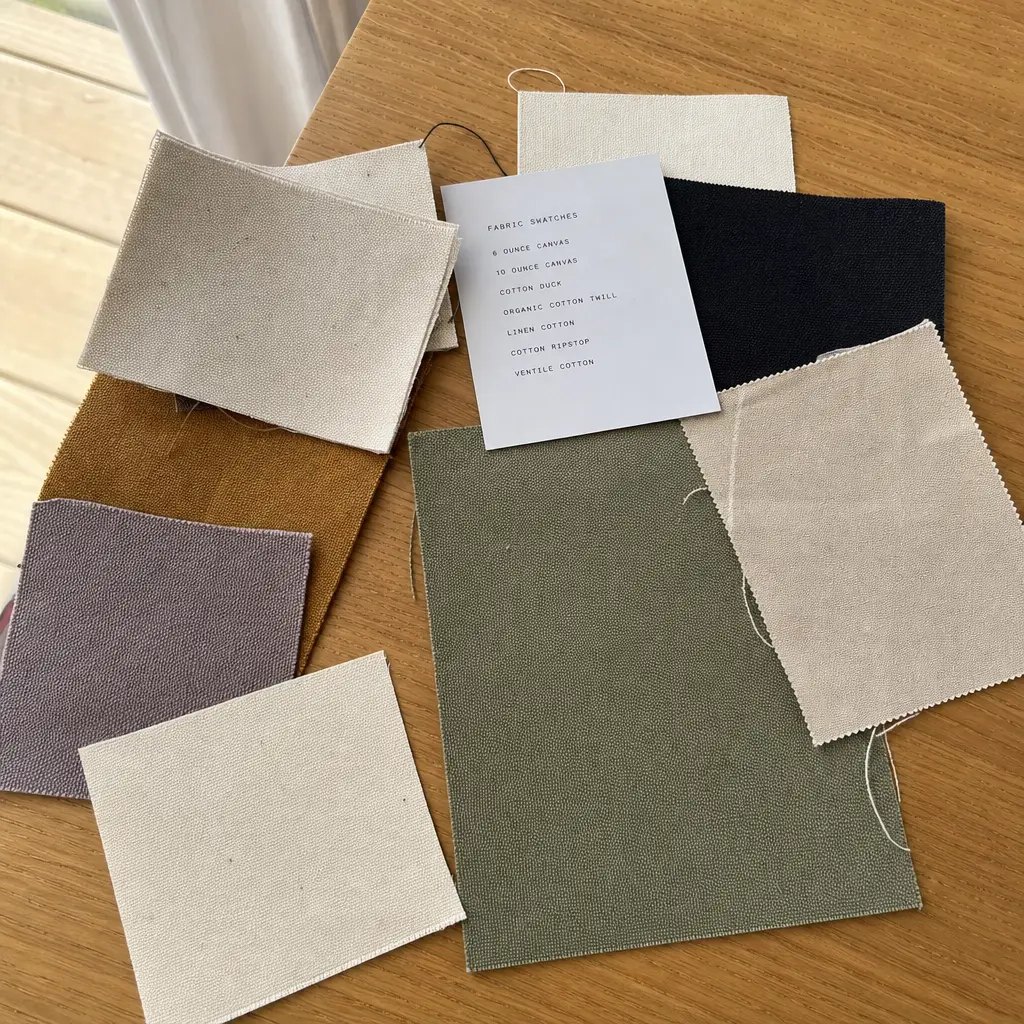
Ask for a swatch and a finished sample, because each tells you something different. The swatch helps the buyer judge color tone, handfeel, hairiness, odor, weave density, and surface defects before a full sample is made. The finished sample shows what happens after lamination if used, cutting, folding, sewing, printing, and packing. For larger orders, label and retain both the approved swatch and sample so inspection teams can compare bulk production to a physical standard, not a memory.
- Apparel and souvenirs: 300-350 GSM can work when the tote is not promoted for repeated textbook carrying.
- Mixed bookstore purchases: 330-420 GSM is a safer working range for balancing cost, strength, printability, and retail appearance.
- Premium retail tote: heavier fabric may be useful, but test fold bulk, handle comfort, seam thickness, and carton density before approval.
- Fabric acceptance: front logo panels should not have large yarn gaps, oily marks, damp spots, mold stains, or heavy loose fiber.
- Quote comparison: require the same GSM, lamination status, bag dimensions, handle construction, and packing method before comparing unit prices.
Unlaminated, Laminated, Coated, and Dyed Jute
Unlaminated jute gives the most natural handfeel and is often the right choice when a university wants a straightforward natural-material story. It folds more softly, feels less plastic-like, and avoids questions about a plastic film on the body. The tradeoff is lower moisture resistance, less shape retention, and a more irregular printing surface. If the bag will mostly carry apparel, gifts, dry stationery, and light bookstore items, unlaminated jute is often enough.
Clear PP lamination or a light coating changes the behavior of the bag. It improves stiffness, helps the tote stand better at checkout, and adds light moisture resistance. A common light lamination may be around 20-35 microns, but the supplier should state the exact construction because some quotes include lamination in the total weight while others list fabric weight separately. Lamination can be useful on rainy campuses or for grocery-style bookstore formats, but it adds plastic content, may create fold whitening, can affect ink adhesion, and may produce odor if poorly cured.
Dyed jute and colored lamination can deliver a stronger school-color effect, yet they bring shade and MOQ risk. Natural jute varies in base tone, so a Pantone color will not look the same on jute as it does on coated paper or white cotton canvas. For many bookstore programs, the most practical solution is a natural jute body with one or two school-color inks and dyed cotton handles. The bag still reads as natural, while the handles and logo give the campus identity enough presence.
- Unlaminated: best for natural handfeel, softer folding, simpler composition language, and dry-goods bookstore use.
- Clear laminated: better for shape retention, light moisture resistance, front-panel stability, and heavier mixed retail purchases.
- Colored laminated: useful for bold school-color effects, but requires closer shade, odor, fold-mark, and MOQ review.
- Buyer check: specify whether lamination is inside, outside, or both sides because it affects feel, printing, and material declarations.
- Acceptance point: laminated panels should not show bubbles, peeling, trapped dust, white stress marks, or strong odor after unpacking.
Bag Size, Gusset, Capacity, and Load Planning
Size the tote around real bookstore merchandise, not a catalog photo. Useful reference sizes include about 35 x 40 cm for a flat or light-gusset tote and about 38 x 35 x 12 cm for a gusseted retail tote. The right answer depends on the planned contents: folded sweatshirts, course packs, folders, boxed mugs, drinkware, notebooks, or orientation inserts. Write size as width x height x gusset in centimeters, add a tolerance, and include a simple technical sketch whenever possible.
Flat totes cost less and pack efficiently, but they have limited depth and usually look less substantial at checkout. Side-gusset and bottom-gusset totes use more fabric and sewing time, yet they create real capacity. A 10-15 cm gusset can be the difference between a sweatshirt fitting cleanly and the bag pulling diagonally at the side seams. For paid retail totes, the gusset also improves perceived value because the bag opens, stands, and displays better.
Handle drop belongs in the capacity discussion. A short handle may look tidy on a fixture, but it may not fit comfortably over the shoulder. Many bookstore programs use a finished handle length around 45-60 cm, which often creates a handle drop around 22-28 cm depending on attachment position and bag height. Shoulder carry matters during orientation, campus tours, parent visits, and graduation weekends, when the bag may be carried across campus rather than just from register to car.
- Flat tote: lower cost, easier packing, and lower freight volume, but limited capacity and weaker retail shelf presence.
- Side gusset tote: better for apparel, gifts, folders, and checkout use because the bag opens naturally.
- Bottom gusset tote: better for stacked books and boxed items, but corner stitching and bottom seam strength must be controlled.
- Load test: fill the sample with planned merchandise weight and inspect seam distortion, handle pull, top hem stress, and gusset corners.
- Measurement control: confirm body size, gusset depth, handle drop, handle spacing, top hem depth, and logo position on the approval sheet.
Handle Construction Is a Primary Specification
Handles are one of the first places jute bookstore bags fail. Thin jute rope can look rustic, but under book weight it may dig into the hand and create pressure points. Cotton webbing is usually the better option for university bookstore programs because it is smoother, easier to dye, and more comfortable. A practical width is often 25-35 mm, with wider handles preferred for heavier loads or paid retail totes.
The attachment method has to be part of the RFQ. A simple straight stitch may be acceptable on light gift bags, but bookstore totes should normally use box-X reinforcement, multiple bar tacks, or another agreed reinforced stitch where the handle enters the folded top hem. The top hem itself must be deep and strong enough to spread the load. Otherwise, a strong webbing handle can still tear out of a weak jute panel. Webbing, insertion depth, thread, stitch density, top hem depth, and seam allowance work as one system.
Handle color affects cost and timing more than many buyers expect. Natural cotton webbing may be available from stock. Dyed webbing usually needs a separate dye lot, shade approval, and minimum quantity. If the university requires exact brand color, ask for lab dips or existing color cards and define a realistic tolerance. Exact Pantone matching on cotton webbing is harder than matching a printed ink drawdown, so approve the real material rather than relying only on a digital color reference.
- Standard option: natural cotton webbing, 25-30 mm wide, sewn into a folded top hem for moderate bookstore loads.
- Stronger option: 30-35 mm cotton webbing, deeper insertion, box-X reinforcement, and consistent stitch density for 5-8 kg target loads.
- Brand option: dyed cotton webbing matched to school colors, subject to MOQ, lab dip approval, and shade tolerance.
- Comfort check: load the sample with books and carry it by hand and shoulder to assess pressure, twist, and handle drop.
- Acceptance point: handle width, length, drop, spacing, insertion depth, reinforcement pattern, and stitch position should match the approved sample.
Print Method, Artwork Limits, and Licensed Marks
Screen printing is usually the most reliable method for jute tote bags with bookstore names, orientation graphics, department marks, simple mascots, and campus logos. Jute is coarse and irregular, so ink will not behave as it does on smooth canvas or coated paper. Large solid shapes, bold type, and simplified line art print better than fine serif type, thin outlines, halftones, gradients, and detailed mascot textures. Review artwork at final print size before the supplier confirms cost.
A useful quote states the number of colors, print dimensions, whether an underbase is required, and whether the art needs simplification. As a practical starting point, avoid critical lines under about 1 mm and avoid small text under about 6-8 mm height unless a strike-off proves it is readable. White and light inks on natural jute may need extra coverage or an underbase. Dark green, navy, black, maroon, and other strong school colors often read more clearly on tan jute, but the physical strike-off is still the approval standard.
Heat transfer can work for sharper graphics in some situations, but it must be tested on the exact jute surface. Transfers can lift at the edges, crack over coarse texture, or behave differently on laminated and unlaminated jute. Digital printing should not be assumed for coarse jute without a sample proof. For licensed university marks, provide clear-space rules, exact imprint size, approved colors, and instructions that the supplier may not stretch, redraw, crop, or reposition logos without written approval.
- Best artwork: bold one- to three-color logos, block text, simple line art, large campus marks, and moderate print areas.
- Risky artwork: small legal text, detailed mascot fur, gradients, metallic effects, thin outlines, distressed textures, and edge-to-edge coverage.
- Color control: provide Pantone references but approve physical strike-offs because natural jute changes perceived ink color.
- Approval step: review the strike-off on actual jute under daylight and store lighting, not only from a digital mockup.
- Brand control: include final imprint size, logo clear space, print location, color references, and written approval rules for any art change.
MOQ, Price Breaks, and Quote Normalization
MOQ depends on more than the final bag quantity. Natural jute fabric may be easier to source at lower volumes than dyed jute. Standard cotton handles may be in stock, while custom dyed webbing requires a separate dye lot. A one-color screen print has different setup economics than a three-color logo with tight registration. Packing with hangtags, barcode labels, campus-wise carton marks, or retail price tickets also changes labor and minimums.
For university bookstore procurement, tiered pricing is more useful than one isolated unit price. Ask for price breaks at practical levels such as 500, 1,000, 2,500, and 5,000 pieces using the same approved construction. This shows whether cost is driven by fabric purchase, handle dyeing, print setup, sewing-line efficiency, or carton utilization. It also helps the buyer decide whether a pilot order makes sense or whether the better value is a seasonal replenishment quantity.
Normalize every quote before choosing a supplier. A low unit price may exclude screen charges, sample fees, courier charges, hangtags, barcode labels, inner bundles, export cartons, inspection support, or campus-wise sorting. The quotation should state what is included, what is optional, and what changes the price. If the bookstore expects to reorder each semester or school year, ask whether the supplier can hold the approved construction and what may vary when jute lots change.
- Fabric cost rises with GSM, tighter weave, lamination, dyeing, shade sorting, cleaner panel selection, and waste allowance.
- Labor cost rises with gussets, reinforced top hems, box-X stitching, inner pockets, zipper tops, binding, and complex packing.
- Print cost rises with color count, print size, underbase, screen setup, registration difficulty, and stricter rejection criteria.
- Logistics cost rises with bulky handles, lower carton density, split packing, small shipment volume, and oversized master cartons.
- Quote discipline: compare the same delivered specification, not a base unit price that excludes samples, labels, packing, and inspection requirements.
Sample Approval Before Bulk Cutting
A useful jute tote sample is more than a photo approval. The buyer should receive a physical sample made with the intended fabric weight, finish, handle material, stitch construction, and print method. If the exact bulk fabric is not available at first sample stage, the supplier should label the difference clearly and provide a corrected pre-production sample before bulk cutting. Photos can speed up discussion, but they cannot verify handfeel, odor, handle comfort, moisture condition, or real print texture.
Check the sample with actual bookstore merchandise. Load it with the expected weight, hang it for a set time, carry it by hand and shoulder, then inspect the handle attachment, seam shape, top hem stress, gusset corners, and print cracking. If the target load is 5 kg, consider testing the sample at 6-7.5 kg as a safety margin. If the tote is sold as reusable, do not approve it on appearance alone.
Document the approval so production and inspection teams can use it. A sample approval sheet should list measurements, tolerances, fabric GSM, lamination status, handle details, stitch pattern, print colors, packing method, carton quantity, and accepted deviations. Photograph the approved sample with a ruler and keep the physical sample sealed or labeled. That small step reduces disputes if bulk goods differ in shade, stiffness, size, print position, or handle construction.
- Measure width, height, gusset, handle drop, handle width, handle spacing, top hem depth, and logo placement against the spec sheet.
- Rub the print with a dry and slightly damp white cloth to screen for obvious ink transfer before bulk approval.
- Fold and unfold laminated samples to observe white stress marks, panel creasing, lamination noise, edge peeling, or stiffness changes.
- Load the sample with target merchandise weight and inspect handle stitching, top hem stress, side seam distortion, and gusset corners.
- Record every approved deviation in writing so the factory, buyer, and inspector refer to the same standard.
Quality Control Criteria for Bookstore Orders
Quality control should be defined before production starts because jute naturally varies. A realistic standard allows minor shade and texture differences while rejecting defects that affect use, display, or brand presentation. Buyers should separate acceptable natural character from unacceptable defects such as oil stains, mold marks, strong odor, broken yarn clusters, excessive fiber shedding, crooked handles, open seams, or badly misregistered print.
For bookstore totes, the most important functional checks are handle strength, seam integrity, size consistency, and print durability. A hanging load test should use the buyer’s target load plus an agreed safety margin for a fixed time, such as 2-4 hours. The pass/fail criteria should include no handle pull-out, no top hem tearing, no major seam slippage, and no permanent distortion that affects use. If the bag is sold at retail as reusable, the inspection standard should reflect practical repeated use rather than only a quick visual review.
Packing deserves inspection too. A well-made jute bag can arrive unsellable if cartons are overfilled, damp, weak, or poorly marked. Inspectors should open cartons, check odor after unpacking, count pieces, verify bundle quantities, compare carton marks with the packing list, and examine whether handles have pressed deep marks into the front panels. If the order is split by campus, event, department, or purchase order, packing accuracy becomes part of the quality standard.
- Fabric checks: GSM, weave density, stains, broken yarns, color variation, odor, moisture marks, mold marks, and excessive hairiness.
- Sewing checks: stitch density, skipped stitches, loose threads, seam allowance, gusset corners, top hem depth, and handle reinforcement.
- Print checks: color, registration, coverage, cracking after bending, dry rub transfer, damp rub transfer, logo position, and detail loss.
- Lamination checks: bubbles, delamination, fold whitening, edge peeling, trapped dust, stiffness variation, odor, and poor edge sealing.
- Packing checks: carton strength, quantity per carton, inner bundle count, barcode accuracy, hangtag placement, carton marks, and compression damage.
Packing, Cartons, and Campus Distribution
Packing affects whether the tote looks retail-ready when it reaches the bookstore. If bags are compressed too tightly, handles can press marks into the front panel, laminated jute can crease, and gussets may not open cleanly on the sales floor. A practical export packing plan often uses inner bundles of 25 or 50 pieces, then master cartons sized to keep gross weight manageable for warehouse handling. The right carton quantity depends on body size, gusset depth, handle bulk, lamination stiffness, and whether the tote must arrive display-ready.
University bookstore orders often need carton marks by campus, store location, department, purchase order, or event. Orientation week, alumni weekends, graduation, and school-specific retail programs usually have fixed receiving windows. If carton marks and packing lists are unclear, the buyer may spend extra labor sorting identical cartons after arrival. Include barcode labels, hangtags, retail price tickets, and carton sorting instructions in the RFQ because these details affect labor, timing, and inspection.
Sustainability policies may also shape the packing plan. Individual polybags protect against dust and moisture, but they may conflict with campus plastic-reduction goals. Paper bands, carton liners, or moisture-control packing may be better options depending on the shipping route and storage conditions. If the university restricts plastic packaging, state that requirement before quoting so the supplier does not default to individual polybags or plastic inner liners.
- Flat packing saves freight but can create panel fold lines or handle pressure marks when cartons are overfilled.
- Bundle packing with paper bands supports count checks and receiving, but adds material and labor cost.
- Individual polybags improve dust and moisture protection, but may conflict with university packaging policies.
- Campus-wise packing reduces receiving labor, but requires accurate carton marks, packing lists, and purchase order references.
- Acceptance point: carton gross weight, carton dimensions, pieces per carton, inner packing, labels, and marks should be approved before shipment.
Specification comparison for buyers
| Spec decision | Recommended option | When it fits | Buyer risk to check |
|---|---|---|---|
| Main body fabric | 13-15 oz jute, approximately 330-420 GSM, verified by swatch from the intended bulk lot | Most university bookstore totes carrying apparel, notebooks, drinkware, gifts, light course packs, and occasional textbooks | A quoted GSM can be misleading if weave density is loose, yarn is uneven, moisture content is high, or front panels are not sorted for print quality |
| Weave and handfeel | Tight plain weave with controlled hairiness, moderate stiffness, and no large yarn gaps on the logo panel | Retail bags expected to look premium on fixtures, hold shape at checkout, and support clear screen printing | Open weave, broken yarn clusters, and heavy surface fiber cause fuzzy print edges, seam instability, and a lower retail perceived value |
| Interior finish | Unlaminated jute for natural positioning; clear PP lamination around 20-35 microns when moisture resistance and stiffness matter | Unlaminated works for apparel and dry goods; laminated works for rainy campuses, grocery-style stores, or heavier mixed retail loads | Lamination changes material claims, adds plastic content, may create odor or fold whitening, and can affect ink adhesion |
| Handle material | Cotton webbing 25-35 mm wide with 45-60 cm finished handle length and box-X or bar-tack reinforcement | Best balance for bookstore bags expected to carry books, bottles, apparel, and gifts without cutting into the hand | Narrow handles, rope handles, or weak top hems increase discomfort and handle pull-out risk under 5-8 kg loads |
| Bag structure | Gusseted tote with 10-15 cm side or bottom gusset, reinforced folded top hem, and controlled seam allowance | Useful for sweatshirts, course packs, boxed mugs, folders, orientation kits, and checkout display | Flat totes are cheaper but limit capacity, do not stand well, and concentrate stress at side seams when loaded |
| Print method | Screen print with artwork simplification and strike-off on actual jute; heat transfer only after adhesion and edge-lift testing | Most campus logos, bookstore names, orientation slogans, department graphics, and simple mascot marks | Fine lines under about 1 mm, small text under about 6-8 mm height, gradients, and detailed mascots lose clarity on coarse jute |
| Color direction | Natural jute body with one to three solid ink colors; dyed cotton handles for school-color identity | Brand programs needing campus colors without the cost and shade risk of fully dyed jute fabric | Dyed jute and custom webbing can require higher MOQ, lab dips, shade tolerance approval, and dry/wet crocking checks |
| Retail packing | Flat packed or bundled 25-50 pcs per inner bundle; export cartons sized to avoid crushing gussets and handles | Bookstore backrooms with limited shelf space and orders split by campus, department, event, or purchase order | Over-compression creates permanent creases, deformed handles, collapsed gussets, lamination stress marks, and poor shelf presentation |
| Compliance evidence | Material composition declaration, coating disclosure, azo-free dye statement if dyed, print ink safety statement, and packaging material declaration | University procurement teams with vendor onboarding, sustainability review, licensed mark control, and receiving requirements | Generic eco claims without jute/coating/ink/packaging breakdown can delay approval and create problems with campus purchasing policies |
Buyer checklist before sampling
- Define the use case: paid retail item, checkout bag, orientation kit bag, gift-with-purchase, alumni event bag, or department merchandise bag.
- Set the target load in kilograms, such as 3-5 kg for apparel and gifts or 5-8 kg for mixed bookstore purchases with books.
- State size as width x height x gusset in centimeters, plus handle drop, handle width, top hem depth, seam allowance, and measurement tolerance.
- Specify jute weight in GSM or oz and require a swatch from the intended bulk fabric source, not a generic showroom sample.
- Confirm whether the body is unlaminated, inside laminated, outside laminated, both-side laminated, coated, dyed, or natural.
- Require the quote to list lamination type and approximate film thickness if used, such as clear PP around 20-35 microns.
- Provide final-size artwork with Pantone references, print dimensions, minimum line width, minimum text height, clear-space rules, and exact imprint location.
- State whether school-color handles are stock webbing, custom dyed webbing, or yarn-dyed webbing, and request lab dip or shade card approval.
- Require handle construction details: material, width, finished length, drop, spacing, insertion depth, stitch pattern, thread type, and reinforcement position.
- Approve a print strike-off on the actual jute surface before bulk printing, especially for white ink, light colors, detailed mascots, or licensed marks.
Factory quote questions to send
- What exact jute fabric weight are you quoting in GSM or oz, and what tolerance will you accept in bulk production?
- Can you provide a swatch cut from the same fabric source planned for bulk production, and will the approved swatch be retained as the inspection standard?
- Is the fabric natural, bleached, dyed, unlaminated, inside laminated, outside laminated, both-side laminated, or coated?
- If laminated, what material and approximate thickness are used, and is the lamination included in the quoted GSM or added after fabric weighing?
- What is the proposed bag size, gusset construction, folded top hem depth, seam allowance, and measurement tolerance after sewing?
- What handle material, width, finished length, handle drop, color, insertion depth, and reinforcement stitch are included in the price?
- What load test can you perform on the pre-production sample, using how many kilograms, for how long, and with what pass/fail criteria?
- Which print method are you quoting, how many colors are included, what print size is included, and what minimum line width is safe on this jute texture?
- Will white or light-color ink require an underbase, double strike, or artwork adjustment on natural jute?
- Does the quotation include artwork setup, screen charges, strike-off sample, pre-production sample, courier cost, hangtag, barcode label, inner bundle, and export carton?
Quality-control points to confirm
- Fabric weight should match the approved specification within the agreed tolerance, commonly plus or minus 5% for natural jute, measured on conditioned fabric where practical.
- Finished bag width and height should stay within the approved tolerance, commonly plus or minus 1 cm for sewn jute totes unless the buyer requires tighter control.
- Gusset depth, handle drop, handle width, handle spacing, logo position, top hem depth, and seam allowance should be measured because small changes affect capacity and comfort.
- Handle attachment should pass the agreed load test, such as target load plus 25-50% safety margin for 2-4 hours, with no tearing, seam slippage, or handle pull-out.
- Screen print should be checked for ink coverage, registration, cracking after bending, dry rub transfer, damp rub transfer, color shift, and loss of detail on mascot or small text areas.
- Front panels should be free from oil stains, wet marks, mold marks, strong odor, large weaving gaps, broken yarn clusters, excessive loose fiber, and severe color patches.
- Top hem, side seam, bottom seam, gusset corners, and handle insertion points should be inspected for skipped stitches, loose threads, open seams, inconsistent stitch density, and uneven reinforcement.
- Laminated bags should be checked for delamination, air bubbles, white fold stress marks, edge peeling, trapped dust, uneven stiffness, and strong chemical odor after carton opening.
- Dyed handles or dyed jute should be checked against the approved shade standard and rubbed with a white cloth for obvious dry and damp color transfer.
- Cartons should be strong enough for export handling and not packed so tightly that handles deform panels, gussets collapse, lamination creases, or barcode labels are damaged.