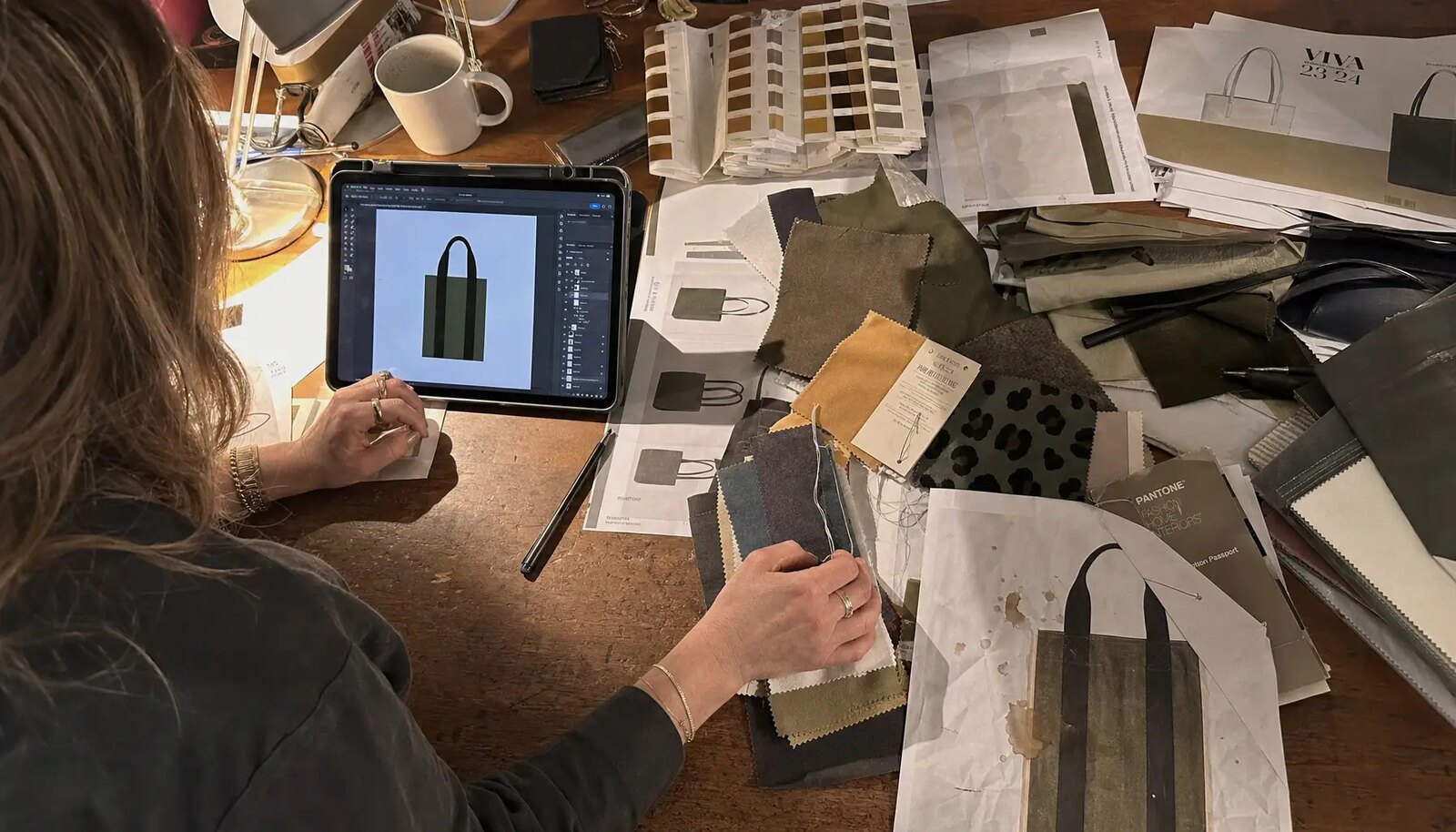
1. Start with the job the bag must do
The word “jute” is not a complete specification. A jute tote bag might be a simple event giveaway, a store checkout bag, a folded-garment package, an influencer kit, or a resale accessory. Each version needs a different balance of fabric weight, structure, handle comfort, decoration quality, packing, and inspection. When the RFQ says only “natural jute tote with logo,” the supplier has to guess. One factory may quote a lightweight unlined bag. Another may include lamination and cotton handles. A third may assume a custom gusset, retail packing, and barcode labels. The unit prices will look comparable, but they are not buying the same product.
Eco apparel brands also have a brand-positioning issue to manage. The tote should look natural and responsible, but it still has to work in a commercial environment. It may carry one folded T-shirt, several garments, denim, catalogs, accessories, or a shoebox. It may be stored behind a counter, shipped to a 3PL, packed into wholesale cartons, or handed out quickly at an event. Those routes affect construction. A small hand-carry bag for a pop-up campaign does not need the same handle drop, carton plan, or load test as a reusable retail shopper.
Before asking for prices, turn the use case into measurable requirements. List the finished dimensions, gusset depth, target load, handle style, interior contact risk, branding method, packing format, carton requirements, and delivery schedule. Decide how much natural variation is acceptable. Jute is an agricultural fiber, so shade shifts, slubs, and texture differences are normal to a point. Procurement’s job is to define that point before bulk fabric is cut.
- Retail shopping bag: prioritize handle comfort, seam strength, print appearance, carton efficiency, and clean store presentation.
- Garment packaging: prioritize interior cleanliness, fiber-shedding control, dust control, folded garment fit, and color transfer risk.
- Gift-with-purchase: balance perceived value, MOQ, artwork setup cost, replenishment timing, and simple packing.
- Event tote: keep the construction practical, but still confirm load strength, print rub resistance, and carton marks for fast distribution.
- Resale merchandise: treat the tote like an accessory, with tighter stitching, more consistent fabric, stronger handles, and better finishing.
2. Define the jute fabric in terms a factory can quote
Jute and burlap are often sold with broad phrases: natural, heavy, premium, rustic, export quality. Those words may be useful in conversation, but they are weak in a purchase order. A B2B specification should ask for weave count, fabric weight, surface finish, color range, and stock status. Suppliers may describe constructions such as 10x10 or 11x11 weave. That is a better start, but it should still be paired with a GSM or oz/yd² range and a physical swatch that represents production.
Do not choose fabric weight by assuming heavier is always better. Lighter, more open jute can lower cost and reduce carton weight, but it may distort at the seams, show wider yarn gaps, and break up artwork. Very heavy jute can feel substantial, yet it can also be stiff, harder to sew, bulkier to pack, and more expensive to ship. For many apparel programs, a mid-weight jute construction is more practical than the cheapest promotional burlap or the stiffest heavyweight fabric.
Color control deserves early attention. Natural jute may run from golden tan to grey-brown, with visible slubs and irregular yarns. That texture is part of the appeal. However, uncontrolled shade variation across a multi-store delivery can make the program look uneven. Approve a shade range, not only one attractive sample. If the brand needs a narrow tone range, ask the supplier whether sorting, dyed jute, lamination, lining, or another material route is required, and what that does to MOQ, lead time, and cost.
- Request fabric weight as a range with tolerance, not just a single number or marketing phrase.
- Approve swatches for shade, slub level, roughness, stiffness, dust, odor, and print suitability.
- Ask whether one fabric lot can cover the full order or whether lot-to-lot variation is expected.
- Set a rule for slubs: what counts as acceptable natural texture and what becomes a visible defect.
- Confirm that jute is stored dry and clean before cutting because moisture and dust affect odor, handling, and packing quality.
3. Choose unlined, laminated, or lined construction deliberately
The body construction shapes the entire customer experience. Unlined jute is simple, textured, cost-effective, and closest to the natural material story. It also carries the highest risk of loose fibers, dust, scratchy interior surfaces, and a less structured shape. That may be acceptable for a rustic event tote or a low-cost gift bag. It may be a poor fit for premium knits, lingerie, black garments, or anything that can snag or collect fibers.
Laminated jute usually gives the tote more structure and a steadier surface for printing. It can also help reduce fiber movement and provide some resistance against moisture. The trade-off should be discussed openly. Lamination changes the handfeel and can complicate sustainability messaging depending on the laminate material. Poor lamination may smell, bubble, crack at folds, peel near seams, or delaminate after compression. If a supplier recommends lamination, ask what material is used, which side is laminated, and how defects are checked.
Lining is a separate decision. A cotton, recycled cotton, nonwoven, or other lining can create a cleaner interior and a more finished look. It is often worth considering for gift sets, accessories, resale totes, and apparel that will sit directly inside the bag. But lining adds material, cutting, sewing, shrinkage, shade, and color-transfer risks. Inspect the sample carefully: does the lining twist, pull, bag out, narrow the opening, or create bulky corners? A lined tote can look premium, but only when it is engineered cleanly.
- Choose unlined jute when natural handfeel, cost control, and simple construction are the main priorities.
- Choose laminated jute when structure, print stability, or moisture resistance justifies the material trade-off.
- Choose lining when apparel-contact cleanliness or premium presentation is worth the added cost and QC work.
- For laminated bags, inspect odor, bubbling, cracking, peeling, and delamination after folding.
- For lined bags, inspect lining looseness, twisted corners, seam bulk, top-opening shape, and color transfer risk.
4. Treat handles as load-bearing components, not trim
Handles are where many tote failures begin. A vague line item such as “cotton handle” or “jute handle” leaves too much open. The specification should include material, width, finished length, handle drop, color, stitch pattern, thread, reinforcement area, and whether the strap is intended for hand carry or shoulder carry. Shoulder-carry handles need enough drop to be comfortable over clothing. Hand-carry handles can be shorter, but they still need enough width and attachment strength for the intended contents.
Cotton webbing is popular for apparel brands because it feels softer and more refined than jute webbing. Natural cotton also pairs well with eco-oriented packaging. Jute webbing gives a fully natural look, although it can feel rougher in the hand. Rope handles may suit resort, beachwear, or lifestyle collections, but they add bulk and require secure anchoring. Handle material affects comfort, carton volume, visual style, and load performance.
Reinforcement should be proven before bulk production. Box-X stitching, bar-tacks, double rows, and reinforcement patches can all work when the attachment area, thread, and sewing tension are controlled. A large bag with narrow handles and a small stitch area is a common mismatch. Test a filled sample using the actual expected load. If the tote will carry denim, catalogs, footwear boxes, or multiple garments, write the test weight and duration into the spec instead of relying on a general “strong handle” claim.
- Define handle width, finished length, handle drop, color, and material before requesting bulk price.
- Specify the attachment method with a photo, technical drawing, or approved sample reference.
- Ask whether handle stitching is visible inside the bag and whether it may contact garments.
- Use realistic load testing with target weight, hold time, pass/fail criteria, and acceptable distortion.
- Carry a filled sample for several minutes to judge comfort, not just pull the strap by hand.
5. Match artwork to the rough jute surface
Jute is not smooth canvas. Its open weave, slubs, and uneven yarns interrupt fine graphics. The safest artwork is usually bold: large logos, simple icons, strong type, and one- or two-color layouts. Thin outlines, small reversed text, gradients, halftones, and tight multi-color registration are harder to control. Bring the design team into the sourcing discussion early so the artwork is built for the material rather than fixed after two or three failed sample rounds.
Screen printing is common for jute tote bags because it is practical and scalable. Still, approval should happen on the actual jute fabric or final bag construction, not only on a paper proof or smooth cotton test panel. Ink coverage changes on rough yarn. Color perception also changes on tan or grey-brown jute. Pantone references are helpful, but the buyer should agree on a realistic tolerance because the base material influences the final appearance. A print strike-off is especially important for small lettering, strict brand colors, or more than one print color.
Alternative decoration can solve specific problems. A cotton patch gives a smoother print surface and a more premium layer, but it adds cutting and sewing steps. A woven side label works well for subtle repeat branding. A transfer can sharpen details, although it may look less integrated with the natural texture. Embroidery directly on jute should be tested because dense stitching can distort the loose weave or weaken the panel. The right choice is not the fanciest method; it is the method that fits the artwork, the material, and the order volume.
- Ask the supplier for minimum line thickness, minimum readable text height, and maximum recommended print area for the quoted weave.
- Approve artwork placement from fixed reference points such as top edge, side seam, and bottom gusset.
- For multi-color print, write a registration tolerance and inspect bulk against the approved strike-off.
- Check dry rub and stacking transfer risk because printed panels may rub inside compressed cartons.
- Use patches, labels, or transfers when the brand requires sharper detail than direct screen print can reliably deliver.
6. Build an RFQ that prevents false price comparisons
Most confusing jute tote quotations are caused by missing details. A low price may assume thinner fabric, shorter handles, no reinforcement, a stock size, tight bulk packing, or no special labeling. A higher price may include custom dimensions, lamination, woven labels, barcode stickers, carton marks, and inspection support. Until the specification is normalized, procurement is not comparing suppliers; it is comparing different bags.
A quote-ready RFQ should list finished size, gusset, jute construction, fabric weight range, lamination or lining, handle details, decoration method, artwork size, label and hangtag requirements, packing method, target quantity, shipment terms, and inspection expectations. Ask the supplier to separate unit price from sample fee, screen or plate charges, label costs, special carton costs, barcode application, special packing, and any surcharge for quantities below the preferred production minimum.
MOQ is not only a negotiation point. It is often tied to fabric purchasing, cutting efficiency, screen setup, handle material minimums, printing queue, sewing line planning, cartons, and labels. If the first order must be smaller, the best levers are stock dimensions, standard natural jute, standard handle widths, one-color print, and simple carton packing. Custom size, special handle color, lining, multiple artworks, retailer-specific barcodes, or separate packing SKUs usually increase MOQ and lead time.
- Request two options when budget is uncertain: stock-size custom print and fully custom construction.
- Require suppliers to state whether MOQ applies per order, size, fabric color, artwork, print color, label, or packing SKU.
- Ask for carton quantity, carton size, gross weight, and estimated volume so landed cost can be compared.
- Confirm whether fabric and handles are in stock or purchased after deposit.
- Do not approve a quote until construction, decoration, packing, and tolerances are aligned in writing.
7. Use samples as production controls, not showroom approvals
A good sample is not just something attractive for a meeting. It is a production control. Showroom samples can be cleaner than bulk because they may be sewn slowly, printed outside the normal line, or made from the best available fabric. Separate the sample stages clearly: concept sample, proto sample, print strike-off, pre-production sample, and golden sample. The golden sample should use the final fabric, final handle, final print method, final trim, final label, and the approved packing approach.
Review the sample like an inspector, not only like a buyer. Measure it flat, then open it and fill it. Watch the gusset and bottom panel. Do the side seams lean? Does the top edge sit straight? Are the handles symmetrical? Does the bag stand, fold, or collapse as expected? Look inside for loose fibers, dust, rough seam allowances, lining pull, or exposed lamination edges. Then check print color, sharpness, placement, registration, ink coverage, and rub resistance.
Sample feedback should be measurable. “Logo too low” becomes “move logo center 20 mm upward from approved sample.” “Handle too short” becomes “increase handle drop to the specified measurement.” “Fabric too rough” should be tied to the approved swatch and described as slub density, stiffness, yarn thickness, shade, or dust. Specific feedback prevents circular sampling and gives the factory a target the production team can actually follow.
- Keep one approved golden sample with the buyer and one with the supplier.
- Record finished measurements, fabric swatch, print placement, handle drop, stitch pattern, label position, and packing method in the approval notes.
- Reject samples made with substitute fabric or substitute handles unless they are clearly marked as non-production references.
- Request print strike-offs before a full bag sample when artwork risk is high.
- Photograph approved details for inspection: handle stitching, seam binding, inside finish, print position, label placement, and carton packing.
8. Set tolerances and defect rules before bulk starts
Jute quality control has to allow natural character without accepting poor workmanship. Minor slubs, small shade differences, and surface irregularity may be normal. Open seams, weak handles, wrong size, incorrect logo placement, strong odor, excessive shedding, broken lamination, and wrong carton marks are production defects. If these rules are not defined before manufacturing, final inspection can become a subjective argument.
A practical QC plan has three layers. Incoming material checks confirm jute weight range, shade, lamination, lining, handle material, thread, and trims before cutting. Inline checks catch twisting panels, seam issues, print placement problems, and handle attachment defects while the factory can still correct them. Final inspection confirms finished dimensions, appearance, load performance, labeling, packing, carton marks, and count accuracy.
Written tolerances make inspection enforceable. Include width, height, gusset, top opening, bottom panel, handle drop, print placement, label placement, stitch quality, loose threads, odor, and shade variation. The exact tolerance should fit the bag. A small accessory pouch needs tighter measurement control than a large rustic shopper. The point is not to copy a generic number; it is to agree on realistic pass/fail limits before bulk fabric is cut.
- Classify defects as critical, major functional, major visual, minor workmanship, or acceptable natural variation.
- Set measurement tolerances for width, height, gusset, top opening, bottom panel, and handle drop.
- Define print tolerance for placement, size, color, registration, edge breakup, ink coverage, and rub resistance.
- Check odor and shedding early, especially for apparel-contact packaging and retail deliveries.
- Use the golden sample for visual reference, but use written tolerances for pass/fail decisions.
9. Check load, rub, odor, and fiber shedding in practical ways
For apparel brands, the most useful performance checks are often simple and practical. Can the tote carry the intended load? Does the print rub off? Will the interior leave fibers on garments? Does the shipment smell acceptable when cartons are opened? These checks should be defined during sample approval and repeated during inline or final inspection when possible.
Load testing should match actual use. A small packaging tote for one folded T-shirt does not need the same test as a grocery-style shopper, but it still needs to hold its intended contents. State the test weight, duration, and method. A practical pass criterion is that handles, seams, and body panels do not tear, detach, or distort beyond the agreed limit. If the bag is shoulder-carry, test it in the carrying position rather than only hanging it from a hook.
Print rub and odor checks matter because jute totes are often stacked tightly in cartons. Ink may transfer if curing is insufficient or if printed faces press against each other during transport. Natural fiber odor can become stronger when goods are packed while damp, compressed heavily, or sealed before airing. Fiber shedding is especially important for black apparel, delicate knits, lingerie, and premium folded garments. Approve the acceptable level by channel and require corrective action if bulk exceeds the standard.
- Define target load, duration, and pass/fail criteria in the specification.
- Test handle attachment and bottom seams, not only the fabric panel.
- Check dry rub and carton stacking transfer for printed panels.
- Inspect odor when opening sealed cartons, not only on an unpacked sample that has aired out.
- For apparel contact, rub the inside against dark and light fabric swatches to judge visible fiber transfer.
10. Design packing for freight, receiving, and presentation
Packing affects cost, quality, and warehouse flow. Jute tote bags can crease, flatten, shed fibers, hold odor, or transfer ink if they are packed poorly. Freight cost depends on carton volume and gross weight, not just unit price. Ask for carton dimensions, pieces per carton, gross weight, inner packing method, and carton marks at the quotation stage, not after production is complete.
Flat packing is common because it supports efficient shipping and easy counting. Even then, define the rules: fold direction, pieces per inner bundle, whether printed faces can touch, whether interleaving is needed, and how much compression is acceptable. Individual polybags may be necessary for retail cleanliness, direct-to-consumer kitting, or barcode control. They also add material, labor, and cost. Bundled inner packs may be enough for store replenishment or wholesale cartons.
Retailers and 3PLs often require specific receiving details. Cartons may need SKU labels, barcodes, PO numbers, country-of-origin marks, carton sequence numbers, or weight limits. If those requirements arrive after packing, the order may need rework, which can delay shipment and damage presentation. Align packing with the downstream channel before bulk is finished. For retail-critical programs, ask for packed carton photos and approve the first packed cartons before the full order is sealed.
- Specify flat pack, folded pack, bundled inner packs, individual polybags, interleaving, or dividers.
- Confirm whether printed faces may touch or need protection to prevent ink transfer.
- Approve carton dimensions, gross weight, carton count, barcode placement, and outer carton marks.
- Avoid over-compression that permanently creases panels, crushes gussets, or damages lamination.
- Ask for photos of packed inner bundles and master cartons before shipment release.
Specification comparison for buyers
| Spec decision | Recommended B2B specification | Best-fit buying scenario | Procurement and QC risk to control |
|---|---|---|---|
| Base jute fabric | Natural jute or burlap defined by weave count and fabric weight range, such as 10x10, 11x11, or supplier-equivalent construction with declared GSM or oz/yd² | Retail apparel totes, gift-with-purchase bags, showroom bags, event totes, and replenishable store packaging | Loose terms such as “premium jute” can hide differences in density, shade, stiffness, slub level, print surface, and seam strength |
| Fabric weight range | Quote an agreed GSM or oz/yd² tolerance instead of a single marketing weight; match the range to bag size, gusset, lining, lamination, and target load | General apparel packaging and reusable retail shoppers where structure, handfeel, and cost must balance | Too-light fabric can distort or fail at stress points; too-heavy fabric can increase sewing difficulty, carton weight, freight cost, and stiffness |
| Body construction | State whether the bag is unlined jute, laminated jute, or lined jute; define top hem or binding, seam type, gusset shape, and inside finish | Unlined for cost control; laminated for structure and moisture resistance; lined for cleaner apparel contact and higher perceived value | Unlined bodies may shed fibers; lamination changes handfeel and sustainability messaging; lining adds sewing operations, MOQ, and inspection points |
| Lamination | If used, identify laminate side, finish, thickness target if available, and acceptance criteria for odor, bubbling, peeling, cracking, and delamination | Beachwear, resort bags, structured retail shoppers, and programs needing a cleaner print surface | Uncontrolled lamination can create chemical odor, cracking at folds, poor seam behavior, and buyer-facing sustainability questions |
| Lining material | Specify cotton, recycled cotton, nonwoven, or other lining by fabric type, color, weight range, shrinkage risk, seam integration, and colorfastness expectation | Premium apparel, delicate garments, accessories, gifting, and resale merchandise | Loose lining, twisted corners, seam bulk, color transfer, and narrowed top openings can make the bag look poorly engineered |
| Handle material | Define cotton webbing, jute webbing, rope, or reinforced fabric handles by width, finished length, handle drop, color, stitch pattern, and reinforcement area | Cotton webbing for comfort and retail feel; jute webbing for a natural look; rope for resort or beach positioning | Undefined handles lead to narrow straps, uncomfortable carry, weak attachment, inconsistent drops, and load-test failures |
| Handle reinforcement | Approve box-X, bar-tack, double-row, or reinforced patch construction with thread type, visible stitch color, and attachment dimensions confirmed | Reusable shoppers, resale totes, heavier garments, denim, catalogs, and multi-item retail purchases | Handle tear-out is a common functional defect; reinforcement must be proven in samples and checked during inline inspection |
| Print method | Use 1-2 color screen print on actual bulk jute for bold branding; test patches, woven labels, transfers, or embroidery before approving production | Apparel logos, store campaigns, capsule packaging, wholesale sample bags, and event programs | Fine lines, gradients, small reversed text, and tight registration break up on rough weave; colors shift on tan or grey-brown jute |
| Decoration tolerance | Specify Pantone target, print area, placement from fixed reference points, registration tolerance, edge acceptance, and rub resistance requirement | Retail presentation, brand packaging, and multi-store deliveries | Without written tolerances, logo position and print sharpness become subjective factory judgments rather than measurable requirements |
Buyer checklist before sampling
- Define the buying purpose first: retail shopping bag, garment packaging, gift-with-purchase, event tote, wholesale sample bag, influencer kit, or resale merchandise.
- Confirm finished size as width x height x gusset, and state whether measurements are taken flat, opened, or after packing recovery.
- Specify target load in kilograms or pounds, expected carrying duration, and whether the bag must carry folded apparel, denim, shoeboxes, catalogs, hangers, or mixed retail purchases.
- Define body fabric in measurable terms: natural jute or burlap, weave count, GSM or oz/yd² range, lamination or no lamination, lining or no lining, and approved shade range.
- Ask for production-representative swatches showing acceptable color tone, slub level, weave openness, stiffness, odor, dust, and surface roughness.
- State whether the interior may contact apparel directly; if yes, set requirements for lining, seam binding, fiber shedding, dust control, and color transfer risk.
- Specify handle material, width, finished length, handle drop, color, stitch pattern, thread color, reinforcement size, and whether handles are shoulder-carry or hand-carry.
- Send vector artwork with Pantone references, print dimensions, placement from top edge and side seam, number of colors, minimum line weight, and smallest text size.
- Decide whether branding is screen print, transfer, cotton patch, woven label, embroidery, hangtag, side label, or a combination, and require samples on the final material.
- Request a printed strike-off on actual bulk jute before approving complex artwork, strict brand colors, small lettering, or multi-color registration.
Factory quote questions to send
- What exact jute or burlap construction are you quoting: weave count, GSM or oz/yd² range, yarn appearance, shade range, slub level, lamination status, lining status, and whether the fabric is stock or made to order?
- Is the quoted bag size measured as finished width x height x gusset after sewing, measured flat before packing, or measured after the bag is opened? What tolerance do you allow for each dimension?
- What are your standard tolerances for width, height, gusset, top opening, bottom panel, handle drop, print placement, label placement, and carton quantity? Can these be written on the spec sheet or proforma invoice?
- What handle material, width, finished length, handle drop, reinforcement method, thread, and stitch pattern are included in the price? Please provide photos or drawings of the attachment method.
- What target load can this construction support, and what in-house test method do you use for handle strength and seam strength? Please state test weight, duration, and pass criteria.
- Does MOQ apply per total order, bag size, body fabric, fabric color, handle color, artwork, print color, label version, barcode, or packing SKU?
- Can you quote a stock-size option with custom print separately from the fully custom specification so we can compare MOQ, lead time, carton quantity, and landed cost?
- Which production steps are in-house and which are outsourced: fabric sourcing, lamination, printing, embroidery, woven labels, hangtags, barcoding, inspection, carton packing, and final audit?
- For screen printing, what artwork file format do you need, and what are your recommended minimum line thickness, minimum readable text height, maximum print area, and registration tolerance on this jute weave?
- Can you provide a printed strike-off on the actual bulk jute before making the full pre-production sample? If not, what fabric will be used and how representative is it?
Quality-control points to confirm
- Incoming jute fabric matches the approved swatch for weave density, fabric weight range, shade, slub level, stiffness, dust level, odor, lamination or lining, and overall handfeel.
- Fabric roll or lot variation is segregated enough that one shipment does not contain visibly mismatched panels unless the approved tolerance allows natural shade variation.
- Finished dimensions remain within written tolerance for width, height, gusset, top opening, bottom panel, and handle drop after sewing and after reasonable packing recovery.
- Panels are cut straight with grain direction controlled so the bag does not twist, lean, pucker, or collapse unevenly when opened and filled.
- Top edge, binding, side seams, bottom seams, gusset seams, and inside corners are secure, with no open seams, skipped stitches, burst stitches, fraying beyond tolerance, or visible needle damage.
- Handle attachment uses the approved material, width, stitch pattern, reinforcement area, thread color, and tension; no loose threads longer than the agreed limit, commonly 5 mm unless otherwise specified.
- Load test matches intended use; handles, seams, and body panels must not tear, detach, or distort beyond the agreed acceptance limit after the defined test weight and duration.
- Print color, print size, artwork clarity, placement, edge sharpness, registration, ink coverage, and rub resistance match the approved strike-off or golden sample within written tolerance.
- Labels, side tabs, patches, hangtags, barcodes, retail stickers, care or content markings, and SKU identifiers are correct, readable, securely attached, and placed according to the spec sheet.
- Interior finish is appropriate for the channel, with controlled loose fibers, dust, lining attachment, seam bulk, sharp corners, color transfer risk, and snagging risk for apparel-contact uses.