1. Start with the market calendar, then work backward
A jute tote bags lead time planning guide for farmers market vendors should begin with the calendar, not the tote itself. Farmers market programs are seasonal, visible, and deadline-driven. If the bags arrive late, the problem is not hidden in a warehouse; it shows up at opening weekend, vendor check-in, CSA pickup, sponsor handouts, or customer checkout. Procurement teams need to anchor the order to the first date the bags must be physically available, then add time for receiving, sorting, vendor kit assembly, and local delivery.
For B2B buyers, the most common schedule mistake is treating factory production time as the full lead time. Bulk sewing may take only part of the calendar, but custom tote orders also need artwork confirmation, material booking, sampling, print approval, inspection, packing, export handling, freight movement, customs clearance, and domestic receiving. If the market launch is tied to a fixed date, every approval delay reduces the recovery options.
A practical planning model is to create three dates before asking for quotes: the required delivery date at the receiving location, the latest acceptable ship date from the supplier, and the spec freeze date. The spec freeze date is the point when size, fabric, handle, print method, artwork, packing, and quantity can no longer move without resetting the schedule. This gives suppliers a real target and helps procurement compare vendors on schedule discipline rather than optimistic promises.
- Set the required delivery date at the receiving warehouse, event site, or market office, not only the public launch date.
- Reserve time for local distribution if bags must be sorted by vendor, sponsor, location, or membership tier.
- Ask suppliers to quote sample lead time, bulk production lead time, inspection time, and shipment readiness as separate line items.
- Treat sponsor logo changes, committee approvals, and packaging decisions as lead-time risks that need owners and deadlines.
2. Translate vendor use into a precise bag specification
Farmers market vendors use totes in several ways: selling branded merchandise, packing customer purchases, distributing CSA shares, offering reusable checkout bags, or supporting a market-wide promotional campaign. Those uses look similar on a product page, but they require different specifications. A lightweight rustic tote may be fine for herbs, bread, or folded merchandise. A structured laminated jute bag may be better for jars, bottled sauces, flowers, and mixed produce that needs the bag to stand upright at the stall.
Procurement teams should convert the use case into measurable details. Finished width and height determine the front print area. Gusset depth determines how well the bag stands and how much it can carry. Handle drop affects comfort over the forearm or in the hand. Handle width affects perceived quality, especially when customers carry heavier purchases. Bottom construction affects stability on display tables and in market carts.
The RFQ should avoid loose wording such as standard jute tote or medium shopping bag. Suppliers may interpret those phrases differently, and even small changes can affect cost and schedule. A bag with a deeper gusset takes more material and sewing time than a flat tote. A longer handle changes folding and carton volume. Laminated jute may need different handling during sewing and packing. When the specification is clear, the supplier can price the real product instead of filling gaps with assumptions.
- Define finished size in centimeters or inches with width, height, and gusset depth listed separately.
- Specify handle drop and handle width, not just total handle length.
- State whether the bag must stand upright when empty, hold a target load, or fold flat for vendor storage.
- Clarify whether the bag is intended for customer giveaway, paid retail resale, sponsor promotion, or operational vendor use.
3. Choose fabric, lamination, and handle construction with lead time in mind
Jute construction affects both quality and production speed. For many farmers market programs, 14–16 oz jute or approximately 300–350 GSM laminated jute gives a useful balance of structure, perceived value, and printability. Lighter jute may reduce cost, but it can collapse at the stall, show uneven print coverage, or feel less durable when loaded with produce. Heavier jute can look premium, but it may increase material cost, freight weight, needle wear, and sewing time.
Lamination is a planning decision as much as a product decision. Unlaminated jute gives a natural burlap appearance and may suit rustic market branding. Laminated interiors help the bag hold shape and resist minor moisture from packaged produce, but lamination can add stiffness, odor risk, and fold-line concerns if not controlled well. Buyers should be careful with sustainability language when lamination is used, because the construction may affect recyclability or compostability claims.
Handle construction is often where cheap quotes hide risk. Cotton web handles usually feel better in hand than narrow jute tape, especially when the customer carries heavier purchases. A box-X stitch or reinforced bar tack is worth specifying when the bag will carry jars, bottles, or root vegetables. If the supplier quotes a lower price by using narrow handles or simple straight stitching, the order may pass a visual inspection but fail in actual market use.
- Use structured jute or laminated jute when the bag needs to stand at checkout or merchandise displays.
- Choose unlaminated jute when natural appearance is more important than shape retention or spill resistance.
- Require the supplier to identify fabric weight, lamination, handle material, and reinforcement method in the quote.
- Ask whether fabric is in stock or needs to be purchased, because raw material availability can add days or weeks.
4. Keep artwork production-friendly before the first proof
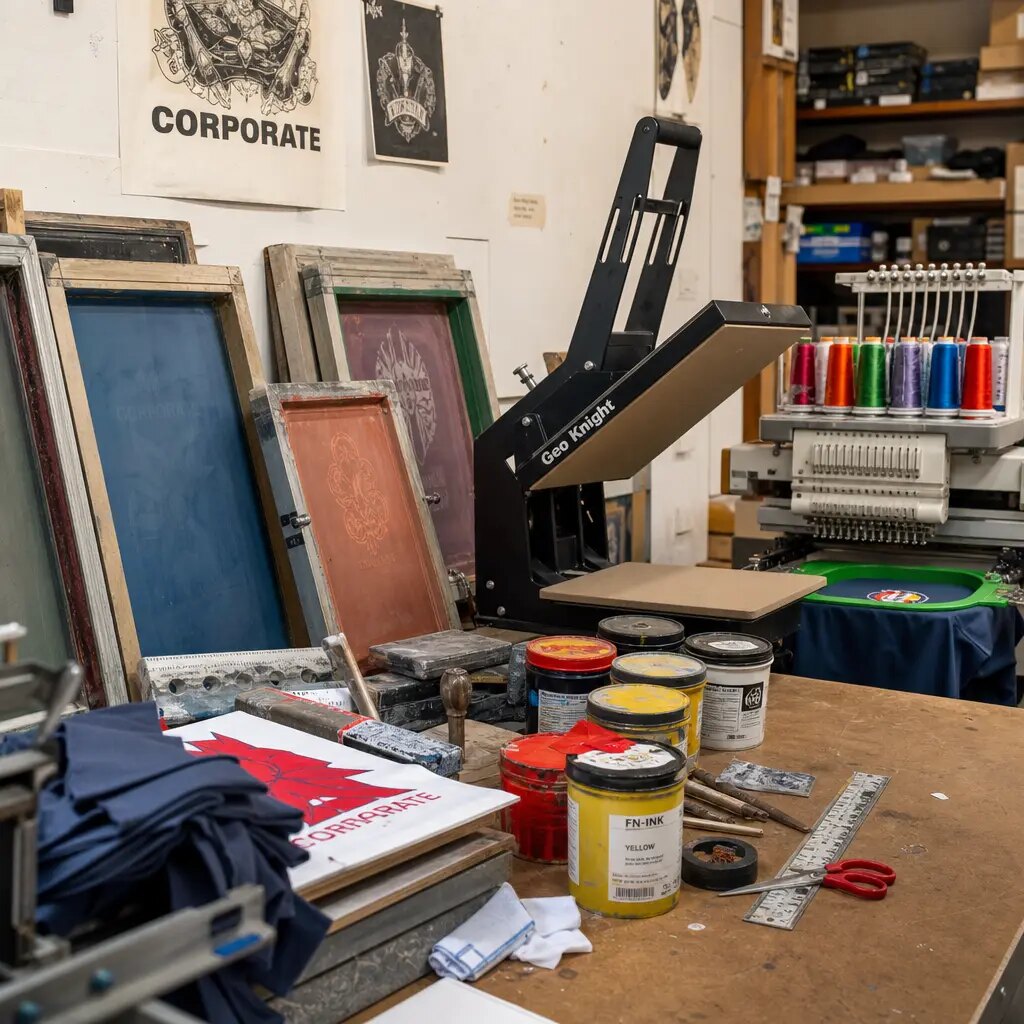
Print approval is one of the most controllable sources of delay. Jute is coarse, textured, and naturally variable, so artwork that prints cleanly on paper may not reproduce cleanly on burlap. Large solid shapes, bold lettering, and simple one-color logos usually perform better than fine-line illustrations, tiny sponsor names, gradients, or tight multi-color registration. For many market programs, a one-color screen print is the most predictable balance of cost, clarity, and schedule.
The artwork file should tell the factory exactly what to produce. Procurement buyers should send vector artwork, print size, placement measurements, Pantone references or closest color targets, and any required sponsor spacing. If the brand color must be tightly controlled, the buyer should understand that natural jute affects how ink appears. A Pantone code is a useful reference, but it is not a guarantee of paper-like color matching on a textured natural fiber.
Placement should be specified with measurements from physical bag edges, not only shown on a mockup. The front panel may shift slightly during cutting, sewing, and pressing, especially near gussets and seams. Buyers should define acceptable placement tolerance before bulk production. A reasonable tolerance allows normal manufacturing variation while still protecting the visible brand area. Without a written tolerance, small shifts become arguments after production is complete.
- Send vector artwork with final print size and color references at the RFQ stage.
- Avoid tiny text, thin strokes, gradients, and multi-color art unless the supplier confirms they can hold the detail on jute.
- Keep printing away from seams, handle stitching, gusset folds, and heavy texture changes.
- Approve a real print strike-off on jute or the actual bag panel when brand visibility matters.
5. Build an RFQ that exposes real cost drivers
A strong RFQ does more than ask for a unit price. It forces each supplier to quote the same bag, the same artwork, the same packing method, and the same delivery assumption. This matters because jute tote bag quotes can look close on the surface while hiding different materials, handle widths, carton quantities, print setup fees, or Incoterms. A low quote based on lighter fabric, simple stitching, and bulk ex-factory terms is not comparable to a quote that includes reinforced handles, individual labels, inspection support, and FOB shipment readiness.
Procurement buyers should ask for price breaks at realistic order quantities. Farmers market programs may start with 500 or 1,000 units, then expand to 3,000 or 5,000 units if sponsors, vendors, or retail customers respond well. Price breaks reveal whether the supplier has a sensible production model. Setup costs, screen preparation, cutting waste, and changeover time are spread across more pieces as volume rises, so the price curve should make commercial sense.
The RFQ should also separate fixed fees from variable costs. Screen charges, sample fees, custom labels, barcode labels, special folding, individual polybags, and export cartons can all change the landed cost. When those items are hidden inside one unit price, buyers cannot make informed tradeoffs. Separating them makes it easier to decide whether a retail-style pack is worth the extra labor or whether one core artwork is better than multiple small art versions.
- Quote the same finished size, fabric weight, handle construction, print method, packing format, and Incoterms with every supplier.
- Request price breaks at 500, 1,000, 3,000, and 5,000 pieces if the program may scale.
- Separate unit price, setup fees, sample fees, custom label fees, packing charges, and inspection charges.
- Ask the supplier to list exclusions so the buyer knows what is not included in the offer.
6. Compare sourcing routes by schedule control, not just unit price
A direct factory, a trading company, and a domestic stock supplier can all be legitimate choices, but they solve different procurement problems. A direct factory may provide the best control over specifications, repeat production, and cost transparency when the buyer has time to manage approvals. A trading company may help when the order includes multiple related items or when communication speed and consolidation are valuable. A domestic stock supplier may be fastest, but available sizes, print areas, fabric weight, and color options may be limited.
For farmers market vendors, the best route depends on how much customization the program needs and how fixed the launch date is. If the bags carry a market association logo and must match a seasonal sponsor package, custom production may be worth the planning time. If the program is late and only needs a simple stamped logo on available stock, a domestic or stock route may reduce risk. The buyer should avoid comparing these routes as if they are identical products.
Schedule visibility is a major selection factor. A supplier should be able to explain what happens after approval: when fabric is purchased, when printing starts, when sewing begins, when first-off pieces are checked, when bulk inspection can occur, and when cartons can be ready for pickup. If a supplier cannot break down the timeline, the buyer has less ability to recover from delays.
- Use direct factory sourcing when the specification is stable and repeatability matters.
- Use trading or consolidation support when the program includes multiple bag types, labels, or related packaging items.
- Use stock bags as a speed option when customization can be limited and exact construction is less critical.
- Choose the route that protects the launch date, not only the route with the lowest quoted unit price.
7. Treat sampling as a production checkpoint, not a courtesy sample
The sample stage should protect the buyer from bulk mistakes. For jute tote bags, a photo of a similar bag is not enough. The buyer needs to review the actual fabric hand feel, panel shape, gusset structure, handle drop, stitching pattern, print size, logo position, folding method, and carton labeling if those details affect distribution. A sample is the physical version of the purchase agreement, and bulk production should be judged against it.
There are usually two useful sample types: a print strike-off and a sewn pre-production sample. The strike-off confirms how ink behaves on the selected jute and whether line thickness, opacity, and color are acceptable. The sewn pre-production sample confirms construction, dimensions, handle comfort, logo placement on the finished panel, and packing behavior. For a repeat order with no changes, buyers may be able to shorten sampling. For a new supplier or new artwork, skipping the sewn sample creates unnecessary risk.
Buyers should review samples with a checklist instead of relying on general impressions. Measure the bag. Tug the handles. Open the gusset. Check whether the bag stands. Fold it as it will be packed. Rub the print lightly after curing. Smell the bag after it has been enclosed. If the bag will be resold, check presentation quality. If it will be packed into vendor kits, check whether the fold size fits the kit carton or shelf.
- Approve a print strike-off when artwork clarity, ink coverage, or color is important.
- Approve a sewn pre-production sample when size, handle drop, stitching, or logo placement is new.
- Record approval comments in writing with photos and measurements so the factory has a production reference.
- Do not release bulk production until sample deviations are corrected or formally accepted.
8. Define packing and carton standards before production starts
Packing choices affect cost, lead time, carton volume, moisture risk, and receiving efficiency. Bulk packing is often the most practical choice for farmers market vendor programs because bags are distributed to vendors, event managers, or warehouses rather than sold as individually packaged retail units. Bulk packing can be faster and cheaper, but it needs clear carton counts, clean folding, moisture control, and accurate carton marks.
Individual polybags may be appropriate when the tote is sold in retail stores, shipped directly to consumers, or handled in a mixed merchandise warehouse that requires scannable units. However, individual packing adds labor and material cost. It can also trap moisture if jute is packed before it is fully dry or aired out. Buyers should require the supplier to explain how bags are dried, stored, folded, and packed, especially for ocean freight.
Carton planning is part of lead time planning because receiving problems can delay distribution even after the shipment arrives. The buyer should know pieces per carton, carton dimensions, gross weight, net weight, carton strength, carton marks, and whether cartons are packed by artwork version or mixed. If bags must be allocated to different market locations, carton-level organization can save hours of rework at receiving.
- Use bulk packing for most vendor distribution programs unless retail presentation requires individual packaging.
- Specify pieces per carton, folding method, carton dimensions, carton weight, and carton marks in the purchase order.
- Ask whether desiccants, liners, or moisture controls are recommended for the shipment route and season.
- Pack separate artwork versions or locations in clearly marked cartons to reduce receiving errors.
9. Put quality control requirements into the purchase order
Quality control should be defined before the order is placed, not negotiated after a failed inspection. Jute is a natural material, so some variation in shade, slub, and texture is normal. The procurement task is to define which variation is acceptable and which variation harms the brand, function, or customer experience. For example, a small natural slub on a side panel may be acceptable, while a dark stain through the printed logo should not be.
A finished goods inspection should check dimensions, fabric appearance, print quality, handle stitching, seam strength, lamination, odor, moisture, packing, and carton marks. Buyers can use an AQL-style inspection approach if the order volume justifies it, but the checklist still needs product-specific points. Generic inspection wording may miss issues that matter on jute bags, such as print show-through, loose yarns in the logo area, handle stress points, and odor from damp storage.
Inspection timing matters. If the buyer waits until the goods are fully packed and the vessel booking is imminent, rework may threaten the launch date. For higher-risk orders, request first-off production photos or an in-line check after initial printing and sewing. This allows the factory to correct print placement, handle stitching, or folding before the same mistake is repeated across the full run.
- Define tolerances for finished dimensions, handle drop, print placement, and color variation in writing.
- Inspect real packed bulk units from multiple cartons, not only factory-selected samples.
- Check handle reinforcement and stitch quality carefully because field failure usually happens at stress points.
- Require corrective action options before shipment if bulk goods drift from the approved sample.
10. Compare landed cost and build a recovery plan
The final procurement decision should be based on landed cost and schedule risk together. Ex-factory unit price is only one part of the cost. Buyers also need to account for sample fees, setup charges, special labels, packing labor, inspection, inland freight, export handling, ocean or air freight, customs duties where applicable, local delivery, and the cost of emergency recovery if the order slips. A cheap bag can become expensive if late approval forces air freight.
For planned seasonal programs, sea freight is usually the most economical route, but it requires earlier approvals and attention to vessel schedules, cut-off dates, and port handling. Air freight can rescue a launch quantity, but it is rarely the right plan for the full order unless the quantity is small and timing is critical. Some buyers split shipments: a small air shipment for opening weekend and the balance by sea. That approach can work, but it should be priced before the crisis, not discovered after the deadline is missed.
A recovery plan does not mean expecting failure; it means knowing the options. Procurement should ask whether partial shipment is possible, whether blank bags can ship first, whether local printing is realistic, whether a stock substitute exists, and how fast rework can happen if inspection fails. For farmers market vendors, having the right number of acceptable bags on the first weekend may matter more than having the entire annual quantity in one shipment.
- Compare quotes using the same Incoterms, destination, freight mode, and packing assumptions.
- Model the landed cost at the planned quantity and at a smaller emergency air quantity.
- Keep a launch buffer for inspection rework, customs clearance, and local delivery to vendor sites.
- Decide in advance whether partial shipment, split freight, or stock substitution is acceptable if the schedule tightens.
Specification comparison for buyers
| Planning decision | Recommended procurement choice | Best-fit use case | Lead time or quality risk to verify |
|---|---|---|---|
| Program calendar | Work backward from the first date bags must be physically on site and freeze specs before sampling | Season launches, vendor onboarding kits, CSA pickup programs, sponsor promotions | Late artwork, committee changes, or venue approvals can consume the whole production buffer |
| Finished size | Specify width, height, gusset depth, and handle drop in the RFQ | Reusable produce bags, vendor resale totes, sponsor-branded giveaways | A bag that is 2–3 cm short can reduce print area and usable capacity |
| Fabric weight | Use 14–16 oz jute or about 300–350 GSM laminated jute for structured retail use | Totes carrying produce, bread, flowers, jars, or mixed purchases | Too light can collapse; too heavy can raise freight weight and slow sewing |
| Lamination | Choose unlaminated for a natural look or laminated for shape retention and spill resistance | Dry goods, packaged produce, and display-ready market bags | Poor lamination can bubble, crack at fold lines, or create odor complaints |
| Handle construction | Use cotton web or jute-cotton handles with box-X stitching or bar-tack reinforcement | Customers carrying heavier purchases over several market stops | Thin handles stretch; weak reinforcement causes field failures after delivery |
| Print method | Use one-color screen print for most programs; use heat transfer only when artwork detail requires it | Bold farm, sponsor, market association, or event logos | Fine lines can fill in on coarse weave; multi-color registration can add proof time |
| MOQ strategy | Start with one core size and one artwork version unless the program clearly needs variants | Buyers balancing budget control, vendor consistency, and lower unit cost | Too many size or artwork splits create separate setups and carton complexity |
| Sample approval | Approve a print strike-off plus a sewn pre-production sample before bulk release | New artwork, new supplier, new handle length, or first-year programs | Photo approvals miss hand feel, odor, handle drop, print placement, and folding behavior |
| Packing method | Bulk pack with clear carton marks unless retail presentation requires individual packaging | Warehouse-to-vendor distribution, market office replenishment, and kit assembly | Individual polybags add labor, carton volume, and moisture risk |
Buyer checklist before sampling
- Confirm the first required delivery date at the receiving location, not only the market opening date, because vendor kits may need assembly before launch.
- Lock finished width, height, gusset depth, handle drop, handle width, and target load expectation before comparing quotes.
- Specify fabric weight, weave appearance, lamination status, lining requirement, handle material, and reinforcement method in the RFQ.
- Provide vector artwork with Pantone or closest-color references, print area dimensions, placement measurements, and acceptable placement tolerance.
- State whether the order uses one artwork version or multiple versions for sponsors, farm categories, market locations, or seasonal promotions.
- Request MOQ and price breaks by exact size, print version, packing method, and Incoterms so suppliers cannot quote on different assumptions.
- Define the approval path for print strike-off, sewn sample, carton label, and final production release, and name who signs off at each step.
- Include QC requirements for dimensions, stitch strength, print opacity, print registration, odor, moisture, lamination, stains, and carton condition.
- Decide whether bags ship bulk packed, flat packed, individually polybagged, barcode labeled, or packed by vendor-kit quantity.
- Ask for master carton dimensions, pieces per carton, gross weight, net weight, carton marks, and palletization assumptions if relevant.
Factory quote questions to send
- What is your standard timeline for this exact jute tote bag specification, broken down into artwork review, sample making, sample shipping, bulk production, inspection, packing, and freight booking readiness?
- Which fabric weight, weave, lamination, lining, and handle material are included in the quoted price, and which alternatives change cost or lead time?
- What are the MOQ rules per finished size, fabric color, handle color, print color, artwork version, and packing format?
- Can you produce a sewn pre-production sample with final handle drop, print placement, stitch type, label placement, folding method, and carton marking for approval before bulk cutting?
- What are the unit prices at 500, 1,000, 3,000, and 5,000 pieces, and are screen charges, sample charges, label charges, or packing charges listed separately?
- What print method do you recommend for this artwork on jute, and what minimum line thickness, text height, and color tolerance should we use to avoid production problems?
- What packing standard is included in the quote, including pieces per carton, carton dimensions, carton strength, polybag use, barcode labels, desiccants, and carton marks?
- Which inspection standard do you use before shipment, what AQL level can you support, and what is your rework process if bulk production does not match the approved sample?
- What finished dimension tolerance, print placement tolerance, handle length tolerance, and acceptable jute shade variation will you commit to in writing?
- From which factory location, inland warehouse, or port will the goods ship, and what raw material, printing, holiday, or vessel booking risks could affect the requested delivery window?
Quality-control points to confirm
- Fabric weight should stay within the agreed range, and inspectors should check panels from multiple cartons because jute thickness can vary across rolls.
- Jute weave should be reasonably consistent in the print area; holes, severe slubs, broken yarns, loose weave, dark stains, or oil marks should be rejectable when visible on the front panel.
- Finished bag width, height, gusset depth, handle drop, handle width, and bottom construction should be measured against the approved spec with written tolerances.
- Handle stitching should use the approved box-X, bar-tack, or reinforcement pattern with no skipped stitches, broken thread, loose knots, or weak tension at the stress point.
- A practical load check should be agreed for the intended use, especially if bags will carry jars, bottles, root vegetables, or multiple produce items.
- Logo placement should match the approved sample, with measurable tolerance from the top edge, side seam, and bottom fold rather than a vague centered requirement.
- Print opacity, edge sharpness, color consistency, registration, curing, and rub resistance should be checked on actual jute panels, not only on a paper proof.
- Heat transfers, if used, should be checked for edge lift, cracking, stiffness, adhesion, and appearance after folding because rough jute can challenge bonding.
- Laminated bags should be checked for odor, bubbling, delamination, sharp crease whitening, interior sticking, and uneven lamination at seams.
- Moisture and odor should be checked before packing; jute can absorb warehouse smell and humidity, which may become obvious only when cartons are opened.