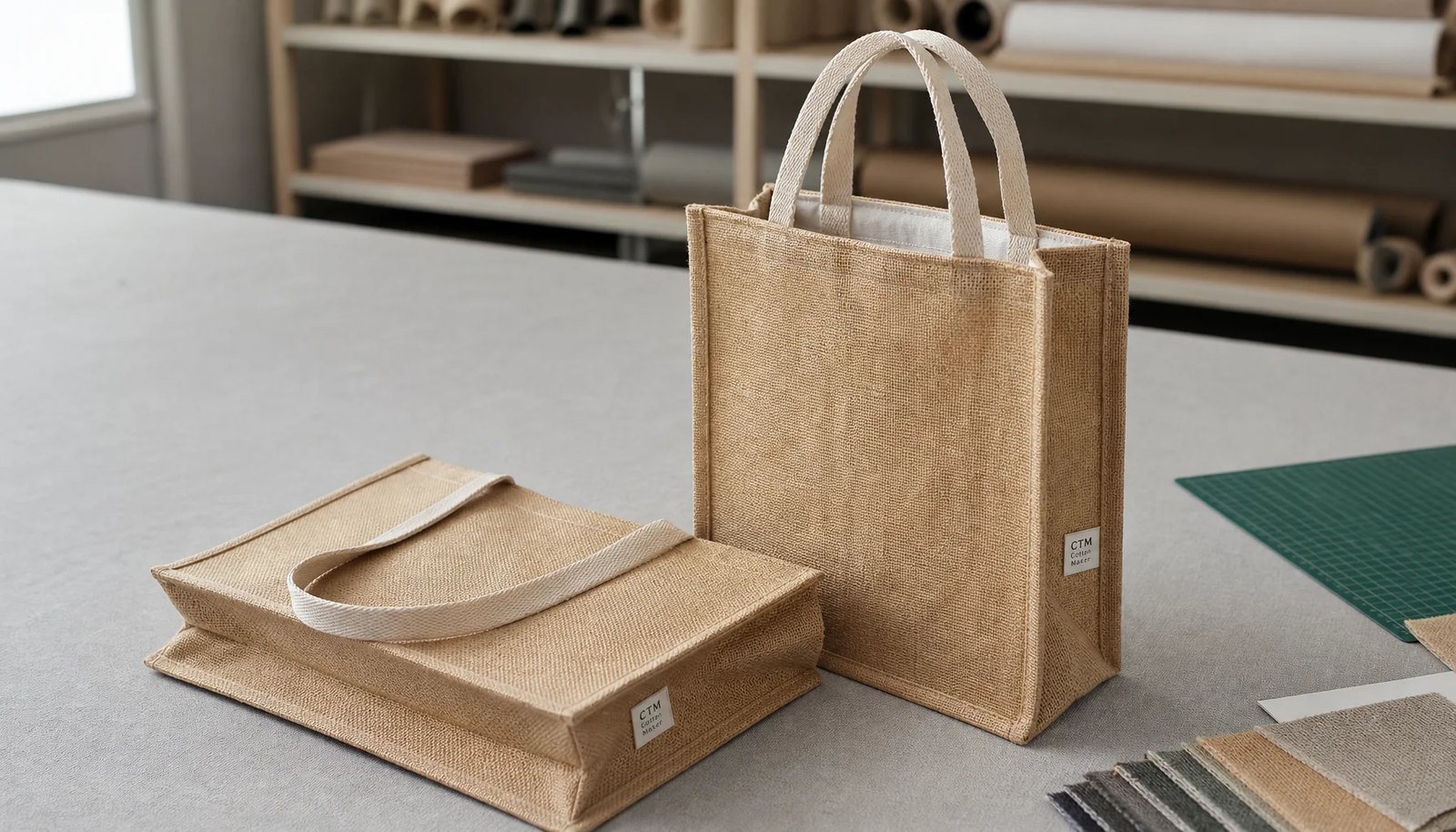
Start With The Hotel Retail Use Case
Jute tote bags for hotel retail are not the same product as a giveaway tote for a one-day event. A guest may buy the bag in a resort boutique, receive it with a spa set, use it to carry local products, or keep it as part of the hotel brand experience. That means the bag has to look natural and premium, but it also has to survive shelf handling, packing, guest use, and export transit without odor, loose fibers, weak handles, or distorted print.
The first supplier compliance step is to define the retail function in practical terms. A hotel gift shop shopper can be lighter and more flexible. A spa amenity tote needs a cleaner inside finish. A wine or gourmet product bag needs a stronger gusset and handle attachment. A premium resort retail bag often needs better structure so it stands upright on a shelf. When the RFQ states the use case clearly, suppliers stop quoting the cheapest available jute and start matching construction to risk.
- For boutique retail: prioritize neat shape, consistent color, and shelf-ready packing.
- For spa or amenity sets: consider laminated backing or cotton lining to reduce lint transfer.
- For wine, food, or heavy retail items: upgrade handle reinforcement and gusset strength.
- For hotel chain programs: control repeat-order shade, label placement, carton marks, and barcode rules.
Specify Jute GSM And Construction
Most hotel retail jute totes fall into a practical fabric range of about 280-340 GSM. This range gives a natural hand feel without making the bag too stiff or expensive for volume retail. If the buyer wants a structured boutique look, or if the bag carries heavier items, 360-420 GSM may be a better target. Below this range, the bag can collapse too easily, show uneven weave, and feel more promotional than retail.
GSM is only one part of the construction. Natural jute can be unlaminated, laminated on the back, combined with a cotton lining, or made with a laminated jute body and cotton webbing handles. Lamination improves body and reduces fiber shedding, but it can introduce odor if the material is packed too soon. Cotton lining improves retail finish but adds labor, weight, and cost. The buyer should compare quotes by full construction, not just by size and logo.
- Common retail tote range: 280-340 GSM natural jute for balanced price and appearance.
- Premium structured range: 360-420 GSM when the bag must stand upright or carry heavier goods.
- Unlaminated jute: more natural, softer, more fiber shedding, less structure.
- Laminated jute: better body and cleaner inside surface, but requires odor and peeling checks.
- Cotton lining: more finished retail appearance, higher sewing cost, longer production time.
Choose Branding That Works On Jute
Jute is not a smooth cotton canvas. The weave is coarse, the surface is irregular, and small logo details can break up. A clean hotel mark, resort name, or simple one-color brand graphic usually prints well by screen print. Fine serif text, thin lines, gradients, and small QR codes are riskier. If the brand identity requires detail, a woven label, cotton patch, leather-look patch, or heat transfer on a smoother panel may give better control.
For compliance, the supplier should not approve branding only from a digital mockup. A print strike-off on actual jute is more useful because it shows ink coverage, edge sharpness, color absorption, and texture interruption. For hotel retail, the logo often has to look quiet and premium rather than loud. Buyers should define print size, position, Pantone target, acceptable color variation, and whether the natural jute texture showing through the ink is acceptable.
- Screen print: best for bold one-color or two-color hotel logos with moderate detail.
- Heat transfer: useful for more detailed artwork, but adhesion and hand feel must be tested.
- Woven label: good for subtle retail branding and repeat consistency across jute lots.
- Cotton patch: useful when the logo needs a smoother printing surface.
- Embossed or leather-look patch: premium appearance, but confirm material compliance and stitching quality.
Compare Supplier Routes Before Comparing Unit Price
For the keyword problem of supplier compliance, the main mistake is treating all supplier quotes as equal. A factory-direct jute bag manufacturer may quote a higher MOQ but can control cutting, sewing, print approval, and carton packing more directly. A trading company may be useful for mixed programs, but the buyer needs visibility into which factory is actually producing the jute totes. A ready-stock wholesaler may be fast, but batch consistency and compliance evidence are weaker.
The right route depends on the buyer's risk. A hotel chain or importer selling into retail channels usually needs repeatable material, artwork control, barcode accuracy, and inspection access. A small boutique hotel may accept ready-stock plain jute bags with a simple label. Distributors should be careful when combining several bag types in one shipment, because cotton, canvas, jute, and burlap products may have different lead times, packing needs, and compliance documents.
- Choose factory-direct when artwork control, repeat orders, and inspection access matter.
- Use a sourcing agent only when production responsibility and factory documentation are transparent.
- Use ready stock for urgent or small replenishment, with looser expectations on shade and dimensions.
- Avoid comparing a laminated lined tote against an unlined natural jute tote as if they are the same item.
- For hotel retail distribution, require documentation that matches the actual material, ink, coating, and packaging.
Understand MOQ Logic And Cost Drivers
MOQ for custom jute tote bags is driven by material purchasing, cutting efficiency, print setup, sewing line planning, and packing labor. A supplier may accept a lower MOQ if the bag uses standard natural jute, existing handle webbing, one-color print, and simple bulk packing. MOQ rises when the buyer needs custom dyed handles, lining, special labels, small carton assortments, multi-position printing, or strict retail packing.
Unit price differences often come from details that are not visible in a short quote. A cheaper quote may use lighter jute, narrower handles, fewer stitches, thinner lamination, no airing time, or lower carton strength. For hotel retail, it is better to request price breaks at several quantities and compare what changes at each level. A sensible RFQ can ask for 500, 1000, 3000, and 5000 pieces, while separating sample cost, mold or screen cost, label cost, and retail packing cost.
- Lower MOQ is easier with standard natural jute, standard handles, and one-color screen print.
- Higher MOQ may apply for custom dyed fabric, custom lining, special labels, or multi-color print.
- Cost drivers include GSM, lamination, lining, handle width, print area, label application, packing style, and carton strength.
- Quote sample cost and bulk unit cost separately so the buyer can see where setup charges are hidden.
- For repeat programs, negotiate a smaller replenishment MOQ after the first bulk order is approved.
Build A Compliance File That Matches The Product
Hotel retail buyers often need compliance evidence for internal procurement, brand standards, import customs, and retail channel requirements. The file should match the actual bag, not a generic factory certificate. At minimum, buyers may need material declarations for jute, cotton handles or lining, ink or transfer material, lamination film, packaging, and country-of-origin marking. Requirements vary by destination market and end use, so the importer should align with its own compliance advisor before placing the order.
A supplier compliance checklist should separate factory capability from product compliance. A business license or audit profile tells you something about the supplier. It does not prove that the ink on your jute tote is suitable, that the lamination is acceptable, or that the retail label is correct. For a hotel group or distributor, the safest process is to collect documents early, review them before production, and keep the approved sample and documents under the same item code.
- Material declaration: jute fabric, cotton webbing, lining, lamination, labels, and packaging.
- Chemical statements: azo-free dye or ink declaration where relevant to the buyer's market.
- Regulatory alignment: REACH, CPSIA, Prop 65, or other market requirements when applicable.
- Labeling: country of origin, fiber content, care information, barcode, price tag, and brand hangtag rules.
- Traceability: supplier name, production batch, approved sample date, and item code should be consistent.
Set Sample Approval Criteria
A good pre-production sample for jute tote bags is not just a visual reference. It is the control piece for size, fabric weight, handle drop, print, lining, label placement, seam finish, and packing. The sample should use actual production jute or confirmed equivalent material. If the supplier sends a beautiful sample made from leftover premium fabric but bulk production uses a different jute roll, the approval has limited value.
Hotel retail samples should be checked under real handling conditions. Place the likely retail items inside the bag, carry it by the handles, set it on a shelf, inspect how it stands, and rub the print with a dry white cloth. Smell the inside after it has been sealed for a day. Check whether the handle length feels right for hand carry or shoulder carry. Photograph and measure the approved sample, then sign or tag it so the factory and buyer are referring to the same standard.
- Measure finished width, height, gusset, handle width, and handle drop.
- Weigh the bag and compare it with expected GSM and construction.
- Review print clarity, logo position, color, ink coverage, and rub resistance.
- Load test with the intended retail contents or a realistic weight example.
- Inspect inside finish for loose fibers, odor, glue marks, lamination bubbles, or sharp seam edges.
- Approve the actual packing method, including polybag, hangtag, barcode, and carton arrangement.
Define QC Thresholds Before Production
Jute is a natural material, so some shade variation and weave irregularity are normal. The buyer's job is not to demand impossible uniformity; it is to define what is commercially acceptable for hotel retail. Serious defects include broken seams, weak handles, unreadable logo, heavy stains, mildew smell, sharp lamination edges, wrong label, wrong barcode, severe size variation, and cartons that arrive crushed or damp.
For bulk inspection, use measurable acceptance points. Size can be controlled with tolerances. Print position can be measured from the top edge and side seam. Handle strength can be checked with a practical load test. Carton count and barcode scan can be verified during final inspection. AQL sampling is common, but it only works if the defect categories are defined before the inspector opens the cartons.
- Critical defects: wrong artwork, wrong barcode, mildew, unsafe sharp edges, missing required origin label.
- Major defects: weak handle stitching, large stains, serious print smearing, incorrect size, peeling lamination.
- Minor defects: small natural slubs, slight shade variation, minor loose thread that does not affect function.
- Suggested size tolerance: plus or minus 5 mm for width and height on standard totes.
- Suggested handle drop tolerance: plus or minus 10 mm unless retail display requires tighter control.
- Inspection should compare bulk goods to the signed pre-production sample, not only to the purchase order.
Control Packing, Moisture, And Retail Presentation
Packing is a major risk point for jute tote bags because the material can absorb moisture and hold odor. If bags are packed too soon after printing, lamination, or warehouse storage, the cartons may arrive with a strong smell or mildew risk. The factory should allow airing time, use dry cartons, keep finished goods away from damp floors, and add desiccant where appropriate for the route and season.
Hotel retail packing also has a merchandising side. A bag that arrives wrinkled, crushed, dusty, or covered in loose fibers will create extra handling work at the hotel or distributor warehouse. The buyer should decide whether each bag needs a polybag, recycled paper band, tissue insert, hangtag, barcode sticker, or bundle packing. Individual polybags improve cleanliness and scanning, but some hotel brands want reduced plastic. That decision belongs in the RFQ, not after production.
- State whether bags are packed flat, folded, nested, or with shape support.
- Define pieces per inner bundle and pieces per master carton.
- Set maximum carton weight so warehouse handling remains practical.
- Require export carton marks with item code, PO number, quantity, gross weight, net weight, and carton number.
- Use desiccant when shipping during humid seasons or long sea transit, based on buyer policy.
- Confirm whether retail barcodes must scan through a polybag or be applied to a hangtag.
Plan Lead Time Around Real Production Steps
A reliable lead time for hotel retail jute tote bags includes more than sewing days. The schedule should include artwork review, material confirmation, sample making, sample shipping, buyer approval, bulk material preparation, printing, curing or airing, sewing, trimming, label application, packing, final inspection, and export handover. When a supplier quotes only a simple production lead time, the buyer still has to add approval days and shipping buffer.
The highest schedule risk usually appears before bulk sewing starts. Late artwork, unclear Pantone references, label changes, barcode approval, or compliance document delays can hold the order while the factory is ready to proceed. For seasonal hotel retail, especially resort openings and holiday gift shop programs, lock the sample and compliance file early. A rushed jute order often shows problems in odor control, print curing, carton packing, and final inspection.
- Sample development commonly needs time for artwork setup, material selection, printing, sewing, and international courier transit.
- Bulk lead time should be counted after sample approval, deposit, artwork confirmation, and material confirmation.
- Add buffer for custom lining, custom handle color, woven labels, hangtags, or barcode approval.
- Reserve inspection time before shipment, especially for first orders or retail channel launches.
- Do not book a firm hotel launch delivery date until carton data, production plan, and freight route are aligned.
Specification comparison for buyers
| Supplier option | What to verify | Commercial advantage | Buyer risk to control |
|---|---|---|---|
| Direct sewing factory | jute roll photos, lamination sample, odor-control process, handle pull evidence, and pre-shipment carton condition photos | Better sample-to-bulk control and faster production feedback | May be weaker on export paperwork or branded packing unless checked early |
| Trading company | Factory name, production photos, trim-source proof, and who owns QC decisions | Can coordinate small mixed orders and extra services | Markup can hide real factory capability and slow defect decisions |
| Specialized bag workshop | handle stitching, side gusset, lamination edge control, inner seam cover, and fiber shedding tolerance | More practical for detailed construction, trims, and repeat programs | Capacity may be limited during peak seasons |
| Low-price general supplier | laminated or unlaminated jute, cotton-jute blend, inner coating, odor control, yarn thickness, and color shade variation | Useful for simple promotional runs with loose specs | Material downgrades, weak packing, and vague inspection scope can erase savings |
| Retail-ready supplier | airing time, moisture absorber, carton liner, bundle wrap, odor separation, and warehouse ventilation before loading | Can handle labels, SKU separation, carton marks, and receiving rules | Higher unit cost must be compared against reduced warehouse work |
| Compliance-focused supplier | Fabric records, labeling review, test plan, and production traceability | Safer for retail programs and repeat brand orders | Documentation claims need evidence, not only sales language |
| Local sample room plus bulk factory | Signed sample, bulk factory handoff, first-piece photos, and deviation owner | Good for complex branding before large production | Sample room quality may not match bulk line unless handoff is controlled |
Buyer checklist before sampling
- Define the retail use before requesting price: gift shop shopper, spa amenity bag, minibar gift set, wine carrier, conference retail bag, or in-room merchandise packaging.
- Specify finished bag dimensions in width x height x gusset, plus handle drop, instead of sending only a reference photo.
- State target fabric weight or acceptable GSM range, such as 280-340 GSM natural jute or heavier 360-420 GSM for a structured premium bag.
- Confirm whether the jute requires inner lamination, cotton lining, no lining, or laminated backing with a covered seam finish.
- Provide logo artwork in vector format and define Pantone references, print size, print position, and whether the logo can follow the natural jute texture.
- Set print acceptance criteria for pinholes, edge sharpness, registration, ink rub, odor, and color variation on natural fabric.
- Require a pre-production sample using actual jute, actual handle material, actual print method, and actual packing method.
- Define handle material, width, color, attachment method, X-stitch or box-stitch pattern, and minimum pull strength expectation.
- Decide if retail labels, hangtags, barcodes, price stickers, care labels, or country-of-origin labels must be applied at factory.
- Specify individual polybag, paper band, inner bundle, master carton count, carton marks, desiccant, and maximum carton weight.
Factory quote questions to send
- What exact jute GSM, weave style, and lamination or lining construction are included in your quote?
- Is the quoted jute from current stock or new dyed/natural material to be purchased for this order?
- What is the minimum order quantity for this size and print method, and what price breaks apply at 500, 1000, 3000, and 5000 pieces?
- Which production steps are done in your own factory: cutting, printing, lamination, sewing, label attachment, packing, and final QC?
- Can you make a print strike-off on actual jute before the full pre-production sample?
- What tolerance do you apply for finished size, handle drop, logo position, carton weight, and print color?
- What documents can you provide for material compliance, ink safety, packaging materials, and country-of-origin marking?
- How many days are needed for sample, bulk material preparation, printing, sewing, inspection, and packing after approval?
- Can you provide carton dimensions, CBM, gross weight, and loading quantity for air and sea shipment comparison?
- How do you control moisture, odor, lint, and mildew risk before export packing?
Quality-control points to confirm
- Finished size tolerance should normally be controlled within plus or minus 5 mm for width and height and plus or minus 8 mm for gusset on standard tote construction.
- Handle drop should be consistent across the lot, normally within plus or minus 10 mm unless a tighter retail display requirement is specified.
- Jute GSM should match the approved sample range, with batch shade and weave density reviewed before cutting.
- Logo placement should be measured from bag edges, not judged by eye, especially when hangtags or retail labels must align visually.
- Screen print should pass dry rub testing by hand and show no serious cracking, heavy ink bleeding, or unreadable small text on the jute surface.
- Handle attachment should use reinforced stitching such as box stitch or X stitch, with no skipped stitches, loose threads, or weak corners.
- Seams and gussets should be checked under load to confirm the bag keeps shape and does not twist when carried.
- Lamination or lining should not create strong odor, peeling, bubbling, sharp edges, or visible glue marks near the top opening.
- Cartons should be dry, clean, correctly marked, and packed to avoid crushed corners, excessive weight, and moisture trapping.
- Final inspection should include AQL sampling, carton count verification, barcode scan test where applicable, and comparison against the signed pre-production sample.