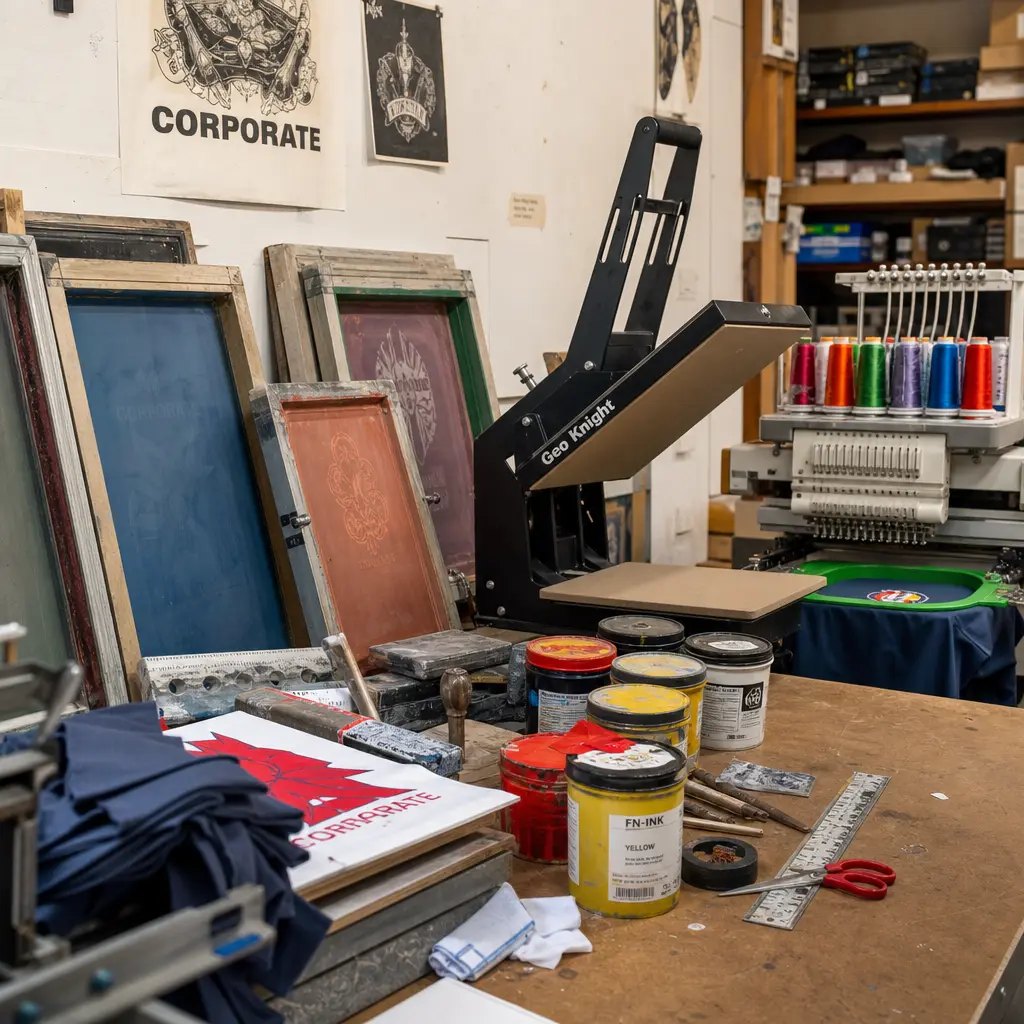
Why jute totes make sense for tech startup programs
Jute tote bags are popular with tech startups because they sit in a useful middle ground: more substantial than a thin nonwoven giveaway bag, but still workable for event distribution, onboarding packs, and simple retail merch. Buyers usually want three things at once: a clean brand surface, enough strength for repeated use, and a cost structure that does not break a launch budget.
The real procurement question is not whether jute looks good. It is whether the bag can be built consistently at the load, print quality, and packaging standard your program needs. A tote used for a conference keynote kit may only need to carry a notebook and brochure set. A tote used for an employee onboarding pack may also need to hold a bottle, charger, hoodie, or other bulky items. That difference changes the fabric weight, handle construction, and carton size you should specify.
Tech buyers should also consider brand context. A rough, natural fiber look supports sustainability messaging, but it can work against a polished premium launch if the print is too fine or the bag slumps when packed. That is why the spec must connect appearance to use case, not just to aesthetics. The best result comes from choosing a construction that supports the contents, the event format, and the expected lifespan of the bag.
- Use jute when you need a natural look with better body than a thin promo tote.
- Tie the bag spec to the actual contents, not to a generic “premium” label.
- Treat print quality, handle comfort, and packing efficiency as part of the product, not add-ons.
Choose fabric weight by load, not by instinct
Fabric weight is one of the easiest places to overspend or under-spec. Many buyers assume the heaviest jute is automatically the best option, but that is not always true. Heavier fabric raises unit cost, makes folding harder, increases shipping cube, and can create a stiff handfeel that is not ideal for conference or retail use. Too-light fabric creates its own problems: a softer body, more wrinkling, and a higher risk of print distortion or visible deformation when the bag is loaded.
A practical starting point for procurement is to map fabric weight to the expected load and use frequency. For light event use, a lower weight can work if the bag is short-lived and the contents are modest. For onboarding kits and day-to-day carry, a medium range is usually the safer commercial choice. For sample packs or heavier merch, move up only after checking handle reinforcement, gusset depth, and carton cube. GSM alone does not make the bag strong; the construction around it does.
Avoid blanket promises such as “best for all uses.” A tote for a booth handout and a tote for retail shelf display are not the same item. Ask the supplier how the fabric weight was measured, whether the number refers to raw fabric or a finished laminated panel, and whether the quoted range is before or after finishing. That one clarification can prevent a lot of pricing confusion.
- Choose the lightest weight that still meets load and brand requirements.
- Ask how GSM is measured and whether finishing changes the number.
- Pair fabric weight with handle reinforcement and seam spec before approving the build.
A practical comparison of fabric weight and structure
The table below is the most useful decision aid in the article because it compares the weight, build, and commercial trade-off in one view. Use it when you need to choose between a lower-cost promo tote, a balanced onboarding tote, or a heavier retail-style bag. The goal is not to pick the “best” option in theory. It is to pick the option that best fits the use case, budget, and shipping plan.
If you are ordering for a tech startup, the most common failure mode is buying to a swatch rather than to a pack-out scenario. A bag that looks fine on a sample table may not behave the same once you add books, cables, water bottles, or boxed merch. Think in terms of filled shape, handle stress, and presentation after transit.
- Use the table to align weight with content load and repeat use.
- Treat carton size and fold behavior as part of the weight decision.
- Shortlist suppliers only after they can explain how their structure supports the chosen weight.
Comparison table: fabric weight, structure, and buyer trade-offs
Compare these options as procurement choices, not as style preferences. The right answer is usually the one with the fewest hidden trade-offs for your actual order scenario.
For example, a heavier bag can improve structure but worsen freight economics and storage. A lighter bag can be easier to pack but may need stricter limits on contents and print complexity.
- Always compare finished-use behavior, not just raw material descriptions.
- If the supplier cannot state tolerances, treat the quote as incomplete.
- Use the same comparison sheet across all suppliers so quotes stay comparable.
What the supplier quote must show line by line
A procurement-ready quote should let you see where the price comes from. If a supplier only gives a single unit number, you cannot tell whether the low price comes from a thinner fabric, simpler stitching, reduced print coverage, smaller carton counts, or a weaker packing method. That is risky because the order may still be “in spec” verbally while being built differently in practice.
A strong quote separates fabric, handles, print, finishing, packing, and cartonization. It should also identify what is included in the sample path and what is excluded from the unit price. If you are comparing a factory-direct supplier and a trading company, ask both to quote the same build assumptions. Otherwise, the cheaper number may simply be missing costs you will pay later.
This is especially important for startup merch programs because launch calendars are tight and budget approvals are often fixed. If one quote excludes sample revisions, special packing, or export cartons, you may discover the true cost only after approval. Ask for a written list of exclusions. That is often where the negotiation starts.
- Request a quote broken into fabric, handles, print, packing, and carton costs.
- Ask what is excluded from the unit price and whether sample charges are deductible from bulk.
- Make the supplier state any cost changes tied to print colors, handle length, lining, or closures.
Supplier routes: who to use for which order
Factory-direct sourcing usually gives the best control when you care about repeatability, especially for standard jute tote programs with one bag size and one or two logo versions. It is the cleanest route when you need to lock fabric weight, handle construction, and packing details. The trade-off is that you need a tighter spec sheet and stronger sample approval discipline, because the factory expects the buyer to make technical decisions early.
Trading-company or managed sourcing routes can make sense when the order has multiple SKUs, mixed packaging, or a need to coordinate across several product types. These suppliers can simplify communication and keep the project moving, but the buyer should still demand the same technical proof: fabric spec, sample photos, and carton plan. A managed route is not a substitute for a clear build standard.
For a pilot order, the best route is often the one that can move quickly without blurring accountability. The key question is not whether the supplier is a factory or a trader. It is who owns the final spec version, who signs off on deviations, and who can prove the bag being quoted is the bag that will ship.
- Use factory-direct when construction control and repeat orders matter most.
- Use trading or managed sourcing when the order has more moving parts than your team can easily coordinate.
- Always ask who owns spec control, sample approval, and deviation sign-off.
Construction details that affect durability and appearance
The durability of a jute tote is usually determined by details that are easy to overlook during quoting. Handle width, sewn-in length, reinforcement pattern, seam type, and gusset construction all affect how the bag carries weight and how it looks after repeated use. Two bags can share the same fabric weight and still perform very differently if one has weak handle anchoring or sloppy seam control.
For handle construction, cotton web handles are often a sensible choice because they improve comfort and reduce cutting into the hand. The important part is not the handle material alone; it is the sewn-in length, stitch density, and reinforcement style. Ask the supplier to tell you the stitch count per inch or the equivalent factory standard they use for handle attachment. If they cannot describe it clearly, the construction may not be tightly controlled.
For body construction, ask whether the side seams are overlocked, bound, or folded in a way that controls fraying. Inspect whether the gusset stands evenly and whether the base remains square when the bag is loaded. These are not cosmetic issues. If the bag slumps or twists, the customer sees it immediately, and the perceived quality drops even if the fabric weight is acceptable.
- Specify handle width, attachment length, and reinforcement pattern.
- Ask for seam type and stitch density in measurable terms.
- Check gusset square, base stability, and load behavior after filling.
Print methods on jute and where they fail
Jute is not a smooth printing substrate, so the artwork needs to respect the material. Screen print is usually the most reliable option for bold logos, simple messaging, and repeatable production. It works well when the artwork can tolerate a slightly textured edge and when color count is limited. The advantage is commercial consistency: setup is predictable, and the result is usually easier to repeat on later runs.
Heat transfer can work for small runs or more detailed artwork, but buyers should be careful about adhesion and wear expectations. Jute texture can make transfer edges appear less clean than they would on cotton or coated fabric. Digital approaches may be possible in some production setups, but they are not automatically the right choice for every tote. The more detailed the art, the more important it is to ask for a physical sample rather than relying on a digital proof.
If brand quality matters, define the minimum readable text size and the acceptable edge shift before you approve artwork. Fine lines, low-contrast colors, and small tagline text are common failure points. A simple logo often performs better than a detailed illustration on a woven surface. When in doubt, simplify the artwork rather than pushing a weak process to do too much.
- Use screen print for bold, repeatable branding with controlled cost.
- Use transfer methods only after checking wear, adhesion, and edge quality on real samples.
- Set minimum text size and acceptable shift limits before artwork approval.
Sample approval and acceptance criteria that actually help
A sample is only useful if it locks the commercial details that matter. The pre-production sample should reflect the approved fabric weight, handle construction, print placement, and packing method. If the sample is missing one of those elements, it is not a full reference sample; it is just a visual sample. Buyers should keep the approved sample versioned and tied to the quote, so production cannot drift from the agreed build.
Acceptance criteria should be written in practical inspection language. Rather than saying “good stitching,” define the acceptable stitch density range or the visible failure that would cause rejection. Rather than saying “accurate print,” define how far a logo may shift from center and what type of edge break is allowed on a woven surface. Natural jute will always vary somewhat, so the goal is to separate normal fiber variation from a manufacturing defect.
For important orders, review the sample under normal lighting and at normal viewing distance. Check front, back, seam, handle attachment, inside finish, and carton pack pattern. If the sample has smell issues, fraying, uneven cuts, or print haze, assume those will become more visible in bulk unless corrected before approval.
- Approve only a sample that reflects the final fabric, print, and packing setup.
- Write visible failure criteria, not just broad quality language.
- Keep one signed approval sample and one matching spec sheet in the project file.
QC checks, tolerances, and clear failure points
Quality control should be specific enough that a factory inspector can use it without guessing. Start with the critical dimensions: finished width, height, gusset depth, and handle length. Then define the tolerance band for each one. For many tote programs, a small variation is acceptable, but the acceptable range should be written down before production starts. If the buyer never states tolerances, the supplier will use its own internal standard, which may not match your expectations.
For stitching, inspect handle attachment points, seam continuity, and any skipped or broken stitches. A visual check alone is not enough for a bag that must carry weight. Pull testing on a representative sample should be used to check whether the reinforcement area behaves consistently. You do not need to over-engineer the test, but you do need a repeatable standard that flags weak seams before shipment.
For print, inspect centering, color consistency, and edge cleanliness under daylight. On jute, a slight texture break can be normal, but smudging, double impressions, and large misregistration should be treated as failures. Also confirm odor, loose fibers, and dirty marks, especially if the bags will go to retail, founders’ kits, or premium event packs. These details are often what buyers notice first when the order arrives.
Carton and packing quality matter as much as product quality. Verify that the bag count per carton is correct, the fold direction is consistent, and the carton is not overcompressed. If the bags are packed too tightly, they can arrive with permanent creases. If they are packed too loosely, the freight cube gets inefficient and costs rise. The packing spec should be part of the QC checklist, not an afterthought.
- Set measurable tolerances for dimensions, not just a general “match sample” instruction.
- Use pull testing and stitch inspection for handle and seam control.
- Treat packing count, fold behavior, and carton compression as QC items.
Specification comparison for buyers
| Decision point | Best default for startup buyers | When to choose it | What to verify in the quote |
|---|---|---|---|
| Fabric weight | 320-360 GSM jute | Conference giveaways, onboarding kits, light retail merch | Ask for measured GSM tolerance, not a vague “heavy” or “premium” description |
| Fabric weight | 360-420 GSM jute | Daily-carry totes, sample packs, higher perceived value | Confirm whether the supplier measures before or after coating/lamination |
| Handle spec | Cotton web handle, 25-30 mm width, box-X reinforcement | When comfort and load security matter more than lowest cost | Check handle cut length, sewn-in length, stitch count, and seam allowance |
| Print method | 1-color or 2-color screen print | Bold logos, repeat orders, simple brand marks | Confirm print area, artwork minimum line thickness, and registration tolerance |
| Print method | Heat transfer on a smoother panel or lining insert | Small runs with more detailed branding | Ask for rub test expectations and whether the transfer is matte or glossy |
| Lamination | No lamination or light inner lamination only | Eco messaging, lower unit cost, lighter contents | Clarify whether lamination changes handfeel, recyclability message, or lead time |
| Bag structure | Open top with reinforced base | Event use, handouts, and flexible packing | Check base stitch type, gusset depth, and finished dimensions |
| Bag structure | Zip or button closure | Retail kits, devices, or higher-value contents | Verify zipper gauge, puller type, and added sewing steps |
| Supplier route | Factory-direct for controlled specs | Repeat orders and buyers who can approve samples quickly | Request factory photos, production method, and packing spec |
Buyer checklist before sampling
- State the target use case in the RFQ: giveaway, onboarding kit, retail merch, or conference bag.
- Specify finished dimensions, gusset depth, handle length, handle width, and target fabric GSM with a tolerance band.
- Require construction details: seam type, reinforcement at handle points, and whether side seams are overlocked or bound.
- Define print method, logo placement, minimum text size, and acceptable color match standard if brand accuracy matters.
- Ask for a pre-production sample, a measured spec sheet, and photos of front, back, seam, inside, and packed carton.
- Lock packing method, carton count, carton size, and outer shipping mark format before production starts.
- Request confirmation of any substitutions: fabric source, handle material, lining, closure, or print process.
- Set acceptance criteria for loose threads, stitch skips, print shift, odor, fabric variation, and carton damage.
Factory quote questions to send
- What is the exact GSM of the jute fabric, and what tolerance do you hold in bulk cutting or incoming inspection?
- Is the quoted price based on unlaminated jute, laminated jute, or a blended panel, and does that change the handfeel or structure?
- What is the handle width, cut length, sewn-in length, and reinforcement pattern at the attachment points?
- How many stitches per inch do you use on side seams and handle attachment, and what thread type is included?
- What is the print method, how many colors are included, and what is the extra cost for a second artwork location?
- What are the sample lead time, bulk lead time, and revision charges if the first sample needs correction?
- What carton size, carton count, and estimated gross weight per carton should we plan for?
- Can you share a measurement sheet or QC record from a previous run showing fabric weight, stitch accuracy, and print registration?
- Who is responsible if the factory substitutes fabric weight, handle material, or packing method after sample approval?
- What shipping term is quoted, and what costs are excluded from the unit price?
Quality-control points to confirm
- Measure fabric GSM on incoming rolls or panels using a defined sampling plan, and reject material outside the agreed tolerance band.
- Check finished dimensions against spec on a representative sample set, and treat repeated shrinkage or oversize as a process failure.
- Pull-test handle attachment points and inspect stitch density, skip stitches, and seam bite on both handles.
- Inspect print centering, edge sharpness, and color consistency under normal daylight, not just under factory lighting.
- Check for odor, fraying, loose fibers, and contaminated marks before approving bags for retail or premium gifting.
- Verify carton count, inner bundle count, fold direction, and carton compression so the bag opens cleanly on arrival.
- Confirm that any acceptable natural fiber variation is documented so it does not become a dispute at final inspection.
- Record photo evidence of every failed sample and link it to the spec version used for approval.