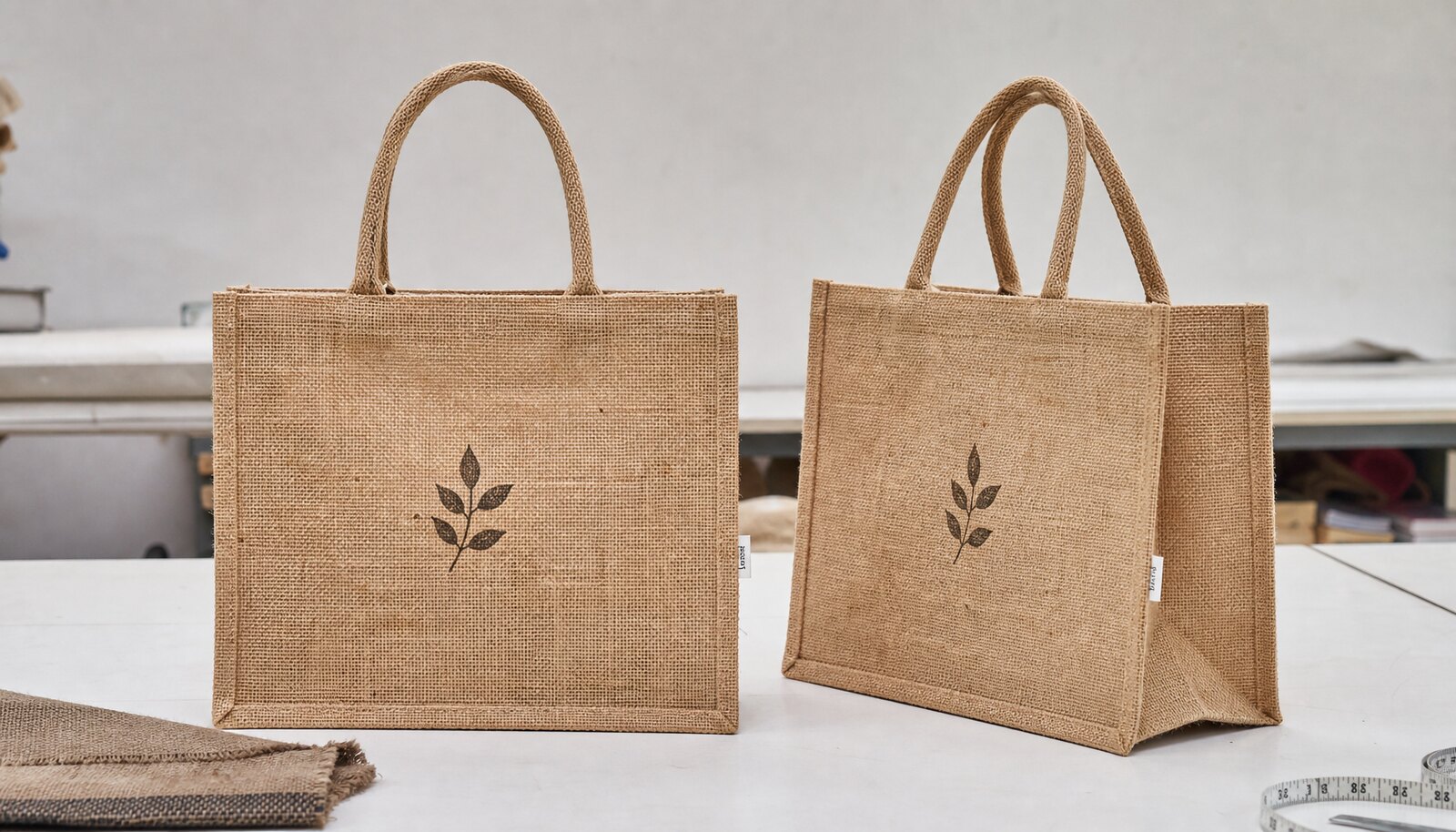
1. Start With the Gift-Shop Selling Job, Not the Bag
Jute tote bags for gift shops are not generic carry bags. They have a retail job to do before they ever leave the store: they must look good on a hook or shelf, carry the brand or destination message clearly, and still feel worth the price a shopper pays at the counter. That is why print proofing for gift-shop totes needs to be handled as a procurement decision, not just an artwork approval exercise. If the bag is intended for tourist retail, museum shops, destination branding, or seasonal gifting, the proof must reflect how the bag will be seen and handled in the store.
The first question is commercial, not graphic: what is the bag for? A souvenir tote with a bold destination mark can tolerate a more rustic finish and simple one-color printing. A premium gift carrier sold beside boxed candles or stationery may need a cleaner weave, stronger structure, and a more refined logo placement. If the buyer does not define the retail use case, the supplier will make assumptions about fabric, finishing, and print style. That usually leads to a sample that looks fine in isolation but wrong on the shelf.
Gift-shop buyers should also decide whether the tote itself is the product or just the packaging. If the bag will be sold as a standalone retail item, the customer will examine stitching, print sharpness, odor, handle comfort, and overall presentation. If it only carries purchased gifts out of the shop, durability and freight efficiency matter more than premium presentation. Those two use cases lead to different proofing priorities, different acceptable defect levels, and very different supplier choices.
- Define the bag’s retail role: souvenir item, gift carrier, premium retail product, or multi-use tote.
- Identify the main selling environment: shelf, peg hook, checkout counter, or bundled with gift sets.
- Set the expected retail price band before asking for samples.
- Decide whether print quality, structure, or low landed cost is the highest priority.
- State whether the bag must look finished enough to sell on its own.
2. Build the Base Spec Before You Discuss Artwork
The substrate decides how the print will behave. Jute is naturally coarse, textured, and variable, so a design that looks clean on a screen may appear broken, muted, or uneven once it meets the weave. Buyers often ask for a logo proof too early and only later discover that the bag build itself is not suitable for the visual standard they need. That creates a costly loop of changed artwork, changed fabric, and changed price. The better approach is to lock the base spec first, then proof the art against that exact construction.
If you need a useful working range, use one that is explained as a planning guide rather than a guaranteed standard. Many suppliers quote lighter souvenir-style tote builds in the roughly 240 to 260 GSM band, more structured retail bags around 280 to 340 GSM, and heavier premium versions above that. Those are not universal norms and should not be treated as a published standard. The right choice depends on how much structure you want, how transparent the weave is, and how much the final price can absorb. Ask the supplier to state the actual fabric weight, whether the bag is lined or laminated, and whether reinforcement is added at stress points.
The proof should always be reviewed on the same bag build that will run in bulk. A loose, unsewn fabric print can hide alignment problems that show up once seams and handles are added. Likewise, a sample on a heavier fabric can make the print look cleaner than it will on the final production weight. For procurement buyers, the goal is not to approve a nice sample; it is to approve the real production condition.
- Confirm actual fabric weight or supplier working range in writing, with the understanding that it is a planning spec, not a universal rule.
- Ask whether the bag is lined, laminated, reinforced, or raw finished.
- Match the proof to the final sewn bag, not only to a loose printed panel.
- Record any special finish such as piping, gusset reinforcement, or base board inserts.
3. Match Print Method to Artwork and to the Reality of Jute
The best print method is the one that fits the artwork without hiding the limitations of the bag. Screen printing remains the workhorse for jute totes because it produces strong opacity, predictable color, and reasonable unit economics when the artwork is simple. It is usually the safest route for one- or two-color logos, destination marks, or bold shop graphics that need to read quickly in retail. Screen print also tends to be easier for reorders, because the setup is more repeatable and the color relationship is well understood.
That said, not every design should be forced into screen print. If the artwork includes multiple colors, tiny lettering, or fine illustration details, a transfer method may preserve detail better. But transfer is not automatically a premium choice. On rough natural fiber it can change the hand feel, show edge lift after folding, or crack if the bag is repeatedly handled. Buyers should treat it as a different product with different risks, not just a different decoration process. If the supplier suggests embroidery, woven patches, or sewn-on labels, those can be excellent solutions for some gift-shop programs, but they add cost, lead time, and a different defect profile.
The rule is simple: simplify the art to fit the fabric, not the fabric to fit the art. Ask the supplier where the print is likely to fail. Thin lines, reversed text, gradients, small disclaimers, and oversized solids can all behave differently on jute than they do on paper or canvas. A credible supplier will point out where the design is likely to lose clarity rather than promising that everything will print perfectly.
- Use screen print for bold, low-color retail graphics.
- Use transfer methods only when artwork complexity justifies the added risk.
- Avoid hairline detail unless the factory has proven it can hold it on coarse weave.
- Keep the artwork readable at arm’s-length retail viewing, not only in a digital proof.
4. Ask for a Proof Package, Not Just a Picture
A PDF alone is not a real proof package. For jute tote bags for gift shops, the proof should show the bag layout at actual size, the exact print position, the color reference, and any additional decoration such as woven side labels, sewn patches, or hangtags. If the factory only sends a graphic mockup, the buyer cannot assess how the design behaves against the weave, seam lines, or handle attachments. The proof needs to answer the practical questions that matter in bulk production: is the logo centered, does the print clear the seam, and does the artwork remain legible on the finished bag body?
For new artwork, new construction, or a new supplier, request a strike-off and then a pre-production sample on the final bag build. A strike-off is helpful for print appearance and color direction, but it does not settle the final placement once seams and handles exist. The pre-production sample is the real approval point because it combines all the variables that can cause defects. If the bag includes a small woven label or side tab, make sure that element is present on the sample if it will be present in bulk. Omitting it from the proof can lead to mismatched placement, unexpected bulk at the seam, or a very different retail look.
A good proof package should be easy to audit later. Keep the exact artwork version number, the date, the color references, the annotated placement notes, and a clean final approval copy. If there is a dispute after production, the strongest reference is the approved sample plus the marked-up proof, not the memory of an email thread.
- Request an actual-size layout showing front, back, and gusset if branding appears there.
- Insist on the same fabric, same print process, and same decoration positions used in bulk.
- Keep one marked-up proof and one clean approved version in the order file.
- Ask the factory to identify the final approved artwork version number on every sample.
5. Use a Sample Sequence That Reflects Production Risk
The cleanest approval path is usually blank bag confirmation, strike-off, pre-production sample, then bulk release. Each step answers a different question. The blank bag confirms the base construction. The strike-off checks ink behavior. The pre-production sample tests the real bag, real placement, and real packaging interaction. Skipping directly from artwork to mass production is where many gift-shop orders run into avoidable problems, especially when the print sits near a seam or the bag has a side label, board insert, or unusual handle attachment.
The sample should be evaluated in a way that reflects how the bag will be received and sold. Hang it on a rack. Fold it once. Open it again. Look for print cracking, edge fuzziness, handle distortion, odd odor, and any shift in print position caused by sewing. Gift-shop buyers often judge a tote more harshly than a commodity shopper would, because the bag is part of the brand experience. That is why the gold sample matters: it becomes the reference point if the bulk shipment differs later.
A sample approval should never be a vague email message like "looks fine." The approval should note the version, the date, the exact acceptable color reference if relevant, and any exceptions. If a minor issue is accepted on the sample, record that exception clearly so the factory does not spend time correcting a feature that procurement has already accepted. If the sample is rejected, say exactly why and whether the supplier should revise artwork, adjust the print screen, replace materials, or remake the sample.
- Use the final sewn bag sample for final sign-off whenever seams or labels affect the layout.
- Record every sample decision in writing, including acceptable exceptions.
- Store a sealed gold sample with the PO and artwork file.
- Inspect the sample under the same lighting that will be used for color review.
6. Compare Suppliers on More Than Unit Price
A price quote for jute totes only helps when the line items are visible. Procurement buyers need to compare similar offers, not just low numbers. A factory that quotes a small blank-bag price may later add print setup, packing, and export handling as extras. A trading company may bundle those items into one number but control less of the process. A local decorator may be fast but expensive once blank stock, finishing, and freight are added. If the buyer compares only the headline unit price, the real landed cost stays hidden until the order is already underway.
A proper comparison should include the supplier route, print method, MOQ, sample timing, correction cycle, packing standard, and the incoterm. It should also show whether the factory prints on the finished bag or on pre-cut panels before sewing. That distinction matters because placement accuracy and defect control are different in each case. If your gift-shop program needs multiple SKUs, hangtags, barcode labels, or shelf-ready cartons, then the comparison must include those services as part of the commercial offer rather than as afterthoughts.
When comparing quotes, hold the order quantity constant. If one supplier quotes 500 units and another quotes 1,000, their pricing is not directly comparable. Ask both to price the real test order and then the projected reorder quantity. The first order may carry setup-heavy economics, while the reorder may show whether the supplier can support a stable program. That is especially useful for destination stores and seasonal gift ranges that may repeat the same artwork year after year.
- Request separate pricing for blank bag, print setup, packing, and export handling.
- Compare the same order quantity across every supplier.
- Check whether the supplier prints on finished bags or on panels before sewing.
- Include freight, duty, and local handling in the landed-cost view.
7. Turn the Proof Into a Factory QC Checklist
A production sample is useful only if the inspection criteria are specific enough to apply at scale. Good QC for jute tote bags should cover more than whether the logo looks nice. It should define what happens when the print is slightly off-center, when a stitch line is weak, when the weave is thin in one area, or when the color is close but not quite right. Buyers do not need to invent a formal lab standard to be precise; they do need to define the acceptance and rejection rules in plain language before bulk production starts.
If your organization uses AQL, state the inspection level and sample size in the order file or QC instruction. If you do not use AQL, create an equivalent pass/fail rule: for example, no critical defects, only a small number of minor defects allowed, and zero tolerance for issues that would make the bag unsellable. The key is consistency. A sample that is approved under one standard and then inspected under another standard creates confusion, arguments, and sometimes unnecessary rework.
Color control deserves special attention. For natural fibers, a perfect match is not realistic on every run, so the approval method should be defined in advance. Use a specified reference such as a Pantone target when appropriate, but judge it under the agreed light source and with the understanding that texture will affect the result. Some buyers also maintain a sealed master sample or a signed color standard card. That is useful as long as everyone agrees it is the reference, not a suggestion. If the supplier cannot explain how they check color and print position during production, that is a warning sign about factory discipline.
- Define critical, major, and minor defects before bulk starts.
- Use AQL or a written equivalent sampling rule and keep it on file.
- Set a color reference method: Pantone target, sealed sample, or signed swatch.
- Record the maximum acceptable print shift, stitch gap, and loose-thread condition.
8. Decide What Can Be Accepted, Reworked, or Rejected
A strong checklist is only useful if it ends with a decision rule. Buyers should separate issues that can be accepted, issues that need rework, and issues that require rejection. For example, a minor tonal shift in natural jute may be acceptable if the approved sample already showed that variation. A misplaced logo, a smear across the brand mark, or a broken handle should not be treated the same way. The closer the order is to retail launch, the more important it becomes to make these lines explicit before shipment.
For a gift shop program, the most common disappointment is not a dramatic failure but a small cluster of defects that reduce display quality. A few crooked prints, a patchy batch of ink coverage, or a carton mix-up can damage the shelf impression even if the total defect rate looks manageable on paper. The buyer should therefore define what makes the shipment unacceptable for retail presentation, not just what breaks basic function. If the bags are being sold as merchandise, appearance defects matter almost as much as durability.
If rework is allowed, the supplier should know exactly who pays for it and how the replacement units are controlled. Rework without a written process can create a second problem worse than the first: mixed lots, delayed shipping, and inconsistent final quality. When the defect is structural or the print is not recoverable, rejection is often the cleaner commercial decision. The buyer should protect the launch date and the store standard, not simply minimize friction in the moment.
- Define which defects are acceptable, reworkable, or rejectable before production begins.
- Treat retail appearance defects as seriously as function defects when bags are sold on shelf.
- Require written responsibility for rework cost and replacement control.
- Reject mixed lots when the defect pattern cannot be isolated cleanly.
9. Lock Packing, Shipping, and Reorder Controls
Packing is part of the product, not a separate logistics detail. Jute totes can absorb moisture, pick up dust, and crease in transit if the pack format is too tight or the carton is too weak. For gift shops, the outer presentation matters as much as the bag itself. If the goods are sold directly from the carton or immediately placed on a retail hook, then the packing spec must support that reality. Decide whether the bags should ship loose, nested, tissue-wrapped, or polybagged, and make sure the supplier understands the retail consequence of each choice.
Carton data should be part of the approval package. Procurement needs carton dimensions, gross and net weight, inner pack count, and carton labels so freight can be compared accurately and warehouse handling can be planned. In humid lanes or longer transit routes, ask whether the supplier uses moisture protection or desiccant. If the bags are destined for a summer tourist season or a holiday window, a little protection in the carton can save a lot of retail disappointment when the shipment arrives.
Reorder control matters too. Many gift-shop programs repeat the same artwork, but the second order is where suppliers sometimes drift on fabric weight, screen mesh, or finishing details. Keep the approved sample, final artwork file, packing spec, and landed-cost summary together so the next order can be compared against a real baseline. This is the simplest way to keep the same bag looking consistent across seasons without reopening the entire approval cycle every time.
- Set the packing method before bulk production starts.
- Confirm carton dimensions and weights for freight comparison.
- Add moisture protection when the route or climate makes it useful.
- Keep reorder documents together so repeat orders do not drift from the approved standard.
10. Use Quote Questions That Expose Real Capability
The best RFQ questions are not the longest list; they are the ones that reveal whether the factory can actually execute the order. Ask the supplier to explain how they handle the proof, where they print, how they measure placement, and what happens when the sample is not right. A capable factory will answer in concrete terms. A weak supplier will answer with broad promises and generic reassurance. Procurement buyers should look for documentation, process clarity, and consistency between the quote and the sample story.
A useful sourcing conversation should also test how the supplier compares similar orders. Ask for photos of a comparable bag type, an explanation of their inspection routine, and the way they define defect thresholds. If they can provide a recent inspection format, a sample approval flow, or a written correction path, that usually tells you more about their capability than a polished sales pitch. It also helps distinguish a true manufacturer from an intermediary who is passing the question to someone else.
For gift-shop programs, the strongest suppliers tend to be the ones that can balance retail appearance with practical production control. They know how to keep small text readable, how to manage simple art on a rough weave, and how to package the order so the store receives a clean, shelf-ready shipment. That is the kind of supplier value a buyer should pay for, because it reduces launch risk and simplifies future reorders.
- Ask how the factory measures print placement and stitching consistency.
- Request the approval path for a rejected sample or a failed production batch.
- Ask for a recent inspection template or QC record format.
- Verify whether the supplier can support repeat orders without changing the approved spec.
Specification comparison for buyers
| Decision area | What to compare | Best fit for gift shops | Supplier risk to check | QC or document to request |
|---|---|---|---|---|
| Supplier type | Direct factory, trading company, or local decorator | Direct factory when you need tighter print control and repeatable reorders | Middleman quotes can hide the real production site or split responsibility for defects | Factory profile, production address, and named contact for sample approval |
| Print method | Screen print, transfer, embroidery, patch, or label-based branding | Screen print for bold one- to two-color retail graphics on natural jute | Fine text, gradients, and tiny disclaimers can fail on coarse weave | Artwork proof at actual size and a print feasibility note from the factory |
| Artwork complexity | Solid logo, outline mark, multicolor illustration, or photo-style art | Simple spot-color art for souvenir shops and tourist retail | Complex art may look good digitally but lose clarity on jute fibers | Approved strike-off or pre-production sample on the final bag construction |
| MOQ structure | Per style, per color, per artwork version, or per packaging format | Lower-risk suppliers that separate setup costs clearly and allow small test orders | A low MOQ headline may hide high setup charges or expensive reorders | Written MOQ by size, color, and decoration method |
| Lead time | Sample time, bulk time, correction round, and shipping window | Suppliers that state when timing starts and include proof correction allowance | Quoted lead time may start before artwork approval or omit rework time | Production timeline with milestones and approval trigger |
| QC depth | Visual inspection, stitch check, print alignment, carton pack, and documentation | Suppliers that can show incoming material checks and final inspection records | No defined defect criteria usually means weak factory control | Inspection report, defect limits, and an approved gold sample |
| Packing model | Loose bulk, polybag, tissue wrap, inner pack, or shelf-ready pack | Retail-ready packing when bags go directly to shop shelves | Packing can crush handles, mark the print, or increase damage in transit | Packing spec, carton dimensions, and inner pack count |
| Commercial term | EXW, FOB, CIF, or DDP | The term that lets procurement compare landed cost clearly | A cheap ex-factory quote can become expensive after freight and handling | Landed-cost sheet with incoterm, freight basis, and carton data |
Buyer checklist before sampling
- Bag size, gusset depth, handle length, and target carry use defined in writing
- Fabric weight, weave density, and whether the bag is lined, reinforced, laminated, or left raw
- Print method, number of colors, print area, and exact placement on front, back, and gusset
- Artwork supplied as editable vector file with Pantone references and a simplified version for coarse weave if needed
- Minimum readable line thickness and minimum text size agreed before proofing
- Approved proof type selected: digital layout, strike-off, pre-production sample, or gold sample
- Color acceptance method defined, including Pantone target, delta tolerance, or visual match under agreed lighting
- Placement tolerance defined for top edge, centerline, seam clearance, and repeat order alignment
- Stitch standard set for handle anchoring, corner reinforcement, and loose-thread limit
- Packaging spec set for inner pack count, carton count, label position, moisture protection, and retail readiness
Factory quote questions to send
- Is your quote for blank bags, printed bags, or retail-ready packed bags? Please break out each cost separately.
- Where is production done, and do you print on the finished bag or on panels before sewing?
- What exact fabric weight, weave style, and reinforcement are included in this quote?
- What print method do you recommend for this artwork, and why is it suitable for coarse jute?
- How many colors are included, what are the setup charges per color, and are reorders charged the same way?
- Can you produce a strike-off on the actual fabric before mass production, and will that be the same process used in bulk?
- What is the MOQ by size, color, artwork version, and packing format?
- What are the sample lead time, bulk lead time, and the approval trigger that starts the clock?
- What tolerance do you allow for print placement, color variation, and stitching defects?
- What overrun or underrun policy do you apply, and how do you handle short shipment or excess units?
Quality-control points to confirm
- Fabric weight matches the ordered specification and no unexplained thin, loose, or stretched sections appear in the bag body
- Bag dimensions are within agreed tolerance for width, height, gusset, and handle length
- Print is centered, square to the bag body, and clear of seams, hems, and handle stitching
- Ink coverage is even, with no patchiness, pinholes, streaking, overspray, smudging, or visible registration drift
- Small text is readable at normal retail viewing distance and not only legible in the artwork file
- Color is checked against the agreed reference under daylight-equivalent light, with a recorded tolerance method
- Stitching at handles, corners, and side seams is secure, with no skipped stitches, broken thread, or loose knots
- No fiber shedding, oil marks, odor, mold smell, or handling dirt that would block retail display
- Handle attachment is symmetrical, load-bearing, and reinforced to the agreed stitch pattern
- Carton count, SKU labeling, inner pack count, and carton marks match the packing list