Begin with the vendor job, not the word tote
A useful RFQ for jute tote bags for farmers market vendors starts with the work the bag has to do. The same finished size can behave very differently when it is used for leafy greens, jars of honey, bakery items, flower bunches, CSA pickup, farm-shop resale, or a sponsor giveaway at a weekend market. Farmers market bags are handled quickly, filled unevenly, set on tables, stacked in cartons, photographed for retail promotion, and often reused by customers. That mix of function and presentation should shape the spec before anyone talks about price.
Write the operating conditions in plain procurement language. Tell the supplier whether the contents may be damp, dusty, heavy, fragile, or mixed. A bag for dry bread and branded retail merchandise can stay unlined and lighter than a bag expected to carry root vegetables, glass jars, and condensation from produce. If the bag is sold to shoppers, visible stitching, logo placement, odor, and hand feel matter more than they would for a back-of-stall utility bag. If the bag is a sponsor-funded giveaway, logo accuracy and consistent carton counts may be the real pressure points.
Use the RFQ to name the failures you cannot accept. Common risks include handle tear, open side seams, sagging base shape, strong jute odor, print loss on rough fabric, crooked sponsor marks, mildew from damp packing, and cartons that arrive crushed or mislabeled. When those risks are visible in the brief, suppliers can quote construction choices that address them. Without that context, they may quote the cheapest item that fits a generic tote description, and the quotes will look similar while the products are not.
- State the market channel: vendor operating bag, customer resale bag, CSA pickup bag, farm-store retail bag, or promotional giveaway.
- Define a target load, such as 10 lb, 15 lb, or 20 lb, and say whether the load is occasional or repeated.
- Identify contents that affect construction: wet produce, loose dirt, glass jars, bread, flowers, boxed goods, or mixed retail items.
- Say whether the bag must stand upright during packing and display or can collapse flat after use.
- Name the main risk to avoid: handle failure, odor, print defects, poor shape, moisture staining, or carton receiving problems.
- Clarify whether the bag is sold to consumers, included free with purchase, or used by vendors behind the stall.
Write dimensions that inspection can measure
Size should be written as a finished product requirement, not a style nickname. A supplier may interpret medium market tote as a narrow shopper, a lunch-size gift bag, or a wide-bottom produce carrier. For RFQ comparison, write finished width x height x gusset depth, then list handle drop, handle width, and handle spacing. The best measurement point is the finished sewn bag laid flat after trimming and pressing because that is what final inspection can repeat.
Gusset depth deserves special attention. A tall bag with a shallow gusset may look large in a quote table but perform poorly with bulky produce or jars. A wider base can make the bag easier to pack and more stable at checkout. If the bag needs to hold cartons of berries, bunches of greens, bread, or preserves without tipping, ask for a simple construction drawing, flat measurement sheet, and filled sample photo. Capacity claims alone are too loose; define the contents and the dimensions you expect the bag to handle.
Tolerances need to be realistic, but they should not be vague. Sewn textile products move during cutting, folding, stitching, and pressing. Zero variation is not practical. Loose tolerance, however, can create problems when bags need consistent shelf presentation, barcode placement, carton count, or logo alignment. Many buyers set separate tolerances for main body dimensions, handle drop, and print placement because the commercial risk is different for each. Whatever tolerance you choose, put it in the RFQ, repeat it on the purchase order, and check it against the pre-production sample.
- Write size as finished width x height x gusset depth, for example 15 in x 14 in x 6 in or the metric equivalent.
- Specify handle drop separately from total handle length so comfort and shoulder clearance are clear.
- Use inspection-ready tolerances, such as plus/minus 0.25-0.5 in for main dimensions where appropriate for the construction.
- Set tighter tolerance for visible brand placement, especially if the logo aligns with seams, handles, or a label.
- Ask whether dimensions are measured flat, expanded, or filled, and use only one method in the RFQ.
- Require a measurement sheet with width, height, gusset, handle drop, handle spacing, print position, and carton pack count.
Choose jute GSM, weave, lining, and base structure with intent
Jute fabric weight is one of the biggest drivers of cost, durability, drape, and appearance. Lighter jute may be suitable for short-term promotional bags or light dry goods. Heavier jute is usually better when vendors expect repeated customer use, heavier contents, or a bag that keeps a cleaner shape on a stall table. As a practical sourcing range, many buyers evaluate approximately 250-350 GSM for lighter use and approximately 350-450 GSM for sturdier reusable market totes, then adjust after reviewing swatches and finished samples.
Ask suppliers to define exactly what GSM means in their quote. Some quote the outer jute only. Others describe a combined structure that includes lamination, backing, or lining. That difference changes both price and performance. If the bag includes lamination, cotton lining, nonwoven lining, trim, or a base insert, list each layer separately. A quote that simply says 350 GSM laminated jute is not clear enough unless the buyer knows whether 350 GSM is before or after lamination.
Lining and lamination can be useful, but they are not automatically better. Lamination may improve shape retention and wipeability for damp produce or retail display. It can also add stiffness, cost, odor risk if poorly cured, and cracking at fold lines if the material is not suitable. Unlined jute can feel more natural and may be right for dry goods, bakery packaging, and simple retail display. Base inserts help bags stand upright, but they add weight, carton volume, and another component to inspect. The RFQ should make each choice explicit so every supplier prices the same construction.
- Ask for outer jute GSM, acceptable GSM tolerance, and a physical swatch before approving bulk material.
- Specify whether the bag is unlined, laminated, cotton-lined, nonwoven-lined, or fitted with a sewn-in or removable base insert.
- Confirm whether the bottom needs to stand flat when filled or only look flat when photographed empty.
- Request fabric color and shade tolerance because natural jute can vary between lots.
- Check odor and dryness before packing, especially for laminated or tightly packed goods.
- Ask for a pre-production sample using the final fabric instead of a showroom fabric that may change during bulk production.
Treat handles as load-bearing components
Handles are where many low-cost jute tote bags fail first. A market bag may be lifted from a table, carried over the shoulder, swung into a vehicle, or reused with heavier contents than the first purchase. Handle material, width, drop, spacing, stitch pattern, and reinforcement all affect performance. A procurement RFQ should describe the handle as a structural part of the bag, not a decorative trim.
Cotton webbing handles are common because they feel softer in the hand and can contrast cleanly against natural jute. Jute tape gives a more uniform look but may feel rougher and needs careful reinforcement. Wider handles distribute weight better than narrow handles. Handle drop should match the intended use: a short hand-carry bag may work for small purchases, while a shoulder-carry farmers market tote needs more clearance. If the finished bag may carry 15-20 lb, ask how the handle ends are reinforced and whether the factory can run a simple pull or load check during production.
Stitching language should be specific. Phrases like strong stitching or reinforced handles leave too much room for interpretation. Ask whether the factory is quoting box stitch, cross stitch, bar-tack, double row stitching, or an agreed equivalent. Also specify thread color and whether the reinforcement should be visible or hidden. On a retail-facing bag, uneven handle spacing or crooked stitches may be a major appearance defect even when the handle is strong enough to function.
- Specify handle material: cotton webbing, jute tape, padded cotton, rope, or another approved trim.
- List handle width, handle drop, handle spacing, and total handle length if needed for production.
- Require a defined attachment method such as box stitch with cross stitch, bar-tack, double row stitching, or agreed equivalent.
- Ask for thread type and color, especially when stitches are visible on the front panel.
- Include a pull or load check on production samples if the bag is marketed for heavier carry.
- Classify handle detachment, open stitching, loose reinforcement, or uneven handle length as major or critical defects.
Lock branding before screens, labels, or patches are made
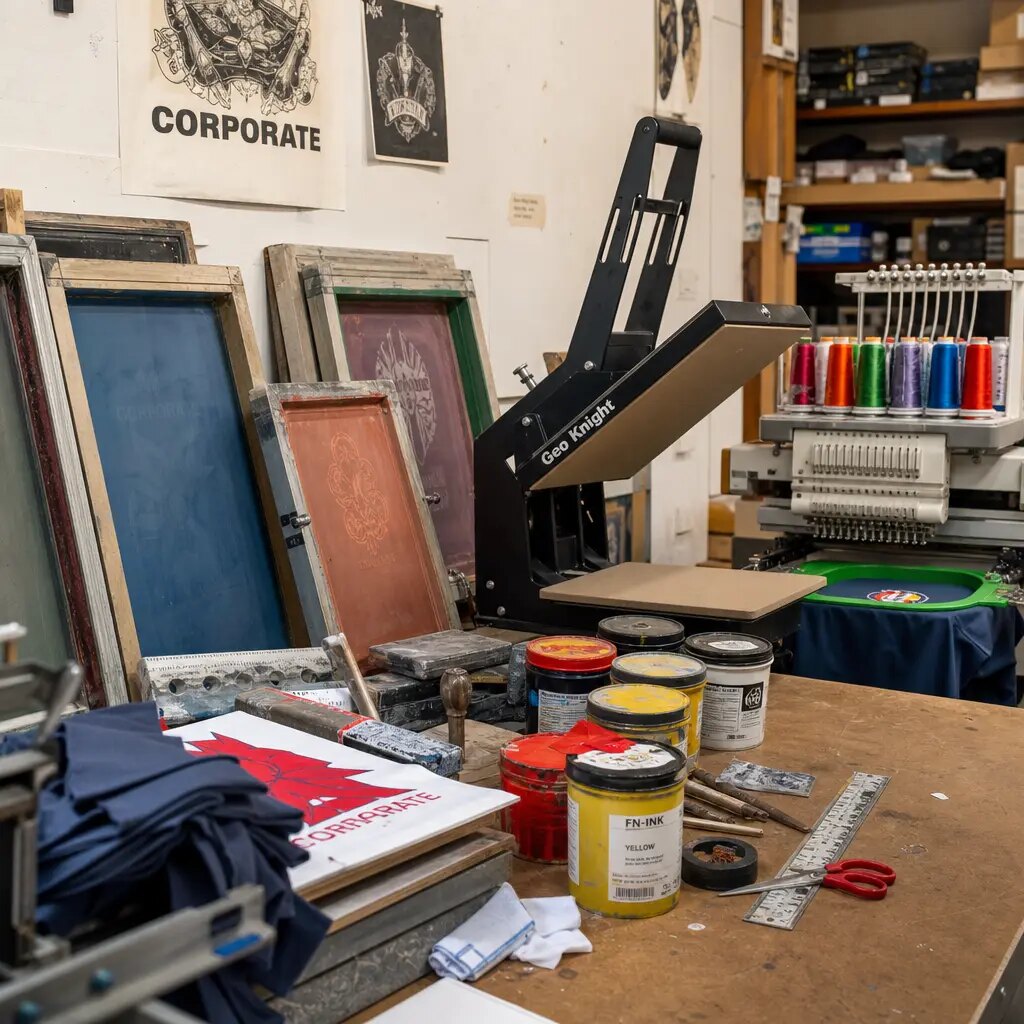
Branding on jute needs different expectations than branding on smooth cotton canvas. The rough weave can break up thin lines, small type, halftones, fine reverse text, and detailed gradients. A bold one-color or two-color screen print is often the most predictable option for farmers market bags, especially when the artwork uses solid shapes. For small sponsor marks, fine logo detail, or a more premium retail look, a woven label or sewn patch may produce a cleaner result than direct printing on textured jute.
The RFQ should include artwork controls before pricing. Provide artwork size, color callouts, file format, placement coordinates, and the maximum acceptable print or label drift. A placement drawing should reference fixed bag features such as top hem, side seam, bottom edge, handle centerline, or label seam. Instructions like centered on front often cause disputes because front panels can shift during sewing, folding, and pressing. If the artwork includes a border, barcode, compliance copy, or multiple sponsor logos, placement tolerance becomes even more important.
Ask the supplier to confirm print method, ink type, curing process, and rub-check expectation. Jute can absorb ink unevenly, so prints may look lighter or more textured than digital proofs. Require a pre-production print sample on the actual bulk fabric before mass printing. If using woven labels or patches, confirm label size, edge finish, stitch position, thread color, and fray resistance after folding and handling. Artwork approval should happen before screens, labels, or patches are produced, because changes after tooling usually add cost and delay.
- Use screen print for bold farm logos, market names, sponsor marks, and repeat seasonal orders.
- Use woven labels or sewn patches when artwork has fine detail, small text, or a premium retail look.
- Avoid small reverse type, thin lines, tight registration, and detailed gradients unless the supplier proves the result on bulk jute.
- Request artwork proof with dimensions, color callouts, and placement measured from fixed bag features.
- Ask whether each print color requires a separate screen, setup charge, MOQ, or production pass.
- Define print defects: misregistration, poor opacity, smudging, cracking, rubbing off, crooked placement, or ink bleeding.
Make quote tables comparable before ranking suppliers
Assume two suppliers will quote different assumptions unless the RFQ prevents it. Jute tote bag pricing changes with GSM, finished size, gusset depth, handle trim, lining, base board, print colors, label method, carton pack, export term, and inspection requirement. A lower unit price may simply mean lighter fabric, smaller dimensions, no base insert, no setup charges, or looser packing. The purpose of the RFQ template is to make every supplier quote the same bag.
Ask for line-item pricing instead of one blended number. Separate bulk unit price, sample fee, screen charge, woven label tooling, inner packing, export carton, inland freight, palletizing, inspection support, and rush charges. Ask for price breaks at quantities you may actually order. If the program may repeat seasonally, request the current order price, the next practical price break, and the reorder price assuming no artwork or tooling changes. This helps separate launch cost from recurring cost.
Normalize trade terms before comparing offers. FOB, EXW, CIF, and DDP are not interchangeable. A DDP quote may include international freight and destination handling that an FOB quote excludes. An EXW quote may leave inland freight and export handling outside the unit price. Decide which trade term your team wants, or ask all suppliers to quote the same defined alternatives. Also request carton dimensions, gross weight, and pieces per carton so landed cost can be estimated with fewer surprises.
- Send one spec sheet to all suppliers and require substitutions to be listed as alternates, not hidden in the base quote.
- Request price breaks at the quantities you may actually buy, not random volume levels.
- Separate one-time setup charges from recurring unit cost in the quote table.
- Ask suppliers to state assumptions for fabric availability, artwork readiness, lead time, packing, and inspection access.
- Normalize all offers to the same trade term before ranking suppliers.
- Treat unexplained price gaps as questions to resolve, not automatic savings.
Ask for production-control evidence, not just catalog photos
A polished sales sheet does not prove a supplier can control a jute tote bag order. Useful evidence connects directly to the steps that create buyer risk: fabric sourcing, cutting, sewing, printing, finishing, inspection, and packing. Ask where each step happens and who owns approval. A direct factory may control more processes internally, while a trading company may coordinate several workshops. Either model can work, but the buyer needs to know how changes, delays, and defects are handled.
Request evidence from the actual production environment, within reasonable confidentiality limits. Useful items include photos of similar jute fabric rolls, cutting tables, sewing machines, handle reinforcement, print setup, drying or curing area, inspection tables, and packed export cartons. If printing, lamination, or label making is outsourced, ask when goods move between sites and who checks them after return. Every handoff creates another point where written approvals matter.
Use the quoting process to test accuracy. Ask the supplier to repeat the specification in their own quote sheet. If the supplier misses handle drop, lining, print position, carton count, or GSM definition during RFQ, those same details may be missed during production. A capable supplier should be able to state what is included, what is excluded, what requires buyer approval, and what could change price or lead time. That clarity is worth more than a fast but incomplete quote.
- Ask which steps are in-house and which are subcontracted, including printing, lamination, label making, and packing.
- Request recent in-process photos from a similar jute tote construction if available without exposing another buyer's confidential artwork.
- Check whether the supplier has a written inspection process for fabric, sewing, printing, and final packing.
- Ask who approves the pre-production sample and who signs the carton count before shipment.
- Require the supplier to list deviations or proposed substitutions in writing before sampling.
- Confirm how rework, replacement, or discount decisions are handled if final inspection fails.
Set golden sample and QC rules before bulk starts
The golden sample is the physical reference that protects both buyer and factory. It should use the final jute fabric, final GSM, final handle, final print or label, final lining, and final packing method. Do not approve bulk production from a sample that is close enough but still uses substitute handles, draft artwork, a different fabric lot, temporary labels, or placeholder packing. Once bulk begins against an incomplete sample, defect discussions become harder and slower.
QC criteria should be measurable and sorted by severity. Critical defects are issues that make the bag unsafe, unusable, or noncompliant, such as broken needle contamination, handle detachment, severe mildew, wrong SKU, or missing required marks. Major defects affect saleability or function, such as open seams, severe crooked print, wrong size outside tolerance, wrong handle drop, delamination, heavy stains, or incorrect packing. Minor defects are small issues that do not materially affect use, such as a short thread tail that can be trimmed or slight natural jute variation within the approved standard.
For larger orders, buyers may use an AQL inspection plan or another agreed random sampling method. The exact AQL level depends on buyer policy and risk tolerance, so it should be agreed in writing instead of assumed by the supplier. If your team does not use formal AQL, still define sample quantity, measurement points, and acceptance rules. Inspection should include flat measurements, handle pull or load checks if required, print rub checks, odor review, label placement, carton counts, and photo evidence.
- Approve one signed pre-production sample before bulk and keep matching references with buyer and supplier.
- Attach the approved measurement sheet, artwork proof, packing spec, and defect classification to the purchase order.
- Define critical defects such as broken needle risk, severe mildew, handle failure, wrong product, or missing required label.
- Define major defects such as open seam, wrong size, wrong print position, wrong handle drop, heavy stain, or delamination.
- Define minor defects such as small removable thread tails or slight natural jute variation within the approved standard.
- Require inspection photos showing full bag front and back, inside, handles, seams, print closeups, labels, and cartons.
Specify packing, carton marks, and moisture protection
Packing is part of the product for B2B buyers. A well-made jute bag can still create receiving problems if it is crushed, damp, mislabeled, overpacked, or hard to count. Farmers market programs often distribute goods to vendors, farm shops, event teams, or regional warehouses. Carton count and labels should match the way the goods will be received. Decide whether bags ship flat in bulk, folded once, individually polybagged, packed with hangtags, or packed retail-ready with barcodes.
Jute can absorb moisture and odor, so packing discipline matters. Bags should be dry before packing, and cartons should not be sealed while the product is damp. Depending on shipping route and season, buyers may request moisture-control measures, but those should be specified carefully to avoid unnecessary plastic, excess cost, or receiving issues. Ask how finished goods are stored before shipment and whether cartons are kept off the floor in a dry area.
Carton dimensions and gross weight should be approved before freight booking. Oversized cartons may reduce unit packing cost but become hard to lift, stack, or receive. Overly tight cartons can crease bags, distort base inserts, and make retail-ready presentation look tired before the product reaches the customer. Carton marks should include PO number, SKU, description, quantity, carton number sequence, gross and net weight if required, country of origin if applicable, and any customer-required barcode or receiving label. If goods will be palletized, specify pallet pattern, maximum height, corner protection, and stretch-wrap expectations.
- Define packing method: bulk flat pack, folded pack, individual polybag, hangtag, barcode label, or retail-ready pack.
- State pieces per inner pack and pieces per export carton, then require the packing list to match exactly.
- Approve carton dimensions, gross weight, and carton strength before shipment.
- Require clear carton marks with PO, SKU, quantity, carton number, and any required origin or barcode information.
- Ask how the factory prevents mildew, odor, and damp packing during storage and transit.
- Confirm whether palletizing, corner boards, stretch wrap, or moisture protection is included or quoted separately.
Plan lead time around approvals, not optimistic promises
Lead time for jute tote bags should be broken into milestones. A single promise such as 30 days after order is not enough unless the buyer knows what starts the clock. Suppliers may count from deposit receipt, artwork approval, fabric availability, pre-production sample approval, or receipt of custom labels. If those assumptions differ, the same stated lead time can represent very different ship dates.
The critical path often includes artwork proofing, sample making, fabric booking, trim procurement, screen or label setup, cutting, sewing, printing, curing, final QC, and packing. Custom woven labels, special lining, new carton sizes, and multiple artwork versions can extend the schedule. For farmers market programs, timing is commercial. Missing the season can reduce the value of the order even if the bags are eventually correct.
Build approval gates into the RFQ. Ask for sample lead time separately from bulk production lead time. Ask when final artwork must be locked, when carton marks must be approved, when the factory needs deposit or purchase order, and what happens if buyer approvals are delayed. A milestone schedule gives procurement a practical way to identify slippage early and decide whether to simplify construction, split shipment, choose available stock, or adjust the launch plan.
- Separate sample lead time, bulk production lead time, inspection time, and transit time.
- Ask whether lead time starts after deposit, artwork approval, sample approval, or material booking.
- List approval gates for artwork proof, pre-production sample, fabric swatch, label proof, carton marks, and packing sample.
- Request dates for material purchase, cutting, sewing, printing, final QC, packing, and cargo handover.
- Add buffer for new trims, custom labels, laminated materials, special cartons, or multiple SKU versions.
- Confirm whether rush production changes price, inspection access, or quality risk.
Specification comparison for buyers
| Spec decision | Recommended option | When it fits | Buyer risk to check |
|---|---|---|---|
| Body fabric weight | Approx. 250-350 GSM jute for light resale, gift-with-purchase, or promotional use; approx. 350-450 GSM for sturdier reusable vendor carry | Farm-shop retail bags, CSA pickup bags, produce carriers, market merchandise, and sponsor-funded seasonal programs | Confirm whether GSM is for outer jute only or includes coating, backing, lamination, or lining; request swatch weight tolerance and the factory's checking method |
| Finished size | Common market range: 12-16 in width, 13-16 in height, 5-8 in gusset, adjusted to the actual pack-out | Mixed produce, bread, preserves, flowers, pantry items, or farm-store bundles | Avoid nominal size only; specify finished sewn measurements, handle drop, and tolerance after sewing and pressing |
| Handle construction | Cotton webbing, jute tape, or padded handle with reinforced box stitch, cross stitch, or bar-tack at attachment points | Bags expected to carry repeated 10-20 lb loads or be comfortable for hand and shoulder carry | Ask for handle width, handle drop, handle spacing, stitch pattern, thread type, and a practical pull or load-test expectation |
| Interior finish | Unlined jute for dry goods; laminated or lined interior when moisture, staining, wipeability, or shape retention matters | Dry bakery goods, root vegetables, produce with condensation, retail shelf display, or reusable CSA bags | Check odor, delamination, fold cracking, exposed lining edges, and whether the lining changes the buyer's sustainability or disposal claims |
| Base structure | Gusseted base with optional sewn-in board or removable insert | Vendors who need the bag to stand upright during checkout, display, packing, or retail merchandising | Base inserts add cost, weight, and carton volume; confirm insert material, thickness, placement, and whether it is included in the quoted unit price |
| Branding method | Screen print for bold 1-2 color art; woven label or sewn patch for fine detail and premium presentation | Farm logos, farmers market sponsor programs, retail merchandise, private-label farm shops, and co-branded vendor bags | Request print placement tolerance, ink curing method, rub check, artwork proof, and pre-production approval before screens or labels are made |
| Supplier route | Direct OEM factory when you need tight production control; trading company when coordinating several bag styles or accessories | Repeat seasonal programs, private-label retail, multi-SKU procurement, and orders with coordinated packaging | Confirm who owns QC sign-off, who reworks defects, which steps are subcontracted, and who communicates approvals to each workshop |
| Quote basis | Compare FOB to FOB or DDP to DDP, with the same size, GSM, print, handle, carton count, and packing format | Any competitive RFQ where two or more suppliers are quoting | A low unit price can hide lighter fabric, smaller gusset, sample fees, screen charges, label tooling, cartons, inland freight, or omitted palletizing |
| Packing format | Bulk flat pack for warehouse distribution; individual polybag, hangtag, or barcode pack for retail-ready resale | Wholesale vendor kits, farm-store shelves, sponsor programs, event distribution, or direct-to-vendor shipment | Check carton gross weight, moisture protection, barcode placement, carton marks, receiving label rules, and whether bags arrive flat enough to merchandise |
Buyer checklist before sampling
- Define the end use: produce carry, farm-shop resale, CSA pickup, vendor merchandise, sponsor giveaway, or mixed retail display.
- State the target load in pounds or kilograms and whether the bag must tolerate repeated weekly use or short-term event distribution.
- Specify finished dimensions as width x height x gusset, plus handle drop, handle width, handle spacing, and measurement tolerance after sewing.
- Name the jute fabric weight in GSM, whether the weight is outer fabric only, and the acceptable GSM tolerance.
- Confirm weave appearance, body color, lamination or lining, base insert, trim material, thread color, and edge finishing.
- Specify the handle attachment method, such as box stitch, cross stitch, bar-tack, double row stitching, or an approved equivalent.
- Choose branding before requesting price: screen print, heat transfer, woven label, sewn patch, embroidery, side label, or hangtag.
- Provide artwork size, color callouts, file format, placement drawing, and print or label placement tolerance in millimeters or inches.
- Ask for separate line items for unit price, sample fee, screen or label tooling, inner packing, cartons, inland freight, palletizing, and inspection support.
- Require a pre-production sample made with final fabric, handle, print, label, lining, and packing before bulk production starts.
Factory quote questions to send
- What exact jute GSM, weave, body color, finishing, lining, lamination, and trim material are included in this quote?
- Is the quoted GSM for the outer jute fabric only, or does it include coating, backing, lining, or lamination?
- What finished-size tolerance will you hold for width, height, gusset depth, handle drop, and handle spacing after sewing?
- What handle width, handle drop, stitch type, thread type, and reinforcement method are you quoting?
- What load test or handle pull check do you normally use for this construction, and can it be added to the inspection plan?
- Are cutting, sewing, printing, lamination, label application, packing, and final inspection done in-house or subcontracted?
- What is the MOQ by size, fabric color, print color, label version, handle type, lining, and packing format?
- Which charges are one-time charges, including sample fee, screen charge, artwork setup, woven label tooling, mold, die, or carton setup?
- Can you break the quote into bulk unit price, sample cost, tooling, inner packing, export carton, inland freight, inspection support, and optional palletizing?
- What print method, ink type, curing method, color tolerance, and print placement tolerance are you quoting for jute?
Quality-control points to confirm
- Approved fabric swatch matches bulk production in GSM, weave appearance, color tone, hand feel, odor, and finishing.
- GSM is checked against the agreed tolerance using cut sample weight or the supplier's documented fabric inspection method.
- Finished width, height, gusset depth, handle drop, and handle spacing are measured on completed bags laid flat, not on cut panels.
- Handle ends are reinforced with the approved stitch type, placed evenly, and free from skipped stitches, loose thread ends, or weak attachment points.
- A practical load or pull check is completed on production samples according to the agreed buyer standard.
- Side seams, bottom seams, gusset corners, and top hem are straight, secure, and free from open seams, puckering, or distorted stitching.
- Print placement is checked from fixed reference points such as side seam, top edge, bottom seam, or handle centerline.
- Print color, opacity, edge definition, curing, rub resistance, and registration match the approved pre-production sample within agreed limits.
- Woven labels, patches, hangtags, and barcodes are positioned correctly and do not fray, peel, detach, or obstruct normal use.
- Lamination or lining is smooth, bonded, odor-controlled, and free from bubbling, cracking, exposed raw edges, sharp corners, or sticky surfaces.