Why coffee roasters need tighter proofing for jute totes
A jute tote can look straightforward in a sourcing request, but it becomes a brand-control item as soon as a coffee roaster adds a logo. Natural jute has an open weave, uneven fiber, and shade variation from batch to batch. Those characteristics are part of the appeal, but they also make print proofing less predictable than printing on smooth cotton canvas or paper packaging.
Coffee brands use these bags for retail gift sets, café merchandise, wholesale welcome kits, subscription inserts, farmers market events, trade shows, and seasonal promotions. In each case, the bag is handled by customers, buyers, and staff before the coffee is even brewed. A crooked logo, weak handle, damp odor, or crushed front panel turns an otherwise useful product into a visible quality problem.
The cleanest procurement process treats proofing as more than artwork approval. The buyer should verify the body spec, handle construction, print method, print placement, sample sequence, packing method, and final inspection criteria before bulk production. That prevents the common situation where the logo is approved digitally but fails on the real jute surface.
- Treat the tote as a retail-facing branded item, not just a free carry bag.
- Proof the logo on the actual jute quality and final bag construction.
- Check panel flatness, handle position, and gusset shape before judging print quality.
- Keep one sealed approved sample for production and reorder comparison.
Lock the bag specification before approving artwork
The first buying decision is the bag itself. Finished size should be stated clearly, not assumed from a reference photo. List finished width, height, side gusset, bottom gusset, handle drop, handle width, and the maximum usable print panel. If the tote will carry two 250 g coffee bags, a 1 kg bag, a mug, a pour-over cone, or a boxed gift set, test the packed product volume before committing to size.
Fabric weight needs careful wording. Many buyers ask for 12 oz or 14 oz jute, while other suppliers quote GSM. Those values are not always converted the same way because suppliers may use different measurement conventions. Instead of relying on a rough conversion, ask the supplier to state the convention, provide a physical swatch, and confirm the final sample matches the quoted fabric.
Lining and lamination should also be specified early. Unlined jute is common for dry promotional and retail use. Cotton lining gives a cleaner interior and can reduce loose fiber contact. Lamination may add structure and opacity, but it can change odor, hand feel, foldability, and sustainability messaging. These choices affect cost, MOQ, sewing time, and carton count.
- Write finished dimensions, not only cutting dimensions or a general size name.
- Confirm the quoted fabric standard with a swatch or pre-production sample.
- Avoid comparing ounce and GSM quotes unless the supplier explains the measurement basis.
- State lining, coating, lamination, and material claims in the RFQ.
Choose a print method that fits coffee-roaster artwork
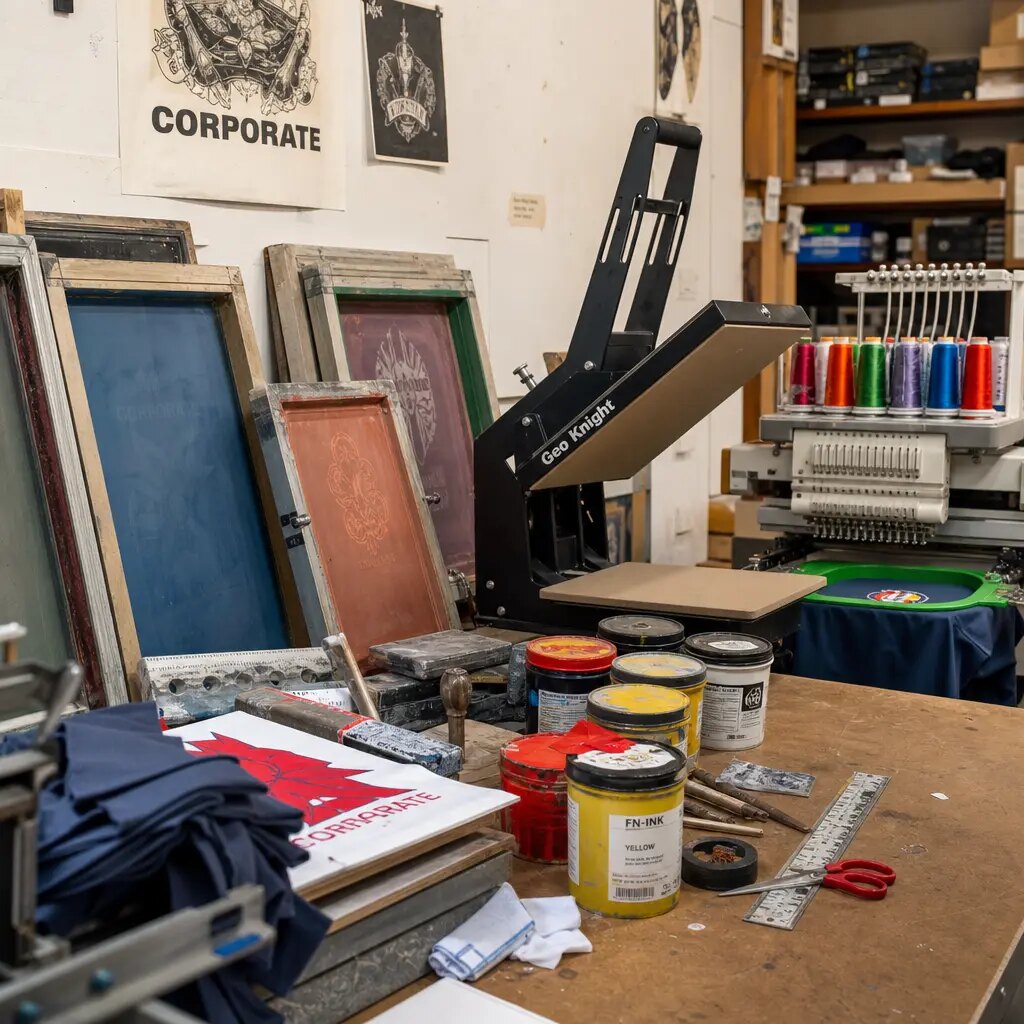
Most roaster logos work best when simplified for jute. A strong wordmark, roaster stamp, icon, roast badge, or one-color lockup usually prints more reliably than a detailed illustration. Screen printing is often the practical choice for bulk jute tote bags because it offers strong opacity and predictable cost for bold artwork.
Two-color screen printing can work, but it adds registration risk. The weave may shift visually under each color, and the bag panel may not sit as flat as a paper sheet. If the design uses fine outlines, tight traps, or small secondary text, ask for an actual printed sample and define registration tolerance before bulk.
Heat transfer can hold more detail on some designs, especially short runs or complex color artwork. It is not automatically superior. On coarse jute, the transfer may feel like an applied surface, and folding or compression may reveal cracking or edge lift if the process is not right. Embroidery and woven labels are useful for smaller brand accents, but they may not replace a large front logo.
- Use 1-color screen print for bold, high-readability coffee logos.
- Avoid small text unless the supplier proves it at final size on the selected jute.
- Ask for minimum line weight and minimum readable text size on the chosen fabric.
- Use heat transfer only when the artwork benefit justifies added cost and proofing risk.
Build the proof around real viewing conditions
A digital mockup can confirm layout direction, but it cannot prove print quality. Review the printed sample at real size, under normal room light, and from the distance a customer will see it in a café, shop, event booth, or gift pack. A logo that looks acceptable in a close-up phone photo may read poorly from one to two meters away.
Placement should be measured, not judged by eye. Use fixed reference points such as the top edge, side edge, center line, and gusset fold. Keep artwork away from hems, seams, handle stitching, and bottom folds. A small placement error is more visible when the logo sits near a construction line.
Color should be reviewed on the actual jute base. Natural jute shades range from tan to golden brown, and ink will not appear the same as it does on white paper. If brand color is strict, provide Pantone references but also approve a realistic tolerance for the natural base. For many coffee brands, dark brown, black, cream, or a single earthy ink reads better than a complex color match.
- Check the proof close up and from customer viewing distance.
- Measure print placement from fixed points on the finished bag.
- Set safe margins from seams, hems, gussets, and handle reinforcement.
- Approve color on the actual jute, not only on a screen or paper reference.
Compare supplier quotes line by line
A low unit price is not useful if the spec is incomplete. One supplier may quote a blank jute tote, another may include a one-color print, and another may use lighter fabric or simpler handles. Procurement should split the quote into material, cutting and sewing, handle construction, decoration, lining, sample charges, packing, inspection, and shipment readiness.
MOQ needs the same discipline. Ask whether the minimum is per size, per artwork, per print color, per handle color, per lining, or per purchase order. Four coffee blends printed as four separate designs may create four setup charges and four minimums. If the buyer expects future reorders, ask whether screens, artwork files, and carton marks are retained.
Qualification should be practical, not excessive. Before placing a meaningful bulk order, request the supplier’s business details, factory profile, product photos from current production if available, sample retention practice, inspection method, and packing standard. If audits or certifications are required by your company or customers, ask for valid documents early rather than after the deposit.
- Compare the same spec across all suppliers before judging price.
- Ask whether MOQ applies per design, colorway, size, or shipment.
- Separate sample cost, setup cost, unit cost, packing cost, and freight assumptions.
- Request production photos and inspection checkpoints for important orders.
Use the right sourcing route for the order risk
Direct factories are usually best for repeat programs where the buyer needs close control over fabric, sewing, print, packing, and reorders. This route can reduce confusion, but it requires the buyer to manage sampling, approvals, inspections, and export communication carefully.
Trading companies can be valuable when the order includes several bag styles, mixed merchandise, or consolidation across categories. The risk is that technical details can become blurred. A trading company should still be able to identify the jute quality, decoration process, production facility, packing plan, and inspection standard.
Local converters can be useful for urgent reprints, small domestic runs, or late event needs. They often decorate stock blank bags. That can save time, but the buyer may have less control over fabric weight, handle reinforcement, shade consistency, and blank-bag sourcing. For larger programs, local conversion may also be less cost-efficient than factory-finished production.
- Use direct factory sourcing for repeat volume and tight spec control.
- Use trading companies when coordination and consolidation are more important than maximum transparency.
- Use local converters for urgent or small runs, while checking blank bag consistency.
- Ask every route for the same written specification and sample process.
Approve samples in the right order
For a new bag construction, start with a blank pre-production sample. This shows whether the body panel is flat, the gusset is clean, the handles are centered, the top hem is straight, and the interior finishing is acceptable. Without this step, print defects can hide sewing defects until it is too late to correct them.
Next, approve a printed pre-production sample using final artwork, final print size, final ink or transfer method, and final placement. Do not approve bulk from a digital mockup alone. The printed sample should reveal opacity, edge definition, registration, skew, color on natural jute, and any weave interference with small details.
Finally, seal a gold sample. Label it with supplier name, PO or quote number, artwork version, fabric reference, size, handle spec, print method, approval date, and any accepted limitations. Keep one sample with the buyer and one with the factory when possible. On reorders, compare new samples and production photos to this reference instead of relying on memory.
- Approve blank construction before print for new specs.
- Approve printed samples made with final artwork and final process.
- Label and seal the gold sample for bulk inspection and reorders.
- Record any approved deviations so they are not disputed later.
Set measurable QC criteria before bulk starts
Vague language such as “good quality” is not enough for a printed jute tote order. Define the defects that matter: wrong material, wrong size, unsafe handle, mold, strong odor, severe stains, print smudging, missing ink, color mismatch, registration error, skew, open seams, skipped stitches, and broken thread.
For many B2B tote orders, buyers use general inspection level II with AQL 0.0 for critical defects, 2.5 for major defects, and 4.0 for minor defects. These are not universal rules, but they give procurement and suppliers a common starting point. Critical defects should include mold, contamination, unsafe construction, wrong artwork, or a materially wrong specification.
Add simple functional tests. For dry rub, rub the print with a clean white cotton cloth for 10 cycles using consistent hand pressure; heavy transfer, flaking, or cracking should be reviewed. For handles, test a sample bag with 1.5 to 2 times the expected load for 30 minutes. After testing, check for stitch breakage, seam slippage, handle tearing, and distortion.
- Set AQL levels and defect classifications before production.
- Use measurable tolerances for size, placement, skew, and handle drop.
- Perform dry rub checks on printed areas before packing.
- Test handle strength against the intended coffee product load.
Treat packing as part of print protection
Jute totes can pass sample approval and still arrive in poor condition if the packing plan is weak. Over-compression can crease the logo. Loose packing can rub printed faces together. Damp cartons can cause musty odor. Unclear carton marks can mix SKUs and slow warehouse receiving.
Ask for the pack-out plan before production is complete. Confirm pieces per inner bundle, whether bags are flat packed or controlled folded, whether print faces are protected, whether a carton liner is used, and how carton moisture is managed. For export orders or long storage, dry cartons and moisture-aware packing are especially important.
Carton marks should connect directly to the purchase order, SKU, artwork version, size, colorway, and quantity. If the order includes multiple café locations, blends, campaigns, or logo versions, inner bundle labels are not optional. They help the warehouse receive quickly and prevent the wrong tote from being sent to the wrong customer or event.
- Avoid hard folds or compression lines across the main logo area.
- Use labeled inner bundles with consistent counts.
- Check carton dryness, liner condition, and odor before shipment.
- Request photos of inner bundles, carton fill, outer marks, and load-out condition.
Control lead time by freezing the spec early
Most delays come from unclear approvals, not from sewing alone. Artwork changes, late handle decisions, fabric substitutions, revised packing counts, and sample rework can all push shipment readiness. Ask the supplier to split the schedule into artwork review, blank sample, printed sample, courier time, material preparation, cutting, sewing, printing, inspection, packing, and export handover.
Freeze the core decisions before bulk release: bag size, fabric reference, lining, handle, print method, print location, artwork version, carton count, carton marks, and inspection criteria. Moving a logo by a few centimeters may require a new screen. Changing handle color may trigger a trim MOQ. Adding lining can change sewing time and carton quantity.
For reorders, keep a locked spec pack. Include the approved artwork file, gold sample notes, fabric reference, sample photos, carton marks, packing plan, inspection report, and prior quote version. Before repeating the order, ask the supplier to confirm whether any material, process, cost, or lead-time factor has changed.
- Request lead time by stage, not one broad production estimate.
- Freeze artwork and construction before paying for bulk setup.
- Document sample approvals and carton marks for warehouse accuracy.
- Use the gold sample and spec pack to keep reorders consistent.
Specification comparison for buyers
| Spec decision | Practical B2B option | Trade-off: cost, MOQ, durability, print clarity, lead time | Buyer risk to check |
|---|---|---|---|
| Jute fabric weight | Specify a named supplier standard such as 12 oz or 14 oz jute, or a tested GSM if the mill quotes by GSM | Heavier jute improves body and handle feel but can raise material cost, folding bulk, carton volume, and lead time. Do not assume oz and GSM are interchangeable unless the supplier states the measurement convention. | Too-light fabric can distort the front panel and soften the print area; mismatched weight units can cause quote comparisons to be wrong. |
| Print method | 1-color screen print for bold coffee logos; 2-color screen print only with clear registration limits; heat transfer for short-run complex artwork | Screen print is usually cost-efficient and clear for simple logos. Extra colors increase setup, proofing time, and rejection risk. Heat transfer may improve detail but can feel like a surface patch and add cost. | Fine text, distressed marks, gradients, and hairlines can break up on coarse jute unless simplified and sampled at actual size. |
| Supplier route | Direct factory for repeat volume; trading company for mixed-product consolidation; local converter for urgent domestic decoration | Direct factories can offer better spec control but need more buyer management. Trading companies may simplify coordination but reduce transparency. Local converters can be fast but often cost more per unit. | The real fabric source, print method, handle reinforcement, and packing standard may be unclear unless documented. |
| MOQ logic | Ask for MOQ by exact spec: size, fabric, handle, lining, artwork version, print color, and carton plan | Lower MOQ may limit custom material, increase unit cost, restrict packing, or force stock blanks. More artwork versions can multiply setup charges and approval time. | A quote may hide whether MOQ is per design, per colorway, per size, per shipment, or per purchase order. |
| Handle construction | Cotton webbing or reinforced jute handles with box-X or bar-tack stitching at stress points | Stronger handles improve real-use durability but add trim cost and may affect MOQ if the color or width is custom. | Weak stitch density, narrow webbing, or no reinforcement can fail when bags carry beans, mugs, books, or brew accessories. |
| Lining or coating | Unlined for dry merch and giveaways; cotton lining for cleaner interior; lamination only when structure or opacity is required | Lining improves presentation but adds sewing cost and lead time. Lamination can increase stiffness but may affect odor, foldability, and material claims. | Unspecified linings can change hand feel, sustainability messaging, carton count, and customer perception. |
| Sample approval | Blank pre-production sample, printed pre-production sample, then sealed gold sample | Adds days and some cost, but separates construction issues from print issues and gives a stable reference for reorders. | Approving only a digital mockup does not prove panel flatness, ink coverage, print skew, odor, or handle strength. |
| Packing method | Flat pack or controlled fold, labeled inner bundles, print-face protection, carton liner, and carton marks tied to SKU and artwork version | Better packing can increase carton volume but reduces creasing, rubbing, receiving errors, and moisture risk during export or storage. | Loose, damp, or over-compressed packing can create odor, print abrasion, creases across the logo, and mixed SKU cartons. |
Buyer checklist before sampling
- Define finished bag dimensions in millimeters: width, height, side gusset, bottom gusset if any, handle drop, handle width, and usable print panel.
- State the exact fabric reference the supplier is quoting. If one supplier quotes ounces and another quotes GSM, ask how the value is measured and request a swatch or sample before comparing prices.
- Confirm whether the tote is unlined, cotton-lined, laminated, or has any coating. If environmental claims matter, list every material layer separately.
- Provide vector artwork, final print size, print location, Pantone or brand color references if required, and safe margins from seams, hems, gusset folds, and handle stitching.
- Choose the decoration method before sampling: 1-color screen print, 2-color screen print, heat transfer, woven label, embroidery, or label application. Note whether fine lines, small text, halftones, or distressed effects are allowed.
- Specify handle material, handle width, handle drop, stitch pattern, thread color, reinforcement type, and the expected product load the bag will carry.
- Set measurable tolerances before bulk: finished size, handle drop, print placement, print skew, color variation, seam slippage, loose threads, odor, stains, and carton condition.
- Request a blank pre-production sample for new construction, a printed pre-production sample using final artwork, and a sealed gold sample for bulk comparison.
- Require useful production evidence: cutting/sewing photos, print setup photo, in-line inspection photo, final packed carton photo, and load-out photo when shipment is ready.
- Share first order quantity, annual estimate, reorder cadence, SKU split, artwork versions, and launch deadline so the supplier can quote realistic MOQ, setup cost, and lead time.
Factory quote questions to send
- What exact jute quality are you quoting: fabric weight, weave appearance, yarn character, natural shade range, and whether the fabric is washed, calendared, softened, coated, or laminated?
- If you quote fabric in ounces, what convention are you using? If you quote GSM, can you provide the tested GSM range or a physical swatch for comparison?
- Is the quoted decoration screen print, heat transfer, embroidery, woven label, or label application, and what setup cost is included?
- How many print colors, print locations, and artwork versions are included in the unit price? What is the cost and lead-time impact of each additional color or side?
- What is the MOQ for this exact specification, and which elements drive it: fabric purchase, handle color, lining, print setup, carton quantity, or artwork version?
- Can you provide a blank pre-production sample, printed pre-production sample, and sealed gold sample? How many days are needed for each stage, excluding courier time?
- What tolerances do you hold for finished width, height, gusset, handle drop, print placement, print skew, and color variation?
- What handle load test do you normally perform, and can you test the approved handle construction using the buyer’s target load and hold time?
- What AQL level or inspection plan do you use for bulk inspection, and how do you classify critical, major, and minor defects for jute tote bags?
- How will bags be packed to control moisture, odor, print rubbing, over-compression, and SKU mixing during export transit and warehouse storage?
Quality-control points to confirm
- Use a written inspection plan. For many promotional and retail tote orders, buyers may use general inspection level II with AQL 0.0 for critical defects, 2.5 for major defects, and 4.0 for minor defects, adjusted to order value and brand risk.
- Define critical defects as issues that make the bag unsafe, unusable, contaminated, moldy, or materially different from the approved sample. Reject cartons with visible dampness, mold, pest contamination, or strong chemical/musty odor.
- Measure finished size after sewing and pressing. A practical starting tolerance is often +/-5 mm for small dimensions and +/-10 mm for larger body dimensions, but the buyer and supplier should agree before production.
- Check print placement from fixed reference points. A common starting tolerance is +/-5 mm for simple one-color logos and tighter only if the supplier confirms it can be held on jute.
- Check print skew by measuring the logo baseline against the top edge or center line. Agree a maximum skew before production, such as 2-3 degrees for visible front logos.
- Run a dry rub check on the printed area before packing: rub a clean white cotton cloth across the print with consistent hand pressure for 10 cycles. Heavy ink transfer, flaking, or cracking should trigger review or rejection.
- For handle strength, test approved samples with the intended load. As a starting point, hang the filled bag with 1.5 to 2 times the expected use load for 30 minutes, then check for stitch failure, seam slippage, handle tearing, or distortion.
- Inspect handle attachment for skipped stitches, broken thread, loose tails, uneven box-X or bar-tack stitching, narrow seam allowance, and weak reinforcement at stress points.
- Check customer-facing areas for oil marks, glue marks, stains, needle damage, broken yarn clusters, foreign fibers, heavy shade mismatch, and visible dirt.
- Check carton moisture controls: dry cartons, intact liners where specified, no wet corners, no musty smell, no excessive compression, and inner bundles labeled by SKU, artwork version, and quantity.