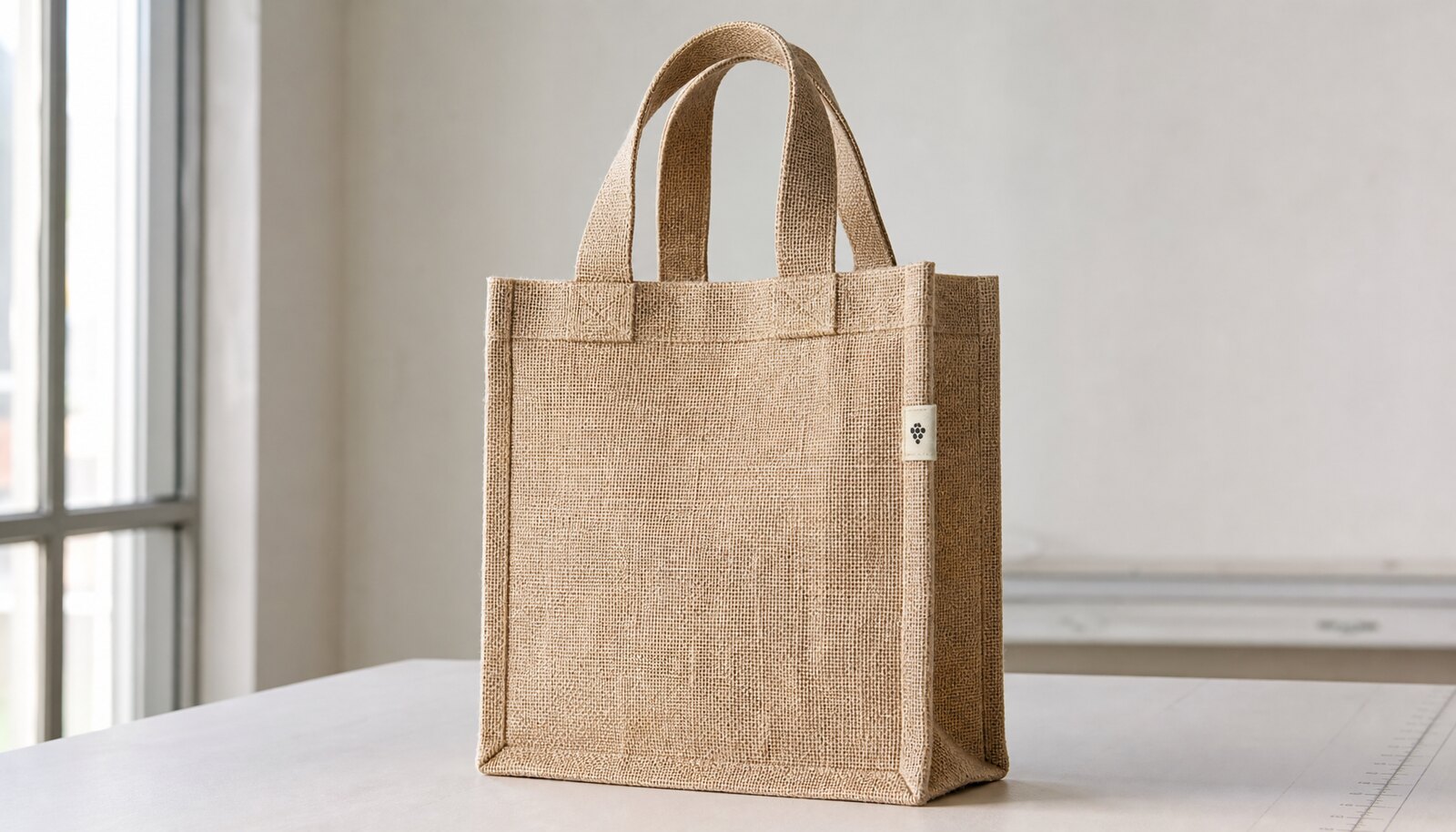
Why carton planning decides whether the quote holds
For boutique winery programs, jute tote bags are not just a bag spec. They are a packaging system. The finished tote, the way it folds, the way the handle sits, and the way the print panel behaves under pressure all change the outer carton size. If you compare suppliers only on bag price, you miss the part that usually creates the real cost gap: the carton count, the box cube, and the amount of damage risk in transit.
This is why shipping carton planning should be written into the RFQ from the start. A supplier who understands export packing will think about moisture, carton stacking, pallet layers, and how many bags can be packed without crushing the handles or scuffing the logo. A supplier who quotes only the bag often assumes a generic pack plan, and that is where receiving teams later find dents, warped sides, or cartons that are too heavy to move safely.
- Treat carton planning as part of the product spec, not an afterthought.
- Ask for the bag, packing method, and carton size in one quotation.
- Approach the order as a retail presentation item that still has to survive freight handling.
Start with bottle count and bag geometry
The first question is not what the bag looks like. It is what the bag must carry. A one-bottle wine tote, a two-bottle carrier, and a gift tote for a mixed set all need different dimensions, base support, and handle positioning. If you do not define the bottle profile up front, the factory will estimate around a generic bottle, and that can leave you with a bag that is tight at the neck, loose at the base, or awkward to pack flat.
For a typical 750 ml bottle, provide the full bottle height, body diameter, closure height, and any capsule or decorative wrap that adds bulk. If the tote is meant for retail display, say so. If it is a carry-out bag used after purchase, say that too. Boutique wineries often want a giftable look, but the bag still has to handle an actual bottle with enough clearance to avoid stress on the seams and enough structure that the base does not sag.
- Send filled-bottle dimensions, not only empty bag dimensions.
- State whether the tote is for shelf display, gift packaging, or customer carry-out.
- Confirm where the bottle sits inside the bag so the factory can place boards or dividers correctly.
Choose jute weight and reinforcement for transit
For winery totes, 12 to 14 oz jute, roughly 340 to 390 GSM, is usually the practical middle ground. It gives enough body for a premium retail feel without turning the bag into a rigid block that wastes carton space. Lighter material, around 10 oz or 280 GSM, can work for simpler retail promotions, but it will feel less stable when the bag is carrying glass. Heavier material, around 16 oz or 450 GSM, suits premium structured bags, but it raises carton bulk and can reduce packing density if the handles and body do not fold neatly.
The fabric weight alone does not decide performance. Reinforcement matters just as much. Ask for double-stitched side seams, X-box or bar-tack handle reinforcement, and a base board if the bag has to stand upright on shelf. If the tote includes a divider or lining, define that early, because each extra layer changes the fold pattern and the shipping carton dimensions. In this category, a bag that looks strong in a photo can still fail if the handle stitching is weak or the bottom board shifts in the carton.
- Require the factory to state GSM or oz weight in the quote.
- Ask how the handles are attached and what stitch pattern is used.
- Include any divider, lining, or board thickness in the spec sheet.
Pick a print method that suits rough jute
Natural jute is textured and irregular, so decoration has to be chosen with restraint. Screen printing is usually the best option for a winery tote with a bold logo, one or two colors, and a repeatable brand mark. It sits better on the surface, it is easier to control across a run, and it holds up better when the bag is folded and packed. Heat transfer and digital transfer can be useful when the art is detailed or the quantity is small, but they need more scrutiny because the finish can feel less natural on coarse jute.
For premium boutique branding, a woven label, stitched side label, or debossed patch can be a better answer than a large printed block. Those methods reduce the risk of cracking and keep the look understated. They also affect carton planning in a practical way: raised labels and thick print areas create more friction when bags are nested. If your logo is large or placed on a face panel that will touch other bags, the pack method needs to protect the surface during compression.
- Define print size in millimeters and attach the exact artwork file.
- Approve color against the actual jute base, not against white paper.
- Keep a small no-print margin near seams and edges so the artwork does not distort.
Build the RFQ around MOQ and quote line items
MOQ logic in this category is usually driven by fabric roll usage, print setup, and packaging setup, not just by the number of tote bodies. A standard bag size with one-color screen print and a stock carton can often start at a lower MOQ than a custom size with a divider, lining, and custom outer carton. If a supplier gives you a low bag MOQ but does not explain the carton MOQ, that is a warning sign. They may be counting unfinished goods and ignoring the packaging work needed to ship the order cleanly.
The RFQ should force all quote data onto one line of sight. A proper quote should state bag size, GSM, handle material, print method, carton pack count, carton dimension, gross weight, packing format, and shipment term. That is the only way to compare one factory against another without guessing whether a lower unit price hides a heavier carton, a weaker print method, or a packaging spec that your warehouse will reject later.
- Separate sample fee, tooling fee, packaging fee, and production price.
- Ask whether carton printing, labels, and pallet wrap are included or charged separately.
- Make the supplier show the MOQ for the bag itself and the MOQ for the carton style.
Design the carton pack, not just the bag
Carton planning starts with the folded sample. One supplier may fold the handles inward and stack the bags flat. Another may nest them differently to protect the logo. A third may use a polybag, tissue wrap, or moisture barrier sleeve. Those choices change how much air is trapped in the carton, how the handles recover after compression, and how many cartons fit on a pallet. If you do not approve the folded state, you are only approving a flat sketch, not a shipment-ready pack.
The outer carton should match the route, the destination, and the handling environment. Ocean transit, humid storage, and warehouse stacking all argue for a corrugated spec that is stronger than a domestic retail box. If the program is premium and the bags are going into gift boxes or display trays, the outer carton may need a cleaner print or stronger corner protection. If the bags are going straight into distribution, the better move may be a plain export carton with clear shipping marks and a controlled pack count that stays easy to lift.
- Approve carton size from a physically folded sample, not from an estimated drawing.
- Ask for gross weight per carton and check whether it matches your warehouse limits.
- Require the carton marks to show SKU, color, quantity, and packing date code if needed.
Approve samples against real use, not pretty photos
A winery tote sample has to survive a use test, not just a desk review. Put the same bottle type into the sample, fold it the same way the factory plans to pack it, and then lift it by the handle. Check whether the seams pull, whether the bottle neck rubs the top edge, and whether the print scuffs when the bag is compressed. If the bag only looks good on a flat table, it is not ready for production approval.
Set acceptance criteria before you sign off. Define the size tolerance, logo location tolerance, stitch quality, and carton count. Also define what counts as a major defect: broken stitches, crooked print, odor, heavy staining, or a carton that crushes under normal stacking. When these rules are written early, the sample becomes a reference instead of a negotiation tool, and the production team knows exactly what has to be repeated.
- Test the sample with actual bottles or realistic fill-weight dummies.
- Open one packed carton and inspect the fold memory after compression.
- Keep a signed reference sample at both buyer and factory level.
Compare supplier routes before you compare price
A direct factory with carton engineering usually gives the most control over fit, fold, and pallet loading. That route is strongest when the bag size is custom, the brand is sensitive to presentation, or the order will repeat across seasons. A trading company can be useful when you need mixed products in one shipment or when you do not want to manage multiple factories, but then you need clearer proof that someone owns the carton specification and the QC plan. A local warehouse repacking route can solve late-stage kitting or labeling, but it adds handling and more chances for abrasion.
The trap is comparing only the unit bag price. A quote that looks lower may be using a heavier carton, a loose pack count, or a carton size that wastes space and drives freight up. Compare the route on the whole order outcome: how many cartons, how much cube, how much manual handling, and how much risk of rejected cartons at receiving. If one supplier can explain their carton math and another cannot, the cheaper quote is not the safer quote.
- Compare suppliers on carton logic, not just on the bag cost.
- Ask for packing photos or previous export carton examples when possible.
- Favor the supplier that can explain how the carton was derived from the folded sample.
Lock the schedule and control changes
Most schedule slips in this category come from late changes to size, artwork, or pack count. A small shift in bag width can change the fold, which changes the carton, which can change pallet loading. A print change can require new screens or a revised placement. A packaging change can force a new carton sample. If the project is tied to a winery launch, seasonal gift period, or trade event, freeze the spec early and treat every later change as a formal revision.
You also need a clean approval chain. Photos are useful for quick visibility, but they are not a substitute for a signed sample reference. The factory should know when the bag is approved, when the carton is approved, and when the packing method is locked. Once those three items are fixed, production can move with fewer disputes. Without that discipline, the order often reaches final inspection with small but expensive mismatches between the quote, the sample, and the packed goods.
- Freeze the bag spec before final artwork approval whenever possible.
- Record every post-approval change in writing with a new revision number.
- Treat carton approval as part of production approval, not a warehouse task.
Send a clean RFQ and read quotes line by line
A clean RFQ is the fastest way to get comparable quotes. Start with bottle count, finished bag dimensions, jute weight, handle type, print file, carton pack count, shipping destination, and the required packing style. Add a photo or sketch with measurements if the bag is custom. If the supplier can see the bottle profile and the final pack expectation, they can quote carton size and gross weight with much less guesswork.
When the quotes return, read them line by line. Look for missing packaging, vague wording such as standard packing, unconfirmed carton dimensions, and substitutions hidden under equivalent material language. A quotation that does not state GSM, print method, carton count, and gross weight is incomplete. The goal is not to get the lowest number on the page. The goal is to get a quote that matches the sample, ships cleanly, and does not create surprises when the cartons reach the receiving dock.
- Use one spec sheet for all suppliers so every quote is built from the same input.
- Reject any quote that leaves carton size, pack count, or print method undefined.
- Match the quote to the approved sample reference before you issue the PO.
Specification comparison for buyers
| Spec decision | Recommended option | When it fits | Buyer risk to check |
|---|---|---|---|
| Direct factory with carton engineering | Best when the supplier can design the outer carton from the folded sample and pallet target | Custom bag sizes, export programs, and orders where carton efficiency matters | Ask for a carton dieline or at least finished carton dimensions before approving mass production |
| Factory using standard master cartons | Use the supplier's existing carton sizes if your bag folds cleanly and repeat orders are likely | Stable SKUs, smaller range, and buyers who want faster quoting | Standard cartons can waste cube space or crush handles if the bag bulk is not tested first |
| Trading company bundling bag and carton sourcing | Useful when you need one contact for mixed products or a smaller initial order | Multi-item programs and buyers who value convenience over tight packaging control | Confirm who owns carton accuracy, because the quote can hide spec drift between factories |
| Local warehouse repacking route | Choose only if cartons need local relabeling, split shipments, or late-stage kitting | Markets with final assembly or frequent SKU changes | Extra handling can scuff print, raise labor cost, and weaken carton traceability |
| 12 to 14 oz jute with board base | The usual sweet spot for winery tote programs that need structure without excessive weight | One-bottle and two-bottle gift totes for retail display and carry-out | Too light sags under load; too heavy increases carton bulk and shipping volume |
| 1-color screen print on natural jute | Best for bold logos and repeatable brand marks with good abrasion resistance | Most boutique winery branding where the logo is simple and high contrast | Check ink penetration and edge clarity on rough jute before mass sign-off |
| Heat transfer or digital transfer | Use for short runs, detailed art, or when the logo has gradients and fine type | Small seasonal batches or artwork that cannot be screen printed cleanly | Transfers can crack or feel plasticky on coarse jute if the carrier is folded and handled often |
| 25 pcs per carton versus 50 pcs per carton | Choose the pack count that keeps cartons manageable and protects handles | Orders that need efficient warehouse handling and safe pallet stacking | A denser carton can save box count but create compression damage and lift problems at receiving |
Buyer checklist before sampling
- Confirm bottle count, bottle dimensions, and whether the bag must carry a filled bottle or only present it as a gift pack.
- Lock the finished bag size, jute weight in GSM or oz, handle type, and any base board or divider requirement.
- Specify print method, logo size, print location, and the exact reference artwork file that will be approved.
- Set the carton pack quantity, carton dimensions target, and your maximum acceptable gross carton weight.
- Ask the supplier to quote bag, print, packaging, carton, and palletization on separate lines.
- Request a pre-production sample or pre-production photo of the exact folded pack and carton style.
- Write down the defect limits for stitching, print alignment, odor, stain, and carton damage before approval.
- Match the commercial quote to the sample reference number so the factory cannot swap details later.
Factory quote questions to send
- What jute weight, backing, lining, or base board are you quoting for this bag?
- What are the finished bag dimensions, handle length, and allowed size tolerance?
- Which print method are you using, how many colors, and what is the print area in millimeters?
- How many pieces per carton are you proposing, and what are the finished carton dimensions and gross weight?
- Will the bags be packed flat, folded, stuffed, or nested, and what protection is included for the printed surface?
- Is the outer carton standard or custom, and does it include shipping marks or carton printing?
- What sample stages are included before mass production, and what is the approval reference number?
- Can you share pallet loading details, carton count per pallet, and the export packing list format?
Quality-control points to confirm
- Finished bag size matches the approved sample and stays within the agreed tolerance on height, width, and gusset.
- Jute weight, lining, and board thickness match the quote and are checked against the approved material sample.
- Handles are stitched with reinforcement that can support the intended bottle load without looseness or seam pullout.
- Print placement, color density, and edge sharpness match the signed-off artwork and do not crack when folded.
- No heavy odor, visible mold, loose fibers in the logo area, oil stains, or inconsistent dye marks on the natural jute.
- Carton count, pack orientation, and carton dimensions match the approved packing method and do not crush the handles.
- Outer cartons pass a basic compression and corner check so the box survives pallet stacking and warehouse handling.
- Shipping marks, SKU labels, and carton count are readable and consistent across all cartons in the shipment.