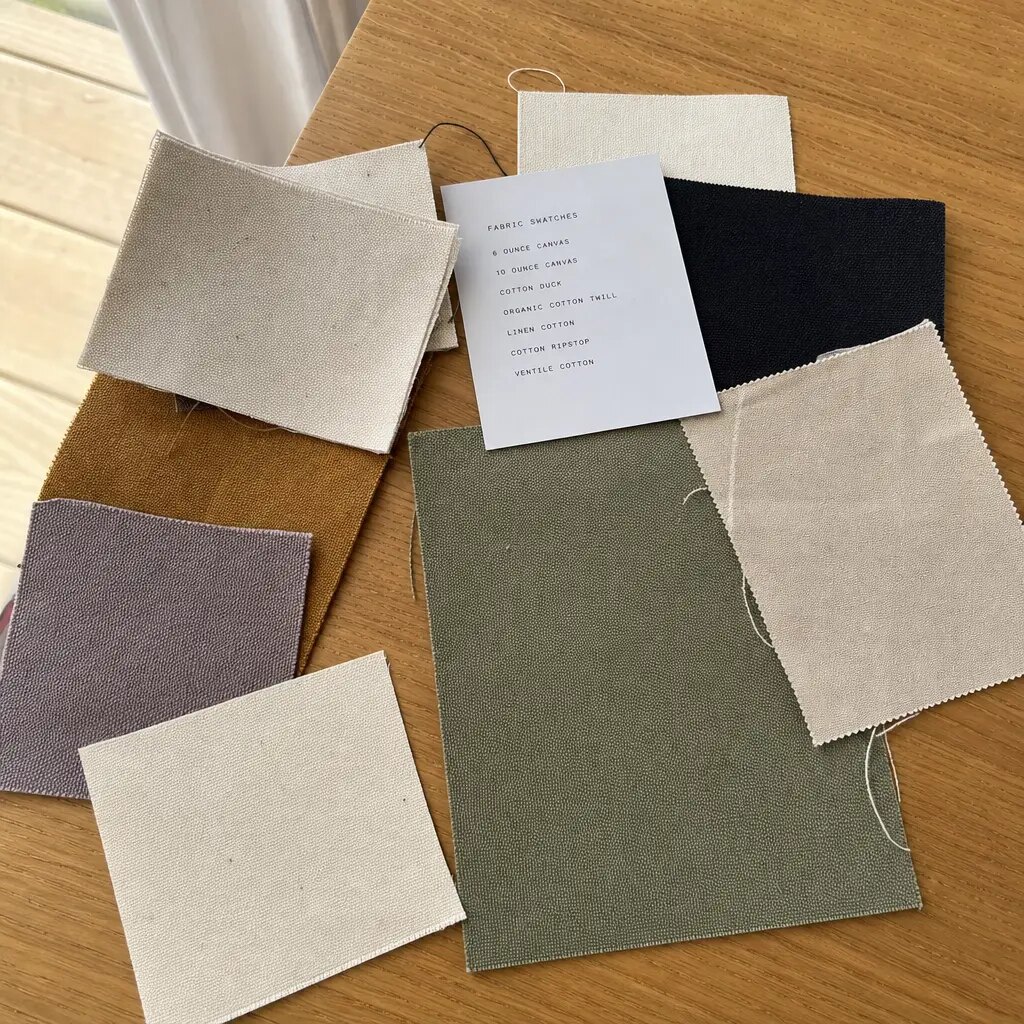
Start With the Use Case, Not the Bag
The fastest way to get clean quotes on jute tote bags for boutique wineries is to stop treating the bag as a generic tote. A winery buyer is usually solving one of four different problems: carry a single bottle as a gift, sell a two-bottle set in the tasting room, package a seasonal promotion, or ship a retail-style gift pack through a distributor. Each use case changes the bag size, fabric weight, handle build, print area, and carton plan. If the RFQ does not name the real use case, the supplier will price the easiest version they can make, and that usually creates a mismatch later.
A good RFQ should tell the factory exactly what the bag must carry, how it will be sold, and how it will move through the supply chain. A bag that only sits on a shelf can use lighter construction than a bag that will travel through warehouse handling, store replenishment, and consumer use. For winery programs, the RFQ should define bottle count, target bottle size, whether the bottles are sleeved or naked, and whether the tote needs to feel premium enough to live as a souvenir after the wine is consumed.
- Name the use case: one bottle, two bottles, tasting-room retail, or event gifting.
- State the target load in kilograms or by bottle count and size.
- Tell the factory whether the bag must stand upright, collapse flat, or include a divider.
- Include the sales channel, because wholesale retail packaging and direct gift packaging are not the same spec.
Lock the Bag Spec Before You Price It
Jute pricing swings more from construction than from the bag shape alone. Ask the factory to quote both the fabric weight in gsm and the equivalent ounce weight if they use that system, because suppliers do not always speak the same unit. For lighter promotional use, a bag in the 280-320 gsm range can work if the load is modest and the seam stress is low. For a premium winery program that carries two bottles or needs a sturdier retail feel, 350-420 gsm is a more practical starting point. Beyond that, the bag becomes heavier, freight costs can rise, and the bag may feel overbuilt unless the buyer truly wants a rigid gift carrier.
Construction details matter just as much as gsm. A simple open-top tote with a gusset is easier to pack and price than a lined bag with a board insert or zipper top. Cotton webbing handles usually feel cleaner on the shoulder than self-fabric jute handles, while jute rope handles can look rustic but may be less comfortable for repeated carry. If the winery uses glass bottles with sharp edges or heavier formats, specify bottom reinforcement, side seam reinforcement, or a base board so the tote does not deform in transit.
- Ask for gsm and ounce weight in the quote so you can compare factories with different measurement habits.
- For one-bottle gifting, lighter fabric may be enough if the bag is mostly a presentation piece.
- For two-bottle programs, reinforce the handle anchors and bottom panel before discussing decoration.
- If the bag must stand upright on shelf, include a board insert or structured base in the RFQ.
Choose Branding That Survives Handling
The best-looking logo is not always the best production choice. On jute, a one- or two-color screen print is usually the simplest and most repeatable option for winery branding. It gives a clear logo, lower setup complexity, and good economics for repeat orders. If the brand wants a quieter premium look, a woven patch or sewn label can work well, especially when the bag is intended to feel rustic rather than promotional. Heat transfer can handle fine detail or more colors, but it is harder to rely on if the bag will be rubbed, folded, or exposed to moisture during retail handling.
For the RFQ, the buyer should state print size, exact placement, color count, and what makes the decoration acceptable or rejectable. A logo placed too close to a seam may distort during stitching or folding. A logo printed over a rough seam line can look broken even if the supplier claims it passed inspection. Ask for a strike-off or decoration sample on the exact fabric, not just on a paper artwork proof. If the logo must align with a side label or woven brand tab, add placement tolerance in centimeters so the factory knows the acceptable window.
- Use screen print for simple logos and repeatable production.
- Use woven patch or sewn label for a more retail-premium, rustic finish.
- Use heat transfer only when the artwork needs more detail and you accept lower abrasion tolerance.
- Approve decoration on the real fabric, not only on a digital proof.
Read Supplier Quotes by Cost Driver
A meaningful quote should show what changes the price, not just the final unit number. For jute tote bags, the main cost drivers are fabric weight, handle material, lining or board inserts, print method, print color count, carton pack density, and any special finishing such as zippers, lamination, or woven labels. If two suppliers quote the same bag but one includes a heavier fabric, a larger print area, and a retail pack, the lower unit price may be fake value. You need to normalize the spec first, then compare the quotes.
The cleanest way to compare suppliers is to request a line-by-line breakdown: base bag, decoration, reinforcement, sampling, tooling, inner packing, outer carton, and any compliance or test fee. That structure exposes hidden costs quickly. It also reveals who understands export business. A factory that can only quote one flat price often has not thought through carton count, CBM, or rework risk. For a winery buyer, that matters because a bag that lands late or arrives crushed can ruin a promotional season even if the unit price looked good.
- Ask for a quote that separates base bag, print, labels, inserts, and packing.
- Normalize GSM, size, handle type, and print count before comparing suppliers.
- Request carton dimensions and estimated CBM so freight is not a surprise.
- Treat a single flat unit price as incomplete if the supplier cannot explain the cost stack.
Evidence to Request From the Factory
For this category, supplier evidence matters as much as the sample itself. Ask the factory for recent photos or short videos showing the exact production steps, not only polished marketing images. You want to see cutting, stitching, print setup, packing, and the final carton marks. If a supplier claims in-house printing, ask to see a current job on the same fabric type or a close equivalent. If they say they are a direct factory, they should be able to show the workspace, equipment, and a current export order without hiding behind stock photos.
Documentation should match the destination market and the buyer's risk profile. For some programs, a simple material declaration and carton list may be enough. For others, the buyer may need migration, azo-dye, or restricted substance documentation, depending on the market and channel. The practical point is not to demand every possible certificate. It is to make sure the factory can support the claims they are making in the quote. If the supplier cannot explain where the jute came from, how the print ink is controlled, or who is responsible for final packing, the quote is not ready for approval.
- Request current production photos or video of the same or similar bag.
- Confirm whether cutting, sewing, printing, and packing are truly in-house.
- Ask which compliance documents are available for your destination market.
- Require traceable carton marks and lot identification for repeat orders.
Set Sample Approval and QC Limits
Do not approve a bulk order from a sales sample alone. For jute tote bags, the useful sequence is sample, pre-production sample, and then a retained golden sample that becomes the reference for bulk. The first sample helps the buyer judge style and rough size. The pre-production sample should use the final fabric weight, print method, handle material, and packing method. The golden sample is the standard the factory keeps for the lot. Without that chain, later shipments can drift in handle length, print placement, or fabric tone even when the supplier insists the order is the same.
Your QC criteria should be measurable. For a winery tote, body dimensions usually need a tolerance window, handle drop must be consistent, and stitched load points should survive a realistic carry test. If the bag is designed for two bottles, test the loaded bag with a real bottle-equivalent weight, not a token load. A sensible check is a five-kilogram hang test for around 10 minutes with no seam opening, handle slip, or visible stress failure. For print, set a simple acceptance standard: no major misplacement, no obvious color shift versus the approved sample, and no flaking under dry rub and light damp handling.
- Use a pre-production sample made from final materials, not a sales sample.
- Retain one golden sample signed off by both sides.
- Set measurable tolerance for size, handle drop, and print placement.
- Test the bag with a real load that reflects the winery use case.
Packing That Protects a Jute Bag in Transit
Jute is durable, but it is not a low-care material. It absorbs moisture, wrinkles easily, and can pick up odor if it is packed or stored badly. That means packing is part of the product spec, not an afterthought. For bulk export, many buyers prefer flat folding in master cartons with clear carton marks and lot coding. If the bag is sold as a retail gift item, inner polybags, tissue, belly bands, or hangtags may be needed, but those choices increase labor and carton volume. The RFQ should state whether the bag is shelf-ready or purely bulk packed.
For wine programs, carton layout matters because the tote may be paired with bottles, inserts, or divider sets. If the bag has a rigid board or a structured bottom, the carton height and fold method must be planned early so the bag does not crease in the wrong place. Ask the factory to give carton dimensions, gross weight, net weight, and cartons per pallet or cubic meter. If the lane is humid, a moisture barrier or desiccant can be useful. The point is simple: the better the pack plan, the lower the damage and the cleaner the receiving process.
- State whether the bag ships bulk folded or retail ready.
- Ask for carton size, gross weight, net weight, and CBM in the quote.
- Use lot codes and carton marks so warehouse receiving stays clean.
- Add moisture protection if the shipping lane or storage condition is humid.
Lead Time Risks That Move the Ship Date
Lead time on jute bags is not just sewing time. The schedule depends on whether the factory has the right base fabric in stock, whether the weave or weight is standard, whether the print uses existing screens or new screens, and whether the pack format needs extra labor. A quote that ignores fabric sourcing time is incomplete. If the program needs a custom color, woven label, zipper, or board insert, the timeline usually stretches because each added component has its own approval and supply risk. A buyer who wants an accurate date should ask for the longest step, not the average step.
A realistic schedule usually has four gates: sample approval, material readiness, bulk production, and final inspection or packing. Delays often happen at the first and third gates, not the sewing line itself. The most common failure is a buyer approving artwork or dimensions while still changing print placement, carton count, or handle material. That forces the factory to restart setup. If the winery has a seasonal launch date, build in a buffer for proofing and rework. For a first order, a conservative schedule is better than an optimistic promise that slips right before the promotion.
- Ask the supplier to show lead time by step, not one total number.
- Treat custom color, woven labels, zippers, and inserts as schedule risk items.
- Approve artwork and structure before bulk begins.
- Build buffer time for first orders and seasonal launches.
Compare Landed Cost, Not Just Unit Price
The cheapest quote on paper often loses once freight, cartons, damage, and rework are included. For jute tote bags, landed cost should include the bag unit price, setup fee, sample fee if amortized into the order, carton cost, inland handling, export documents, freight basis, import duty, and the cost of rejects or touch-up work at destination. This matters more for boutique winery programs than for many promotional items because the bag is part packaging, part gift item, and part retail display. A low unit price with poor packing can produce a higher final cost than a sturdier quote that ships efficiently.
To compare routes, build a simple landed-cost sheet and keep the same assumptions for all suppliers. Use the same Incoterm, same carton density, same destination, and same defect allowance. Then compare not only the invoice price but also how many usable bags arrive in saleable condition. If one supplier offers a lighter bag with lower price but higher rejection risk, the real cost may be worse than the heavier bag that packs cleanly and survives handling. This is the level at which procurement teams can make a defensible decision instead of just selecting the lowest line item.
- Include freight, carton, duty, and defect allowance in the landed-cost view.
- Use the same Incoterm and destination assumptions across all quotes.
- Do not ignore damage risk when comparing light versus reinforced construction.
- Choose the quote that delivers the most saleable bags per landed dollar.
Specification comparison for buyers
| Spec decision | Recommended option | When it fits | Buyer risk to check |
|---|---|---|---|
| Production route | Direct factory with jute cutting, stitching, and packing in-house | Best for repeat orders, tighter spec control, and faster corrective action | Confirm the real maker, not just the sales office, and ask for recent production photos |
| Production route | Trading company sourcing from a known subcontract factory | Useful for lower MOQ or mixed-category orders | Quote can hide who actually makes the bag, which slows problem solving if quality drifts |
| Fabric weight route | 280-320 gsm for light promotional use | Fits one-bottle gifting, short carry distance, and price-sensitive programs | Can feel soft or flimsy if the bag must hold heavy bottles or travel in export cartons |
| Fabric weight route | 350-420 gsm with reinforcement for premium retail use | Better for two-bottle carry, shelf display, and higher perceived value | Higher weight increases cost and can raise freight if the bag is oversized |
| Branding route | In-house screen printing with 1-2 colors | Best for simple winery logos and stable repeat production | Ask for screen count, ink type, and rub-test results so the print does not crack or smear |
| Branding route | Woven patch or sewn label for a premium rustic look | Good when the bag must feel elevated without heavy ink coverage | Check placement, stitch quality, and whether the patch adds lead time or MOQ |
| Structure route | Open top with gusset and optional base board | Works for standard gift tote programs and easy packing | If bottles are the main use case, verify side seam reinforcement and bottom load capacity |
| Structure route | Lined body or zipper top with dividers | Better for retail sets, courier handling, or higher-value bottle gifts | Confirm added components do not create uneven shrinkage, crooked tops, or carton bulge |
| Reorder route | Repeat from a retained golden sample and same lot references | Best for ongoing programs that need shade and size consistency | Without retained samples, later orders can drift in tone, handle length, or print placement |
Buyer checklist before sampling
- State the end use clearly: one-bottle gift, two-bottle carrier, tasting-room retail bag, or event giveaway.
- Lock the target size, handle drop, and loaded weight before asking for price.
- Specify fabric weight in gsm and whether you want unlined, lined, or reinforced construction.
- Define print method, print size, Pantone targets if needed, and acceptable placement tolerance.
- Ask the factory to quote sample fee, tooling/setup, carton spec, and packing method separately.
- Require a pre-production sample or approved golden sample before bulk release.
- State the destination market, incoterm, and any compliance documents your market requires.
- Compare quotes on landed cost, not only unit price.
Factory quote questions to send
- What is the exact fabric weight in gsm, weave count, and finishing for the quoted bag?
- Is the quote for direct production in your own facility, or is any step subcontracted?
- What is your MOQ at the quoted spec, and how does it change if we adjust print colors, lining, or handle material?
- Please break out the cost of sample, setup, print screens, woven labels, boards, zippers, and special packing separately.
- What size tolerance do you hold for body dimensions, handle length, and print placement?
- Can you share a recent production photo or short video of the same or similar jute bag being made and packed?
- What test reports, material declarations, or market-specific compliance documents can you provide for this item?
- What is the normal lead time for sample approval, bulk production, and export packing for an order of our target size?
Quality-control points to confirm
- Fabric weight should stay within a practical tolerance, typically about plus or minus 5 percent of the agreed gsm.
- Body dimensions should stay within plus or minus 1 cm unless the design uses a structured board or hard insert.
- Handle length and handle drop should be consistent across the lot so the bag hangs evenly on the shoulder or arm.
- Stitching at handle anchors, side seams, and bottom corners should show no skipped stitches, loose threads, or needle damage.
- Load testing should reflect real use, such as a two-bottle equivalent or around 5 kg for a 10-minute hang without seam opening.
- Print should match the approved strike-off or sample for placement, color density, and edge sharpness.
- The bag should not carry excessive odor, mildew marks, or moisture staining from poor storage or wet packing.
- Carton count, lot code, outer marks, and any retail barcode or hangtag should match the packing list exactly.