Start with the bookstore load, not the bag photo
University bookstore jute tote bags can look similar in a supplier catalog, but they do very different jobs on campus. A tote sold beside sweatshirts and drinkware needs clean stitching, comfortable handles, low odor, and a logo that looks retail-ready. An orientation tote may be packed quickly by staff with folders, maps, coupons, lanyards, notebooks, bottles, and event packets. An alumni gift needs a more polished finish because it represents the university brand long after the event is over. If the RFQ only says jute tote bag with logo, suppliers may quote different fabric weights, handle types, stitch patterns, lamination choices, and packing methods while appearing to price the same item.
The strongest jute tote bags durability testing checklist for university bookstores begins with the real carrying situation. State whether the tote must carry textbooks, apparel, drinkware, boxed gifts, binders, laptop sleeves, or welcome-kit materials. Then translate that into a test load in kilograms. For many bookstore retail programs, 8 kg is a practical starting point for moderate use. When students may carry multiple textbooks, bottles, and apparel together, 10-12 kg is a more demanding benchmark. A light event bag can be tested lower, but the purchase documents should say so clearly.
Durability testing should focus on the finished bag, not just the jute panel. The body fabric may feel thick while the handle stitch line still tears through the weave after repeated lifting. The common weak points are handle bases, side seams, bottom gusset corners, lamination folds, print edges, and carton creases. A sample that survives a showroom photo may not survive a bookstore counter, a campus event table, or a student walking across campus with hard book corners pressing into the gusset.
- Retail resale: prioritize handle comfort, clean stitching, low odor, consistent color, and logo appearance.
- Orientation kits: prioritize load capacity, packing speed, carton labels, and predictable finished size.
- Admissions or alumni gifts: prioritize presentation, brand accuracy, premium handle feel, and neat internal seams.
- Department bulk orders: clarify whether the tote is a gift, resale item, kit container, or short-term handout.
- Register bags: prioritize fast handling, carton count accuracy, moisture resistance, and moderate load strength.
Write the fabric spec in measurable terms
Jute is often sold under broad names such as burlap, natural jute, laminated jute, or eco jute. Those descriptions are not enough for procurement. Ask for fabric weight in GSM or ounces, confirm whether that number includes lamination, and review weave stability on an actual sample. A practical retail bookstore range often begins around 13-15 oz jute, approximately 440-510 GSM, but suppliers may measure differently depending on base cloth, moisture content, coating, and lamination. A lighter construction may be fine for short-term giveaways. It should not be compared directly with a heavier retail tote unless the performance difference is part of the discussion.
Weave density matters as much as weight. A loose weave can look substantial and rustic, yet allow stitches to pull through when the handle is loaded. A tighter weave gives the seam and handle stitching more stable material to grip and often improves logo definition. During sample approval, hold the jute against light, look for large open gaps, and gently pull near seam allowances to see whether yarns separate easily. If two suppliers quote the same GSM but one fabric is firmer and denser, the finished bags may not perform the same.
Natural jute also varies in shade and moisture. Color can run from pale straw to darker brown, and the difference becomes obvious when bags sit side by side under bookstore lighting. Moisture can affect weight, odor, and carton behavior. The approved pre-production sample should include a retained fabric cutting, a shade reference, and a written note explaining whether lamination is included in the quoted fabric weight. That small record helps later if the bulk lot looks thinner, darker, looser, or more odorous than the sample.
- Ask for GSM or ounce weight for the exact bulk-intended fabric, not a catalog phrase.
- Record whether the weight includes lamination, coating, or only base jute fabric.
- Keep an approved cutting from the pre-production sample for later inspection comparison.
- Reject vague terms such as premium jute, heavy burlap, export quality, or eco fabric unless they are backed by measurements.
- Define acceptable shade variation using an approved sample range rather than expecting identical natural color.
Decide on lamination with eyes open
Lamination is a performance choice. It is not automatically an upgrade. Inside clear lamination can reduce fiber shedding, add body, help the tote stand upright, and make the bag more tolerant of damp retail floors or grocery-style reuse. It can also make the bag stiffer, increase fold memory, trap odor, and crack or whiten if the carton is compressed too tightly. Unlaminated jute has a softer, more natural hand feel, but it sheds more fibers, absorbs moisture more readily, and may look less structured on display.
For bookstore retail, laminated jute is often chosen when the tote needs a cleaner interior and stronger shelf presence. For sustainability-positioned merchandise, unlaminated jute may fit the desired natural look if the buyer accepts more shedding and softer structure. For welcome kits, the decision depends on the contents. Folders and books often benefit from structure. Items sensitive to odor may require extra airing time, a different lamination, or a shift to unlaminated construction.
Test lamination the way the bag will actually be packed. Fold the gussets as the factory plans to fold them, compress the sample lightly, then reopen it. Look for white stress marks, cracking, peeling film, brittle sound, and retained crease lines. Smell the sample after it has been sealed in a bag or carton because lamination odor can be less obvious when a sample has been sitting open. If the print crosses a fold line, check the logo after folding as well as the film underneath it.
- Use laminated jute when reduced shedding, added structure, and damp-floor tolerance are important.
- Use unlaminated jute when soft natural appearance and lower plastic content are higher priorities.
- Test folds at the gusset, top edge, and any carton fold line before approving bulk packing.
- Avoid fold lines across large printed logos when lamination or heavy ink coverage is used.
- Document odor acceptance after sealed storage, not only after the sample has aired out.
Treat handles as the main engineering decision
Handle construction is usually the highest-risk durability decision for bookstore jute totes. A student carrying two textbooks, a hoodie, a bottle, and notebooks can easily place 8-12 kg of load on the handle attachments. Cotton webbing handles in the 35-45 mm range are commonly more comfortable for this use than narrow rope or thin jute tape because they spread pressure across the hand or shoulder. Padded jute-wrapped cotton handles can look more natural, but the internal material and attachment method still need to be confirmed.
Handle drop should be written as a finished measurement from the top edge of the bag to the inside top of the handle curve. A short hand-carry drop may be around 10-15 cm. A shoulder-friendly drop may be around 22-28 cm, depending on bag height and market preference. If the buyer leaves the drop open, bulk production can vary enough to create comfort complaints, uneven display appearance, and a different feel from the approved sample.
The handle base needs reinforcement because it concentrates force into a small area of jute. A box stitch with cross tack, dense bar tack, reinforcement patch, or extended webbing sewn into the top hem can distribute load better than a single straight stitch line. Stitch density still has to match the fabric. Too few stitches may loosen; too many can cut through jute yarns. The approved construction should be tested on complete bags made with the final fabric, handle, thread, top hem, lamination, and print.
- Specify handle material, width, thickness if relevant, color, and finished drop length.
- Use wider handles for heavier loads and shoulder carry; avoid narrow tape for textbook programs.
- Approve box stitch, cross tack, bar tack, or reinforcement details with close-up sample photos.
- Measure both handles on several samples because unequal handles are visible and uncomfortable.
- Check dyed handle colorfastness if handles contact natural jute, light apparel, or inner packing.
Run a durability test buyers can repeat
A useful durability test does not have to be complicated. It does have to represent bookstore use. Start with the target load and actual contents. Hard book corners, binders, boxed mugs, and bottles stress gussets differently from soft apparel or evenly distributed weights. For a moderate retail tote, buyers may test at 8 kg. For textbook-heavy use, 10-12 kg is a better challenge. If the tote is only intended as a light giveaway, a lower test load can be acceptable, but that limitation should be written into the order file.
Use both dynamic and static testing. Fill the tote to the agreed weight, lift it by both handles, set it down, and repeat the cycle. Then hang it for a defined time. A practical internal check might use 25-50 lift cycles followed by a 30-60 minute static hang. Higher-risk orders can use stricter requirements. What matters most is consistency: every supplier sample should face the same contents, weight, cycle count, hang time, and pass criteria.
Inspection after testing is where the value appears. Check for broken bar tacks, pulled handle webbing, yarn tearing around stitch holes, seam slippage, bottom distortion, gusset corner stress, print cracking, and lamination whitening. Photograph the same areas before and after testing. A clear record turns vague arguments about strong enough into a concrete comparison between constructions. It also gives the factory a practical target before bulk production starts.
- Define test weight in kilograms and match it to actual bookstore contents.
- Run repeated lift-and-set-down cycles before relying on a static hang result.
- Include hard items such as books or binders to test gusset corners and bottom seams.
- Inspect handle bases, side seams, bottom corners, top hem, print, and lamination after testing.
- Record pass or fail criteria before sample review so competing quotes are judged fairly.
Control seams, stitching, and tolerances
Seam quality is where many low quotes reveal themselves. A jute tote can use heavy fabric and still fail if the seam allowance is too narrow, stitch density is inconsistent, thread tension is poor, or raw edges fray inside the bag. Ask how the side seams, bottom seams, top hem, and gusset corners are finished. Internal binding or covered seams may add cost, but they can reduce fraying and improve perceived quality when the tote is being sold as campus merchandise.
Stitch inspection belongs in both sample approval and pre-shipment QC. Look for skipped stitches, loose thread chains, broken threads, needle cuts, uneven stitch lines, and long thread tails. At handle bases, check whether the stitch pattern is centered on the webbing and whether the jute is tearing between stitch holes. At the bottom gusset, confirm that the seam lies flat and that hard book corners do not force the seam open after loading.
Tolerances should be measurable. For many jute tote orders, finished width and height within about +/- 1 cm is a practical target, with gusset depth within about +/- 0.5-1 cm and handle drop within about +/- 1 cm. Logo placement may need tighter control because even small drift is obvious on the front panel. If the factory cannot hold these tolerances, it is better to discover that during sample approval than after cartons arrive at the bookstore.
- Measure finished width, height, gusset depth, handle drop, and logo placement on multiple samples.
- Check seam allowance and stitch density at side seams, bottom seams, and handle bases.
- Reject broken stitches, skipped stitches, loose bar tacks, open seams, and visible yarn tearing.
- Use internal binding or cleaner seam finishing for higher-price retail merchandise.
- Include tolerance requirements in the purchase order and inspection checklist.
Test the university logo on real jute
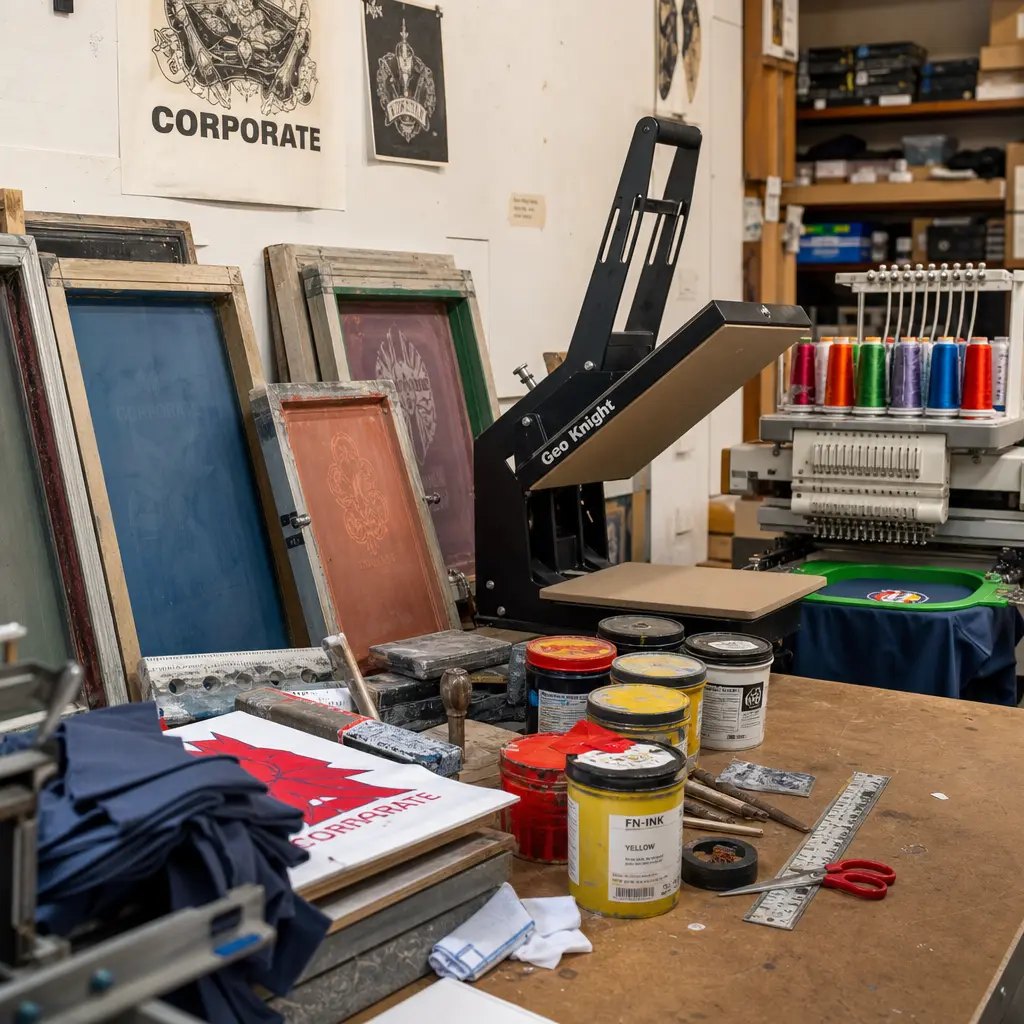
Jute is coarse and uneven, so artwork that looks crisp in a PDF may not print cleanly on the bag. Fine university seals, small legal text, thin outlines, detailed mascots, and gradients are high risk. Screen printing is usually the most stable choice for bold one-color to three-color university logos, bookstore names, and department marks. Heat transfer can deliver sharper edges on some constructions, but it needs adhesion, cracking, and edge-lift testing on the exact jute surface.
Review artwork at actual print size before sampling. The supplier should advise minimum line thickness, minimum text height, registration tolerance for multiple colors, and whether small copy should be removed or enlarged. Buyers should provide vector artwork, Pantone references where brand color matters, logo dimensions, placement measurements, and any university licensing rules. On natural tan jute, navy, dark green, black, maroon, and gold may all look different than they do on white paper or a digital mockup.
Print testing should use the same fabric, lamination, ink, curing process, and packing fold planned for bulk production. Dry rub checks show whether ink transfers during handling. Light wet rub checks show whether minor moisture causes unacceptable ink loss. Fold checks show whether the logo cracks if the packing line crosses the print area. The approved print sample should be physical and controlled, then available for inspection comparison when bulk goods are produced.
- Use screen print for bold campus names, department logos, bookstore marks, and simple mascot artwork.
- Simplify seals, gradients, fine rules, and small text that cannot reproduce cleanly on coarse jute.
- Confirm Pantone expectations are realistic on natural tan material.
- Run dry rub, light wet rub, fold, and adhesion checks on the production-intended construction.
- Measure logo placement from fixed bag edges, not by visual centering alone.
Compare landed cost instead of headline unit price
Jute tote quotes vary because suppliers may quietly change fabric weight, weave density, lamination, handle material, reinforcement, print method, carton size, or packing density. A low unit price is not useful unless the specification is identical. Request price ladders at realistic quantities such as 500, 1,000, 2,500, and 5,000 pieces using the same body size, GSM, handle construction, print method, packing style, and Incoterm.
Separate one-time charges from the unit price. Screen charges, artwork cleanup, color matching, sample fees, courier charges, retail hangtags, barcode labels, private-label cartons, and inspection support can change the true program cost. If the university needs several department logos, body production may be combined, but each logo can still require separate screens, setup, labeling, and inspection sampling. The quote should state quantity per design, print colors per design, and whether mixed designs are packed separately.
Landed cost also depends on carton cube and weight. Jute totes are bulkier than many thin cotton bags, and flat packing for better presentation can increase freight cost. Request carton dimensions, pieces per carton, gross weight, and packing method early enough to estimate storage and receiving needs. For DDP or delivered quotes, clarify whether duties, brokerage, campus delivery, liftgate service, inside delivery, or appointment delivery are included.
- Compare quotes only when size, fabric, lamination, handles, stitching, print, packing, and Incoterms match.
- Ask for itemized setup, sample, courier, label, inspection, and packaging charges.
- List all logo versions with quantity, color count, and carton labeling requirements.
- Request carton dimensions, gross weight, and pieces per carton for freight and storage planning.
- Treat vague specifications as cost risk because they allow substitutions during production.
Approve samples with a written record
A single attractive sample is not enough for a university bookstore order. Keep one sample as the clean visual standard and use another for load testing, rub testing, fold testing, odor review, and seam inspection. For event-critical or resale orders, the pre-production sample should use the actual bulk-intended jute, handle material, thread, print process, lamination, labels, and packing method. A showroom sample made from available fabric may be helpful for shape, but it should not be treated as proof of bulk performance.
The sample approval record should include measured width, height, gusset depth, handle width, handle drop, print size, print location, fabric weight, lamination status, and packing method. Photos should show the front, back, inside seams, handle bases, bottom gusset, top hem, print detail, and carton packing. When buyers approve from a digital mockup or one front-view photo, they lose control of the construction details that most affect durability.
Odor deserves its own check. Jute, lamination, ink, glue, and cartons can create smell during sealed storage, even if the sample seems acceptable in open air. For bookstore resale, objectionable odor can hurt customer acceptance even when the bag passes load testing. If airing time, carton change, ink change, lamination change, or material change is needed, decide before bulk production begins.
- Keep one approved visual standard and one destructive-tested sample with notes.
- Measure and record all critical dimensions and placement points.
- Test the final logo size, ink color, placement, and print process before bulk printing.
- Approve packed appearance, fold lines, bundle count, carton count, and label layout.
- Do not authorize bulk production until substitutions are removed from the sample record.
Inspect packing before shipment
Packing can damage jute totes after the bags themselves have been made correctly. Tight baling can create permanent creases, distorted gussets, cracked lamination, crushed corners, and print damage. Flat packing usually gives the cleanest retail presentation, but it increases carton volume. Light folding can reduce freight cost, but the fold line should avoid the logo and high-stress laminated areas whenever possible.
Carton specifications should match bookstore receiving conditions. A carton that is too heavy is harder to lift, more likely to be dropped, and more likely to crush lower cartons. Set a maximum gross weight, request carton board strength appropriate for the route, and confirm whether inner poly liners, desiccants, or moisture-resistant cartons are needed. Jute can absorb humidity and odor during long storage or sea freight, so moisture control should be considered before packing begins.
Labels should support campus receiving, not only export handling. Cartons may need PO number, SKU, quantity, logo version, department, event name, color, carton number, barcode, and destination. Mixed logo versions should be clearly separated or mapped on the packing list. Pre-shipment inspection should verify count accuracy, label accuracy, print quality, handle strength, seam quality, odor, carton condition, and packing method before goods are handed over to freight.
- Set pieces per carton, carton dimensions, gross weight limit, and packing method in writing.
- Avoid tight compression when bags are laminated, structured, or heavily printed.
- Use moisture-aware packing for sea freight, humid routes, or long pre-event storage.
- Verify carton labels by logo version, SKU, PO, quantity, and delivery destination.
- Schedule inspection before shipment cutoff so failed goods can still be corrected.
Specification comparison for buyers
| Spec decision | Recommended option | When it fits | Buyer risk to check |
|---|---|---|---|
| Body fabric weight | Retail bookstore range often starts around 13-15 oz jute, approximately 440-510 GSM depending on weave, moisture content, and whether lamination is included | Textbooks, apparel, notebooks, drinkware, admissions kits, graduation merchandise, and campus gift bundles | A loose weave can look heavy but allow stitch pull-through; request the actual GSM test method, weave description, and a retained cutting from the approved sample |
| Lamination | Inside clear lamination for structure and shedding control, or unlaminated jute for a softer natural appearance | Laminated jute fits grocery-style reuse, damp floors, and upright retail display; unlaminated fits rustic eco-positioned merchandise | Low-grade lamination may crack, whiten at folds, trap odor, or delaminate; run fold, compression, odor, and flex checks before approval |
| Handle material | Cotton webbing or padded jute-wrapped cotton handles, normally 35-45 mm wide for heavier bookstore loads | Shoulder or hand carry with books, bottles, hoodies, laptop sleeves, and bundled merchandise | Narrow rope, thin tape, or raw jute handles can cut into the hand and fail earlier at attachment points |
| Handle drop | Hand-carry drop commonly around 10-15 cm; shoulder-carry drop commonly around 22-28 cm, subject to bag height and market preference | Short drop for retail gift bags; longer drop for reusable campus totes and bookstore merchandise | If drop is not specified, bulk lots can vary enough to affect comfort, shelf appearance, and complaints |
| Handle attachment | Box stitch with cross tack, dense bar tack, reinforcement patch, or extended webbing sewn into the top hem for high-load designs | Needed when totes may carry multiple textbooks, bottles, apparel, and event packets | Decorative stitching may pass photo approval but fail after repeated 8-12 kg lifting; specify stitch pattern and post-test acceptance |
| Bottom construction | Gusseted bottom with clean side seams, adequate seam allowance, and internal binding or covered seams when budget allows | Improves shelf presentation, load distribution, welcome-kit filling, and repeat use | Raw seams can shed, fray, or open under hard book corners; inspect bottom corners after loaded lift cycles |
| Print method | Screen print for solid 1-3 color university logos; heat transfer only after adhesion and fold testing on the exact jute | Campus wordmarks, bookstore logos, bold mascot marks, department names, and event artwork | Fine seals, small text, thin outlines, and gradients may break on coarse fibers; confirm minimum line width and text height before sampling |
| Size choice | Common bookstore sizes include about 14 x 16 x 6 in or 15 x 15 x 6 in, adjusted for book dimensions, apparel bundles, and carton efficiency | Textbooks, hoodies, notebooks, drinkware, admissions packets, and retail gift sets | Oversizing increases fabric use, carton cube, freight, and handle stress; test with actual contents before finalizing |
| Dimensional tolerance | Typical finished tolerance target: +/- 1 cm for width and height, +/- 0.5-1 cm for gusset, +/- 1 cm for handle drop, tighter for logo placement | Useful for retail displays, barcode placement, bundle packing, and reorder consistency | Uncontrolled tolerances cause uneven shelf presentation, misaligned prints, and inconsistent kit packing |
Buyer checklist before sampling
- Define the program first: retail resale, orientation giveaway, admissions kit, alumni gift, department order, graduation merchandise, or bookstore register bag. Each use has a different durability, presentation, and cost profile.
- List the actual contents the tote must carry, such as two textbooks, a water bottle, hoodie, laptop sleeve, notebooks, binders, packets, boxed gifts, or drinkware, then set a target test load in kilograms.
- Specify finished width, height, gusset depth, handle width, handle drop, seam construction, print size, print placement, packing style, and tolerances before requesting price comparisons.
- Request the actual jute body fabric weight in GSM or ounces and state whether the quoted weight includes lamination, coating, moisture, or only the base fabric.
- Ask for at least two construction options when volume allows, such as 13 oz versus 15 oz jute or 35 mm versus 45 mm cotton webbing, so cost and durability can be compared on the same design.
- Choose laminated or unlaminated construction based on shedding tolerance, moisture exposure, odor sensitivity, fold behavior, shelf structure, and the bookstore's desired eco appearance.
- Approve handle attachment by material, width, stitch pattern, seam allowance, reinforcement area, thread quality, and tested performance, not by catalog image alone.
- Confirm whether the university artwork contains small text, seals, mascot detail, gradients, registration marks, or thin rules that may not reproduce cleanly on coarse jute.
- Test print adhesion, dry rub, light wet rub, logo edge clarity, fold resistance, and color acceptability on the same jute and ink system planned for bulk production.
- Write acceptance criteria for size tolerance, handle strength, seam slippage, skipped stitches, stains, odor, lamination cracking, print defects, shade variation, carton damage, and label accuracy.
Factory quote questions to send
- What exact jute body fabric is included in this quotation: GSM or ounce weight, weave description, yarn count if available, lamination status, and whether weight includes coating?
- What is the quoted finished size, gusset depth, handle width, handle drop, and expected production tolerance for each measurement?
- Is the handle cotton webbing, jute, rope, padded jute-wrapped cotton, or another material, and what are the width, thickness, colorfastness status, and finished drop length?
- What handle attachment method is included: box stitch, cross tack, bar tack, reinforcement patch, webbing inserted into top hem, or another construction?
- Can you provide close-up photos of handle stitching, side seams, bottom gusset, internal seam finish, and top hem from a current sample or pre-production sample?
- What load test do you recommend for this design, including test weight, static hang time, number of lift cycles, failure definition, and whether testing is performed on finished printed bags?
- Can you quote two fabric weights and two handle constructions using the same size, logo, packing, Incoterm, and quantity ladder so we can compare cost versus durability?
- Which print method do you recommend for our artwork, and what minimum line thickness, text height, color count, registration tolerance, and Pantone limitations apply on natural jute?
- Are screen charges, artwork cleanup, color matching, sample cost, courier cost, pre-production sample revisions, inspection support, hangtags, barcodes, and carton labels included or separate?
- What is the MOQ for natural jute, dyed jute, laminated jute, custom handle color, multiple logo versions, retail hangtags, individual polybags, and private-label cartons?
Quality-control points to confirm
- Finished body width and height should normally be controlled within about +/- 1 cm; gusset depth within about +/- 0.5-1 cm; handle drop within about +/- 1 cm unless the supplier states a tighter or looser production standard.
- Logo placement should have a written tolerance, often tighter than body size tolerance, measured from the top edge and side seam or centerline so retail display remains consistent.
- A practical bookstore load test should include both static hanging and repeated lifting using the agreed load, commonly 8-12 kg for retail or textbook use, with a lower target only if the buyer defines the tote as a light event bag.
- Handle attachment must show no broken stitches, skipped stitches, opened bar tacks, pulled webbing, visible yarn tearing, or stitch-line cut-through after load testing.
- Side seams, bottom seams, and gusset corners should not open, unravel, slip, or expose large gaps when loaded with hard contents such as books or binders.
- Stitching should be checked for stitch density consistency, adequate seam allowance, loose thread tails, thread breaks, needle damage, and alignment against the approved sample.
- Laminated jute should be folded, flexed, compressed, and opened to check cracking, whitening, delamination, brittle film behavior, noisy film, and trapped odor.
- Printed logos should be inspected for edge definition, pinholes, ink bleeding, under-curing, smudging, color mismatch, registration error, and unacceptable broken detail.
- Dry rub and light wet rub checks should not transfer visible ink beyond the agreed standard to white paper, light cloth, or adjacent packing surfaces.
- Natural jute shade variation should be compared against an approved shade range because side-by-side bookstore displays make color differences more visible.