Buying Problem: Nice-Looking Jute Totes That Do Not Fail in Use
Tech startup buyers often choose jute tote bags because they look more natural than polyester giveaways and feel more substantial than thin cotton shoppers. The buying risk is that jute is not a uniform industrial fabric like nylon. It has coarse yarns, natural shade variation, fiber shedding, odor sensitivity, and lower flexibility at folded corners. A bag can look good in a photo and still fail when it carries a boxed power bank, a notebook, a water bottle, and event brochures.
For procurement, the useful question is not whether jute is durable in general. The useful question is whether the selected construction, fabric weight, handle attachment, printing method, and packing plan match the real use case. A startup recruiting event needs fast delivery and consistent logo visibility. A retail bundle needs cleaner finishing and carton presentation. An employee onboarding kit needs stronger handles and lower fiber shedding because the bag may carry devices or accessories across offices.
- For light event handouts, avoid over-specifying lining if the target is low unit cost and one-day use.
- For retail or paid merchandise bundles, use heavier jute, stronger handle reinforcement, and cleaner packaging.
- For laptop accessory kits, define the load and corner pressure created by boxes before approving the bag body.
- For multi-location delivery, protect the cartons against moisture because jute absorbs odor and humidity quickly.
Set the Durability Target Before You Request Prices
Many RFQs for jute tote bags start with size, logo, quantity, and delivery date. That is not enough for reliable quoting. A factory can meet the size and logo requirement using different jute weights, handle widths, stitch patterns, and lamination options. Two quotes may look comparable but represent different performance levels. One supplier may quote a light promotional jute bag; another may quote a reinforced retail-grade tote.
Start by writing the expected contents in the RFQ. For example, a startup welcome kit may include a hoodie, notebook, insulated bottle, badge holder, cable pouch, and two small boxes. The load may not be extremely heavy, but the boxed corners can press into the bottom gusset and side seams. This is where weak construction shows up. A clear durability target helps the supplier choose the correct fabric and handle reinforcement instead of guessing from a lifestyle image.
- State normal carrying load and maximum expected load in kilograms.
- List sharp or boxed contents that may stress the bottom and side seams.
- Define whether the bag is for one event, repeated office use, retail sale, or bundled distribution.
- Separate cosmetic expectations from strength expectations so inspection decisions are not subjective.
- Include whether shoulder carry is required, because handle drop changes stress on the stitch area.
Choose Jute Weight, Lamination, and Lining by Use Case
Jute tote durability starts with fabric selection, but fabric weight alone does not solve every problem. A common buyer mistake is asking only for a heavy GSM while ignoring weave openness, lamination, and seam design. Heavier jute may feel stronger, but a loose weave can still distort around the handle stitching. Laminated jute improves structure and print stability, but it may crease more visibly if packed too tightly or folded for a long time.
For promotional startup events, natural jute around 280-320 GSM can be enough if the bag is not overloaded and the handle area is reinforced. For retail bundles or executive welcome kits, 320-380 GSM or 14-16 oz jute is a safer starting point. A cotton lining improves interior touch, reduces fiber contact with contents, and gives a more finished look, but it increases sewing complexity and lead time. If the tote will carry electronics accessories, lining is often worth discussing because unlined jute fibers can rub against product boxes and cable pouches.
- Use unlaminated jute when a softer natural feel matters and the logo is simple.
- Use laminated jute when the buyer needs a more upright shape and cleaner print edge.
- Use cotton lining when the tote carries small accessories or retail items with clean packaging.
- Avoid very open weave jute for small logos, QR codes, thin typography, or detailed icon artwork.
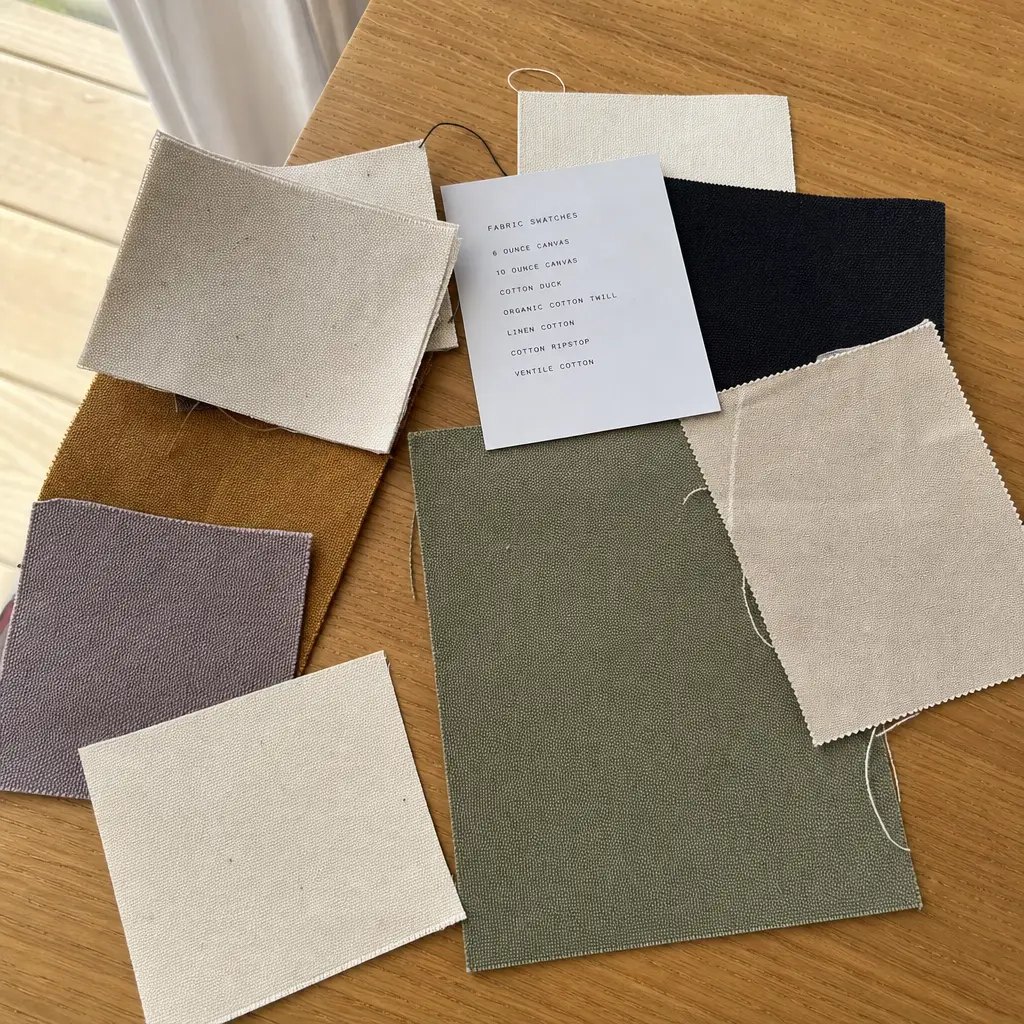
- Request a swatch with the same finish as bulk production, not a random jute sample from stock.
Handle Construction Is the Main Failure Point
In real use, jute tote bags rarely fail by tearing across the middle of the panel. They fail at the handle attachment, gusset corner, side seam, or bottom seam. This is why handle details should not be treated as decoration. A quote that says cotton handles included is incomplete. Procurement should define handle material, width, length, drop, color, stitch shape, stitch density, and reinforcement method.
Cotton webbing handles are usually more comfortable than jute tape handles for tech event totes because the bag may be carried through airports, exhibition halls, or office campuses. A 3-4 cm handle width distributes pressure better than a narrow strap. For stronger orders, use box stitching or cross stitching at each handle end and keep enough seam allowance so the stitch does not cut through the jute edge. If the tote is lined, the handle end can be trapped between layers, but the factory still needs a clear reinforcement plan.
- Define handle drop for hand carry or shoulder carry; 22-28 cm drop is common for shoulder-friendly totes.
- Use wider cotton webbing when the contents include bottles, books, or boxed accessories.
- Require the handle color to be matched or approved separately from the jute body.
- Set a handle pull test that stresses each handle end, not only the full bag as one unit.
- Reject samples with loose stitch tails, uneven reinforcement boxes, or fabric tearing around the stitch holes.
Print Method and Logo Durability on Rough Jute
Jute is a textured surface, so print approval should be stricter than on smooth cotton canvas. A small startup logo with thin lines may break across the weave. Fine text may look acceptable in digital proof but disappear on the actual bag. For most jute tote orders, screen printing is the practical option for one to three solid colors. It handles simple logos well and keeps cost predictable, especially at event quantities.
Heat transfer can help with detailed artwork, gradients, or small elements, but it changes the hand feel and may not suit every natural jute surface. Embroidery is possible for patches or labels, but direct embroidery on coarse jute can distort the panel and add cost. For retail buyers, a woven side label or cotton patch can look cleaner than forcing a detailed logo onto uneven jute. The safest path is to approve a print strike-off on the exact material before bulk printing.
- Convert artwork to vector format and provide Pantone references for each print color.
- Avoid QR codes or micro text unless the factory proves readability on the actual jute.
- Set print position tolerance, such as +/-5 mm to +/-10 mm depending on bag size and panel stability.
- Perform dry rub and light scratch tests after the ink is cured.
- Confirm whether the quoted price includes screen setup, color matching, and one print strike-off.
Sample Approval Should Test the Bag, Not Just the Look
A pre-production sample for jute tote bags should be treated as a working test piece. Many buyers approve the first sample based on size, logo placement, and overall appearance, then discover in bulk that the handle feels weak, the bottom does not stand, or the print loses clarity. A useful sample approval sheet records dimensions, fabric weight, handle construction, stitching, print result, odor, packing fold, and load test result.
For startup orders, schedule sampling early because artwork revisions and material changes can consume more time than sewing. If the delivery date is tied to a launch or conference, the buyer should not rely on a last-minute sample approval. A blank structure sample can be approved first for size and construction, followed by a print strike-off for logo quality. This sequence reduces the chance that a good print is wasted on the wrong body construction.
- Measure width, height, gusset, handle width, and handle drop on the physical sample.
- Weigh the finished sample and compare it to the quoted construction.
- Load the sample with realistic contents for several hours before approval.
- Photograph the handle attachment and bottom gusset as approval references.
- Keep the signed sample or sealed golden sample available for final inspection comparison.
MOQ Logic and Cost Drivers Behind the Quote
MOQ for jute tote bags is not only a sales policy. It is tied to fabric purchasing, cutting efficiency, print setup, sewing line arrangement, and packing labor. A supplier may accept 200 pcs using stock jute and simple screen printing, but the unit price will be higher and options will be limited. For custom size, custom lining, dyed handles, multi-color printing, or retail packing, 500-1,000 pcs is a more realistic starting point for stable production.
When comparing quotes, look beyond the unit price. One quote may include a thicker jute body, cotton lining, reinforced handles, and stronger cartons. Another may use thin unlined jute and cheaper packing. Ask suppliers to break down major cost drivers so the buyer can decide where to save without damaging durability. If the tote is a free conference giveaway, reduce cost through simple artwork and stock dimensions. If it is sold as part of a retail set, do not save by weakening handle reinforcement.
- Fabric cost changes with GSM, weave density, lamination, dyeing, and lining.
- Printing cost changes with color count, print area, setup screens, and artwork complexity.
- Sewing cost changes with lining, pockets, zipper closure, reinforced handles, and edge binding.
- Packing cost changes with individual polybags, tissue, hangtags, barcode labels, and carton strength.
- Logistics cost changes with folded size, carton dimensions, gross weight, and shipment mode.
Durability Testing Checklist for Bulk Approval
Durability testing does not need to be complicated, but it must be defined before production. A factory cannot pass an unstated test. For jute tote bags, the practical checks are static load, handle pull, seam strength, print adhesion, rub resistance, dimensional stability, odor, and packing recovery. These tests should be written into the PO or inspection checklist so the supplier knows what will be judged at final inspection.
The test level should match the business risk. A simple event giveaway may only need a reasonable load check and visual inspection. A retail product or high-profile startup launch should use stricter criteria because defective bags damage the buyer's brand in public. The most useful approach is to define pass or fail conditions in plain language: no broken handle stitches, no seam opening, no major print flaking, no strong mildew odor, and no carton damage that affects presentation.
- Static load: fill the tote with the agreed weight and hang or stand it for the agreed duration without seam failure.
- Handle pull: apply force to each handle attachment and reject tearing, loose stitches, or severe panel distortion.
- Seam rub: rub high-stress seams by hand to detect fiber shedding, open seams, or weak locking stitches.
- Print adhesion: rub the print with a dry white cloth and inspect for heavy ink transfer or flaking.
- Packing recovery: unpack a carton sample and confirm creases relax enough for acceptable presentation.
- Odor check: air the sample and bulk pieces briefly; reject damp, moldy, or chemical odor outside agreed tolerance.
Packing and Carton Plan Affect Final Appearance
Jute totes can be damaged by poor packing even when sewing quality is acceptable. Tight folding can create hard creases, especially on laminated jute. Overloaded cartons can crush gussets and bend handles. Damp cartons can create odor and mildew risk. For importers and distributors, packing details are not a warehouse afterthought; they directly affect sellable condition and customer complaints.
A practical export packing plan should include folding method, pieces per inner bundle, pieces per carton, carton dimensions, gross weight, carton ply, moisture protection, and label requirements. For retail buyers, individual polybags, hangtags, barcode stickers, or carton assortment labels may be needed. For startups sending kits to multiple offices, carton count and weight affect receiving labor. The quote should state packing clearly so the buyer does not discover later that the lowest price came from weak cartons and high compression.
- Keep carton gross weight manageable for warehouse handling, commonly under 15-18 kg where possible.
- Use flat packing for better presentation, but verify shipping volume before approving.
- Avoid excessive compression if the bag has lamination, lining, or structured gussets.
- Use desiccant or dry storage controls when shipping during humid seasons.
- Mark cartons with PO number, item code, quantity, destination, and carton sequence for easier receiving.
Lead Time and Schedule Risk for Startup Campaigns
Startup orders often have fixed event dates, but product development still follows factory steps: material confirmation, artwork review, sampling, sample approval, bulk material preparation, cutting, printing, curing, sewing, trimming, QC, packing, and shipment. A normal lead time estimate is only useful if it states what is included. A supplier saying 25 days may mean 25 days after sample approval and deposit, not 25 days from the first email.
Build a schedule with decision gates. Artwork delay, late sample approval, color changes, and packing changes are common causes of missed dates. Jute also needs attention to storage and drying conditions, especially during humid periods. If the campaign date cannot move, choose standard fabric, standard size, simple print, and straightforward packing. Custom dyed jute, complex lining, or multiple SKUs should be used only when there is enough calendar room for sample corrections.
- Separate sampling lead time from bulk production lead time in the RFQ.
- Reserve time for print strike-off approval, especially for new brand colors or small logo details.
- Confirm when the lead time starts: deposit received, artwork approved, or sample approved.
- Book inspection before the goods are packed too tightly or loaded for shipment.
- For urgent events, reduce variables by using stock fabric, one-color print, and standard carton packing.
Specification comparison for buyers
| Spec decision | Recommended option | When it fits | Buyer risk to check |
|---|---|---|---|
| Body fabric weight | 14-16 oz jute or 280-350 GSM laminated jute | Startup welcome kits, conference giveaways, retail gift-with-purchase programs, and reusable office merchandise | Light jute may deform under laptop accessories, bottles, or catalog inserts; request actual GSM and finished bag weight |
| Interior structure | Unlined jute for low-cost events; cotton lining for retail or premium onboarding kits | Use lining when the bag carries small tech accessories, notebooks, cables, or boxed items with sharp corners | Unlined jute sheds fibers and may snag packaging; lined bags add cost, sewing time, and dimensional tolerance risk |
| Handle material | Cotton webbing 3-4 cm wide with reinforced cross-stitching | Best for repeated hand carry and shoulder carry at trade shows, campus events, and employee kits | Narrow jute handles feel rough and fail earlier at the stitch point; define handle drop and load test requirement |
| Print method | Screen print for solid logos; heat transfer only for detailed artwork on coated panels | Screen print works for one to three color startup logos and avoids unnecessary setup cost on mid-size orders | Jute texture breaks fine lines; approve print on real jute, not paper proof or flat digital artwork only |
| Bottom construction | Gusseted bottom with folded seam and reinforced side stitching | Needed when the tote holds boxed chargers, notebooks, drinkware, apparel, or retail product bundles | Flat envelope styles look cheaper and carry less; weak gusset corners often fail before the fabric tears |
| MOQ planning | 500-1,000 pcs for custom size or print; lower only if using stock jute body and simple logo | Suitable for startup launch events, investor roadshows, recruiting fairs, and distributor samples | Very low MOQ can mean higher unit cost, limited fabric choice, mixed batch color, or no pre-production sample |
| Packing method | Flat pack 25-50 pcs per inner bundle with export carton sized to avoid hard creases | Best for distributors, retail buyers, and startups shipping kits to multiple offices | Overpacked cartons create permanent folds in laminated jute and make bags look rejected at unpacking |
| Durability test level | Static load, handle pull, seam rub, print adhesion, and carton drop checks before shipment | Useful when the tote is part of a paid retail bundle or a high-visibility brand launch | A supplier may quote fabric only, not finished-bag performance; put acceptance criteria in the PO |
Buyer checklist before sampling
- Define finished size in width, height, gusset, handle width, and handle drop, not only a reference photo.
- Specify jute weight or finished bag weight range and state whether lamination, lining, or coating is required.
- State the expected carrying load, typical contents, and minimum static load test duration.
- Confirm handle material, handle attachment method, stitch density, and reinforcement pattern.
- Send vector artwork with Pantone references and minimum line thickness suitable for coarse jute texture.
- Approve a real material sample and a printed pre-production sample before cutting bulk fabric.
- Set acceptable tolerances for dimensions, print position, color shade, odor, fiber shedding, and seam defects.
- Require carton packing details including pcs per carton, carton size, gross weight, and anti-moisture protection.
- Request quote breakdown for fabric, printing, accessories, packing, sample fee, tooling, and freight handover terms.
- Keep production lead time separate from sampling, artwork approval, inspection booking, and vessel or courier transit.
Factory quote questions to send
- What exact jute specification will be used: oz, GSM, weave density, lamination status, and natural or dyed finish?
- What is the finished bag weight for the quoted size, and what tolerance should we expect between batches?
- Which handle material and width are included in the quote, and how many stitches or reinforcement points are used per handle end?
- What load test can your factory perform on the finished bag, and what pass or fail criteria will be recorded?
- Can you print our logo directly on the selected jute, and what is the minimum readable line width on this material?
- Is the quoted MOQ based on stock fabric, custom fabric purchase, custom size, or print setup efficiency?
- What sample types are included: blank material sample, digital proof, printed strike-off, and pre-production sample?
- How many pieces per carton, what carton dimensions, and what gross weight will be used for export packing?
- What are the separate lead times for sample making, buyer approval, bulk material preparation, printing, sewing, QC, and packing?
- Which Incoterm, port, payment term, and validity period are included in the quote?
Quality-control points to confirm
- Finished size tolerance should normally stay within +/-5 mm for small totes and +/-10 mm for larger gusseted totes unless a looser tolerance is approved.
- Handle pull test should confirm the seam and reinforcement survive the agreed load without tearing, skipped stitches, or visible fabric distortion.
- Static load test should use the buyer's expected contents or an agreed test weight for a defined time, such as 8-12 kg for 2-4 hours for event totes.
- Stitching should be even, locked at the ends, and free from long loose threads, needle holes outside the seam line, or open gusset corners.
- Screen print should pass dry rub and light scratch checks without heavy flaking, especially on laminated jute or uneven natural weave.
- Natural odor should be controlled by ventilation and dry storage; strong chemical, mildew, or damp warehouse odor should trigger investigation.
- Carton drop or compression checks should confirm packed totes do not arrive with broken cartons, crushed gussets, or permanent hard creases.
- Random inspection should separate critical, major, and minor defects so cosmetic fiber variation is not treated the same as handle failure.