Start With Carton Planning, Not Only Bag Price
For craft fair programs, jute tote bags often look simple on the buying sheet: natural fabric, logo print, cotton handles, bulk quantity. The expensive mistakes usually appear later in freight and warehouse handling. Jute is denser and less flexible than lightweight cotton, and gusseted bags with bulky handles can increase carton cube faster than buyers expect. A supplier can offer a low FOB unit price while packing fewer pieces per carton, creating a higher landed cost per usable bag.
The RFQ should therefore request carton data at the same time as unit price. A useful quote includes finished bag size, fabric weight, pieces per carton, carton dimensions, net weight, gross weight, and CBM per 1,000 pieces. Without those numbers, procurement cannot compare two offers honestly. For event-related buying, carton planning also affects domestic delivery: cartons must be light enough for booth staff or distributors to move without damaging handles, prints, or carton corners.
- Treat carton CBM as part of the product specification, not a shipping detail added after order confirmation.
- Compare landed cost per 1,000 bags using the supplier's carton dimensions and packing count.
- Set a maximum carton gross weight early if the goods will be handled manually at craft fair venues.
- Reject vague quote lines such as “standard export carton” unless the supplier provides actual dimensions.
Choose Jute Weight Based on Load and Fold Behavior
Most craft fair jute totes need enough body to stand up at a booth and carry small retail purchases, but they do not always need the heaviest fabric. A practical range is around 280-340 GSM equivalent or 13-15 oz jute, depending on how the mill reports the material. Lighter jute reduces cost and carton weight, but it can look limp, show weave gaps, and distort around the print. Heavier jute improves structure but adds bulk, makes folding harder, and can reduce pieces per carton.
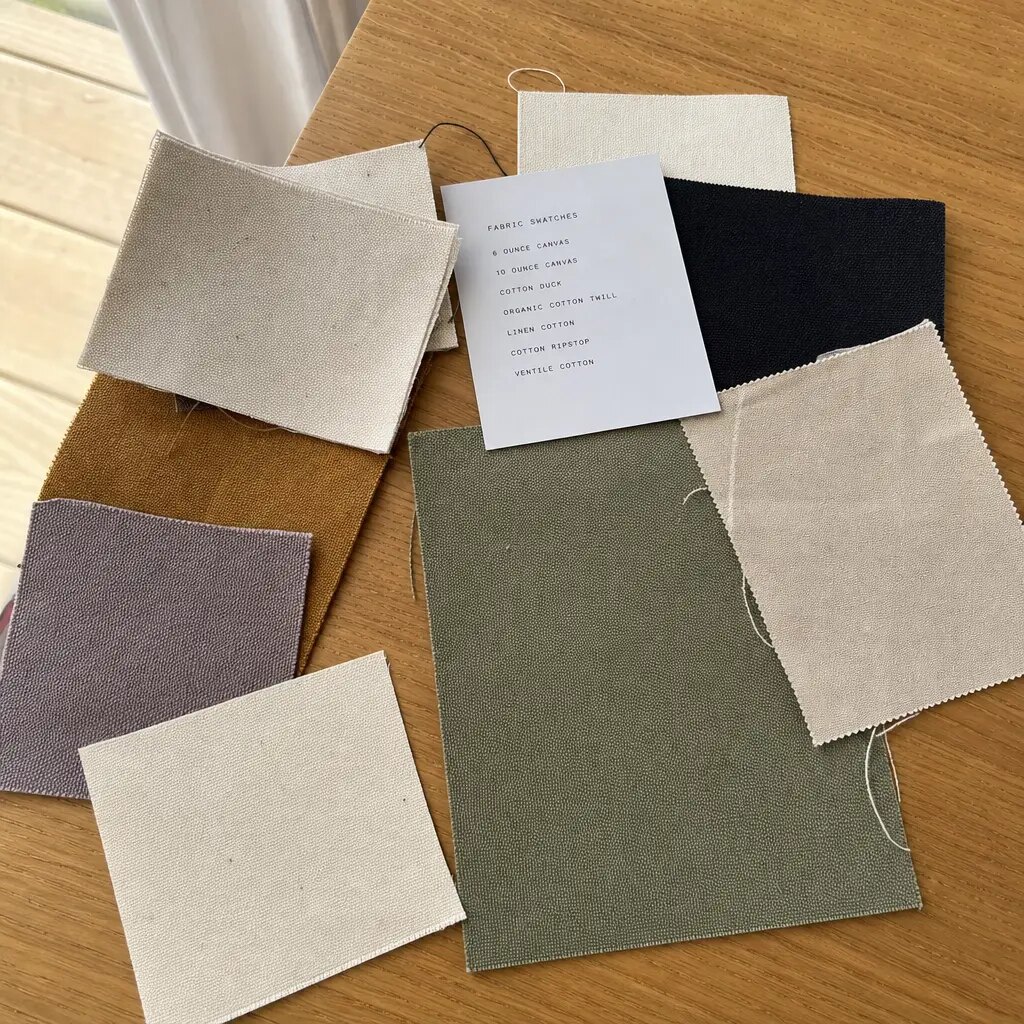
Buyers should not approve fabric based only on a supplier's product photo. Jute varies in weave tightness, hairiness, odor, color tone, and stiffness. A 320 GSM open-weave jute may perform worse than a slightly lighter but tighter fabric. The approval sample should include a fabric swatch, an actual finished bag, and a packed sample showing how the bag looks after being folded or compressed in the carton.
- For lightweight giveaway use, consider a simpler flat jute tote with moderate GSM and no heavy trim.
- For retail resale or sponsor bags, choose tighter weave jute with cleaner surface and stronger handle stitching.
- For ceramics, jars, candles, or books, prioritize handle reinforcement and bottom seam strength over fabric weight alone.
- Record the approved sample's finished bag weight so later production cannot quietly switch to thinner material.
Size and Gusset Decisions Control Freight Cube
A small change in gusset depth can change carton planning more than a small change in unit price. A flat 35 x 40 cm jute tote packs more efficiently than a 35 x 40 x 15 cm gusseted tote because the gusset creates extra folds and corner bulk. For craft fairs, a gusset is useful when vendors sell boxed goods, jars, candles, or folded garments, but unnecessary for simple brochure, stationery, or sponsor gift distribution.
Before locking size, procurement should map the bag to the actual products carried at the event. If the bag must hold a standard gift box, measure the box and add enough clearance for practical loading. If the bag is mainly a brand-visible giveaway, oversizing increases fabric consumption, print area, carton size, and final freight. A disciplined size choice can keep the bag useful while protecting the shipping budget.
- Use a flat tote when the contents are thin, flexible, or promotional.
- Use a 10-15 cm gusset when the bag must stand upright or carry boxed craft products.
- Avoid extra-wide sizes unless the retail product mix clearly needs them.
- Request carton data for each size option, because the cheapest bag size may not be the cheapest landed option.
Print Method Must Match Jute Texture
Screen printing is usually the most practical method for jute tote bags used at craft fairs. It works well for bold logos, sponsor marks, simple event names, and one or two solid colors. The print technician must adjust pressure and ink deposit because jute has an uneven surface. If the artwork uses fine lines, small type, gradients, or tight registration, the result may look rough even when the factory follows normal process.
Heat transfer can produce sharper graphics, but it may look less natural on burlap texture and can introduce adhesion risk if the surface is hairy or dusty. Embroidery is possible for small patches or labels, but direct embroidery on coarse jute can pull the weave and add cost. For most procurement teams, the safest path is a production jute sample with the real artwork, reviewed after drying and after being packed in the intended carton fold.
- Keep line width and small type conservative; jute is not a smooth canvas printing surface.
- Avoid large solid ink blocks if a natural rustic look is required, because texture will show through.
- Specify print position tolerance, commonly plus or minus 1 cm unless artwork demands tighter control.
- Approve color against a physical print sample, not only a digital mockup or Pantone reference.
MOQ Logic: What Changes the Minimum Order
The MOQ for jute tote bags depends less on sewing difficulty and more on material preparation, trim sourcing, print setup, and packing labor. A basic natural jute tote with standard cotton handles may be feasible at lower quantities, often around 500-1,000 pieces depending on the factory and season. Custom dyed jute, custom handle color, woven labels, retail hangtags, or special inner lamination can raise MOQ because suppliers must purchase material rolls and accessories in minimum lots.
For craft fair buyers, splitting one order into many small artwork versions can also affect cost. If each vendor needs a unique logo, the factory may charge separate screens, setup time, and packing segregation. A better structure is to standardize the bag body and handle, then group artwork versions by print color and delivery date. This keeps production efficient and reduces the risk of mixed cartons.
- Separate MOQ for bag body, fabric color, handle color, print setup, and packing style in the RFQ.
- Use common bag construction across vendors if multiple craft fair brands share one buying program.
- Expect higher MOQ or surcharge for dyed jute because color matching and roll purchasing are less flexible.
- Confirm whether the quoted MOQ is per design, per color, per size, or per purchase order.
Carton Count, Weight, and Warehouse Handling
Carton planning should balance freight efficiency with handling safety. Heavy jute totes can create cartons that look efficient on paper but are difficult to lift, stack, or deliver to event booths. A carton above 20 kg gross weight may be acceptable for palletized warehouse operations, but it can be a problem for craft fair distribution where cartons are opened in temporary venues. If cartons are too heavy, the risk of dropped cartons, crushed corners, and torn handle areas increases.
A typical bulk packing target may be 50-100 pieces per carton, but the right number depends on finished size, gusset, handle bulk, fabric stiffness, and whether the bags are individually packed. The buyer should require carton dimensions before deposit and then verify them after pre-production packing. Carton count should be stable enough for the forwarder, warehouse, and event team to plan pallet quantity and delivery labor.
- Request net weight and gross weight separately so carton material and packing inserts are visible.
- Use 5-ply cartons when gross weight is high or ocean freight stacking time is long.
- Avoid over-compression if the print is large, fresh, or positioned across a fold line.
- Require carton number sequence and SKU marking when multiple bag designs ship together.
Packing Method Changes Both Appearance and Cost
Bulk packing is usually enough when jute tote bags are distributed at craft fairs by staff or vendors. Bags can be counted into bundles and packed flat to reduce labor and packaging waste. Individual polybags are better when the bags are sold as retail items, shipped to stores, or must remain dust-free until end users receive them. However, individual packing adds material cost, labor time, and carton volume. It can also make cartons fill unevenly if the bag is gusseted.
The fold method matters because jute holds creases more visibly than cotton. A bag folded through the printed logo may arrive with a crease line across the artwork. A gusseted bag compressed too tightly may lose its shape and not stand well at the booth. The sample approval process should include one packed carton or at least a packing trial with the exact fold, bundle count, and carton size.
- For event handout use, choose counted bundle packing with clear carton quantity labels.
- For retail resale, use individual polybag plus barcode or hangtag only if the sales channel requires it.
- Keep print panels away from hard fold lines where possible.
- Add a moisture barrier only when storage or shipping conditions justify it, not by default.
Sample Approval Should Include a Packed Result
A loose sample can look good on a desk but fail after bulk packing. Jute fibers shed, handles create pressure marks, and print surfaces can rub against adjacent bags during transit. The pre-production sample should represent the production fabric, real handle material, actual print method, final stitching, label placement, and intended packing style. If the final order will be folded, the approved sample should be folded the same way.
Procurement teams should approve measurable criteria, not general appearance comments. Record body size tolerance, handle length tolerance, print position, load test target, fabric weight, and packed carton data. Keep one approved sample at the factory and one with the buyer if possible. This reduces disputes when production jute is slightly darker, hairier, or stiffer than expected.
- Measure body width, height, gusset depth, handle drop, and finished bag weight on the sample.
- Rub the printed area lightly after curing to see whether ink transfers or flakes.
- Load the bag with the expected weight and hold it by the handles to observe seam stress.
- Place several samples in the intended folded position to check creasing before bulk packing.
Lead Time Risks Around Craft Fair Season
Craft fair orders are often tied to fixed event dates, so schedule risk is more serious than in normal retail replenishment. A realistic timeline includes artwork confirmation, sample making, sample shipment, approval time, material booking, printing, sewing, final inspection, carton packing, export handling, ocean or air freight, customs clearance, domestic delivery, and buffer time before the event. Compressing this timeline usually increases cost or reduces inspection time.
Jute material can also be affected by seasonal availability, moisture control, and dyeing schedules. Natural jute is usually faster than custom dyed jute. A one-color print is faster than multiple artworks with separate screens. Individual retail packing is slower than bulk packing. Buyers should request a process-by-process lead time rather than a single optimistic delivery date.
- Build a buffer for sample revision if artwork has fine lines or multiple print colors.
- Avoid late changes to bag size because carton dimensions, material cutting, and freight estimates all change.
- Book inspection before cartons leave the factory, not after the forwarder collects goods.
- If air freight is a backup plan, calculate it using carton CBM and gross weight before relying on it.
Quote Data Needed for Landed-Cost Comparison
A good jute tote quote for craft fairs should allow the buyer to calculate cost from factory to event location. Unit price alone is not enough. The quote should show material specification, print details, packing method, carton data, incoterm, sample charge, mold or screen charge if any, label or hangtag cost, and production lead time. If two suppliers quote different carton counts, the buyer should normalize the comparison per 1,000 bags and per cubic meter.
The most common quote trap is comparing a supplier with bulk packing against another supplier with individual polybags, or comparing a flat tote against a gusseted tote without noticing the carton CBM. Another trap is accepting “similar quality” fabric without finished bag weight. For procurement teams, the cleanest RFQ format is one page of fixed specs plus one table where suppliers must fill in cost and logistics data in the same units.
- Require EXW or FOB price, but also request carton CBM so freight cost can be estimated.
- List setup charges separately from unit price, especially for multiple artwork versions.
- Ask for packed carton photos before shipment if the order is time-sensitive or multi-SKU.
- Compare total landed cost per usable bag after estimated freight, duty, inspection, and local delivery.
Specification comparison for buyers
| Spec decision | Recommended option | When it fits | Buyer risk to check |
|---|---|---|---|
| Jute fabric weight | 13-15 oz jute or roughly 280-340 GSM equivalent depending on weave density | General craft fair merchandise bags carrying candles, ceramics, apparel, stationery, or small gift sets | Thin jute may look acceptable in photos but collapse after loading; request actual GSM, weave photo, and finished bag weight |
| Bag size | Medium 35 x 40 cm or gusseted 35 x 40 x 15 cm | Vendor giveaways, retail checkout bags, and reusable shopper bags for makers' booths | Oversized bags increase carton cube quickly; compare packed carton CBM before approving size |
| Handle construction | Cotton webbing handles stitched with cross or box reinforcement | Orders where buyers expect comfort and repeated use | Jute rope handles can look rustic but may rub carton interiors and deform during compressed packing |
| Print method | One or two color screen print with low-bleed ink and adjusted pressure | Bold craft fair logos, sponsor marks, simple brand graphics, or booth names | Fine lines, gradients, and small type fill into jute texture; approve printed sample on production jute, not paper proof only |
| Lamination | Unlaminated for natural look; inner lamination only if moisture resistance is required | Eco-positioned events and handmade markets where soft natural texture matters | Laminated jute packs stiffer and can crack at folds if cartons are compressed or stored hot |
| Individual packing | Bulk pack by counted bundles; individual polybag only for retail resale or strict dust control | Craft fair distribution where bags are unpacked at booths before use | Individual polybags add labor, cost, carton volume, and waste; clarify if legally or commercially needed |
| Carton count | 50-100 pcs per carton depending on size, gusset, handle bulk, and print curing needs | Importers balancing warehouse handling with freight cube | A cheap unit quote may hide low carton count and high CBM per 1,000 pcs |
| Carton strength | 5-ply export carton for heavy jute, especially above 18 kg gross weight | Ocean freight, distributor storage, and pallet stacking before event season | Weak cartons bulge because jute is dense and springy; require max gross weight and carton drop condition |
| MOQ logic | 500-1,000 pcs for basic natural jute with standard handle; higher for custom dyed fabric or special trims | Craft fair programs with multiple booths, sponsors, or seasonal resale | Low MOQ can carry fabric surcharge, print setup allocation, and limited carton optimization |
Buyer checklist before sampling
- Define the finished bag size, gusset depth, handle length, and intended load before requesting carton data.
- Request fabric GSM or ounce weight, finished bag weight, and close-up photos of the jute weave from the supplier.
- Specify whether the order is bulk packed, bundle packed, or individually polybagged before comparing freight quotes.
- Require carton dimensions, pieces per carton, net weight, gross weight, and CBM per 1,000 pieces on every quotation.
- Approve a printed pre-production sample using the same jute roll, ink system, handle material, and packing fold method.
- Set an acceptable carton gross weight limit for your warehouse, commonly below 18-20 kg unless pallet handling is standard.
- Confirm if bags will be packed flat, folded once, or compressed, because this changes creasing and print appearance.
- Check event date, vessel cutoff, customs buffer, and domestic delivery time before accepting a tight production schedule.
- Include carton label format, barcode requirement, PO number, destination mark, and mixed-SKU rules in the RFQ.
- Compare suppliers by landed cost per usable bag, not only EXW or FOB unit price.
Factory quote questions to send
- What is the exact jute fabric weight in GSM or ounce, and what is the expected finished bag weight?
- What carton size, pieces per carton, net weight, gross weight, and CBM per 1,000 pieces do you quote for this size?
- Will the bags be packed flat, folded, compressed, bundled, or individually polybagged?
- What is the maximum recommended carton gross weight for this construction, and is the carton 3-ply or 5-ply?
- Which print method will be used on jute, and what minimum line width and font size do you recommend?
- Can you provide a printed sample on the same jute quality before bulk production?
- What MOQ applies to natural jute, custom dyed jute, custom handle color, and individual retail packing?
- How many days are needed for sample, material preparation, printing, sewing, final inspection, and carton packing?
- What QC standard is used for stitching, print position, stains, odor, loose fibers, and carton damage?
- Can the carton label include our PO, SKU, destination, quantity, gross weight, and carton number sequence?
Quality-control points to confirm
- Fabric weight should match the approved sample within the agreed tolerance, commonly plus or minus 5% unless otherwise stated.
- Finished bag dimensions should stay within practical tolerance, such as plus or minus 1 cm for body size and gusset depth.
- Handle attachment should pass a load test based on intended use, for example 8-10 kg static load for general craft fair shopping bags.
- Print should be legible on the jute surface with no major ink bleed, ghosting, misregistration, or missing strokes in the logo.
- Stitching should be secure at handles, side seams, bottom corners, and gusset folds with no skipped seams or loose thread tails.
- Bags should be dry, free from strong odor, heavy oil marks, mildew, visible insect contamination, and excessive loose fiber shedding.
- Cartons should not bulge, split, or exceed the agreed gross weight; carton count must match the packing list.
- Random inspection should include packed-carton opening checks, not only loose bag checks from the sewing line.