Why material selection matters for craft fair jute totes
Craft fair tote bags are not the same as simple giveaway bags. They are handled by makers, packed into event kits, displayed on crowded tables, sold or given to shoppers, and often used to carry irregular products such as candles, pottery, framed prints, soaps, books, jars, and textiles. A weak or poorly specified jute tote may look acceptable in a supplier photo but fail when it is loaded at the booth.
The main buying problem is balancing rustic appearance, usable strength, print quality, sustainability positioning, and landed cost. If the RFQ only says 'natural jute tote bag with logo', suppliers will quote different fabric weights, different lamination, different handles, different gusset construction, and different packing. The cheapest quote may not be comparable to the strongest quote.
- For gift packaging, prioritize shape retention and clean display.
- For shopper carry bags, prioritize handle comfort and seam strength.
- For branded merchandise, prioritize print area, artwork simplification, and consistent front panel appearance.
- For eco-focused brands, define exactly what claims are acceptable before choosing lamination or lining.
Choose jute weight by structure, not only by price
Jute tote fabric is commonly discussed in ounces, but many international RFQs also use GSM. For craft fair totes, a practical working range is often around 13 oz to 14 oz, or roughly 380-420 GSM before lamination, depending on the mill and finish. Lighter jute can be suitable for small gift bags, but it may collapse on display and show more distortion around seams and print edges.
Heavier jute does not automatically mean a better bag. Dense, stiff fabric improves structure but can increase cutting difficulty, needle marks, freight weight, and carton bulk. Very coarse fabric may look natural but can make logos uneven. A good RFQ should describe the desired result: 'stands upright when empty', 'carries 5 kg retail load', or 'soft rustic pouch-style tote', instead of simply demanding the heaviest available jute.
- Small fair gift tote: 300-360 GSM may work if load is light and bag is not expected to stand firmly.
- Standard retail craft fair tote: 380-420 GSM is a useful starting point for structure and durability.
- Premium rigid tote: heavier jute plus lining may be used, but confirm sewing quality and carton volume.
- Loose weave risk: lower print definition, more fraying, and variable seam bite.
- Overly stiff fabric risk: corner stress, needle damage, and higher freight cost.
Laminated, unlaminated, or lined jute: the real tradeoff
Inner lamination is common on jute tote bags because it adds body, reduces fiber shedding inside the bag, and helps the tote stand upright. For craft fairs, this can be valuable because sellers want bags that look neat when stacked or displayed. PE lamination also makes the interior easier to wipe and can improve the feel of a structured shopping tote.
Unlaminated jute feels more natural and may support a stricter plastic-free message, but it is softer, sheds more fiber, and absorbs moisture more easily. A cotton lining is a premium solution when the brand wants a cleaner inside finish without a plastic-looking interior, but it adds cutting, sewing, shrinkage, and cost control issues. The best option depends on the buyer's claim language and the actual use, not only on appearance.
- Use PE laminated jute when the bag must stand upright and hold retail goods securely.
- Use unlaminated jute when the brand message requires a more natural, minimal-construction product.
- Use cotton lining for boutique retail or higher-ticket merchandise where the inside finish matters.
- Avoid vague claims such as '100 percent eco-friendly' unless the material construction supports the claim.
- For food-adjacent uses, define whether the bag only carries packaged goods or needs special compliance review.
Bag construction decisions that affect performance
Craft fair buyers often focus on the front logo panel but overlook the parts that fail first: handle attachment, top hem, gusset corners, and bottom seam. A tote that carries candles or ceramics needs more than a nice fabric weight. It needs enough seam allowance, secure backstitching, and reinforcement at stress points. If the bottom is boxed, the corner sewing should be clean and repeatable, not pulled out of shape.
Side gussets and a bottom gusset make the tote more useful for vendor booths because the bag opens wider and can hold boxed or irregular items. A flat tote may be cheaper, but it does not perform as well when customers buy multiple pieces. If the bag will be sold as merchandise, a stable shape also improves perceived value on a retail shelf or fair table.
- Recommended top hem: folded and stitched cleanly to reduce fraying at the opening.
- Recommended handle reinforcement: box stitch, cross stitch, or bar tack depending on handle type and load.
- Recommended bottom: gusseted base for packaged crafts, boxed products, and event merchandise.
- Recommended seam finish: internal binding or secure overlock to control loose fibers.
- Avoid very small gussets if the bag is intended for boxed products; the tote will look full before it is useful.
Handle material and length should match fair use
Handle choice changes both comfort and cost. Cotton webbing is often the most buyer-friendly option because it is smoother on the hand and shoulder than coarse jute. A 35-40 mm cotton webbing handle gives better comfort for shoppers walking through a fair with several purchases. Jute webbing creates a more unified natural look, but rougher surfaces can reduce comfort if the bag carries weight for long periods.
Handle length should be specified as drop length, not just total handle length. A short hand-carry tote may need a lower cost handle, but a craft fair shopper may prefer shoulder carry, especially when buying from multiple booths. Longer handles increase material cost and can change carton packing behavior, but they often improve real usability.
- Short hand carry: around 30-35 cm drop depending on bag size and buyer preference.
- Shoulder carry: around 45-55 cm drop, with enough handle width for comfort.
- Cotton webbing: good comfort, strong print-compatible appearance, common for retail totes.
- Jute webbing: consistent natural appearance but can feel rougher.
- Rope handles: decorative but may be less suitable for heavy, repeated craft fair use.
Print method: design around jute texture
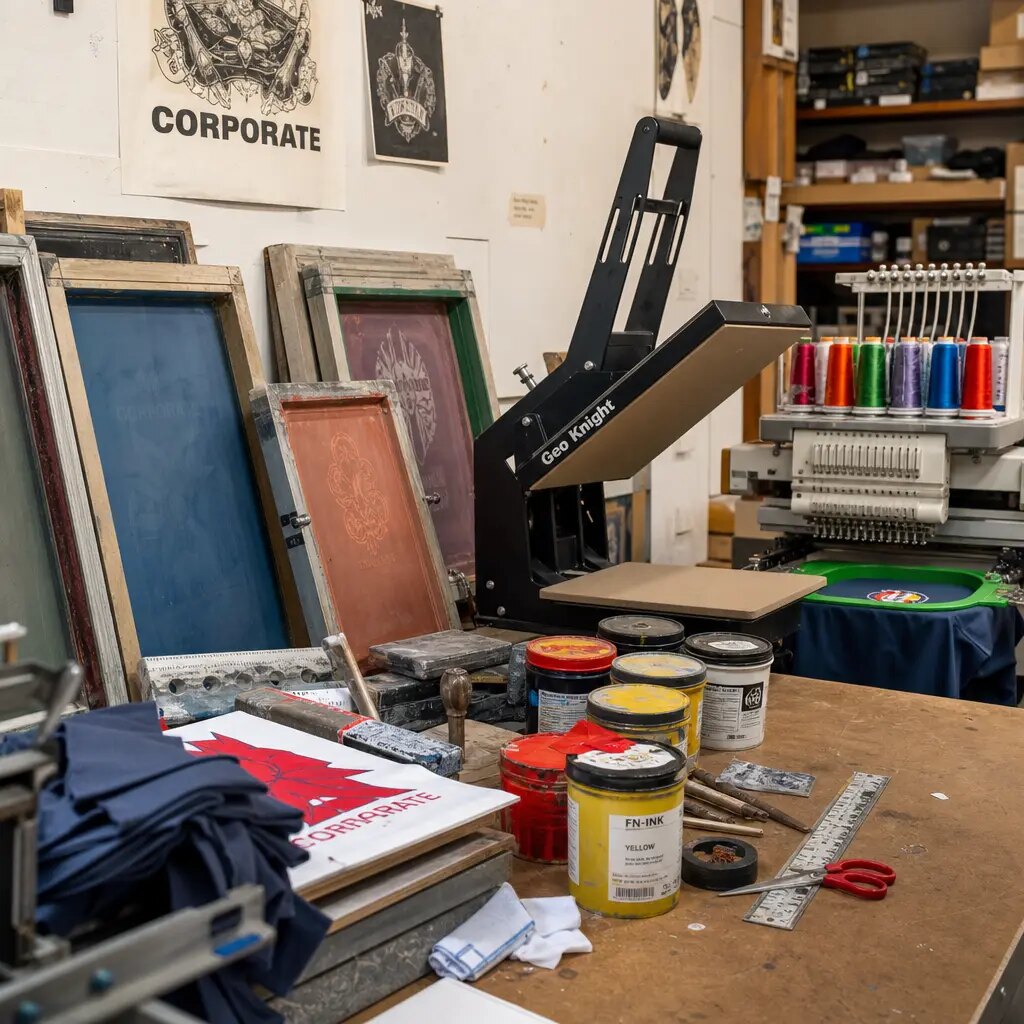
Jute is not a smooth cotton canvas. The woven surface has slubs, uneven thickness, and texture that interrupt fine detail. Screen printing works well for simple solid artwork, especially one to three colors, but buyers should not expect sharp micro text or fine reversed lines. Artwork that prints beautifully on paper may look broken on natural jute.
For detailed logos, small sponsor marks, gradients, or multi-color art, a transfer patch, woven label, or cotton panel may produce a cleaner result than printing directly on jute. However, each added component changes cost and production time. If the brand identity depends on precise color matching, request drawdowns or printed swatches on actual jute before approving the full pre-production sample.
- Best for direct screen print: bold logo, simple type, large solid shapes, limited color count.
- Risky for direct screen print: thin serif text, QR codes, small sponsor logos, gradients, and photo images.
- Alternative branding: cotton patch, woven side label, leather-look patch, or transfer label.
- Ink coverage: heavy ink can stiffen the print area and may crack if not cured correctly.
- Artwork file: provide vector artwork and Pantone references, then approve a real printed fabric strike-off.
MOQ logic and how to compare supplier quotes fairly
MOQ for jute tote bags is driven by several layers: fabric sourcing, lamination setup, cutting efficiency, handle material, print setup, and packing configuration. A supplier may accept a low total order quantity if the base bag is standard and only the print changes. The same supplier may require a higher MOQ for custom dyed jute, unusual handle color, cotton lining, or special size.
When comparing quotes, separate the base bag cost from artwork setup and packing requirements. A lower unit price may exclude screen charges, inner bundles, carton marks, sample remake cost, or moisture protection. For distributors managing several craft fair designs, the most economical route is often to standardize one bag body and change only the front print or side label.
- Base material MOQ: affected by jute weight, lamination, color, and mill availability.
- Construction MOQ: affected by bag size, gusset shape, lining, and handle type.
- Artwork MOQ: affected by number of print colors, screens, color changes, and logo positions.
- Packing MOQ: affected by retail polybags, hangtags, barcode labels, and venue-specific cartons.
- Quote comparison rule: require the same fabric weight, lining, handle, print size, packing, and inspection terms from each supplier.
Sample approval should test the bag, not just the look
A nice sample photo is not enough. The approved sample should be made from the same jute weight, lamination, lining, handle material, thread, print method, and packing method intended for bulk production. If the factory uses leftover sample-room fabric, the buyer may approve a bag that cannot be repeated in production. This is a common reason for bulk shade, stiffness, and print differences.
For craft fair orders, the sample should be filled with realistic products or a weight equal to the intended load. Lift it repeatedly, hang it by the handles, place it on a table, and check whether it stands, collapses, twists, or pulls at the seams. Also open the sample after it has been sealed in a bag or carton for a short period to evaluate odor.
- Measure finished width, height, side gusset, bottom gusset, and handle drop.
- Compare fabric shade against the approved swatch under consistent lighting.
- Rub the print with a dry and slightly damp white cloth to identify obvious ink transfer.
- Load test the bag with realistic craft fair goods, not only flat paper.
- Review stitching at handle attachments, top hem, bottom corners, and internal seams.
- Approve a sealed reference sample for production and inspection teams.
Packing and moisture control are part of the material decision
Jute is more sensitive to moisture and odor than many synthetic promotional materials. If bags are packed too tightly before they are fully dry, or if cartons sit in a humid area, the shipment can arrive with a musty smell or visible carton damage. This is especially risky for sea freight and for event programs where the delivery window is fixed.
Packing should protect the bag shape without wasting freight volume. Flat packing is common, but over-compression can leave deep creases in laminated jute. For retail buyers, inner bundles, barcode labels, hangtags, and carton marks need to be included in the RFQ because they affect labor cost and packing time. For distributors shipping to different fairs, carton assortment rules should be defined early.
- Use flat packing with controlled bundle quantity to reduce creasing.
- Avoid excessive carton weight; heavy cartons increase handling damage risk.
- Consider moisture barrier or desiccant when routing through humid ports or long sea freight.
- Keep carton markings clear: item code, artwork code, quantity, gross weight, net weight, and destination if needed.
- For retail delivery, define whether each bag needs a hangtag, belly band, barcode sticker, or individual polybag.
Lead time risks for seasonal craft fair programs
Craft fair programs are often seasonal, tied to holiday markets, spring fairs, local maker events, or tourism periods. The schedule risk is not only sewing time. It includes material booking, lamination, sample approval, artwork correction, print curing, final inspection, packing, customs documents, and inland delivery. A late logo approval can be more damaging than a slow sewing line.
A practical sourcing calendar starts with a real pre-production sample and leaves time for one correction cycle. Natural jute shade, print registration, and handle comfort are easier to fix before cutting bulk fabric. If the buyer compresses sample approval and bulk production into one step, the factory may proceed with assumptions that are difficult to correct after printing.
- Sample development: allow time for material sourcing, print strike-off, and courier transit.
- Approval buffer: reserve time for artwork resizing, shade review, or handle adjustment.
- Bulk production: depends on order quantity, construction complexity, and peak-season capacity.
- Inspection: schedule before final balance payment or shipment release where possible.
- Freight planning: compare air, sea, and rail options early if the event date is fixed.
Specification comparison for buyers
| Spec decision | Recommended option | When it fits | Buyer risk to check |
|---|---|---|---|
| Jute fabric weight | 13 oz to 14 oz natural jute, roughly 380-420 GSM before lamination | Most craft fair retail totes needing a firm handfeel, visible natural texture, and reliable shelf presentation | Very loose weave may look rustic but can distort print edges and reduce seam holding strength |
| Lamination choice | Inner PE lamination for structure; unlaminated only when a soft, fully natural feel is more important | Laminated jute works better for upright display, gift sets, packaged crafts, and retail checkout bags | Lamination can trap odor if drying is poor and may be restricted by some eco-positioning claims |
| Panel construction | Boxed bottom with side gussets, reinforced top hem, and bottom seam binding | Craft fair shoppers often carry ceramics, candles, books, jars, and multi-item purchases | Flat totes save cost but collapse on tables and overload bottom corners more easily |
| Handle material | Cotton webbing or jute-webbing blend, 35-40 mm width, cross-stitch or box-stitch reinforced | Comfortable hand carry and shoulder carry for fair visitors walking between booths | Thin rope or narrow jute handles can scratch hands and fail abrasion tests if load is heavy |
| Print method | Screen print for 1-3 solid colors; heat transfer only for detailed artwork on limited areas | Logos, fair names, boutique branding, simple sponsor artwork, and event merchandise | Jute texture causes broken fine lines; artwork needs thicker strokes and controlled ink deposit |
| Interior lining | PE laminated interior or cotton lining for premium versions | PE is practical for food-safe packaging appearance; cotton lining is better for boutique retail positioning | Cotton lining adds cost and shrinkage control work; PE lining may not match plastic-free marketing claims |
| MOQ logic | One fabric color and one construction shared across SKUs; artwork variations grouped by print setup | Distributors and retail buyers needing several fair designs without multiplying base material risk | Small artwork batches may carry screen charges, higher unit cost, and longer color-change setup time |
| Packing format | Flat-packed 10-25 pcs per inner bundle, moisture barrier if sea freight, export carton under practical weight limit | Bulk import orders, retail DC delivery, and craft fair kits shipped to multiple venues | Over-compressed jute develops crease marks; damp cartons can transfer odor and mildew risk |
Buyer checklist before sampling
- Define the intended load: light leaflets and textiles, or heavier candles, pottery, jars, and books.
- Specify jute GSM or ounce weight, not just 'standard jute', because weave tightness and stiffness vary by supplier.
- Decide whether the bag must stand upright on a booth table; if yes, use side gussets, bottom gusset, and laminated or lined panels.
- State whether eco-claims require unlaminated jute, recycled lining, cotton lining, or no plastic coating.
- Confirm handle length by use case: short hand carry, shoulder carry, or dual-use; include width and reinforcement stitch.
- Prepare artwork with bolder lines and fewer tiny reverses than cotton canvas artwork.
- Set acceptable color variation for natural jute because shade differs by crop, bleaching, dyeing, and lamination.
- Request pre-production samples made with actual bulk jute quality, actual lining, actual handle, and actual print method.
- Set carton packing rules to avoid over-compression, moisture exposure, and excessive carton weight.
- Include inspection requirements for seam strength, print adhesion, odor, dimensions, handle pull, and carton condition.
Factory quote questions to send
- What jute fabric weight in GSM or oz will be used, and is the quoted fabric laminated or unlaminated?
- Is the jute natural, bleached, dyed, or color-coated, and what shade tolerance will be applied to bulk production?
- What are the bag dimensions including side gusset, bottom gusset, handle length, and handle width?
- Which handle material is included in the quote: cotton webbing, jute webbing, rope, PU, or another option?
- What print method is quoted, how many colors are included, and are screen charges or plate charges separate?
- Will the pre-production sample use actual bulk fabric, actual lamination, and the final stitching construction?
- What MOQ applies to base material, bag size, handle type, and each artwork or colorway?
- What is the estimated sample lead time, bulk lead time after sample approval, and peak-season capacity limit?
- How will bags be packed per inner bundle and export carton, and what is the estimated carton size and gross weight?
- Which QC tests or inspection points are included before shipment, and can the supplier support third-party inspection?
Quality-control points to confirm
- Fabric weight tolerance should be agreed before production; many buyers use plus or minus 5 percent as a practical control point.
- Finished dimensions should be measured on packed-out samples, including width, height, side gusset, bottom gusset, and handle drop.
- Handle pull strength should match the intended load; for craft fair retail totes, test with a realistic static load and repeated lifting.
- Seam allowance and backstitching must be visible and consistent at handles, top hem, gusset corners, and bottom seams.
- Print registration, ink coverage, and rubbing resistance should be checked on the actual jute texture, not on a paper proof only.
- Odor should be evaluated after opening a sealed carton, because damp jute, poor drying, or fresh lamination can create complaints.
- Natural jute shade variation should be compared against an approved master swatch under consistent light.
- Cartons should be dry, clean, correctly marked, and strong enough for export handling without crushing the bag structure.